
Hobbies and interests
Aerial Silks
Reading
Fantasy
I read books multiple times per month
Alexis Newton
1x
Finalist1x
Winner
Alexis Newton
1x
Finalist1x
WinnerBio
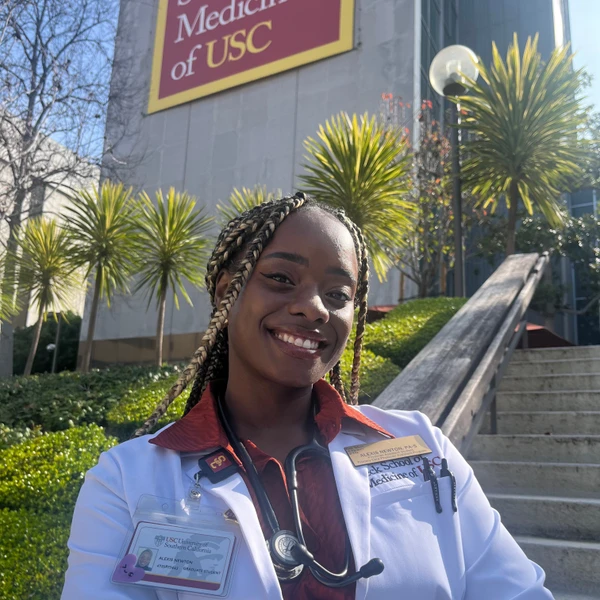
Despite financial insecurity and working two part-time jobs throughout PA school, I have remained deeply committed to my education, my community, and expanding access to the PA profession. As a first-generation student from an underrepresented background, I learned early that many capable future providers are excluded not by lack of ability, but by lack of access. That reality shaped my life goals: to deliver excellent patient care while actively widening the path for those who come after me.
I am most passionate about equity, representation, and mentorship. As a USC MedCor mentor, I guide underserved high school students through college readiness and financial aid—often becoming the first future clinician they have ever met who looks like them. I have also mentored pre-PA students nationwide, helping more than fifteen gain acceptance into PA programs. After being invited by the NCCPA to speak on a national panel on diversity in PA education, I helped co-found a national virtual Pre-PA Pathways Program in collaboration with USC and other national PA organizations. Our inaugural cohort of twenty students now has access to mentorship, representation, and resources many of us never had.
Clinically, I am drawn to the ICU. Caring for critically ill cardiopulmonary patients taught me to balance the elegant simplicity of the heart with its immense complexity—integrating physiology, pharmacology, and hands-on skills to improve patient care. I am committed to healing at the bedside and strengthening the systems that determine who get to stand there next.
Education
University of Southern California
Master's degree programMajors:
- Health Professions and Related Clinical Sciences, Other
Dickinson College
Bachelor's degree programMajors:
- Biology, General
Institute For Collaborative Education
High SchoolMiscellaneous
Desired degree level:
Doctoral degree program (PhD, MD, JD, etc.)
Graduate schools of interest:
Transfer schools of interest:
Majors of interest:
Career
Dream career field:
Medicine
Dream career goals:
Physician Assistant
Emergency Medical Technician - conduct both emergent and non-emergent patient assessment and transportation, bls certified, CPR certified, hazardous certificates and EMT van certification
Rockland Mobile Care2016 – 20171 yearBreast Oncology Program Specialist - coordinate clinical trials data management, consent patients onto investigator initiated trials, assist in procurement of blood, tissue, and saliva samples, assist in fda ausits, etc.
Weill Cornell Medicine2017 – 20225 years
Research
Medicine
NMF PCLP Scholar Fellowship — Developed an educational activity, pre and post survey, presented findings at Research Symposium.2024 – 2025
Public services
Volunteering
AAPA Student Board - Director of Student Communications — Create post/content to share resoures and information for PA students, Update students on the interworkings of AAPA and advocacy efforts, serve as the co-chair on the communications committee, etc.2025 – PresentVolunteering
USC Pathways Virtual Pre-PA Pathways Program — Our inaugural cohort of twenty students—many first-generation or from historically underserved backgrounds—receives monthly mentorship, workshops, mock interviews, and financial literacy guidance.2025 – PresentVolunteering
USC Trojan Trainer — Volunteer as a Trojan Trainer building trust with unsheltered patients; assist with securing PCPs, appointments, and resources, create individualized care plans, and strengthen empathetic communication and advocacy skills for future advanced practice.2023 – 2024Advocacy
PAEA Student Health Policy Fellow — Self-directed a PAEA student advocacy project which involved working with an established FQHC in LA, CA (Venice Family Clinic) to increase their HPSA score so they could hire more NHSC scholars2023 – 2024Volunteering
AAPA Student Academy Board of Directors — Serve as regional point of contact for Student Academy Representatives (SARs); maintain organized contact lists, lead SAR communications and calls, relay deadlines and updates, elect HOD delegates, and promote student engagement.2024 – 2025Volunteering
USC MedCor Mentor — Serve as a long-term mentor to a cohort of 8–10 students, providing guidance, inspiration, and career development support. Foster a safe, encouraging environment through regular check-ins, communication, and professional growth activities.2023 – Present
Future Interests
Advocacy
Politics
Volunteering
Philanthropy
Entrepreneurship
Women in Healthcare Scholarship
As a first-generation Black American woman raised by a single mother in the Bronx, pursuing a career in healthcare has never been simply about earning a degree—it has been about purpose, representation, and responsibility. I grew up understanding how deeply systemic inequities shape people’s lives long before they ever enter a hospital room. Financial instability, limited access to healthcare resources, and the absence of providers who reflected my community were realities I witnessed early. Those experiences shaped not only my understanding of medicine, but also the kind of provider I aspire to become.
I chose to pursue a degree in healthcare because I believe medicine is one of the most powerful ways to restore dignity, advocacy, and hope during a person’s most vulnerable moments. Throughout my clinical training, I have learned that excellent healthcare extends beyond diagnosing disease; it requires listening closely, recognizing when something is being overlooked, and ensuring patients feel seen and protected.
During my emergency medicine rotation, I cared for a patient who initially presented with what appeared to be a simple urinary tract infection. Yet while speaking with her, I noticed worsening shortness of breath, declining oxygen saturation, and details in her history that did not align with the presumed diagnosis. Trusting my clinical instincts, I advocated for a more extensive cardiopulmonary workup despite initial hesitation. Further evaluation ultimately revealed a pulmonary embolism. While my preceptor later praised my clinical reasoning, what stayed with me most was sitting beside that patient as she processed the fear and uncertainty of a life-threatening diagnosis far from home. In that moment, I understood that medicine is not only about recognizing pathology—it is about providing steadiness when patients feel most vulnerable. That experience solidified my desire to become a physician assistant who combines clinical vigilance with compassion and advocacy.
My journey to this profession has required resilience far beyond the classroom. Throughout PA school, I worked two jobs while balancing clinical rotations, leadership roles, research, and academics. There were moments where exhaustion felt unavoidable, but I remained committed to becoming the kind of provider I once needed to see growing up: someone who understands hardship, advocates fiercely for underserved patients, and creates space for others to believe they belong in medicine too. Despite these challenges, I was honored to be recognized as Student of the Year and inducted into my institution’s honor society, achievements that represent years of perseverance in spaces where students from backgrounds like mine remain underrepresented.
As a Black woman in healthcare, I hope to create impact both at the bedside and beyond it. During PA school, I co-created the USC Virtual Pre-PA Pathways Program, a nationwide initiative designed to support underrepresented students pursuing careers as physician assistants. Through mentorship, mock interviews, CASPA workshops, and professional development, we have worked to expand access for students who often lack guidance, representation, and opportunity. Watching students begin to see themselves reflected in this profession has been one of the most meaningful experiences of my life.
Ultimately, I hope to serve underserved communities as a cardiothoracic surgery PA while continuing to advocate for equity, mentorship, and access within medicine. I want my career to reflect the belief that representation matters—not only because patients deserve providers who understand their experiences, but because future generations deserve to see that there is space for them in healthcare too.
Ruthie Brown Scholarship
As a first-generation Black/African American woman raised by a single mother, pursuing higher education has never been a straight path—it has been one built through sacrifice, resilience, and an unwavering commitment to creating a different future for myself and my community. Financial instability was not an abstract concept growing up; it shaped many of the decisions my family and I had to make. Entering PA school, I understood that while academic success would be essential, so would finding ways to remain financially stable enough to fully show up for the demanding rigor of medical education.
Throughout PA school, I worked two jobs while balancing coursework, clinical rotations, leadership responsibilities, and research. There were many moments where exhaustion felt inevitable, but I remained grounded in the understanding that every sacrifice was connected to a larger purpose. I was not only pursuing a career for myself, but also working to become the kind of provider I once needed to see growing up—someone who understands hardship, advocates fiercely for underserved patients, and recognizes the humanity behind every clinical encounter.
Despite these challenges, I remained deeply committed to academic excellence and service. I was honored to be recognized by my institution as Student of the Year and inducted into the honor society in recognition of my academic performance, leadership, and dedication to the profession. These accomplishments represent more than grades or awards to me; they reflect years of perseverance, discipline, and the determination to succeed in spaces where students from backgrounds like mine are often underrepresented.
My commitment to service extends beyond the classroom and hospital setting. During PA school, I co-created the USC Virtual Pre-PA Pathways Program, a nationwide initiative designed to support underrepresented students pursuing careers as physician assistants. Through CASPA workshops, mock interviews, mentorship, and personal statement support, we worked to address barriers that often prevent talented students from accessing the profession. Creating this program reinforced my belief that representation in medicine matters and that mentorship can fundamentally change the trajectory of a student’s life.
Following graduation, I plan to work as a cardiothoracic surgery physician assistant in an underserved community in California, where access to specialty care remains limited. I intend to continue mentoring future pre-PA students while responsibly addressing my student loan debt through disciplined financial planning, employment in underserved communities, and loan repayment opportunities available through community-based healthcare systems.
Student loan debt represents a significant financial burden, but it also represents the cost of pursuing a dream that will allow me to serve others meaningfully. Receiving this scholarship would not only alleviate financial strain, but would also allow me to continue investing in the communities and students I hope to uplift throughout my career. More importantly, it would help ensure that the doors I fought to walk through remain open for those coming behind me.
PAC: Diversity Matters Scholarship
WinnerAn impactful Physician Assistant is defined not only by clinical competence, but by courage, advocacy, and an unwavering commitment to people—both at the bedside and beyond it. I believe the most effective PAs are those who listen deeply, act decisively, collaborate intentionally, and remain accountable to the systems that shape patient care. Throughout my journey to becoming a PA, I have intentionally embodied these attributes through service, leadership, and patient-centered advocacy.
As a first-generation student from an underrepresented background, I learned early that access—not ability—is often the greatest barrier to entering medicine. Navigating higher education largely alone showed me how many capable, compassionate future providers are excluded before they ever reach the exam room. These experiences shaped my belief that an impactful PA must widen the path for others while delivering excellent clinical care. That responsibility has guided every step of my training.
I embody this commitment through mentorship and pipeline development. As a USC MedCor mentor, I support underserved high school students as they navigate college eligibility, financial aid, and career planning—often introducing them to healthcare professions for the first time. Many had never met someone pursuing medicine who looked like them. Being the mentor I once needed reinforced my belief that representation is not symbolic; it is transformative. In parallel, I have mentored pre-PA students nationally, and more than fifteen individuals I supported have since earned acceptance into PA programs.
My advocacy expanded when I was invited by the NCCPA to speak on a national panel addressing diversity in PA education. Standing alongside leaders who shaped our profession clarified something essential: advocacy is not something we wait to do after graduation—it is a responsibility of the present. That moment inspired me to help co-found a national virtual Pre-PA Pathways Program in collaboration with USC, the United Negro College Fund, Morehouse College, Physician Assistants of Color, African Heritage PA Caucus, and the National Society of Black PAs. Our inaugural cohort of twenty students—many first-generation or historically underserved—now receive mentorship, financial literacy education, mock interviews, and exposure to diverse healthcare careers. Watching students gain confidence and community has been one of the most meaningful expressions of the PA values I strive to uphold.
An impactful PA must also be willing to advocate when systems fail patients. During my primary care rotation, I watched a patient’s diabetic foot ulcer worsen—not because of medical complexity, but because outdated policy required a physician co-signature for a PA referral. The delay led to preventable disability. That experience solidified my understanding that advocacy is patient care. Since then, I have attended the AAPA Leadership and Advocacy Summit in Washington, D.C. for two consecutive years, meeting with legislators to support modernized PA practice laws that protect patient access.
Clinically, I strive to embody vigilance, humility, and teamwork. During my emergency medicine rotation, I advocated for a full cardiopulmonary workup for a patient initially presenting with a “simple” UTI after noticing subtle signs of respiratory distress. That decision led to the diagnosis of a pulmonary embolism. The experience reinforced that impactful PAs look beyond chief complaints, trust their clinical reasoning, and speak up—especially when it is uncomfortable.
I believe I am a strong candidate for this scholarship because I consistently embody the qualities that define an impactful PA: clinical vigilance, advocacy, leadership, service, and an enduring commitment to equity. I am dedicated not only to healing individual patients, but to strengthening the profession itself—so that those who come after me will encounter fewer barriers and greater opportunity. That is the impact I strive to make, and the legacy I hope to carry forward.