user profile avatar

The Nguyen

1x

Finalist

Bio

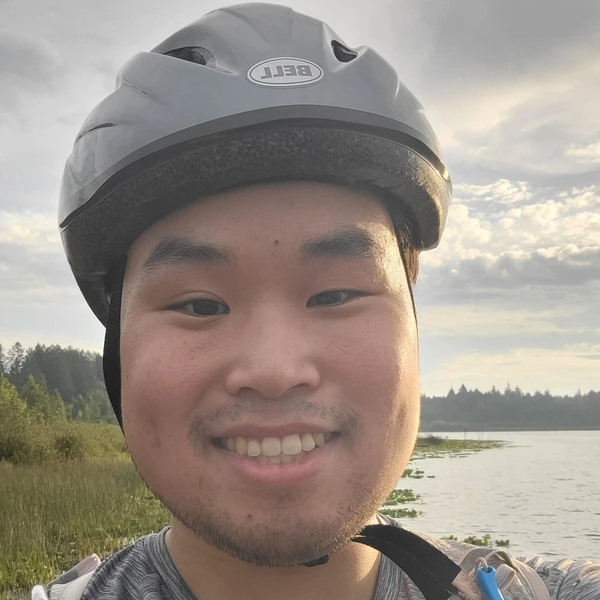
I am a PY3 (Pharmacy Year 3) student at the University of Washington School of Pharmacy! On top of my full-time education, I work 2 jobs between the clinical hospital lab and hospital intern! I love to find out answers to questions not explored or answers not clearly defined! In fact, on top of my school and work, I am balancing and leading 3 research projects

Education

University of Washington-Seattle Campus

Doctoral degree program (PhD, MD, JD, etc.)

2024 – 2028

Majors:
  • Pharmacy, Pharmaceutical Sciences, and Administration
University of Washington-Seattle Campus

Bachelor's degree program

2019 – 2023

Majors:
  • Clinical/Medical Laboratory Science/Research and Allied Professions

Miscellaneous

Desired degree level:
Doctoral degree program (PhD, MD, JD, etc.)
Medical school interest:
No

Career

Miscellaneous

Dream career field:
Pharmaceuticals
Work experience:
3 years
Has nursing license:
No
J&Y Law Yahouda Yahoudai Service Scholarship
Community service, in my experience, has never looked like a single dramatic gesture. It has looked like showing up consistently: for a student who does not know how to navigate a system, for a community that deserves health information in a language it can understand, for a population that research has not yet reached. I am a third-year PharmD candidate at the University of Washington, the son of a single father, and someone who grew up understanding that collective responsibility is not optional. My mother was frequently absent from our home due to health circumstances, which left my father as the sole provider and me as the surrogate caretaker for my younger brother. That experience did not make me charitable. Rather, it made me attentive to who, in any room, is being underserved, and what I can do about it. That attentiveness is what led me to the Health Careers Opportunity Program (HCOP) at UW. HCOP is designed to support underrepresented students pursuing healthcare careers, and I joined not as a recipient but as a mentor. I guide pre-pharmacy students through the application process, the unwritten rules of professional school, and the day-to-day reality of building a career in medicine when no one in your family has done it before. I remember needing exactly that kind of guidance and not having it. I try to be what I did not have. Through HCOP, I also had the opportunity to present health information to a Latin American community through the LETI program, translating pharmacological content into accessible, culturally appropriate Spanish-language materials. Standing in front of that audience, I understood something clearly: the gap between what a community needs to know about its own health and what it actually has access to is not a gap that requires a medical degree to close. It requires someone willing to show up and translate both literally and figuratively. That same impulse carried me to Bangkok, where I am developing a Fulbright research project on health access barriers among non-venue-based sex workers, a population navigating serious health risks with almost no pharmacological support and almost no research to guide it. I am building relationships with local NGOs, including SWING, and I plan to deliver community workshops on pharmacological prevention, menstrual health, and safe hygiene practices during the grant year. The community I am serving there looks nothing like the one in Seattle. The need is the same. Closer to home, I also mentor a second-year pharmacy student through UW's mentorship program, who recently secured a position at Costco Pharmacy. The mentorship was small in scope and significant in outcome. That is usually how it works. I do not think of these efforts as separate acts of service. I think of them as one continuous practice: finding the people in any community who are navigating something hard without enough support, and offering what I have. Sometimes that is pharmacological knowledge. Sometimes it is a contact, a conversation, or simply the confirmation that someone sees what they are up against. I grew up needing that. I have spent my career learning to provide it.
Lotus Scholarship
Growing up, my household was defined by absence and uncertainty. My mother cycled between hospitalization and periods away from home, leaving my father as not just the sole provider but also the sole parent. And thus, at a young age, was influenced to be a surrogate caretaker for my younger brother. There was no blueprint for what we were navigating. There was just the next day, and the responsibility to show up for it. That experience taught me something I could not have learned any other way: that circumstances do not wait for you to be ready, and neither should you. I learned to function without external support, to find solutions independently, and to keep moving when the path forward was unclear. Those are not qualities I developed later. They were forged early, out of necessity. Today I am a PharmD candidate at the University of Washington, working 28 hours every weekend across two clinical jobs to fund my education without graduating under debt that would limit my choices as a future pharmacist. I mentor pre-pharmacy students through HCOP, guide pharmacy students through UW's mentorship program, and have designed an original RCT investigating antihistamines for PMS after a coworker's casual question sparked my curiosity. I am also applying for a Fulbright grant to conduct qualitative research on health access barriers among underserved women in Bangkok. The through line is simple: I grew up in a home where I had to make something out of very little. I have never stopped doing that. Every project I build, every student I mentor, every question I refuse to leave unanswered. This is the same instinct I developed watching my brother, making sure things were handled. I just have more tools now.
Women’s Health Research & Innovation Scholarship
When I first learned about premenstrual dysphoric disorder in my therapeutics coursework at the University of Washington School of Pharmacy, what struck me was not the severity of the condition, but the narrowness of our treatment options. PMDD and premenstrual syndrome affect up to 40% of reproductive-age individuals, yet our pharmacological toolkit has barely expanded in decades. SSRIs remain first-line, combined oral contraceptives are second, and response rates plateau around 60%. For the millions who do not respond or who cannot tolerate the side effects, we have remarkably little to offer. That gap between the scale of suffering and the scope of our therapeutic imagination is what drew me to this work. As a PharmD candidate, I am designing and leading a randomized controlled trial investigating a novel pharmacological approach to PMS and PMDD: combined H1/H2 receptor antagonism using fexofenadine (Allegra) and famotidine (Pepcid) during the luteal phase. The scientific rationale stems from an emerging body of evidence connecting hormonal fluctuations, mast cell biology, and histamine signaling to premenstrual symptoms. Estradiol directly activates mast cells through estrogen receptors, promoting degranulation and histamine release in a menstrual cycle-dependent pattern. The downstream effects of histamine (bloating, headache, fatigue, mood disruption, GI distress) map remarkably well onto the symptom profile of PMS and PMDD. Meanwhile, combined H1/H2 blockade is already established as first-line therapy for mast cell activation syndrome, a condition where hormonal fluctuations are a recognized trigger. Despite this mechanistic plausibility, no randomized controlled trial has ever tested antihistamines for PMS or PMDD. My trial aims to change that. The study is a single-center, double-blind, placebo-controlled trial enrolling University of Washington students, using the Daily Record of Severity of Problems (the gold-standard validated instrument for PMS/PMDD assessment) as the primary outcome. If funding permit, participants will use urinary LH surge testing to time the onset of luteal-phase dosing with precision. The design includes stratified randomization to account for PMDD severity and concurrent SSRI; I believe we need answers that are relevant to patients as they actually present (including those already on first-line therapy who still have inadequate symptom control). This project represents one concrete step toward moving PMDD from the margins into routine clinical consideration, not only by testing a novel and accessible treatment, but by reframing how we think about the condition's pathophysiology. If histamine-mediated mechanisms contribute to premenstrual symptoms in even a subset of patients, it opens an entirely new therapeutic avenue using safe, inexpensive, over-the-counter medications. That kind of accessible intervention could reach patients in settings where SSRIs are stigmatized, unavailable, or ineffective. Beyond the trial itself, I am committed to ensuring this work reaches clinicians. My goal is to publish the results regardless of outcome (positive or negative findings would both advance our understanding) and to present at pharmacy and women's health conferences where the conversation about PMDD recognition is most needed. The fact that a plausible, mechanism-based treatment hypothesis has gone untested for this long is itself evidence of how far PMDD remains from the center of our clinical attention. I intend to help close that distance, one rigorous study at a time.
The Nguyen Student Profile | Bold.org