Ethnicity
Asian
Hobbies and interests
Hiking And Backpacking
Shopping And Thrifting
Volunteering
Advocacy And Activism
Linguistics
Baking
Culinary Arts
Photography and Photo Editing
Needle Felting
Ceramics And Pottery
Reading
Criticism
Romance
Literary Fiction
Gardening
Adventure
I read books multiple times per week
Thi Thanh Thanh Tran
1x
FinalistThi Thanh Thanh Tran
1x
FinalistBio
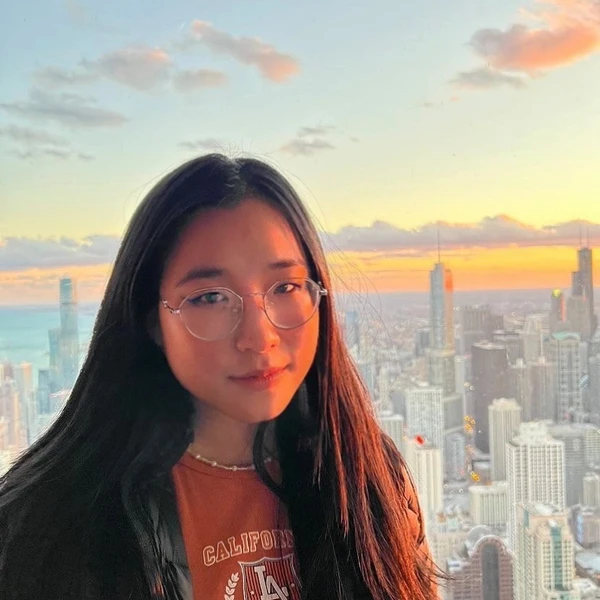
My name is Thanh. I grew up in Vietnam and came to the United States for college as the first in my family to pursue education. I graduated from Coe College in Iowa with degrees in Public Accounting and Data Science, and I’m now a first-year master’s student in Complex Systems & Data Science at the University of Vermont.
I see myself as both a scholar and an engaged citizen. I'm fascinated by how we can use interdisciplinary tools statistics and systems thinking to understand people's experiences. My goal is to contribute to social and public policy work, particularly for communities facing barriers similar to those I've navigated.
I'm a jack of all trades in hobbies. I love cooking/baking Vietnamese dishes, experimenting pottery projects, and finding the best view while hiking. (Yes, I meticulously photograph all of it!)
I’m grateful for my parents' sacrifices that got me here, and for opportunities that allow first-generation, low-income students like me to keep dreaming bigger than their circumstances.
Education
University of Vermont
Master's degree programMajors:
- Human Computer Interaction
- Computational Science
- Computer Engineering
- Data Science
Coe College
Bachelor's degree programMajors:
- Data Science
- Accounting and Computer Science
Miscellaneous
Desired degree level:
Doctoral degree program (PhD, MD, JD, etc.)
Graduate schools of interest:
Transfer schools of interest:
Majors of interest:
- Education, General
- Behavioral Sciences
- Data Science
- Computer Engineering Technologies/Technicians
- Hospitality Administration/Management
Career
Dream career field:
Education
Dream career goals:
Reasearcher
University of Vermont2025 – Present1 yearTax Staff
Hansen & Hunter Co PC2024 – 20251 year
Sports
Archery
Club2022 – Present4 years
Swimming
Club2011 – Present15 years
Research
Cultural Studies/Critical Theory and Analysis
University of Vermont — reasearcher2025 – PresentData Science
Coe College — Researcher2023 – 2023
Arts
Club
DanceDance videos2008 – 2020
Public services
Advocacy
PEN America — journalist2024 – PresentVolunteering
ETA4 — Teaching assistant2014 – 2017
Future Interests
Advocacy
Politics
Volunteering
Philanthropy
Entrepreneurship
Bick First Generation Scholarship
The first notebook I ever owned was given to me by my older brother. It wasn’t a gift so much as a practical suggestion. We were sharing a room, and after listening to my complaints about boredom, he handed me a thin, half-used notebook and told me to amuse myself by writing down my thoughts.
I didn’t know it then, but that notebook became the place where I learned how to sit with uncertainty. I wrote about moving to yet another town, about missing friends I had just made, about lying awake at night listening to sirens in an unfamiliar neighborhood. Page by page, I tried to make sense of a world that kept changing faster than I could understand it. In many ways, that notebook taught me what it meant to be first-generation: learning without a guide and translating systems before I fully understood them myself.
I dreamed of attending college abroad and was eventually admitted to a private college in the United States, where I funded my education through a patchwork of scholarships, loans, and on-campus jobs. Surrounded by upper-class peers, I realized academic ability alone was not enough to blend in. Experiences that felt casual to others often felt out of reach to me. Many classmates had parents who understood college culture, social clubs, and networking, while I was explaining why an unpaid research opportunity mattered when my family was more concerned about whether I was eating enough. While friends spoke excitedly about summer trips and holidays, I quietly edited my answers, not wanting to explain that I would be working instead. None of this was intentional, yet I often felt like a phony in conversation. How could I catch up to a culture others had absorbed since childhood? Were systems like this designed for students like me at all?
Yet these fears coexist with the hopes that push me forward. I hope to become the first person in my family to earn a graduate degree. I hope to build the stability my parents spent their lives chasing. Most importantly, I hope to use my education to make systems fairer for families like mine. As a data science student, I focus on displacement - economic and social forces that keep communities on the margins. I have worked on projects analyzing nutrition access in low-income communities and its connection to health outcomes, as well as housing segregation and economic mobility.
Marcia Bick Herman’s legacy resonates deeply with me because I have felt firsthand how belief can change a student’s trajectory. The moments that shaped me most were not merit awards, but the times when my parents encouraged me and my advisor helped me believe I belonged in schools.
I still carry a notebook with me everywhere. Its pages are no longer filled with fear, but with a sense of self, research ideas and future plans. Page by page, I learned to endure, to imagine, and to move forward with purpose.
Lotus Scholarship
At fourteen, I started tutoring neighborhood kids after school. My father lost his job three months earlier before I entered high school and our family was running through savings we didn't really have. I remembered calculating three sessions equaled my weekly expense, five sessions would cover our electric bill.
Education was non-negotiable in our house. My father never finished middle school yet always insisted on packing my books in the largest boxes during our moves across Vietnam. My mother refused to replace her 10-years-old phone so our tuitions could be paid on time. Watching them wrestle with our expenses, I learned early that I have to be tenacious - as a responsibility to my family, to their efforts, and to my potentials.
Scarcity made me disciplined and resourceful. It also made me restless in the face of injustice. I studied obsessively because I understood that education was our only exit route. I often questioned why so many families like mine were forced to rely on luck and other people's sacrifice to survive.
Today, as a graduate student in Complex Systems and Data Science, I am actively working to study and dismantle these barriers. My research focuses on how instability, such as food insecurity and economic or socioeconomic displacement, shapes people. I have worked on projects analyzing nutrition access in low-income communities and its association with poor health outcomes. I explored housing segregation and its effects on economic mobility, recognizing patterns from the neighborhoods we would cycle through in Vietnam. Outside of schools, I volunteered in local organizations helping low-income children and immigrant families with resource navigation.
I come from scarcity, but I do not accept it as destiny. With this scholarship, I hope to continue building knowledge into action and advocating for others.
STEAM Generator Scholarship
I attended six different schools before high school. Those were difficult years for my parents, a couple with few skills and no formal education. We moved constantly across towns and provinces in Vietnam as my family searched for better paying jobs - from construction to light manufacturing, anything that eased the financial pressure. Watching my parents wrestle with our few possessions each move, I learned early on what was essential to keep and protect.
Education was the one thing no one could take from us. My father, despite never finishing middle school himself, insisted on giving me the largest boxes for my books. He couldn't help with homework, but he would drive me for hours to attend extra classes in distant towns. My mother often woke before dawn to cook and packed meals for our family. She refused to buy her necessities so we could afford the next tuition. Carrying their dedication, I became skilled at being the good student at new schools but also became acutely aware that I am always an outsider looking for a way in.
I dreamed of attending college abroad, even while living in a small town where such aspirations felt laughably out of reach. I was eventually admitted to a private college in the United States, where I funded through a patchwork of scholarships, loans, and part-time jobs. Surrounding myself with upper-class friends, I found it very hard to blend in this time. While my friends had parents who could explain FAFSA and help to get internships, I learned how to navigate office hours and ask for help without feeling inadequate. While they spent their summers in New York or Europe, I worked to pay down my loan. I feared that no matter how hard I tried, I would always be two steps behind those who entered higher education with inherited advantages. I feared financial instability - one unexpected medical bill and I will be worrying about my next meal. I sometimes feared growing isolated from my family, unable to explain what I'm studying or why it matters. Most of all, I fear the system isn't designed for people like me to succeed.
Yet these fears coexist with the hopes that push me forward. I hope to become the first person in my family to earn a graduate degree. I hope to build the stability my parents spent their lives chasing. And I hope to use my education to make systems fairer for families like mine. My background of being an immigrant from a low-income family has shaped the questions that guide my research today. As a data science student, I focus on projects that examine how instability affects daily well-being: access to nutrition in needy households, health outcomes for underserved groups, and the long-term impacts of incarceration on families. I care deeply about the concept of displacement - not just physical but economic and social displacement that keeps communities on the margins. I want to advocate for more equitable systems.
I think often about my father giving me the largest boxes for my books, about my mother packing the food she didn’t eat. My parents couldn't attend college, but they gave me the tools to question why some doors remain closed and more importantly - the determination to help open them.
Healing Self and Community Scholarship
Addressing the mental health crisis requires solutions as interconnected as the problem itself. As a BIPOC student pursuing Complex Systems and Data Science, I believe making mental health care more affordable and accessible demands action at three levels: personal, communal, and systemic.
At the personal level, I practice healthy coping mechanisms in my own community through regular check-ins with friends, creating judgment-free spaces to discuss stress and anxiety. These small acts of connection remind us we don't face challenges alone. I’ve organized informal peer support groups where students share what genuinely works for them.
At the communal level, I advocate for integrating mental health education into schools. Many students don't recognize depression or anxiety. Early awareness reduces stigma and normalizes support-seeking, particularly in BIPOC communities where mental health remains deeply stigmatized.
At the systemic level, my research explores how complex systems modeling - successfully used in infectious disease epidemiology - can transform mental health policy. Traditional research examines individual risk factors in isolation, but mental health operates as a complex system with feedback loops. Systems modeling helps answer critical questions: What combination of interventions is needed? For whom? At what intensity? I want to use this knowledge to help communities design care that fits their real lives: group therapy that reduces cost, community-led programs, and early screening.
Mental health care shouldn't be a privilege. By fostering peer support, promoting education, and advancing systems-based research, I aim to help build a future where every person can access the support they need.
Sunflower Seeds Scholarship
“Something that’s happening across the world in Europe, why does this matter to a young person in the United States? Think about it as you walk out of class today”.
The question lingered in the lecture hall long after the professor stopped speaking. As a first-generation student who grew up in Vietnam, I have always understood that global conflict is never truly distant. Its consequences - economic scars, displacement, psychological trauma - reach far beyond national borders. Russia’s invasion of Ukraine is one of those events whose impact continues to ripple through families, communities, and students around the world.
I saw this impact closely through a friend who was directly affected. Her life became a constant conflict between trying to be a student and trying to hold the emotional weight of a war. People might express their empathy and come back to their routine after reading the news, while she remains suspended in a state of constant stress. A single alert on her phone could undo her entire day. What used to be an hour of homework became four. She worried constantly about family members still in Ukraine - if they were safe, if she was doing enough, if it was selfish to focus on school at all.
Listening to her shifted how I understood resilience. It is not always loud or heroic. Sometimes it looks like finishing an assignment through fear, or showing up to class while your heart is divided between places. It also deepened my belief that global issues must be understood through the experiences of ordinary people, not only through headlines or world leaders’ speeches.
This perspective influences my academic path as well. In my master’s program in Complex Systems and Data Science, I study how communities absorb shock - through pandemic or public crises. My projects often investigate how instability affects daily well-being: access to nutrition in low-income households, health outcomes for underserved groups, or long-term impacts of incarceration. Data, to me, is not just information; it is a tool for empathy. It allows us to see patterns of harm, but also patterns of resilience, mutual support, and collective recovery.
My goal is to use these skills to support communities affected by conflict and displacement. I hope to work with humanitarian or nonprofit organizations, focusing on increasing the institutional capacity to manage protracted displacement, particularly for Internally Displaced Persons (IDPs) in war. I want to solve the challenge of local integration and promote data-informed programs such as equitable resource distributions. War exposes governance weaknesses. This scholarship will help me transfer necessary technical expertise to promote justice through stronger, more accountable systems.
War taught me that no one should have to carry their trauma alone. Education taught me that understanding is the first step toward change, for oneself and for others. With this scholarship, I hope to continue learning, contributing, and building a future where compassion shapes our world. Thank you for your consideration.
Johnna's Legacy Memorial Scholarship
The world, for most people, arrives in sharp focus. For me, clarity has always been an act of will. I was challenged by a rare neurological disorder that disrupts the brain’s ability to process inputs. My first awareness of this condition came at fourteen. I was on stage when the performance lights blurred into static, and the audience before me dissolved into a swirl of color.
In the hospital room, doctors told me I was tired and overstimulated. I wanted to believe in this simple explanation but the conditions persist for months. Visual fogs that don't make sense; migraines that disrupt my daily routine. I felt a sense of guilt for not keeping up with my schoolwork, friends and hobbies. Trips to eye specialists yielded only confusion, until nineteen, I was finally diagnosed. There was no cure and I was handed two choices - to be defined by the static or to define my life by it.
See I was diagnosed with a rare neurological anomaly that an eye doctor probably only sees 2-3 patients in his career . My brain, in processing visuals, decided to add its own. Imagine an old TV with poor reception, faint static flickering over the image. That’s how I see the world on a good day. On my worst days, that TV has been left on with nothing to play; all I see is black and white static.
Years of fighting the invisible battle taught me to fully embrace life. This is why Johnna Hampton’s legacy resonates so deeply with me. Reading about how she faced numerous medical challenges with unshakeable joy and a relentless zest for life reminded me of the choice I made early on when the static tried to cloud my world. I learned that my symptoms worsened when anxiety and despair took root, so I turned to creativity as a way of reclaiming control. Journaling helped me untangle my racing thoughts; dance helped me trace the strength still present in my body. I began sharing my filtered “lenses” through photography, which connected me to a community of others navigating similar challenges. My goal is to use my unique experience to make our invisible challenges visible, raising awareness among the public and researchers so that one day, we might find a cure.
At the same time, I pushed myself to excel academically because like Johnna, I believe that education is the most powerful tool for self-liberation. Living with a condition that constantly interferes with focus forced me to cultivate patience and resilience. I learned to adapt, to plan around unpredictable migraines, to advocate for my needs in schools, and to show compassion for myself in ways I never had before. These carried me through high school and college with strong academic standing and now into my Master’s program in Complex System and Data Science. Johnna believed that knowledge has the power to lift others, and I hope to continue that legacy by using my education and lived experience to advocate for greater understanding of invisible illnesses.
Receiving the Johnna’s Legacy Memorial Scholarship would not only ease the financial weight of pursuing my degree but also honor the spirit of perseverance that this award celebrates. Like Johnna, I believe that chronic illness doesn’t define who we are. More than often, it reveals how capable we are. I hope to use my education to bridge understanding, advocate for those whose challenges are unseen, and continue turning adversity into purpose.
My vision may be imperfect, but it has taught me to see clearly what matters most: courage, compassion, and perseverance.
Wicked Fan Scholarship
To me, “Wicked” is pure movie magic. It’s grand, gorgeous, and full of heart. It’s the kind of film that reminds me why I fell in love with movies in the first place. Everything about it feels alive - the sweeping real sets, the dazzling costumes, the choreography that bursts with energy. It’s the rare big production that doesn’t feel bloated or distant but deeply human. From the very first number to the soaring finale, I was completely immersed.
What I love most about “Wicked” is how it dares to reframe the story we thought we knew. It takes the simple labels of “good” and “wicked” and turns them inside out, showing how messy, beautiful, and human goodness can actually be. Beneath the breathtaking set design and dazzling costumes, is a story about compassion, courage, and the power of seeing beyond appearances.
Many people see “Wicked” as Elphaba’s story and it is. But on my second viewing, I found myself falling in love with Glinda’s journey. Her story quietly follows the hero’s journey almost perfectly. She begins as someone who seeks perfection but life at Shiz disrupts her comfortable world. Her call to adventure arrives when she meets Elphabak - someone who challenges her ideas about what being “good” really means. Through friendship, loss, and betrayal, Glinda’s understanding of goodness evolves from vanity to selflessness, from wanting to seem good to truly doing good.
That transformation broke me a little, in the best way. It reminded me how hard it is to grow out of comfort and face uncomfortable truths about yourself. In Thank Goodness, Glinda seems to have everything she wanted -fame, beauty, approval - but she’s never felt emptier. That moment, when she realizes that goodness without honesty is hollow, is one of the most human moments I’ve ever seen on screen. From being a nobody to becoming ‘Glinda the Good’ she earned the trust and is revered by her fellows. It is also as courageous as the path Elphaba chose as it is a lonely road in the name of power.
Wicked moves me because it finds hope in imperfection. It celebrates friendship that changes you, mistakes that teach you, and bravery that costs something. The film invites all audience to reflect - "Are people born wicked, or do they have wickedness thrust upon them?”. Jon M. Chu’s direction honors the heart of the stage musical while grounding it in raw, emotional truth. Ariana Grande and Cynthia Erivo don’t simply perform. They become Glinda and Elphaba, embodying the vulnerability and strength of women who dare to be seen. Every scene is packed with visual wonder, yet the story and its emotional weight always come first. “Cats” and “Mama Mia”, though beautifully cinematic, don't convey emotions in the same way.
“Wicked” made me think about what it means to be good, to listen, and to grow. It reminded me that sometimes, the real magic isn’t in flying, it’s in learning to stand beside someone different from you, and choosing kindness anyway.
Marilynn Walker Memorial Scholarship
The moment my team found out we had won the university startup contest for our local food systems project, I remember feeling both disbelief and clarity. After months of designing a model to connect local farmers directly with consumers and reduce supply inefficiencies, the recognition felt surreal. But more than that, it led me to realize this is the kind of systemic change I want to keep building with my entrepreneurial spirit. Citizens need to be the center of all innovations.
When COVID-19 hit, it became immediately clear that the world’s greatest challenges no longer fit neatly into a single box. Public health collided with economics. Social behavior shaped epidemiological curves. Digital platforms became lifelines for learning and work. I watched how decisions made in isolation rippled across communities in the interconnected yet fragile world. The pandemic was a wake-up call that we need leaders who can integrate knowledge across boundaries and design solutions that serve both people and systems.
That belief led me to pursue my Master’s in Complex Systems (CS) and Data Science (DS) at the University of Vermont. In Principles of CS, I learned that complex problems almost always involve economic, social, and technological aspects. The course challenged me to see how small local decisions can scale into global effects - how randomness, language, cities, and stories all reveal the hidden architecture of human systems. In Modeling CS, I studied how to model epidemiological dynamics and how simple local rules can produce large-scale outcomes. These experiences have taught me that true innovation requires both analytical depth and social awareness.
I bring that same curiosity and drive into my side projects, which are mostly human-centered. In one research project, our team studies how misinformation spreads during public health crises. We combine insights from social media analysis and epidemiology to help policymakers communicate more effectively. My current work focuses on integrating complexity science with modern data architecture, specializing in Graph-Native Simulation. Current firms like Linkurious apply graph analytics effectively to financial risk, but I seek to extend this methodology to socio-economic governance. We would model policy impacts not as isolated events, but as network perturbations, allowing leaders to see how a change in climate policy cascades through local labor markets, health outcomes, and economic indicators. I hope to be one of many entrepreneurs who approaches business with courage, creativity, and heart.
Like Marilynn Walker, I strive to empower people and create long-term value with businesses. And like her, I hope to be remembered not just as someone who succeeded in business, but as someone who changed how people see what business can do for the world. Thank you for your consideration.