Hobbies and interests
Cheerleading
Volunteering
Track and Field
Singing
Thandiwe Mpofu
1x
Finalist
Thandiwe Mpofu
1x
FinalistBio
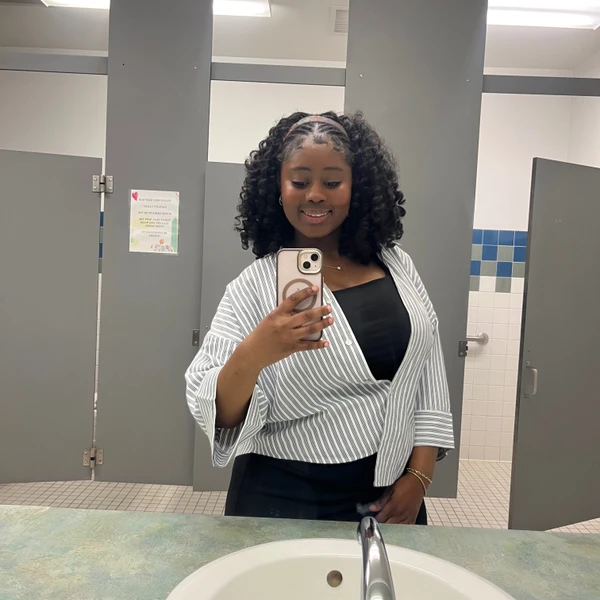
I am a 17 year old girl from South Africa who currently lives in Georgia, USA. I plan on attending Howard University to major in Psychology, but I’m in need of help with my funding!
Education
Centennial High School
High SchoolMiscellaneous
Desired degree level:
Doctoral degree program (PhD, MD, JD, etc.)
Majors of interest:
- Psychology, General
- Clinical, Counseling and Applied Psychology
Career
Dream career field:
Mental Health Care
Dream career goals:
Sports
Cheerleading
Varsity2023 – 20263 years
Arts
Take note
Music2023 – Present
Public services
Volunteering
Beta club — Showing up to team meetings and as well as contributing to any drives we had in support of other organizations or our general neighborhood!2023 – 2026
Valerie Rabb Academic Scholarship
My name is Thandiwe Mpofu and I’m a High school senior at Centennial High in Roswell, Georgia. I was born in South Africa, and moved to the United States in 2022.
After I moved to the United States, I noticed the shift in atmosphere almost immediately. The constant conversation between neighbors and the continuous nagging from aunties across the street no longer followed me. It was quiet. Loud, but quiet. I could hear the cars driving down the roads and music playing from businesses. The sound came from objects, but not the people. Everyone was busy, head down to their phone, earbuds in, looking for the fastest way to get where they were meant to be while avoiding the inconvenience of human interaction. The absence of community did not discourage me—it inspired me. I became determined not only to let my culture shine through me, but to leave a sense of belonging wherever I went.
Through the extracurriculars I have committed myself to, I have worked to create spaces where people feel seen, supported, and valued. As Vice President of my senior class and Vice President of the Black Student Union, I have centered my leadership around inclusivity. In BSU, I helped create spaces where students could express themselves freely and feel a sense of belonging. Through organizations like Beta Club, Tri-M Music Honor Society, Green Plate Club, and Model United Nations, I have engaged in service, advocacy, and global awareness—each experience strengthening my commitment to uplifting those around me. Even in roles such as cheer captain, chorus leadership, and a cappella, I have used teamwork and mentorship to foster confidence and unity within my peers.
I plan to attend Howard University and major in psychology, I want to better understand how communities can heal from disconnection and hardship. One day, I hope to open my own practice—one that provides accessible mental health support and fosters a sense of belonging, especially for those who feel overlooked. This scholarship will help me, not only gain independence, but take a step closer to picking up the paint brush I will use to one day create the community I dream of. I plan not only to live out my dreams, but to live out the dreams of those who could not be here with us today. My father unfortunately passed away in 2021 due to Covid.
Losing my father made me feel like the pillar that held my being up completely collapsed. I became the comfort that I dearly missed. Checking up on others, making space for them, making sure that no one would ever feel as alone as I did during those quiet moments. I wanted to be the strength that I had lost.
And through that, I learned something real:
Belonging isn't something people give you. It's something you grow into.
I still show up loudly, I will continue to show up loudly. But now I understand that being heard means nothing if I silence myself. I am learning to let my confidence be real, not rehearsed. And some days, I still struggle, but I've accepted it.
I want to be someone in which little girls who are just like me, can see a reflection of their future, and not their regression. To be living proof that you can still shine even if your polish isn't fully complete yet. To be a woman that my father would have imagined me to be. One of growth, one of hope. I am not an imposter. I am someone becoming.
Aserina Hill Memorial Scholarship
My name is Thandiwe Mpofu. I am a 17-year old senior at Centennial High School in Roswell, GA.
Through the extracurriculars I have committed myself to, I have worked to create spaces where people feel seen, supported, and valued.
As Vice President of my senior class and Vice President of the Black Student Union, I have centered my leadership around inclusivity. In BSU, I helped create spaces where students could express themselves freely and feel a sense of belonging. Through organizations like Beta Club, Tri-M Music Honor Society, Green Plate Club, and Model United Nations, I have engaged in service, advocacy, and global awareness—each experience strengthening my commitment to uplifting those around me. Even in roles such as cheer captain, chorus leadership, and a cappella, I have used teamwork and mentorship to foster confidence and unity within my peers.
After being elected as my senior class’s vice president, I had one goal in mind: to be inclusive. As someone who has experienced being a wallflower, I understood what it meant to want to be heard, or even seen. Rather than appealing to a select group, I was committed to reaching everyone. One of the most meaningful ways my team and I demonstrated this was through a fundraiser for our senior class.
Financial struggles are often invisible. The guilt of asking a parent for money—when they are already struggling to pay for necessities—can weigh heavily on a student. We wanted to change that. Our goal was to ensure that every student could experience their senior year without financial barriers. Through this initiative, we were able to raise $5,420, with 48 seniors participating. To put that into perspective, with senior dues at $55 per student, nearly 100 students could have their fees covered. This not only eased financial strain, but also allowed more students to fully participate in milestone experiences.
Looking forward, I hope to expand this impact by focusing on community healing. As I plan to attend Howard University and major in psychology, I want to better understand how communities can heal from disconnection and hardship. One day, I hope to open my own practice—one that provides accessible mental health support and fosters a sense of belonging, especially for those who feel overlooked.
For future generations, I believe stronger communities begin with intentional spaces—spaces where young people are encouraged to explore opportunities without limitation, where empathy is taught, and where support is not conditional. Whether through mentorship programs, school-based initiatives, or accessible mental health resources, I am committed to ensuring that the next generation grows up knowing they are seen, heard, and valued.
Because ultimately, a stronger community is not built by individuals alone, it is built when we choose to show up for one another.
Angelia Zeigler Gibbs Book Scholarship
When I moved from South Africa, everything which I once found familiar disappeared. My accent- once a piece of home- became something to point out, question, joke about. I didn't want to be seen as "different" for the wrong reasons, so I exchanged the vowels I once knew for a shield to protect myself. Every day, I practiced an American accent until I sounded like I belonged. Outwardly, I laughed it off. Inside, I wondered why blending in required me to erase the most intricate pieces of myself.
But becoming unrecognizable to yourself isn't belonging. It's performing.
There were days when I came home and felt every achievement transform into doubt. Days where the voices in my head were louder than any classroom. Days where I would laugh with friends and grieve later because I didn't recognize the girl who looked so put together.
But those who really knew me- my dad especially- could always see the cracks beneath the confidence.
Losing my father made me feel like the pillar that held my being up completely collapsed. I became the comfort that I dearly missed. Checking up on others, making space for them, making sure that no one would ever feel as alone as I did during those quiet moments. I wanted to be the strength that I had lost.
And through that, I learned something real:
Belonging isn't something people give you. It's something you grow into.
If I could visit every past version of myself, the girl laughing through calamity, the student terrified of slipping up, the daughter trying so hard to stay strong.
I would tell her, "You're not an imposter. You are someone becoming."
I still show up loudly, I will continue to show up loudly. But now I understand that being heard means nothing if I silence myself. I am learning to let my confidence be real, not rehearsed. And some days, I still struggle, but I've accepted it.
I want to be someone in which little girls who are just like me, can see a reflection of their future, and not their regression. To be living proof that you can still shine even if your polish isn't fully complete yet. To be a woman that my father would have imagined me to be. One of growth, one of hope. I am not an imposter. I am someone becoming.
S.O.P.H.I.E Scholarship
Community, to me, has never been defined by proximity, but by intention. Through the extracurriculars I have committed myself to, I have worked to create spaces where people feel seen, supported, and valued.
As Vice President of my senior class and Vice President of the Black Student Union, I have centered my leadership around inclusivity. In BSU, I helped create spaces where students could express themselves freely and feel a sense of belonging. Through organizations like Beta Club, Tri-M Music Honor Society, Green Plate Club, and Model United Nations, I have engaged in service, advocacy, and global awareness—each experience strengthening my commitment to uplifting those around me. Even in roles such as cheer captain, chorus leadership, and a cappella, I have used teamwork and mentorship to foster confidence and unity within my peers.
After being elected as my senior class’s vice president, I had one goal in mind: to be inclusive. As someone who has experienced being a wallflower, I understood what it meant to want to be heard, or even seen. Rather than appealing to a select group, I was committed to reaching everyone. One of the most meaningful ways my team and I demonstrated this was through a fundraiser for our senior class.
Financial struggles are often invisible. The guilt of asking a parent for money—when they are already struggling to pay for necessities—can weigh heavily on a student. We wanted to change that. Our goal was to ensure that every student could experience their senior year without financial barriers. Through this initiative, we were able to raise $5,420, with 48 seniors participating. To put that into perspective, with senior dues at $55 per student, nearly 100 students could have their fees covered. This not only eased financial strain, but also allowed more students to fully participate in milestone experiences.
After the fundraiser, one of my friends thanked me for taking the initiative. In that moment, I realized the true impact of our work. I wept out of joy, not because of the money we raised, but because of the unity we created. To cultivate joy, to build connection, and to remind people that they are not alone is what drives me.
Looking forward, I hope to expand this impact by focusing on community healing. As I plan to attend Howard University and major in psychology, I want to better understand how communities can heal from disconnection and hardship. One day, I hope to open my own practice—one that provides accessible mental health support and fosters a sense of belonging, especially for those who feel overlooked.
For future generations, I believe stronger communities begin with intentional spaces—spaces where young people are encouraged to explore opportunities without limitation, where empathy is taught, and where support is not conditional. Whether through mentorship programs, school-based initiatives, or accessible mental health resources, I am committed to ensuring that the next generation grows up knowing they are seen, heard, and valued.
Because ultimately, a stronger community is not built by individuals alone, it is built when we choose to show up for one another.
McCusker Family Scholarship
I knew of Ubuntu before I could even spell it. Growing up in South africa, it was not taught as a concept, but rather second nature. Through shared meals, collective responsibility, and the quiet understanding that no one should stand alone. Ubuntu— meaning humanity. ”Umuntu ngumuntu ngabantu,” a person is made a person through other people, is not simply a proverb; it is a promise. It teaches that humanity is sharpened in relationship, that we become clearer and stronger. After I moved to the United States, I noticed the shift in atmosphere almost immediately. The constant conversation between neighbors and the continuous nagging from aunties across the street no longer followed me. It was quiet. Loud, but quiet. I could hear the cars driving down the roads and music playing from businesses. The sound came from objects, but not the people. Everyone was busy, head down to their phone, earbuds in, looking for the fastest way to get where they were meant to be while avoiding the inconvenience of human interaction. The absence of community did not discourage me—it inspired me. I became determined not only to let my culture shine through me, but to leave a sense of belonging wherever I went. It started small, with me joining clubs at school and reaching out to people I didn’t normally talk to, an attempt to create empathy and connection where it was lacking. Over time, those small actions grew into leadership. As Vice President of both my senior council and the Black Student Union, I worked to build inclusive spaces where students felt supported and represented. Through BSU, I helped amplify voices that often felt unheard, creating a sense of belonging for students who, like me, understood what it meant to search for community. Whether I was leading as a cheer captain, guiding my peers as a chorus student director, or representing my school in Model United Nations, my goal remained the same: to build community. Ubuntu has shaped not only how I lead, but how I see the world. It reminds me that leadership is not about standing above others, but standing with them. It is in the small moments, encouraging a teammate, mentoring younger students, or simply starting a conversation, that real impact is made. As I plan to attend Howard University and major in psychology, I hope to center my work on community healing. I want to understand how people process identity, belonging, and trauma, and use that knowledge to uplift those who feel unseen or disconnected. One day, I hope to open my own practice, one that reflects Ubuntu not just in philosophy, but in action: space where healing is collective, where people feel safe to be fully themselves, and where no one has to navigate their struggles alone. Wherever I go, I will carry Ubuntu with me, not just as a memory of where I come from, but as a responsibility to create environments where people feel connected, uplifted, and seen.
Marie Jean Baptiste Memorial Scholarship
I learned the meaning of Ubuntu long before I could even spell it. Growing up in South africa, it was not taught as a concept, but rather second nature. Through shared meals, collective responsibility, and the quiet understanding that no one should stand alone. Ubuntu— meaning humanity. ”Umuntu ngumuntu ngabantu,” a person is made a person through other people, is not simply a proverb; it is a promise. It teaches that humanity is sharpened in relationship, that we become clearer, stronger, and mo
After I moved to the United States, I noticed the shift in atmosphere almost immediately. The constant conversation between neighbors and the continuous nagging from aunties across the street no longer followed me. It was quiet. Loud, but quiet. I could hear the cars driving down the roads and music playing from businesses. The sound came from objects, but not the people. Everyone was busy, head down to their phone, earbuds in, looking for the fastest way to get where they were meant to be while avoiding the inconvenience of human interaction. The absence of community did not discourage me—it inspired me. I became determined not only to let my culture shine through me, but to leave a sense of belonging wherever I went.
It started small, with me joining clubs at school and reaching out to people I didn’t normally talk to, an attempt to create empathy and connection where it was lacking. Over time, those small actions grew into leadership. As Vice President of both my senior council and the Black Student Union, I worked to build inclusive spaces where students felt supported and represented. Through BSU, I helped amplify voices that often felt unheard, creating a sense of belonging for students who, like me, understood what it meant to search for community. Whether I was leading as a cheer captain, guiding my peers as a chorus student director, or representing my school in Model United Nations, my goal remained the same: to build community.
Ubuntu has shaped not only how I lead, but how I see the world. It reminds me that leadership is not about standing above others, but standing with them. It is in the small moments, encouraging a teammate, mentoring younger students, or simply starting a conversation, that real impact is made.
As I plan to attend Howard University and major in psychology, I hope to center my work on community healing. I want to understand how people process identity, belonging, and trauma, and use that knowledge to uplift those who feel unseen or disconnected. One day, I hope to open my own practice, one that reflects Ubuntu not just in philosophy, but in action: space where healing is collective, where people feel safe to be fully themselves, and where no one has to navigate their struggles alone.
Wherever I go, I will carry Ubuntu with me, not just as a memory of where I come from, but as a responsibility to create environments where people feel connected, uplifted, and seen.