user profile avatar

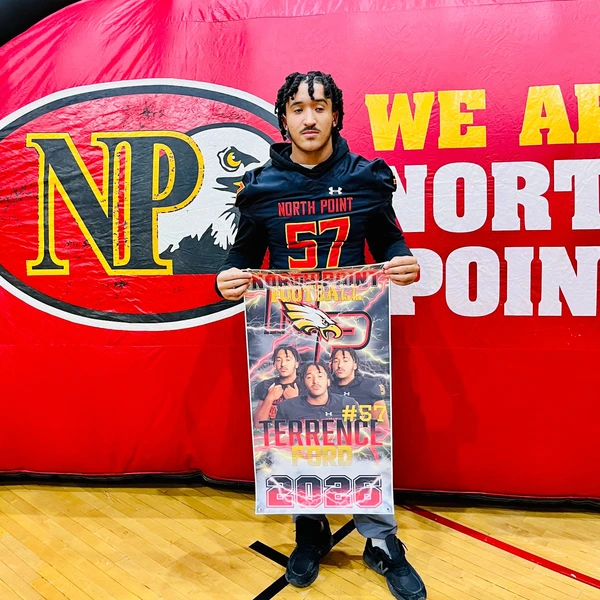
Terrence Ford

1x

Finalist

Bio

I’m a Business/Finance student who believes that success means more than just personal achievement — it means lifting others along the way. As a student-athlete, I’ve learned the value of discipline, teamwork, and pushing through adversity when it would be easier to quit. Outside of sports and school, I dedicate my time to volunteering in my community, because I know firsthand how much a little support can change someone’s trajectory. I also work to help support myself through school, which has taught me responsibility and a deep appreciation for every opportunity I earn. My goal is to use a business education to build something that creates real impact — for my family, my community, and the people who need it most.

Education

North Point High School

High School
2022 - 2026

Miscellaneous

  • Desired degree level:

    Bachelor's degree program

  • Majors of interest:

    • Business Administration, Management and Operations
  • Not planning to go to medical school
  • Career

    • Dream career field:

      Sports

    • Dream career goals:

      Sports

      Football

      Varsity
      2024 – 2024

      Awards

      • state championship
      Grand Oaks Enterprises LLC Scholarship
      I grew up in a household where my mom did everything she could to keep us going. She raised three kids mostly on her own, and a few months ago she lost her job. I watched her come home crying that day and it hit me hard — because she’s always been the one holding everything together. That moment didn’t break me though. It made me lock in even more. I’m a first-generation college student so I’ve had to figure out a lot on my own. Nobody in my family had been through this before, so there was no blueprint. What I did have was a willingness to work. While I was in high school I started my own small businesses on the side — dog walking, snow shoveling, baking and selling food — just to keep money coming in and help out at home. That’s not something I plan to stop doing in college either. I’m getting a job as soon as I get on campus because that’s just how I’ve always operated. On the football field I put in years of work that paid off this past season when my team won a state championship. That run wasn’t easy. There were moments where things looked bad and it would’ve been easy to quit. We didn’t. I carry that same mentality into everything else in my life. Football taught me a lot about who I am, but I’m building toward something bigger than the game. My plan is to get a Business Management degree and eventually own my own business. I want to create something real that puts me in a position to take care of my family. My siblings are 16 and 12 — they’re watching everything I do. My mom has given everything she has for us. Everything I’m working toward is just as much for them as it is for me. Attending Bowie State University would genuinely mean a lot to me. I have a coach I’ve known for years who went there, and I’m also close with one of the current coaches on staff. This man has been in my corner through some of the toughest times I’ve faced. When things got hard he didn’t let me fold. He told me something I still think about — tough times don’t last, tough people do. That stuck with me. It still does. Knowing that people connected to Bowie State have already invested in me the way he has makes me want to be there even more. Beyond the personal connection, HBCUs were built for students like me. They were built at a time when we weren’t welcomed anywhere else, and they became places of real excellence and community. Walking onto a campus like Bowie State means being part of that history — a history of people who refused to be counted out. As someone who’s had to fight for most of what I have, that means something to me. I want to be part of that legacy and add to it. There’s also something about being in an environment where people who look like you are succeeding at a high level every day. That pushes you. For a first-generation student coming from a tough situation at home, that kind of environment can make a real difference. When it comes to making a difference for my family and community — it starts with graduating and building something. I want to get to a place where my mom never has to stress about money again and my younger siblings have someone solid to look up to. That’s the whole point for me. But it doesn’t stop there. I grew up in my neighborhood and I know what it looks like when young people don’t have anyone in their corner. I was fortunate to have coaches who pushed me and believed in me. Not everyone gets that. When I’m in a position to give back I’m coming back to my community to mentor young people and show kids from where I’m from that college is real and that your circumstances don’t have to determine your outcome. My Business Management degree gives me the tools to build something that can create real opportunities — not just for me but for the people around me too. I’m not coming into this with everything figured out or an easy road behind me. I’m coming in with work ethic, a real reason to succeed, and people who believe in me. This scholarship would help make the path forward a little more possible — for me, for my family, and for everyone I plan to bring along the way.
      Arlin Diaz Memorial Scholarship
      I remember the day my mom came home crying. She had just lost her job, and seeing her like that hit different — because my mom is someone who always holds things together. She has three kids depending on her, and in that moment I could see the weight of all of it on her face. I didn’t say much. I just knew that whatever I was working toward, I had to keep going harder. That moment stuck with me. It still does. I’m a first-generation college student, which means I’ve been figuring most of this out on my own. There’s no blueprint in my family for how to do this. What I do have is the work ethic I built myself. While I was in high school I started my own businesses on the side — dog walking, snow shoveling, baking and selling food — just to have something coming in and help where I could. College won’t change that mindset. I’m planning to get a job as soon as I get on campus because that’s just how I’ve always moved. I don’t wait for things to come to me. My mom is still looking for work, and in the meantime our household is running on whatever we can piece together. I have a 16 year old sibling and a 12 year old sibling both still at home, which means the bills don’t stop and the needs don’t slow down. Every dollar matters right now. So when I think about college, I’m not just thinking about myself — I’m thinking about how every expense I can cover on my own is one less thing my family has to worry about. Any money that goes toward my education is a relief not just for me but for all of us. That’s not pressure I run from. It actually motivates me. My major is Business Management, and I’m setting a goal to maintain a 3.0 GPA or higher throughout college. I also want to become a First Team All-American on the football field. Both of those might sound like a lot at once, but I’ve already been balancing school, work, and varsity football for years. This past season my team won a state championship after going through real adversity together. There were moments during that run where things didn’t look good — where we could have folded. We didn’t. That experience taught me that pressure either breaks you or builds you, and I’ve chosen to let it build me every single time. The reason I’m pursuing Business Management isn’t just to get a degree and find a job. I want to own my own business one day. I want to build something from the ground up, create real opportunities, and get to a place where I can take care of my family the way they deserve. My mom has given everything she has for us without complaint. My younger siblings are watching everything I do right now. I don’t take that lightly, and I don’t plan to let them down. This scholarship would genuinely change things for me. Right now money is a factor in almost every decision I make about college — where I can go, what I can afford, how much stress I carry into the classroom. Having financial support means I can put more of my energy into my education and my goals instead of constantly doing the math on whether I can afford to be there. That mental shift matters more than most people realize. When a student isn’t consumed by financial stress, they show up differently. They’re more locked in, more focused, and more capable of reaching their potential. I plan to honor this scholarship by doing exactly what it was created to support. Working hard, staying committed, giving back, and not wasting the chance I’ve been given. I don’t know everything about Arlin Diaz’s story, but I know that a scholarship in someone’s name means people believed their memory deserved to live on through the success of others. I intend to be someone worthy of that. Every day I’m going to show up, put the work in, and make sure this opportunity counts — for my family, for my future, and for the legacy this scholarship represents.
      Richard Neumann Scholarship
      One of the most pressing environmental crises of our time is deforestation. Every single day, millions of trees are cut down around the world to make room for agriculture, urban development, logging, and industry. The consequences are devastating — lost biodiversity, disrupted water cycles, accelerated climate change, and the destruction of communities that depend on forests to survive. The problem feels enormous, almost too big to solve. But I believe that some of the most powerful solutions are also the simplest ones. My idea is this: for every one tree that is cut down, five seeds must be planted in return. This concept came from a place of frustration and hope. Frustration because we have watched forests disappear for decades while the response has been too slow and too small. Hope because I genuinely believe that if we change the rules around how we consume natural resources, we can begin to reverse the damage. A mandatory five-to-one replanting policy — five seeds planted for every tree removed — would create a system of accountability that does not currently exist at the scale we need. Here is how I would build it if I had the money and resources to make it real. First, I would work with governments and regulatory bodies to establish the five-to-one rule as a legal requirement for any industry that involves tree removal. This would apply to logging companies, real estate developers, agricultural operations, and any other entity that clears forested land. No permits would be issued without a verified replanting commitment. Compliance would be tracked through satellite imaging and on-the-ground verification teams. Second, I would create a seed bank and distribution network to make replanting accessible and affordable. One of the barriers to reforestation is that companies and individuals may be willing to replant but lack access to the right seeds for their specific region. My organization would maintain a diverse inventory of native tree seeds sorted by climate zone and ecosystem type, ensuring that the trees being planted are the right ones for the environment they are going into. Planting non-native species can cause its own ecological damage, so this step would be critical. Third, I would establish a community employment program tied directly to the replanting effort. Local residents, particularly in regions most affected by deforestation, would be hired and trained as seed planters and forest monitors. This creates jobs, builds community ownership over the reforestation effort, and ensures that the people who know the land best are the ones taking care of it. Economic incentives and environmental responsibility would work together rather than against each other. Fourth, I would launch a public transparency platform — an app or website — where anyone in the world could track in real time how many trees had been removed, how many seeds had been planted, and where those plantings were located. Transparency creates accountability, and accountability drives behavior change. Companies that comply would be recognized. Those that do not would be visible to the public and face consequences. The five-to-one model is not a perfect solution to deforestation, but it is a meaningful and measurable one. It shifts the default from extraction to restoration. It turns every act of removal into an obligation of renewal. And over time, if applied consistently and broadly, it would result in more trees on this planet than we started with. We cannot afford to keep taking without giving back. This idea is my answer to that problem — practical, enforceable, and rooted in the belief that we can do better.
      Future Green Leaders Scholarship
      When most people think about environmental sustainability, they think of scientists, engineers, or environmental activists. They rarely think of business managers. But I would argue that business leaders may be the most powerful force in determining whether our planet moves toward a more sustainable future or continues down a destructive path. That belief is at the core of why I chose business management as my major and why sustainability will be a defining priority in my career. Businesses are responsible for a significant portion of the world’s carbon emissions, waste production, and resource consumption. Every decision a company makes — what materials to source, how to package products, where to build facilities, how to manage supply chains — carries an environmental consequence. For too long, those consequences have been treated as someone else’s problem. The role of a business manager is to make decisions that drive profitability, but the next generation of business leaders must expand that definition. Profitability and sustainability are not opposites. In fact, the most forward-thinking companies in the world are proving every day that they go hand in hand. Studying business management has shown me that systems thinking is at the heart of good leadership. You cannot manage a business effectively without understanding how every moving part connects to the whole. That same mindset applies directly to environmental sustainability. Our ecosystems, supply chains, communities, and economies are all interconnected. A decision made in a boardroom can ripple out to affect a watershed, a farming community, or an entire coastline. Business managers who understand this are not just better environmental stewards — they are better leaders, period. I see my future career as an opportunity to put these principles into practice from the inside. Rather than advocating for change from the outside, I want to be seated at the table where business decisions are made and use that position to embed sustainability into the foundation of whatever organization I am part of. This could mean redesigning supply chains to reduce waste, pushing for renewable energy partnerships, developing corporate social responsibility programs with real accountability, or creating incentive structures that reward environmentally conscious behavior at every level of a company. I am also deeply aware that sustainability in business is not just about the environment — it is about people. Communities that are most affected by environmental damage are often the least resourced and the least heard. As a future business manager, I want to ensure that the organizations I lead or influence are thinking about environmental justice alongside environmental impact. Green leadership means nothing if it does not also center equity. The Future Green Leaders Scholarship represents exactly the kind of investment I believe the world needs to make right now — not just in environmental science, but in the next generation of professionals across every field who are committed to doing things differently. Business management shapes the decisions of corporations, nonprofits, and institutions that touch millions of lives. If those managers are trained to think sustainably, the impact is enormous. I am committed to being that kind of leader. I want to build a career that proves sustainability is not a sacrifice — it is a strategy. And I want to inspire the next generation of business professionals to see environmental responsibility not as a burden, but as one of the greatest opportunities of our time.
      District 27-A2 Lions Diabetes Awareness Scholarship
      Diabetes is often described as a silent disease, one that creeps into a person’s life and quietly begins to reshape everything they know. For my family, it was anything but silent. Watching my father battle this disease taught me more about strength, sacrifice, and resilience than anything else in my life ever has. His journey with diabetes has fundamentally shaped who I am today and continues to influence the direction I want my future to take. When my father was first diagnosed, the weight of that moment settled over our entire household. Diabetes was no longer something that happened to other people — it was now living in our home, sitting at our dinner table, and following us everywhere we went. My father, a man I had always seen as invincible, suddenly had to confront his own vulnerability. The diagnosis was not just a medical one; it was an emotional reckoning that tested him mentally and physically in ways I had never witnessed before. The changes he had to make were enormous. Almost overnight, everything about his daily routine had to be reimagined. The foods he had eaten his entire life were no longer options. He had to learn an entirely new relationship with nutrition, one that required discipline, education, and an incredible amount of willpower. To support this transformation, he made the decision to hire a personal chef — someone who could help him navigate a diet that would work with his body rather than against it. Watching him make that choice showed me something powerful: that asking for help is not weakness. It is wisdom. What followed was nothing short of remarkable. Through sheer determination and a commitment to his own survival, my father lost over 150 pounds. That number alone is staggering, but what it represents goes far beyond a scale. Every pound represented a choice he made — to wake up and fight, to prioritize his health, to be present for our family. There were hard days, days when the mental toll of the disease felt heavier than the physical one. Depression and anxiety are real companions to chronic illness, and I watched my father wrestle with both. But he never stopped. He kept going, and in doing so, he showed me what perseverance truly looks like. Growing up with this front-row view of diabetes has shaped me in lasting ways. I became deeply aware of how lifestyle, access to resources, and mental health are all intertwined with physical wellness. I grew more empathetic toward people living with chronic illness, understanding that what someone faces medically is never the full story — there is always an emotional and personal journey running alongside it. I also became passionate about health equity, knowing that not everyone has the resources my father was fortunate enough to access. Not every family can hire a personal chef. Not every person has the support system he had. That reality drives me to want to do more. Looking forward, my experience has given me a clear sense of purpose. I want to pursue a career where I can contribute to improving health outcomes for others, whether through medicine, public health, or community advocacy. I want to be part of the conversation around diabetes awareness and prevention, especially in communities where resources are limited. My father’s journey showed me that transformation is possible, but it is far easier with the right support, knowledge, and access. He changed his life because he had to. I want to spend my life helping others do the same — not out of necessity, but out of possibility.
      Mark A. Jefferson Teaching Scholarship
      I did not always know exactly how my life would unfold. But I have always known two things: I want to play in the NFL, and when that chapter is done, I want to coach football. Not just to draw up plays or win games, but to take everything I learned at the highest level and pour it into the next generation of athletes — to be the kind of coach who actually changes lives. The NFL is the goal right now. Everything I do is pointed in that direction. The early mornings, the grind through injuries, the mental battles — all of it is building toward that dream. But even as I chase it, I think about what comes after. Because I have been around enough people to know that the most impactful coaches are not always the ones who read the most books about the game. They are the ones who lived it. Who know what it actually feels like to be in a locker room under pressure, to push through doubt, to compete at a level most people never reach. That experience cannot be faked, and I want to bring every bit of it back to young athletes one day. Growing up, I learned what it means to have someone genuinely invest in you. My electrical construction teacher Keith is 65 years old and one of the wisest people I have ever been around. He never just taught me how to wire a circuit — he taught me how to carry myself. Hold yourself accountable. Admit when you are wrong. Handle your business when it needs to be handled. Those lessons went far beyond the classroom, and that is exactly the kind of educator I want to be. Someone whose impact lasts long after the final whistle. Football also showed me my own weaknesses. As a senior, younger guys looked up to me, and there were moments I should have stepped up and led — and I did not. My confidence was not fully there yet. But going through that taught me what young athletes actually need from a coach. They need someone who sees them as more than just a player. Someone who teaches discipline and accountability not as punishment, but as a standard. Someone who helps them build real confidence — the kind that does not collapse when things get hard. That is what I want to bring to coaching. The knowledge from playing at the highest level combined with a genuine understanding of what it feels like to struggle, to doubt yourself, and to keep going anyway. I want my players to know it is okay to not have everything figured out — as long as they keep showing up and putting in the work. The world needs coaches who care about the whole person. Kids from tough backgrounds, kids who have never had a real mentor, kids who are one good coach away from changing the direction of their entire life — they all end up on football fields. I want to be the person standing there who takes that responsibility seriously. Playing in the NFL is the dream I am chasing right now. Coaching is the legacy I plan to leave behind. And I believe the combination of both will make me exactly the kind of educator these kids deserve.
      Hearts on Sleeves, Minds in College Scholarship
      Being a senior on a football team carries weight. Everybody knows it. The younger guys look up to you, the coaches expect more from you, and when things get rocky, you are supposed to be one of the people who steps up and handles it. I knew all of that going into my senior season. I just did not actually do it when the time came. There were moments throughout the season where somebody needed to say something. The energy would be off, guys would be disconnected, and coaches could only do so much from the sideline. Those were the moments that called for a leader — somebody in the locker room, somebody in the huddle, somebody who the team actually related to, to step up and change the atmosphere. I was that person for a lot of guys. They looked up to me. And I stayed quiet anyway. For a while I told myself I was leading through my actions. Showing up, working hard, doing my job on the field. And yeah, that matters. But if I am being real with myself, the reason I did not speak up had nothing to do with my leadership style. My confidence just was not there. I did not feel sure enough in myself to open my mouth, so I kept waiting for the right moment that never really came. And while I was waiting, the team was missing something I could have given them. What helped me start to figure things out was watching other people try to lead. Some of them did it right — calm, genuine, knew how to approach different people differently, said the right thing without making it a whole production. Others did it completely wrong — all talk, made everything about themselves, pushed people away more than they brought them together. I paid attention to both. Seeing what bad leadership looked like up close actually taught me a lot about what I did not want to be. And seeing good leadership made me realize it was not as complicated as I had built it up in my head. Leadership is not about having the perfect speech ready. It is not about being the loudest or the most vocal guy in the room. It is about reading the moment, knowing how to approach people based on where they are, and actually caring enough to try — even when you are not sure you will say it exactly right. That last part was my problem. I was so worried about getting it wrong that I did nothing at all. And doing nothing has a cost too. I just did not see it until after the fact. I see it now though. And that matters more to me than anything else that came out of this season. I came in as a senior who did not fully understand what it meant to lead. I am leaving with a much clearer picture of who I want to be and how I want to show up for the people around me. Not just on a football field, but everywhere. Going into college and whatever comes after that, I want to be someone who actually uses his voice. Not to be in charge or to have people notice me, but because I know now what it feels like when someone who could have said something just does not. I do not want to be that guy anymore. I am still working on my confidence, still figuring it out, but the difference is I am not waiting until everything feels perfect before I open my mouth. That wait almost cost me my whole senior season. I am not making that mistake again.
      David Foster Memorial Scholarship
      Not every teacher changes your life. Keith did. When I walked into electrical construction class, I expected to learn how to wire circuits and read blueprints. What I did not expect was to walk out a better person. Keith is 65 years old, and every single year he has lived shows up in the way he teaches — not just the technical stuff, but the real stuff. The kind of lessons that follow you long after the bell rings. From day one, Keith made it clear that his class was about more than electricity. It was about character. He would look at us and say things like “hold yourself accountable,” “admit when you’re wrong,” and “take care of your business right then and there — not later, not tomorrow, right now.” At first I heard those words like I heard most things in school. They went in one ear and almost out the other. But over time, I started to actually feel what he meant. There were moments in class where I made mistakes — bad connections, wrong measurements, things I wanted to brush off or blame on something else. Keith never let me do that. But the way he corrected me never made me feel small. He was patient. He would walk me through it, explain why it mattered, and then tell me to try again. That patience meant everything. It taught me that being corrected is not the same as being put down, and that the people who push you the hardest are often the ones who believe in you the most. What Keith gave me was not just knowledge about electrical work. He gave me a standard to hold myself to. Before his class, I was the type to put things off, make excuses, or avoid taking responsibility when something went wrong. Now I catch myself. When I mess up, I own it. When something needs to get done, I do it. That shift did not happen overnight, but Keith’s consistency made it happen. He is 65 years old and still showing up every day, still pouring into students like me, still carrying wisdom that most people spend a lifetime trying to find. I do not take that for granted. Not everyone gets a Keith in their corner. I am a better student because of him. More than that, I am becoming a better man because of him — and that is something I will carry with me long after I leave high school.
      Big Picture Scholarship
      Some movies just hit different. The Pursuit of Happyness is one of those films that I did not just watch — I felt it. Seeing Chris Gardner go through losing his home, his relationship, and almost everything he had, while still refusing to quit, did something to me. It was not just inspiring. It felt familiar. Chris is not some superhero. He is a regular person dealing with impossible circumstances, and yet every single day he wakes up and keeps going. What got to me most were not the big moments — it was the small ones. Showing up to an unpaid internship in clothes that had seen better days. Sleeping in a bathroom with his son and still finding a way to smile the next morning. That is the kind of strength that does not make the highlight reel, but it is the kind that actually matters. I have had my own version of those moments. Growing up, my family went through some real challenges. The kind of stuff that is hard to talk about but impossible to ignore when you are living it. I had to grow up fast and figure out how to keep going even when things at home were not okay. Life does not care about your problems — it keeps moving, and you either move with it or get left behind. That hit even closer when I broke my nose right before football season. If you play sports, you know how devastating that kind of timing is. Football is not just a game to me. It is where I feel like myself. Being forced to watch from the sidelines while everyone else was out there practicing was genuinely painful. But I thought about Chris Gardner sitting in that subway bathroom, and I decided I was not going to let one setback become my whole story. I came back, I competed, and I did not let it beat me. There is a line in the movie that I keep coming back to: “You got a dream, you gotta protect it.” That line means something different to me now than it did the first time I heard it. It is not just about chasing success. It is about not letting hard times convince you that you are not capable of more. The Pursuit of Happyness showed me that struggle is not a sign you are failing. Sometimes it just means you are on your way to something greater beyond comprehension.
      Chris Ford Scholarship
      I am a first-generation college student going to school for business and finance. That alone means a lot to me because nobody in my family has done this before. I am not just doing this for myself — I am doing it for the people who raised me and the community I grew up in. This is bigger than me and I never lose sight of that. Money was always a stressful topic in my household growing up. I watched my parents make financial mistakes that affected our whole family, and instead of letting that discourage me, I paid close attention. I started managing my own money early — budgeting, saving, and being intentional with every dollar I had. I figured out on my own what nobody taught me at home, and that is something I am genuinely proud of. Most people my age are still learning these basics, but I had real life experiences that pushed me to figure it out sooner. Going into business and finance is not just about landing a good job or making good money. I want to actually help people who are in the same position my family was in. A lot of people in communities like mine are not struggling because they do not work hard enough — they just never had anyone sit down and explain how money actually works. Nobody taught them about credit, investing, or how to plan for the future. I want to be that person for others someday. Whether that is through financial advising, owning a business, or just being the go-to person in my community for honest financial guidance, I want to make a real difference in people’s lives in a practical way. I also just try to be a good person every single day. I look out for the people around me, I show up when it counts, and I genuinely care about others doing well. That is just who I am and how I was raised despite the challenges my family faced. Being the first in my family to pursue a college degree is already something I take seriously, but I do not want it to stop with me. I want to open doors for the people coming after me — younger cousins, kids in my neighborhood — so they can see that this path is possible for them too. The Chris Ford Scholarship would be supporting someone who is serious, motivated, and ready to use their education to do something genuinely good in the world.
      Scorenavigator Financial Literacy Scholarship
      Growing up, I had a front row seat to the consequences of financial mistakes. Watching my parents struggle taught me lessons that no classroom ever could. Instead of repeating those patterns, I made a decision early on to pay attention, learn from what I observed, and build different habits for myself. By the time I was a teenager, I was already budgeting my own money, saving consistently, and thinking carefully about every financial decision I made. What my parents went through did not break me — it built me into someone who takes money seriously. The financial discipline I developed on my own became something I am genuinely proud of. I understand how to stretch a dollar, how to prioritize needs over wants, and how to set money aside even when the amount feels small. These are skills that many people my age are still figuring out, yet they came naturally to me because I had real life examples showing me exactly what not to do. I turned their mistakes into my motivation and my foundation. Every good financial habit I have today exists because I chose to learn from their experiences rather than ignore them. Now I want to take that foundation and build something much greater with it. Pursuing a degree in business and finance is the natural next step for someone who has always been drawn to understanding how money works. I want to go beyond personal budgeting and savings. I want to understand investing, financial markets, corporate finance, and wealth building on a larger scale. I want the formal education to match the instincts and discipline I have already developed on my own through years of careful observation and personal commitment. My goal is to use my degree to create lasting financial stability for myself and eventually give back to my family. I want to be the person who helps turn things around for the people who raised me. I carry no resentment toward my parents for their mistakes. Instead, I carry gratitude, because those mistakes gave me clarity, focus, and a level of financial awareness that will serve me for the rest of my life and carry into my career. The Scorenavigator Financial Literacy Scholarship would support a student who does not just talk about financial responsibility — but lives it every single day. I am ready to take my knowledge, my discipline, and my drive into a business and finance career that creates a real and lasting difference.
      Marlene Manning Scholarship
      Growing up, college was never a given in my family — it was a dream that felt just out of reach. As the first in my family to pursue a degree, I carry the weight of that dream with every step I take toward my future. It is not just about me. It is about showing my family that the sacrifices they made were worth it, and proving to myself that the path forward is possible no matter where you start. I have chosen to pursue a degree in business and finance because I believe that financial knowledge is one of the most powerful tools a person can have. So much of the struggle I watched my family face came down to limited access to financial resources and opportunity. I want to be the person in my family who understands how money works, how businesses are built, and how wealth can be created and sustained across generations. I want to break a cycle and start a new one. Being a first-generation college student comes with challenges that are hard to put into words. There is no roadmap handed to me, no family member who has navigated the college application process or knows what to expect inside a college classroom. Every step has required me to figure things out on my own, ask questions others might take for granted, and push through moments of self-doubt. But that same experience has made me resilient, resourceful, and deeply motivated in a way I am truly proud of. I have learned that not having a blueprint does not mean you cannot build something great — it just means you have to work harder and believe in yourself more. The Marlene Manning Scholarship would make a real and immediate difference in my ability to pursue this path. The financial burden of college is one of the greatest obstacles standing between me and my goals. With this support, I would be able to focus fully on my studies, explore internships and opportunities outside the classroom, and invest my energy entirely into becoming the business professional I know I am capable of being. My goal is not simply to graduate. It is to return to my community and my family with knowledge, stability, and the ability to open doors for others the way I wish doors had been opened for me. I want my degree to mean something beyond a diploma — I want it to represent the moment everything changed for my family. This scholarship would help make that possible, and I am grateful for the opportunity to be considered.
      Ken Bolick Memorial Scholarship
      Growing up, I always found ways to make money on my own. I walked dogs, shoveled snow for neighbors, and even baked and sold cookies. These weren’t big jobs, but they taught me a lot about responsibility and what it actually means to work for something. Nobody told me to do any of this — I just knew I wanted to be doing something productive rather than sitting around waiting for things to happen. I learned early that if you want something, you have to go get it yourself. The snow shoveling was probably the most rewarding because it wasn’t just about making money. I was actually helping people in my neighborhood who needed it. Elderly neighbors, busy families — just showing up and taking care of something for them felt good. It made me realize that working hard isn’t always about what you get out of it. Sometimes the reward is just knowing you made somebody’s day a little easier. That stuck with me more than any dollar I ever made. The cookie selling taught me something different — how to think like a businessman. I had to figure out what people wanted, how to price things, and how to actually get people to buy. It was small scale, but it was real. I was learning how to run something, and that felt good. Around the same time, I started taking my health seriously. I began eating cleaner, going to the gym regularly, and just being more intentional about how I was living. It wasn’t easy at first. There were plenty of days I wanted to skip the gym or just eat whatever was convenient. But I pushed through it and eventually it became part of who I am. My mindset shifted. I started approaching everything in my life with more discipline and more focus. What surprised me most was how it affected my dad. He watched me change over time — my body, my discipline, my whole attitude — and it motivated him to start making changes in his own life too. That hit different for me. I had always looked up to my dad, so knowing that something I did inspired him meant more than any compliment I could have received. It showed me that how you carry yourself matters, even when you think nobody is watching. Going forward, I want to keep building on everything I have learned so far. I want to pursue my education, grow in my career, and become someone who consistently shows up for himself and for others. The habits I have built — working hard, staying disciplined, and leading by example — are things I plan to carry with me for the rest of my life. I am not where I want to be yet, but I know exactly the kind of person I am working to become.
      Sammy Meckley Memorial Scholarship
      Football has never just been a game to me. From the moment I first put on a helmet, I understood that this sport demanded something deeper — discipline, sacrifice, and an unwavering commitment to something bigger than yourself. It is that passion that has kept me on the field through every challenge, every loss, and every moment of doubt. Being part of a football team is one of the most humbling and rewarding experiences a young person can have, and it is something I am genuinely grateful for every single day. The extracurricular commitment that comes with football is unlike anything else. Early morning workouts, film sessions, practice after school, and games on Friday nights — all while keeping up with academics. It teaches you time management in a way no classroom can. You learn quickly that excuses don’t win games, and that the work you put in when nobody is watching is what shows up when everyone is. That lesson has shaped my character more than anything else in my life. But what makes me most passionate about football is what it does for the people around us. When our team lost our best players and the state championship in the same season, the entire community felt it. People stopped believing in us. The doubt was loud. But we refused to fold. We came back the next season with something to prove, and after fighting through injuries, losses, and adversity, we went on a nine-game winning streak and won the state championship. That victory wasn’t just ours — it belonged to our school, our families, and our entire community. People who had written us off were now celebrating with us. That is the power of extracurricular activities done right. Football brings people together. On Friday nights, the whole community shows up — parents, students, teachers, local businesses. It gives people something to rally around and be proud of. For younger kids watching from the stands, seeing a team overcome adversity and win teaches them that hard work and belief are real. It plants a seed. It shows them what is possible. That is why I am passionate about what I do. Football built me into someone who leads, perseveres, and gives back. And the community impact that comes from a group of young men pouring everything they have into a shared goal — that is something truly special that extends far beyond the scoreboard.
      Janisse Berry Memorial Scholarship
      Growing up, football was more than just a sport to me — it was a brotherhood, a proving ground, and ultimately, the experience that shaped who I am today. Losing our best players and the state championship in the same season left our entire team shattered. These weren’t just good players; they were the backbone of our offense, the ones who made big plays when it mattered most. Their absence left a hole that nobody knew how to fill. Everyone doubted us — the county, the opposing teams, even some of our own supporters. People wrote us off before we even had a chance to prove ourselves. But our coaches refused to give up, and that belief trickled down to every single one of us. When the new season started, we won three out of four scrimmage games, which gave us some confidence. But we knew we weren’t ready yet. Then came our first regular season game, and before it even started, our starting quarterback was injured. We lost by one point. That loss stung, but instead of letting it break us, we used it as fuel. We blocked out the noise and stayed locked in on our goal. The turning point came after our second loss. We showed up to practice feeling defeated and unprepared. That’s when our coach did something none of us expected — he handed each of us a small cup of mouthwash. “Spit out the negativity,” he said. “From now on, no more BS. Let’s prove all the doubters wrong.” That moment shifted everything. It sounds simple, but it completely changed our mindset. From that day forward, we approached every practice with more focus, more intensity, and more belief in each other. We stopped making excuses and started making plays. After that, we lost only one more game and went on a nine-game winning streak heading into the playoffs. In the end, we won the state championship — the very thing everyone said we couldn’t do. That experience taught me the most important lesson of my life: adversity is not the end, it is the beginning. The doubt, the injuries, the losses — none of it stopped us because we refused to let it. That same mentality is what drives my pursuit of higher education. College will not be easy, but I have already proven to myself that I can push through when things get hard, stay focused when people count me out, and keep going until I reach my goal. The future I hope to create is built on that same foundation — grit, teamwork, and an unshakeable belief that I belong.
      Maria's Legacy: Alicia's Scholarship
      As a first-generation college student, I’m not just changing my path — I’m building a foundation for every generation that follows. I never truly understood what relentless dedication meant until I watched everything fall apart, and then watched us build it back. That journey began on the football field. There they go — off to college. Some of the best players on our varsity team, the ones who constantly made plays, gone in one offseason. It might not seem like much, but it was everything. After losing several key linemen and the state championship in the same season, we were left in shock. Everyone doubted we’d even make the playoffs. The county had given up on us, but our coaches and returning players refused to. Facing doubt from our own supporters and gaping holes in key positions, we felt the weight of it all. But we held onto one truth: winning a state championship takes relentless dedication, teamwork, and mental toughness. Success is built on preparation and perseverance. Summer flew by and scrimmages began — our chance to assess where we stood. We won three of four games, which felt promising, but we knew we had work to do before the regular season. With fourteen games before the playoffs, focus was everything. Then came our first game, and with it, a problem: injuries. Our starting QB went down the week before, and our confidence took a hit. We lost by one point. But instead of crumbling, we used that loss as fuel. It pushed us to work harder, block out the noise, and lock in on our goal. From that point on, we caught fire. The real turning point came mid-season after our second loss. We showed up to practice flat and unprepared. Our coach had seen enough. He handed each of us a small cup of mouthwash. “After today, let’s get all the negativity out. From now on, we work under MMC. No more BS. Let’s prove the doubters wrong.” That moment changed everything. We stopped going through the motions. We started competing — every rep, every practice, every game. Despite losing most of our starting linemen and even the backups, we didn’t fold. We adjusted, kept pushing, and kept winning. After that second loss, we won nine straight and entered the playoffs on a roll. It wasn’t just about football anymore — it was about staying true to each other, grinding through adversity, and refusing to let outside noise define us. In the end, all the hard work paid off. We won the state championship. Looking back, I see how far we came — from a team everyone counted out to champions. We never let our setbacks define us. We pushed forward with grit, heart, and an unshakeable belief in each other. That same belief is what drives me toward higher education. I’ve watched people in my community get overlooked, underfunded, and underrepresented — and I want to be the person who changes that. A college degree means having the tools to create real opportunities, advocate for those without a voice, and build something that outlasts me. The grit that carried us to a state championship is the same grit I’ll bring to college — and it won’t just change my life. It will change the path of every generation in my family that comes after me.
      Mark Caldwell Memorial STEM/STEAM Scholarship
      State Championship There they go off to college. Who am I talking about, you might ask? Some of the best players on the varsity team who constantly made plays. It might not seem like much, but it was. After losing several linemen and the state championship in the same season, we were left in shock. Everyone doubted we would even make it to the playoffs. The county didn't believe in us, but our coaches and the returning players refused to give up. Facing doubt from our supporters and losing key positions, we felt awful. But we knew one thing: winning a state championship takes relentless dedication, teamwork, and mental toughness. Success is built on preparation and perseverance. Summer flew by, and the football scrimmages began. This was our chance to assess our team and identify areas for improvement. We won three out of four games, which felt great, but we knew we still had work to do before the regular season. With fourteen games before the playoffs, we had to stay focused. Our first game arrived, but there was a big problem: injuries. Our starting QB was hurt the week before the game, and our confidence took a hit. We lost by one point, but instead of getting discouraged, we used it as fuel. That loss pushed us to work harder, block out the negativity, and stay focused on our goal of winning a state championship. From that point on, we went on a winning streak, and our momentum grew. Our first game was tough, with injured teammates and a challenging opponent. Losing made us question ourselves, but it also lit a fire in us. Everyone had written us off before the season started, but our coaches and teammates believed in each other. That belief kept us going. We hadn't taken practice seriously before, but after that loss, we knew things had to change. We had to prove everyone wrong, and that's exactly what we did. After that loss, we dropped only one more game and went on to win the next nine, heading into the playoffs with a nine-game winning streak. There was a turning point in the middle of the season. After our second loss, we showed up to practice feeling unprepared. Our coach had an idea: he handed us small cups of mouthwash. "After today, let's get all the negativity out of our bodies. From now on, we'll work under our brand of MMC. No more BS. Let's prove all the doubters wrong," he said. That moment was a wake-up call. We needed to approach every practice with a new mindset. From then on, our team worked harder, more focused, and refused to let negativity derail us. Despite losing most of our starting linemen, including the backups, we didn't give up. People didn't think we'd make it far, but we proved them wrong. We adjusted, kept pushing, and kept winning. It wasn't just about the games; it was about staying true to our team, working together, and pushing through adversity. In the end, all the hard work paid off we won the state championship. Looking back, I see how far we've come. We started the season doubted by everyone, with injuries and key losses. But we never let those setbacks define us. We chose to push forward with grit, heart, and the belief that we could overcome anything. Winning that championship made all the struggles and sacrifices worthwhile. It wasn't just a victory for us; it was a victory for our perseverance and unwavering belief in each other.
      K-POP Fan No-Essay Scholarship
      Terrence Ford Student Profile | Bold.org