user profile avatar

Teresa Nuckolls

1x

Finalist

Bio

I have an identical twin sister. Normally when I say that people respond with, "Wow I'm so jealous I wish I had a twin!" or "Who's older?" or, most recently, "Are you going to college together?" These types of questions used to annoy me because, to me, I wasn't anything special. I'd never lived a life as anything but a twin so how could I possibly detail all of the ways it has impacted my life? How could I tell them what exactly about my day to day is different than theirs? With the impending prospect of college, these questions have started to become easier to answer. My sister and I likely won’t be going to college together (though I would love that, she seems a bit opposed). However, our decisions greatly impact each other. Namely when it comes to finances. We’re not poor by any means, we’ve always had food on the table, if our water heater is broken we can afford to fix it, but two college educations at the same time is an insane financial burden. My peers do not have to factor this into their college decisions. Even though I have gotten into my dream school, I won’t know if we can afford it until my sister makes her choice. My friends are committing to schools and letting all of this stress go, but even though I’ve received a decision I am forbidden from being excited about it! Because the number we were given from that university is not something that my family can double. I know it’s cliche, but literally anything helps.

Education

University High School

High School
2022 - 2026

Miscellaneous

  • Desired degree level:

    Doctoral degree program (PhD, MD, JD, etc.)

  • Majors of interest:

    • Biological and Biomedical Sciences, Other
    • Biochemistry, Biophysics and Molecular Biology
    • Sports, Kinesiology, and Physical Education/Fitness
  • Planning to go to medical school
  • Career

    • Dream career field:

      Medicine

    • Dream career goals:

      Become a surgeon!

    • Spotlight Operator

      Playhouse On The Square
      2024 – Present2 years
    • Performer

      Playhouse On The Square
      2022 – 20253 years

    Sports

    Track & Field

    Varsity
    2020 – Present6 years

    Cross-Country Running

    Varsity
    2019 – Present7 years

    Awards

    • 9th at State 2025
    • Most Improved Runner 2024

    Research

    • Human Biology

      University of Memphis — Head Researcher
      2025 – Present
    • Biochemistry, Biophysics and Molecular Biology

      University of Memphis — Lab Technician
      2025 – Present

    Arts

    • Playhouse On The Square

      Theatre
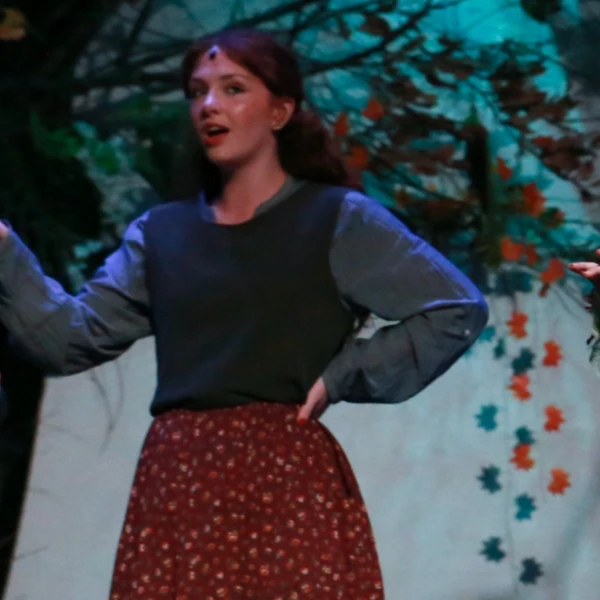
      The Wizard of Oz, Seussical, Catch Me If You Can, Parade, Jesus Christ Superstar, Jagged Little Pill, Sweeney Todd
      2022 – Present
    • Memphis Youth Symphony Program

      Music
      2023 – Present

    Public services

    • Volunteering

      New Spark Performing Arts — Music Director
      2023 – 2025
    • Volunteering

      Orpheum Memphis STAR Council — Member
      2022 – Present
    • Volunteering

      Methodist LeBonheur Healthcare VolunTEEN — Volunteer/Shadow
      2025 – 2025
    • Advocacy

      University High School Senior Council — Secretary
      2025 – Present
    • Volunteering

      St. Jude Children's Research Hospital — Fundraiser/Runner
      2019 – Present

    Future Interests

    Advocacy

    Volunteering

    Philanthropy

    Dr. John C. Cate IV STEM Scholarship
    Because I am a senior in high school, I was required to complete a capstone research project. At the time, I had no clear idea what I wanted to study, and I spent much of the summer feeling stuck. I knew I was interested in science, but I had never experienced what real research looked like outside of a classroom. Eventually, I thought of my friend’s neighbor (someone I knew through running) who worked in a biology lab at the University of Memphis. I reached out and asked if he would be willing to let me work on a project with him. Honestly, I did not care what the project was; I just wanted the chance to learn. He introduced me to a project focused on the molecular determination of nestling (baby bird) sex, and that opportunity completely changed how I viewed STEM. In the lab, I learned to use PCR and gel electrophoresis to analyze DNA samples, eventually sexing more than 400 nestling specimens. The process required patience, precision, resilience, and a lot of pipetting. Procedures did not always work the first time, and I had to learn how to troubleshoot mistakes rather than get discouraged by them. For the first time, science felt active and investigative instead of completely theoretical. As I gained experience, I began to understand how individual data points contribute to larger scientific questions. My work now aims to transform genetic data into meaningful evolutionary applications, helping researchers better understand population dynamics and development within species. Seeing how careful laboratory work can lead to broader ecological insight showed me the real impact of scientific research. This experience solidified my interest in STEM by showing me that discovery often begins with curiosity and the willingness to try something unfamiliar. After graduating, I hope to pursue a career in medicine where I can apply scientific thinking to real-world problems and serve my community through evidence-based, compassionate care. I want to continue asking questions, seeking understanding, and using science as a tool to improve lives.
    Playmakers Nashville x Athletes Unlimited Scholarship
    Running has always been more than a sport for me, it’s where I push myself, clear my head, and see what I’m capable of. But during my junior year of cross country, I learned the hard way that running is as much mental as it is physical. I DNF’d (Did Not Finish) three out of nine races, and each one felt like a punch to the gut. It started with the first race of the season. I had run a 5k at the end of summer that felt effortless, and I was excited to carry that momentum into the season. But as soon as the gun went off, I felt off. My first mile was slower than it had been just weeks before, and my mind immediately spiraled. “Why am I running so slow? I should be in better shape. Maybe I’m not good enough.” By the second mile, I was exhausted physically, and even more mentally. Every step felt impossible, and every thought convinced me that I might as well quit. I stepped off the course in tears, feeling like I had failed not just myself, but my team. The next two races played out the same way. My body could have kept going, but my mind refused. I realized that my own thoughts were the biggest obstacle, and that my DNF’ing wasn’t about a lack of effort or fitness—it was about fear, doubt, and anxiety overpowering me at exactly the wrong moment. It was humbling, and it forced me to confront what resilience really meant. With the guidance of my coach, I set a simple goal: finish. I left my watch behind, removed the pressure of pacing, and focused on effort instead of numbers. The next race wasn’t easy, the second mile still sucked, but this time I didn’t step off. Crossing the finish line, my time wasn’t a personal record, but the pride and relief I felt far outweighed any number. From then on, I stopped DNF’ing. I learned that resilience isn’t about avoiding struggle but rather is about choosing to move forward even when your mind and body are screaming at you to quit. These experiences shaped not only how I approach running, but also my academic curiosity and my interest in sports medicine. My AP Research project explores how high school female distance runners can tailor their training to their menstrual cycles. I studied how hormonal fluctuations affect training performance, recovery, and injury risk, and how small adjustments in intensity and recovery can optimize performance. Conducting interviews with adolescent female runners and analyzing their experiences reinforced my fascination with how science can guide safer, more effective athletic training. Both my personal experiences and my research have convinced me that I want to pursue a career in sports medicine. I hope to help athletes navigate both the physical and mental challenges of competition, optimize performance through evidence-based strategies, and design training programs that account for the unique needs of each athlete. My goal is to make sports a space where athletes are supported, empowered, and encouraged to reach their potential, even when the journey is hard. By combining the lessons I learned from my DNFs with the insights from my research, I hope to help shape the future of running where athletes can train smarter, perform stronger, and recover safely.