user profile avatar

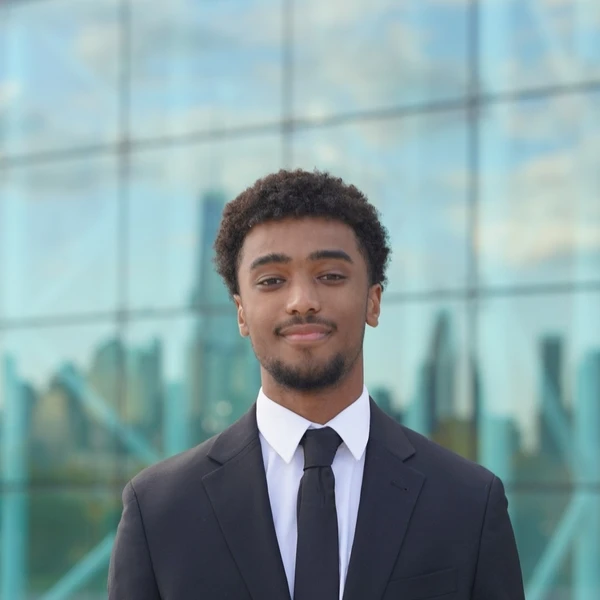
Terence Richards

1x

Finalist

1x

Winner

Bio

Terence Iyasu Richards is a Chemical Engineering student at Stevens Institute of Technology, finishing his freshman year with a 4.0 GPA. He spent his first year conducting research in Professor Pin-Kuang Lai's lab, working on molecular dynamics simulations and antibody-drug conjugate modeling for cancer treatment. Outside of academics, Terence competes on the varsity track and field team and plays soccer in his free time — two things that have taught him a lot about consistency and showing up even when it's hard. He's motivated by work that has a real purpose behind it, and heading into sophomore year, that hasn't changed. His goal is to use chemical engineering to build solutions that are effective, accessible, and actually make a difference for the people who need them most.

Education

Stevens Institute of Technology

Bachelor's degree program
2025 - 2029
  • Majors:
    • Chemical Engineering

Miscellaneous

  • Desired degree level:

    Master's degree program

  • Graduate schools of interest:

  • Transfer schools of interest:

  • Majors of interest:

  • Not planning to go to medical school
  • Career

    • Dream career field:

      • Chemicals
    • Dream career goals:

    • Athletic Trainer Assistant

      Stevens Institute of Technology
      2025 – Present1 year
    • Cashier/Self-Checkout

      Walmart
      2023 – 20241 year

    Sports

    Track & Field

    Varsity
    2023 – Present3 years

    Awards

    • Varsity Letter

    Research

    • Computational Science

      Stevens Institute of Technology — Undergraduate researcher
      2025 – 2026

    Arts

    • Roxbury High School Honors Wind Symphony

      Music
      2022 – 2025

    Public services

    • Volunteering

      Emmanual Worship Center — Teacher/Helper
      2021 – 2024
    Sgt. Albert Dono Ware Memorial Scholarship
    Service was never explained to me as a concept growing up — it was just modeled. My mother left Ethiopia, built a life in America from scratch, and still found time to volunteer at our church, feed people in need, and show up for her community without ever being asked. I watched that and understood, even as a kid, that the measure of a person isn't what they accumulate — it's what they give back. That foundation has shaped every decision I've made since. Sgt. Albert Dono Ware's story resonates with me deeply because he embodied that same principle at the highest possible level. He came to this country, made it his own, and then gave his life in service to it. That kind of sacrifice — choosing something larger than yourself, repeatedly and without guarantee — is not lost on me. It's the standard that serious service sets, and it's one I think about when my own commitment to others is tested. My version of service has looked different, but it has been consistent. In high school, I distributed food to homeless community members through the Interact Club, participated in neighborhood clean-ups, and taught Sunday school at my church every week — writing lesson plans for kids and showing up faithfully, week after week. At Stevens Institute of Technology, where I'm now a freshman Chemical Engineering student finishing my first year with a 4.0 GPA, I work through the Federal Work-Study program assisting athletic trainers in Sports Medicine, supporting fellow student-athletes in their recovery. Service has never felt optional to me. It feels like an obligation that comes with being given opportunity. That sense of obligation is also what drives my academic and career goals. I conduct undergraduate research in Professor Pin-Kuang Lai's lab, working on antibody-drug conjugate modeling for cancer treatment. Long term, I want to work in pharmaceutical engineering focused on making effective healthcare accessible to underserved communities — including the African diaspora communities that are disproportionately underserved by the American healthcare system. That is where I see my technical training and my commitment to service converging. The challenges facing the African diaspora in the United States are interconnected and deep-rooted. Healthcare inequity, educational access, economic mobility, and representation in professional and academic spaces are not separate problems — they feed each other. A family without access to quality healthcare produces a child who misses school. A child who misses school faces narrower opportunities. Narrower opportunities produce communities with less political and economic power to advocate for themselves. Breaking that cycle requires intervention at multiple points simultaneously. The policy reforms I see as most critical begin with healthcare. Expanding community health infrastructure in predominantly Black and immigrant neighborhoods — including funding for federally qualified health centers, mental health services, and preventive care programs — would address one of the most immediate sources of inequity. Alongside that, educational investment is essential: equitable school funding formulas, expanded access to AP and dual enrollment programs in under-resourced districts, and scholarship pipelines specifically designed to move first-generation students into STEM fields where they remain severely underrepresented. Driving these changes requires the involvement of stakeholders at every level. Local community organizations like the United African Organization, which are already embedded in the communities they serve, need to be centered — not consulted as an afterthought, but treated as primary partners in designing and implementing reform. Municipal and state governments hold significant power over school funding and healthcare policy, and elected officials need consistent, organized constituent pressure to prioritize these issues. Universities and research institutions have a responsibility to actively recruit, fund, and retain students from underrepresented backgrounds — not just for the sake of diversity statistics, but because the research produced by diverse teams is demonstrably better. And the private sector, particularly in healthcare and technology, must be held accountable through both policy and public pressure to close the gaps their industries have historically widened. Bravery, in my understanding, doesn't always look like a battlefield. Sometimes it looks like a woman crossing an ocean alone to give her child a better life. Sometimes it looks like a student walking into a room where nobody looks like him and deciding to stay anyway. Sometimes it looks like choosing a career path oriented around community impact instead of maximum earning potential. Sgt. Ware's bravery was extraordinary, but the values underneath it — service, sacrifice, commitment to something larger than yourself — are ones that each of us can practice in the lives we actually have. I intend to keep practicing them. In the lab, in my community, and in whatever platforms my career eventually gives me access to. That is the legacy I want to build — one that honors the people who came before me by making things a little better for the people who come after.
    Stephan L. Wolley Memorial Scholarship
    My mother used to say that everything we have comes from God, and everything we do should reflect that. Growing up in a Christian household, faith wasn't something we practiced once a week — it was the foundation of how we lived. How we treated people, how we handled hardship, how we showed up for each other. My mom immigrated from Ethiopia to give our family a better life, and she did it with that faith as her anchor. Watching her do that shaped the way I approach everything — school, athletics, and the goals I set for myself. I'm Terence Richards, a freshman Chemical Engineering student at Stevens Institute of Technology in Hoboken, New Jersey. I grew up in Succasunna, New Jersey, attended Roxbury High School, and competed in track and field all four years, earning four varsity letters. Athletics have always been a core part of who I am — not just because of the competition, but because of what consistent training teaches you about yourself. There is no shortcut to getting faster. You show up, you put in the work, and over time, it compounds. I've tried to apply that same mentality to everything else in my life. At Stevens, I compete on the varsity track and field team while carrying a full course load in one of the most demanding engineering programs at the university. I also work through the Federal Work-Study program in Sports Medicine, assisting athletic trainers with rehabilitation programs for varsity athletes. Being on both sides of athletics — as a competitor and as someone supporting other athletes' recovery — has given me a fuller picture of what it takes to perform and sustain at a high level over time. My family dynamic has always been close-knit, rooted in faith and anchored by my mother. She came to this country with very little and built something stable for our family through perseverance and a deep trust in God. She volunteered at our church, taught me to give back before I had much to give, and showed me what it looks like to live with integrity when nobody is watching. That example is the standard I hold myself to every day — especially on the days when balancing research, practice, work, and coursework feels like too much at once. Academically, I finished my freshman year with a 4.0 GPA and have been conducting undergraduate research in Professor Pin-Kuang Lai's lab, working on antibody-drug conjugate modeling for cancer treatment. Using molecular dynamics simulations and computational tools, I've been helping analyze ADC stability and therapeutic potential — work that has made my long-term goals feel real and reachable. Those goals are clear. I want to pursue a career in pharmaceutical engineering or drug delivery research, focused on developing healthcare solutions that reach underserved communities. After completing my undergraduate degree, I plan to pursue graduate school and build a career at the intersection of chemical engineering and medicine — work that I believe I've been called to do. Stephan Wolley valued family, faith, and competition — three things that sit at the center of my life too. I don't take a single opportunity for granted. Every practice, every exam, every late night in the lab is a chance to honor God and the people who sacrificed so I could be here. I plan to make the most of it.
    Emerging Leaders in STEM Scholarship
    I remember sitting in my honors chemistry class in tenth grade, researching algae biofuel for a presentation, and realizing for the first time that the problems I cared about were a lot more complicated than I thought. I had always wanted to help people — but that assignment showed me that wanting to help wasn't enough. You needed the technical knowledge to actually understand the problem, and the discipline to work through solutions that held up under scrutiny. That was the moment I knew I wanted to pursue STEM seriously. Chemical engineering became the natural fit. It pulls together chemistry, biology, mathematics, and real-world problem solving in a way that feels purposeful to me — not just learning for the sake of it, but building toward something. During my freshman year at Stevens Institute of Technology, that purpose became even clearer when I joined Professor Pin-Kuang Lai's research lab. I spent the year working on antibody-drug conjugate modeling for cancer treatment — running molecular dynamics simulations and using computational tools to analyze ADC stability and therapeutic potential. Sitting with data from a simulation and trying to understand what it means for a patient down the line is the kind of work that makes everything else feel worth it. The impact I want to make is specific. I want to work in pharmaceutical engineering and drug delivery research, focused on closing the gap between treatments that exist and treatments that actually reach people. That gap is not just a scientific problem — it's an equity problem. Effective therapies are often too expensive, too complex to manufacture at scale, or simply not prioritized for communities that lack political and economic power. I grew up in one of those communities. I know what it looks like when healthcare systems aren't built with certain people in mind, and I want to spend my career helping to change that. The adversity I've faced hasn't been dramatic in a single moment — it's been the steady, quiet weight of navigating systems that weren't designed for someone like me. I'm a second-generation immigrant, the son of a woman who left Ethiopia with very little and built a life in America without a roadmap. There was no family member who had been through college before me to explain how financial aid worked, which opportunities to pursue, or how to find my footing in spaces where I was often the only person who looked like me. I had to figure most of it out on my own, and there were moments — especially in the first months of college — where that felt genuinely overwhelming. But I kept going. I finished my freshman year at Stevens with a 4.0 GPA, a spot on the varsity track and field team, a Federal Work-Study job, and active participation in undergraduate research. Not because everything came easily, but because I refused to let the unfamiliarity of the system become an excuse to fall short of what I came here to do. STEM, for me, has never been just about the science. It has been about proving — to myself and to everyone who comes after me — that this space belongs to us too. I intend to make the most of that, and to use everything I build to make the path a little clearer for the next person walking it.
    Adrin Ohaekwe Memorial Scholarship
    Winner
    The first time I lost a chess match that I thought I had won, I sat there for a long time trying to figure out where things went wrong. I had been so focused on my own plan that I stopped paying attention to what my opponent was doing. That loss taught me something I've carried into every part of my life since — having a good plan isn't enough. You have to stay aware, stay adaptable, and never assume the path forward is as clear as it looks. I started playing chess in school, and what drew me in wasn't just the competition — it was the way the game demanded a specific kind of thinking. Every move has consequences, not just immediately, but several steps down the line. You learn quickly that impulsive decisions are punished, that patience is a skill, and that the most important thing you can do before acting is understand the full picture in front of you. Those lessons translate directly into my career goals. I'm a freshman Chemical Engineering student at Stevens Institute of Technology, currently conducting undergraduate research in Professor Pin-Kuang Lai's lab, where I work on antibody-drug conjugate modeling for cancer treatment. The work involves running molecular dynamics simulations and using computational tools to analyze how ADC structures behave — predicting stability, solubility, and therapeutic potential before anything ever reaches a clinical setting. It is, in many ways, exactly like chess. You are constantly thinking ahead, anticipating how a change in one variable ripples through an entire system, and making calculated decisions under uncertainty. My long-term goal is to work in pharmaceutical process engineering or drug delivery research, focused on developing treatments that are accessible to underserved communities. Getting there requires the same strategic thinking chess taught me. I've already mapped out the steps — maintaining my 4.0 GPA, deepening my research experience each semester, securing an industry internship by junior year, and pursuing graduate school immediately after my undergraduate degree. Each step is deliberate. Each one sets up the next. Chess also taught me how to handle failure, which might be its most underrated lesson. In research, things go wrong constantly. Simulations don't behave as expected. Models have to be rebuilt. Results raise more questions than they answer. Early on, that kind of setback felt discouraging. But chess reframes failure as information — every loss shows you exactly where your thinking broke down, and that's actually valuable. I've started approaching research the same way. A result that doesn't match your prediction isn't a dead end. It's the game showing you something you hadn't considered. Balancing undergraduate research, a full course load, and competing on the varsity track and field team requires the same resource management that chess demands on the board. You only have so many pieces. You only have so much time. The question is always how to deploy what you have in the most effective way possible, without overextending yourself in one area at the cost of another. Adrin Ohaekwe clearly understood that chess is more than a game. It is a framework for thinking — about problems, about people, about the future. I am grateful to have learned it, and I plan to keep playing it, on the board and off, for the rest of my life.
    STEAM Generator Scholarship
    When I was applying to colleges, my mother sat with me at the kitchen table and asked me to explain what a FAFSA was. She wasn't embarrassed about not knowing — she just genuinely had no frame of reference for any of it. She had never gone through the process herself. Nobody in our family had. That moment stuck with me, because it made something very clear: I wasn't just navigating a new chapter of my life. I was navigating an entirely unfamiliar system, mostly on my own, without a map. My mother immigrated to the United States from Ethiopia. She worked hard, built a stable life, and poured everything she had into making sure I had opportunities she never did. But higher education in America was foreign territory for our family. There was no older sibling who had already figured out financial aid. No parent who could tell me which professors to seek out or how to approach a cold email to a research lab. No blueprint. Just the belief that education was worth pursuing, and the expectation that I would figure out how. That experience has shaped my educational journey in ways I'm still unpacking. On one hand, it made me resourceful. I learned early to ask questions, seek out mentors, and treat every resource available to me — advisors, writing centers, office hours, faculty connections — as something I couldn't afford to take for granted. On the other hand, there were moments of real uncertainty. Moments where I genuinely didn't know if I was doing things right, where the unspoken rules of academic life that other students seemed to absorb naturally felt completely invisible to me. My honest fear going into college was that the gap would be too wide to close — that students who grew up with parents who understood this world would always be a step ahead in ways I couldn't fully compensate for. That fear hasn't entirely gone away. But my freshman year at Stevens Institute of Technology showed me something important: the gap is real, but it's not insurmountable. I finished my first year with a 4.0 GPA, earned a spot conducting undergraduate research in Professor Pin-Kuang Lai's lab — modeling antibody-drug conjugates for cancer treatment using molecular dynamics simulations — and competed on the varsity track and field team throughout. None of it came easily. But it came. What drives me forward is the same thing that brought my mother here in the first place — the belief that the next generation should have more than the one before it. I'm pursuing chemical engineering because I want to work in pharmaceutical research and drug development, specifically focused on making healthcare more accessible to underserved communities. That goal is deeply tied to where I come from. I know what it looks like when systems aren't built with certain people in mind. I want to spend my career helping build ones that are. My hope is that by the time I'm done — undergraduate degree, graduate school, career — I'll have built enough of a foundation that the people coming after me in my family don't have to start from zero the way I did. That's what this is really about. Not just my future, but the one I'm helping to build for everyone who comes next.
    Joe Gilroy "Plan Your Work, Work Your Plan" Scholarship
    I keep a running list of what I need to get done every day. It sounds simple, but for someone balancing a full course load, varsity athletics, a work-study job, and undergraduate research, that list is the difference between moving forward and falling behind. I didn't learn that from a productivity book — I learned it from watching my mother manage everything she had to manage with almost nothing to spare. Plan your work, work your plan. It's the only way any of it gets done. That mindset is the foundation of everything I'm pursuing as a Chemical Engineering student at Stevens Institute of Technology, and it's exactly how I think about my goals — not as abstract ambitions, but as a sequence of concrete steps with real timelines and real resources attached to them. My short-term goal is to finish my undergraduate degree with a strong GPA while continuing to build research experience. I'm currently on track with a 4.0 after my freshman year, and I plan to maintain that standard through disciplined time management — blocking study hours around practice and work commitments, utilizing Stevens' academic resources and office hours consistently, and staying ahead of coursework rather than catching up to it. I will continue working in Professor Pin-Kuang Lai's lab, where I conduct molecular dynamics simulations and computational modeling on antibody-drug conjugates for cancer treatment. Each semester, I plan to take on more responsibility in the lab — moving from executing assigned tasks to independently designing components of experiments and contributing to publications. Financially, I've built my college funding around a combination of merit scholarships — the Edwin A. Stevens Scholarship, the Founder's Day Scholarship, and the Presidential Achievement Scholarship — along with my Federal Work-Study income and outside scholarships like this one. Stevens' annual cost of attendance runs approximately $80,000, and while my scholarships cover a significant portion, the remaining gap requires careful planning. I work part-time through the Work-Study program and apply to external scholarships each semester to supplement that gap. Every dollar matters, and I treat my scholarship applications with the same intentionality I bring to my academics. My medium-term goal is to secure a research internship or co-op at a pharmaceutical or biotech company by my junior year. Stevens has strong industry connections in the New Jersey and New York corridor, and I plan to leverage the Career Center, faculty referrals, and professional networking through LinkedIn and industry events to make that happen. That experience will directly bridge my academic research and the professional world I'm working toward. Long term, my goal is to work in pharmaceutical process engineering or drug delivery research, focused specifically on making effective treatments more accessible to underserved communities. That goal will likely require a graduate degree, which I plan to pursue immediately after completing my undergraduate studies — targeting programs with strong research funding and faculty alignment with my interests in biopharmaceutical engineering. Every step of this plan has a next step built into it. That's intentional. I've learned that goals without structure are just wishes, and I don't have the luxury of wishing. I have a mother who crossed an ocean for this opportunity, and I intend to honor that with every decision I make.
    SigaLa Education Scholarship
    Here's the essay: The summer before high school, my mom sat me down and told me something I've never forgotten. She said that she left everything she knew in Ethiopia so that I could have options she never had. That conversation didn't just motivate me — it gave me a sense of responsibility. Whatever I chose to do with my life, it had to mean something. That's ultimately why I chose chemical engineering. It's a field that sits at the center of the problems I care most about — healthcare, access, equity — and it gives me the technical tools to actually do something about them. During my freshman year at Stevens Institute of Technology, I had the opportunity to conduct undergraduate research in Professor Pin-Kuang Lai's lab, working on antibody-drug conjugate modeling for cancer treatment. Using molecular dynamics simulations and computational tools, I helped analyze ADC stability and therapeutic potential for cancers like breast cancer. That experience made my goals concrete in a way that coursework alone never could. In the short term, I want to keep building my research foundation, deepen my technical skills, and explore the intersection of chemical engineering and pharmaceutical development. Long term, I want to work on drug delivery systems and treatment accessibility — specifically, developing therapies that work not just in well-funded research hospitals, but in the kinds of communities that are typically underserved by the healthcare system. That goal is personal. I grew up understanding that access to quality healthcare is not something everyone gets equally, and I want my career to help close that gap. Being a Black student in chemical engineering has shaped those goals in ways that are hard to fully put into words. There are moments — in classrooms, in labs, in professional spaces — where you become aware that you're one of very few people who look like you. That awareness can be heavy. But it also clarifies something important: representation matters, not just symbolically, but practically. When students from underrepresented backgrounds don't see themselves reflected in STEM fields, it becomes harder to imagine belonging there. I want to be part of changing that. Not just by succeeding in my own career, but by mentoring younger students — especially those from immigrant families or communities of color — who need to see that this path is possible for them too. My mother didn't have access to the kind of education I'm receiving. She built everything she has through hard work and sacrifice, and she did it so that I could have opportunities she never got. I carry that with me every day — when I'm in the lab, when I'm competing on the track and field team, when I'm sitting in a lecture hall at Stevens finishing my freshman year with a 4.0 GPA. None of it feels separate from where I come from. This scholarship would make a real, practical difference. Being a college student who works through the Federal Work-Study program, competes athletically, and conducts research is fulfilling — but it also comes with genuine financial pressure. Every scholarship I receive means more bandwidth to focus on the work that matters, less time spent worrying about how to make everything balance, and one more reminder that there are people who believe students like me belong in these spaces. I plan to make the most of that belief. And when I'm on the other side of this degree, I plan to extend it to someone else.
    7023 Minority Scholarship
    My mom came to this country from Ethiopia with no guarantees and no roadmap. She built a life here through sheer consistency — showing up, working hard, and never losing sight of what she was doing it for. But what I admire most about her isn't what she accomplished. It's that through all of it, she never stopped showing up for other people too. That's just who she is. Growing up watching that taught me something I couldn't have learned in a classroom — that the way you treat people, especially when it costs you something, says everything about who you are. That's the value I've tried to carry into everything I do. In high school, I volunteered with the Interact Club, distributing food to homeless community members and showing up for neighborhood clean-ups. I taught Sunday school at my church every week, building lesson plans for kids and trying to make learning feel like something worth caring about. None of it was glamorous. But it felt important, and it still does. I'm now a freshman Chemical Engineering student at Stevens Institute of Technology, finishing my first year with a 4.0 GPA while competing on the varsity track and field team, working through the Federal Work-Study program, and conducting undergraduate research. It's been a full year — genuinely full — and I've loved it. Not because it's been easy, but because for the first time, everything I'm working toward feels connected. The research has been the clearest example of that. Working in Professor Pin-Kuang Lai's lab, I've been using molecular dynamics simulations and computational tools to model antibody-drug conjugates — a newer approach to cancer treatment that tries to target cancer cells directly without damaging the healthy tissue around them. It's slow, careful work, and it's shown me exactly the kind of engineer I want to be. I want to work in healthcare, specifically in developing treatments that are not just effective but actually accessible — to people in under-resourced communities, to patients who don't have the luxury of the best hospitals. That gap is real, and it's one I think about personally. Growing up as a Black kid with an immigrant mother, I understood early that access isn't something everyone gets equally. Not in healthcare, not in education, not in opportunity. That awareness has never left me, and honestly, I don't want it to. It keeps me grounded in why I'm doing this. Addie James Hamerter's story resonates with me because of that same groundedness. She didn't need noise to create change. She was steady, strategic, and completely committed to the idea that every person deserves dignity and opportunity. I think about that kind of quiet, purposeful strength a lot — because I saw it first in my mother, and it's the version of myself I'm working toward. If I'm awarded this scholarship, the most honest thing I can say is that it would matter. Being a college student who works, competes, and researches all at once comes with real financial pressure, and every bit of support makes it easier to stay focused on what I'm here to do. But beyond the practical side, being recognized by a scholarship tied to service and human rights means something to me. It lines up with where I come from and where I'm trying to go. I'm not just trying to build a career. I'm trying to build something that gives back — to my community, to the people my mother's generation sacrificed for, and to the ones coming after me.
    Byte into STEM Scholarship
    Here's the combined essay: I didn't grow up thinking of myself as someone destined for engineering. I grew up thinking about people. Watching my community, noticing who had access to things and who didn't, volunteering at church teaching kids on Sunday mornings, handing out food with the Interact Club, playing music in the school band. Those experiences didn't feel like résumé builders at the time — they just felt like the right things to do. But looking back, they shaped the way I approach everything, including my education. Growing up in Succasunna, New Jersey, I learned early that effort and consistency matter more than anything else. I ran track all four years of high school, earned four varsity letters, and kept my grades up through all of it. I wasn't always the loudest person in the room, but I showed up — for my team, for my community, for myself. That's something I've carried into college. At Stevens Institute of Technology, I'm pursuing a Bachelor of Science in Chemical Engineering, and my freshman year pushed me harder than I expected. Balancing a rigorous course load, competing on the varsity track and field team, working through the Federal Work-Study program, and conducting undergraduate research all at once wasn't easy. But I finished the year with a 4.0 GPA, and more importantly, I found my direction. The research has been the most eye-opening part. Working in Professor Pin-Kuang Lai's lab, I've been building computational models to study antibody-drug conjugates — a newer class of cancer treatment designed to deliver toxic payloads directly to cancer cells without damaging healthy tissue. Using molecular dynamics simulations and tools like PyMOL and JARVIS, I've helped analyze ADC stability, solubility, and aggregation behavior to identify candidates with better therapeutic potential. It's complex, slow-moving work, and that's exactly what I've come to appreciate about it. Real solutions take time. That research connected something for me that I'd been circling around for a while. I've always cared about healthcare — not in an abstract way, but in the way you care about something when you've seen people around you struggle to access it. Chemical engineering sits right at the intersection of science and human impact. It's not just about understanding how molecules behave — it's about translating that understanding into treatments, systems, and tools that actually reach people. That's the work I want to do. My long-term goal is to work in pharmaceutical engineering or biomedical research, focusing on making effective treatments more accessible — not just to patients at well-funded hospitals, but to communities that are typically overlooked. I know that's a big goal. But I also know that the path to it is built one year, one project, one problem at a time. Stevens is giving me the technical foundation to get there — rigorous coursework, hands-on research, and an environment that pushes you to think beyond the classroom. What drives me isn't the prestige of the field or the complexity of the work — it's the idea that what I'm learning could eventually mean something real for someone I'll never meet. A better drug formulation. A more accessible treatment. A system that works in a community clinic, not just a research hospital. That possibility is what gets me into the lab, back on the track, and showing up every day. I've been given a lot of support to get to where I am — scholarships, mentors, coaches, a family that believes in me. This scholarship would add to that foundation, and I don't take that lightly. I plan to make it worth it.