Hobbies and interests
Clinical Psychology
Temilolu Slack
1x
Finalist
Temilolu Slack
1x
FinalistBio
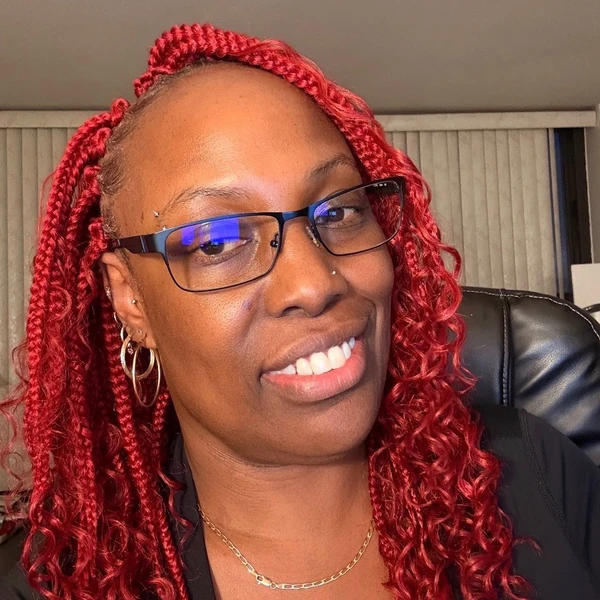
My name is Temilolu Slack, and my journey into clinical psychology is deeply personal, rooted in survival, resilience, and purpose. I am a Black woman, a survivor of 13 years of domestic violence, including mental, physical, and emotional abuse. I left that relationship with a police escort, holding my five-year-old son, determined to break a three-generation cycle of abuse. Today, my son is 24, married, and a father of two. He is a loving, present husband and father, proof that cycles can be broken through intention, healing, and accountability.
I am also a disabled student who has endured multiple surgeries, including one life-threatening experience. Despite these challenges, I remained committed to my education, refusing to let my circumstances define my future. I earned my bachelor’s degree with a 3.94 GPA and am completing my Master’s in Clinical Psychology with a 3.8 GPA while providing trauma-informed care as a clinician in training.
My lived experiences fuel my passion to serve underserved communities, particularly survivors of domestic violence, trauma, and systemic barriers. In the fall, I will begin a Psy.D. program in Clinical Psychology at The Chicago School of Psychology and I will continue working toward establishing a nonprofit that provides affordable mental health and psychological assessment services. I am committed to turning pain into purpose, survival into service, and ensuring that others have access to the care, support, and healing they deserve.
Education
The Chicago School of Professional Psychology at Chicago
Doctoral degree program (PhD, MD, JD, etc.)Majors:
- Psychology, Other
Benedictine University
Master's degree programMajors:
- Psychology, Other
Benedictine University
Bachelor's degree programMajors:
- Business Administration, Management and Operations
Miscellaneous
Desired degree level:
Doctoral degree program (PhD, MD, JD, etc.)
Graduate schools of interest:
Transfer schools of interest:
Majors of interest:
Career
Dream career field:
Mental Health Care
Dream career goals:
long-term vision is to establish a nonprofit organization in the Chicagoland area that provides affordable psychological assessments and therapy services to survivors of domestic violence.
Account Specialist, Leadership
AT&T1997 – 201720 years
Sports
Bowling
1989 – Present37 years
Public services
Volunteering
Holistically Divine Couseling — Clinician in training (internship)2025 – PresentVolunteering
Avenue Church — Welcome team, Announcement's,Sharing my Domestic Violence story advocacy, Security Team2017 – 2022
Future Interests
Advocacy
Volunteering
Philanthropy
Entrepreneurship
Future Nonprofit Leaders Award
Why I Want to Pursue a Career in the Nonprofit Sector
I want to pursue a career in the nonprofit sector because I believe meaningful social change depends on people who are committed to serving the public good, even when that work is challenging, underfunded, or unrecognized. Through my academic journey and firsthand experiences with nonprofit and volunteer work, I have come to understand that nonprofit organizations are often the backbone of communities—providing essential services, advocacy, and support where systems fall short. Choosing this path reflects both my values and my long‑term commitment to helping communities thrive.
My exposure to nonprofit and volunteer environments has taught me that impact rarely happens in dramatic or highly visible ways. Instead, it is created through consistency, compassion, and a deep understanding of the people being served. I have seen how nonprofits step in to fill gaps created by economic hardship, social inequities, and limited access to resources. These experiences shaped my belief that service‑oriented work is not only necessary, but transformative—both for individuals receiving support and for those dedicating their lives to that work.
I am particularly drawn to nonprofit work connected to social services, public systems, and community‑centered initiatives. Many individuals and families face barriers related to housing instability, mental health, education, and access to basic resources. These challenges are often interconnected, rooted in systemic inequities rather than personal failure. The nonprofit sector allows professionals to approach these issues holistically—meeting immediate needs while also addressing the broader structures that contribute to ongoing hardship.
Through my education, I aim to build the skills and knowledge necessary to serve communities ethically, effectively, and sustainably. I am motivated by the idea of not only supporting individuals one‑on‑one, but also contributing to programs and initiatives that strengthen communities over time. Whether through direct service, advocacy, outreach, or program development, I hope my work will help create pathways for stability, empowerment, and long‑term well‑being.
What most inspires me about nonprofit careers is the alignment between purpose and practice. Purpose‑driven work requires perseverance, adaptability, and emotional investment, especially in fields where resources are limited and needs are great. Yet it also offers the rare opportunity to see tangible outcomes—lives improved, communities supported, and systems slowly reshaped through dedicated effort. While nonprofit careers may not provide the same financial incentives as other sectors, they offer something far more meaningful: the opportunity to contribute to fairness, dignity, and opportunity for others.
I am deeply committed to building a career that reflects ambition not in terms of personal gain, but in the scope of impact I can help create. My goal is to remain grounded in the communities I serve, listening carefully to their needs and honoring their strengths. I believe sustainable change happens when professionals work alongside communities rather than imposing solutions from a distance.
Receiving this scholarship would directly support my ability to continue my education while maintaining a strong focus on service. Financial support would reduce barriers that could otherwise limit my capacity to pursue a nonprofit career and allow me to invest more fully in learning, growth, and community involvement. Ultimately, I hope my work in the nonprofit sector will contribute to a more equitable society—one where access to support, opportunity, and dignity is not determined by circumstance, but recognized as a shared responsibility.
Tawkify Meaningful Connections Scholarship
Relationships have played a defining role in shaping both my personal identity and my professional aspirations. For me, relationships are not just connections between people; they are the environments where patterns are learned, trauma is experienced, healing begins, and transformation becomes possible. My long-term goals in clinical psychology are deeply rooted in my understanding of how relationships can either perpetuate harm or become powerful tools for change.
My perspective on relationships has been shaped significantly by my lived experiences. I was in a 13-year relationship that involved mental, physical, and emotional abuse. Leaving that relationship was one of the most difficult decisions of my life. I left with a police escort alongside my five-year-old son, knowing that I had to create a different path not only for myself but for him. In that moment, I made a conscious decision to break a three-generation cycle of domestic violence that I had witnessed within my ex-husband’s family. That decision fundamentally changed the trajectory of both of our lives.
Today, my son is 24 years old, married, and a father of two children. He is a loving, present, and respectful husband and father. Watching him build healthy, stable relationships has reinforced my belief that relational patterns can be interrupted and rewritten. This outcome did not happen by chance it was the result of intentional parenting, self-reflection, and a commitment to healing. It showed me that relationships, even when they begin in dysfunction, can evolve into something entirely different when guided by awareness, accountability, and support.
These experiences have directly influenced my professional goals. I am pursuing a career in clinical psychology because I want to help individuals and families understand the impact of relationships on their emotional and psychological well-being. I am particularly interested in working with survivors of domestic violence and individuals impacted by intergenerational trauma. Many people remain in harmful relationships not because they lack strength, but because their understanding of love, attachment, and self-worth has been shaped by past experiences. Through therapeutic approaches such as Emotionally Focused Therapy and Narrative Therapy, I hope to help clients reprocess those experiences, reconstruct their personal narratives, and develop healthier, more secure ways of relating to themselves and others.
In addition to romantic relationships, I recognize the importance of other relational systems, including family, community, and cultural connections. As a first-generation Nigerian-American, I was raised in a culture that emphasized resilience, responsibility, and perseverance. While these values have been strengths, they have also influenced how emotions, vulnerability, and relationships are expressed. Understanding the role of cultural expectations in relational dynamics is essential in my work as a future clinician, as it allows me to approach clients with greater cultural humility, respect, and awareness.
My long-term goal is to establish a nonprofit organization that provides affordable mental health services, including therapy and psychological assessments, to underserved communities. Within this work, relationships will remain central. Whether it is helping a survivor rebuild trust after abuse, supporting a family in improving communication, or guiding individuals in forming healthier attachments, I believe that meaningful and lasting change happens within the context of safe, supportive relationships.
I am also committed to modeling healthy relationships in my own life. This includes setting boundaries, practicing open communication, and continuing my own healing and self-reflection. I understand that being an effective clinician requires ongoing personal growth, as our own relational experiences inevitably shape how we show up for others. By remaining self-aware and grounded, I can ensure that I provide care that is both ethical and empathetic.
Ultimately, relationships are at the core of both the challenges people face and the healing they seek. My experiences have taught me that while relationships can be a source of deep pain, they can also be a source of profound healing and transformation. As I continue my journey in clinical psychology, I am committed to helping others break harmful cycles, build healthier connections, and create lives grounded in safety, dignity, and emotional well-being.
Women in Healthcare Scholarship
Why I Have Chosen to Pursue a Degree in Healthcare and My Impact as a Woman in the Field
My decision to pursue a degree in healthcare, specifically in clinical psychology, is rooted in both lived experience and a deep sense of purpose. My path has not been linear, but it has been intentional. As a survivor of domestic violence, serious health challenges, and years of navigating systems that often overlook marginalized individuals, I have developed a profound understanding of the gaps that exist in healthcare, particularly in mental health services. These experiences have shaped not only my desire to enter the field but also the kind of clinician I aspire to become.
Healthcare, for me, is not simply a profession; it is a calling. Throughout my life, I have seen how trauma, cultural stigma, and financial barriers prevent individuals, especially women, minorities, and survivors, from accessing the care they need. During some of the most difficult periods of my life, including multiple surgeries and emotional trauma, I experienced firsthand how critical compassionate, competent care can be. I also witnessed where the system falls short. These moments ignited a desire within me to become part of the solution.
My academic journey reflects this commitment. While raising my son as a single mother and working full-time for over two decades, I completed my undergraduate degree with high academic achievement and am now finishing my Master’s in Clinical Psychology. Each step has required perseverance, discipline, and sacrifice. However, these challenges have strengthened my resilience and deepened my empathy qualities that are essential in healthcare.
As a woman in the healthcare field, particularly as a first-generation Nigerian-American, I hope to bring a culturally informed, trauma-aware, and compassionate perspective to my work. Representation matters. Many individuals from marginalized communities struggle to find providers who understand their cultural background, lived experiences, or spiritual beliefs. I want to be a clinician who not only provides care but also creates a space where clients feel seen, heard, and understood without judgment.
My long-term goal is to establish a nonprofit organization that provides affordable mental health services, including psychological and neuropsychological assessments, to underserved populations. Too often, these services are financially out of reach, yet they are essential for diagnosis, treatment planning, and long-term healing. By increasing accessibility, I hope to reduce disparities in care and empower individuals to better understand themselves and their mental health.
In addition, I am deeply committed to working with survivors of domestic violence and individuals impacted by intergenerational trauma. Having lived through these experiences, I understand the complexity of healing and the courage it takes to seek help. I aim to use evidence-based approaches such as trauma-informed care, narrative therapy, and Emotionally Focused Therapy to support individuals in reclaiming their voice and rebuilding their sense of self.
Ultimately, my goal is to transform my experiences into advocacy, service, and impact. As a woman in healthcare, I do not take lightly the responsibility to lead with integrity, compassion, and cultural humility. I am committed to not only helping individuals heal but also contributing to a broader shift toward equity, accessibility, and dignity in healthcare.
Pursuing this degree is not just about advancing my career; it is about fulfilling a purpose that is deeply personal and profoundly needed.
Ruthie Brown Scholarship
As a BIPOC, first-generation Nigerian American, non-traditional student, single mother, and individual living with a disability, I understand the weight of pursuing higher education while managing financial responsibility. My journey has required not only resilience but also intentional planning to minimize and manage student debt while continuing to move forward academically and professionally.
I returned to school in September 2015 while working full-time and raising my son. At the time, I made a commitment to pursue higher education without allowing financial barriers to stop me, but I was also mindful of the long-term impact of student loan debt. As a low-income student, I have had to be strategic in how I fund my education. I have relied on a combination of working, scholarships, and careful financial decision-making to reduce the amount of debt I take on.
Throughout my undergraduate and graduate studies, I have continued working, even during the most challenging seasons of my life. Maintaining employment while attending school has allowed me to contribute to tuition costs and limit excessive borrowing. However, balancing work, school, and personal responsibilities, especially as someone now living on a fixed income due to disability, has required discipline and sacrifice.
One of the primary ways I am addressing my current and future student debt is through actively seeking scholarships and financial assistance opportunities such as this one. Scholarships play a critical role in reducing financial strain and allowing me to focus more fully on my academic and clinical training. I approach each opportunity with intention, understanding that every dollar awarded is a step toward minimizing long-term financial burden.
In addition, I have been intentional about choosing programs and pathways that align with both my professional goals and financial sustainability. As I prepare to begin my doctoral program in Clinical Psychology in Fall 2026, I am carefully evaluating funding options, including scholarships, grants, and potential assistantship opportunities. My goal is to complete my doctoral education while maintaining a manageable level of debt that will not hinder my ability to serve the communities I am called to support.
My long-term plan for addressing student debt also includes building a sustainable career that allows me to give back while maintaining financial stability. As a future clinical psychologist, I plan to work in both clinical and community-based settings, providing trauma-informed care to underserved populations. I am also interested in developing a nonprofit organization that offers affordable psychological assessments and mental health services. While this work is purpose-driven, I am also mindful of creating multiple streams of income through clinical practice, assessment services, and community programming to ensure long-term financial sustainability.
Additionally, I plan to take advantage of loan repayment and forgiveness programs that support professionals working in underserved communities. These programs align with my career goals and will provide an opportunity to reduce my student loan burden while continuing to serve populations in need.
While the financial challenges of higher education are significant, they have not deterred me from pursuing my goals. Instead, they have strengthened my determination to be intentional, resourceful, and proactive in managing my educational journey.
This scholarship would directly reduce the amount of debt I carry and allow me to continue focusing on my education and professional development. More importantly, it would support my ability to move forward without the overwhelming burden of financial strain.
I am not only working to address my student debt, but I am also working to create a future where my education becomes a tool for impact, stability, and generational change.
Minority Single Mother Scholarship
The day I left my marriage with a police escort, holding my son’s hand and carrying only a few belongings, I made a decision that would change the course of our lives forever. I chose safety. I chose freedom. And although I did not yet know how I would rebuild, I knew I could not turn back.
My journey as a low-income African-American single mother pursuing higher education has been defined by resilience, sacrifice, and an unwavering commitment to creating a better future for my son and myself. After leaving, I faced emotional trauma and financial instability. I later discovered that my ex-husband had filed for divorce without my knowledge and publicly claimed that I had abandoned my child. Despite a verbal co-parenting agreement, I received no child support. I made the difficult decision to never return to my abuser for financial assistance, even during the hardest times.
There were seasons when survival meant relying on food pantries. I worked overtime just to cover basic needs. Many days, I ate oatmeal from home or something as simple as romaine lettuce with onions so my son would have money on his school card. Those sacrifices were intentional. I was determined that he would not go without, even when it meant I did.
When my son developed a passion for track and cross country, I worked longer hours and stretched every dollar to purchase the running shoes he needed. Those shoes represented more than sport; they represented hope and the belief that his dreams mattered.
Housing instability became another challenge. I chose to remain in a strong school district for my son, even as rent increased from $1,450 to $2,500 per month. I held on as long as I could, but eventually, I was evicted. That moment was painful, but it did not break me. I reminded myself that my circumstances were temporary, but my purpose was not.
Through every hardship, I continued working full-time at AT&T for over 20 years while raising my son. In September 2015, I returned to school. There were nights filled with exhaustion and doubt, but I kept going because I knew I was building something greater than my present situation.
Today, I have earned my Bachelor’s degree in Organizational Leadership and will complete my Master’s degree in Clinical Psychology in May 2026. In August 2026, I will begin my doctoral program in Clinical Psychology at The Chicago School. Even now, living on a fixed income due to disability, I remain committed to my education and my purpose. As a black woman, it shows determination, unrelenting drive, and courage.
The most fulfilling part of my journey is seeing the life my son has built. I was determined to break a three-generation cycle of domestic violence, and I have. My son is now 24, married, and a father of two. He completed a trade program in HVAC and was recognized locally for his achievements. Watching him live a life rooted in stability and love reminds me that every sacrifice was worth it.
Through further education, I hope to uplift not only myself and my family but also other women facing similar challenges. I plan to provide trauma-informed care to underserved communities, particularly survivors of domestic violence.
This scholarship would ease the financial burden of continuing my education and allow me to remain focused on my goals. More importantly, it would support my ability to transform my journey into purpose.
I did not just survive the circumstances; I rose from them, and I am committed to helping others do the same.
Goths Belong in STEM Scholarship
At 52 years old, a Nigerian woman with tattoos and piercings, my return to higher education represents more than an academic pursuit—it is a deeply personal journey of resilience, healing, and purpose. My path has not been traditional, but every experience I have faced has shaped my values, strengthened my faith, and guided me toward a calling rooted in service to others.
I began my academic journey later in life, earning my Bachelor of Arts in Organizational Leadership from Benedictine University in 2021 with a 3.94 GPA. At the time, I was navigating single parenthood, working full-time, and recovering from multiple serious health challenges. There were moments when the weight of responsibility felt overwhelming, but I remained committed to my education. I often scheduled medical appointments around my coursework and pushed through physical discomfort because I refused to let my circumstances define my future. Completing my degree was more than an achievement—it was a promise to myself that I would keep going.
My decision to pursue a Master’s degree in Clinical Psychology, which I will complete in May 2026 with a 3.8 GPA, was shaped by both lived experience and a growing awareness of the unmet mental health needs within my community. As a survivor of a thirteen-year abusive marriage, I understand firsthand the lasting impact of trauma. For years, I carried emotional wounds that affected how I saw myself and navigated the world. Through my own healing process, I began to recognize that my pain had purpose. I became increasingly drawn to understanding the psychological effects of trauma and how healing can take place.
During the pandemic, I found myself supporting others through listening, encouragement, and shared understanding. It was in those moments that I realized how many individuals were silently struggling without access to proper mental health care. I saw the gaps, especially for survivors of domestic violence, and I knew I wanted to be part of the solution. These experiences solidified my commitment to becoming a clinician who not only understands trauma but is equipped to treat it with compassion and clinical expertise.
Today, as a Clinician in Training at Holistically Divine Counseling, I provide trauma-informed, culturally responsive care to individuals experiencing domestic violence, anxiety, grief, and spiritual distress. I also engage in community outreach through my church, speaking openly about mental health, trauma, and healing. These experiences reflect my belief that true healing extends beyond the therapy room and into the community.
In Fall 2026, I will begin my doctoral studies in Clinical Psychology at The Chicago School. My long-term goal is to specialize in trauma and psychological assessment, with a focus on improving diagnostic accuracy for underserved populations. I have seen how many individuals are misdiagnosed or go without proper evaluation due to financial barriers. I plan to establish a nonprofit organization in the Chicagoland area that provides affordable psychological assessments and trauma-informed therapy, ensuring that individuals receive the care they deserve.
This scholarship will help ease the financial burden of my continued education, allowing me to fully focus on my academic and clinical training while continuing to serve my community. More importantly, it will support my ability to turn my vision into reality.
Returning to school at this stage in my life is not just about achieving a degree—it is about honoring my journey and using it to uplift others. I am committed to transforming my experiences into purpose, breaking cycles of trauma, and creating lasting change for the communities I serve.
Strong Leaders of Tomorrow Scholarship
At 52 years old, my return to higher education represents more than an academic pursuit—it is a deeply personal journey of resilience, healing, and purpose. My path has not been traditional, but every experience I have faced has shaped my values, strengthened my faith, and guided me toward a calling rooted in service to others.
I began my academic journey later in life, earning my Bachelor of Arts in Organizational Leadership from Benedictine University in 2021 with a 3.94 GPA. At the time, I was navigating single parenthood, working full-time, and recovering from multiple serious health challenges. There were moments when the weight of responsibility felt overwhelming, but I remained committed to my education. I often scheduled medical appointments around my coursework and pushed through physical discomfort because I refused to let my circumstances define my future. Completing my degree was more than an achievement—it was a promise to myself that I would keep going.
My decision to pursue a Master’s degree in Clinical Psychology, which I will complete in May 2026 with a 3.8 GPA, was shaped by both lived experience and a growing awareness of the unmet mental health needs within my community. As a survivor of a thirteen-year abusive marriage, I understand firsthand the lasting impact of trauma. For years, I carried emotional wounds that affected how I saw myself and navigated the world. Through my own healing process, I began to recognize that my pain had purpose. I became increasingly drawn to understanding the psychological effects of trauma and how healing can take place.
During the pandemic, I found myself supporting others through listening, encouragement, and shared understanding. It was in those moments that I realized how many individuals were silently struggling without access to proper mental health care. I saw the gaps, especially for survivors of domestic violence, and I knew I wanted to be part of the solution. These experiences solidified my commitment to becoming a clinician who not only understands trauma but is equipped to treat it with compassion and clinical expertise.
Today, as a Clinician in Training at Holistically Divine Counseling, I provide trauma-informed, culturally responsive care to individuals experiencing domestic violence, anxiety, grief, and spiritual distress. I also engage in community outreach through my church, speaking openly about mental health, trauma, and healing. These experiences reflect my belief that true healing extends beyond the therapy room and into the community.
In Fall 2026, I will begin my doctoral studies in Clinical Psychology at The Chicago School. My long-term goal is to specialize in trauma and psychological assessment, with a focus on improving diagnostic accuracy for underserved populations. I have seen how many individuals are misdiagnosed or go without proper evaluation due to financial barriers. I plan to establish a nonprofit organization in the Chicagoland area that provides affordable psychological assessments and trauma-informed therapy, ensuring that individuals receive the care they deserve.
This scholarship will help ease the financial burden of my continued education, allowing me to fully focus on my academic and clinical training while continuing to serve my community. More importantly, it will support my ability to turn my vision into reality.
Returning to school at this stage in my life is not just about achieving a degree—it is about honoring my journey and using it to uplift others. I am committed to transforming my experiences into purpose, breaking cycles of trauma, and creating lasting change for the communities I serve.
Michele L. Durant Scholarship
At 52 years old, my return to higher education represents more than an academic pursuit—it is a deeply personal journey of resilience, healing, and purpose. My path has not been traditional, but every experience I have faced has shaped my values, strengthened my faith, and guided me toward a calling rooted in service to others.
I began my academic journey later in life, earning my Bachelor of Arts in Organizational Leadership from Benedictine University in 2021 with a 3.94 GPA. At the time, I was navigating single parenthood, working full-time, and recovering from multiple serious health challenges. There were moments when the weight of responsibility felt overwhelming, but I remained committed to my education. I often scheduled medical appointments around my coursework and pushed through physical discomfort because I refused to let my circumstances define my future. Completing my degree was more than an achievement—it was a promise to myself that I would keep going.
My decision to pursue a Master’s degree in Clinical Psychology, which I will complete in May 2026 with a 3.8 GPA, was shaped by both lived experience and a growing awareness of the unmet mental health needs within my community. As a survivor of a thirteen-year abusive marriage, I understand firsthand the lasting impact of trauma. For years, I carried emotional wounds that affected how I saw myself and navigated the world. Through my own healing process, I began to recognize that my pain had purpose. I became increasingly drawn to understanding the psychological effects of trauma and how healing can take place.
During the pandemic, I found myself supporting others through listening, encouragement, and shared understanding. It was in those moments that I realized how many individuals were silently struggling without access to proper mental health care. I saw the gaps, especially for survivors of domestic violence, and I knew I wanted to be part of the solution. These experiences solidified my commitment to becoming a clinician who not only understands trauma but is equipped to treat it with compassion and clinical expertise.
Today, as a Clinician in Training at Holistically Divine Counseling, I provide trauma-informed, culturally responsive care to individuals experiencing domestic violence, anxiety, grief, and spiritual distress. I also engage in community outreach through my church, speaking openly about mental health, trauma, and healing. These experiences reflect my belief that true healing extends beyond the therapy room and into the community.
In Fall 2026, I will begin my doctoral studies in Clinical Psychology at The Chicago School. My long-term goal is to specialize in trauma and psychological assessment, with a focus on improving diagnostic accuracy for underserved populations. I have seen how many individuals are misdiagnosed or go without proper evaluation due to financial barriers. I plan to establish a nonprofit organization in the Chicagoland area that provides affordable psychological assessments and trauma-informed therapy, ensuring that individuals receive the care they deserve.
This scholarship will help ease the financial burden of my continued education, allowing me to fully focus on my academic and clinical training while continuing to serve my community. More importantly, it will support my ability to turn my vision into reality.
Returning to school at this stage in my life is not just about achieving a degree—it is about honoring my journey and using it to uplift others. I am committed to transforming my experiences into purpose, breaking cycles of trauma, and creating lasting change for the communities I serve.
Arnetha V. Bishop Memorial Scholarship
At 52 years old, my return to higher education represents more than an academic pursuit—it is a deeply personal journey of resilience, healing, and purpose. My path has not been traditional, but every experience I have faced has shaped my values, strengthened my faith, and guided me toward a calling rooted in service to others.
I began my academic journey later in life, earning my Bachelor of Arts in Organizational Leadership from Benedictine University in 2021 with a 3.94 GPA. At the time, I was navigating single parenthood, working full-time, and recovering from multiple serious health challenges. There were moments when the weight of responsibility felt overwhelming, but I remained committed to my education. I often scheduled medical appointments around my coursework and pushed through physical discomfort because I refused to let my circumstances define my future. Completing my degree was more than an achievement—it was a promise to myself that I would keep going.
My decision to pursue a Master’s degree in Clinical Psychology, which I will complete in May 2026 with a 3.8 GPA, was shaped by both lived experience and a growing awareness of the unmet mental health needs within my community. As a survivor of a thirteen-year abusive marriage, I understand firsthand the lasting impact of trauma. For years, I carried emotional wounds that affected how I saw myself and navigated the world. Through my own healing process, I began to recognize that my pain had purpose. I became increasingly drawn to understanding the psychological effects of trauma and how healing can take place.
During the pandemic, I found myself supporting others through listening, encouragement, and shared understanding. It was in those moments that I realized how many individuals were silently struggling without access to proper mental health care. I saw the gaps, especially for survivors of domestic violence, and I knew I wanted to be part of the solution. These experiences solidified my commitment to becoming a clinician who not only understands trauma but is equipped to treat it with compassion and clinical expertise.
Today, as a Clinician in Training at Holistically Divine Counseling, I provide trauma-informed, culturally responsive care to individuals experiencing domestic violence, anxiety, grief, and spiritual distress. I also engage in community outreach through my church, speaking openly about mental health, trauma, and healing. These experiences reflect my belief that true healing extends beyond the therapy room and into the community.
In Fall 2026, I will begin my doctoral studies in Clinical Psychology at The Chicago School. My long-term goal is to specialize in trauma and psychological assessment, with a focus on improving diagnostic accuracy for underserved populations. I have seen how many individuals are misdiagnosed or go without proper evaluation due to financial barriers. I plan to establish a nonprofit organization in the Chicagoland area that provides affordable psychological assessments and trauma-informed therapy, ensuring that individuals receive the care they deserve.
This scholarship will help ease the financial burden of my continued education, allowing me to fully focus on my academic and clinical training while continuing to serve my community. More importantly, it will support my ability to turn my vision into reality.
Returning to school at this stage in my life is not just about achieving a degree—it is about honoring my journey and using it to uplift others. I am committed to transforming my experiences into purpose, breaking cycles of trauma, and creating lasting change for the communities I serve.
Debra S. Jackson New Horizons Scholarship
Hello, my name is Temilolu Slack. At 52 years old, my return to higher education represents more than an academic pursuit; it is a deeply personal journey of resilience, healing, and purpose. My path has not been traditional, but every experience I have faced has shaped my values, strengthened my faith, and guided me toward a calling rooted in service to others.
I began my academic journey later in life, earning my Bachelor of Arts in Organizational Leadership from Benedictine University in 2021 with a 3.94 GPA. At the time, I was navigating single parenthood, working full-time, and recovering from multiple serious health challenges. There were moments when the weight of responsibility felt overwhelming, but I remained committed to my education. I often scheduled medical appointments around my coursework and pushed through physical discomfort because I refused to let my circumstances define my future. Completing my degree was more than an achievement it was a promise to myself that I would keep going.
My decision to pursue a Master’s degree in Clinical Psychology, which I will complete in May 2026 with a 3.8 GPA, was shaped by both lived experience and a growing awareness of the unmet mental health needs within my community. As a survivor of a thirteen-year abusive marriage, I understand firsthand the lasting impact of trauma. For years, I carried emotional wounds that affected how I saw myself and navigated the world. Through my own healing process, I began to recognize that my pain had purpose. I became increasingly drawn to understanding the psychological effects of trauma and how healing can take place.
During the pandemic, I found myself supporting others through listening, encouragement, and shared understanding. It was in those moments that I realized how many individuals were silently struggling without access to proper mental health care. I saw the gaps, especially for survivors of domestic violence, and I knew I wanted to be part of the solution. These experiences solidified my commitment to becoming a clinician who not only understands trauma but is equipped to treat it with compassion and clinical expertise.
Today, as a Clinician in Training at Holistically Divine Counseling, I provide trauma-informed, culturally responsive care to individuals experiencing domestic violence, anxiety, grief, and spiritual distress. I also engage in community outreach through my church, speaking openly about mental health, trauma, and healing. These experiences reflect my belief that true healing extends beyond the therapy room and into the community.
In Fall 2026, I will begin my doctoral studies in Clinical Psychology at The Chicago School. My long-term goal is to specialize in trauma and psychological assessment, with a focus on improving diagnostic accuracy for underserved populations. I have seen how many individuals are misdiagnosed or go without proper evaluation due to financial barriers. I plan to establish a nonprofit organization in the Chicagoland area that provides affordable psychological assessments and trauma-informed therapy, ensuring that individuals receive the care they deserve.
This scholarship will help ease the financial burden of my continued education, allowing me to fully focus on my academic and clinical training while continuing to serve my community. More importantly, it will support my ability to turn my vision into reality.
Returning to school at this stage in my life is not just about achieving a degree, it is about honoring my journey and using it to uplift others. I am committed to transforming my experiences into purpose, breaking cycles of trauma, and creating lasting change for the communities I serve.
Ella's Gift
Personal Statement
My decision to pursue a doctoral degree in clinical psychology is not rooted in theory alone; it is rooted in survival. It is shaped by years of enduring domestic violence, raising my son amid fear and instability, and learning firsthand how trauma imprints itself on the mind, body, and spirit. As a Black woman, a mother, and a survivor, my journey has demanded resilience beyond what should ever be required of one person. Yet through that pain, purpose emerged: to heal and to ensure others do not have to suffer in silence.
For 13 yrs, I lived in a marriage defined by physical violence, emotional control, and constant unpredictability. I endured repeated beatings while doing everything in my power to protect and raise my son in an environment that felt unsafe, even in moments of quiet. Each day required hyper vigilance, monitoring moods, anticipating danger, and preparing myself for harm before it arrived. I learned to place my own needs last, believing that endurance equaled strength and that my role as a mother required self‑sacrifice at any cost.
The psychological weight of this trauma followed me long after the physical marks faded. I developed debilitating anxiety, depression, and eventually PTSD. I experienced intrusive memories, emotional numbness, chronic sleep disturbances, and a persistent sense that danger was always near. Even in safe spaces, my body remained on high alert. I learned how to function while dissociating, to present as capable while privately unraveling, and to survive while quietly losing myself.
The turning point came when survival without healing was no longer sustainable. Seeking therapy was the most difficult yet transformative decision of my life. As a Black woman, I carried generational messages about silence, strength, and enduring hardship without complaint. Cultural stigma, systemic barriers, and fear of being misunderstood delayed my reaching out, but once I did, therapy became the first place where my pain was named and validated. I learned that PTSD was not a personal failure, but a natural response to prolonged trauma. For the first time, I began seeing myself not as broken, but as human.
Although I have not personally struggled with substance abuse, my lived experience and clinical exposure have shown me how closely trauma, depression, anxiety, and substance use intersect. I have witnessed survivors, particularly women from marginalized communities, often turn to substances or other harmful coping mechanisms when support is inaccessible or invalidating. These insights have reinforced my commitment to trauma‑informed, nonjudgmental, and culturally responsive care.
My personal healing journey has unfolded alongside my academic one. I am currently completing a Master’s degree in Clinical Psychology and will graduate in May 2026. Throughout my graduate training, I have gained clinical knowledge while deepening my understanding of trauma, attachment, and psychosocial development. My education has provided language for experiences I once believed were unspeakable and affirmed my desire to work with survivors whose suffering is too often dismissed or misunderstood.
I am presently completing my internship at Holistically Divine Counseling, where I work with women experiencing trauma, depression, anxiety, and suicidal ideation. This work has been both humbling and transformative. Sitting with clients in their most vulnerable moments reinforced for me the importance of empathy, presence, and ethical responsibility. It has also illuminated the severe gaps that exist in mental health access, safety planning, and survivor advocacy. Witnessing the systemic barriers my clients face has propelled my desire to pursue doctoral training to provide clinical care and to help influence policy, expand advocacy efforts, and create more equitable systems of support.
In Fall 2026, I will begin the PsyD program in Clinical Psychology at The Chicago School of Psychology. My educational and professional goal is to become a licensed clinical psychologist specializing in PTSD, interpersonal violence, mood disorders, and trauma‑related conditions. I am committed to serving Black women, mothers, and survivors of domestic violence, and to advocating for trauma-informed practices at both the clinical and policy levels. I aspire to be part of the change that ensures survivors are not only treated, but protected, believed, and empowered.
Maintaining my recovery remains an essential foundation for my personal and professional life. I continue to engage in therapy, intentionally practice emotional regulation and grounding techniques, and prioritize mental health as an ongoing commitment rather than a destination. I maintain boundaries, seek supervision and support, and remain conscious of the risks of burnout and vicarious trauma. I understand that ethical practice begins with self‑awareness and self‑care.
This scholarship represents more than financial assistance; it represents belief in the power of resilience and the value of lived experience in the mental health field. My story is not defined by the violence I endured, but by the strength it took to heal and transform pain into purpose. I move forward in doctoral training, committed to advocacy service.