Hobbies and interests
Reading
Reading
Leadership
I read books multiple times per week
Tegan Hayes
1x
FinalistTegan Hayes
1x
FinalistBio
I am passionate about education, equity, and helping young people build skills that lead to stable and meaningful futures. I currently work as an educator teaching STEM and Career Readiness in a juvenile facility, where I support students who have often experienced academic disruption, trauma, and limited access to opportunity. This work has reinforced my belief that education should be practical, supportive, and centered on real-world skills that empower students beyond the classroom.
In my role, I design hands-on lessons that help students explore career pathways, develop employability skills, and build confidence in their abilities. I also incorporate social-emotional supports, such as calming strategies and structured routines, to create a learning environment where students feel safe, respected, and capable of growth. Seeing students gain motivation and begin to envision positive futures has strengthened my commitment to this field.
I am pursuing my bachelor’s degree to deepen my knowledge, expand my impact, and continue advocating for justice-involved youth. Completing my degree will allow me to advance professionally and develop stronger educational programs that support long-term success. I am a strong scholarship candidate because I have a clear sense of purpose, a proven commitment to service, and a dedication to using my education to create meaningful change for others.
Education
Southwestern Oklahoma State University
Bachelor's degree programMajors:
- Education, Other
Miscellaneous
Desired degree level:
Bachelor's degree program
Graduate schools of interest:
Transfer schools of interest:
Majors of interest:
- Education, General
- Clinical, Counseling and Applied Psychology
Career
Dream career field:
Education
Dream career goals:
Instructor
CareerTech2023 – Present3 years
Public services
Volunteering
Affect Destiny — team lead1999 – 2005
Raise Me Up to DO GOOD Scholarship
I was raised by a single mother who worked two jobs and still somehow managed to always be there for me. Growing up, I did not fully understand how much she sacrificed. I just knew that she was always tired, always busy, and always present. She made sure I had what I needed, even when it meant going without herself. Looking back, I realize that my understanding of hard work, perseverance, and unconditional love was shaped almost entirely by watching her do the impossible day after day.
My mom was my example of what it means to be strong. She worked long hours, sometimes leaving early in the morning and coming home late at night, yet she never missed the things that mattered. She showed up for school events, helped me with homework when she was exhausted, and made sure I always knew I was supported. She taught me that responsibility is not just about doing what you have to do, but about doing it with care and commitment to the people who depend on you.
Being raised in a single-parent household taught me independence early. It also taught me empathy. I saw firsthand how hard life can be and how much unseen effort goes into simply keeping everything together. Because of that, I do not take stability or opportunity for granted. I learned to respect hard work and to notice when others are struggling, even if they do not say it out loud.
These lessons are a big part of why I chose a career in education, specifically working with youth in a juvenile facility. Every day, I work with students who come from difficult backgrounds and who often feel like the system has already given up on them. Many of them remind me that circumstances can shape a person’s path, but they do not have to define their future. In my classroom, I teach STEM and career readiness, but more importantly, I try to give students something many of them have never had in school before: patience, consistency, and someone who believes they can do better.
Working in a juvenile facility has reinforced my belief in second chances and in the power of showing up for people, even when it is hard. I see my role not just as a teacher, but as someone who helps students rebuild confidence and imagine a different future. When a student who once refused to participate completes a project, earns a certification, or starts talking seriously about life after release, I see the ripple effect of the values my mother taught me.
My upbringing continues to shape my future goals. I want to keep growing in education and expand the impact I can have on at-risk youth. While I do not have every step of my career mapped out, I know I want my work to be centered on service, advocacy, and opportunity. I want to help build systems and programs that support students who have been overlooked, just like my own mother supported me when life was overwhelming.
In the future, I see myself using my skills, education, and experiences to help people find stability, direction, and hope. Everything I am working toward is rooted in the example my mother set. She showed me what dedication, sacrifice, and unconditional support look like. Because of her, I believe in resilience, in second chances, and in using whatever success I achieve to lift others up.
Priscilla Shireen Luke Scholarship
Giving back is not something I see as a separate part of my life, it is woven into my daily work and long-term goals. Currently, I serve my community as an educator in a juvenile facility, where I teach STEM and career readiness to students who are often overlooked, underestimated, or written off. Many of my students come from difficult backgrounds and have experienced repeated failure in school and in life. My goal each day is not only to teach academic content, but to help them rebuild confidence, discover their potential, and begin to believe that their future can be different from their past.
In my classroom, giving back means showing up consistently, even on the hard days. It means creating a space where students feel safe enough to try, fail, and try again. I have worked to design lessons that connect learning to real-world careers so students can see a purpose beyond just earning credits. I have also focused on supporting students’ emotional needs, including creating a calming space in the classroom and teaching simple self-regulation strategies. These efforts have helped reduce conflicts, improve focus, and most importantly, remind students that they are worthy of patience and support.
One of the most meaningful parts of my work is watching students begin to change how they see themselves. I have had students who entered my class convinced they were “bad at school” or “too far behind” eventually earn certifications, complete projects they were proud of, and start talking seriously about jobs and continuing their education. Those moments reinforce why I chose this path and why I consider my work a form of service to my community.
Looking toward the future, I plan to expand the impact I can make through education and advocacy. Returning to school to complete my degree is a critical step in that process. I want to deepen my knowledge and skills so I can help design and lead programs that better serve at-risk youth, particularly those involved in the juvenile justice system. My long-term goal is to work in a leadership or program development role where I can influence curriculum, policies, and support systems that focus on rehabilitation rather than punishment.
I also hope to be involved in creating partnerships between schools, community organizations, and local employers to provide students with real pathways to success. Too often, these young people leave the system without the tools or opportunities they need to succeed. I want to help change that by building bridges between education, job training, and community support.
On a broader level, I plan to continue advocating for compassion-based, evidence-informed approaches to education and behavior support. I believe that when we invest in people, especially those who have been marginalized, we do more than change individual lives; we strengthen families, reduce cycles of incarceration, and build healthier communities.
Giving back, to me, is about using my skills, education, and position to open doors for others. Right now, I do that one student at a time. In the future, I hope to do it on a larger scale, by shaping programs, systems, and opportunities that help more young people believe in themselves and build meaningful, productive lives.
Emma Jane Hastie Scholarship
Service has always been more than something I do; it is part of who I am. I am an educator who works with youth in a juvenile facility, where every day is a reminder that people are more than their mistakes and that everyone deserves the opportunity to grow, learn, and start again. My path into this work was shaped by a strong belief in second chances and in the power of education to change the direction of a life. I have always been drawn to roles that allow me to serve others, especially those who are often overlooked or underestimated.
Working in a juvenile facility has taught me that service is not always loud or visible. Sometimes it looks like showing up consistently, listening patiently, and refusing to give up on someone even when they have already given up on themselves. My students come from difficult backgrounds, and many have experienced more challenges in their young lives than most adults ever will. They often enter the classroom guarded, frustrated, and convinced that school has nothing to offer them. My role is not just to teach STEM and career readiness skills, but to help them rebuild confidence and imagine a different future.
One experience that stands out to me was when I helped create a more supportive and calming learning environment for my students. Many of them struggled with emotional regulation, anxiety, and anger, which often led to conflicts or shutdowns in the classroom. I noticed that when students became overwhelmed, learning stopped entirely. Instead of seeing this as a discipline problem, I saw it as a need that wasn’t being met.
I took the initiative to design and implement a “calming corner” in our classroom—a space where students could step away, use simple coping tools, and reset before rejoining the group. I gathered materials, introduced mindfulness and breathing techniques, and taught students how to recognize when they were becoming overwhelmed. At first, some of them were skeptical, but over time, something remarkable happened. Students began to ask for breaks before they exploded. Arguments decreased. One student told me, “This is the first time school doesn’t make me feel like I’m about to lose it all the time.”
The impact went beyond behavior. Students who used to shut down started participating more. They were able to focus longer and engage in discussions about their goals and futures. I saw firsthand how a small, thoughtful act of service could create a ripple effect, changing not just individual behavior but the overall atmosphere of the classroom.
This experience reinforced my belief that true service is about meeting people where they are and helping them move forward, even if progress comes in small steps. I am proud of the work I do, not because it is easy, but because it matters. Every day, I have the opportunity to serve my community by helping young people believe that they are capable of more than their past, and that their future is still something worth working toward.
Poynter Scholarship
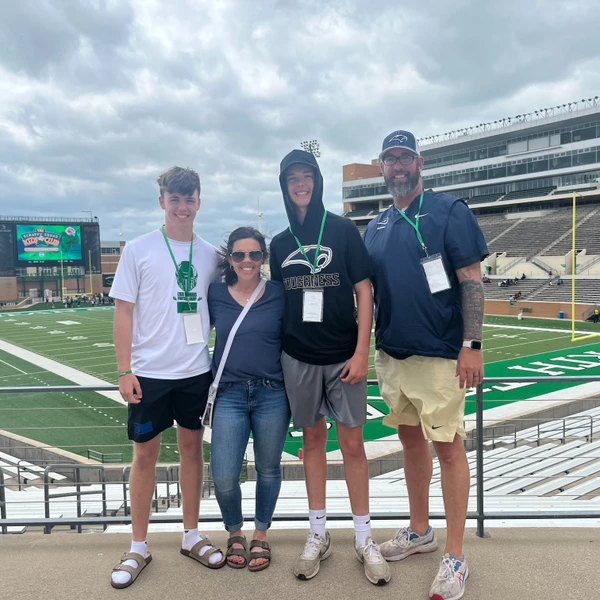
Balancing education with family responsibilities is a challenge, but having a supportive partner allows me to approach this journey with confidence, planning, and determination. As a parent to high school–aged sons and with a husband who is a teacher and football coach, I understand the importance of collaboration, communication, and shared responsibility. Pursuing my bachelor’s degree requires intentional scheduling, dedication, and the ability to prioritize both my family and my studies without compromising either.
I plan to balance my education with family life by maintaining structure and open communication. My husband and I coordinate schedules to ensure that our sons have the guidance and support they need while also carving out dedicated time for my coursework. Together, we share household responsibilities, coordinate school and extracurricular activities, and ensure that family time remains meaningful and uninterrupted. By modeling commitment, discipline, and perseverance, I hope to demonstrate to my sons that pursuing one’s goals—no matter the stage of life—is both possible and rewarding.
My experience as an educator working with justice-involved youth has taught me skills that translate directly to balancing multiple responsibilities: patience, organization, and resilience. I approach each day with intention, breaking tasks into manageable steps and remaining flexible when unexpected challenges arise. These skills allow me to focus on my coursework while maintaining a strong presence in my family’s life. I view my education not only as a personal goal but also as a way to strengthen my role as a parent and role model, showing my sons the value of lifelong learning and hard work.
Receiving this scholarship would be instrumental in helping me achieve my degree. Financial support would reduce the stress associated with tuition, textbooks, and other educational expenses, allowing me to devote more energy to learning and completing assignments. It would provide the resources and stability necessary to pursue my education fully and efficiently, ensuring that I can balance academic demands with family responsibilities without compromising quality in either area.
Completing my bachelor’s degree will allow me to expand my professional impact as an educator and advocate for students who face barriers to success. It will also serve as a powerful example for my children, showing them that commitment, perseverance, and hard work can lead to meaningful accomplishments. By earning my degree, I can continue to create opportunities for others while reinforcing values of education, dedication, and service within my own family.
In pursuing my degree, I am committed to balancing family life, professional responsibilities, and academic goals with intentionality and resilience. With careful planning, support from my husband, and the assistance of this scholarship, I am confident that I can achieve my academic aspirations while continuing to provide a nurturing, inspiring, and supportive environment for my sons.
Susie Green Scholarship for Women Pursuing Education
Returning to school at 38 years old was not a decision I made lightly. It required courage, honesty with myself, and a willingness to confront fear, doubt, and past insecurities. What ultimately gave me the courage to go back and finish my degree was the realization that my lived experience, my work, and my role as a parent all demanded more of me—and that I was finally ready to give it.
For many years, higher education felt out of reach. Life responsibilities, self-doubt, and the belief that “it was too late” quietly shaped my choices. I questioned whether I belonged in a classroom again, whether I could balance school with work and family responsibilities, and whether pursuing a degree at this stage of my life was realistic. Those doubts lingered for a long time and often felt heavier than my motivation.
What began to change was my work as an educator teaching STEM and career readiness to justice-involved youth. Every day, I encourage my students to believe in themselves, to push past mistakes, and to understand that their futures are not defined by their pasts. Over time, I realized I was asking my students to do something I had not fully done myself. I was encouraging courage, perseverance, and growth—yet hesitating to take that same step in my own life.
At the same time, I was watching my high school–aged sons begin to shape their own dreams and goals. I often tell them to follow their passions, work hard, and not let fear determine their choices. Eventually, I had to ask myself what example I was setting. I wanted my sons to see that it is never too late to pursue education, that setbacks do not define a person, and that courage sometimes means starting again. Going back to school became as much about modeling resilience and commitment for them as it was about personal achievement.
I also recognized how much I have grown over the years. At 38, I bring discipline, focus, and clarity of purpose that I did not have when I was younger. I understand why I am pursuing my degree and how I intend to use it—to strengthen my impact as an educator, advocate for underserved youth, and create meaningful opportunities for others. That clarity transformed fear into determination.
Returning to school has required sacrifice, including time, energy, and financial stability. Balancing coursework, full-time work, and parenting is challenging, but it has also been deeply rewarding. Each step forward reinforces my belief that education has no expiration date and that growth is always possible.
Choosing to finish my degree at 38 was an act of courage rooted in purpose, integrity, and love for both my students and my children. By continuing my education, I am living the values I teach every day—perseverance, self-belief, and the courage to pursue a better future. I hope my journey encourages my sons, my students, and others to believe that it is never too late to chase their dreams.
Marie Humphries Memorial Scholarship
I am interested in pursuing a career in teaching because I believe education has the power to change the direction of a person’s life when it is rooted in belief, support, and meaningful connection. Teaching is not just about delivering content; it is about recognizing potential in students who may not yet see it in themselves. My passion for education has grown from both my personal experiences as a student and my professional experiences working with justice-involved youth.
Currently, I teach STEM and career readiness in a juvenile facility, where I work with students who have often experienced academic failure, instability, or discouragement. Many of these students enter the classroom believing they are “bad at school” or that their futures are already decided for them. Teaching in this environment has shown me how critical it is for educators to approach students with patience, high expectations, and empathy. When students feel respected and believed in, they are more willing to engage, take risks, and imagine a future beyond their current circumstances. This is the type of teacher I strive to be.
My desire to teach is deeply connected to the experience I had with my high school English teacher, who changed the way I viewed myself and my abilities. At a time when I doubted my academic potential, this teacher saw something in me that I could not yet see. They encouraged my writing, challenged me to think critically, and consistently expressed confidence in my ability to succeed. Simple acts—meaningful feedback on assignments, thoughtful conversations, and genuine encouragement—had a lasting impact on my self-confidence. That belief became a turning point, helping me understand that my voice mattered and that I was capable of more than I had assumed.
This experience has stayed with me into adulthood and directly influences how I approach teaching today. I understand firsthand how powerful it is when a teacher takes the time to notice a student’s strengths and communicates belief in their potential. I aim to provide my students with that same sense of validation and encouragement. Whether through hands-on STEM projects, career exploration lessons, or moments of one-on-one support, I work to create an environment where students feel seen, capable, and supported.
I am pursuing a career in teaching because I want to be the educator who helps students rewrite their narratives. Completing my bachelor’s degree will allow me to strengthen my instructional skills, deepen my understanding of educational practices, and expand my ability to serve students who need consistency and encouragement the most. I am especially committed to working with populations that are often marginalized or underestimated, because I know from experience how transformative it can be when someone believes in you.
The belief my high school English teacher had in me continues to guide my path. Their influence inspired me to pursue education not just as a profession, but as a purpose. I hope to be that steady, encouraging presence for my students—the teacher who helps them recognize their own potential and take meaningful steps toward a brighter future.
Kerry Kennedy Life Is Good Scholarship
My career of choice is education, with a specific focus on STEM instruction and career readiness for justice-involved and at-risk youth. I am deeply passionate about this field because I have witnessed how education, when delivered with intention and compassion, can transform lives. Working in a juvenile facility has allowed me to see beyond labels and behaviors to the potential that exists in every student. Many of the young people I work with have experienced disrupted schooling, trauma, and limited access to positive role models, yet they possess creativity, intelligence, and resilience. Helping them recognize their own strengths and develop skills that prepare them for life beyond confinement is what motivates me every day.
I am particularly passionate about career readiness because it provides students with tangible hope. When students understand how their interests connect to real jobs, learn employability skills, and practice goal-setting, they begin to see a future that feels attainable. In my role, I design hands-on lessons that blend STEM concepts with real-world applications, such as problem-solving, teamwork, and critical thinking. I also prioritize social-emotional learning and trauma-informed practices to create a safe and structured environment where students feel respected and capable of growth. Seeing students gain confidence, engage in learning, and begin to envision positive paths forward reinforces my commitment to this career.
To pursue my personal and educational goals, I have made meaningful sacrifices. Balancing full-time work with higher education has required discipline, persistence, and careful time management. I have often sacrificed personal time, rest, and social opportunities to stay focused on coursework while maintaining my professional responsibilities. Choosing to invest in my education has sometimes meant financial strain, as I have prioritized tuition and academic resources over short-term comforts. These sacrifices were not made lightly, but they reflect my understanding that long-term impact requires sustained effort and commitment.
Additionally, I have taken on emotionally demanding work while continuing my education. Working with justice-involved youth requires patience, resilience, and constant self-reflection. There are days when the work is challenging, yet I remain committed because I believe these students deserve educators who are prepared, compassionate, and skilled. Continuing my bachelor’s degree while working in this environment has pushed me to grow both personally and professionally. It has strengthened my ability to manage stress, remain focused on long-term goals, and maintain a strong sense of purpose.
I am pursuing my bachelor’s degree because I know it will allow me to deepen my knowledge, expand my impact, and advocate more effectively for the students I serve. Completing my education is not only a personal achievement but also a professional responsibility. I am committed to using my degree to create meaningful educational programs, support positive outcomes for vulnerable populations, and contribute to systems that emphasize rehabilitation and opportunity rather than limitation. The sacrifices I have made reflect my dedication to this path and my belief in the power of education to change lives.
Jerrye Chesnes Memorial Scholarship
I first started college in 2006. I took a year off after high school before I started college to get married to my high school sweetheart. I went two years to college to start my General Education requirements and had a hard time deciding what I wanted to do for my career. I then got pregnant with my first child. I decided at that point I wanted to stay home and take care of him while my husband finished school to become and educator and a football coach. For the next 15 years I was a stay-at-home mom. It was my job to take care of the kids and the house. Then Covid-19 hit. Everything changed. We lost our house and one of our vehicles. My husband had taken time away from teaching and coaching to start his own painting company to try to make more income for our family. In 2022, we decided it was time for him to start teaching and coaching again. We ended up moving to a large city where he got a coaching and teaching job. Both of my children were now in junior high, and I felt it was time to start working. I realized that I did not have any skills in the workplace. I was a paraprofessional for my boys' school for one semester, but the income was quite low. We still did not make enough money to pay everything. I was then contacted by CareerTech to teach to STEM in a juvenile facility. They hired me without my degree because they saw how I truly love the youth of today. I worked there for one year and decided it was time to go back to college and finish my degree so that I am able to start teaching in public school. I just finished my first semester back. I ended it with a 4.0. It was hard. I work a full-time job, my kids are very active in sports and extracurricular activities, and I am a coach's wife. That in itself is a job. I did it though. I could not believe that I was able to accomplish not only finishing my first semester but finishing it with a 4.0. I now know that I can do this. I want to be an example to my children and to the children that I teach. I want them to know that it is never too late to accomplish their goals in life.