user profile avatar

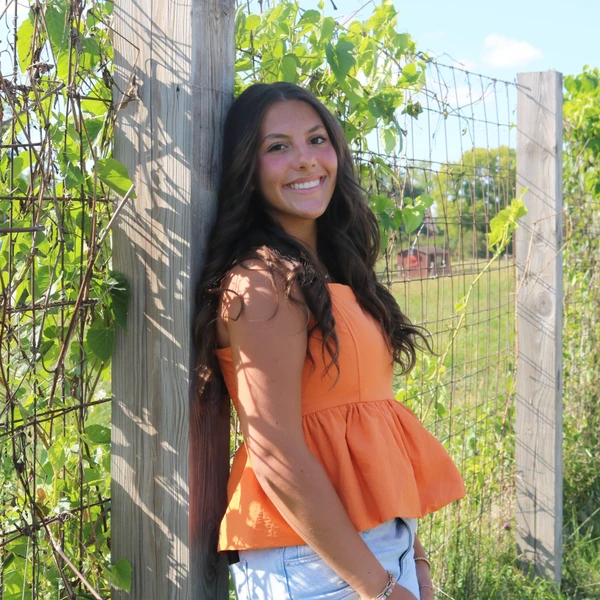
Taylor McKenzie

1x

Finalist

1x

Winner

Bio

I am Taylor McKenzie, a recent graduate of Staley High School with a 4.0 GPA and a strong record of leadership and community involvement. Throughout high school, I actively participated in soccer and tennis, earning multiple awards for my athletic performance and teamwork. Beyond athletics, I have dedicated significant time to volunteering in my community, supporting youth through mentoring and coaching, assisting disabled individuals in artistic and athletic programs, and contributing to health-related charity initiatives. My commitment to helping others has shaped my character and fueled my passion for pursuing a degree in Radiologic Technology, where I can combine my skills and compassion to make a meaningful impact on patient care and community well-being.

Education

Northwest Missouri State University

Bachelor's degree program
2025 - 2029
  • Majors:
    • Health Professions and Related Clinical Sciences, Other
    • Nuclear and Industrial Radiologic Technologies/Technicians
Staley High School

High School
2021 - 2025

Miscellaneous

  • Desired degree level:

    Bachelor's degree program

  • Graduate schools of interest:

  • Transfer schools of interest:

  • Majors of interest:

  • Not planning to go to medical school
  • Career

    • Dream career field:

      Hospital & Health Care

    • Dream career goals:

      Rad Tech

    • Team Member

      Andy's Frozen Custard
      2025 – 2025
    • Team Member

      Nektar Juice Bat
      2024 – 20251 year

    Sports

    Soccer

    Club
    2011 – 202514 years

    Soccer

    Junior Varsity
    2021 – 20243 years

    Tennis

    Junior Varsity
    2021 – 20254 years

    Arts

    • Staley Art

      Drawing
      2021 – 2025

    Public services

    • Volunteering

      KCSG — Youth Mentor
      2022 – 2024
    • Volunteering

      NKCSD — Tutor
      2021 – 2025
    • Volunteering

      Smithville Parks and Recreation — coach
      2023 – 2023
    • Volunteering

      NHS — volunteer
      2022 – 2025
    • Volunteering

      Friends and Family NPO — volunteer
      2022 – Present

    Future Interests

    Advocacy

    Volunteering

    Philanthropy

    Learner Mental Health Empowerment for Health Students Scholarship
    Mental health is deeply important to me as a student because I have witnessed firsthand how profoundly it affects every aspect of a person's life. During my volunteer work at a public separate day school for students with behavioral struggles, I worked with young people who were navigating significant emotional disturbances and mental health challenges. Many of these students had experienced trauma, anxiety, depression, and other conditions that shaped how they learned, interacted with peers, and saw themselves. That experience fundamentally changed how I understand mental health, it is not separate from academic success, athletic performance, or personal growth. It is foundational to all of it. What struck me most during that work was how much students' behavior and academic struggles were rooted in untreated or unmanaged mental health issues. A student acting out in class was often communicating that they were overwhelmed or scared. A student withdrawing from peers was sometimes processing grief or anxiety. When I took time to listen without judgment, to create a safe space where they could talk, or to help connect them with counseling resources, I saw real shifts in their confidence and engagement. Those moments taught me that advocacy for mental health begins with presence and compassion. It means showing up consistently, listening carefully, and treating mental health challenges with the same seriousness we give physical illness. At Northwest, I continue this advocacy through my volunteer work with youth with special needs and through my involvement empowering young girls. I intentionally create environments where students feel comfortable talking about struggles, where asking for help is normalized, and where I model that mental health is a priority. Within my sorority, I advocate by sharing mental health resources, checking in with sisters who seem stressed, and speaking openly about the importance of counseling and self care. I encourage peers to seek support from campus counseling services and help normalize conversations about anxiety, depression, and stress management. I also recognize that mental health advocacy means understanding how systems either support or fail vulnerable populations. My volunteer experience showed me that students with behavioral and emotional challenges often lack adequate resources, trained staff, and supportive environments. Some fell through cracks in the system because their needs were seen as discipline problems rather than mental health crises. That injustice motivates me to be an advocate who speaks up, who connects people to resources, and who refuses to dismiss struggling individuals as troublemakers. This understanding deeply informs my career goals in radiologic technology and healthcare. Patients coming for imaging often experience fear, anxiety, and stress. Many are dealing with serious diagnoses or health crises that affect their emotional wellbeing. I want to be a technologist who recognizes that mental and physical health are intertwined, who communicates with compassion, and who takes time to ease a patient's emotional distress alongside providing excellent clinical care. I also hope to advocate within healthcare settings for better mental health support and resources for both patients and staff. Mental health advocacy, for me, is about small consistent actions: listening without rushing, normalizing mental health conversations, connecting people to help, and treating emotional struggles with respect and care. I believe that when we prioritize mental health in our communities, we create environments where people can truly thrive. That commitment will guide my work as a student, a healthcare professional, and a community member.
    Learner Calculus Scholarship
    Calculus is essential in the STEM field because it gives professionals the tools to analyze change, predict outcomes, and solve complex real-world problems. From medicine and engineering to environmental science and technology, calculus supports the study of systems that evolve over time. Its applications help scientists and engineers make informed decisions, improve designs, and develop innovations that shape everyday life. In medicine and healthcare, calculus is critical for understanding biological processes and improving patient care. Pharmacologists use calculus to determine how quickly medications are absorbed into the bloodstream and how drug concentrations change over time, ensuring safe and effective dosing. In radiologic technology specifically, calculus underlies the physics of imaging equipment. Technologists must understand how radiation behaves, how it interacts with body tissues, and how imaging devices process and reconstruct images from raw data. Calculus helps explain the mathematical principles behind CT scans, MRI machines, and X-ray technology. Additionally, calculus is used to calculate appropriate radiation doses, balancing the need for clear diagnostic images with patient safety. Radiologic technologists who understand these mathematical foundations can troubleshoot equipment issues, optimize image quality, and contribute to advancing imaging techniques. In engineering and physics, calculus is indispensable. Engineers use calculus to design structures, machines, and systems by calculating forces, stress, motion, and energy distribution. Whether designing a bridge, an aircraft, or a medical device, engineers rely on calculus to predict how systems will behave under different conditions. Physicists use calculus to describe fundamental laws of motion, gravity, electromagnetism, and quantum mechanics. These applications demonstrate how calculus transforms theoretical understanding into practical innovation. Biology, chemistry, and environmental science also depend heavily on calculus. Biologists use calculus to model population growth, understand enzyme kinetics, and predict disease spread through populations. Chemists apply calculus to analyze reaction rates and determine how quickly chemical processes occur. Environmental scientists use calculus to model climate change, predict resource depletion, and understand ecosystem dynamics. These applications show how calculus helps professionals make informed decisions about complex natural systems. In modern technology and data science, calculus is foundational. Machine learning algorithms, artificial intelligence systems, and data analysis techniques all rely on calculus for optimization and improvement. Companies use calculus-based methods to understand user behavior, improve recommendations, and develop new technologies. As technology continues to advance, calculus remains essential for innovation. What makes calculus so powerful is its ability to address real-world problems that involve change and uncertainty. Scientists and engineers use calculus to predict outcomes, optimize performance, and design solutions that improve human life. A radiologic technologist who understands the calculus behind imaging technology becomes a more informed professional capable of delivering better patient care and contributing to medical advances. For STEM professionals at any level, calculus provides the mathematical literacy necessary to understand technical literature, collaborate with colleagues, and innovate within their fields. Whether working in healthcare, engineering, research, or technology, a solid grasp of calculus empowers professionals to think critically, solve complex problems, and make meaningful contributions to their disciplines and communities.
    Robert F. Lawson Fund for Careers that Care
    I am Taylor, attending Northwest Missouri State University studying Radiologic Sciences, and I try to approach every part of my life with purpose, humility, and consistency. Maintaining a 4.0 GPA has been important to me because it reflects the discipline and work ethic I want to bring into my future career. Outside the classroom, I stay involved in my sorority, intramural activities, and volunteer work, all of which have helped shape me into a well rounded person. These experiences have taught me how to lead, work with others, stay committed, and build meaningful relationships with people from different backgrounds. My interest in healthcare grew from both my personal background and the example set by my family. As a child, I spent a great deal of time in hospitals undergoing tests and scans. Those experiences could be overwhelming, but I still remember the technologists who treated me with patience and kindness. They explained what was happening, helped me feel calm, and showed me how much compassion matters in healthcare. I also grew up in a family that valued science, curiosity, and hard work. My father worked as an engineering technician, my mother taught science, and my older brother pursued research. Their influence gave me a strong appreciation for learning and problem solving, while my own experiences helped me realize that I wanted to use those strengths in a career centered on caring for people. That calling led me to radiologic technology, and more specifically to my goal of specializing in MRI. I am currently working toward acceptance into the Saint Luke's program, where I hope to continue developing the technical knowledge and hands on skills needed to serve patients well. What draws me to this field is the combination of science, precision, and human connection. Radiologic technologists play a vital role in helping doctors make accurate diagnoses, but they also have the opportunity to make patients feel safe during vulnerable moments. I want to be the kind of professional who delivers both excellent imaging and genuine reassurance. My volunteer work has strengthened this goal even more. Working with young girls and youth with special needs has taught me patience, empathy, and the importance of showing up for others in consistent ways. Through those experiences, I have learned that positive impact often begins with small actions such as listening carefully, explaining something clearly, or making someone feel included and valued. Being involved in my campus community through my sorority and intramurals has also helped me grow in teamwork, accountability, and service. Together, these parts of my life have shown me that leadership is not about recognition. It is about using your abilities to support others and make your community stronger. Through my career, I plan to make a positive impact by giving patients the same sense of comfort and care that once made a difference for me. I want to communicate clearly with patients, ease fear during imaging procedures, and treat every person with dignity and respect. I also plan to continue growing professionally so I can provide accurate, high quality imaging that supports better outcomes for patients and healthcare teams. In the long term, I hope to serve my community beyond the hospital by supporting outreach efforts, health education, and mentorship for young people who are interested in healthcare careers. I especially want to encourage young women and students from underrepresented backgrounds to believe they belong in science and medicine. My goal is to build a career that combines technical excellence, compassion, and service so that I can make a meaningful difference both in individual lives and in the wider community.
    Maxwell Tuan Nguyen Memorial Scholarship
    My inspiration to pursue a career in healthcare grew from personal experience, family influence, and a deep commitment to service. As a child I spent many hours in and out of hospitals undergoing tests and scans that were often frightening and confusing. The machines were intimidating, the environments unfamiliar, and the uncertainty about what would happen next created real anxiety. What changed those experiences was the presence of skilled, compassionate technologists who took time to explain procedures step by step, offered calm reassurance, and treated me as a person rather than a case number. Those individuals showed me that technical competence paired with genuine care can transform a patient's entire experience during vulnerable moments. Growing up I was also surrounded by people who valued science and problem solving. My father worked as an engineering technician, my mother taught science in the classroom, and my older brother pursued a career in research. Their curiosity, steady work ethic, and commitment to understanding how things work inspired me to value careful observation, hands-on learning, and real-world application. Yet I knew I wanted to forge my own path within science, one that combined rigorous technical training with direct, personal service to others. That is when I discovered radiologic technology and, specifically, my passion for MRI specialization. In college my commitment to service deepened through volunteer work with young girls and youth with special needs. Supporting these populations taught me profound lessons about empathy, patience, and the transformative power of consistent presence. I learned that small acts of care like, taking time to explain something clearly, adapting an activity so everyone can participate, or simply checking in with someone who is struggling can often create the most meaningful change. This work reinforced my belief that science must always be grounded in humanity. Now as a sophomore at Northwest Missouri State maintaining a 4.0 GPA and pursuing Radiologic Sciences, I am working toward acceptance into the Saint Luke's program with a specialization in MRI. My academic foundation is solid, but my true education comes from understanding how knowledge translates into care. I plan to make a difference through my career in several concrete ways. First, I will prioritize patient-centered communication, ensuring that individuals undergoing imaging feel informed, respected, and less anxious about their procedures. Drawing from my own childhood experiences, I will explain each step clearly and create a calm, professional environment where patients feel safe. Second, I will pursue advanced training and continuing education so I can provide accurate, high-quality diagnostic imaging that directly supports better clinical outcomes. Third, I will advocate for equitable access to care, working to ensure that financial barriers or geographic limitations do not prevent people from receiving necessary imaging services. Beyond clinical practice, I plan to expand community health initiatives through screening events, education workshops, and mentorship programs that connect scientific knowledge with practical public benefit. I want to mentor other young women and underrepresented students considering careers in healthcare and STEM so they see themselves reflected in the field. At my core I am driven by a genuine desire to combine technical excellence with compassionate service. Healthcare is not simply about operating machines accurately; it is about treating each person with dignity, reducing suffering, and advocating for access and equity. My career will be defined by that commitment: using rigorous scientific training to provide skilled care while never losing sight of the human being I am serving.
    Willie Louis Pegues Science Scholarship
    From a young age I was surrounded by people who loved solving problems and explaining how the world works. My father worked as an engineering technician, my mother taught science in the classroom, and my older brother pursued a career in research. Their curiosity and steady work ethic inspired me to value careful observation, hands‑on learning, and the real-world impact of scientific knowledge. Even so, I wanted to find my own path within science—one that combined technical skill with direct, personal service. That is how I found radiology. My interest in the sciences deepened through childhood experiences in and out of hospitals, where I underwent tests and scans that were often frightening. What stood out most in those moments were the people who explained procedures clearly, offered calm reassurance, and treated me with dignity. Those technologists turned intimidating machines into understandable steps and gave me confidence during uncertain times. Their mix of technical competence and compassion showed me that science can be both exacting and deeply human. Volunteering later in life—mentoring youth, coaching, and supporting students in a special needs classroom—reinforced that I want to use scientific knowledge to help people directly. Academically I have pursued rigorous preparation. I completed an Early College program in high school while maintaining a 4.0 GPA and balancing athletics, recovery from injuries, and substantial volunteer commitments. Now at Northwest Missouri State I am enrolled in Radiologic Sciences coursework, maintaining a strong GPA, participating in sorority life and intramurals, and continuing independent volunteer work in a special needs classroom. My goal is to become a licensed radiologic technologist, gain acceptance into the Saint Luke’s program, and specialize in MRI so I can provide precise diagnostic imaging and compassionate patient care. I approach this career as a scientist in practice. Radiologic technology demands methodical problem solving, critical thinking, and continual learning—skills I have developed through college coursework and hands‑on volunteering. I plan to complete required clinical rotations, earn certifications in advanced imaging modalities, and pursue continuing education so I can contribute to improved diagnostic processes and patient outcomes. Beyond clinical competence, I am committed to patient-centered communication: clearly explaining procedures, reducing anxiety, and advocating for equitable access to care. Receiving this scholarship would make a tangible difference in that journey. Financial support would reduce the need for part‑time work that competes with study and clinical hours, allowing me to invest time in specialized MRI coursework, hands‑on workshops, and certifications that strengthen my clinical readiness. It would also enable me to expand community outreach initiatives—screening events, health education workshops, and inclusive sports clinics—that connect scientific knowledge with practical public benefit. Scholarships do more than fund classes; they create bandwidth for deeper learning, mentorship, and service. At my core I am driven by curiosity, compassion, and a desire to translate science into care. Inspired by a family of problem solvers, I chose a path that lets me apply scientific principles directly to people’s lives. With rigorous training, ongoing education, and the support this scholarship would provide, I will work to deliver accurate diagnostic imaging, ease patients’ fears during testing, and contribute to a healthcare system that respects both evidence and humanity.
    Henry Respert Alzheimer's and Dementia Awareness Scholarship
    The Slow Fade: Living with Nay Nay’s Alzheimer’s My grandmother, whom I call Nay Nay, has been a constant presence in my life for as long as I can remember. Before I started school, she cared for me every day while my parents worked. Nay Nay taught me how to braid hair, how to make simple snacks, and how to sit quietly and listen when someone needed a story or a shoulder. She was the steady hand that smoothed life’s small bumps. Last year, when our family finally received the diagnosis of Alzheimer’s disease, it felt as if the steady rhythm that defined my childhood had begun to skip. The earliest signs were small and easy to explain away. She would leave the kettle on the stove or misplace a pair of glasses. Then, gradually, the lapses grew larger and more frequent. Her hygiene began to decline; she forgot to bathe regularly and her clothing sometimes looked unkempt. She started forgetting to pay bills and would deny the missed payments when my mom or aunt tried to help. What made these changes especially painful was that Nay Nay had always been fiercely independent. For decades she managed her affairs, resisted help, and took pride in doing things on her own. Alzheimer’s slowly stripped away both memory and the pride tied to autonomy, and yet her instinct was to refuse the very care she needed. Watching her memory fade has been heartbreaking. There are moments when she brightens and the woman I know returns: she hums an old tune, tells a childhood story, or recognizes the scent of a familiar dish. Those moments feel like small islands of who she used to be, and they make the losses sharper. Other times she seems lost in a world that none of us can reach. She asks the same questions repeatedly, forgets names of close family members, or becomes confused about where she is. It is difficult to reconcile the woman who taught me to be brave and creative with the frightened, uncertain person who sometimes stares at me without recognition. The emotional toll on my family has been profound. My parents and aunt have stepped into roles they never anticipated: advocates, caregivers, troubleshooters, and sometimes, emotional anchors for each other. Decisions we assumed we would never have to make—about finances, legal matters, and living arrangements—have become urgent. My mom and aunt have tried to coordinate help, but Nay Nay’s reluctance to accept assistance complicates every plan. There is a constant negotiation between respecting her dignity and ensuring her safety. Family conversations often turn into cautious strategizing: who will drive her to appointments, who will manage bills discreetly, how can we gently intervene when she refuses help? Practical challenges multiply. Everyday tasks that once fit neatly into routines now require extra attention and planning. Medication must be monitored closely. Doctors’ appointments and assessments replace casual visits. There are nights when one of us sleeps poorly, listening for noises or worrying that something might go wrong. Financial worries compound emotional stress—missed payments, the need for in-home support, and the eventual possibility of long-term care all present heavy realities. The strain has sometimes sparked tension between family members, each coping differently with grief, guilt, and frustration. Yet these moments of strain are balanced by acts of deep compassion: my aunt sitting with Nay Nay for hours so my mom could work, my dad fixing small things around the house to make it safer, and our extended family coordinating to spend time with her so she is not isolated. Alzheimer’s has also reshaped my own understanding of identity, memory, and love. As someone who grew up under Nay Nay’s care, I feel a personal sense of loss that is both nostalgic and present. The rituals that used to define our relationship—cooking together, telling stories, sharing small celebrations—have been interrupted. I have learned that love in this context becomes more about presence than productivity: showing up even when there is no recognition, offering a hand even if it is not taken in the same way, and finding ways to connect that do not rely on shared memories. One important lesson I have learned is the value of patience. Alzheimer’s strips away the convenience of assumed continuity; you cannot rush someone back to who they were. Instead, you must meet them where they are. Patience means listening to a story repeated a dozen times as if it were new; it means answering questions again without showing fatigue; it means allowing small victories—like a moment of genuine laughter—to be celebrated with gratitude. Patience also extends to family members. Each of us grieves differently, and learning to offer grace when tempers flare has been essential. I have also learned about the importance of dignity. Even when Nay Nay’s memory fails, she remains a person with preferences, values, and feelings. Preserving dignity can be as simple as asking for her opinion, involving her in small decisions, or explaining changes gently rather than imposing them. When the family treats her as someone worthy of respect, our efforts to help feel less like control and more like partnership. Alzheimer’s has taught us to slow down and appreciate the small meaningful moments. A shared cup of tea, a favorite song on the radio, or the way she lights up at the sight of an old photograph has become profoundly significant. Those fragments of clarity remind us that even as memory fades, emotional traces remain. Love can be expressed in simpler forms: a warm blanket, hands held for a few minutes, or a familiar meal prepared exactly how she liked it. Community support has been another crucial lesson. Talking with neighbors, other family members, and medical professionals has helped us navigate logistics and emotional fatigue. Support groups—whether online forums or local meetings—have offered practical tips and a sense that we are not alone. These networks validate the hard work of caregiving and provide resources for when our family’s capacity is limited. The need for community becomes especially clear when crises occur: a neighbor noticing a door left open, a friend offering to drive to an appointment, or a church member sitting with Nay Nay so family members can rest. Perhaps most unexpectedly, caring for Nay Nay has reshaped my long-term perspective on life and responsibility. I am learning that caregiving is not a one-time sacrifice but a long-term commitment that asks families to reorganize priorities, finances, and time. It has also sparked questions about how society supports the aging and vulnerable—questions that go beyond our family to broader issues of healthcare, eldercare policy, and social attitudes toward dementia. Observing the gaps and the strengths in our support systems has made me more aware of the social dimensions of illness. In the end, Alzheimer’s has been a teacher in loss and love. Losing pieces of Nay Nay’s memory has been unbearably sad, but the experience has deepened our family’s compassion and resilience. We have learned to be patient, to preserve dignity, to cherish simple moments, and to ask for help when we need it. Nay Nay may not remember every face or every name, but she has left an imprint that continues to shape who I am. In caring for her, I am learning to carry forward the kindness she gave me as a child—with gentleness, presence, and an open heart.
    Sloane Stephens Doc & Glo Scholarship
    I am deeply inspired by Sloane Stephens’ commitment to uplifting underserved communities through education, empowerment, and service—values that strongly resonate with my own life experiences and goals. Like Sloane, I believe that resilience, kindness, and self-belief are essential not only to personal success but also to making a meaningful impact in the lives of others. I will be starting my studies in Radiology at Northwest Missouri State University in the fall of 2025, with a focus on women’s health and mammography. Through this path, I hope to contribute to improving healthcare outcomes, especially by promoting early detection and compassionate care for women. Throughout high school, I was actively engaged in numerous clubs and played tennis all four years, which helped build my discipline, time management, and teamwork skills. Being part of a tennis team taught me perseverance and how to support teammates through challenges—qualities that Sloane embodies both on and off the court. Beyond sports, I dedicated a significant portion of my time to community service, volunteering at local organizations, coaching younger athletes, tutoring classmates, and mentoring peers. These experiences enriched my leadership abilities and strengthened my passion for giving back to the community. My personal health journey has also deeply influenced my desire to pursue healthcare. From a young age, I faced ongoing health challenges that required numerous hospital visits and diagnostic imaging procedures, including MRIs, CT scans, and X-rays. Navigating these experiences gave me a firsthand understanding of how crucial compassionate and skilled care is during vulnerable times. It also sparked my interest in radiology and the power of imaging technologies to provide critical information that guides treatment and saves lives. The mission of the Sloane Stephens Doc & Glo Scholarship, honoring her grandparents’ legacy of resilience, kindness, and belief in education, aligns perfectly with my values. I admire how Sloane has used her platform to uplift underserved youth and create opportunities where they might not otherwise exist. This inspires me to continue seeking ways to serve and empower others, especially through education and healthcare. Receiving this scholarship would not only support my academic journey but also connect me to a community that celebrates perseverance and service. I am excited to carry forward the spirit of giving back and resilience as I pursue my degree and work toward becoming a nuclear medicine technologist specializing in mammography. My goal is to provide patients with accurate diagnostic care delivered with empathy and respect, helping them face their health challenges with confidence. Thank you for considering my application. I am honored to share my story and hope to contribute to the legacy of kindness, empowerment, and excellence that this scholarship represents.