Hobbies and interests
Tennis
Soccer
National Honor Society (NHS)
Volunteering
Coaching
Mentoring
Tutoring
Art
Advocacy And Activism
Animals
Babysitting And Childcare
Exercise And Fitness
Pickleball
Reading
Football
Hiking And Backpacking
Drawing And Illustration
Community Service And Volunteering
Reading
Self-Help
Christianity
Romance
I read books multiple times per week
Taylor McKenzie
1x
Finalist1x
WinnerTaylor McKenzie
1x
Finalist1x
WinnerBio
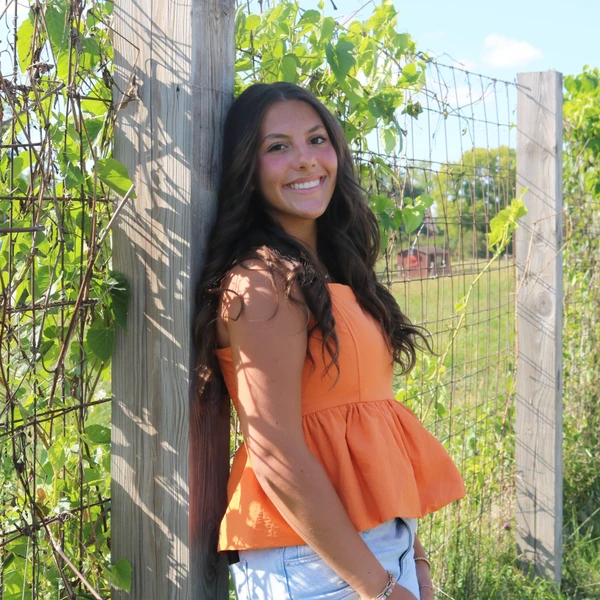
I am Taylor McKenzie, a recent graduate of Staley High School with a 4.0 GPA and a strong record of leadership and community involvement. Throughout high school, I actively participated in soccer and tennis, earning multiple awards for my athletic performance and teamwork. Beyond athletics, I have dedicated significant time to volunteering in my community, supporting youth through mentoring and coaching, assisting disabled individuals in artistic and athletic programs, and contributing to health-related charity initiatives. My commitment to helping others has shaped my character and fueled my passion for pursuing a degree in Radiologic Technology, where I can combine my skills and compassion to make a meaningful impact on patient care and community well-being.
Education
Northwest Missouri State University
Bachelor's degree programMajors:
- Nuclear and Industrial Radiologic Technologies/Technicians
Staley High School
High SchoolMiscellaneous
Desired degree level:
Bachelor's degree program
Graduate schools of interest:
Transfer schools of interest:
Majors of interest:
Career
Dream career field:
Hospital & Health Care
Dream career goals:
Rad Tech
Team Member
Andy's Frozen Custard2025 – 2025Team Member
Nektar Juice Bat2024 – 20251 year
Sports
Soccer
Club2011 – 202514 years
Soccer
Junior Varsity2021 – 20243 years
Tennis
Junior Varsity2021 – 20254 years
Arts
Staley Art
Drawing2021 – 2025
Public services
Volunteering
KCSG — Youth Mentor2022 – 2024Volunteering
NKCSD — Tutor2021 – 2025Volunteering
Smithville Parks and Recreation — coach2023 – 2023Volunteering
NHS — volunteer2022 – 2025Volunteering
Friends and Family NPO — volunteer2022 – Present
Future Interests
Advocacy
Volunteering
Philanthropy
Willie Louis Pegues Science Scholarship
From a young age I was surrounded by people who loved solving problems and explaining how the world works. My father worked as an engineering technician, my mother taught science in the classroom, and my older brother pursued a career in research. Their curiosity and steady work ethic inspired me to value careful observation, hands‑on learning, and the real-world impact of scientific knowledge. Even so, I wanted to find my own path within science—one that combined technical skill with direct, personal service. That is how I found radiology.
My interest in the sciences deepened through childhood experiences in and out of hospitals, where I underwent tests and scans that were often frightening. What stood out most in those moments were the people who explained procedures clearly, offered calm reassurance, and treated me with dignity. Those technologists turned intimidating machines into understandable steps and gave me confidence during uncertain times. Their mix of technical competence and compassion showed me that science can be both exacting and deeply human. Volunteering later in life—mentoring youth, coaching, and supporting students in a special needs classroom—reinforced that I want to use scientific knowledge to help people directly.
Academically I have pursued rigorous preparation. I completed an Early College program in high school while maintaining a 4.0 GPA and balancing athletics, recovery from injuries, and substantial volunteer commitments. Now at Northwest Missouri State I am enrolled in Radiologic Sciences coursework, maintaining a strong GPA, participating in sorority life and intramurals, and continuing independent volunteer work in a special needs classroom. My goal is to become a licensed radiologic technologist, gain acceptance into the Saint Luke’s program, and specialize in MRI so I can provide precise diagnostic imaging and compassionate patient care.
I approach this career as a scientist in practice. Radiologic technology demands methodical problem solving, critical thinking, and continual learning—skills I have developed through college coursework and hands‑on volunteering. I plan to complete required clinical rotations, earn certifications in advanced imaging modalities, and pursue continuing education so I can contribute to improved diagnostic processes and patient outcomes. Beyond clinical competence, I am committed to patient-centered communication: clearly explaining procedures, reducing anxiety, and advocating for equitable access to care.
Receiving this scholarship would make a tangible difference in that journey. Financial support would reduce the need for part‑time work that competes with study and clinical hours, allowing me to invest time in specialized MRI coursework, hands‑on workshops, and certifications that strengthen my clinical readiness. It would also enable me to expand community outreach initiatives—screening events, health education workshops, and inclusive sports clinics—that connect scientific knowledge with practical public benefit. Scholarships do more than fund classes; they create bandwidth for deeper learning, mentorship, and service.
At my core I am driven by curiosity, compassion, and a desire to translate science into care. Inspired by a family of problem solvers, I chose a path that lets me apply scientific principles directly to people’s lives. With rigorous training, ongoing education, and the support this scholarship would provide, I will work to deliver accurate diagnostic imaging, ease patients’ fears during testing, and contribute to a healthcare system that respects both evidence and humanity.
Henry Respert Alzheimer's and Dementia Awareness Scholarship
The Slow Fade: Living with Nay Nay’s Alzheimer’s
My grandmother, whom I call Nay Nay, has been a constant presence in my life for as long as I can remember. Before I started school, she cared for me every day while my parents worked. Nay Nay taught me how to braid hair, how to make simple snacks, and how to sit quietly and listen when someone needed a story or a shoulder. She was the steady hand that smoothed life’s small bumps. Last year, when our family finally received the diagnosis of Alzheimer’s disease, it felt as if the steady rhythm that defined my childhood had begun to skip.
The earliest signs were small and easy to explain away. She would leave the kettle on the stove or misplace a pair of glasses. Then, gradually, the lapses grew larger and more frequent. Her hygiene began to decline; she forgot to bathe regularly and her clothing sometimes looked unkempt. She started forgetting to pay bills and would deny the missed payments when my mom or aunt tried to help. What made these changes especially painful was that Nay Nay had always been fiercely independent. For decades she managed her affairs, resisted help, and took pride in doing things on her own. Alzheimer’s slowly stripped away both memory and the pride tied to autonomy, and yet her instinct was to refuse the very care she needed.
Watching her memory fade has been heartbreaking. There are moments when she brightens and the woman I know returns: she hums an old tune, tells a childhood story, or recognizes the scent of a familiar dish. Those moments feel like small islands of who she used to be, and they make the losses sharper. Other times she seems lost in a world that none of us can reach. She asks the same questions repeatedly, forgets names of close family members, or becomes confused about where she is. It is difficult to reconcile the woman who taught me to be brave and creative with the frightened, uncertain person who sometimes stares at me without recognition.
The emotional toll on my family has been profound. My parents and aunt have stepped into roles they never anticipated: advocates, caregivers, troubleshooters, and sometimes, emotional anchors for each other. Decisions we assumed we would never have to make—about finances, legal matters, and living arrangements—have become urgent. My mom and aunt have tried to coordinate help, but Nay Nay’s reluctance to accept assistance complicates every plan. There is a constant negotiation between respecting her dignity and ensuring her safety. Family conversations often turn into cautious strategizing: who will drive her to appointments, who will manage bills discreetly, how can we gently intervene when she refuses help?
Practical challenges multiply. Everyday tasks that once fit neatly into routines now require extra attention and planning. Medication must be monitored closely. Doctors’ appointments and assessments replace casual visits. There are nights when one of us sleeps poorly, listening for noises or worrying that something might go wrong. Financial worries compound emotional stress—missed payments, the need for in-home support, and the eventual possibility of long-term care all present heavy realities. The strain has sometimes sparked tension between family members, each coping differently with grief, guilt, and frustration. Yet these moments of strain are balanced by acts of deep compassion: my aunt sitting with Nay Nay for hours so my mom could work, my dad fixing small things around the house to make it safer, and our extended family coordinating to spend time with her so she is not isolated.
Alzheimer’s has also reshaped my own understanding of identity, memory, and love. As someone who grew up under Nay Nay’s care, I feel a personal sense of loss that is both nostalgic and present. The rituals that used to define our relationship—cooking together, telling stories, sharing small celebrations—have been interrupted. I have learned that love in this context becomes more about presence than productivity: showing up even when there is no recognition, offering a hand even if it is not taken in the same way, and finding ways to connect that do not rely on shared memories.
One important lesson I have learned is the value of patience. Alzheimer’s strips away the convenience of assumed continuity; you cannot rush someone back to who they were. Instead, you must meet them where they are. Patience means listening to a story repeated a dozen times as if it were new; it means answering questions again without showing fatigue; it means allowing small victories—like a moment of genuine laughter—to be celebrated with gratitude. Patience also extends to family members. Each of us grieves differently, and learning to offer grace when tempers flare has been essential.
I have also learned about the importance of dignity. Even when Nay Nay’s memory fails, she remains a person with preferences, values, and feelings. Preserving dignity can be as simple as asking for her opinion, involving her in small decisions, or explaining changes gently rather than imposing them. When the family treats her as someone worthy of respect, our efforts to help feel less like control and more like partnership.
Alzheimer’s has taught us to slow down and appreciate the small meaningful moments. A shared cup of tea, a favorite song on the radio, or the way she lights up at the sight of an old photograph has become profoundly significant. Those fragments of clarity remind us that even as memory fades, emotional traces remain. Love can be expressed in simpler forms: a warm blanket, hands held for a few minutes, or a familiar meal prepared exactly how she liked it.
Community support has been another crucial lesson. Talking with neighbors, other family members, and medical professionals has helped us navigate logistics and emotional fatigue. Support groups—whether online forums or local meetings—have offered practical tips and a sense that we are not alone. These networks validate the hard work of caregiving and provide resources for when our family’s capacity is limited. The need for community becomes especially clear when crises occur: a neighbor noticing a door left open, a friend offering to drive to an appointment, or a church member sitting with Nay Nay so family members can rest.
Perhaps most unexpectedly, caring for Nay Nay has reshaped my long-term perspective on life and responsibility. I am learning that caregiving is not a one-time sacrifice but a long-term commitment that asks families to reorganize priorities, finances, and time. It has also sparked questions about how society supports the aging and vulnerable—questions that go beyond our family to broader issues of healthcare, eldercare policy, and social attitudes toward dementia. Observing the gaps and the strengths in our support systems has made me more aware of the social dimensions of illness.
In the end, Alzheimer’s has been a teacher in loss and love. Losing pieces of Nay Nay’s memory has been unbearably sad, but the experience has deepened our family’s compassion and resilience. We have learned to be patient, to preserve dignity, to cherish simple moments, and to ask for help when we need it. Nay Nay may not remember every face or every name, but she has left an imprint that continues to shape who I am. In caring for her, I am learning to carry forward the kindness she gave me as a child—with gentleness, presence, and an open heart.
Sloane Stephens Doc & Glo Scholarship
I am deeply inspired by Sloane Stephens’ commitment to uplifting underserved communities through education, empowerment, and service—values that strongly resonate with my own life experiences and goals. Like Sloane, I believe that resilience, kindness, and self-belief are essential not only to personal success but also to making a meaningful impact in the lives of others. I will be starting my studies in Radiology at Northwest Missouri State University in the fall of 2025, with a focus on women’s health and mammography. Through this path, I hope to contribute to improving healthcare outcomes, especially by promoting early detection and compassionate care for women.
Throughout high school, I was actively engaged in numerous clubs and played tennis all four years, which helped build my discipline, time management, and teamwork skills. Being part of a tennis team taught me perseverance and how to support teammates through challenges—qualities that Sloane embodies both on and off the court. Beyond sports, I dedicated a significant portion of my time to community service, volunteering at local organizations, coaching younger athletes, tutoring classmates, and mentoring peers. These experiences enriched my leadership abilities and strengthened my passion for giving back to the community.
My personal health journey has also deeply influenced my desire to pursue healthcare. From a young age, I faced ongoing health challenges that required numerous hospital visits and diagnostic imaging procedures, including MRIs, CT scans, and X-rays. Navigating these experiences gave me a firsthand understanding of how crucial compassionate and skilled care is during vulnerable times. It also sparked my interest in radiology and the power of imaging technologies to provide critical information that guides treatment and saves lives.
The mission of the Sloane Stephens Doc & Glo Scholarship, honoring her grandparents’ legacy of resilience, kindness, and belief in education, aligns perfectly with my values. I admire how Sloane has used her platform to uplift underserved youth and create opportunities where they might not otherwise exist. This inspires me to continue seeking ways to serve and empower others, especially through education and healthcare.
Receiving this scholarship would not only support my academic journey but also connect me to a community that celebrates perseverance and service. I am excited to carry forward the spirit of giving back and resilience as I pursue my degree and work toward becoming a nuclear medicine technologist specializing in mammography. My goal is to provide patients with accurate diagnostic care delivered with empathy and respect, helping them face their health challenges with confidence.
Thank you for considering my application. I am honored to share my story and hope to contribute to the legacy of kindness, empowerment, and excellence that this scholarship represents.