Hobbies and interests
Lacrosse
Flying And Aviation
Anthropology
Anatomy
Art
Baking
Biomedical Sciences
Violin
Criminology
Japanese
Travel And Tourism
Reading
Adult Fiction
Anthropology
Classics
Fantasy
Psychology
Young Adult
Spirituality
Social Science
Adventure
Biography
I read books multiple times per week
Taylor Davis
1x
Finalist
Taylor Davis
1x
FinalistBio
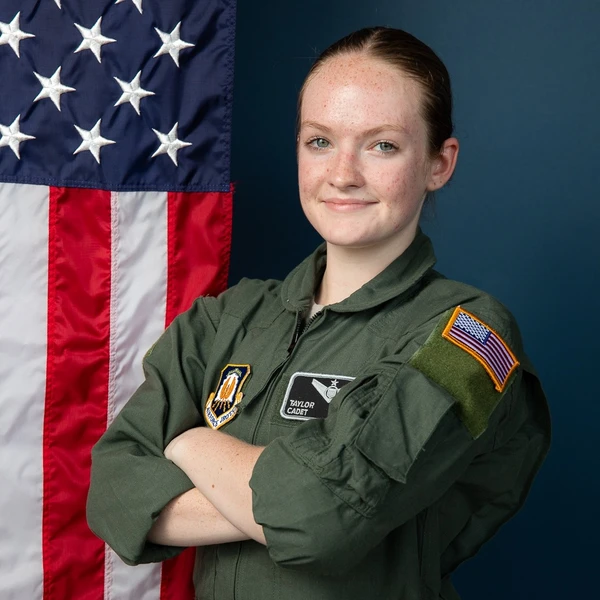
I'm most passionate about developing my education, leadership, and physical capabilities while pursuing my own hobbies. I love playing and competing in lacrosse, rock climbing, graphic design, and flying. I hope to make the military my career and pursue information operations or becoming a foreign area officer after I receive a bachelor's degree in Behavioral Sciences and a minor in Japanese. I'm passionate about both learning and teaching as I grow into my role as an active-duty student and the United States Air Force Academy.
Education
United States Air Force Academy
Bachelor's degree programMajors:
- Behavioral Sciences
Dobyns - Bennett High School
High SchoolMiscellaneous
Desired degree level:
Master's degree program
Graduate schools of interest:
Transfer schools of interest:
Majors of interest:
- Behavioral Sciences
- Neurobiology and Neurosciences
- Foreign Languages, Literatures, and Linguistics, Other
- Anthropology
- Research and Experimental Psychology
- Social Work
Career
Dream career field:
Information Operations
Dream career goals:
I held this server role annually. I set up for the Annual Kingsport Chamber Dinner and ensured that food was served, drinks were filled, tables were cleaned, and 7+ tables of guests needs were fulfilled in a fast-paced environment.
Meadowview Conference Resort and Convention Center through A-1 Workforce and Onin Staffing2022 – 20253 years
Sports
Lacrosse
Varsity2021 – Present5 years
Research
Research and Experimental Psychology
AP Research — Researcher, Data Collector, Peer Reviewer, and Data Presenter2024 – 2025
Arts
Mountain Melody School of Music
Music2021 – 2024
Future Interests
Advocacy
Politics
Volunteering
Audra Dominguez "Be Brave" Scholarship
The Lakeland ATIS read off 35 degrees Celsius for the temperature at Kingsky Flight Academy on a sunny yet humid week in July. The cloud level was perfect for flying to other controlled and uncontrolled airports to practice for my mock check-ride. We cadets took up the pattern in our surrounding airports, crunching for time, to make up lessons and gain hours in order to move on to the final step: our check-ride. We were just a week away from graduation day and half the cadets still needed to complete their check-rides.
We 19 cadets in the 8-week program to receive our private pilot's license had lost approximately 1.5 weeks of flight time due to thunderstorms, low cloud levels, and chaotic Florida weather. With the program already condensed, our flight time had been shortened even more: it became crunch time by week four.
Flying in either the back or front of the plane some days for two four-hour blocks had been some of the most daunting tasks when trying to save time by flying with my battle buddy, Lauric. Studying my oral hand guide and ground school book in the back of the aircraft while Lauric and our instructor had been doing pattern work trying to nail the various landings and takeoffs for hours, and vice versa, had not been for the weak. Not only had Florida weather set us back, but passing our stage checks which encompassed ground and flight checks around every 2 weeks had been another stresser. Most, if not all, cadets had to redo lessons with our instructor, indicated by green pages placed in our lesson binders; I couldn’t say I didn’t have a handful. Making mistakes when already being behind due to weather had been incredibly humbling. Yet, it was a lesson I needed to learn.
For eight weeks, I’d learned not only to fly, but how to work as a team in the chaos of Florida weather, scheduling conflicts, mistakes, and preparing for our check-ride. Bringing order to this chaos was no easy feat both physically and mentally; from groggily waking up at 6 AM five times a week with my three roommates as we all could barely lift ourselves out of the beds to having group lectures at the airfield until 6 PM with our instructors trying to process concepts ranging from Bernoulli’s Principle to the fact that Bravo airspace is an upside down wedding cake to knowing that ICEFLAGS could save our lives. Learning day to day away from home, amid many moments of self-frustration and struggles, had been an awakening–a realization of how I needed to perform as both a student and a cadet in a new and strenuous environment.
Having been in this foreign and rigorous environment, I’ve come to know well that both patience and resilience are key factors in dealing with difficult situations. I’ll be forever grateful to have been taught by both the cadets and instructors what embracing the suck and pushing forwards truly means.
Kristinspiration Scholarship
I have always been interested in how the brain works and why people do the things they do from a psychological standpoint. From browsing anatomy and physiology textbooks in the 6th grade to taking and loving AP Biology and AP Psychology in 11th grade, I have known that I would find myself looking towards behavioral sciences. While I am passionate about this field, I also hope to further my academic knowledge in a leadership environment through a military career, especially because I enjoyed learning and teaching in AFJROTC. And now that I'm in college as well as in the military, it is vital that I use these same skills and passions to drive myself and others forward. I want to be the confident person others look at and think to themselves, "Well, maybe if she can do it, I can too," because I know exactly what it feels like to not have anyone and to feel incredibly out of place. One day, when I'm an officer in the Air Force, I want to be that same kind of leader, but with the experiences to fully back up that same confidence. With a degree in Behavioral Sciences and in the psychiatry and social work field, I'll be able to help those who need it, especially for all of the frightened girls out there who don't have anyone in environments that can be demanding and even demeaning.
When learning from my experiences as a student-athlete and leader, I’ve come to understand myself in ways that I don’t believe I could have found without the help of the people I’ve both known my entire life and recently met throughout my high school and college career. My mom–the woman who has raised me all by herself after proudly serving in the Air Force for four years–has never given me the idea that I couldn’t do whatever I set my mind to or be whomever I wanted to become. She has inspired me to become a confident, independent woman in this world and to pursue life with strength and resilience. Being a first-generation college student, I realize that with the support of my mom as well as my teachers and coaches, who have challenged me to learn grit, perseverance, and critical thinking, I wouldn’t have had the aspirations I have now or been able to grow into the person I am today. With lacrosse, I’ve learned teamwork on and off the field ever since my Freshman year when our girls' team first got started. I had grown to love the sport (and still do) and was a part of senior leadership, even with the hardships our team has faced as a growing team. With this, I can sympathize with the determination and patience it can take to see something grow to the best of its abilities, but I can also understand, as a student and athlete, how difficult it can be to do what’s best and reach those high expectations that have been set. I cannot wait to further these passions for learning and leading in college in hopes of gaining the knowledge I need to be successful and live life to the fullest. I believe that now, as a freshman in college with a pursuing military career in behavioral sciences, I can gain the knowledge I crave in a way that I couldn’t do normally; I could hone my academic and leadership skills in ways I’d always hoped so I can show my mom and all of the other girls who were afraid of opportunities like I was that it's possible.
Mental Health Profession Scholarship
Throughout middle school, high school--sometimes now in college--I struggled with an immense amount of anxiety and loneliness. I was basically afraid of everything and couldn't think straight because of how frightened I was of how others would perceive me. It wasn't until I joined AFJROTC in high school that I began to gain some sort of confidence. The course led me to go WAY out of my comfort zone with leadership roles, wearing a uniform, maintaining professionalism, and so much more. This mostly broke my fear because of the people I surrounded myself with, especially the few females who were in that course. My admiration for them drove me to be stronger since I believed that if they could do it, maybe I could.
Later in high school, when I maintained even greater leadership roles, I realized that involvement and encouragement were something that I knew from my own experience as a freshman was incredibly important. No matter the challenges, I knew how much my cadets, particularly my female ones, needed me to be a leader, and I will forever be grateful to have been there for them. I was one of only two female upperclassmen in my flight when I was flight commander, so I knew the importance of showing the new female cadets that they had someone whom they could always come to; and as the semester went by, they did. Even in my Senior year (a year later), I saw so many of those same cadets implementing what they’ve learned into their new flights as official upperclassmen, and I couldn’t be prouder. Throughout it all, leading and learning as a leader has been one of the most challenging aspects of my high school career, and now that I’ve delved into the hardships of both, I’ve come to know that these experiences have allowed me to grow as a student, cadet, and a leader.
And now that I'm in college as well as in the military, it is vital that I use these same skills and passions to drive myself and others forward. I want to be the confident person others look at and think to themselves, "Well, maybe if she can do it, I can too," because I know exactly what it feels like to not have anyone and to feel incredibly out of place. One day, when I'm an officer in the Air Force, I want to be that same kind of leader, but with the experiences to fully back up that same confidence. With a degree in Behavioral Sciences and in the psychiatry and social work field, I'll be able to help those who need it, especially for all of the frightened girls out there who don't have anyone in environments that can be demanding and even demeaning.
Fuerza de V.N.C.E. Scholarship
I’m grateful that I am able to use my physical and mental abilities to help others who are struggling or not as fortunate. I say this because I believe many people, including myself sometimes, take for granted what they can do so easily, especially when they haven’t been through all of life's hurdles yet. Yes, some may say how obvious it is to point out how healthy, young, and wealthy someone is, but today that is an absolute blessing and would be a waste not to help those who have had at least one of those things taken from them. There are just so many young men and women who are experiencing hardships that many don’t have to think twice about: paralysis, chronic illness, cancer, arthritis, dementia, abuse, lack of family and friends, not having a place to start, and so many other hurdles. With this, I would say that community service means to give your actions a place to do good for others who don't have the opportunity to perform the same tasks in order to create prosperity in your neighborhood, community, country, or even world.
Throughout my time in high school, I completed over 120 hours of community service through clubs and JROTC, and it’s definitely safe to say that I gained more perspective on my own community because of that. I learned how to do new things, like how to score a wrestling tournament or how to organize stadium concessions into the correct disposals. I have met so many people with stories that haven’t been heard in an incredibly long time, like from the sweet elders and veterans at the retirement homes our JROTC unit would perform flag foldings and color guards for. I’ve been able to hear younger generations' aspirations and fun questions about what I do, and to teach them what it means to help your community. Not only is it great to help out your community, but you also get so much in return that can be difficult to receive if you’re not actively taking part in your community.
Now that I’m in college and in the military, I plan to use my Air Force career and behavioral science knowledge (and eventually degree) to serve my country as a social worker and help people all around the world with knowledge in education, cultural anthropology and psychology. I want to eventually gain insight into all of the communities that have been overlooked across the world, especially the children and women who have been mentally and physically abused their entire lives, and use what I’ve learned as a military member and student in a field of understanding behavior to make rational decisions that will have a positive impact on culture, understanding countries outside of the US, and a new perspective about the world. I want to use what I can to help build a greater understanding of how our world works and give back to those who don’t have the same opportunities as I do. I will not have the regret of taking the opportunities I’ve been given for granted, especially if I’m able to use them to help those more fortunate than I.
CW4 Savidge Memorial Scholarship
Prompt 2
As I sat down on the plane in my Air Force blues, I noticed a kind, older man seated to my right, wearing a baseball cap that read “Vietnam Vet.” He smiled warmly, noticed my uniform, and thanked me for my service. I couldn’t thank him in the same way quickly enough, as I’ve just barely begun my own service. During the flight, I eventually gained the confidence to ask if he would share his story, and he gladly did so with pride.
At the age of 19 or 20, Hal, the Vietnam veteran, was sent to prepare for the Vietnam War with no prior experience. He noted that many young men in his squadron looked clueless and frightened, weapons in hand. I can only imagine what it must be like to be taken from your family at such a young age, with minimal preparation and the expectation that you might never return home.
Not only was it terrifying to not know a single soul and be placed on the frontlines so young, but being accountable for an entire squadron at 21 and watching at least seven of your men die in front of you is nothing short of horrific. Then, after suffering for so long, coming home to friends and family who couldn’t care less about returning soldiers, seeing only the evil of the war’s atrocities, was just another hell. At that point, Hal said he didn’t care how others treated him. He was just grateful to be home, sleep in a bed, and eat a proper meal.
But that relief was short-lived. Memories and losses returned with every reminder of the war: loud noises, familiar smells, the way someone yelled, the way someone stood up, and countless other small details that caused years of painful memories to flood back.
Hal noted that nearly 40 years had passed before he was finally able to open up about his experiences in Vietnam. I’m grateful I could be one of the people to hear the story of someone who made the best of life after witnessing atrocities no 19-year-old should see.
I’ve spoken with many veterans who have shared fascinating yet gut-wrenching stories like Hal’s. Across every conversation, one theme remains the same: their mental well-being often has not fully recovered, and if it has, it took an incredibly long time.
One thing Hal said helped him gain the confidence to talk was reconnecting with his squadmates 30 years later online. He described how meaningful it was to find people whose names or addresses he never knew while fighting so young. Through military associations, he reconnected with several squadmates, and now they meet every year at an annual military ball in Colorado. Rebuilding these connections later in life helped bring a shared understanding to trauma that once felt isolated.
For that reason, I would encourage more military events, veteran outreach, and accessible information for veterans and fallen soldiers in local communities. As well as for these communities to hear from selected veteran speakers more often, to understand military perspectives, as many people go through life without having to know as horrific of events as many veterans have. With that, I will always be eternally grateful for Hal’s story and perspective on how he navigated life. I want to take this understanding with me as I navigate the Air Force, especially as a commissioned officer in four years. This compassion and understanding will be vital to being a great leader, and I want to make sure I never lose sight of the well-being of those around me.