Hobbies and interests
Advocacy And Activism
Reading
Academic
Tanvi Agrawal
1x
FinalistTanvi Agrawal
1x
FinalistBio
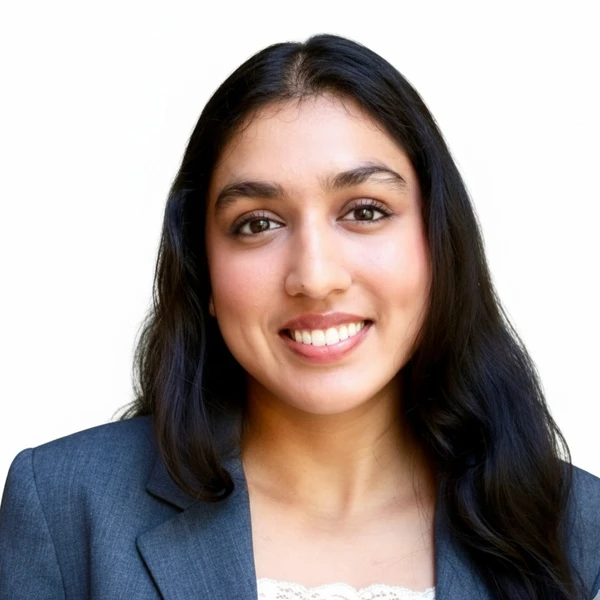
Tanvi Agrawal is a passionate computer science student dedicated to using technology to create inclusive solutions for underserved communities. Through her work with individuals with disabilities and her leadership in school organizations, she strives to combine innovation with empathy to make a lasting impact.
Education
The University of Texas at Austin
Bachelor's degree programMajors:
- Computer Science
Miscellaneous
Desired degree level:
Master's degree program
Graduate schools of interest:
Transfer schools of interest:
Majors of interest:
Career
Dream career field:
Computer Software
Dream career goals:
Tennis Instructor
UT RecSports2024 – 20251 year
Sports
Tennis
Varsity2020 – 20244 years
Public services
Volunteering
MyPossiblilites — Teacher2020 – Present
Minority Women in STEM Financial Need Scholarship
The first time I walked into my upper-division computer science class at The University of Texas at Austin, I scanned the room and immediately felt small. Row after row of faces, almost all male. I remember choosing a seat near the edge, quietly wondering if I truly belonged there. No one said I didn’t belong. But when you are one of the only women, and often the only woman of color, in the room, the silence can feel loud.
For a moment, I considered shrinking. Speaking less. Blending in. But over time, I realized something powerful: belonging is not granted, it is claimed.
Dr. Marie M. Daly once said you “learn courage by couraging.” I did not wake up one day fearless. I built it. I built it by raising my hand even when I was unsure. By attending office hours. By leading technical projects. By staying up late debugging code instead of convincing myself I was not “technical enough.” Every small act of persistence was an act of courage.
Today, my career goal is to become a cybersecurity engineer focused on protecting critical systems from emerging threats. I am particularly drawn to the intersection of artificial intelligence and security, building intelligent defense systems that can detect vulnerabilities and protect organizations in real time. In an increasingly digital world, cybersecurity is not just about protecting data; it is about protecting people.
But my ambition extends beyond technical achievement. I want to be the woman in the room who makes it easier for the next woman to walk in confidently. Representation in cybersecurity remains limited, especially for minority women. I know what it feels like to question your place in a space. I want to mentor young women in STEM, speak at schools in underserved communities, and eventually help create programs that provide hands-on cybersecurity training to students who may not otherwise see themselves in tech.
To achieve these goals, I am intentionally strengthening both my technical expertise and leadership skills. Through rigorous coursework in systems and security, certifications in cybersecurity and cloud technologies, and research projects involving AI-driven systems, I am building the foundation necessary to work in high-stakes environments. I actively pursue internships and collaborative technical projects that challenge me to think critically and solve real-world problems. Each experience reinforces that I am capable, not because the room looks like me, but because I have earned my place in it.
Financially, pursuing a STEM degree is demanding. Scholarships like this one would ease the burden of tuition and allow me to focus fully on developing my skills, pursuing research, and preparing for a career in cybersecurity. More than financial support, it is affirmation that minority women belong in these fields.
There are still rooms I walk into where I am one of few. The difference now is that I no longer look for permission to stay. I take up space. I speak. I lead.
Courage, I have learned, is not the absence of doubt. It is the decision to continue despite it. And I intend to keep couraging, for myself and for the women who will follow.
Anthony Belliamy Memorial Scholarship for Students in STEAM
From an early age, I learned what it meant to be underestimated. As an Indian girl passionate about science, technology, and athletics, I often felt like I didn’t fit the mold others expected of me. Some doubted my ability to succeed in a rigorous STEM field, while others assumed that excelling academically meant I couldn’t thrive in leadership or athletics. Rather than letting these assumptions define me, I used them as fuel to prove, to myself and to others, that I was capable of much more than what was expected.
One of the biggest challenges I faced was balancing my academics, leadership commitments, and competitive tennis career. From spending late nights coding for computer science projects, to leading my school’s Business Professionals of America (BPA) chapter of nearly 300 members, to training for tennis tournaments, I constantly juggled competing priorities. There were times when I felt overwhelmed, especially when preparing for our BPA competitions while simultaneously striving to improve my tennis performance. But through persistence, planning, and resilience, I not only managed to succeed, I thrived.
Under my leadership as BPA President, our chapter earned the Outstanding Chapter Award in the state of Texas, a recognition of our collective hard work, innovation, and dedication. This achievement taught me the power of collaboration and how strong leadership requires empowering others. At the same time, I pursued my passion for tennis, where my doubles partner and I proudly won 1st place in our district championship. Balancing these achievements with maintaining a strong academic record has been one of my proudest accomplishments because it reflects my ability to rise above challenges and excel across multiple disciplines.
My commitment to giving back to the community has also shaped my personal and career goals. Through volunteering with My Possibilities, an organization supporting adults with intellectual and developmental disabilities, I learned the value of empathy, patience, and inclusion. Working directly with participants, I witnessed how technology and compassion together can create meaningful opportunities for others. This experience strengthened my desire to pursue computer science with a focus on cybersecurity and AI-driven solutions, fields where I can use innovation to make an impact on people’s lives.
Yet, the path hasn’t always been easy. As one of the few women of color in many of my STEM-focused classes, I’ve often felt the weight of expectations, and the sting of stereotypes. There were moments where I questioned my abilities, especially when others underestimated me simply because of my background. But these experiences taught me perseverance and self-confidence. They reminded me that my identity is not a limitation, it’s a source of strength. Today, I see myself as an advocate for diversity in technology, committed to breaking barriers and empowering other young women to pursue careers in STEM.
Looking forward, my goal is to specialize in cybersecurity while continuing to develop AI and machine learning solutions that create real-world impact. I hope to work at the intersection of technology and social good, building secure, intelligent systems that not only solve complex problems but also make people’s lives safer and better.
Anthony Belliamy’s legacy of resilience, integrity, and leadership deeply resonates with me. Like him, I believe in rising above challenges with courage and optimism. The obstacles I’ve faced have not defined me, they’ve shaped me into someone who thrives under pressure, embraces growth, and seeks to inspire others through action. This scholarship would help me continue my journey of breaking barriers, leading with compassion, and making a meaningful difference in the world of technology.
Chadwick D. McNab Memorial Scholarship
The hallway outside TA help hours looked like a scene out of an old Western standoff: students lined up for what felt like eternity, laptops in hand, waiting for their turn while productivity ground to a halt. Some gave up and left; others sat slumped on the floor, not knowing if they’d be helped in ten minutes or two hours. As I stood there one evening, I thought to myself, there has to be a better way.
That question sparked one of my proudest projects: RoundUp, a Western-themed online queueing system designed to make TA help hours more efficient and enjoyable. Created at the 2025 WICS Hackathon, RoundUp lets students join the queue virtually, receive SMS reminders when it’s almost their turn, and even participate in a group chat with TAs and peers. Inspired by Austin’s cowboy spirit, we gave it a rustic theme and playful branding to transform what had been a stressful, time-consuming experience into something collaborative and engaging.
Building RoundUp brought my tinkering spirit to life. I had never integrated SMS messaging into an app before, but I dove headfirst into the Twilio API, testing countless prototypes until notifications worked flawlessly. I used Firebase Firestore and Cloud Functions to power real-time queue updates and designed a polished, Western-style UI using custom CSS and Figma. Late nights were spent debugging, brainstorming, and reimagining the student experience until RoundUp felt seamless.
The moment that validated all our effort came during our demo. As we walked the judges through the process, a student signed up, left, and then received a cheerful “Your turn’s coming up, partner!” text. The room erupted in laughter, and several TAs immediately asked, “Can we actually use this for our classes?” Winning Best Design at the hackathon was exciting, but knowing we had built something genuinely useful was even more rewarding.
For me, technology is inspiring because it transforms frustration into possibility. It turns late-night ideas into real-world solutions that impact people’s lives. RoundUp showed me that even small projects can make a tangible difference, and it deepened my passion for building tools that are both innovative and human-centered.
Looking ahead, I want to keep exploring this intersection of creativity and technology, whether it’s developing intelligent systems powered by AI, designing full-stack applications that scale, or improving user experiences that make technology more accessible. The field of computer science excites me because there is always another problem to solve, another system to optimize, and another opportunity to make someone’s day just a little better.
Chadwick D. McNab’s legacy of innovation and mentorship resonates deeply with me. Like him, I aim to pursue a career where I not only build impactful solutions but also empower others to grow as technologists and creators. With every project I take on, I carry forward the same spirit of curiosity, persistence, and collaboration that drives me to push boundaries and create meaningful change.
Kyle Lam Hacker Scholarship
The hallway outside TA help hours looked like a scene out of an old Western standoff: students lined up for what felt like eternity, laptops in hand, waiting for their turn while productivity ground to a halt. Some gave up and left; others sat slumped on the floor, not knowing if they’d be helped in ten minutes or two hours. As I stood there one evening, I thought to myself—there has to be a better way. That question sparked what became one of my proudest tinkering projects: RoundUp, a Western-themed virtual queueing system that turned frustration into delight.
At the 2025 WICS Hackathon, my teammates and I set out to solve the problem of long, unpredictable help-hour wait times for Intro to Programming and Data Structures students. We wanted something that didn’t just organize the queue, but also made the process fun and engaging. Our solution: let students join the line virtually, get a text five minutes before their turn, and even chat with peers and TAs while waiting. Inspired by Austin’s cowboy spirit, we gave it a rustic design and a name to match: RoundUp.
Building it was where my tinkering spirit came alive. I had never integrated SMS messaging into an app before, but I dove headfirst into the Twilio API, testing prototype after prototype until notifications worked seamlessly. I experimented with Firebase Firestore and Cloud Functions to keep the queue updated in real time. Late into the night, I tweaked CSS to nail the Western aesthetic, because I believed delight comes not only from functionality, but from the experience of using the tool.
The moment that confirmed we had built something special came during our demo. We walked the judges through the process: a student checked in, stepped away, and then received a friendly “Your turn’s coming up, partner!” text right before their slot. The room laughed, then leaned forward. Several TAs immediately asked, “Can we actually use this for our classes?” That reaction, equal parts joy and practicality, was the best award we could have hoped for. Winning Best Design at the hackathon was just the icing on the cake.
In the weeks that followed, classmates approached me asking if RoundUp would be rolled out for actual help hours. Their enthusiasm showed me that tinkering isn’t just about clever code, it’s about creating solutions that make people’s lives easier and brighter. RoundUp took something tedious and stressful and turned it into something efficient, collaborative, and even fun.
What I carry forward from this project is the same spirit that Kyle Lam embodied: curiosity to explore, creativity to build, and generosity to share what I’ve learned with others. For me, tinkering isn’t about accolades; it’s about that moment when someone smiles because a small piece of technology made their day better. With every project I pursue, I aim to keep that hacker spirit alive, pushing boundaries, surprising people with unexpected solutions, and building with both purpose and playfulness.
FIAH Scholarship
When I step onto a tennis court, the world sharpens into focus, the sound of the ball hitting the strings, the split-second decisions, the quiet confidence that comes from knowing pressure is not something to fear but something to master. Tennis has never just been a sport for me; it has been a training ground for resilience, strategy, and leadership. One of my proudest moments was winning 1st place in districts in girls’ doubles, a victory that reflected not only my technical skills but also the trust, communication, and adaptability I built with my partner. Those lessons in persistence and teamwork have shaped how I approach every challenge, both on and off the court.
Beyond athletics, my leadership journey took shape in Business Professionals of America (BPA), where I had the privilege of serving as president of a chapter with nearly 300 members. Leading such a large group demanded organization, vision, and the ability to inspire others toward collective success. One of the initiatives I am most proud of was our “Dots for Dollars” fundraiser, which raised over $200 and collected more than 25 pounds of sports equipment for the Special Olympics. This effort wasn’t just about donations, it was about inclusion and giving athletes the same sense of empowerment that tennis has always given me. Our chapter’s dedication was recognized with the Outstanding Chapter Award for the state of Texas, a moment that validated the power of teamwork and service.
Together, tennis and BPA taught me that success is about more than personal achievement, it’s about using your skills to create opportunities and impact for others. That philosophy continues to guide me at the University of Texas at Austin, where I mentor younger students, especially girls in STEM, encouraging them to explore computer science and believe in their potential. Just as I once learned to stay composed during a tiebreak on the court, I now help others develop the confidence to face challenges in their own journeys.
Looking ahead, I aspire to a career in cybersecurity, where I can combine my love for technology with my commitment to protecting communities. Cybersecurity is not just a technical discipline, it’s about safeguarding the digital systems that power healthcare, education, and critical infrastructure. Much like tennis demands sharp focus and BPA required collaborative leadership, cybersecurity calls for resilience, adaptability, and problem-solving with real-world impact.
Ultimately, whether through sports, leadership, or technology, my mission has always been the same: to use my skills to uplift and protect others. This scholarship would not only support my education but also empower me to continue building on that mission: leading, serving, and safeguarding communities for years to come.
Sweet Dreams Scholarship
The first time one of my five-year-old tennis students connected with the ball and sent it sailing over the net, he froze, wide-eyed, then broke into the biggest smile I had ever seen. His parents cheered from the sidelines, and I realized in that moment that what I was doing was about much more than forehands and serves, it was about building confidence, joy, and connection in my community.
I’ve been part of my local tennis community for years, first as a player, then as a coach. Teaching young kids in my neighborhood started as a way to share a sport I love, but it quickly became something bigger. I wasn’t just teaching skills; I was helping shy children come out of their shells, encouraging perseverance when they missed a shot, and celebrating small victories that made them believe in themselves. Week after week, I watched my students grow, not just in ability, but in self-assurance and willingness to support each other.
This experience has shaped my sense of hope for the future because it reminded me that change begins with small acts of encouragement. When I see a child light up after mastering a skill they once thought impossible, I see a future adult who believes they can tackle challenges in life. I believe that communities thrive when people invest in each other’s growth, and my time as a coach has shown me the ripple effect of those investments.
One of my favorite memories came from organizing a free “Tennis Fun Day” for kids whose families couldn’t afford lessons. I recruited fellow high school players to help, gathered donated rackets, and set up stations for games and drills. That day, the courts were full of laughter and encouragement from all sides. Parents who had never met before started chatting, kids began cheering for teammates they’d just met, and the energy was electric. It was a reminder that connection doesn’t just happen, it’s built, intentionally, through shared experiences.
Teaching tennis has taught me resilience, too. Not every lesson goes smoothly. Some days it rains, some kids get frustrated, and sometimes you have to adjust on the fly to keep everyone engaged. But that’s what community is, adapting, lifting each other up, and finding ways to make things work.
Being part of this community has made me optimistic about the future because I’ve seen firsthand how kindness and encouragement can transform people. In a world that often feels divided, spaces where people come together to learn, laugh, and support each other are essential. I hope to continue building those spaces, both on and off the tennis court, and to inspire others to do the same.
This scholarship would allow me to keep pursuing my education while continuing to serve my community. The lessons I’ve learned through coaching, patience, empathy, leadership, are the same ones I hope to carry into my career, ensuring that no matter where I go, I’m contributing to connection, resilience, and kindness.
Chris Jackson Computer Science Education Scholarship
In the labyrinthine hallways of my middle school, where shyness often kept me silent, a single moment changed the way I saw connection, and, eventually, my future. It wasn’t a conversation, just a shared smile: mine, hesitant; his, radiant, from an eighth grader with Down syndrome. That warmth gave me courage, and for the rest of the year, I sought out that smile like a sunrise, constant, kind, and quietly powerful.
Years later, starting high school, I craved that same feeling of genuine connection and signed up to volunteer with My Possibilities, an organization serving adults with intellectual and physical disabilities. My first day, I walked into a classroom of twenty-three curious faces and introduced myself before leading a Marvel Superheroes trivia game. The laughter that followed quickly broke the ice. Soon, weekly visits became a tradition. I brought dance sessions, art activities, and quizzes, and even coded a custom Whack-a-Mole game to teach reaction skills. It was in those moments, blending creativity, problem-solving, and empathy, that I realized technology could be a bridge. I wanted to use it to build tools that empower people like the ones I’d come to know and care for. That realization is what drew me toward a computer science degree.
Since then, I’ve thrown myself into technology with the same dedication I had for these adults. I’ve taught myself Linux, learned multiple programming languages, and earned certifications in Java, AI, and Linux. My drive led me to win state titles in Network Design (BPA) and Business Law (DECA), place first in Texas for Linux, and rank in the top 10 nationally. In leadership roles, from serving as President of BPA to directing marketing for TSA, I’ve learned to lead teams, solve problems, and communicate effectively. These experiences have shaped my goal: to work in cybersecurity and AI, developing accessible, secure technologies that can help individuals live more independently and safely.
I believe I am a strong candidate for this scholarship because my journey mirrors the values Chris Jackson embodied, ambition, persistence, and a deep commitment to people. Like Chris, I understand what it means to work hard for an education, balancing academics, part-time jobs, and service. I am driven not only to succeed personally but to use my skills for meaningful impact, whether that’s mentoring young women in STEM, creating inclusive programs, or developing solutions that make technology a tool for empowerment.
This scholarship would not only help ease the financial challenges of my degree but would also honor Chris’s legacy by enabling me to continue the work that first inspired me: using computer science to connect, uplift, and create lasting change.
Kalia D. Davis Memorial Scholarship
The first time I stepped onto a tennis court, I was barely tall enough to see over the net, but I could already imagine winning the point. Tennis has been a part of my life for as long as I can remember, shaping not just my skills with a racket but my mindset, resilience, and dedication. Over the years, the court has been my training ground for more than sports: it’s where I learned discipline, patience, and the importance of showing up for yourself and others, no matter the challenge.
By the time I reached high school, tennis wasn’t just something I played, it was something I lived. I competed on my school’s varsity team, training before sunrise and pushing myself through tough matches against players far more experienced than I was. Each win felt like a reward for persistence, and each loss was a reminder that setbacks are simply opportunities to grow stronger. Those lessons still guide me today as I navigate my journey as an undergraduate computer science student at the University of Texas at Austin.
Now, tennis has become more than my sport, it’s my way of giving back. I coach young children, introducing them to the joy of the game and teaching them the same life skills it gave me: confidence, focus, and perseverance. I also teach beginner-level tennis classes for undergraduates on campus. Watching my students’ progress, from hesitant swings to powerful serves, is one of the most rewarding parts of my week. These coaching roles also help me pay for part of my college education, reinforcing my belief in working hard to support myself while pursuing my goals.
My commitment to service extends far beyond the court. As president of my high school’s Business Professionals of America chapter, I organized our annual Dots for Dollars fundraiser, which raised over $200 and collected more than 25 pounds of sports equipment for the Special Olympics. I also volunteered with My Possibilities, where I taught an art class for adults with intellectual and physical disabilities, an experience that deepened my compassion and adaptability. In college, I mentor young girls in STEM fields, helping them gain confidence in their abilities, and I participate in a “Follow the Leader” program, where I encourage high school senior girls to explore computer science as a potential career. These experiences have reinforced my belief that leadership is about opening doors for others and making sure they feel empowered to walk through them.
This scholarship would not only ease the financial pressures of my education but also allow me to dedicate more time to mentoring, coaching, and community service. Balancing my studies, coaching commitments, and part-time work teaches me independence and time management, but financial support would give me more flexibility to focus on academic excellence and impactful service.
Kalia D. Davis’s story is deeply inspiring to me. Her unwavering work ethic, leadership, and joy for life are qualities I aspire to emulate every day. Like her, I believe in giving my all, whether it’s in a classroom, on a court, or in service to others. I hope to honor her legacy by living with the same ambition, kindness, and drive that she exemplified.
I’ve grown from a child barely able to see over the net into someone who uses tennis as a tool for growth, both for myself and for those I teach. This scholarship would help me continue serving, leading, and striving for excellence, carrying forward a legacy of living, loving, laughing, and learning with purpose.
Learner Tutoring Innovators of Color in STEM Scholarship
When I was eight years old, I remember watching my dad try to reset a hacked email account. I didn’t understand much of what was happening, but I saw the frustration in his eyes and the powerlessness he felt. That was the first time I asked, “What if I could stop this from happening?” At the time, I didn’t realize that this small moment would spark a passion for cybersecurity, a path that not only excites me intellectually but also connects deeply with my identity as a woman of color in tech.
Growing up in a South Asian household, pursuing a career in STEM was not just encouraged, it was expected. Yet while fields like medicine and software engineering were praised, my passion for cybersecurity often raised eyebrows. To my family, it wasn’t one of the ‘traditional’ success stories. But for me, it was a calling, a way to protect the digital world and give a voice to underrepresented communities in tech. However, the more I learned about STEM, the more I realized that it’s a field built on questions: Why does this happen? How can we make it better? And most importantly, who will take on the challenge of solving it? As I explored coding, ethical hacking, and systems design, I found that I wasn’t just passionate about the technology itself, I was driven by the impact it could have on everyday lives, especially those in marginalized communities who are often overlooked when it comes to online safety and digital education.
As a person of color in STEM, I don’t just want to join the conversation, I want to reframe it. I hope to build a future where cybersecurity tools are not just designed for billion-dollar corporations, but also for immigrant families, local community organizations, and low-income schools. These groups are just as vulnerable to cyber threats, yet rarely have access to the protective technology or education they need. I aim to be part of the movement that brings digital equity to the forefront of cybersecurity.
Representation in STEM matters. When students of color see someone who looks like them leading a tech team, launching a product, or designing a breakthrough algorithm, it tells them that they belong. And belonging can be the difference between dropping out and diving in. I want to mentor younger students of color, especially girls, and show them that they don’t need to look or speak a certain way to succeed in tech. They just need curiosity, resilience, and someone who believes in their potential.
One of my dreams is to create a cybersecurity nonprofit that focuses on training underserved communities to recognize cyber threats, build secure systems, and explore careers in tech. Innovation doesn’t happen in a vacuum, it happens when people from different backgrounds bring their stories, their problems, and their solutions to the table. As a woman of color, my lived experiences give me a lens that is underrepresented in tech, but so necessary.
Choosing to pursue a degree in STEM isn’t just about personal ambition, it’s about creating systemic change. I want to help redefine what a technologist looks like, build a safer digital world, and empower others to do the same. With the right resources and support, I believe I can become not just a cybersecurity expert, but a changemaker. And that journey began the day I asked, “What if I could stop this from happening?”
STEAM Generator Scholarship
The first time I translated a bill for my parents, I was nine years old. The fluorescent paper with urgent red letters made my heart race. I didn’t fully understand what a utility shut-off notice meant, but I knew it wasn’t good. As a first-generation Indian-American, I’ve lived at the intersection of two worlds, one where I interpreted paperwork, policies, and procedures for my family, and one where I tried to keep up with peers whose parents had been through it all before. That balancing act has defined my educational journey and fuels the dreams I hold for the future.
Navigating school as a first-generation student has often felt like fumbling in the dark. My parents, while incredibly supportive, couldn’t help me with FAFSA forms, course registration, or even choosing a major. They came to this country to give me a shot at the education they never had, but that meant I had to figure it all out myself. While my classmates had mentors at home who knew how to navigate AP classes, college applications, and career paths, I had to learn by trial and error. I spent countless nights Googling acronyms, watching YouTube videos about college admissions, and relying on community forums to piece together the roadmap.
But with every challenge, I’ve grown more determined.
Being the first in my family to attend college isn’t just a personal milestone, it’s a generational breakthrough. I’m currently majoring in Computer Science and minoring in Statistics, with the goal of working in cybersecurity to protect communities like mine. So many immigrant families fall victim to scams or data breaches due to language barriers and lack of access to tech literacy. I want to develop AI-driven systems that can detect and prevent these attacks, and eventually build tools specifically designed to serve underrepresented populations online.
Still, my path hasn’t been without fear. There’s the fear of not being good enough in a field that still lacks diversity. The fear that one mistake could mean the difference between success and disappointment, not just for me, but for the family that’s counting on me. There’s pressure, of course, but also a fire. Every time I face a challenge, I think of my grandparents who never learned to read, or my parents who sacrificed comfort and familiarity to give me this chance. Their resilience runs in my veins.
I also fear that students like me will continue to be overlooked. Without financial support, many of us are forced to juggle work and school, slowing our academic progress and limiting our potential. We may be the first in our families to go to college, but we shouldn’t have to carry the burden of being the last simply because of affordability.
Receiving this scholarship would do more than help me financially, it would affirm that my journey, and the journeys of students like me, matter. It would allow me to focus more on learning, innovating, and contributing to a field that needs diverse voices. It would bring me one step closer to breaking generational cycles, not just for my family, but for every underrepresented student who dares to dream bigger.
College isn’t just a degree for me; it’s a promise. A promise to use the education I fought for to uplift others, to make technology more inclusive, and to show that even when the path isn’t clear, it’s still worth walking.
Love Island Fan Scholarship
Love Island Challenge: “Truth Unfiltered”
Love Island thrives on connection, chaos, and confession. My brand-new challenge, “Truth Unfiltered,” brings all three to the villa, combining raw honesty with strategic gameplay in a way that’s equal parts dramatic and hilarious.
The Premise:
Each islander is secretly given a list of three revealing “truth prompts” tailored to their personal villa journey. These prompts are not chosen randomly, they’re curated based on previous dates, recouplings, dramatic moments, or juicy secrets the viewers know but not all islanders do.
But here’s the twist: instead of answering their own prompts, islanders take turns answering anonymously on behalf of someone else. Think: “Who do you think is the most fake couple in the villa?” or “What do you think [Islander's name] would do if their ex walked through that door tomorrow?”
The Setup:
A glam, neon-lit “Confession Booth” is set up near the garden, giving retro diary room vibes. One by one, islanders are called in to record their anonymous responses to others’ prompts. Their tone is unfiltered, unscripted, and honest… or so they hope.
Later that evening, the group gathers around the fire pit. The host reveals one prompt at a time and reads several of the anonymous responses aloud, without saying who said what. Islander reactions are filmed in real time, and let’s just say it’s the perfect recipe for tension, laughter, and potential fireworks.
But Wait, There's a Twist:
After all responses are read, the game kicks into its second phase: “Guess Who Said That?”
Each islander writes down who they believe made each comment. Get it right? You earn a point. The one with the most correct guesses wins a luxury date. The one with the fewest? They have to cook dinner for the entire villa that night (and yes, clean up too!).
Why It Works:
"Truth Unfiltered" isn’t just drama for drama’s sake. it encourages islanders to reflect on their relationships, see how others perceive them, and injects accountability into the villa in a fun and creative way. Plus, the anonymous nature of the game forces them to trust their instincts and observe social cues they may have missed. It’s part love therapy, part detective mission, and all very Love Island.
Bonus Chaos Mechanic:
A wildcard card is thrown in at the end. One response, chosen at random, is revealed with the speaker’s identity exposed, on air. That final moment gives the perfect “OMG” cliffhanger for the episode and stirs up the pot just enough before the next recoupling.
Why I Love It:
As a devoted Love Island fan (yes, I plan my summer evenings around it), I know what makes the show shine, authenticity, unpredictability, and vulnerability. “Truth Unfiltered” isn’t just about scandal; it’s about deepening dynamics, challenging fake fronts, and making the islanders confront how they’re perceived.
It’s also just ridiculously fun.
I’ve laughed, cried, and gasped while watching Love Island, and I think this challenge would bring all three emotions to the screen in one go. It would be iconic. And if I can’t be in the villa (yet), I’ll settle for bringing a little chaos from the outside.
Dr. Samuel Attoh Legacy Scholarship
Legacy isn’t just what we inherit. It’s what we carry forward, and how we choose to evolve it. For me, legacy means honoring the sacrifices of those who came before while reshaping the path for those who come after.
My parents immigrated from India with little money and no safety net, but with enormous belief in the power of education. I grew up watching them rebuild their lives from scratch. My father worked long shifts, and my mother handled everything from the bills to helping me with homework, even when neither of them fully understood the American school system. But they understood its promise.
Our home was filled with expectations: not pressure, but hope. Hope that I could become the first in my family to graduate from college in the U.S., to choose a career not out of necessity but purpose. I’ve always been drawn to solving complex problems and improving the systems we rely on, so I chose to major in computer science with a focus on cybersecurity and disaster technology.
But that path has never been easy. As a first-generation college student, I’ve navigated FAFSA, course registration, and career fairs mostly on my own. I’ve also faced moments of deep imposter syndrome, surrounded by classmates whose parents worked in tech, while mine couldn’t even pronounce “JavaScript.” But I pushed forward, driven by both gratitude and grit.
Legacy, for me, is also about breaking silence, especially in spaces where women of color are underrepresented. In my tech classes, I often find myself one of the few women of color. Instead of shrinking back, I lead. I’ve served as a tech lead in a social impact project that helps vulnerable communities prepare for natural disasters. I mentor first-year students who feel out of place like I once did. And I organize workshops to bring coding to underserved high schools.
But it’s not just about continuing a legacy of hard work, it’s about breaking cycles too. My parents didn’t talk much about mental health, burnout, or self-doubt. In their world, you pushed through quietly. In mine, I’m learning to speak up, seek support, and advocate for balance. I want to show younger girls who look like me that success isn’t about suffering silently. it’s about thriving authentically.
Receiving the Dr. Samuel Attoh Legacy Scholarship would mean more than financial relief—it would affirm the values I live by: service, resilience, and forward momentum. It would allow me to continue pursuing certifications in cybersecurity and invest time into projects that protect and empower underserved communities, rather than worrying about how I’ll afford textbooks next semester.
I don’t come from a long line of engineers or professors. But I come from people who taught me to build, whether it’s a life, a system, or a solution. My legacy won’t be defined by where I started, but by how far I carry that story, and by how many others I bring with me along the way.
Women in STEM and Community Service Scholarship
Growing up in a Desi immigrant household, I was taught the importance of community from a young age, whether it was helping a neighbor file government paperwork or translating at medical appointments for a family friend. As I grew older and found my passion in computer science, I realized I could scale that same sense of service into tools that help not just individuals, but entire communities.
One issue I care deeply about, both globally and locally, is emergency preparedness and access to safety resources, especially in underserved communities. Natural disasters are increasing in frequency and intensity, and too often, the most vulnerable populations are the least informed or equipped to respond. Many don’t have access to timely alerts, know where to find nearby shelters, or understand what to do in the event of a flood, fire, or hurricane.
This inspired me to lead the development of a mobile app through UT Austin’s student-run social impact tech group. Our app detects a user’s location and provides real-time alerts about nearby disasters, shelter availability, and safety instructions, leveraging both Google Maps API and Firebase for scalability. It’s designed with accessibility in mind, available in multiple languages, and includes features like offline access and SMS-based alerts for areas with low internet connectivity.
I didn’t just code the app, I also led focus groups with local nonprofit organizations, survivors of previous natural disasters, and student volunteers to make sure we were solving a real problem with empathy and relevance. It was the first time I saw how technical skills could directly intersect with humanitarian need, and it won’t be the last.
Beyond this project, I volunteer with Girls Who Code and host beginner-friendly workshops on cybersecurity and ethical AI. I want to make tech more accessible to young women, especially those who don’t come from tech-savvy backgrounds, and ensure they feel empowered to build solutions for their own communities.
This scholarship would be an incredible support as I continue my journey. With the financial burden of tuition, textbooks, and living expenses, it’s often difficult to take on unpaid research or fieldwork opportunities. This award would help me pursue a certification in cybersecurity and further develop community-focused apps without worrying about whether I can afford the resources or tools I need.
In the future, I hope to work at the intersection of public safety and technology, designing systems that not only predict and alert but also protect. My dream is to launch a nonprofit that offers free digital safety tools and education to underserved communities worldwide, equipping them with the resources they need to respond to both natural and digital threats.
My education is more than a degree. it's a promise. A promise to use what I learn not just to succeed, but to serve. Whether I’m debugging code at 2 a.m. or presenting our app to disaster relief nonprofits, every step I take is guided by the belief that technology should uplift, not exclude.
Through the Women in STEM and Community Service Scholarship, I would gain more than financial support, I’d gain the momentum to keep building meaningful change, one line of code at a time.
Victoria Johnson Minority Women in STEM Scholarship
I remember the exact moment I decided to study computer science. I was in tenth grade, sitting on my bedroom floor with my dad's old laptop, watching a woman of color give a TED Talk on using machine learning to detect disease outbreaks. It wasn’t just what she built that inspired me, it was who she was. I saw myself in her. That moment sparked a fire in me, but the path forward has been far from easy.
As a first-generation college student, I entered UT Austin with dreams of using technology to create social change. But with those dreams came a mountain of financial and emotional challenges. From paying for college applications and test prep materials to the high costs of tuition, housing, and textbooks, every step has required careful budgeting and sacrifice. Even now, I work part-time to support myself while juggling a demanding STEM curriculum, leadership roles, and community outreach efforts.
One of the biggest hurdles I anticipate is the cost of pursuing graduate studies or a professional certification in cybersecurity, a field I’m deeply passionate about. Admissions tests, prep courses, and application fees feel like toll gates on a road I’m sprinting down, but can't afford to slow for. At times, it’s exhausting to watch peers move forward freely while I must pause and weigh every expense against my dreams.
Receiving this scholarship would give me the freedom to stay focused on my academic and professional goals without the constant pressure of financial limitations. It would allow me to invest in proper exam preparation and application costs, and even pursue relevant certifications like CompTIA Security+ or AWS Cloud Practitioner to strengthen my knowledge. Most importantly, it would remind me that my ambitions are seen and supported, that I don’t have to walk this road alone.
But my goals aren’t just for me. I believe deeply in giving back, especially to young girls of color who don’t yet see themselves in tech. As a leader in my university’s social impact tech group, I’ve mentored underclassmen, organized workshops on ethical AI, and worked on apps that support disaster preparedness in vulnerable communities. I also serve as a mentor for first-year students in STEM who are struggling with imposter syndrome, the same battle I once fought alone.
In the future, I plan to build a nonprofit initiative that offers free coding and cybersecurity bootcamps for high school girls from underrepresented communities, especially those who are first-generation college students like me. My vision is to create a pipeline of confident, capable, and supported women of color entering the tech workforce, because representation matters, and because no girl should feel like she has to choose between survival and ambition.
STEM isn’t just about solving technical problems, it’s about solving human problems. And I want to be part of that movement. With your support, I can continue building the future I dream of, one where I’m not just the first in my family to do this, but not the last.
Cybersecurity for Your Community Scholarship
Growing up as a first-generation Indian-American woman in a low-income neighborhood, I saw how a lack of cybersecurity awareness left our community vulnerable, from local small businesses hit by phishing scams to students’ personal data being leaked. I aim to use my cybersecurity knowledge to create free digital safety workshops in underserved schools, empowering youth and families with practical skills to protect themselves online. By building culturally responsive materials and offering multilingual resources, I hope to bridge the access gap that puts marginalized communities at risk. I believe real change starts with education, especially when it protects people where they are most vulnerable. My goal is to make cybersecurity not just a career, but a community service.
Jimmy Cardenas Community Leader Scholarship
When I stepped into my first computer science class at UT Austin, I felt like an imposter. Most of the students around me had years of coding experience, private tutoring, and tech-savvy families. I, on the other hand, was a first-generation college student whose immigrant parents didn’t know what "syntax" meant, much less how to debug a broken program. But what I lacked in background, I made up for in persistence.
I failed my first programming quiz. I walked out of class, sat on a bench, and cried, not because I wasn’t smart enough, but because I wasn’t used to failing after years of pushing myself to be the “perfect” daughter. But that moment of frustration became a turning point. I didn’t give up. I joined study groups, visited office hours religiously, and spent weekends teaching myself the material on YouTube and GitHub. By the end of the semester, I was tutoring my peers in the same class I once struggled in.
That experience taught me that obstacles aren’t signs to stop, they’re signals to adapt. It also taught me that leadership doesn’t start when you're at the top. It begins when you reach back and help others climb with you.
I carried that lesson into everything I did, including my role as a tech lead in a student-run social impact organization at UT. When I joined, our team’s goal was to develop a mobile app to assist people in disaster-prone areas by alerting them to nearby shelters and safety resources using geolocation. I wasn’t just coding. I was listening, interviewing survivors, working with nonprofits, and trying to build tech that served people, especially under-resourced communities like the one I grew up in.
Halfway through development, our backend crashed just two days before a demo to our sponsors. Our team panicked. But I stepped up. I quickly triaged the issues, delegated bug fixes, and stayed up with my teammates until 4 a.m. to rebuild the database and ensure the core functionality worked. We presented on time, and more importantly, we proved to ourselves what we were capable of under pressure.
My leadership isn’t loud. It’s persistent, empathetic, and rooted in community. I lead by doing, by listening, and by lifting others, especially women of color and first-generation students, who feel like they don’t belong in rooms they’ve worked hard to be in.
I also work with organizations on campus to promote cybersecurity awareness, especially for underrepresented communities vulnerable to scams and data theft. I believe that safety isn’t just physical, it’s digital too. And building a safer community includes protecting people online.
My passion for community stems from my parents, who immigrated to the U.S. with little but gave everything. They taught me that service is not about recognition, it’s about impact. I may not be pursuing a criminal justice degree, but I am building tools that help people feel secure, empowered, and informed. Like Jimmy Cardenas, I’m committed to protecting and uplifting the community around me.
Receiving this scholarship would ease the financial burden on my family, allowing me to continue pursuing both my education and my service-oriented projects without pause. More importantly, it would honor the values of resilience, leadership, and ambition that drive me every single day.
Carlos F. Garcia Muentes Scholarship
My story begins not in Austin, Texas, where I study computer science today, but thousands of miles away, in a small town in India where my parents grew up. My mother often tells me about the nights she studied by candlelight during power outages and the days she walked miles to school in the sweltering heat because education was her only ticket to a better life. My father, the eldest son in a family of seven, took on adult responsibilities before he could legally vote. Their stories aren’t just anecdotes, they’re blueprints of sacrifice, resilience, and belief in the transformative power of opportunity.
When my family immigrated to the U.S., we carried more than suitcases. We carried dreams bigger than zip codes, aspirations not yet shaped into words, and the pressure of becoming the “firsts”, first to graduate college in the U.S., first to chase a career not for survival but for passion, and first to bridge two cultures that often seemed to pull in opposite directions.
Growing up as a Desi girl in America meant constantly navigating that tightrope, trying to respect tradition while forging my own path. While my friends spent weekends at football games, I spent mine helping my parents file paperwork, interpret bills, or navigate the U.S. healthcare system. I learned early that translating documents wasn’t just about language, it was about advocacy, and making sure my family wasn’t left behind in a system not built with us in mind.
That duality, of being rooted in one culture and reaching for another, shaped my worldview. I see education not just as a personal goal, but as a vehicle for generational uplift. That’s what led me to pursue computer science with a focus on cybersecurity: I want to protect the digital rights of vulnerable communities, including immigrants, whose data and identities are often exploited without accountability.
My parents didn’t understand what “cybersecurity” meant at first. They just knew I lit up every time I explained how firewalls work, or how I could build an app that alerts users about natural disasters based on location data. Their pride doesn’t come from the technical jargon, it comes from knowing that I’m building something bigger than myself.
At UT Austin, I’ve channeled this motivation into action. I lead development in a social impact tech group, mentor underclassmen from underrepresented backgrounds, and collaborate on AI and disaster relief tools meant to serve real people, not just theory. Every project, every late night of debugging, is tied to a bigger mission: to make tech more ethical, more inclusive, and more human.
My family’s journey, from dusty roads in India to university lecture halls in Texas, taught me that ambition without gratitude is hollow. Their sacrifices fuel my grit, but their values anchor my vision. I’m not just chasing a degree. I’m working to be the bridge between where we came from and where we’re going, to build tools that protect, uplift, and empower people like my parents, who dared to dream in a language not their own.
Winning this scholarship wouldn’t just ease my financial burden, it would honor the quiet resilience of immigrants who came before me. And it would be one more step toward becoming the kind of technologist, and daughter, they can be proud of.
Emerging Leaders in STEM Scholarship
In high school, I remember the day our district's computer system was hacked, shutting down everything from class schedules to lunch accounts. While most of my classmates celebrated the unexpected break, I found myself captivated. I wanted to understand how something invisible could have so much power—and how I could one day be the person who stops it. That moment marked the beginning of my journey into the world of STEM.
As a Computer Science major minoring in Data Science and Statistics at UT Austin, I’ve come to see STEM not just as a field of study, but as a powerful toolkit to solve global problems. My passion lies at the intersection of cybersecurity and social impact. In today’s world, where data breaches and misinformation can have real-world consequences, I want to design ethical systems that protect privacy and build trust in digital spaces. My long-term goal is to develop accessible cybersecurity tools for underserved communities and contribute to policies that ensure safe technology use for all.
Getting to this point wasn’t easy. As a woman of color in a male-dominated field, I’ve often felt like I had to prove myself twice over. In high school, I was one of the few girls in my AP Computer Science class. I took it upon myself to become a mentor—hosting peer tutoring sessions, joining coding competitions, and eventually leading a club of 300+ members as president of Business Professionals of America. I wanted younger students, especially girls and minorities, to see that they belong here too.
College brought new challenges. Balancing rigorous coursework, part-time jobs, and family responsibilities stretched me in every direction. There were semesters when I questioned whether I could keep up. But with each obstacle, I learned how to adapt—using resources, building support networks, and staying rooted in my “why.” These experiences have given me not just technical skills, but grit and empathy—qualities I believe are just as essential to becoming a leader in STEM.
This scholarship would not only help relieve financial stress but would also serve as a vote of confidence in the mission I’ve committed to. I’m determined to use my education to make technology safer, smarter, and more equitable. With support like this, I can continue developing meaningful projects, like my recent app that helps people navigate natural disasters using real-time data and AI.
STEM has always been about possibility. I’m ready to explore those possibilities—and help others do the same.
This Woman's Worth Inc. Scholarship
The first time I taught a young girl how to encrypt a message using the Caesar cipher, her eyes lit up with joy—she felt powerful. That moment defined the dreams I now chase with relentless purpose: to use cybersecurity not only to protect systems, but to empower people, especially women, in a world where their safety and voice are often compromised.
I am worth the dreams I aspire to achieve because I believe in transforming every barrier I face into a bridge for others. As a first-generation woman in tech, I’ve often walked into rooms where I felt like an outsider—too quiet, too brown, too unsure. But instead of shrinking, I chose to lead. In high school, I served as president of Business Professionals of America, guiding nearly 300 students to regional and national competitions. I didn’t just organize—we built a support system. Today, as a Computer Science major at UT Austin minoring in Journalism and Statistics, I continue blending technical rigor with human connection. I volunteer with organizations that teach girls of color to code, and I’m developing an app that helps communities stay safe during natural disasters using real-time AI alerts.
My dreams are ambitious because the need is urgent. Cybercrime is rising, and marginalized communities are disproportionately affected. I want to become a cybersecurity expert who designs systems that are not only secure but ethical, inclusive, and accessible. I aspire to work at the intersection of policy and technology, using my skills to advocate for digital justice and help underrepresented women feel safe, seen, and supported online.
Yet, the path forward is not easy. As someone balancing financial constraints with academic and leadership commitments, scholarships like this one don’t just support me—they sustain me. They allow me to keep volunteering, mentoring, and building tools that matter. They fuel the fire I already carry to keep pushing, learning, and showing up—especially when the odds say I shouldn’t.
This Woman’s Worth is more than a scholarship. It’s a reflection of a belief I hold dear: that every woman deserves to be seen not as a statistic or stereotype, but as a story in motion. I am that story—a woman who sees worth in every line of code, every classroom visit, every act of service.
I am worth the dreams I aspire to achieve because I’m not chasing them just for myself. I’m chasing them for the girls who still don’t know they can.
Future Women In STEM Scholarship
In the labyrinthine hallways of my middle school, where shyness clung to me during my 7th-grade year, an unexpected encounter quietly reshaped my life. It wasn't a conversation or a grand gesture, just a simple, warm smile from an 8th grader with Down syndrome. That moment, though fleeting, lingered with me. His smile gave me a reason to look up, to be present, and eventually, to connect with others beyond my comfort zone.
Years later, as a freshman in high school, I found myself still longing for that kind of unspoken connection. That’s when I discovered MyPossibilities, a nonprofit dedicated to helping adults with intellectual and developmental disabilities, affectionately called HIPsters, gain life skills for independent living. Nervously climbing the stairs to my first volunteer session, I had no idea I was walking into something that would define not only my high school years but the future I’m now pursuing in college.
That first day, I introduced myself with a tentative wave and a burst of enthusiasm: “Hey y’all, my name is Tanvi and are y’all ready to play some Marvel Superhero trivia?” As the HIPsters slowly warmed up to me, laughter began to fill the room, and a familiar joy returned. I began to create weekly sessions that blended fun with learning: dance-offs, art hours, yoga, trivia, and even a custom-coded whack-a-mole game. I wasn’t just giving back; I was growing up.
Each week brought new conversations and insights into the everyday challenges these individuals faced, tasks most people take for granted. But their resilience and joy ignited something in me. I realized how powerful technology could be in removing barriers and creating accessible experiences for those with unique needs. Fueled by this purpose, I dove headfirst into coding, self-learning Linux, Java, and Python, and eventually earning certifications in Java, Linux, and AI.
As I grew technically, I also found my voice. From once being the quiet girl in class, I became the student confidently presenting technical solutions, winning state competitions in Network Design for BPA and Business Law & Ethics for DECA, and placing in the top 10 nationwide in Linux. These achievements weren’t just milestones, they were symbols of a transformation sparked by those early days at MyPossibilities.
Now, as a college sophomore majoring in Computer Science with a minor in Data Science and Statistics, I continue to carry forward this mission. I’ve led development projects aimed at accessibility, explored AI for social impact, and remain committed to building tools that empower people with disabilities. The HIPsters gave me more than volunteer hours or leadership opportunities, they gave me purpose.
In a world where women, especially from underrepresented groups, still face barriers in STEM, I hold onto that original spark: a smile exchanged in a hallway, the joy of inclusion, and the belief that technology can, and should, be a force for good. This journey isn’t just about me stepping into STEM; it’s about making space for others to step forward too.
Elevate Women in Technology Scholarship
Last semester, I took an introductory geology course expecting to learn about rocks, tectonic plates, and sediment layers. But what truly shifted my worldview was realizing how dynamic and fragile our planet is, and how much we still can’t see until it’s too late. That’s when I discovered InSAR, or Interferometric Synthetic Aperture Radar: a technology that quietly watches the Earth from space and alerts us to invisible shifts happening below our feet.
InSAR uses radar satellites to detect surface deformations as small as a few millimeters. These measurements have become vital for early warnings of earthquakes, volcanic eruptions, and even land subsidence in urban areas. One story that moved me was how scientists in Iceland used InSAR to detect magma movement underground weeks before an eruption. That single insight protected communities, informed emergency responses, and allowed people to get out safely, because of data we could barely perceive.
As a woman in computer science, I’ve often felt pressure to “make noise” in a field where we’re still underrepresented. But this technology showed me something powerful: innovation doesn’t always have to be loud to be life-changing. InSAR is a reminder that systems—whether natural or digital, can be listened to, analyzed, and protected through tech that values quiet foresight over flash.
I’m now pursuing a path in cybersecurity, where I hope to build systems that offer the same kind of silent protection, preventing damage before it strikes, especially for communities that often go overlooked. My dream is to develop security tools that detect digital threats the way InSAR detects seismic ones: early, precisely, and without fear-mongering.
In a tech world often dominated by the visible and the immediate, I find inspiration in technologies like InSAR, tools that empower us to listen more closely to the systems we depend on. I want to help lead a generation of women who build with intention, protect with integrity, and see technology not just as innovation, but as quiet resistance against harm.
Women in STEM Scholarship
Walking into my first computer science lecture at UT Austin, I was overwhelmed not by the content, but by the silence in my head that said I didn’t belong. I glanced around and saw mostly men, confidently raising their hands, forming coding groups, speaking in jargon I didn’t yet understand. I froze, not because I couldn’t keep up, but because something inside me whispered, you’re just lucky to be here. That whisper grew louder with every class I attended, every assignment I second-guessed, and every time I felt the need to prove I was “one of the guys.”
This was my first true encounter with imposter syndrome, and it hit hard. As a woman in computer science, I felt like I was constantly on trial, expected to explain how I got here, why I deserved a seat at the table, and whether I was actually capable of building systems and writing algorithms. I wasn’t just learning to code, I was learning to survive in a space that wasn’t designed for me.
But what changed everything wasn’t a perfect grade or a groundbreaking project—it was community. I joined a cybersecurity club on campus where I met other women who had walked the same tightrope. We bonded over late-night CTF competitions, dissecting malware samples, and even just ranting about being the only woman in the room. These women didn’t just make me feel seen, they helped me realize that I wasn’t an imposter. I was a pioneer.
Cybersecurity soon became more than just a career path, it became a mission. In a world where digital threats are multiplying by the second, diverse perspectives are essential. Hackers don’t all think the same, so why should defenders? As a woman in cybersecurity, I bring not only technical skills but also a mindset shaped by resilience, empathy, and collaborative strength. I want to be part of building secure systems that reflect the diversity of those they serve, especially for communities traditionally left out of the conversation.
Now, I mentor first-year women in STEM, sharing my own struggles and reminding them that doubt is not a disqualifier. I tell them the truth I had to learn the hard way: belonging isn’t about proving yourself to others, it’s about accepting that your presence matters.
Receiving the Learner’s Women in STEM Scholarship would not only alleviate the financial burdens that often deter women from pursuing STEM, it would be an affirmation of a journey that so many of us are still navigating. I want to contribute to a future where girls no longer have to ask if they belong in tech, but instead ask: What will I build next?
Through cybersecurity, I hope to protect not just data and networks, but also the dreams of every young woman too afraid to raise her hand. Because if I can overcome that silence in my head, then maybe I can help someone else do the same.
Sloane Stephens Doc & Glo Scholarship
In the labyrinthine hallways of my middle school, where shyness was a constant companion during my 7th-grade year, a quiet encounter unexpectedly shaped the course of my life. It wasn’t a conversation, just a shared smile, mine, hesitant; his, radiant, from an 8th grader with Down syndrome. That moment became a lifeline. His warmth gave me the courage to lift my gaze, and for the rest of the year, I sought out that smile like a sunrise, constant, kind, and quietly powerful.
Years later, starting high school, I craved that same sense of connection and stumbled upon “MyPossibilities,” an organization serving adults with intellectual and physical challenges, affectionately called HIPsters (Hugely Important People). I signed up to volunteer. With nervous excitement echoing in every step of my sandals, I walked into my first session. Twenty-three curious eyes met mine as I entered the classroom. “Hey y’all,” I smiled, “My name is Tanvi. Are y’all ready to play some Marvel Superheroes trivia?” The room erupted in cautious chuckles, but soon enough, music and laughter filled the air.
That first hour turned into a weekly commitment. I brought dance sessions, art activities, and quizzes, and even coded a custom Whack-a-Mole game to teach reaction skills. What started as an effort to give back quickly evolved into something deeper. I was learning from them. Week by week, I caught glimpses into their worlds, how even basic tasks posed challenges, yet how joy and resilience still flourished. Their optimism in the face of adversity planted a seed in me: I realized I wanted to build tools that could help people like them lead more independent lives.
So I dove headfirst into technology. I taught myself Linux, learned to code in multiple languages, and completed certifications in Java, AI, and Linux. By the time I graduated, I had won state titles in Network Design (BPA) and Business Law (DECA), placed first in Texas for Linux, and ranked top 10 nationally. I also led school organizations like TSA and Key Club, and served as President of BPA in my senior year, roles that once felt unimaginable for the quiet girl I used to be.
Now a sophomore in college, I’m majoring in Computer Science with a focus on cybersecurity and accessibility. My purpose has only become clearer: I want to use technology to empower underserved and differently-abled communities. My journey with the HIPsters wasn’t just about volunteering; it was about discovering my voice, my confidence, and ultimately, my calling.
The HIPsters transformed me. They taught me to slow down, to listen, to lead with empathy. They reminded me that resilience can coexist with joy and that even a simple smile has the power to change lives. As I continue to grow, in school, in life, and in tech, I carry their lessons with me every step of the way.
The Sloane Stephens Foundation’s mission deeply resonates with me because it reflects the very values I’ve come to embrace: equity, empowerment, and care. Just as Sloane honors her grandparents’ legacy by lifting others up, I strive to honor my own journey by paying it forward, one smile, one project, and one empowered individual at a time.