
Hobbies and interests
Acting And Theater
Advertising
Advocacy And Activism
Animals
Art
Anime
Board Games And Puzzles
Manga
Reading
Sculpture
Reading
Adult Fiction
Adventure
Art
Classics
I read books multiple times per week
Tanisha Desai
1x
Finalist
Tanisha Desai
1x
FinalistBio
I'm a passionate and politically curious student from Mumbai, with an academic foundation in the International Baccalaureate, currently a first-year student at UC Berkeley, with a strong focus on literature, visual arts, and global issues. My work often explores the intersection of identity, memory, and emotion—whether through analytical essays comparing Atwood and Márquez or through mixed-media projects confronting body image. I balance rigorous academics with creative expression, and my lived experiences—from monsoon-flooded school days to caregiving during family health crises—shape both my resilience and my storytelling. I’m committed to using my voice, art, and empathy to challenge assumptions and contribute meaningfully to the world around me.
Education
University of California-Berkeley
Bachelor's degree programMajors:
- Liberal Arts and Sciences, General Studies and Humanities
Miscellaneous
Desired degree level:
Doctoral degree program (PhD, MD, JD, etc.)
Graduate schools of interest:
Transfer schools of interest:
Majors of interest:
- Visual and Performing Arts, General
- English Language and Literature, General
- Radio, Television, and Digital Communication
- Psychology, General
Career
Dream career field:
Arts
Dream career goals:
Sports
Taekwondo
Club2017 – 20236 years
Awards
- Siddhakala Taekwondo Academy - Bronze
Dancing
Club2013 – 202310 years
Research
Fine and Studio Arts
The Art Journal — Wrote the paper2023 – 2024
Arts
Dr. Usha Jayachandran
Drawing2020 – 2023Centrestage
Acting2017 – 2023
Public services
Volunteering
Arun Aashray — Conducted art workshops for children to raise money2018 – 2024
Women in STEM Scholarship
I chose to pursue a path that blends art and STEM because innovation today no longer exists in silos. Animation, digital media, and interactive design rely as much on code and computational thinking as they do on creativity. As an Art Practice major with aspirations to work in animation through computer science, I see STEM not as separate from art, but as the tool that allows creative ideas to move, speak, and reach wider audiences.
My interest in animation began with storytelling—how visuals can communicate emotion, identity, and complex ideas without words. As I explored the technical side of art, I became increasingly drawn to the logic behind motion: algorithms, rendering, physics engines, and software systems that bring still images to life. Learning programming and computational methods has shown me that STEM is fundamentally creative. Writing code to control movement or simulate environments requires the same imagination and problem-solving mindset as drawing or designing.
As a woman pursuing a technology-driven creative field, I am aware that both animation and computer science have historically lacked gender diversity, particularly in technical leadership roles. Too often, women are encouraged toward the artistic side but discouraged from the technical one. I want to challenge that divide. By building strong skills in both art and computer science, I hope to contribute to a future where women are equally represented in the design and development of digital worlds.
My goal is to work in animation or interactive media in a way that prioritizes inclusivity, accessibility, and representation. Whether through animated storytelling, educational media, or immersive digital experiences, I want to create work that reflects diverse perspectives and makes technology feel more human. I am especially interested in using animation to simplify complex concepts, making science and technology more accessible to broader audiences.
Beyond my own career, I hope to mentor and support younger women interested in creative technology. Representation matters, but guidance matters just as much. By sharing my experiences navigating both artistic and technical spaces, I want to help other women feel confident pursuing interdisciplinary STEM paths without feeling pressured to choose between creativity and computation.
This scholarship aligns deeply with my ambitions. Supporting women in STEM means recognizing emerging fields where technology and creativity converge. With this support, I will continue developing the technical skills and creative vision necessary to contribute meaningfully to the future of animation and digital innovation—proving that women belong not only in STEM, but at the forefront of shaping how technology is imagined and experienced.
Pamela Branchini Memorial Scholarship
To me, collaboration in art is not simply multiple people working on the same project—it is a process of shared vulnerability, trust, and growth. In the field of art practice, collaboration means allowing other voices, disciplines, and perspectives to shape the final work in ways I could never achieve alone. It is about relationships built through listening, compromise, and collective intention.
What draws me most to fine arts is that art is rarely created in isolation. Whether it is an installation, performance, or visual project, the most meaningful work often emerges from dialogue. Collaboration transforms art from a personal expression into a shared experience—one that invites connection between artists, audiences, and communities. In this sense, collaboration becomes both the medium and the message.
Some of my most formative experiences with collaboration began before college, working on interdisciplinary creative projects that blended visual art, storytelling, and design. I learned early on that collaboration requires humility: the ability to release full control of an idea and trust others to contribute their own strengths. In group exhibitions and creative showcases, I saw how designers, performers, and visual artists each approached the same theme differently, yet the final result felt richer because of those differences.
One particularly inspiring experience involved working with peers to curate a small exhibition. While my instinct was to focus solely on my own work, the process quickly shifted toward collective decision-making—how pieces interacted in a space, how lighting affected mood, and how viewers would move through the exhibit. Through discussion and experimentation, I learned that collaboration is not about diminishing one’s artistic identity, but about strengthening it through exchange.
Now, as a freshman studying Art Practice at UC Berkeley, collaboration has become central to how I envision my future in the arts. Berkeley’s creative environment encourages crossing boundaries between disciplines, cultures, and ideas. I am especially interested in collaborative spaces where visual art intersects with performance, music, and design—spaces where art becomes immersive and communal rather than static.
Pamela Branchini’s legacy deeply resonates with me because her work centered not just on art itself, but on the relationships formed in the process of creating it. Her commitment to supporting artists and building meaningful experiences reflects what I believe collaboration should be: generous, intentional, and rooted in care for others. The preparation behind an event or performance—the conversations, problem-solving, and shared excitement—is just as powerful as the final outcome.
In my intended field, collaboration means building environments where creativity feels supported and collective, where every contributor feels seen and valued. It means creating art that invites participation and connection, rather than standing apart from the world. I hope to continue pursuing collaborative projects that bring people together, honoring the idea that art is most impactful when it is shared.
Through collaboration, I have learned that art is not only about what we create, but about who we become in the process—and that is the lesson I will carry forward throughout my artistic journey.
Boatswain’s Mate Third Class Antonie Bernard Thomas Memorial Scholarship
Leadership, to me, is not about standing at the front—it’s about creating an environment where others can step forward with confidence. It’s the combination of listening deeply, acting with integrity, and being willing to put in the work, even when no one is watching. The five traits embodied by Antonie “Tony” Bernard Thomas—strong leadership and communication, resilience, selflessness, focus and determination, and strong work ethic—are values I strive to uphold every day, both in my personal life and in my academic journey.
I have always believed that leadership starts with listening. In my community art project, The Art of Aging, I designed collage-making kits for seniors to help combat isolation and spark conversation. This project required me to communicate clearly, adapt to different personalities, and encourage participants to share stories on their own terms. I learned to ask questions that opened doors and to create a safe space where everyone’s voice mattered. Those experiences taught me that true leadership is not about control—it’s about collaboration and trust.
Resilience has been the backbone of my education and personal growth. Balancing rigorous academics, creative work, and personal challenges has taught me how to adapt without losing sight of my goals. Growing up in a culture where mental health conversations were limited, I had to find my own ways to cope with stress and self-doubt. I turned to art as a means of processing emotions and building strength from setbacks, learning that every challenge is an opportunity to grow stronger.
Service is at the core of my work. Whether it’s mentoring younger students, helping friends through academic and personal struggles, or volunteering in community initiatives, I approach each opportunity with the mindset of giving more than I take. The senior collage project was built on this principle—it wasn’t about my creative portfolio, but about giving others a platform to tell their stories and feel less alone.
Once I set a goal, I pursue it with unwavering commitment. When I decided to explore the field of art therapy, I researched programs, sought mentorship, and began building projects that aligned with that path. I keep my long-term vision in mind. This determination has carried me through deadlines, complex projects, and moments of uncertainty, reminding me that perseverance is often the difference between intention and achievement.
I approach every task—whether it’s a creative project, an academic paper, or a leadership role—with thorough preparation and attention to detail. This mindset has helped me excel academically, develop meaningful community projects, and maintain high standards for myself, even when no one is holding me accountable.
I am pursuing a degree because I believe education is the most powerful tool for creating change. My goal is to become an art therapist, using creativity to help people process trauma, build resilience, and reconnect with their own narratives. This path is inspired by my belief that healing should be accessible to everyone, and by the transformative moments I’ve witnessed when people use art to express what words cannot.
Leadership is about service. It’s about taking responsibility not only for your own actions but for the well-being and growth of those around you. It’s about creating spaces where people feel empowered to bring their best selves forward. Leaders inspire not through authority, but through example—by showing up, working hard, and putting others first.
I hope to carry these values into my future career and community work, building on the legacy of compassion that Antonie “Tony” Bernard Thomas embodied. His example is a reminder that leadership is measured not by the size of your voice, but by the depth of your impact.
Cybersecurity for Your Community Scholarship
Over coffee, I’d tell you that my goal is to make cybersecurity less intimidating and more accessible, especially for small community organizations and individuals who lack the resources to protect themselves online. In Mumbai, I’ve seen how misinformation, scams, and data breaches disproportionately harm vulnerable groups. By learning cybersecurity, I want to develop workshops and easy-to-use digital safety guides that empower people to safeguard their information. I also hope to collaborate with local schools to teach students safe online practices from a young age. Protecting our community starts with knowledge, and I want to be the one who helps spread it.
Ethel Hayes Destigmatization of Mental Health Scholarship
Mental health has been both a personal battle and a lens through which I understand the world. My own struggles, combined with witnessing friends and loved ones fight invisible battles, have shaped the way I view relationships, goals, and the role we each play in making mental health a topic that can be discussed without shame.
Growing up in Mumbai, I learned early that conversations about mental health were rare—and when they did happen, they were often whispered, softened, or reframed as something else entirely. Stress was “just part of life.” Anxiety was “overthinking.” Depression was “laziness” or “drama.” In that environment, it was easy to internalize the idea that feelings were meant to be endured silently. I, like many others, became skilled at masking emotions in public while privately dealing with the heaviness.
That silence came at a cost. I saw how isolation deepened when there were no safe spaces to express what you were going through. I watched classmates crumble under academic pressure, relationships fracture because of unspoken fears, and friends withdraw when they didn’t know how to ask for help. And I realized that the stigma was not just an abstract cultural phenomenon—it was a wall between people who needed help and those who could give it.
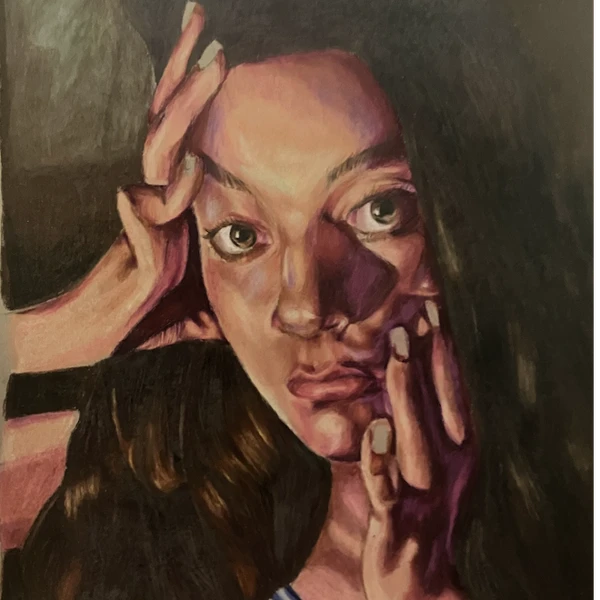
Over time, art became my way to break through that wall. I began creating projects that gave form to feelings I couldn’t easily verbalize. In my work exploring body dysmorphia, I used layered and fragmented portraits to represent the distortions in self-perception. That project didn’t just resonate with me—it started conversations. People who had never spoken about their own insecurities suddenly began sharing their stories. I realized that art could function as both a mirror and a bridge: it reflected unspoken emotions back to the viewer while creating a pathway to connect.
That belief carried over into The Art of Aging, a project where I designed collage-making kits for seniors. The goal was not just creative engagement, but connection—encouraging participants to share memories and experiences in a visual way. I saw people light up as they arranged colors and textures that held personal meaning. The act of making became a gentle opening for deeper dialogue. In those moments, I understood something profound: creativity can make mental health discussions feel less intimidating, especially for those who have been taught that vulnerability is dangerous.
These experiences have shaped my goals in a way that feels deeply personal. I want to pursue a career that combines art and mental health advocacy, specifically through art therapy. My ambition is not only to work one-on-one with individuals navigating trauma, anxiety, and depression, but also to create community-based initiatives that make mental health resources accessible to people who might never step into a therapist’s office. This includes developing low-cost art therapy kits, hosting creative workshops in schools, and partnering with local organizations to normalize discussions around mental well-being.
My relationships have also been transformed by my mental health journey. I’ve learned to prioritize emotional honesty, even when it feels uncomfortable. I check in with friends more intentionally, and I listen without rushing to “fix” things—because often, what people need most is to feel heard. I’ve also learned to set boundaries, understanding that protecting my own mental health allows me to show up better for others. This balance between empathy and self-care is something I didn’t always have, but now value deeply.
My understanding of the world has shifted from seeing mental health as an individual challenge to seeing it as a collective responsibility. Mental health is not just a personal issue—it’s shaped by culture, economy, education systems, and community attitudes. Change requires a shift in all these spaces. That’s why I believe in creating environments, whether in classrooms, workplaces, or homes, where open conversation is the norm. The more we bring mental health into the light, the less power stigma has to isolate and harm.
I carry this vision forward not only as a future professional, but as someone who has lived through the weight of silence. I know firsthand how much courage it takes to say, “I’m not okay.” I also know the relief of having someone respond with understanding instead of judgment. My goal is to be that person for others—to create spaces where people don’t have to hide parts of themselves to be accepted.
Ethel Hayes’ story resonates deeply with me because it embodies the truth that silence can be deadly, and that conversations—real, unfiltered, compassionate conversations—can save lives. I want my work to honor that truth, both in personal interactions and in broader community initiatives. Whether it’s through an art therapy session with a single client or a public workshop attended by dozens, my aim is the same: to use creativity as a light in places where people have felt only darkness.
My journey with mental health has taught me resilience, empathy, and the urgency of action. It has shown me that healing is possible, but only when we are willing to speak, listen, and create together. That is the world I’m working toward—a world where no one feels they have to suffer alone, and where art can be both the language and the lifeline for those ready to begin their journey toward healing.
Marsha Cottrell Memorial Scholarship for Future Art Therapists
Art has always been my language—the way I process emotions that feel too complex for words. Growing up, I discovered that a brushstroke could carry the weight of an unspoken fear, a collage could hold the fragments of a fractured memory, and a portrait could make someone feel seen in ways a conversation never could. That understanding is what has drawn me toward a career in art therapy: the belief that creativity is not just an act of self-expression, but a profound tool for healing.
My journey toward this path began with personal projects that explored the intersections of art, emotion, and lived experience. Through The Art of Aging, I worked with seniors to create collage-making kits that encouraged them to share stories and memories. For many, the act of arranging paper and color was more than an activity—it was a way to reclaim narrative, to transform isolation into connection. Later, I created deeply personal works exploring body dysmorphia, including layered and fragmented portraits that reflected both my insecurities and the societal pressures that shape them. In sharing these works, I witnessed something remarkable: people began opening up about their own struggles, even those they had never spoken about before.
These moments confirmed what I had always felt instinctively—that art can give voice to experiences that are too heavy, too tangled, or too painful to articulate in traditional ways. This is especially vital for individuals carrying the weight of trauma. In many cases, words can feel limiting or even re-traumatizing. But with art, the process itself—choosing colors, shaping forms, making marks—becomes a gentle, safe entry point into the work of healing.
I am particularly drawn to supporting people who have experienced forms of isolation, whether physical, emotional, or cultural. Growing up in Mumbai, I saw how mental health was often minimized or silenced, and how survivors of trauma were encouraged to endure rather than process. That silence can be corrosive. As an art therapist, I want to help break it by creating spaces where individuals—whether children navigating the aftermath of abuse, seniors confronting loss, or anyone carrying unspoken burdens—can begin to externalize and reshape their stories.
In practice, I hope to design therapy sessions that blend structured prompts with open-ended creation, allowing clients to set their own pace. For example, a child processing anxiety might build a “safe space” collage from magazine cutouts, while an adult survivor might work in clay to give form to emotions they’ve never been able to name. In both cases, the goal is not to produce “good art” but to use the act of making as a bridge toward self-understanding, resilience, and hope.
My ambition is not only to work directly with clients but also to expand access to art therapy in underserved communities. This means developing low-cost creative kits, collaborating with schools and community centers, and training educators to integrate therapeutic art practices into their environments. Healing should not be a privilege—it should be accessible to anyone who needs it.
Marsha Cottrell’s belief that art can say what words cannot resonates deeply with me. Her dream of becoming an art therapist reflects the same truth I have built my path on: that creativity is a lifeline. I hope to carry that vision forward in my own career, honoring her legacy by helping others process pain, reclaim their narratives, and rediscover meaning—one brushstroke, one collage, one moment of courage at a time.
Love Island Fan Scholarship
Love Island thrives on romance, competition, and just the right amount of chaos. As a dedicated fan, I’ve often imagined ways to keep the villa buzzing with unpredictability while still testing the core themes of loyalty, attraction, and trust. My proposed challenge, The Heart Swap, would push Islanders to confront both temptation and fate in a high-stakes, emotionally charged game that could change the course of the season in a single afternoon.
The challenge would take place in a specially designed “Heart Swap Arena,” styled like a glamorous casino with neon lighting, oversized playing cards, and a giant spinning wheel as the centerpiece. Each Islander begins the challenge holding a golden heart token engraved with their name, representing their current romantic standing in the villa. One by one, Islanders spin the wheel, which is divided into several possible outcomes—each one designed to spark drama or deepen connections.
If the wheel lands on Secret Date, the Islander must go on a private, fifteen-minute date with someone other than their current partner. Temptation Text delivers a flirty anonymous message from another Islander, and if the recipient guesses the sender incorrectly, they must surrender their heart token for the round. Public Confession forces an Islander to admit one romantic thought or doubt about their partner in front of the entire villa. Finally, Heart Swap requires an Islander to give their golden heart token to another contestant, symbolically shifting their romantic interest.
The twist comes at the end: for the next coupling ceremony, Islanders can only pair up with the person holding their golden heart token—whether that person is their original partner or someone completely unexpected. This forces contestants to balance loyalty with risk, making every spin of the wheel a gamble with real romantic and strategic consequences.
The Heart Swap would add an entirely new layer of excitement to Love Island. While physical challenges or flirtatious games often create temporary sparks, this challenge would have lasting repercussions that could reshape the villa’s dynamics for days—or even weeks. Viewers would be hooked by the unpredictability, watching favorite couples get split apart and unlikely pairs thrown together, creating the perfect mix of romance, tension, and drama that makes Love Island so addictive.
In short, The Heart Swap captures everything fans love about Love Island: the thrill of chance, the tension of choice, and the emotional rollercoaster that keeps audiences invested. By combining luck, strategy, and vulnerability, this challenge would not only entertain but also reveal who in the villa is truly in it for love—and who’s ready to gamble it all for something new.
Abbey's Bakery Scholarship
My name is Tanisha Desai. I recently graduated from high school in Mumbai, India, and I plan to attend university in the United States this fall to pursue a degree in the arts and social impact. My passion lies in using creative expression to foster empathy, build community, and open dialogue about issues that are often overlooked—especially mental health.
During my high school years, I learned firsthand that mental health struggles rarely happen in isolation. They are often compounded by academic pressure, family expectations, financial uncertainty, and societal norms that discourage vulnerability. In India, conversations about anxiety, depression, and burnout are still whispered, if they happen at all. I’ve seen friends hide their pain for fear of being judged or dismissed, and I’ve experienced moments when my own stress and self-doubt felt impossible to share. Those experiences shaped my determination to create spaces where mental health is not just acknowledged, but prioritized.
What I’ve learned is that mental health is inseparable from our ability to thrive in every other area of life. You cannot give your best to academics, relationships, or work if you’re running on empty emotionally. This understanding has influenced how I approach both my personal and creative work. For example, in one of my recent art projects, I explored body dysmorphia and self-perception through fragmented and layered portraits. Sharing that work sparked meaningful conversations with classmates who felt seen and validated, and it reminded me that art can be a powerful starting point for empathy.
In the years to come, I plan to apply these lessons by actively integrating mental health awareness into my university life. I want to help normalize open discussions about well-being, especially among international students who may feel doubly isolated by distance from home and cultural stigma. My vision includes organizing student-led workshops that blend creative expression with mental health resources—spaces where people can draw, write, or share stories alongside trained counselors and peer supporters. I believe that creating low-pressure, informal avenues for connection can help break down the fear of “being a burden” that so many of us carry.
On a larger scale, I think society can end the stigma surrounding mental health by shifting our language and our priorities. We need to replace phrases like “just get over it” with active listening and validation. We need to fund and expand affordable, culturally sensitive counseling services in schools and workplaces. We need to recognize that mental health is not a luxury—it’s a basic necessity, as fundamental as physical health. Public campaigns, social media storytelling, and educational curriculums should reflect this reality, so that future generations grow up knowing that seeking help is not a sign of weakness but of self-awareness and strength.
For me, ambition is not just about personal achievement—it’s about creating impact that ripples outward. My drive comes from seeing how much difference one safe conversation can make. My hope is that by combining my studies, my art, and my advocacy, I can help turn those conversations into lasting change.
LeBron James once said, “I like criticism. It makes you strong.” In the same way, I believe acknowledging our mental health struggles makes us resilient. It’s time to create a culture where no one has to fight their battles alone—and I’m committed to being part of that change.
Sabrina Carpenter Superfan Scholarship
Sabrina Carpenter has always felt like a big sister I never had. Watching her as Maya Hart on Girl Meets World gave me permission to be loud and emotional in a world that often told me to be quiet and nice. Maya was messy, funny, loyal—and underneath all the snark, deeply vulnerable. I didn’t realize it then, but I was seeing myself onscreen: a girl dealing with mental health struggles she couldn’t quite name, pushing people away before they could leave first. As someone with OCD, ADHD, and BDD, I’ve often felt misunderstood or too much. But through Sabrina’s roles and lyrics, I found someone who not only saw that chaos—but embraced it.
Sabrina’s career has grown up alongside me. Songs like “Skin,” “Because I Liked a Boy,” and most recently “Please, Please, Please” offer a kind of radical honesty I crave. Her ability to balance biting sarcasm with aching vulnerability makes her music feel like a diary entry I didn’t have the words for. When I was battling obsessive spirals or getting trapped in my appearance in the mirror for hours, I’d blast her songs—not to escape, but to feel seen. Her music became a soft landing when I didn’t know how to comfort myself.
She also doesn’t box herself into one image. Watching her move from Disney to music to films, all while retaining her playfulness and bite, made me realize that I could be multifaceted too. I didn’t have to choose between being funny and being serious, or between being mentally ill and ambitious. I could exist exactly as I was—in progress. Sabrina’s confidence onstage and her sense of humor online taught me that vulnerability doesn’t cancel out power. If anything, it’s what makes it real.
Even now, when I’m writing or making art, I hear echoes of her influence. I use sarcasm as armor but let it fall away when I’m being real. I speak openly about mental health because I’ve seen how artists like Sabrina can normalize it just by being honest. And in a world that often feels cruel, her music reminds me to still be soft. Still be silly. Still be human.
I’m a fan of Sabrina Carpenter because she’s proof that you don’t have to be perfect to be powerful. That you can be tiny and loud. That you can sing about heartbreak and still make it sound like a party. And most importantly, that you can take all your flaws and fears and fun—and turn it into art that matters.
Chappell Roan Superfan Scholarship
The first time I heard “Pink Pony Club,” I wasn’t just hearing a song—I was hearing permission. Permission to take up space. To twirl without shame. To want. It was liberating and unfamiliar. As someone with OCD, ADHD, and body dysmorphia, I’ve spent a lot of time shrinking myself—making sure I wasn’t “too much,” while secretly believing I’d never be enough. Chappell Roan's music cracked that mindset open with glitter, synth, and unapologetic vulnerability.
What makes her stand out isn’t just her vocals or her theatrical aesthetic (though they’re incredible); it’s her ability to hold contradictions with grace. She can be both dramatic and sincere, playful and aching. “Good Hurt” captures that haunting duality—how pain can become a comfort, even an identity. That lyric, “it’s a good hurt,” hit especially hard. It gave language to something I’ve felt but never been able to explain: the complicated intimacy of struggle. Living with mental illness means wrestling with thoughts that aren’t yours but feel like they are. It means finding clarity in art when your own mind is a fog.
Her performances are their own form of rebellion. The extravagant makeup, the costume changes, the queerness of it all—it’s theatre in the best way, but it’s also a reclamation. There’s a reason her fans feel seen. She doesn’t perform to please; she performs to express. Watching her thrive, especially in an industry that often tries to dull women down, makes me feel less ridiculous for wanting to be loud, too—for wanting to paint and write and create things that feel “too much.”
Chappell has also impacted me as a queer person navigating their identity in a world that still doesn’t quite know what to do with nuance. I used to worry that I didn’t “look” queer enough or “act” it right. But there’s something radical about the way she occupies her identity—not as a political stance, not as a brand, but as truth. She’s proof that identity can be fluid and real and theatrical all at once. That’s meant everything to me.
Art has always been my outlet, but there were times I questioned whether it mattered. Whether it was okay to make things just because they felt true. Seeing Chappell Roan's rise—especially how long it took, how many detours she had to take—reminds me that impact can take time. That it’s okay to have your breakthrough years after you thought it would come. That perseverance, especially in creative fields, isn’t linear.
And maybe most importantly, she reminds me not to wait for the world to give me permission to be myself.
I support Chappell Roan because she doesn’t just make music—she builds a universe where being sensitive, theatrical, queer, messy, or emotional is not only allowed but celebrated. I want to live in that world. And I want to help create it.
Olivia Rodrigo Fan Scholarship
"I know my age and I act like it / Got what you can't resist / I'm a perfect all-American bitch." – Olivia Rodrigo, “all-american bitch”
There’s something violently liberating about this lyric. Olivia Rodrigo’s “all-american bitch” doesn’t just capture the contradiction of teenage girlhood—it confronts it with rage, wit, and painful honesty. The lyric resonates with me as someone who has spent years walking the tightrope between perfectionism and implosion, trying to be the version of myself others expect, even when that version feels like a lie.
I have Obsessive Compulsive Disorder, ADHD, and Body Dysmorphic Disorder. For most of my teenage life, these weren’t just medical acronyms—they were shadows I lived with. OCD made me obsess over saying the right thing, acting the right way, and achieving nothing short of perfection. ADHD pulled my mind in a million directions at once, making it impossible to keep up with the very standards I’d built for myself. BDD whispered that no matter what I did, no one would see me—only flaws.
But there’s something about Olivia Rodrigo’s music, especially GUTS, that gives those shadows names and then sings them into submission. When she yells “I’m a perfect all-American bitch,” it’s a scream of irony—a rebellion against the constant pressure to be composed, sweet, intelligent, talented, beautiful, and effortless all at once. I hear that lyric and I think of the dozens of times I’ve broken down in bathrooms, only to walk out smiling because that’s what a “together” girl is supposed to do.
GUTS taught me that teenage girlhood isn’t one feeling—it’s all of them, all at once. The jealousy Olivia admits to in “lacy” isn’t petty—it’s painfully familiar. The disillusionment in “teenage dream” echoes the moment I realized the world didn’t have space for complexity, only performance. And the closing of “pretty isn’t pretty”? It reads like my own diary: no matter how much you try to fix yourself, it’s never enough when the mirror is your enemy.
But here’s the thing: GUTS didn’t just validate my pain. It helped me stop apologizing for it. Before, I saw my mental health challenges as something to manage quietly—something that made me hard to love, hard to understand. But Olivia doesn’t package her emotions in digestible pieces. She rages, she cries, she mocks herself and the world around her—and in doing so, she gives the rest of us permission to feel it all too.
I’m learning to do the same. I no longer see my OCD or ADHD as stains on my ambition—they’re part of what makes me resilient, creative, and driven. My BDD still lingers, but I’ve started creating artwork that reflects my distorted perceptions, turning my inner critic into something I can confront on canvas. Like Olivia, I’m learning that vulnerability is a kind of power—not a weakness.
The “all-American bitch” lyric captures the impossibility of being everything and the freedom that comes with admitting you’re tired of trying. It gave me the language I didn’t know I needed to say: I’m exhausted. I’m angry. And I’m still here.
That’s what GUTS means to me. Not just a soundtrack to my adolescence, but a survival manual for it. It’s messy, raw, and beautifully defiant—just like growing up.
Wicked Fan Scholarship
The first time I heard Defying Gravity, I wasn’t watching the musical—I was hunched over a stack of IB papers, headphones in, trying to drown out the noise in my head. Elphaba’s voice broke through: “Something has changed within me, something is not the same…” I paused. Rewound. Played it again. That song—and that moment—stayed with me.
Like Elphaba, I’ve often been misunderstood. I live with OCD, ADHD, and body dysmorphic disorder. At times, I’ve felt alien even in my own skin—awkward, too much, too intense. Elphaba’s story isn’t just about being “different”—it’s about being punished for it, about being told that your instincts, your anger, and your brilliance are threatening. In her, I saw parts of myself that I usually try to hide.
Wicked taught me that being “unpopular” doesn’t mean being unworthy. That you can be powerful and kind, radical and misunderstood, flawed and still full of purpose. It made me feel seen at a time when my own self-worth was shaky—when I was struggling with self-image issues from scoliosis, thyroid problems, and a jaw full of braces. In art class, I turned those insecurities into a portrait of myself: distorted, chaotic, and real. It was my Elphaba moment—stepping into the parts of myself that didn’t fit the mold and saying, “So be it.”
I’m also drawn to Glinda’s arc. People underestimate her, but her journey is deeply human—especially for girls who are expected to perform perfection. In a world that rewards being “likable,” Glinda learns that popularity isn’t purpose. Her story reminded me that even those who seem confident on the outside are figuring things out, too. As someone who has ghosted people out of fear of seeming “too attached” or “too emotional,” I related to her efforts to balance vulnerability and self-image.
What makes Wicked so powerful is how it explores friendship as a force of transformation. Elphaba and Glinda’s bond isn’t neat or easy—it’s full of tension, love, and growth. That song, “For Good,” hit me like a confession. I think about the people I’ve had to let go of—not because they were bad, but because we were growing in different directions. I’ve had to accept that impact isn’t always about permanence; sometimes, just crossing paths changes everything.
Through Wicked, I’ve learned to be bolder in how I express myself. Whether it’s talking about mental health in school, turning personal pain into art, or pushing through self-doubt to pursue higher education abroad, I try to live like someone who’s not afraid to defy gravity—even when the storm is loud and the ceiling (sometimes literally) collapses.
The upcoming Wicked film fills me with hope. With Cynthia Erivo and Ariana Grande taking on these roles, a new generation will see women of color and pop culture icons tell a story that’s never stopped being relevant. Representation like that matters. I can’t wait to watch it and be reminded, all over again, that who you are—your flaws, your strength, your spark—isn’t something to apologize for.
Wicked didn’t just give me music I love. It gave me a mirror. And in that mirror, I stopped seeing a girl who was “too much”—and started seeing a girl with power, a voice, and a future.
Online ADHD Diagnosis Mental Health Scholarship for Women
Living with OCD, ADHD, and body dysmorphic disorder has made every step of my academic journey both a challenge and a lesson in resilience. As a female student navigating rigorous IB coursework in Mumbai—a city that itself throws unpredictability in the form of flooding and collapsing ceilings—I’ve had to learn how to recognize the impact my mental health has on my academics and personal life, and more importantly, how to prioritize it despite external pressures.
Mental health affects my academic performance in very tangible ways. OCD often traps me in loops of overchecking my work, which can consume hours and add intense anxiety around deadlines. ADHD scatters my focus, making it hard to concentrate for long periods and sometimes causing me to procrastinate out of overwhelm. BDD distorts how I see myself, which affects my confidence, especially when presentations or group projects require me to be “visible.” These conditions can make the pressure of school feel like climbing a steep mountain while carrying heavy weights.
At the same time, I’m not just a student; I’m also part of a family dealing with crises—my brother and grandfather have suffered from chikungunya, and our home literally flooded during the monsoon, making focus and calm feel even more elusive. It’s easy to let mental health slip down the priority list when life demands so much. But I’ve learned that ignoring it only deepens the struggle.
To actively prioritize my mental health, I’ve developed strategies grounded in honesty and creativity. One important step is accepting that perfection isn’t the goal. I try to set realistic expectations, allowing myself to ask for help or extensions when needed, even when it feels uncomfortable. I use visual art as an outlet to process feelings that are hard to put into words—creating accordion portraits that exaggerate my insecurities, for example, helps me confront my body dysmorphia and reclaim control over my self-image. Art becomes both therapy and advocacy, opening conversations with classmates about mental health in ways words sometimes cannot.
I also carve out time for self-care, even if it means stepping away from schoolwork. Whether it’s journaling, taking walks in nature, or simply creating a quiet “blue zone” space to decompress, these moments recharge my mind. Humor is another tool—I often laugh at my OCD rituals or ADHD hyperfocus episodes to reduce their grip and remind myself I am not my diagnosis.
Beyond personal strategies, I actively advocate for mental health awareness in my school community. By sharing my story and art, I hope to reduce stigma and encourage others—especially female students—to prioritize their emotional well-being alongside academics. This dual focus is essential because I believe academic success is not sustainable without mental wellness.
Ambition drives me to overcome these challenges. I want to pursue higher education abroad, where I hope to find supportive environments that value neurodiversity and mental health as integral to learning. This scholarship would not only ease financial burdens but also affirm the importance of prioritizing mental health as a female student—showing that struggle and drive can coexist.
In a world that often demands women be “everything at once,” I choose to put my mental health first. Because only when I am well can I truly thrive—academically, personally, and beyond.
Elizabeth Schalk Memorial Scholarship
When I say mental illness has shaped my life, I don’t just mean in a personal sense—I mean it’s woven into my family history, my daily routines, my fears, and even my hopes. I was diagnosed with OCD, ADHD, and body dysmorphic disorder as a teenager, but the signs were always there: the intrusive thoughts I couldn’t shut off, the spirals of hyperfocus and distraction, the deep discomfort with my own body that made mirrors feel like battlegrounds. I learned to mask these things early, especially in an environment where emotional vulnerability was rarely acknowledged.
But mental illness hasn’t just impacted me—it’s affected my entire family. My grandfather, a strong, stoic man, began showing signs of mental and physical decline years ago, but like many families, we focused only on the physical. My brother, younger than me, has silently absorbed the pressure of our household during times of health and financial crisis—especially when both he and my grandfather were sick with chikungunya and our home physically fell apart during the Mumbai monsoons. I watched him withdraw, not because he lacked strength, but because we didn’t always have the tools—or language—to talk about mental strain.
In Indian households, and many others like mine, mental illness often lives in silence. It’s not that people don’t suffer—it’s that suffering becomes normalized. If you're not visibly broken, you're expected to carry on. That unspoken rule has deeply affected the way I view myself. Even when I’m overwhelmed by school, illness, or pressure, I still feel guilty for needing help. I’ve ghosted people I care about just to avoid looking “too emotional.” I’ve pushed through IB assignments during family emergencies because asking for an extension felt like weakness.
Despite all this, or maybe because of it, I’ve chosen to be open about my experiences. I make art about my insecurities—literally. In a recent school project, I created a distorted self-portrait that featured my curved spine (from scoliosis), a jaw full of braces, and a swollen thyroid to reflect my BDD and physical insecurities. It was both terrifying and healing to put my body on display. But it sparked conversations in my school—people opened up about their own body image issues, anxiety, and emotional burdens. That moment made me realize that my vulnerability could be someone else’s validation.
Financially, my family is doing what we can, but international education—my dream—feels out of reach without help. I want to study in an environment that acknowledges mental health as central to success, not a side note. I want to continue turning my experiences into something meaningful—whether through advocacy, storytelling, or a future in healthcare or psychology.
This scholarship would not only bring me closer to that future—it would also affirm something deeper: that mental illness doesn't make you less deserving of opportunity. That surviving isn’t the end of the story, but the beginning of something more.
Ambition isn’t about perfection—at least not for me. It’s about pushing forward while carrying what you cannot always see. It’s waking up every day and trying again. It’s choosing to speak when silence is easier. It’s studying hard even when your ceiling collapses, your city floods, and your mind is full of noise.
Mental illness has shaped me—but it will not define the limits of my life. With help, with hope, and with honesty, I know I can build a future worth fighting for.
ADHDAdvisor Scholarship for Health Students
My experience with OCD, ADHD, and body dysmorphic disorder has given me a personal understanding of how complex, exhausting, and isolating mental health struggles can be—especially when they’re invisible to everyone else. But it has also shown me the immense power of community, empathy, and small acts of emotional support.
I've helped others the way I once needed help myself: quietly, consistently, and without waiting for someone to “look” like they’re struggling. Whether it’s checking in on a friend who’s gone quiet after exams or creating a safe space in my school’s art room to decompress, I’ve learned that emotional support doesn’t have to be loud to be meaningful. My peers often come to me with things they’re afraid to say elsewhere—not because I have answers, but because I listen without judgment.
My visual art projects have become another form of advocacy. In school, I used an accordion portrait to depict the insecurities I live with—an exaggerated spine for scoliosis, a jaw full of metal braces, a distorted thyroid—to help classmates reflect on how physical and mental health intersect. These conversations, sparked by art, led to deeper sharing and understanding. I’ve seen how the simple act of expressing vulnerability can open doors for others to do the same.
As I pursue a healthcare-related field, I plan to carry this approach forward. My goal is not only to become technically proficient, but to be the kind of healthcare provider who makes patients feel safe enough to talk about the things they often hide—like anxiety, shame, or fear. I want to be trained in trauma-informed care and work at the intersection of physical and emotional health, especially in communities like mine, where mental health is often sidelined or misunderstood.
In a world where so many feel unseen, I want my future in healthcare to reflect the truth I’ve lived: that being heard, believed, and supported can be just as healing as any medicine.
Learner Mental Health Empowerment for Health Students Scholarship
Living with OCD, ADHD, and body dysmorphic disorder feels like constantly trying to organize a messy room while the walls are collapsing—sometimes literally. During the infamous Mumbai monsoon, my ceiling gave in. My brother and grandfather were both sick with chikungunya. Two IB deadlines loomed. That week alone felt like a metaphor for what it’s like to be a student with overlapping mental health struggles: everything crashing down, and still being expected to turn in clean, structured work.
Mental health matters to me not just as a personal issue, but as a lens through which I experience every aspect of school and life. OCD makes me obsess over tiny details in assignments. ADHD scrambles my focus and turns time into a blurry rush. BDD distorts how I see myself in mirrors and group photos, often making it hard to even show up in public. Together, they make school a challenge—but they’ve also made me fiercely aware of how invisible mental battles often are. You can’t see executive dysfunction. You can’t measure the weight of shame. But they shape everything.
For a long time, I stayed quiet about what I was dealing with. I didn’t want to seem dramatic. I once even ghosted someone I liked just to avoid the risk of being “too much.” It took me time to realize that hiding what I was going through didn’t make me stronger—it just made me lonelier.
Now, I advocate by creating the very conversations I once avoided. As a visual artist, I use my school art projects to explore what it means to live in a body you sometimes resent. My accordion portrait on body dysmorphia shows exaggerated fragments of myself—a jaw full of braces, a curved spine from scoliosis, a swollen thyroid. Instead of smoothing those insecurities over, I enlarge them. I want viewers to confront the discomfort many of us live with but rarely speak about.
I also advocate through storytelling—whether it's reflective essays or discussions with classmates. I’ve used my own experiences of overworking, spiraling under pressure, and feeling ashamed of asking for help to open up dialogue. When our school flooded during monsoon season, I wrote about the surreal image of my driver carrying my brother through waist-deep water. It was absurd, terrifying, and somehow still not enough to get an extension on a math IA. That story, though funny in hindsight, spoke to how mental health is often ignored unless it’s physical or dramatic. I try to change that narrative.
In small but consistent ways, I’ve created a culture of openness in my school circles. Whether I’m checking in on a friend who’s gone quiet or offering tips on managing ADHD with color-coded spreadsheets, I use my own struggles as a bridge to empathy. Even humor—my natural defense mechanism—has become a tool. I’ll joke about my OCD re-reading sentences ten times or my ADHD hyperfixating on font choices, not to minimize them, but to disarm the shame around them.
I want to study abroad because I know that in the right academic and social environment—one that supports neurodivergent students—I can thrive. But I also need financial help to get there. This scholarship isn’t just funding; it’s a belief in my capacity to turn struggle into impact.
Mental health isn't a side quest. It’s the setting, the background music, the weather, and the terrain. And by advocating for it—in school halls, art rooms, and conversations—I’m learning how to navigate it. Not perfectly, but authentically. That, I think, is worth rewarding.
LeBron James Fan Scholarship
I didn’t grow up with posters of LeBron James on my wall or follow every box score. In fact, I only knew him as the guy who played a lot of basketball and kept winning. But somewhere along the way—between his 21st season and his 21-year-old son joining him on the court—I started paying attention. And what I saw wasn’t just athleticism. It was longevity, intentionality, and a kind of leadership that doesn’t scream for attention but earns it.
I’m not a basketball player, nor do I live in Ohio. I’m an artist, a daughter, a student from Mumbai now chasing higher education with little but grit, ambition, and a patched-together scholarship spreadsheet. And while I might not run sprints or dunk, I do know what it means to stay in the game when the odds stack high. That’s what LeBron James has taught me—even if indirectly.
His story isn’t just one of championships and records (although being the all-time leading scorer is no small feat). It’s about sustaining excellence in a world obsessed with the next big thing. In an era that glorifies short attention spans and burnout, LeBron chooses consistency. I’ve seen him walk through criticism, carry underperforming teams, show up for community initiatives, and now—become teammates with his own son. That multigenerational moment? That’s history. And that’s also legacy.
Do I think he’s the greatest of all time? Depends on the criteria. Michael Jordan might have the edge in championships, and Kobe had a rawness people still revere. But LeBron’s GOAT status, to me, comes from his ability to stretch the definition of greatness. It’s not just about stats—it’s about evolving when the game changes, leading both vocally and quietly, and being the kind of role model who builds a school for underserved youth instead of just talking about giving back.
When I think of impact, I think of his I PROMISE school. When I think of drive, I think of his decision to keep pushing, even when people said he should retire. And when I think of ambition—I think of a young boy from Akron who became a father, a champion, an entrepreneur, and still wakes up at 5 a.m. to train. I can’t pretend to love basketball the way some fans do, but I love what LeBron stands for: ownership of your narrative, reinvention, and fighting for a future beyond the scoreboard.
As someone working toward a university education with the hope of someday creating community spaces for mental health and the arts, I’m reminded that greatness isn’t defined by what’s trending—but by what endures. LeBron’s career has outlasted eras. And that’s why, even as a latecomer to the fandom, I’m proud to call myself a fan.
Not because I’ve followed him from the beginning, but because I’ve learned that greatness doesn’t require your applause—it earns your respect. And LeBron James has earned mine.
Brian J Boley Memorial Scholarship
I didn’t choose mental health—mental health chose me.
Living with OCD, ADHD, and Body Dysmorphic Disorder, I’ve spent years navigating a system that often didn’t have the tools—or the time—to help me. I was mischaracterized as “moody,” “lazy,” or “too sensitive” long before I had the language to describe what was actually happening. I wasn’t unmotivated. I was mentally exhausted from obsessions I couldn’t switch off, a body I couldn’t stop fixating on, and a mind constantly speeding or stalling.
I often felt like I was asking for too much just by needing help.
That sense of invisibility—of being failed by the very structures that are meant to support us—is why I want to enter the mental health field. It’s why I want to be the person I needed when I was younger. Someone who doesn’t dismiss, minimize, or categorize people by symptoms alone. Someone who can look at a struggling person and say, “I believe you—and I’m staying.”
Brian’s story resonates with me because I know how easily mental health struggles can spiral when left unaddressed. While I haven’t experienced addiction firsthand, I know the dangerous ways people learn to cope when no one listens, when no one checks in, or when systems reduce them to diagnoses without seeing the human underneath. The truth is, recovery doesn’t happen in isolation. It happens in connection. And that’s what I hope to offer: connection, empathy, and consistent support.
I’ve found ways to stay grounded through my art. It became more than an outlet—it was survival. My work often explores body image, identity, and vulnerability. In one piece, I distorted my own features—the metal-filled jaw, my curved scoliosis spine, my swollen thyroid—to confront the shame that BDD and chronic illness bring. It’s raw, but real. It’s how I tell the truth when words fail.
In many ways, this creative process mirrors what I hope to bring into my future profession. I want to help others externalize pain, dismantle shame, and find language for what hurts. Whether that’s through expressive arts therapy, trauma-informed counseling, or peer support programs, my vision is to create care models that are personalized, creative, and sustainable. Mental health doesn’t look the same for everyone—so why should healing?
I also want to work on improving accessibility in mental health services. As someone who comes from a financially constrained background, I know the hesitation of wondering whether you can afford help at all. I’ve experienced firsthand how hard it is to get mental health accommodations in school when the process is filled with red tape. That needs to change. The system failed Brian—and it has failed countless others—by being cold, clinical, and too late.
If I can be part of building a new system—one rooted in compassion, early intervention, and holistic care—I’ll know I’ve done something worthwhile. Whether I do that through clinical work, creative mental health education, or advocacy at the policy level, my goal is to push back against the idea that you have to “break down” before you’re taken seriously.
This scholarship would help me pursue the education I need to begin that work. As someone who has learned to live with mental illness and thrive in spite of it, I believe my experiences give me the insight and empathy to be an effective mental health professional. I don’t just want to understand the system—I want to reshape it.
Because no one should ever feel like they’re too much, too late, or too far gone.
Elijah's Helping Hand Scholarship Award
Some days, the weight of everything is invisible. It doesn’t scream, it whispers—steadily, relentlessly. I’ve grown up knowing that strength isn’t always loud. Sometimes, it’s simply about showing up—when your thoughts loop endlessly, when your reflection feels like a stranger, and when the noise in your head is louder than the world outside.
Mental health has not been a chapter in my life—it’s been the whole book. I live with OCD, ADHD, and Body Dysmorphic Disorder. That combination often feels like a war between too much control and none at all. OCD tells me things need to be “just right” or something bad will happen. ADHD scrambles my thoughts and energy, making even simple tasks feel monumental. BDD is the cruel mirror, distorting how I see myself and convincing me that I’m always too much or not enough.
School hasn’t just been about academics—it’s been about masking. Masking the compulsions, the spiraling, the fear that I’m falling behind in ways no one else can see. While other students focused on grades, I was also managing the rituals, the hyperfixations, the exhaustion. I still showed up. Not always perfectly, but consistently—and that has become my quiet version of resilience.
Art became my outlet and my way through. I began using my own body as a recurring motif in my work—fragmented, distorted, raw. In one piece, I exaggerated the features I felt most ashamed of: my metal-filled jaw, my curved scoliosis spine, my swollen thyroid. It may seem stark, but it’s where I find power—by turning discomfort into expression, invisibility into visibility. Art doesn’t ask me to explain myself. It simply lets me be.
Even in the midst of family health crises, a collapsed ceiling at home, and overwhelming academic deadlines, I’ve kept going. I’ve learned to ask for help. To take rest seriously. To prioritize progress over perfection. These may sound like small acts, but for someone like me—who once feared that rest equaled failure—they are radical.
Though I don’t identify as LGBTQIA+, I’ve seen how mental health struggles uniquely impact queer and non-binary friends. Elijah’s story resonates with me deeply. So many of us walk around with invisible pain, dismissed as “too sensitive” or “dramatic.” I’ve lost count of the number of times I’ve been told to “just focus” or “stop overthinking.” If I can be one of the reasons someone stays—because they felt seen, heard, or even just less alone—then I’ve done something worthwhile.
I want to keep doing that. I plan to pursue a university education in the arts—not just for myself, but so I can use my creativity to tell stories that matter. Stories about survival, shame, recovery, and hope. Stories that challenge how we see mental illness, and the people who live with it. With university support, I hope to continue developing work that’s vulnerable, reflective, and resonant—whether in gallery spaces, editorial platforms, or community projects.
This scholarship would be more than financial aid—it would be recognition. That surviving is not a small thing. That living with mental illness doesn’t make me broken, just human. And that perseverance can be quiet, messy, and incredibly powerful.
I’m still here. And I want to keep learning, creating, and helping others stay, too.
SnapWell Scholarship
There was a point in my final year of high school when everything collided — deadlines, illness, and emotional exhaustion. My grandfather and brother were down with chikungunya. Our ceiling literally collapsed. I had two major IB submissions due. And through it all, I found myself shrinking into survival mode — constantly giving, fixing, pushing through, without space to breathe. Until I couldn’t anymore.
It was during that chaotic stretch that I made a decision I hadn’t made before: I chose my well-being first.
That meant stepping back, asking for help, and being honest with my teachers about what was happening. It meant prioritizing rest over perfection, therapy over appearances, and my body’s signals over academic pressure. I realized that powering through wasn’t the only kind of strength — pausing required just as much. And that caring for others doesn’t mean sacrificing yourself entirely.
This choice was uncomfortable. As a high-achieving student, especially coming from a South Asian background, I was conditioned to associate worth with productivity. But making my mental and emotional health nonnegotiable changed everything. It taught me how to set boundaries, to be vulnerable without shame, and to notice the difference between giving up and letting go.
Now, as an undergraduate at UC Berkeley, that mindset shapes how I move through every space I occupy. I organize my week around not just assignments, but balance — scheduling walks, creative breaks, even time to just feel what I’m feeling. I’ve developed emotional check-in routines and creative outlets, like journaling and art, that help me process rather than suppress. I’ve also started creating emotional well-being kits — simple, low-cost resources combining art and reflection prompts — for friends, family, and community members who may not have access to therapy but still need space to care for themselves.
Wellness, to me, is not something you “achieve.” It’s something you practice — especially when everything feels like it’s falling apart.
That experience has also informed my career path. I’m pursuing a degree in psychology and visual communication because I want to work at the intersection of mental health and creative care. I envision a future where I can design accessible tools for emotional wellness — especially for youth of color and neurodivergent students who often go unheard in traditional mental health systems. I don’t want to just survive or succeed; I want to build a life and career that gives others permission to care for themselves, too.
This scholarship would support not just my education, but the bigger picture I’m working toward: a world where self-care isn’t treated as a luxury or weakness, but a necessary, radical act of love. Where students can say “I need a break” and be met with compassion. Where young people are taught not just how to perform, but how to process. Where balance isn’t seen as laziness, and vulnerability isn’t punished.
I’ve learned that tending to yourself — especially when you’re wired to tend to everyone else — is hard. But it’s also healing. And the more I care for myself, the more I’m able to show up fully for others — in school, in community, and in the future I’m determined to build.
Priscilla Shireen Luke Scholarship
Service has never been something I clock in and out of — it’s the rhythm of how I move through the world. I come from a place where community is everything, but it’s also a place where many fall through the cracks. Growing up in Mumbai, India, I learned early on that giving back isn’t always grand or loud — sometimes, it’s as quiet as sitting with someone who feels invisible, listening to a story no one else has the patience to hear, or creating something that helps someone feel seen.
As a student now pursuing higher education at UC Berkeley, my commitment to service has only grown deeper. I’ve always been drawn to people on the margins — those who are misunderstood, overlooked, or written off. I’ve volunteered with senior citizens, creating art kits to help them reconnect with memory and self-expression. I’ve led storytelling workshops for teens navigating anxiety, cultural expectations, and identity struggles. I’ve helped peers process their own mental health through visual expression — sometimes just by sharing my own experience and creating a space where others could be honest, too.
For me, art and emotional wellbeing are not separate from service — they are service. I see creativity as a tool for healing and connection, especially in communities where mental health is either unaffordable or deeply stigmatized. My long-term goal is to build a platform — a blend of nonprofit and social enterprise — that uses psychology-informed creative methods to support young people of color in exploring their emotions, processing trauma, and building confidence. Not everyone has access to a therapist, but everyone deserves access to tools that help them feel human.
I want to design affordable art-based therapy kits, offer community-based workshops, and collaborate with schools and local organizations to embed emotional education into everyday life. But more than anything, I want to prove that small-scale acts of care — like sitting down to collage with a grandparent or helping a student write about their fears — can ripple into large-scale change.
I carry a lot of ambition. I’m studying in a country far from home with no financial cushion, building a future with passion and borrowed time. University in the U.S. is a dream I’m constantly working to keep alive — through scholarships, freelance work, and grit. But this dream isn’t just mine. Every step I take is with the intention of giving something back. Every degree, every project, every collaboration is rooted in service.
Priscilla Shireen Luke’s legacy reminds me of the kind of person I want to be remembered as — not just someone who “made it,” but someone who made it easier for others to believe they could, too. Someone who chose generosity, even when it wasn’t convenient. Someone who understood that change doesn’t only live in activism or politics — sometimes it’s in presence, in care, in showing up for someone who thought no one would.
I give back because I’ve needed people to show up for me. I give back because I’ve seen what happens when no one does. And I plan to keep giving, creating, and caring — because service, to me, isn’t a box I tick. It’s the reason I’m here.
Charlene K. Howard Chogo Scholarship
I come from a world where education was never just about report cards — it was about possibility. Growing up in Mumbai, India, I learned early on that knowledge was currency, freedom, and survival all at once. As a student and an artist, I’ve come to believe that education doesn’t just change lives — it helps us understand them. That’s why I’ve devoted myself to making learning more empathetic, more creative, and more accessible.
My name is Tanisha, and I’m currently pursuing my undergraduate degree at UC Berkeley, focusing on psychology and visual communication. I’ve always been drawn to the intersection of art, mental health, and education — to the ways we teach people to process their emotions, understand their identity, and make sense of a complex world. My goal is to build a career that uses creative tools to make emotional education more inclusive — especially for BIPOC youth and those often overlooked by traditional systems.
My volunteering experience reflects that commitment. I’ve run storytelling workshops for teenagers, created collage kits for older adults dealing with memory loss and loneliness, and mentored younger students navigating identity struggles and academic pressure. In every case, my focus has been simple: use art and communication as a bridge. A bridge to mental clarity, to self-worth, and to connection.
But I also understand the privilege and responsibility that come with a college education — especially as someone who has had to fight for it. I come from a family without a financial safety net. Studying in the U.S. is a dream that requires stitching together scholarships, freelance work, and sheer perseverance. And yet, every class I take, every project I build, is infused with the knowledge that education is a gift — and one I will spend my life paying forward.
My long-term goal is to launch an initiative that integrates psychology, art, and social work to support students who are emotionally overwhelmed or intellectually misunderstood. I want to develop creative toolkits and workshops that empower children to explore their inner world — especially those navigating mental health challenges in silence. I plan to collaborate with schools, community centers, and nonprofits to make these tools widely available and culturally responsive.
Charlene K. Howard’s legacy as a mentor and educational leader inspires me because it mirrors what I strive to become: someone who doesn’t just teach, but uplifts. Someone who creates safe spaces where learning feels like liberation, not pressure. Someone who believes every student — regardless of background — deserves a chance to expand their mind and chase their goals.
This scholarship would allow me to continue that mission without being held back by financial strain. More importantly, it would affirm that the work I’m doing matters — that education isn’t just about reaching a personal finish line, but about building pathways for others too.
I want to make a difference by helping young people not just survive school, but find themselves in it. Through empathy, creativity, and a deep commitment to education, I hope to honor Charlene’s spirit by lighting the way for others.
Lieba’s Legacy Scholarship
From an early age, I understood what it felt like to be misunderstood. To be labeled "too sensitive," "too intense," or "too much" — not because I was doing anything wrong, but because I was thinking deeply, feeling fully, and noticing more than I was supposed to. In school, I often found myself absorbing emotions like a sponge: the anxiety of the student in the back row, the quiet frustration of a classmate struggling with learning differences, the quiet sorrow in the eyes of someone who felt out of place. I never knew how to turn it off. For a long time, I thought that was a flaw.
But now I know: it was empathy. And it’s exactly why I want to pursue a career in psychology.
Lieba Joran’s legacy resonates with me deeply — not only because I, too, have found myself speaking up for others even when it wasn’t easy, but because her life reflected something I believe with my whole heart: that the most misunderstood people are often the ones with the deepest gifts. And that it’s not enough to notice them — we have to fight for them.
I want to become a psychologist who specializes in working with gifted and neurodivergent children and adolescents — especially those whose intelligence and emotional depth often go hand-in-hand with anxiety, ADHD, learning differences, or social isolation. Too often, we celebrate giftedness only when it fits into neat boxes: high test scores, math competitions, early reading. But what about the child who thinks abstractly beyond their years but can’t sit still? The one who writes poetry that cuts straight to the bone, but shuts down in group discussions? The one whose curiosity borders on obsession — and whose mood swings are misunderstood as “difficult” rather than emotionally rich?
I want to help these children feel seen, not pathologized. To help them understand that their differences are not deficits. That they aren’t "too much" — they’re just wired differently. My long-term goal is to open a center for gifted and twice-exceptional youth — a space where kids can receive holistic support: therapy, academic counseling, and creative enrichment in an environment that values complexity and uniqueness. A place where being misunderstood stops being a daily weight and starts becoming a source of pride.
My personal experiences make this goal more than theoretical. I know what it means to juggle expectations, to feel emotionally overloaded, to be told to tone it down when all you want is to connect more deeply. I’ve also seen what happens when young people are given tools to understand their minds — when we name emotions instead of ignoring them, when we work with sensitivity rather than against it. I’ve facilitated emotional art workshops for teens, created reflective storytelling projects about body image and identity, and designed emotional processing kits for older adults. I want to bring this same creative, affirming approach into clinical spaces — making therapy more intuitive, visual, and expressive, especially for those who don’t communicate in traditionally “neat” ways.
My passion is matched by my drive — but not always by my resources. I’m currently attending UC Berkeley, pursuing a degree with a focus in psychology and visual communication, and while I’m beyond grateful to be here, affording tuition and housing has been a constant challenge. My family doesn't have a financial safety net, and each semester requires stitching together scholarships, freelance creative work, and careful budgeting. This scholarship wouldn’t just ease a financial burden — it would allow me to focus more fully on the career I’m building, one that I hope will impact lives like Lieba’s and the children she stood up for.
Lieba’s courage, kindness, and insight are rare — but they shouldn’t have to be. I believe that with the right care, more young people can grow into themselves instead of shrinking to fit. I want to be part of the movement that redefines what giftedness, sensitivity, and neurodiversity mean — not as labels that limit, but as languages that teach us how to listen.
If awarded this scholarship, I will carry forward Lieba’s mission with the same quiet fierceness she modeled: nurturing kindness, pursuing justice, and creating harmony in a world that often forgets how much that matters.
Brandon Repola Memorial Scholarship
I’ve always believed that stories — when told with intention — have the power to change the world. Whether it’s through a visual artwork, a short film, or a compelling social media post, I’m drawn to the tools that help us connect, question, and reimagine the world around us. That’s why I’m pursuing a degree that merges art, digital media, and communication — and why I’m so drawn to the legacy Brandon Repola left behind.
Like Brandon, I’m driven by the need to not just create, but to contribute. My area of interest lies in digital storytelling — particularly videography and digital marketing that centers underrepresented voices and emotions often overlooked in mainstream narratives. As someone who has navigated issues around body image, mental health, and cultural expectations, I’ve found that art and media are more than just career paths — they’re lifelines. They’re how I make meaning of chaos, how I build empathy, and how I advocate for those still struggling in silence.
At university, I’ve been working toward honing my skills in both visual art and digital communication. I’ve designed collage kits for seniors to process emotion, created video-based storytelling formats for mental health awareness, and helped friends and peers build their own personal narratives online. I want to continue developing these tools, but with more technical knowledge and professional training — skills I hope to gain through both formal education and hands-on work in digital marketing and video production.
Long-term, I see myself launching a media initiative focused on accessible, emotion-driven storytelling — offering low-cost content creation services to small businesses, nonprofits, and young creators from marginalized communities. I want to develop visual campaigns that blend strategy with authenticity — the kind that doesn’t just sell, but speaks. In a world overwhelmed with content, I believe there’s space — and desperate need — for content that heals, educates, and inspires.
Financially, though, pursuing this vision hasn’t been easy. I’m currently enrolled as an undergraduate at UC Berkeley, and while getting accepted was a dream come true, staying here — with international tuition, housing costs, and living expenses — has been a challenge. I’ve had to juggle scholarships, freelance design work, and a tight budget. There’s no safety net waiting back home. Every dollar counts. And every opportunity to stay here and continue learning means I can take one more step toward the future I’m building — not just for myself, but for the communities I serve through my work.
Brandon’s story resonates deeply with me. His passion for videography and digital media, his drive to uplift the youth, and his belief in dreaming big despite obstacles — all of it reflects the same values that guide me every day. This scholarship wouldn’t just be funding my education. It would be helping me continue a legacy of using creative tools to empower others, inspire change, and build a more emotionally intelligent world.
I may not have all the answers yet, but I do have the ambition. I have the need. And more than anything, I have the fire to keep going — to keep creating — until something I make helps someone else see their worth a little more clearly.
Bulkthreads.com's "Let's Aim Higher" Scholarship
I want to build bridges — not of steel and concrete, but of memory, meaning, and expression. As an artist and writer, I’m deeply aware of how many people — especially young people of color — feel disconnected from their own stories. Mental health challenges, identity struggles, and generational expectations often go unnamed in our communities. I want to build tools that help people see themselves — not just in mirrors, but in narratives, metaphors, colors, and collages.
I’m currently pursuing higher education in art and interdisciplinary studies, and my goal is to build a practice that blends creative storytelling with emotional education. I want to create accessible, affordable art kits that use visual expression as a way to process feelings — especially for teens and young adults navigating mental health in silence. These kits wouldn’t just be for classrooms or therapists’ offices, but for community spaces, homes, and even digital platforms where culture and care intersect.
Long-term, I hope to develop a network of workshops and online tools that center healing through art — particularly tailored for BIPOC communities who’ve historically lacked access to culturally sensitive mental health support. These won’t be substitutes for therapy, but springboards into self-awareness, expression, and connection.
At the same time, I’m also building something less tangible but just as vital: a voice. A voice that challenges stigma, that advocates for creativity as a legitimate form of care, and that makes space for complexity in both people and art. I believe education is not just for professional advancement — it’s for personal liberation, too. And I plan to use mine to open new doors, not just for myself, but for others who’ve felt locked out of conversations about wellness, identity, and worth.
I’m not building alone. I’m building with and for a community. And this scholarship would help ensure that what I build can grow beyond intention — into action, impact, and change.
Healing Self and Community Scholarship
Mental health shouldn’t be a luxury. Yet for many, especially in BIPOC communities, care feels out of reach — either financially, culturally, or emotionally. I’ve seen this firsthand: the hush-hush tone around therapy, the shame in needing help, the expectation to “just be strong.” As a South Asian woman and an artist, I want to disrupt that silence.
My contribution to mental health accessibility starts with storytelling. Not just in galleries or textbooks, but in spaces where people actually live and heal — community centers, schools, waiting rooms, even public transport. I want to create affordable, interactive art kits and zines that blend emotional expression with cultural context, designed specifically for youth of color. These tools won’t replace therapy, but they’ll open the door to it — making vulnerability feel less foreign and less frightening.
Beyond that, I hope to collaborate with therapists, educators, and tech developers to build platforms that use culturally sensitive visual art and language to help people name their emotions, especially in early adolescence when most disorders begin. Prevention is just as critical as intervention.
Mental health care must feel relatable before it can feel reachable. I believe my ability to translate complex emotions into accessible forms — through collage, visual metaphor, and personal narrative — is my unique contribution. I don’t just want to make art. I want to make people feel seen. And maybe that’s where healing starts.
Champions Of A New Path Scholarship
The question of why I deserve this scholarship almost feels like a trap, because I’ve never been the loudest in the room, or the one who talks about their wins. But if there’s one thing I’ve learned, it’s that the quiet ones often carry the most — and keep going anyway.
I’m not applying with a glossy story of everything going perfectly. I’m applying because despite the rough edges, the breakdowns, and the ceiling (literally) collapsing at home while I had two major submissions due and my family was sick with chikungunya, I kept going. And not just going — I kept creating. Making meaning out of mess is what I do best.
Art has been the backbone of how I’ve processed the world, especially growing up in Mumbai — a city that’s bursting at the seams with contrast: glamour and grime, wealth and water-logged streets, bursting ambition and tired infrastructure. That contradiction, that tension, lives in me and my art. I use it to speak about the things we don’t always have words for — mental health, body dysmorphia, womanhood, family legacies. In one of my recent works, I used the form of an accordion portrait to exaggerate the very features I used to be insecure about: metal braces, a bent scoliosis spine, an inflamed thyroid. I turned what made me shrink into what makes my art stand tall.
And even beyond art — I’m a communicator. A writer. A future storyteller in every medium. Whether it's dissecting political shifts in Mumbai with a metaphor about the monsoon rains, or creating collage kits for seniors to explore memory and emotion, I have always found ways to merge intellect and empathy. It’s not about choosing between creativity and practicality for me — it’s about combining them so that they deepen each other.
I’ve also always had to find ways to do more with less. Financially, things haven’t always been stable, and college in another country is expensive in a way that can feel disorienting. But I didn’t apply to university abroad because I was chasing prestige — I applied because I wanted to study in a place where thinking differently wasn’t an exception, but a foundation. Getting into UC Berkeley was proof that my ideas belong on a global platform. But staying here — making the most of this opportunity — is going to depend on support like this scholarship.
So what gives me an advantage?
I don’t think it’s about being better than anyone. But I do think I have something rare — a blend of discipline and disobedience. I know how to follow structure and systems when needed (hello, IB deadlines), but I also know when to rip up the rulebook and build something better. I don’t wait for the perfect moment or the perfect tools — I just start. Whether that’s turning an old family recipe into a TOK exploration of cultural knowledge, or turning a childhood artwork into a philosophical discussion about how classification changes perception, I find stories in overlooked places.
I’ve had to navigate not just academic rigour, but emotional weight too — being the glue when others were falling apart, being the translator between generations, between identities, between chaos and coherence. There’s power in being that bridge. And I think it’s made me not only resilient, but deeply human.
This scholarship wouldn’t just be funding a student. It would be investing in someone who will use every ounce of that support to give something back — through writing that makes people feel seen, art that makes people pause, and conversations that make people think.
I’ve got the grades, sure — I graduated the IB with strong scores, and I work hard. But what sets me apart is what I’ve done outside the gradebook: finding ways to merge design, education, and emotion; helping others while figuring myself out; learning how to laugh in the middle of chaos. I didn’t wait for “later” to start making an impact. I already have — and this scholarship would help me take that further.
I’m not asking for this because I think I deserve more than someone else. I’m asking because I know exactly what I’ll do with this chance — and I won’t waste it.
Love Island Fan Scholarship
Love Island has become a global cultural phenomenon because it goes beyond just romance and drama—it captures the essence of human connection, vulnerability, and the unpredictable moments that keep viewers hooked. Inspired by this unique blend of entertainment, I have created a new challenge concept called The Heartstrings Challenge, designed to test Islanders’ emotional intelligence, trust, and teamwork. This challenge would deepen the show’s narrative by encouraging authentic communication and meaningful interactions, while still keeping the excitement and tension that make Love Island so addictive.
The Heartstrings Challenge unfolds in two stages, each crafted to reveal different layers of connection between the couples in the villa. In the first stage, called the Emotional Puzzle, couples receive a beautifully designed puzzle box secured by symbolic locks. To open the box, partners must answer personal questions about each other, ranging from lighthearted queries to more introspective ones, such as “What is your partner’s biggest fear?” or “What moment has brought them the most happiness so far in the villa?” Each correct answer unlocks a part of the box, but if a couple struggles, the other Islanders have the opportunity to assist, fostering a spirit of alliance-building and social interaction beyond romantic pairings. This stage reflects how relationships are built piece by piece, requiring patience, empathy, and honest understanding, and it allows the audience to witness Islanders showing their genuine selves beyond surface attraction.
The second stage, called the Trust Walk, is a symbolic and physical test of the trust and communication between partners. Once the puzzle box is opened, the couple finds inside a heart-shaped map outlining a path through the villa’s garden. One partner is blindfolded and must rely entirely on the other’s verbal guidance to navigate a series of obstacles. The partner giving directions cannot physically assist, so clear communication, patience, and empathy become essential for success. If the blindfolded partner completes the course within the time limit, the couple earns a romantic reward, such as a private dinner or a special date experience. If not, the entire villa participates in a fun, light-hearted group challenge, adding an extra layer of excitement and competition to the following day.
This challenge works because it captures the emotional depth that fans crave while maintaining the competitive and dramatic energy of the show. The Heartstrings Challenge amplifies this by encouraging Islanders to be emotionally honest and communicate openly under pressure, creating new opportunities for drama and connection. For example, the challenge might expose moments of vulnerability, frustration, or growth when trust is tested. It also offers interesting social dynamics when couples help one another or form alliances around shared emotional insight.
My inspiration for the Heartstrings Challenge comes from my own passion for storytelling and understanding human emotions. Having explored creative arts and experienced complex relationships personally, I recognize how powerful honest communication and emotional support can be—not only in art but in real life. Entertainment that reveals these emotional truths resonates most deeply with audiences, and this challenge is designed to bring that authenticity front and center in the villa. It moves beyond physical contests or dramatic twists to focus on what truly sustains relationships: trust, patience, and empathy.
Ultimately, the Heartstrings Challenge embodies the ambition, drive, and impact that make Love Island special. It challenges Islanders to be vulnerable and strategic simultaneously, transforming the game into a catalyst for genuine connection and growth. By introducing a challenge that honors the emotional journey of love alongside the fun and competition, I believe this concept would enrich the show and inspire unforgettable moments for fans worldwide.
Thank you for considering my idea.
Learner Math Lover Scholarship
Math has always been more than just a subject to me—it’s a way I make sense of the world. Growing up in Mumbai, surrounded by the vibrant chaos of the city, I found comfort in the clarity and order that math offers. When everything around me felt unpredictable, math was a steady anchor. I love how math breaks down complicated problems into smaller, logical steps, making even the most challenging questions feel solvable. This approach has shaped not only how I tackle schoolwork but also how I face everyday challenges.
What truly fascinates me about math is its connection to so many fields I care about. I’m passionate about technology, and math is the backbone of everything from coding to artificial intelligence. Understanding economic trends and how data shapes decisions also excites me because it shows how math impacts people’s lives on a large scale. I remember being amazed when I learned how simple equations could predict complex systems like stock markets or weather patterns. That’s when I realized math isn’t just abstract; it’s a powerful tool for innovation and change.
Math has also taught me patience and perseverance. There have been times when a problem seemed impossible, and I felt frustrated. But pushing through those moments—breaking down the problem, trying different approaches—has built my resilience. These experiences have spilled over into my artistic interests as well, where creativity and structure coexist. Math challenges me to think both analytically and imaginatively, a balance I’ve grown to appreciate.
What I love most is how math fuels my curiosity. It encourages me to ask questions, explore patterns, and find elegant solutions. This mindset has influenced how I see the world and how I want to contribute to it—through innovation, critical thinking, and continuous learning.
Winning the Learner Math Lover Scholarship would mean more than financial support; it would be a recognition of my passion for a subject that has shaped who I am. Math inspires me every day, and I am excited to continue exploring its endless possibilities in university and beyond.
Billie Eilish Fan Scholarship
My name is Tanisha Desai, and I am an undergraduate student at UC Berkeley. Music has always been a sanctuary for me—a place where emotions, ideas, and identity find expression. Among all the artists who have shaped my understanding of self and the world, Billie Eilish stands out as a beacon of fearless authenticity and emotional depth. Her music has been a soundtrack to pivotal moments in my life and a source of strength and inspiration, fueling my ambition and drive to create meaningful change through my own art.
If I had to choose my top three Billie Eilish songs, they would be “Ocean Eyes,” “Everything I Wanted,” and “Happier Than Ever.” Each captures a different facet of what Billie’s music means to me, resonating deeply with my personal journey.
“Ocean Eyes” was the first Billie song that truly caught my attention. Its haunting melody and raw vulnerability spoke to the quiet intensity of emotions I often felt but struggled to articulate. When I first heard it, I was navigating the challenges of adolescence, caught between pressure to perform academically and the desire to explore creativity. The song reminded me that vulnerability is strength. It inspired me to embrace my emotions and channel them into my art—whether through painting, collage, or storytelling. “Ocean Eyes” helped me understand that art can be healing and a way to connect with others who might feel the same.
“Everything I Wanted” hits close to home with its themes of self-doubt, fame, and pressure to meet expectations—whether from others or ourselves. While I don’t face celebrity scrutiny, the feeling of trying to live up to external standards is universal. This song reminded me to find people who see and support you unconditionally, much like Billie’s relationship with her brother Finneas. It reinforced my belief that success is not just about achievements but about staying true to who you are, even when the world pulls you in different directions. This mindset has kept me grounded through my academic and creative pursuits, motivating me to strive for excellence without losing sight of my values.
Finally, “Happier Than Ever” is a powerful anthem of reclaiming one’s voice and shedding toxic influences. The song’s shift—from soft and reflective to bold and explosive—mirrors the process of finding strength in vulnerability and using it to fuel transformation. For me, it symbolizes the journey of self-empowerment I continue as I push boundaries in my artistic work and community involvement. I draw courage from Billie’s unapologetic honesty, which encourages me to speak out on issues like mental health, body image, and cultural identity through my art and activism.
Billie Eilish’s music has made a profound impact on my life by teaching me that being authentic, even when uncomfortable or risky, is the most powerful form of expression. Her fearless exploration of complex emotions has inspired me to embrace my story—including the parts that don’t fit neatly into societal expectations—and to share it in ways that foster empathy and connection.
As an aspiring artist and storyteller, I am committed to using creativity to build bridges between diverse communities and highlight underrepresented voices. The $500 award would help fund upcoming projects focused on mental health awareness and cultural empowerment through mixed-media exhibitions and community workshops.
Thank you for considering my application. Being a Billie Eilish fan is more than liking her songs—it’s about embracing the courage to be yourself, to challenge norms, and to create impact. Billie’s music has been a guiding light in my life, and I am eager to carry that spirit forward in all that I do.
Kalia D. Davis Memorial Scholarship
My name is Tanisha Desai, and I am a first-year undergraduate student at the University of California, Berkeley. I recently graduated from the International Baccalaureate program, where I cultivated the discipline, resilience, and intellectual curiosity that now guide my journey as an artist and scholar. Like Kalia D. Davis, I have always believed that excellence is not an act but a habit—formed in quiet moments of perseverance, laughter shared with peers, and a relentless drive to uplift others along the way.
Throughout high school, I was a full-time track and field athlete and juggled rigorous academics with multiple community initiatives. Sports taught me endurance—mental and physical. Whether I was sprinting laps or recovering from injury, I learned to push through limitations with grace. That same mindset has carried over to every part of my life: when working on large-scale community art projects, curating a collage-making kit for senior citizens, or helping lead campaigns for inclusive education. I’ve always gravitated toward places where art and activism intersect, and where I can create impact through storytelling and creative expression.
But ambition means little without a purpose behind it. For me, that purpose is people. During high school, I volunteered at local community centers and ran mental health awareness workshops. I also co-led school-wide efforts around gender equity and cultural representation. I believe in building platforms where others can see themselves—boldly, beautifully, and unapologetically—especially young people from marginalized communities. As an artist, I use everything from paint and poetry to portraiture to make visible the internal worlds so many of us are told to hide. Like Kalia, I strive to be the kind of person others can lean on for warmth, for clarity, or just a much-needed laugh when the world feels heavy.
Kalia’s story resonated deeply with me. Her commitment to academics, leadership, service, and joy is not only inspiring—it’s familiar. I, too, have worked part-time jobs throughout school to support my goals. I, too, dream of using every ounce of my education and creative ability to do more than just “make it.” I want to make something better—for myself, for my family, for my community. Kalia’s legacy is a call to continue moving with purpose, to pursue dreams fearlessly, and to never forget the value of kindness, humor, and hope along the way.
This scholarship would allow me to focus on expanding my creative and academic projects at Berkeley, where I plan to study Art Practice and Media Studies with a focus on visual storytelling and social change. I want to design curriculum that reimagines how we teach empathy, identity, and community through art. I want to create public installations that speak to issues like body image, mental health, and cultural history. I want to continue volunteering in intergenerational spaces, especially with elders, using creativity as a bridge for connection and healing.
Most of all, I want to live a life that honors the values Kalia stood for: excellence, service, and joy. I am deeply moved by her story, and I would be honored to carry her legacy forward—not only by continuing to strive in everything I do, but by creating a ripple effect that reaches others. Thank you for considering my application.
#AllKidsNeedBooks Scholarship
When I was a child, I rarely saw myself in the books I read. Brown-skinned girls with crooked spines, hypothyroidism, or a love for messy art and stormy skies just didn’t exist in the picture books I clutched under the covers. So now, as a storyteller, collage artist, and education advocate, I’m working to create the stories I needed growing up—books where children of color aren’t background characters or stereotypes, but bold, complex protagonists with real emotions and layered lives.
My storytelling practice centers on humanizing children of color, particularly South Asian children, through both visual and written narratives. Recently, I began developing a picture book project using accordion-style portraiture and collage to explore themes of body image and self-acceptance. The story follows a young girl who sees herself fragmented in mirrors—jaw full of braces, curved scoliosis spine, swollen thyroid—but over time, through community and imagination, she begins to see herself as whole. I’ve shared drafts and illustrations through local art workshops and collage storytelling sessions at my library in Mumbai. The response has been emotional and affirming—children created characters that looked like them, shared their stories, and even asked to take the collage technique home.
These moments of connection are what drive me. One mother told me her daughter, who always hid her birthmark, started wearing tank tops after making a paper doll that had the same one. In a library workshop, a group of girls created a storytelling club to rewrite fairytales with South Asian leads. These are real, measurable ripples of change—and they reinforce my belief that storytelling and literacy are deeply intertwined.
Of course, the work hasn’t been easy. When I first presented this project in art class, it was dismissed as “too sensitive” for children. Some people insisted body image or mental health had no place in early storytelling. I nearly gave in. But I remembered how isolated I felt as a child, and how no pastel-toned story ever helped me feel seen. That memory pushed me to continue. I turned to authors like Vashti Harrison and Grace Lin for guidance, and I began volunteering with ‘The Art of Aging,’ a program I co-created to connect seniors and kids through collaborative art. These conversations helped me refine how I tell difficult truths with warmth and accessibility.
Receiving the #AllKidsNeedBooks Scholarship would directly support my education as I pursue my degree in the arts and humanities at UC Berkeley. Studying in an interdisciplinary environment gives me the tools, mentorship, and academic grounding I need to grow as both an artist and storyteller. It also connects me with diverse communities and publishing resources that can help me bring stories like mine to the children who need them most. I come from a family where finances are tight, and this scholarship would help me afford tuition and materials—easing the burden on my single mother and allowing me to focus on my work.
Ultimately, I hope to publish children’s books that blend illustration and narrative with themes like emotional resilience, cultural identity, and body diversity. I want to work with underserved schools and libraries to lead collage storytelling sessions that promote literacy through self-expression. And I want to make sure no child feels erased from the pages they read.
Books can be mirrors or windows—but the best ones are both. This scholarship wouldn’t just support my education. It would help me keep telling stories that remind kids they are already enough—braces, brown skin, scars, and all.
Terry Masters Memorial Scholarship
The everyday world around me doesn’t just inspire my art—it ignites it. I grew up in Mumbai, a city where the monsoon rains flood schools and drivers carry children across streets like mythic guardians. Where political posters peel off crumbling walls while someone’s grandmother stirs heirloom recipes that taste like resistance. These details—the hyperreal, the grotesque, the intimate—slip into my art like muscle memory.
My surroundings have shaped my artistic focus on the body as a canvas for emotion and critique. Living with hypothyroidism, scoliosis, and a jaw full of braces has taught me how society misreads visible “flaws.” I reimagine my body in my work—fragmented, crumpled, mirrored—layering anatomical exaggeration with childhood memories and cultural expectations. An X-ray becomes a love letter. A mirror, a battlefield. The street noise becomes narrative.
Public art, political imagery, and even Ms. magazine covers in my research fuel this: how visual language holds up a mirror to injustice or internalized shame. From Käthe Kollwitz’s Uprising to the kitschy plastic gods sold at Dadar Station, I’ve learned that art can be both sacred and subversive. That’s what I want my work to do: be personal, be political, and above all, be felt.
In a world increasingly numbed by overstimulation, I want to create art that pierces through—by transforming the mundane into metaphor and the deeply personal into collective memory. Whether it’s accordion portraits that dissect insecurity or collages that reframe tradition, my art emerges from the messy, vibrant, everyday world that raised me.
Christian ‘Myles’ Pratt Foundation Fine Arts Scholarship
Her name was Emily. A stuffed scarecrow doll with matted straw hair, one eye missing, and limbs stitched like patchwork secrets. I found her one monsoon afternoon in Burberry Park, abandoned on a muddy bench, and something in her brokenness mirrored my own. At the time, I didn’t know this encounter would become the spine of my artistic practice—a lifelong attempt to restore, reimagine, and reframe the discarded.
Growing up in Mumbai, where ceilings leak and school sometimes floods, I learned early that beauty isn’t always in the polished—it’s in the survival. It’s in my grandfather’s wrinkled knuckles painting kolam patterns before dawn. It’s in the scrapbooks my mother made from ration packets, in the stories passed between generations, in a spine curved with scoliosis but standing tall anyway.
The biggest influence in my life hasn’t been a person so much as a constellation: the women who raised me, the artists who carved emotion from silence, and the kids like me who grew up with more imagination than space. But if I had to name one figure, it would be my grandmother—who taught me the poetry of food, the politics of color, and the idea that creation is survival. She passed down recipes like holy scripts, where every pinch of turmeric held a memory, a protest, a prayer. She couldn’t read English, but she could feel when a dish had lost its soul. That instinct—of knowing by feeling—is what shaped my art.
My artistic practice doesn’t fit neatly into boxes. I’ve painted with shadows, stitched grief into paper dolls, and once made an accordion portrait that stretched and twisted my body like a map of insecurity—metal braces on my jaw, an exaggerated thyroid, the crookedness of a back that refuses to perform perfection. I’ve always been drawn to the unspeakable: body dysmorphia, generational trauma, social pressure. My art doesn’t seek answers—it seeks honesty.
That’s what makes it different. I’m not interested in aesthetic safety. I’m interested in discomfort. In mirrors that lie. In crumpled images that feel more true than posed ones. My work is deeply personal, but it becomes universal in its rawness. People see themselves in it—not the selves they present, but the ones they hide.
When I graduate, I want to fuse this emotional fluency with innovation. I’m interested in arts education and accessibility—how can we create art spaces that don’t gatekeep? How can we make visual language available to those who’ve never been told they’re allowed to speak it? I want to develop creative toolkits for seniors, trauma survivors, and students with learning differences—kits that don’t assume skill but nurture expression. I’ve already worked on collage-making kits for the elderly, and I’ve seen how even a torn magazine page can become a declaration of self.
Art is not just what I do—it’s how I think, how I organize chaos, how I make meaning from mess. In a world that increasingly prioritizes speed, profit, and productivity, I want to be someone who slows things down. Who reminds people of the value of pausing. Of looking closely. Of feeling deeply.
So yes, I make art. But more importantly, I make space—for stories, for contradictions, for healing. And in a world that often tells people like me we’re too much or not enough, that space is a kind of revolution.
Diane Amendt Memorial Scholarship for the Arts
I grew up surrounded by peeling glue sticks, stage lights, and the unspoken belief that art was more than a hobby—it was a language. Arts education didn’t just teach me to sing in harmony or draw inside the lines; it gave me the means to stitch myself together when I felt fragmented. It gave me the voice I didn't yet know I had.
Theatre was my first love. Not because I adored the spotlight (though I’ve learned to embrace it), but because rehearsals gave me a sense of belonging. I remember preparing for school performances where the chaos of quick costume changes and backstage whispers felt like home. But even more than the final curtain call, it was the process—the collaboration, the community, the idea that a story only comes alive when it’s shared—that taught me what art truly meant.
Visual art came later. Initially, it was a quiet outlet for emotions I couldn’t name. Over time, it became something more intentional. Through IB Visual Arts, I explored body dysmorphia, reflecting on my own insecurities—the curve of a scoliosis spine, a thyroid-shaped lump of self-consciousness, a jawful of braces. I began creating accordion portraits and layered works that fractured the body into parts both vulnerable and exaggerated. Each piece became a conversation between discomfort and acceptance.
Music threaded through all of this. Whether it was performing or just listening, music helped me process the chaos. I still associate certain songs with specific artworks or moments—like the way a haunting harmony can echo the feeling of being seen in a painting.
But none of this would have grown without the people who nurtured my creativity. Ms. Pam Branchini stands out in my memory—not just as an educator involved in music, theatre, decor, and art—but as someone who believed in the relationships built during the process. She modeled the kind of collaborative creativity I now strive for: art as a shared experience, not an individual product. Her influence showed me that vulnerability and connection are not weaknesses in art—they’re the point.
More personally, my grandfather has always quietly encouraged me, even if he didn’t always understand the content. He once watched me create a crumpled image self-portrait, trying to explain the metaphor behind the warped paper and exaggerated features. He didn’t get it entirely, but he asked questions. He listened. Sometimes that’s the biggest push you need.
As I transition to UC Berkeley, this arts foundation is not something I’m leaving behind—it’s the scaffolding I carry forward. I now want to use my art to examine broader questions: How do we classify and misclassify knowledge? How does cultural memory live through visual representation? And how can the body become a canvas for emotion, especially for people who’ve felt unseen?
Art has made me more empathetic, more observant, and more willing to challenge dominant narratives. It’s helped me make sense of the world and my place in it—especially as a woman, especially as someone who grew up feeling like the “weird art kid.” Arts education gave me the freedom to be weird. To be bold. To be unfinished and still worthy of being looked at.
And now, more than ever, I want to create spaces—on paper, on stage, on campus—where others can feel that same sense of belonging.
Pamela Branchini Memorial Scholarship
Collaboration, for me, is the emotional architecture behind any creative work—it’s the invisible scaffolding of glances exchanged over half-finished projects, of long conversations over Google Docs, of bringing wildly different perspectives into a single frame. It’s also a form of trust: trusting others to carry the weight of something meaningful, and letting them trust you in return. Whether I’m working with friends on a magazine cover analysis, curating a political newsletter, or gluing down a crumpled photograph in the middle of an accordion-folded portrait, the relationships formed in those moments become inseparable from the final piece. The “how” of collaboration always ends up being just as important as the “what.”
As someone who’s always had one foot in the arts and the other in writing, my most powerful collaborations have come from blending both. In IB Visual Arts, I created a portrait around the theme of body dysmorphia, where I exaggerated the parts of myself I felt most insecure about—a spine curved with scoliosis, a jaw full of braces, a swollen thyroid. It was deeply personal. But what made the process transformative was how my peers responded: someone suggested layering anatomical diagrams; another brought up cultural ideals around femininity. These weren’t just critiques—they were conversations that allowed the work to stretch beyond my own narrative and tap into something larger, more collective. That collaboration didn’t dilute my voice—it amplified it.
Similarly, when I helped shape a TOK exhibition around how we classify knowledge in art, it started as a solo venture. But it was the feedback from my classmates and teachers—questioning why my childhood drawings were seen as “juvenile,” and what that meant for how we perceive knowledge—that shifted the work into something more nuanced. I realized then that collaboration in the arts doesn’t just involve people working with you—it’s often about people thinking against you, or beyond you. And that’s powerful.
Even outside of visual art, collaboration has been foundational. When writing about politics for my newsletter, I constantly circle back to conversations with family and friends—our arguments about rain and Modi in Mumbai, our shared frustrations, our generational contrasts. These shape not only the content but the rhythm and honesty of the writing itself. Collaboration here isn’t always cozy; it can be messy and uncomfortable. But discomfort, too, is a creative engine. It sharpens the edges of your ideas.
At UC Berkeley, I’m excited by the kind of collaboration that doesn’t always announce itself as such—the moment in a lecture when someone phrases a question you’ve never considered, or a classmate’s critique that unearths a blind spot in your work. I’m looking forward to creative partnerships that come not just from assigned projects, but from wandering into the wrong room and discovering a new way of thinking.
In every field I love—art, writing, politics—collaboration is ultimately a way of saying, “This matters to me. Does it matter to you too?” It’s a question, an invitation, and sometimes a dare. And each time someone answers, the work becomes bigger than any one person could’ve made it alone.
CEW IV Foundation Scholarship Program
The Emily Effect
My dress was ripped.
No one could sew it right.
My stuffed arm was broken. No one fixed it.
The Old Tree was all I ever knew.
2010, Burberry Park.
My hesitant fingers grazed the cheek of a doll nestled beneath a tree. Her dress was torn. Her face smudged. Her hair, a tangle of straw.
I was Tanisha. She became Emily.
I didn’t see a broken toy. I saw someone overlooked—someone worth loving. I brought her home, despite protests. “This one’s prettier,” my mother said, handing me a pristine replacement. But Emily was beautiful because she wasn’t.
She taught me to see value in imperfection, worth in neglect. Emily became my first art teacher—and the spark that taught me purpose.
2016, the whiteboard.
Kiara: Lactose intolerance
Nysa: Peanut allergy
Sia: Dyslexia.
A classmate, rosy-cheeked and quiet. Nine years old and isolated by something she couldn’t control. On the playground, I reached for her hand—and she took it.
That moment became Imaginate: a platform for children to lead workshops, connect, and discover their talents. I wanted no child to feel like a label. Responsibility, I learned, is not always assigned. Sometimes, you must choose it.
And I helped Emily down from the tree.
2020, the thin wooden door.
My mother whispered about a struggling orphanage—Arun Aashray. I hadn’t seen the children, but I saw Emily. The girl no one picks.
So I started Artani, conducting art workshops to raise funds for the orphanage. Months later, when I visited, their smiles lit up my world. My hands didn’t just paint. They built a bridge between privilege and need.
And I helped Emily down from the tree.
2024, my grandmother’s art studio.
Dadi’s fingers trembled as she tried to place tiny paper jewels on a painting. I steadied her hand, until—slowly, steadily—she placed the final one on her own.
That moment birthed Art of Aging, a program where senior women reclaim joy and creativity through art. To be productive doesn’t always mean fast or efficient—it can mean meaningful, and quietly transformative.
And I helped Emily down from the tree.
Today, Emily sits on my desk. But she is no longer just a doll. She is Sia. She is the children of Arun Aashray. She is Dadi.
Emily is not a person. She is a state of being—the forgotten, the dismissed, the silenced. Being a purposeful, responsible, and productive community member means recognizing the Emilys among us, and doing something about it.
I’ve learned that art is not just my passion—it is my way of connecting with others. It is how I restore dignity, build bridges, and create spaces of belonging.
In the future, I plan to continue this work—by majoring in art practice and human-centered design, and growing Artani and Art of Aging into global, intergenerational platforms. I hope to create accessible art spaces in underfunded communities, and design with—not just for—people.
I look into the mirror. The girl in the reflection mimics my every movement. She doesn’t see the shadow of the Old Tree. But I do.
And I help Emily down from the tree.
You don’t see the dirt. You see my pink cheeks.
The Old Tree is not my home anymore.
The community is.
And here, I become Emily—
so that I can help others out of the tree, too.
Mad Grad Scholarship
I’ve lived 2165 lives.
Chapter 1
A man thrashes wildly in a cesspool of blood and fate. His blonde hair is dyed red as he arches back. His eyes tell a story worse than the one he lives.
This is Brook Watson.
He is about to die.
I am watching it happen.
Watson and the Shark.
One of my favorite paintings- Life #214. I’m flailing in terror, limbs taut, toward Watson, lunging to save him. I was in that painting.
For the first time, I witnessed the power of art.
Brook Watson survived. He went on to live a long life.
Me?
I had just begun living.
What captivated me was the movement, the action, the emotion.
Chapter 2
The sea of the painting swallows me whole and drowns me in another story.
I’m Jack Fletcher. I’ve been shipwrecked on the shores of Japan.
I found a brother in Yamato. Master Masamoto sharpened my spirit like the blade of a katana. I learned the art of bushido. The way of the warrior. I am a samurai.
Young Samurai made me fall in love with Japanese culture.
My brother asked for the impossible for his 12th birthday. To get him a meeting with his favorite author.
Young Samurai taught me honor. Loyalty. Courage- courage that pushed me to email Chris Bradford with a request for a Zoom call with my brother for his 12th birthday.
I’ll never forget that meeting.
Bradford’s lyrical prose fascinated me.
Chapter 3
Vitruvian Man.
The human body. The intersection of art, science, and mathematics. Life #816.
Imagine having the power to sway someone and evoke emotion with your creation. Every time a book or artwork moved me, I made a note of it. I have for the past eight years.
People assumed I had to be amazing at one thing. If I was good at English, I couldn’t excel at art. I thought I had to choose.
So I did. I chose both. Why can’t I live with a paintbrush in one hand and a pen in the other? Both give me indescribable power- to breathe life into paper. Crafting stories and artworks introduced me to a realm where I don’t just make the mold- I break it, too. Art empowers me to create mimeses. English lets me tell stories that shape reality. The Vitruvian Man taught me human form. I’ve been digitally illustrating a children’s book, wherein I also learned human form.
Chapter 4
Harry Potter and the Goblet of Fire.
Balance. Friendship. Competition. Magic. Life #982.
If Harry could balance Quidditch, a Tournament and thrive with friends, I can excel as an artist and also weave magic with my words. I believe my future university will be my Hogwarts.
Chapter 5
Tanisha Desai
My own story. My own artwork. My own amalgamation. I am every artwork I’ve seen and every story I’ve read.
Each action, each memory, like a stroke of paint, seems meaningless individually, but when you look at the final picture, you see the painting in all its beauty. This picture mirrors who you are. I want to be satisfied knowing that the paint might dry but the legacy of my painting will be remembered forever.
I had a dream when I was 9. Just the day before, we'd read a story on Julius Caesar, and I couldn't get it out of my head. In the dream, I saw him get stabbed, and a pearly ghost floated up to the clouds. Suddenly, he finds himself before the ruler of all that lives — in this universe, Zeus. He is told that to repent for his sins and find a place in heaven he must serve a human. He is immediately sent back down to earth in ghost form to serve a 13 year old little girl, Tara. Whether it's helping her with homework on ancient Rome or defending her from school bullies, he bonds with her and a friendship like no other is formed. Someday I want to write a book series on these characters and their adventures and perhaps illustrate it myself. It's been a dream since I was 9, and I want to make this a reality.
I’ve lived 2165 lives.
Well, it’s 2166 now.
Alice M. Williams Legacy Scholarship
I’ve lived 2165 lives.
Chapter 1
A man thrashes wildly in a cesspool of blood and fate. His blonde hair is dyed red as he arches back. His eyes tell a story worse than the one he lives.
This is Brook Watson.
He is about to die.
I am watching it happen.
Watson and the Shark.
One of my favorite paintings- Life #214. I’m flailing in terror, limbs taut, toward Watson, lunging to save him. I was in that painting.
For the first time, I witnessed the power of art.
Brook Watson survived. He went on to live a long life.
Me?
I had just begun living.
What captivated me was the movement, the action, the emotion.
Chapter 2
The sea of the painting swallows me whole and drowns me in another story.
I’m Jack Fletcher. I’ve been shipwrecked on the shores of Japan.
I found a brother in Yamato. Master Masamoto sharpened my spirit like the blade of a katana. I learned the art of bushido. The way of the warrior. I am a samurai.
Young Samurai made me fall in love with Japanese culture.
My brother asked for the impossible for his 12th birthday. To get him a meeting with his favorite author.
Young Samurai taught me honor. Loyalty. Courage- courage that pushed me to email Chris Bradford with a request for a Zoom call with my brother for his 12th birthday.
I’ll never forget that meeting.
Bradford’s lyrical prose fascinated me.
Chapter 3
Vitruvian Man.
The human body. The intersection of art, science, and mathematics. Life #816.
Imagine having the power to sway someone and evoke emotion with your creation. Every time a book or artwork moved me, I made a note of it. I have for the past eight years.
People assumed I had to be amazing at one thing. If I was good at English, I couldn’t excel at art. I thought I had to choose.
So I did. I chose both. Why can’t I live with a paintbrush in one hand and a pen in the other? Both give me indescribable power- to breathe life into paper. Crafting stories and artworks introduced me to a realm where I don’t just make the mold- I break it, too. Art empowers me to create mimeses. English lets me tell stories that shape reality. The Vitruvian Man taught me human form. I’ve been digitally illustrating a children’s book, wherein I also learned human form.
Chapter 4
Harry Potter and the Goblet of Fire.
Balance. Friendship. Competition. Magic. Life #982.
If Harry could balance Quidditch, a Tournament and thrive with friends, I can excel as an artist and also weave magic with my words. I believe my future university will be my Hogwarts.
Chapter 5
Tanisha Desai
My own story. My own artwork. My own amalgamation. I am every artwork I’ve seen and every story I’ve read.
Each action, each memory, like a stroke of paint, seems meaningless individually, but when you look at the final picture, you see the painting in all its beauty. This picture mirrors who you are. I want to be satisfied knowing that the paint might dry but the legacy of my painting will be remembered forever. I want to use my art to tell stories that cause change, to paint pictures like that of Watson.
I’ve lived 2165 lives.
Well, it’s 2166 now.