Hobbies and interests
Robotics
Animals
Anime
Baking
Reading
Adventure
Action
Fantasy
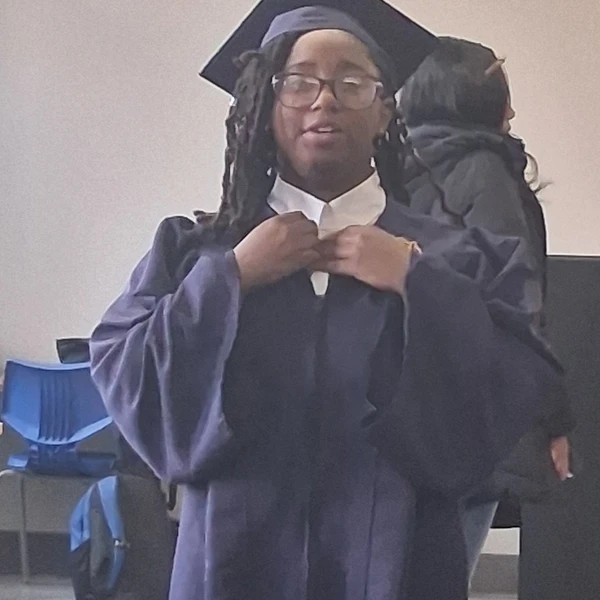
Tahara Drew
1x
Finalist1x
Winner
Tahara Drew
1x
Finalist1x
WinnerBio
Aspiring Biomedical Engineer/Prosthetist- High School Student at The School at Marygrove CO’26- K9.0 Robotics team Electrical Lead- Doctors of Tomorrow Rising Member. I enjoy creation and innovation, I also enjoy baking in my free time and plans on going out of state to study biomedical engineering in college.
Education
The School at Marygrove
High SchoolMiscellaneous
Desired degree level:
Bachelor's degree program
Majors of interest:
- Biomedical/Medical Engineering
Career
Dream career field:
Medical Devices
Dream career goals:
To create my own Orthotics & Prosthetics Clinic
I was an intern for the school nurses
DPSCD The School at Marygrove2026 – 2026
Public services
Volunteering
FIRST Robotics — Field Reset, Photographer, Robot maintenance, ect2023 – Present
Future Interests
Volunteering
Entrepreneurship
Abigail O. Adewunmi Memorial Scholarship
My future goals are rooted in service, innovation, and a deep desire to improve the quality of life for others. As a future biomedical engineering student, I hope to use my education to design and develop prosthetic technology while continuing to serve the communities that shaped me.
In college, I plan to major in biomedical engineering and fully immerse myself in research, internships, and collaborative design projects. I am especially passionate about prosthetics and assistive medical technology because they combine engineering with compassion and human-centered design. I hope to gain hands-on experience early by working in research labs, joining engineering design teams, and pursuing internships in medical technology and healthcare innovation. My goal is to learn how to transform ideas into real, functional devices that help people regain independence and confidence.
Service and mentorship will remain central to my college experience. Throughout high school, I dedicated significant time to mentoring younger students through robotics and STEM outreach. As a member of my school’s robotics team, I helped elementary, middle, and high school students learn engineering concepts, teamwork, and problem-solving. I also volunteered with Girl Scouts and supported younger learners as they explored STEM for the first time. These experiences showed me how powerful representation and encouragement can be. Many students, especially girls and students of color, do not see themselves reflected in STEM fields. Being able to mentor and support them has been one of the most meaningful parts of my service.
In college, I plan to continue mentoring by volunteering with robotics teams and participating in outreach programs that introduce young students to engineering. I want to help create welcoming spaces where students feel confident exploring science and technology. I believe small acts of encouragement can have a lasting impact, and I hope to continue serving as a role model who shows others that they belong in STEM.
After completing my undergraduate degree, I plan to attend graduate school for orthotics and prosthetics. My long-term goal is to become a certified prosthetist and eventually open my own prosthetics clinic. I am especially passionate about making prosthetic care more accessible and affordable, particularly for underserved and low-income communities. I want to help amputees regain mobility, independence, and confidence by providing high-quality care and innovative solutions.
Service will continue to guide my career beyond the classroom and workplace. I hope to remain involved in mentorship and outreach programs that expand access to STEM education and healthcare careers. I want to support students who may not see themselves represented in these fields and help them feel empowered to pursue their goals.
Education has always represented opportunity and responsibility to me. Through my studies and service, I hope to honor that responsibility by using my skills to uplift others, create meaningful change, and carry forward a legacy of compassion, perseverance, and purpose.
Charles B. Brazelton Memorial Scholarship
I used to measure my words before I spoke them, not because I wanted them to sound perfect, but because I was afraid they would not come out at all.
For as long as I can remember, I have stuttered. It has been part of my voice since I first learned to speak. What many people take for granted, like answering a question in class or introducing myself, often felt like obstacles that required preparation and courage. My thoughts moved faster than my words, and the space between them often filled with silence, frustration, and fear of embarrassment.
Because of this, I grew up quieter than I wanted to be. My stutter became a major cause of my social anxiety. I constantly worried about pauses or being judged while speaking. Over time, I associated speaking with vulnerability instead of connection.
One of the most frustrating moments happened in tenth grade when I was talking to my mom at home. I wanted to ask for Little Caesars for dinner, but I could not get the words out. My brain knew what I wanted to say, but my mouth would not cooperate. I stood there stuck between thought and speech until I broke down in frustration. My mom stayed patient and waited for me. That moment showed me how deeply my stutter affected me.
School often made things harder. In tenth grade Spanish, verbal pronunciation assignments were difficult because I struggled to form words while others spoke easily. I was not just learning a language; I was facing barriers I already experienced in English.
My fear of speaking also carried into a speech elective class. I struggled not because I did not try, but because grading was based on pronunciation, fluency, avoiding filler words, and speaking without pauses. These were exactly the areas my stutter affected. I took the class in tenth grade with mostly seniors, and it felt like being evaluated on something I was actively trying to overcome.
For a long time, I believed my voice was something I needed to hide.
That began to change after I was diagnosed with ADHD and started medication. My thoughts became more organized, my anxiety more manageable, and speaking no longer felt like chasing words ahead of me. My stutter did not disappear, but it became easier to control.
One of the clearest moments of growth happened during a twelfth grade engineering presentation. I began to stutter and had to pause to breathe. Instead of shutting down, I kept going, encouraged by classmates who had known me for years. I realized I was no longer just the quiet student afraid to speak. I had grown through discomfort.
Today, I still work on my confidence, especially with strangers, but I am no longer afraid to speak. I hesitate less and allow myself time to finish my thoughts.
My journey has taught me patience, resilience, and empathy. I understand what it feels like to struggle with something others find effortless. Confidence is not the absence of fear. It is the choice to keep going anyway.
For years, I believed my voice was a weakness. Now I see it as proof of my perseverance.
I used to measure my words before I spoke them because I was afraid they would not come out.
Now, I measure them because I know they matter.
Dr. Michal Lomask Memorial Scholarship
I did not discover my passion for STEM in a classroom. I discovered it in a loud workshop filled with wires, tools, and a robot that refused to work five minutes before a competition match.
Joining my high school robotics team changed the direction of my life. At first, I was intimidated. Robotics was male-dominated, highly technical, and fast-paced, and I often felt like I had to prove that I belonged. Over time, that feeling transformed into motivation. I learned how to wire complex electrical systems, troubleshoot under pressure, and eventually became the Electrical Lead on my team. Robotics showed me that STEM is not just about equations or theory. It is about problem solving, teamwork, creativity, and perseverance.
What began as curiosity quickly became purpose.
My passion for STEM deepened as I started volunteering at robotics competitions and outreach events. I mentored elementary, middle, and high school students who were just beginning their own journeys. I saw students become frustrated when their robots failed or when they struggled to understand a concept. I recognized that feeling because I had experienced it myself. Helping them push past those moments and watching their confidence grow showed me the true impact of STEM education. It has the power to build confidence, create opportunities, and change how young people see themselves and their futures.
Through these experiences, I discovered the field that connects my love for engineering with my desire to help others: biomedical engineering.
I want to design prosthetic devices that are more accessible and affordable for people who need them. My dream is to open a prosthetics clinic that serves underserved communities, especially individuals who cannot afford traditional prosthetic care. This goal is deeply personal to me. I have seen how medical challenges can change the direction of someone’s life, and I want to be part of creating solutions that restore independence, mobility, and dignity.
My passion for STEM is also shaped by the challenges I have faced. As a low-income, first-generation college student with ADHD and anxiety, pursuing higher education has required determination and resilience. These challenges have not discouraged me. Instead, they have strengthened my drive to succeed. STEM represents opportunity, independence, and the chance to build a future that my family did not have access to.
Education in STEM is more than a career path for me. It is a way to create meaningful change.
By earning a degree in biomedical engineering and continuing into graduate school for orthotics and prosthetics, I hope to combine innovation with compassion. I want to contribute to research, develop new technologies, and mentor the next generation of students who may feel unsure about their place in STEM. Representation matters, and I want to help ensure that young women, especially Black girls, can see a future for themselves in science and engineering.
I am passionate about STEM because it allows me to turn curiosity into innovation, challenges into growth, and dreams into real solutions that improve lives.
Byte into STEM Scholarship
My journey into STEM began with uncertainty and hesitation. When I entered high school, I had never participated in extracurricular activities and had little confidence in technical spaces. Joining my school’s FIRST Robotics team felt intimidating, and I questioned whether I truly belonged in an environment where many students already had experience. However, choosing to stay despite that uncertainty became one of the most defining decisions of my life.
In the beginning, I struggled to understand the technical language, tools, and systems surrounding me. It was easy to feel behind and out of place. Yet instead of stepping away, I committed myself to learning. I asked questions, stayed late to practice, and treated every mistake as an opportunity to grow. Over time, persistence replaced doubt. I learned how to wire complex electrical systems, diagnose failures, and troubleshoot problems under pressure. Eventually, I earned the role of Electrical Lead on my team, where I became responsible not only for the robot’s electrical system but also for mentoring new members and guiding them through challenges I once faced myself.
As a Black young woman in STEM, representation has played a powerful role in shaping my perspective. I became increasingly aware of how rare it can be for younger students to see someone who looks like them thriving in technical environments. This realization inspired me to expand my involvement beyond my own team. I began coaching an elementary FIRST LEGO League team, volunteering at robotics competitions for elementary, middle, and high school students, and helping lead outreach sessions for Girl Scouts interested in STEM. Many of the students I work with initially feel discouraged when their robots fail or their ideas do not work as planned. I help them break down problems step by step and encourage them to remain patient and persistent. Watching students gain confidence and begin to believe in their abilities has been one of the most meaningful experiences of my life.
These experiences shaped my passion for biomedical engineering. I am especially drawn to prosthetics and orthotics because of their ability to restore independence, mobility, and dignity. My long-term goal is to open a prosthetics clinic dedicated to providing accessible and affordable care, particularly for individuals facing financial hardship or homelessness. Too many people who need prosthetic care are unable to access it due to cost, lack of resources, or limited long-term support. I hope to change that by creating a clinic that prioritizes both innovation and compassion.
Pursuing a degree in biomedical engineering will provide the technical and academic foundation necessary to achieve these goals. Through this program, I will develop expertise in biomechanics, design, and medical technology, equipping me to create solutions that directly improve quality of life. Higher education will also connect me with mentors, research opportunities, and professional networks that will help transform my ideas into tangible impact.
Beyond my career, I am deeply committed to encouraging young girls, especially Black girls, to pursue STEM without fear of being overshadowed or discouraged. Representation is powerful, and I want to help create a future where young students feel confident stepping into engineering spaces and pursuing their ambitions.
What began as uncertainty has grown into purpose. Through education, leadership, and service, I hope to contribute to a future where technology restores independence, expands opportunity, and ensures that the next generation of students sees STEM as a place where they truly belong.
Minority Women in STEM Scholarship
I am a senior at Marygrove High School with a strong interest in engineering, problem solving, and applying technology to improve quality of life. I did not always envision myself in STEM, but my experience in FIRST Robotics revealed both my capabilities and my long-term purpose.
When I entered high school, I had no prior involvement in extracurricular activities and limited confidence in technical environments. I joined robotics without experience, beginning with fundamental electrical tasks and gradually progressing to diagnosing and resolving complex system issues on a competition robot. Over time, I advanced to Electrical Lead of my team, where I am responsible for designing wiring systems, troubleshooting failures, and mentoring newer members. This role has reinforced that STEM is not solely about constructing machines, but about applying critical thinking, persistence, and collaboration to solve real-world problems.
Alongside my technical development, I have found significant value in mentorship. I coach a FIRST LEGO League team of elementary students and volunteer at robotics competitions across elementary, middle, and high school levels. Many students initially struggle with frustration when their systems fail or do not perform as intended. I work with them to deconstruct problems, develop structured approaches, and rebuild their understanding step by step. Observing students progress from discouragement to confidence has demonstrated the importance of representation, patience, and consistent support within STEM education.
These experiences have directly influenced my academic and professional aspirations. I intend to pursue a degree in biomedical engineering, with a specialization in prosthetics and orthotics. I am particularly motivated by the potential for engineering to restore mobility and independence to individuals who have experienced limb loss. My long-term goal is to establish a prosthetics clinic that provides accessible and affordable care, particularly for amputees facing financial hardship or homelessness. I aim to create a practice that extends beyond device provision by offering ongoing support that enables patients to adapt effectively and regain autonomy.
Equally important to my goals is my commitment to expanding access and representation within STEM. As a young Black woman in engineering, I am familiar with the challenges of entering environments where individuals with similar backgrounds are underrepresented. This experience has strengthened my resolve to encourage young girls, particularly Black girls, to pursue STEM fields with confidence and without hesitation. I aspire to serve as a visible example that reinforces their sense of belonging and demonstrates that leadership in these spaces is attainable.
My involvement in robotics has taught me that success in STEM is defined by persistence, adaptability, and the willingness to learn through challenge. I intend to carry these principles forward throughout my education and career.
Ultimately, I hope to integrate engineering and healthcare to develop solutions that meaningfully enhance quality of life. Through my future clinic and work in prosthetic design, I aim to reduce barriers related to cost and access while restoring independence and dignity to individuals in need. For me, STEM is not only a field of innovation, but a pathway to equitable and transformative impact.
Aserina Hill Memorial Scholarship
I am a senior at Marygrove High School with a passion for building, problem solving, and serving my community. Throughout high school, I have focused on using engineering and mentorship to help others grow, learn, and gain confidence. These experiences have shaped both my academic goals and the impact I hope to make in the future.
For the past four years, I have been a member of my school’s FIRST Robotics team, where I currently serve as the Electrical Lead. In this role, I design wiring layouts, troubleshoot power and electrical systems, and mentor younger members of the team. Robotics has taught me how to think critically, collaborate with others, and stay calm under pressure. More importantly, it has given me opportunities to give back.
I regularly volunteer at robotics competitions for elementary, middle, and high school students. I also coached a FIRST LEGO League team of third through fifth graders for over a year. Many of these students became frustrated easily when something did not work, and part of my role was helping them learn how to work through challenges without giving up. My team also hosts weekly help sessions for students and meets with Girl Scout groups to introduce young girls to STEM. Watching younger students gain confidence and realize they are capable of succeeding in engineering has been one of the most meaningful parts of my high school experience.
Outside of robotics, I have participated in Environmental Club, Bike Club, and Newspaper Club. I also enjoy baking and working with technology. These activities reflect my creativity and curiosity, which I bring into everything I do.
After high school, I plan to attend college to study biomedical engineering and later earn a master’s degree in orthotics and prosthetics. My goal is to become a licensed prosthetist and open a clinic that provides advanced and affordable prosthetic devices. I want to design technology that helps people regain independence and improve their quality of life.
If I could start my own charity, it would focus on helping homeless individuals and families, especially those facing serious medical challenges. This mission is deeply personal to me. My mother experienced homelessness while raising my older brothers, my grandmother passed away from cancer, my best friend is currently battling cancer at sixteen, and my brother struggled with severe seizures that limited his ability to attend college. Seeing the challenges my family and loved ones have faced has made me passionate about helping others who are experiencing both financial and medical hardship.
My charity would focus on providing prosthetics and medical support for homeless amputees and individuals with serious health conditions. It would also provide resources to help families regain stability, including housing assistance, connections to healthcare providers, and educational and career support.
Volunteers would organize donation drives, assist at community resource events, and help connect individuals with medical professionals and social services. The goal would be to help people regain independence, stability, and hope while giving them the support they need to pursue their own goals.
Like Aserina Hill, I believe education creates opportunity. Through engineering, service, and community outreach, I hope to continue helping others move forward and achieve their dreams.
Hester Richardson Powell Memorial Service Scholarship
WinnerAt robotics competitions, broken robots are everywhere.
I have seen teams sitting on the floor surrounded by loose wires, unfinished mechanisms, and frustrated students who feel ready to give up. Elementary teams work with LEGO robots. Middle school teams build machines that can weigh up to 60 pounds. High school robots can weigh over 100 pounds and fill an entire cart. No matter the size, the frustration looks the same. Every time I walk past a team struggling, I see a younger version of myself. Because of that, I never walk past. I sit down and help.
My understanding of resilience began long before robotics. After my parents separated, my life became divided between two households filled with tension and uncertainty. For years, I felt responsible for keeping the peace and holding everything together. Eventually, I had to accept that I could not fix everything for everyone. Letting go of that role was painful, but it taught me independence and how to keep moving forward even when life feels unstable.
When I joined robotics in high school, I faced a different kind of challenge. I had never joined an extracurricular activity and doubted whether I belonged on the team. I started with no experience and felt afraid of making mistakes. Instead of giving up, I chose to keep trying. Over time, I developed technical skills, gained confidence, and eventually became the Electrical Lead on my robotics team.
As I grew, I began using my experience to support others.
For a year and a half, I coached a FIRST LEGO League team of third to fifth graders. Many of the students became frustrated easily when something did not work. Simple problems could feel overwhelming, and they often wanted to give up. I learned how to redirect their frustration, break problems into smaller steps, and remind them that mistakes are part of learning. Watching them calm down, try again, and eventually succeed showed me how powerful encouragement can be.
I also helped a middle school robotics team that struggled with participation. The coach often had to do most of the work because the students were not paying attention or did not know how to contribute. I encouraged them to stay engaged and take ownership of their work. Later, I saw that same team at a competition where I was volunteering. They had built a functioning robot and were proudly presenting it. Seeing their progress was one of the most rewarding moments of my experience.
At competitions, I regularly sit with middle and high school teams whose robots are broken or unfinished. Instead of fixing the robot for them, I walk them through the process step by step so they can understand how to solve the problem themselves. Over the years, many coaches have returned to thank me for the help and advice I gave their teams. One coach even told me that a student wanted to attend my high school because of the support I provided.
Through outreach events, weekly robotics help sessions, and mentoring younger students, I have seen how resilience spreads. My experiences taught me that resilience is not just about overcoming challenges. It is about helping others believe they can overcome theirs. By showing students how to keep trying, even when they feel frustrated or unsure, I hope to continue inspiring the next generation of engineers to believe they belong.