user profile avatar

Taggert VinZant

1x

Finalist

Bio

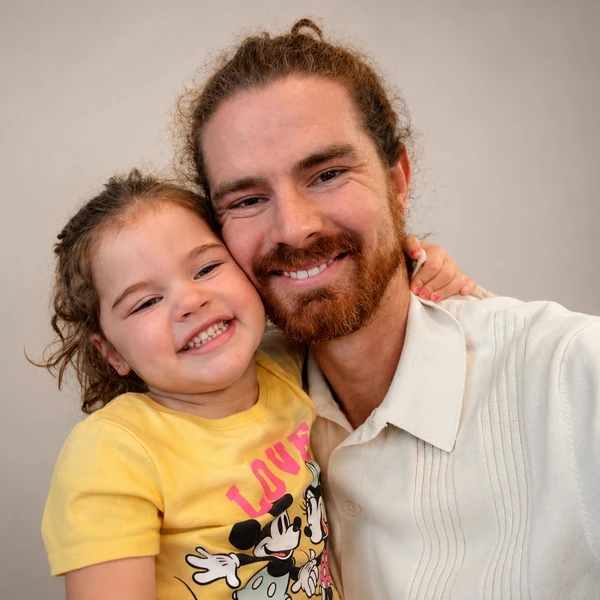
I'm a single dad to a three-year-old daughter, and almost everything I do now gets measured against one question: what kind of life am I building for her? I grew up watching my parents work hard and still get knocked down by money, bankruptcy, and the kind of instability that trails a family for years. I love them for how hard they fought. I've also decided I'm going to be the one who breaks that ceiling instead of handing it down. I'm autistic. I was diagnosed as a kid, and for most of my life I treated it as a secret to manage, something to mask so I'd fit in. After starting a couple successful businesses, and turning my hyperfocus onto learning the skills necessary to be a good leader of people, I'm happy to say its now my secret power, not a secret kept. Going back to school as an adult, while parenting and rebuilding, means choosing between earning and learning almost every week. A scholarship takes that impossible tradeoff off the table, and lets me show my daughter that she can do anything she puts her mind to.

Education

Aiken Technical College

Associate's degree program
2026 - 2027
  • Majors:
    • Engineering Science
  • GPA:
    4

Central High School

High School
2008 - 2012
  • GPA:
    3.7

Miscellaneous

  • Desired degree level:

    Doctoral degree program (PhD, MD, JD, etc.)

  • Graduate schools of interest:

  • Transfer schools of interest:

  • Majors of interest:

    • Physics
    • Systems Engineering
    • Neurobiology and Neurosciences
  • Not planning to go to medical school
  • Career

    • Dream career field:

      Technology

    • Dream career goals:

      Space Industry Engineering

    • Executive Producer

      Cineloco
      2018 – 20224 years

    Sports

    Equestrian

    1996 – 202024 years

    Public services

    • Volunteering

      Augusta Locally Grown — Vice-Chair of the Board
      2024 – Present
    Bulkthreads.com's "Let's Aim Higher" Scholarship
    I want to build abundance for all. For me, that means building a life and career that creates more opportunity than I was handed. I do not want success to stop with my own stability. I want the work I do to make room for other people to grow, earn, learn, create, and imagine a future that feels bigger than survival. In the near term, I hope to build that through social entrepreneurship. I have already seen how businesses can become engines of opportunity when they are built with the right purpose. Through media, technology, and community-centered work, I want to create businesses that do more than generate income. I want them to train people, open doors, tell important stories, and strengthen the communities around them. That matters because opportunity is not evenly distributed. Some people grow up surrounded by examples, networks, and second chances. Others have talent and drive but no clear path into the room. I want the businesses I build to help create those paths. Whether that means giving someone hands-on experience in film and video production, helping a nonprofit tell its story, supporting local food systems, or creating jobs around meaningful work, my goal is the same: build something that makes life more abundant for more people. Education is how I plan to expand that vision. I am finishing my Associate of Science at Aiken Technical College so I can transfer to Clemson for engineering. In the long term, I want to work at the frontier of science and exploration, especially in the space industry. Space represents the kind of future that first made me believe human beings could build beyond the limits in front of them. It is difficult, technical, collaborative, and deeply hopeful. I do not see my near-term and long-term goals as separate. Social entrepreneurship teaches me how to build opportunity here and now. Engineering will give me the tools to contribute to discovery, exploration, and technology at a much larger scale. Both are about building a future with more possibility in it. What I want to build is not just a product or a company. I want to build a pattern of work that creates abundance: for my family, for my community, and eventually for the larger human project of exploration. My education is the bridge between who I am now and the kind of builder I hope to become.
    SuperDad Scholarship
    I am a single father to my daughter, Rosemary, and the hardest part is not one dramatic challenge. It is the constant layering of responsibilities: work, school, bills, parenting schedules, medical appointments, bedtime routines, and the emotional weight of trying to build a stable future while still being fully present today. When Rosemary is with me, I am responsible for the whole rhythm of her day: meals, baths, brushing teeth, potty reminders, clothes, bedtime, appointments, play, comfort, discipline, and joy. Some days that feels like more than I know how to carry. But I carry it because she is worth every bit of effort. What keeps me moving forward is the knowledge that Rosemary is watching me build. I am finishing my Associate of Science at Aiken Technical College so I can pursue engineering at Clemson and eventually work in the space industry. That goal is not just about personal ambition. It is about giving my daughter a father who did not quit when life got difficult. It is about creating a more stable income, a stronger home, and a wider future for her than I could offer if I stayed where I am. My relationship with Rosemary is the center of my life. She is brave, bright, funny, particular, and full of imagination. At my house, we paint and draw constantly. We have dance parties to Moana songs. She asks to go see horses, build towers, and bring her stuffed animal Ralf to bed. One of my clearest memories of her is seeing the ocean as a toddler and wanting to run straight into the waves. That is who she is: curious, fearless, and ready to meet the world. My job is to help her keep that courage while also giving her the safety and structure to grow. Her education matters to me because I want her curiosity protected. I do not want school to become only grades, pressure, or survival. I want it to be a place where she learns that the world is large, that her questions matter, and that she is capable of difficult things. My own education is part of teaching her that. If she grows up seeing me study, work, fail, try again, and keep going, then college is not just something I talk about. It becomes something she has seen lived out in front of her. The rewarding part of being a single dad is that ordinary moments become sacred. A successful bedtime. A picture she made. A silly dance. A moment when she is scared and lets me help her be brave. A quiet ride home after a long day. Those moments remind me that fatherhood is not measured only in big milestones. It is built in repetition, tenderness, patience, and showing up. This scholarship would make a meaningful impact because it would reduce the financial pressure that competes with my education. Every dollar that helps me stay in school helps protect the path I am building for Rosemary and me. It would give me more room to focus, finish my degree, transfer to Clemson, and keep becoming the kind of father she deserves: stable, capable, present, and persistent.
    Veterans Next Generation Scholarship
    My father’s service shaped my career aspirations by teaching me that meaningful work should be disciplined, useful, and connected to something larger than myself. My dad was an airborne Ranger based out of Fort Benning and served during Desert Storm. Growing up as the son of a veteran meant growing up around a particular kind of structure. Hard work was not treated as optional. Order mattered. Follow-through mattered. If something needed to be done, you did it correctly, even if no one was watching. That standard shaped me early. It gave me a respect for discipline and for the people who carry responsibility without needing constant recognition. I am incredibly proud of my dad’s military service, but I am just as shaped by the way he continued serving after he came home. He went on to serve our country and community as a paramedic and now as a police officer. For nearly thirty years, his work has centered on keeping other people safe. That has taught me that service is not only one season of life. It can become a pattern. It can become the way a person moves through the world. That example has shaped how I think about my own future. I am finishing my Associate of Science at Aiken Technical College so I can transfer to Clemson to study engineering, with the long-term goal of working in the space industry. I am drawn to space because it demands the same values I grew up respecting: precision, endurance, teamwork, responsibility, and courage under pressure. Engineering is not just about ideas. It is about making things work when the stakes are real. The space industry also represents service at a scale that inspires me. Satellites, launch systems, exploration technologies, defense capabilities, communications infrastructure, and scientific missions all affect life on Earth. They connect people, protect people, expand knowledge, and push the boundaries of what is possible. I want to be part of work that requires rigor and serves a real purpose. Being the child of a veteran also taught me grit. I have seen that some people are raised to expect comfort, while others are raised to keep going. My father’s life gave me a model of persistence that I carry into school, entrepreneurship, and long-term goals that will not happen quickly. Engineering will be difficult. Transferring to Clemson will require focus. Building a career in the space industry will require years of discipline. But I was raised to understand that hard things are not reasons to quit. They are reasons to become more capable. My career aspirations are not about chasing prestige. They are about building a life of useful work. My father served in uniform, then kept serving in emergency medicine and law enforcement. I hope to honor that example in my own field by becoming an engineer who approaches work with seriousness, humility, and responsibility. I may not serve in the same way my dad did, but his example taught me what service looks like: show up, do the work, protect what matters, and leave things better than you found them. That is the spirit I want to carry into engineering and, eventually, into the space industry.
    RonranGlee Literary Scholarship
    Selected Paragraph: Epictetus, Enchiridion 5 People are disturbed not by things themselves, but by the judgments they form about things. Death, for example, is nothing terrible, or else it would have appeared terrible to Socrates; what is terrible is the judgment that death is terrible. Therefore, whenever we are hindered, disturbed, or grieved, we should never blame anyone else, but ourselves, that is, our own judgments. It is the work of an uneducated person to blame others for his condition; of one beginning to be educated to blame himself; of one fully educated to blame neither another nor himself. Essay Epictetus’s underlying claim is that freedom begins when a person stops treating suffering as something imposed entirely from the outside and learns to examine the judgment that gives suffering its power. The passage is not a shallow command to “think positively,” nor is it a denial that painful things happen. Instead, Epictetus is drawing a sharp distinction between events and interpretation. That distinction becomes the foundation of moral education. The first sentence creates the entire structure: “People are disturbed not by things themselves, but by the judgments they form about things.” Epictetus does not say that people are never injured, limited, or bereaved. His claim is narrower and more demanding. Disturbance, in the sense of inner disorder, comes from judgment. The phrase “things themselves” points to the raw facts of life: death, insult, illness, loss, disappointment, poverty, failure. These things may be real, but they are not self-interpreting. A human being meets them with a judgment: this is unbearable, this proves I am ruined, this should not have happened, this makes my life meaningless. For Epictetus, that second layer is where bondage begins. His example of death clarifies the argument. “Death,” he writes, “is nothing terrible, or else it would have appeared terrible to Socrates.” This sentence depends on Socrates as more than a historical reference. Socrates represents a person whose philosophy held even when the cost was death. Epictetus is not arguing that death is biologically pleasant or emotionally easy. He is arguing that Socrates exposed the difference between death as an event and death as a moral catastrophe. If death were inherently terrible in the deepest sense, then even the wisest person would have been spiritually overthrown by it. Socrates was not. Therefore, the terror must lie not in death alone but in the judgment attached to death. The passage then turns from theory to practice: “whenever we are hindered, disturbed, or grieved, we should never blame anyone else, but ourselves, that is, our own judgments.” The key phrase is “that is.” Epictetus immediately limits what “ourselves” means. He is not encouraging self-hatred. He is not saying that every wound is the victim’s fault. He is saying that our judgments are our responsibility. Without that clarification, the passage could sound cruel. With it, the meaning becomes more precise: if I blame other people for my inner condition, I give them authority over my soul. If I examine my judgment, I recover the one part of the situation that remains mine. The final sentence gives the passage its deepest meaning because it presents education as a progression beyond blame. The “uneducated person” blames others. This is the first and most natural response to pain: someone did this to me; someone prevented me; someone humiliated me; someone owes me peace. Epictetus sees this as ignorance because it locates the center of life outside the self. A person who lives this way can only be calm when circumstances and other people cooperate. The person “beginning to be educated” blames himself. This is progress, but incomplete progress. At this stage, the student has discovered responsibility but has not yet discovered wisdom. He has stopped handing total power to other people, but he may still turn philosophy into another form of punishment. He may say, “I am disturbed, therefore I have failed.” Epictetus treats this as an intermediate stage because self-blame still misunderstands the goal. It remains trapped in accusation. The fully educated person “blames neither another nor himself.” This is the passage’s most important turn. The end of philosophy is not finding the correct target for blame. The end is freedom from the whole pattern of accusation. The educated person sees clearly: an event occurred; a judgment arose; that judgment can be examined, corrected, or released. This person does not need to deny pain, excuse injustice, or pretend to be unaffected. He simply refuses to make blame the organizing principle of his mind. For Epictetus, education is not merely the accumulation of information. It is the training of perception. To be educated is to notice the invisible act between experience and response: the judgment. A person may know many facts and still be ruled by anger, fear, and resentment. Conversely, a person who can examine his judgments has begun to possess himself. The underlying meaning of the passage is that human freedom depends less on controlling the world than on learning how to read one’s own mind truthfully. Epictetus asks the reader to become a close reader of experience itself. What happened? What did I add to what happened? What judgment am I treating as fact? That discipline does not remove suffering from life, but it changes the person who suffers. It turns pain from a master into a subject of examination. For Epictetus, that is the beginning of wisdom.
    Strong Leaders of Tomorrow Scholarship
    Leadership, to me, is the ability to turn complexity into opportunity for other people. As an autistic person, I spent much of my life learning how to mask: how to study a room, understand expectations, translate myself, and move through environments that were not always built for the way my mind works. That experience was difficult, but it also taught me to notice systems. I learned to pay attention to what is said and unsaid, where people get stuck, and what kind of structure helps people succeed. Over time, I began to understand leadership less as being naturally comfortable in every room and more as helping build rooms where more people can belong and contribute. That is the kind of leader I try to be. I am currently finishing my Associate of Science at Aiken Technical College with a 4.0 GPA, with the goal of transferring to Clemson for engineering and eventually working in the space industry. Returning to school has required humility and discipline, but it has also clarified my purpose. Education is not just a credential for me. It is a way to become more capable, more useful, and better equipped to solve problems that matter. My leadership has also been shaped outside the classroom. I serve as Vice Chair of Augusta Locally Grown, a nonprofit working to strengthen local food systems and community resilience. In that role, I help steer the organization, think through strategy, and support work that connects food access, local farmers, education, and long-term community health. That work matters to me because food security is not only about food. It is about whether a community has the relationships, infrastructure, and opportunity it needs to withstand hardship. Entrepreneurship has taught me similar lessons. Building my own businesses has forced me to make decisions, carry responsibility, and create value even when the path was uncertain. Being recognized in Augusta’s Top 10 in 10 in 2024 was meaningful not because it marked personal success, but because it reflected a pattern I want to keep building: using creativity, technology, media, and strategy to open doors for others. What makes me a leader is not that I have always had an easy path. It is that I have learned to use the way I see the world in service of other people. Autism has shaped that. It has made some parts of life harder, especially the pressure to mask socially, but it has also given me a deep respect for structure, clarity, and intentional design. Those are leadership tools. When used well, they help people feel less lost and more capable. I want my leadership to keep moving in that direction: from nonprofit service, to entrepreneurship, to engineering. Whether I am helping a local organization strengthen food access, building opportunities through media and technology, or someday contributing to aerospace systems, I want to create conditions where people can grow. To me, leadership is not about standing above others. It is about seeing what is possible, building toward it, and bringing people with you.
    Champions Of A New Path Scholarship
    I deserve this scholarship because I am not approaching college as an abstract next step. I am approaching it as a deliberate investment in a very specific future: finishing my Associate of Science at Aiken Technical College, transferring to Clemson for engineering, and building a career in the space industry. What gives me an advantage is that I already know what responsibility feels like. I am not only a student imagining what I might do someday. I am a working adult, entrepreneur, nonprofit board member, and father who has already had to build stability in real life. I have learned how to keep going when the path is not simple, how to make practical decisions under financial pressure, and how to turn limited resources into something useful for other people. My background is unusual for an engineering student. I have spent years in creative and technical work: media production, business development, AI implementation, and helping organizations communicate more clearly. Through House of Tag, my AI implementation consultancy, and Get Up Productions, a podcast and video production studio in Augusta, I have learned how to solve problems across disciplines. Some problems are technical. Some are financial. Some are human. Most are all three at once. That kind of experience has taught me to think in systems, which is exactly the mindset I want to carry into engineering. I also bring a service-oriented record, not just a career goal. As an unpaid board member and Vice Chair with Augusta Locally Grown, I help steer a nonprofit working in the local food system. That work has shaped how I think about impact. Food security, small farms, community trust, and local economic opportunity are interconnected. A stronger community is built by creating the conditions for people to participate and thrive, not just by reacting after things break. That same belief guides my work in media and nonprofit entrepreneurship. In my work with Yannik McKie at The Purpose Center, I helped him tell his story of struggle, faith, and purpose. That project mattered because it gave his story a wider reach, but it also created opportunities for others to learn film and video production skills and begin growing their own careers. That is the kind of impact I want my work to have: not just producing something impressive, but leaving behind more capacity than existed before. College is the next step because I want my ability to build useful systems to grow beyond media, entrepreneurship, and local operations. Engineering is the path that can take my curiosity and discipline into problems at a much larger scale. The space industry especially attracts me because it requires precision, courage, teamwork, and long-term thinking. It is a field where small decisions matter, where complexity has to be respected, and where the work can expand what is possible for everyone. This scholarship would help because financial pressure is one of the main forces that slows down students who are otherwise ready to work. I am willing to do the work. I have already proven that. What I need is help keeping the path open so that school can remain a priority instead of being pushed aside by immediate survival. My advantage is not that my life has been easier than other applicants’. It is that I have already been tested by responsibility, and I have kept building. I know why I am in school. I know what I am working toward. I know how to connect ambition with service. If awarded this scholarship, I will use it not only to continue my education, but to become the kind of engineer, entrepreneur, and community member whose work creates opportunity for others.
    Our Destiny Our Future Scholarship
    I plan to make a positive impact by building systems that create opportunity for other people. That has become the center of how I think about service, business, education, and my future career. I am finishing my Associate of Science at Aiken Technical College so I can transfer to Clemson for engineering, with the long-term goal of working in the space industry. That may sound far away from nonprofit work, but to me they are connected by the same question: how do we build things that help people live better, more abundant, more resilient lives? My nonprofit work has taught me that impact is rarely abstract. It usually starts with a person, a story, and a door that was not open before. I serve as an unpaid board member and Vice Chair with Augusta Locally Grown, a nonprofit focused on strengthening local food systems. That work has shown me how food security, small farms, community relationships, and economic opportunity all depend on each other. A resilient community is not built only by handing out help in a crisis. It is built by creating conditions where more people can participate, contribute, and sustain one another. I have also seen this through my work with Yannik McKie at The Purpose Center. Helping him tell his story of struggle, faith, and purpose was not just a media project. It was a way of turning lived experience into something that could reach other people. Through that work, I also helped create opportunities for people to learn film and video production skills and begin growing their own careers. That is the kind of impact I care most about: work that helps one person tell the truth about their life, then turns around and gives someone else a practical path forward. I think of that as social entrepreneurship, but not in a polished buzzword sense. To me, it means building useful things around real human needs. Sometimes that looks like nonprofit board service. Sometimes it looks like helping a community organization communicate its mission. Sometimes it looks like creating training opportunities inside a production project so people leave with skills, not just inspiration. The common thread is abundance: when people have better access to tools, relationships, food, education, and meaningful work, the whole community becomes stronger. Engineering is the next step in that same path. I want the discipline and technical foundation to work on problems bigger than what I can build with communication and entrepreneurship alone. The space industry represents that scale for me. Space work requires precision, collaboration, courage, and long-term thinking. It asks people to solve difficult problems under real constraints. Those are the same habits communities need on the ground. My goal is not to leave community work behind as I move toward engineering. My goal is to carry that service mindset into every system I help build. I want to be the kind of engineer and entrepreneur who understands that technology is only as meaningful as the human future it serves. Whether I am helping a local nonprofit strengthen food security, helping a young person learn production skills, or someday contributing to aerospace systems that expand what humanity can do, I want my work to create opportunity. A positive impact, to me, is not one grand gesture. It is a pattern of building: build trust, build skills, build organizations, build tools, build futures. That is the work I have already begun, and it is the work I plan to keep doing.
    Arthur and Elana Panos Scholarship
    I was raised around faith, but for a long time I did not know how to understand my own relationship with God. As a young adult, I stepped away from the version of faith I had inherited. I thought distance might give me clarity. In some ways it did, but looking back now, I do not believe God ever stepped away from me. Even in the years when I could not clearly name what I believed, I can see that He was still walking beside me. That became especially clear through entrepreneurship. Building businesses taught me how little control I really had. I learned to make decisions with incomplete information, to keep going when the money was uncertain, and to carry responsibility even when I did not feel ready for it. At the time, I often thought of that as grit or survival. Now I can see God sustaining me through it: giving me endurance, opening doors at the right time, and teaching me to keep moving when I could not see the whole path. The hardest seasons of my life have made that clearer, not less clear. I wish my life had happened in a different order. I wish I had found stability before becoming a single parent. I wish faith had been simple for me from the beginning. But I also know that struggle is what brought me back to God with honesty. Single parenthood, financial strain, and the responsibility of caring for my daughter have stripped away a lot of pride. They have made prayer less abstract. I do not come to God as someone who has everything figured out. I come as someone who needs grace, direction, patience, and strength for the next right step. My faith helps me because it gives suffering a context without pretending suffering is easy. It reminds me that I am not abandoned when life is difficult. It teaches me that provision does not always arrive as comfort; sometimes it arrives as discipline, community, opportunity, or the courage to begin again. That has changed the way I see my future. My education is part of that future. School will help me earn a more stable income, support my daughter well, and build the kind of family life I hope to give her. It will also make me more useful to other people. I do not want a career that is only about personal success. I want work that reflects stewardship: taking the abilities and opportunities God has given me and using them responsibly. Faith will assist me in my career by keeping my ambition pointed in the right direction. It will remind me to work with integrity, to treat people as more than transactions, and to measure success by service as much as income. I believe God has carried me through uncertainty for a purpose. Education is one way I can respond to that grace: by becoming more stable, more capable, and more faithful in the work ahead.
    TTOG Scholarship
    I went to high school in Phenix City, Alabama. It's a small river town on the banks of the Chattahoochee, caught in the long economic shadow of its sister, Columbus, Georgia. My dad was a cop, and my mother was herself trying to finish up a degree to give us a better life. As a teenager, we had just recovered from a bankruptcy, and I had to make some adult decisions about where I wanted to go to school. I knew my parents would do anything, make whatever sacrifices they had to, if I asked them to go to the private school on the good side of the river. But I knew their struggles more than I should have, and swallowed that dream in hopes that it would mean less stress in our home. So I went to the public high school, 1 in a class of 500, and that was just my grade. I went there wearing clothes that didn't fit, and a vicious cocktail of devout faith and unmanaged autism that set me up for four years of intense challenges. Where my circumstances failed to prepare me for success amongst my peers, they had honed me for performance in the classroom. My dad had taught me the meaning of hard work in building fences for our animals, or fixing our vehicles that constantly had issues when we couldn't afford to take them to the shop. I saw my mom spend late nights studying at the kitchen table long past my bedtime, and knew that I had to match that effort if I was going to make something of myself. So when the opportunity came to take on dual enrollment courses, it was the chance for me to get a head start on a degree that would give me a better life. Dual enrollment through the local community college was a blessing for me, because even in the absence of a private school education, or the more prestigious college-advancement curriculums, I was given a chance to build those credits before I entered university. My parents were able to make the payments for those credits at great sacrifice, and its a gift that I will spend the rest of my life paying forward to my own children, and those beyond whose lives I'm able to impact through my career. It was only through my parents sacrifices that I'm here now, even through all the hardships they experienced while working to provide me with a better future. I saw their faith, grace, and kindness at play every day and in every decision they made during those hard years. I took the winding road to finishing my education, but now with my own little girl, I know more than ever how important it is to finish what they started for me. It's my parents kindness and hard work that afforded me the opportunity to have the head start of dual enrollment courses; and it was my own kindness and hard work that have sustained me to today. Now I find myself carrying those virtues in my daily life, hoping to build a better life for my little girl, by becoming the best dad for her I can be.