Hobbies and interests
Hiking And Backpacking
Birdwatching
Soccer
Camping
Animals
Paddleboarding
Reading
Environment
Action
Mystery
Academic
I read books multiple times per month
Sydney LaFata
1x
Finalist
Sydney LaFata
1x
FinalistBio
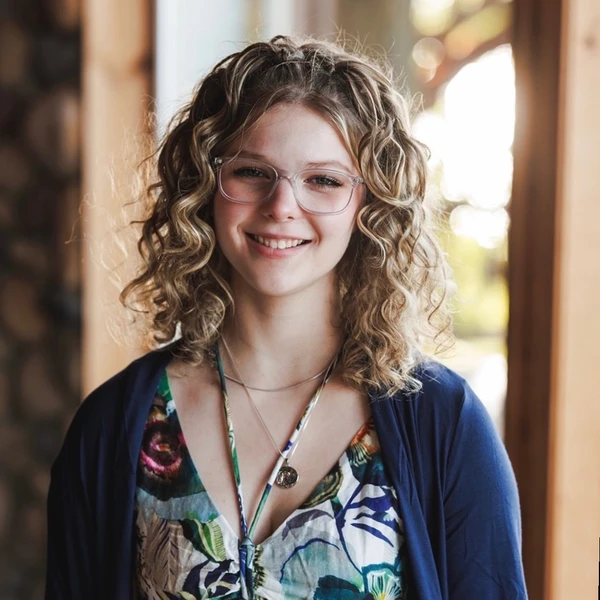
Hi, my name is Sydney! I spend most of my free time exploring beaches, bird-watching, and reading. My curiosity about the natural world has inspired a passion for learning about ecosystems and connections between people and the environment. I have completed my first year at the Ocean Research College Academy, a Running Start program through Everett Community College in Everett, Washington. After graduating high school, I plan to attend a four-year university to study environmental science and natural resources. My goal is to build a career focused on protecting waterways and better understanding natural resource allocation.
Education
Everett Community College
Associate's degree programMajors:
- Marine Sciences
- Geological and Earth Sciences/Geosciences
GPA:
3.4
Kamiak High School
High SchoolGPA:
3.4
Miscellaneous
Desired degree level:
Bachelor's degree program
Graduate schools of interest:
- Colorado State University-Fort Collins
- University of Washington-Seattle Campus
Transfer schools of interest:
Majors of interest:
- Environmental Geosciences
- Geological and Earth Sciences/Geosciences
- Ecology, Evolution, Systematics, and Population Biology
Career
Dream career field:
- Environmental Services
Dream career goals:
Protect our planet through scientific sustainability
Student Researcher (paid)
Oceanic Research College Academy2025 – Present1 year
Sports
Soccer
Club2019 – 20256 years
Soccer
Junior Varsity2023 – 20252 years
Soccer
Varsity2025 – Present1 year
Awards
- First Team All-Wesco 4A Midfielder
- Varsity Letter
Research
Geological and Earth Sciences/Geosciences
Ocean Research College Academy — Student Researcher (paid)2026 – PresentMarine Sciences
Oceanic Research College Academy — Student Researcher2025 – 2026
Arts
ORCA
DesignPossession Sound Student Showcase2026 – Present
Public services
Volunteering
WA Rush Girls Soccer — Food Bank Volunteer2022 – 2024
Future Interests
Advocacy
Politics
Volunteering
David Foster Memorial Scholarship
When I entered high school, I loved science, but I wasn't sure it would ever be a subject I could excel in. Because I hadn't taken advanced math classes in middle school, I wasn't allowed to join the advanced math and science track. It wasn't anyone's fault, but it planted the idea that there were limits to what I could achieve academically.
Then I walked into Mr. Palmiter's Physical Science of the Universe class.
From the very beginning, he saw something in me that I hadn't seen in myself. After another successful lab, he smiled and kidded, "You make this class look like a joke." He told me he appreciated that I took every challenge "head on." It may have seemed like a passing compliment, but to me, it meant everything. For the first time, a teacher wasn't defining me by the classes I was or wasn't taking. He was recognizing my curiosity, my determination, and my potential. His belief in me didn't stop when freshman year ended.
Sophomore year, I wanted to take Chemistry and Biology at the same time. It was an ambitious schedule, and it was instantly denied. While others understandably focused on how demanding the workload would be, Mr. Palmiter focused on what he knew I was capable of. He advocated for me with my counselor because he believed I could succeed. His confidence gave me the courage to challenge myself, and I completed both classes while discovering just how much I loved scientific problem-solving.
As my passion for science continued to grow, so did his support. When I applied to the Ocean Research College Academy (ORCA), Mr. Palmiter wrote my letter of recommendation. Because he believed in me, I have the opportunity to spend my time taking college-level science courses and conducting hands-on environmental research. Looking back, every major academic step I've taken in high school has been strengthened by a teacher who never stopped encouraging me to aim higher.
When I left my high school for my fulltime ORCA schedule, Mr. Palmiter said "I better see you year." He wanted me to come back as a teaching assistant, but at the time I couldn't imagine I was qualified enough. The thought of standing in front of the very classroom where I had started high school seemed impossible.
Then I caught myself thinking the same way I had as a freshman. Once again, I was assuming I wasn't ready. But throughout high school, Mr. Palmiter had shown me otherwise. He believed I could take on a heavier course load, believed I belonged at ORCA, and now believed I could inspire the next generation of students. Maybe, once again, he saw something in me that I hadn't yet seen in myself.
This fall, I'll be walking back into the classroom where my confidence first began to grow. I hope I'll notice the quiet student who loves science but isn't sure they belong yet, just as Mr. Palmiter noticed me. His confidence slowly became my confidence, and there is no better way to thank him than by passing that gift on.
Charles B. Brazelton Memorial Scholarship
“You really cried over a bird?”
“Yes.”
A week earlier, my boyfriend and I had been driving when a tiny bird jumped from its nest too soon and landed on the pavement in front of us. He swerved and stopped the car to catch his breath. Before he fully put it in park, I was already outside, running back down the street, crouched over the small finch. I silently waited for its chest to start rising. It never did.
After sitting there for several minutes, I found a pair of work gloves in the trunk of the car, carried the bird to a patch of grass, buried it, and walked back to the car, brushing the dirt off his gloves.
When I told a few friends what had happened, they laughed.
“You really cried over a bird?”
I smiled, “Yes. Of course!”
My awkward thing is that I “care too much”.
I still hug my mom before I leave the house and after every soccer game, even though I’m almost eighteen. I tell my close friends I love them. I celebrate the people I care for loudly because I never want them to question what they mean to me. Whether it's the people closest to me or a tiny bird on the side of the road, my heart has never learned how to look the other way.
There was a period in my life when simply getting through each day felt overwhelming. Therapy, time, and the people who loved me slowly helped me find my way back. That experience changed me in lots of ways. Once you've learned how fragile life can feel, it's hard not to hold every person, every relationship, and every ordinary moment a little more gently. I don't take life for granted anymore, and I don't think I ever will.
I know this part of me will follow into environmental science. I'll study dying ecosystems, declining species, disappearing habitats, polluted waterways, and communities under constant pressure. There will be days when the work is heartbreaking and I'll probably carry those losses home with me. But I don't see it as a weakness. I never want to become the kind of scientist who stops feeling those hardships. My compassion is what fuels my curiosity and pushes me to keep searching for solutions. Every water sample, field survey, and dataset represents something living, and I never want to forget that.
So yes, I cried over a bird.
I'll probably cry over another one someday. I’ll keep hugging my mom, telling my friends I love them, and caring deeply about a world that doesn't always make it easy to do so. If that makes me awkward, I’m okay with it.
Because the part of me that cares too much is the same part of me that loves fiercely, studies passionately, and hopes to spend a lifetime protecting people, places, and living things that can't protect themselves. Caring is not some flaw I have learned to accept; it's the part of myself I've grown most proud of.
Joe Gilroy "Plan Your Work, Work Your Plan" Scholarship
On my computer sits a Google Drive folder titled “My Future.” Inside are spreadsheets comparing colleges, documents tracking scholarships, and a timeline of academic goals. To some, it may seem excessive, but I have never believed that success is left to chance. I think ambitious goals require planning, consistent effort, and the willingness to adapt when plans change. Long before submitting college applications, I had already begun building the foundation for my future. I sought out rigorous coursework, research opportunities through my college academy, and experiences that align with my long term goals. Growing up, planning became a soothing task that reminds me the future is not as unpredictable as I once thought.
My career goal is to begin as an Environmental Science Technician and eventually transition into environmental health. I want to spend the beginning of my career in the field, gaining as much hands-on experience as possible. After establishing my scientific credibility, I hope to help maintain ecological protection standards and ensure that human activity does not diminish natural resources. I am particularly drawn to watersheds, rivers, and streams because they represent a direct relationship between human activity and ecosystem health through agriculture, shipping, and resource use.
To prepare for this career, I enrolled in the Ocean Research College Academy (ORCA), a dual enrollment program that allows me to graduate high school with both a diploma and an Associate's degree. Earning my associate's degree while still in high school will reduce both the cost and length of college, allowing me to complete a bachelor's degree in approximately two to three years. My top universities are Colorado State University, Montana State University, and Oregon State University because of their strong environmental science programs, field opportunities, and undergraduate research experiences.
I have already begun gaining experience through ORCA research cruises, public presentations, and an upcoming paid summer research project. During college, I plan to continue building technical skills by pursuing GIS certification, improving scientific communication skills, and participating in faculty research whenever possible. I plan to spend summers working with professors or interning with agencies such as Fish and Wildlife. During my final year, I plan to complete a capstone project, meet regularly with career counselors, and begin applying for environmental science positions. I also plan to work part time throughout college, preferably on campus, to offset expenses while gaining professional experience.
Financial planning is equally important to me. I maintain spreadsheets documenting tuition, financial aid, housing, food, books, supplies, and personal expenses for each university. Colorado State University is projected to cost between $41,000 and $45,000 per year, while Montana State University is estimated at $32,000 to $36,000 annually. My goal is to graduate debt free. I plan to achieve this through family savings, scholarships, federal aid, personal savings, and part time employment. I have also budgeted for additional expenses such as transportation and field equipment like waders and waterproof notebooks.
Although I have detailed plans, I know unexpected challenges will arise. If I am not accepted into my preferred universities, I have direct admission opportunities at Western Washington University. If funding for governmental environmental jobs continues to decline, I am prepared to pursue environmental consulting or private sector environmental compliance positions. My career path will not unfold exactly as I predict, but careful preparation has already opened doors that once seemed far away. By continuing to plan ahead, remain adaptable, and seek out new opportunities, I am confident I can build a future dedicated to protecting both people and the environments we depend on.
Science and Advocacy Scholarship
My legs and feet were exhausted from a day of hiking with my parents by the time we boarded the 6 p.m. ferry from Orcas Island back to Anacortes, Washington. We settled into our usual window seats near the front deck when passengers suddenly began rushing through the green doors. Just as I felt the engine shudder to a stop beneath me, the captain's voice came over the intercom.
"Folks, if you look to your right off the front passenger deck, we have a pod of orcas joining us. We will be delayed until they have cleared the 400-yard radius."
Before either of my parents realized what was happening, I had already jumped from my seat and sprinted toward the passenger deck. When I reached the railing, I stood on my tip-toes and heard a puff and whoosh as an orca surfaced beside us. For a moment, everyone stood in silence and awe.
Although the encounter lasted only a few moments, it sparked a fascination that has shaped my life ever since. By middle school, I pored over field guides and bird books, spending hours memorizing species and learning the calls of local birds. My summers were filled with camping trips, fishing adventures, and long days outdoors, where every tide pool, forest trail, and shoreline revealed another ecological mystery. The more I learned, the more questions I had. Before long, curiosity evolved into a desire to understand the systems that govern the natural world.
That passion led me to the Ocean Research College Academy (ORCA), a program centered on environmental science and student-led research. Coincidentally, the animal that first inspired my curiosity was also the symbol of the program that would shape it. I was admitted as one of only fifty-two students in my cohort.
During my first year at ORCA, I have investigated real environmental questions using data collected during field research. I have developed a deeper appreciation for my home and its ecosystems, but more importantly, I have learned that science is not simply about understanding the world; it is about using that understanding to protect it.
Through my studies, I have been constantly reminded that ecosystems depend on people willing to understand, research, and advocate for them. Data alone cannot solve environmental problems. Scientific knowledge must be communicated clearly and used to guide decisions made by communities, businesses, and governments. Through ORCA, I have presented research findings to classmates, educators, and community members, translating scientific data into information others can understand and apply. These experiences have shown me that effective science communication is just as important as scientific discovery. Research has little impact if it remains confined to spreadsheets and reports; it creates change when people understand it and use it to make informed decisions.
This belief has drawn me toward a future in environmental consulting and environmental justice. I hope to serve as a bridge between scientific research and decision-making, helping ensure that environmental policies are guided by evidence. While nature's beauty may speak for itself, its interests are not always represented. Without strong scientific advocacy, decisions risk being driven by misinformation, politics, or convenience.
The same sense of wonder I felt watching those orcas continues to guide me today. Science has given me the tools to better understand the natural world, while advocacy has shown me how to protect it. As I pursue a future in environmental science, I hope to continue conducting research and using my voice to ensure that scientific evidence helps shape the future of our public and private lands.