Hobbies and interests
Coding And Computer Science
Community Service And Volunteering
Information Technology (IT)
Artificial Intelligence
Reading
Leadership
Parenting
Business
Science
Design
I read books multiple times per month
Susan Hirego
1x
Finalist1x
Winner
Susan Hirego
1x
Finalist1x
WinnerBio
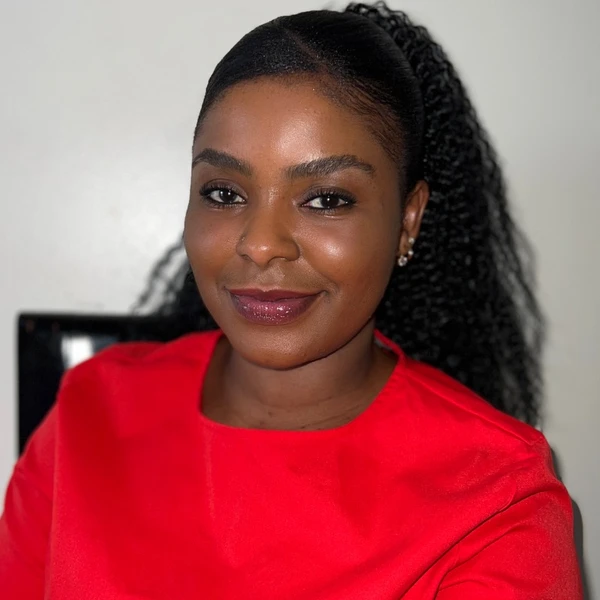
I am a domestic violence survivor, but my story is defined by my comeback, not my circumstances. My education was interrupted in 2013 by circumstances beyond my control, but I made a clear decision to keep investing in myself. Today, I am a Software Engineering student at Dallas College, proving that a pause in my journey was not the end, but a turning point. I intend to continue my studies in software engineering at both the undergraduate and graduate levels with a focus on Artificial Intelligence.
My path into engineering started with curiosity and grew out of necessity. I watched my mother fix everything in our home with limited resources, and I carried that same mindset into rebuilding my own life. I taught myself HTML, CSS, and JavaScript using free online resources because I realized that code could help solve real problems, not just for me, but for others like me.
As part of my healing journey, I created a safe space club for women, which has since grown into the Rego Foundation. To date, my nonprofit has reached over 8,000 young women across Uganda, providing mentorship, technical skills, and the confidence to create new opportunities for themselves.
I am passionate about using technology to create access where it does not exist. My goal is to become a software engineer building tools that expand financial and educational opportunities for underserved communities. Long term, I plan to establish a Technology and Innovation Center that opens clear, supported pathways into tech for the next generation.
Education
Dallas County Community College District
Associate's degree programMajors:
- Computer Programming
Miscellaneous
Desired degree level:
Master's degree program
Graduate schools of interest:
Transfer schools of interest:
Majors of interest:
- Computer Science
Career
Dream career field:
Computer Software
Dream career goals:
Company Founder / CEO
Team Lead
Rego Foundation2016 – Present10 years
Sports
Track & Field
Junior Varsity2005 – 20061 year
Research
Area, Ethnic, Cultural, Gender, and Group Studies, Other
Future We Want Model United Nations — Participating Delegate2017 – 2018
Public services
Volunteering
Stem League - Dallas College — Events Support and Coordination2026 – 2026Volunteering
Rotary Club of Kampala Metropolitan — Executive Secretary2021 – 2022Volunteering
Rotary Club of Kampala Metropolitan — Monitoring and Evaluation Director2020 – 2021
Future Interests
Advocacy
Volunteering
Philanthropy
Entrepreneurship
Lyndsey Scott Coding+ Scholarship
WinnerI view code as the most efficient tool for social architecture. My entry into computer science wasn’t driven by a classroom assignment, but by a survival mandated search for structure after experiencing domestic violence. In the wake of trauma, I discovered that while my physical environment was volatile, syntax was consistent. I didn’t just learn to program; I learned to build a logical foundation for a life that had been stripped of one.
My self-taught proficiency in HTML, CSS, and JavaScript was the starting point for a deeper technical pursuit: leveraging Artificial Intelligence (AI) to solve resource allocation failures. I am pursuing software engineering with a focus on graduate-level AI research, specifically in the field of Algorithmic Equity. My goal is to develop machine learning models that account for thin data profiles. In many underserved communities, traditional data for financial vetting simply doesn't exist. I aim to build AI systems that can interpret alternative data points, such as community-based savings habits, to unlock institutional access for those who are currently invisible to standard algorithms.
The qualitative data for my technical ambitions comes from my work as founder at Rego Foundation. What began as a safe-space club for survivors has scaled to reach over 8,000 young women across Uganda. As we grew, I saw exactly where manual, informal processes failed. This led me to develop RegoNow, a digital framework designed to formalize and secure the group-savings systems common in these communities. By digitizing these informal economies, I am creating the very datasets needed to eventually deploy AI-driven financial tools that accurately reflect the creditworthiness of marginalized entrepreneurs.
For instance, in a traditional FinTech model, an algorithm might look at a woman in Uganda and see "no bank account, no credit history, low-income area" and assign a high-risk score. An Equity-driven AI, however, would be designed to recognize consistent weekly contributions to a community savings circle (RegoNow), 100% repayment rate within that circle and a growing micro-enterprise. My non-technical background gives me a ground-truth edge over other engineers. I do not build for a hypothetical user; I build for the women I sit with every week who require secure, low-latency tools to protect their capital and build sustainable, self-sufficient lives.
I intend to establish a Technology and Innovation Center that operates as a hybrid incubator—a production house where young people use modern tech stacks to solve local logistical and financial bottlenecks. By combining AI research with localized fintech tools, I plan to create an ecosystem where technical skill leads directly to economic autonomy. A biased algorithm is a social failure, and a social problem is often a system awaiting a better architectural solution. I am not looking to join the tech industry to maintain the status quo; I am here to re-engineer the points of entry for those who have been systematically left offline.