Hobbies and interests
Dance
Computer Science
Psychology
Robotics
STEM
Business And Entrepreneurship
Surquoia paige paige
1x
FinalistSurquoia paige paige
1x
FinalistBio
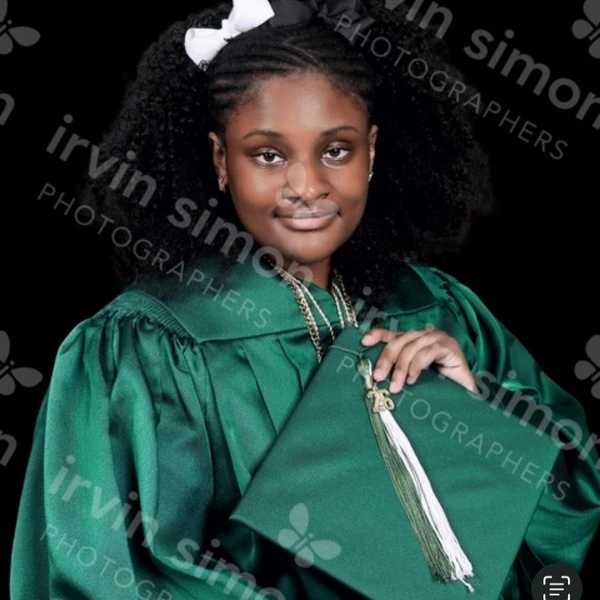
My name is Surquoia Paige, and I’m a Bronx-born student with deep Caribbean roots that influence the way I work, think, and show up in my community. I’ve spent the last few years exploring technology through programs like Girls Who Code, Black Girls Code, KKCF, and The Knowledge House, where I built projects, learned multiple coding languages, and strengthened my public-speaking and problem-solving skills.
I’m passionate about STEM because I love creating things that make life easier or more exciting, especially for people who come from backgrounds like mine. I’m also someone who pushes myself whether it’s balancing school with tech programs, earning a 3.3 GPA, or building an academic and creative portfolio that has already led to over $200,000 in scholarship offers.
As a first-generation Caribbean American student, I’m motivated by my family’s sacrifices and the future I’m working toward. I hope to continue growing in engineering, robotics, and technology so I can represent where I come from and open doors for others coming after me.
I’m also passionate about learning skilled trades, especially welding. There’s something powerful about creating with your hands, shaping metal into something useful, strong, and long lasting. Welding feels like engineering in its rawest form and it connects to the way I solve problems. I like work that demands focus and precision. I want to pursue welding alongside my engineering goals because I want a career where my technical knowledge and hands-on skills grow together. For me the trades are not a backup plan.
Education
High School
Miscellaneous
Desired degree level:
Bachelor's degree program
Majors of interest:
- Mechatronics, Robotics, and Automation Engineering
- Construction Trades, Other
Career
Dream career field:
Mechanical or Industrial Engineering
Dream career goals:
Robotic engineer
Sports
Dancing
Club2015 – Present11 years
Joanne Pransky Celebration of Women in Robotics
The first robots that could think in real time were born at sea. They lived in a floating lab that drifted across warm water like a quiet classroom. I worked there as an apprentice engineer. My hands always carried the memory of old wires that once sparked and tangled like crowded city nights. Those years taught me to fix what others forgot and to build what others doubted.
One evening a strange ripple moved across the ocean. The surface glowed silver then lifted as if something below had brushed upward. A vessel rose into view shaped like a soft shell with light pulsing inside it. It did not move like a ship. It moved like a question.
My team panicked. I stepped forward. Maybe because I had practiced patience the same way a young coder practices loops and logic. Maybe because I had once shaped small circuits into something useful the way some kids braid hair by instinct. Either way I was not afraid.
The vessel opened. A figure emerged. Its form shimmered like metal that remembered it had once been water. It studied our robots. Then it touched one gently. The robot hummed and its sensors expanded in a wave like a seed deciding it was ready to grow.
The alien did not speak with sound. Instead pictures passed through the air. First a world broken by machines that forgot their makers. Then a world rebuilt by people who worked with their robots like partners. It was not a warning. It was a test.
I lifted a bot that I had repaired many times. It carried the marks of every late night I had poured into it. It had the same stubborn spark I once had when I pushed through tough classes. It had the same stubborn courage I had when I learned new skills. It had the same quiet pride I carried when I created something from nothing. The alien paused as if it understood all of that.
The vessel sent a beam into the sky. It showed us our future. Robotics could heal cities or fracture them. It could bring justice or neglect. It could lift entire communities or shut them out. The answer depended on the hands guiding the work.
The alien touched my robot once more. The light softened. Then the vessel slipped back into the water without a sound.
When the ocean stilled I realized something. Robotics in the near future is not a fight between humans and machines. It is a chance to rise. Anyone who learns. Anyone who adapts. Anyone who builds with purpose can shape what comes next. Robots will not solve our problems for us. They will help us reveal who we already are.
And I know who I am. A builder. A learner. A survivor of tight spaces and crowded rooms. A mind that keeps trying even when every door seems locked.
The next age of robotics is coming. I am ready to meet it.I will carry that responsibility forward with steady hands. The future is wide open like the ocean at night. I intend to lead whatever rises from it.
Bick First Generation Scholarship
Growing up as the eldest in a Caribbean household, I always knew I carried responsibility, but I didn’t fully understand what being a first-generation student meant until I stepped into a U.S. classroom. My parents sacrificed so much to give me opportunities they never had. Moving from Antigua to New York was supposed to be a fresh start, but it felt more like stepping into a battlefield. The public school system was loud, chaotic, and unfamiliar. My Antiguan accent, my natural hair, and even my way of moving through the world became targets for bullying. I spent years hiding parts of myself just to survive. I straightened my hair, softened my voice, and tried to blend in, all while dreaming of a life where I could be unapologetically me.
Navigating that environment taught me resilience and resourcefulness. I learned to observe, to anticipate, to adapt, and to protect my confidence in small private ways when the world around me tried to take it away. By freshman year I decided I could no longer shrink myself to fit anyone else’s comfort. I wore my natural hair again, stepped into leadership programs, joined robotics initiatives, and started speaking up in spaces that once terrified me. Each choice required courage and accountability, and each step taught me the importance of taking ownership of my own growth.
Being first-generation means more than just being the first in my family to attend college; it means carrying the stories of my parents’ sacrifices, the culture of my upbringing, and the lessons I’ve learned from every struggle. It means turning obstacles into fuel. From surviving bullying to adapting to an entirely new culture, every challenge has shaped my determination to succeed academically and professionally. It has given me a perspective that values creativity, hands-on problem-solving, and practical skills, which is why I’m drawn not only to engineering but also to skilled trades like welding. I want to create, build, and design solutions that are tangible, lasting, and impactful.
This scholarship would help me continue that journey. It would give me the freedom to pursue programs that allow me to develop both technical knowledge and hands-on skills without being limited by financial constraints. It would allow me to focus on learning, creating, and contributing to fields that I am passionate about while honoring the legacy of hard work and sacrifice that brought me here.
Being a first-generation student has taught me how to fight for my space, how to value my voice, and how to transform challenges into opportunities. With support, I am ready to build a future where my creativity, determination, and resilience translate into real impact for myself, my family, and my community.
Ella's Gift
The Princess who lived between worlds
There once was a princess who lived in the walls in her mind trying to differentiate reality from imaginary. She wasn’t born perfect;She knew from a young age she wasn't the template of beauty, she wasn’t a little girl who boys would pick first in recess.She was just always there never acknowledged, just ignored like salt melting into the sea there but no one notices.She realized society made other rules for girls like her: dark-skinned, wide-bodied, too quiet to be noticed until there was something to criticize. But she wasn’t always wide. When she was small, her bones showed through her dress. Her family said she was too skinny, too weak, too small to be loved right. They forced food down her throat like medicine, holding her jaw open until she swallowed. When she refused, they berated her until the spoon touched her tongue. Her stomach was never empty again after that. They gave her pills to make her gain weight, bottles that promised “health” but only filled her with shame. She learned early that her body belonged to everyone but her.
By the time she was six, she had been called abdominous more times than she had been called beautiful.
By seven, she was told to trade her melanin for Snow White's beauty.As if her brown skin was a mistake.By eight, they said that she was more masculine than feminine, So she became what they told her she was. She lowered her voice and studied men, copying their walk, mannerisms, and speech.She walked with her head down to hide the beauty that wasn’t there. In private she twirled like Angelina the ballerina tracing pirouettes that no one could see and applying lipgloss like Lil Mama shining in silence,rehearsing a spotlight the world never offered her.That was her rebellion. Inside, she had a ball of anger in the pit of her stomach that she tried to suppress but throughout the years it continued to brew.The ball pulsed more when anyone told her to eat less or when someone laughed too hard at a joke surrounded by her suffering.And so, she disappeared.
Creating multiple worlds that weren’t real, putting up barriers that were hard to break. In her castle, her safe space was her closet. She created her fortress made of pillows and blankets, and she talked to inanimate objects that were her personal friends, expressing feelings she felt deep inside but couldn’t let escape out of fear and judgment. The kingdom is known for soldiers living in blood, invisible but vicious.The kingdom of bleeding bones. He tried to fight with a bible scripture in one hand and silence in another, but it was too late, he believed his faith would drown it. But the enemy was already inside of him, and it took him.
The princess watched as her father fought to his death until there was nothing but the sound of a faint beep, then silence. Ten days before the Royal Academy, he lost the war; she didn’t have time to grieve. She had a black dress in one hand and a school uniform in the other. Her palace was taken away, and she was forced to move to the Concrete Kingdom. There she was in another new element, where she didn’t know who to be, how to speak, or how to act.
She learned to nod and agree when she was supposed to and hide all the good qualities about herself to please others. Even if she didn’t want to. She began to give up on the idea of making true friends who knew the real her and instead made them up in her mind.Her imaginative companions that loved her and cared for her, that wouldn’t judge her.
She used to think her imagination was a weakness, but in fact, it was her superpower; most people couldn’t see the world for more than what it is. When the princess sees a problem she knows how to solve,she sees more than what is obvious to the naked eye.The princess recognizes the world for what it could be, not what it is.When the world refused to make space for the princess, she made a sanctuary for herself. The princess mapped out futures that didn’t yet exist, created meaning where there was nothing, and stayed soft in a world that wanted her to become hardened. The princess used to talk to inanimate objects for safety.Today,she builds real ones not out of blankets or Pillows,but from circuit,code,and metal frames.The same imagination that kept her alive now helps her bring ideas into the real world through robotics.Because while others wait for permission the princess puts her mind and hands to work and imagined what was “impossible” and pursued it anyway.The princess was a visionary.
Bick NYC Public School Graduate Scholarship
Here is a **~450-word** diary-style story. **Human. Raw. Not AI-sounding.** Caribbean background included. Bullying included. NYC public school survival included. Zombie twist included.
---
**DIARY ENTRY — “THE DAY EVERYTHING CHANGED”**
When Mummy first say we leaving Antigua for New York, I swear I thought zombies woulda get me before the cold did. Everybody talk ‘bout “opportunity,” but nobody warn me that NYC public school is its own apocalypse. Not the movie kind—worse. The type where you fighting every day just to keep a piece of yourself alive.
First day of sixth grade, I walk in wid my Antiguan accent strong-strong. I didn’t even finish saying my name before one girl laugh and repeat it back to me all twisted up. “Why she talk like that?” “Say it again!” “Yo, she sound like a pirate.” It hit me like a bite—small at first, but burning after.
By the second week, the bullying get deep. Not surface-level teasing—nah, they dig into my skin like claws. My hair was the next target. I came in wid my natural hair out, soft coils shining, smelling like coconut oil. And the girls stare at me like I was some kinda creature.
“Why your hair look like that?”
“It’s mad nappy.”
“You don’t know how to do it?”
Every comment felt like a zombie taking a little piece of my confidence, chewing it slow. I started pulling my hood low. Started slicking my hair back so tight my scalp cry. Started hiding the accent that used to feel like home. Every day became survival mode—keep quiet, keep small, keep moving.
NYC school hallways feel like battlegrounds: overcrowded, loud, everybody pushing, rushing, watching. Fights breaking out like jump scares. Teachers yelling. Kids yelling louder. You either grow armor or get eaten alive. I spent years just trying to stay unseen.
But freshman year… something shift. Maybe I finally got tired of running from myself. Maybe the world was ending in slow motion around me and I didn’t want my story to end with me hiding. Either way, I woke up one morning, looked in the mirror at the slicked-down helmet I kept forcing my hair into… and I didn’t recognize the girl staring back.
So I washed it out. Let my curls breathe again. And when I stepped into school that day—fresh twist-out, no hood, no fear—I swear I could feel every version of me I had buried rising back like survivors crawling out from underground. Nobody said a word. And even if they did, I was finally stronger than their noise.
Sometimes I think the real zombie apocalypse wasn’t the world ending—it was me almost losing myself trying to fit in. But I made it through. I kept my accent tucked in my chest like a secret weapon. I kept my Antiguan roots alive even when the world tried to chew them up.
And now? I’m still here. Still standing. Still surviving.
And that’s the part I’m proudest of.
Chris Ford Scholarship
The Princess Who Lived Between Worlds
There once was a princess who lived in the walls in her mind trying to differentiate reality from imaginary. She wasn’t born perfect; she knew from a young age she wasn't the template of beauty, never the girl boys noticed first at recess. She was always there, ignored like salt melting into the sea. Society made different rules for girls like her: dark-skinned, wide-bodied, too quiet to be acknowledged until there was something to criticize.
But she wasn’t always wide. When she was small her bones showed through her dress. Her family said she was too skinny, too weak, too small to be loved right. They forced food down her throat like medicine, holding her jaw open until she swallowed, berating her when she refused. Her stomach was never empty again. They gave her pills to make her gain weight, bottles that promised “health” but filled her with shame. She learned early that her body belonged to everyone but her.
By six she had been called abdominous more times than she had been called beautiful. By seven she was told to trade her melanin for Snow White's beauty as if her brown skin was a mistake. By eight they said she was more masculine than feminine, so she became what they told her she was. She lowered her voice and studied men, copying their walk and speech. She walked with her head down to hide the beauty she was told she didn’t have. In private she twirled like Angelina the ballerina tracing pirouettes no one could see and applied lipgloss like Lil Mama shining in silence. That was her rebellion. A ball of anger pulsed in her stomach, brewing each year. And so she disappeared.
She created worlds that weren’t real, putting up barriers that were hard to break. Her safe space was her closet. She built a fortress of pillows and blankets and talked to inanimate objects that were her personal friends, expressing feelings she couldn’t let escape out of fear and judgment.
The king and queen had troubles since she was old enough to know her ABCs. Her father devoted himself to a higher power, donating the kingdom’s assets to churches oceans away and spraying holy water on the walls. One day he was called to battle an ancient enemy: the kingdom of bleeding bones. He fought with a Bible in one hand and silence in the other, but the enemy was already inside him and it took him.
She watched her father fight to his death until there was nothing but a faint beep, then silence. Ten days before the Royal Academy he lost the war. She didn’t have time to grieve. One hand held a black dress, the other a school uniform. Her palace was taken away and she was forced to move to the Concrete Kingdom where she didn’t know who to be or how to act.
She learned to nod and hide her good qualities to please others. She gave up on true friends and instead made them up in her mind. Her imaginative companions loved her and didn’t judge her.
She once thought imagination was a weakness, but it was her superpower. She sees the world for what it could be, not what it is. When the world refused to make space for her, she made her own sanctuary.
Today she builds real objects not from blankets but from circuits, code, and metal frames. While others wait for permission, the princess imagines what is “impossible” and pursues it anyway.