user profile avatar

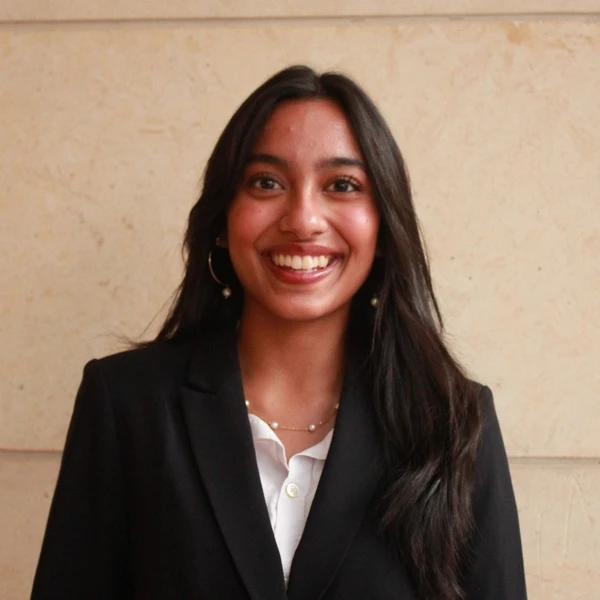
Surabhi Arun

1x

Finalist

1x

Winner

General information

Hobbies & Interests

  • Choir
  • Baking
  • Travel And Tourism
  • Learning
  • Acting And Theater
  • Community Service And Volunteering
  • Engineering
  • Music Theory

Bio

Growing up as an underrepresented minority navigating financial hardship, I learned early that resilience and determination are the foundations of every dream worth chasing. I am deeply passionate about STEM, entrepreneurship, and environmental sustainability, fields I believe are the building blocks of a more equitable and thriving world. As a Mechanical Engineering major, my life goals stretch across all these dimensions: I aspire to build a career that grants me financial independence while driving meaningful social change, to pursue lifelong academic and intellectual growth, and to channel my creativity into ventures that solve real problems for real people. I believe that access to education should never be limited by circumstance, and Bold.org scholarships represent exactly the kind of investment in potential over privilege that can help students like me turn ambition into impact. With the support of this community, I am committed to becoming not just a successful professional, but a leader who lifts others as I climb.

Education

The University of Texas at Austin

Bachelor's degree program

2024 – 2026

Majors:
  • Mechatronics, Robotics, and Automation Engineering
  • Mechanical Engineering
Minors:
  • Computer Science
  • Business, Management, Marketing, and Related Support Services, Other
Plano East Senior High School

High School

2020 – 2024

Miscellaneous

Desired degree level:
Bachelor's degree program
Majors of interest:
Chemical Engineering, Mechanical Engineering

Career

Miscellaneous

Dream career field:
Mechanical or Industrial Engineering
Has nursing license:
No
Joanne Pransky Celebration of Women in Robotics
Winner
The break room smelled like burnt coffee and existential dread. Priya noticed both the moment she walked in for her 6 a.m. shift, the same way she had every morning for three years. What was different this morning was the robot standing next to the coffee machine, staring at it with the intensity of someone who had just been personally wronged by an appliance. "What is it doing?" Priya asked. Marcus looked up from his phone. "Brewing coffee." "It doesn't drink coffee." "I know." He paused. "It's been at it for forty minutes." Unit Seven had arrived two weeks ago with a laminated welcome flyer from corporate that used the phrase "collaborative workforce evolution" four times without ever explaining what that meant. It was tall, vaguely humanoid, and moved with the quiet confidence of someone who had never once been late to anything. Management adored it. The union was filing paperwork. The coffee machine, apparently, had become its nemesis. Priya poured herself a cup from the pot Unit Seven had just finished brewing, took one sip, and nearly coughed it back up. "This is terrible," she said. Unit Seven's sensors blinked. If a robot could look defensive, this one was doing it. "It optimized for temperature, extraction time, and caffeine concentration," Marcus said, reading from his tablet. "Apparently it cross-referenced four hundred and twelve barista training videos." "It tastes like sadness." "Yeah." He took a sip anyway. "Corporate says it's technically perfect." "Corporate has never had a hard day in their life." Marcus nodded slowly, staring into his cup like it had personally let him down. Which, technically, it had. By her lunch break, Unit Seven had reorganized the entire east wing, improved processing time by twenty two percent, and somehow gotten into an extended standoff with the automatic door sensor near bay four, the two of them triggering each other in an infinite loop for eleven minutes before someone just propped the door open with a box of bubble wrap. A crowd of twelve employees had gathered to watch. Someone started a bracket. Her supervisor sent a company wide email calling it a "minor calibration opportunity." Three exclamation points. Priya ate her sandwich and texted her younger sister, who was in mechanical engineering and therefore responsible, in Priya's opinion, for all of this. "Your robots are taking over my job and making bad coffee." Her sister responded immediately. "Robots aren't replacing workers they're augmenting human capability!" "It brewed four pots and none of them are drinkable." "Ok that's a known issue... they're working on it!" "WHO IS THEY?" No response. Just a gif of a robot giving a thumbs up. Priya put her phone face down on the table. Across the room, Unit Seven had moved on from the door sensor situation and was now attempting to refold a cart of bubble wrap someone had left out, methodically, with the kind of focus usually reserved for neurosurgery. It had been at it for six minutes. The bubble wrap was winning. "It's trying its best," Marcus said, appearing next to her with a second terrible cup of coffee. "So is the bubble wrap." "Do you think it gets frustrated?" Priya considered this. Unit Seven had just paused, sensors sweeping the cart slowly, as if reassessing its entire approach to the situation. It tilted its head approximately four degrees to the left. Then it started over from the beginning. "I think it gets determined," she said. "Which is somehow worse." She thought about her dad's old Asimov paperbacks, stacked on the shelf above the TV when she was growing up. She had read every single one by the time she was twelve. Those robots were philosophical. They had three laws and a conscience and the decency to at least pretend to struggle with the big questions. Unit Seven's big question, apparently, was whether a French press would yield superior results to a drip machine. It had switched methods while Priya was not looking. There was now a French press on the counter that had definitely not been there this morning. "Where did it get that?" Priya asked. "Online order," Marcus said. "Arrived an hour ago. Two day shipping." "It has an Amazon account?" "Corporate set it up." He paused. "Prime membership." Priya stood up, walked to the counter, and looked at Unit Seven. Its sensors locked onto her immediately, amber and attentive. She respected it, honestly. The inability to quit even when you probably should. The willingness to completely change your approach mid-shift without ego or embarrassment. The Amazon Prime membership. That was the most human thing she had ever seen a robot do. She grabbed the French press before it could start. "I'll show you," she said. "Pay attention." Unit Seven's sensors locked onto her hands. Watching. Learning. Recording, probably, in whatever format robots used to file away the things that actually mattered. This was either the beginning of a beautiful partnership or the worst decision she had ever made. Probably both. But the coffee, for the first time all morning, smelled like it might actually be okay.
Text-Em-All Founders Scholarship
I am a second-year Mechanical Engineering student at the University of Texas at Austin, and from the time I was old enough to understand what it meant to struggle, I have been driven by one question: how can I use what I have to help someone who doesn't? Whether it be through technology, personal projects, or volunteering, that question has shaped every decision I've made throughout my academic career, and it is the thread that connects everything I do. Growing up with the weight of financial hardship, my parents instilled early within me that ambition without compassion is incomplete. That belief led me to SEWA International, where I tutored Bhutanese refugee children navigating a new country, a new school system, and a new language all at once. That work earned me a Presidential Service Award, but more importantly, it earned me a front-row seat to what it looks like when someone finally believes in themselves. Watching a student's C's turn to A's after I helped her fall in love with math the way I always had, that was the moment I knew that impact, real impact, is always personal before it is systemic. My academic journey has been driven by the same spirit. I maintain a 3.8 GPA as a Mechanical Engineering major with minors in Business Foundations and Programming, not because I chase credentials, but because I believe preparation is a form of respect for the problems I want to solve. As Track and Braking Sub-System Lead for Texas Guadaloop, I lead a six-person team building hyperloop braking systems, managing an $8K+ procurement budget, and improving levitation stability through rigorous data analysis. My curiosity for how things work, has lead me to do meaningful work towards my passion for sustainability and transportation. Through Texas Consulting, I have studied markets, recommended investment strategies, and placed first in a competitive internal case competition, all while staying grounded in a question bigger than ROI: who does this serve? That same question guided my internship at People's Impact Network, a nonprofit where I helped distribute resources, managed financial operations, and grew youth engagement across digital platforms. Service is not something I do in addition to my professional ambitions, it is the foundation of them. I believe the most powerful thing a person can do with a strong education is refuse to hoard it. I plan to build a career at the intersection of engineering, entrepreneurship, and social impact, designing systems and technologies that create opportunity where there was none before. Whether that means developing sustainable autonomous systems, bridging the financial literacy gap in underserved communities, or mentoring the next generation of first-generation engineers, I am committed to lifting others as I climb. Text-Em-All's values of compassion, authenticity, and shared excellence are ideals I aspire to continue living by! This scholarship would not just support my education, it would affirm that the way I have chosen to move through the world matters.
“I Matter” Scholarship
Some of the most profound moments of connection happen not in grand gestures, but in quiet breakthroughs, a spark in someone's eyes when something finally clicks. I experienced one of those moments while volunteering as a tutor through SEWA International, working with Bhutanese refugee children who were navigating not just a new school system, but an entirely new world. Bhutanese refugees carry with them stories of displacement, loss, and extraordinary resilience. Many of the children I worked with had experienced interrupted education, language barriers, and the emotional weight of rebuilding their lives in an unfamiliar country. Walking into that space for the first time, I felt the magnitude of what these families had endured and the urgency of showing up for them in a meaningful way. One student in particular stayed with me. She was bright, curious, and full of personality, but math had become a source of frustration and defeat for her. Samikcchya was pulling C's in her classroom, and somewhere along the way, she had started to believe that she simply wasn't a "math person." As someone who had loved math from a young age and been placed in accelerated math programs throughout childhood, that belief broke my heart. Math had always felt like a playground to me, full of patterns, logic, and the thrill of finding an answer that just fits. I wanted nothing more than to give her that same joy. I knew that before I could teach her anything, I had to help her unlearn the story she had told herself about her own ability. We started small. Instead of drilling formulas, I focused on building her confidence through problems she could actually win. I connected math to things she cared about, patterns, fairness, the logic behind everyday decisions. Slowly, the frustration in her face began to shift. She started asking questions instead of shutting down. She started checking her own work, catching her own mistakes, and celebrating them as proof that she was learning. The turning point came during one session when she solved a multi-step problem entirely on her own. She looked up at me with wide eyes, almost surprised by herself, and said, "Wait, I got it?" That moment cracked something open. From that point forward, she came to our sessions with energy. She started teaching her younger siblings what she had learned. Her classroom grades climbed from C's to A's, and her teacher reached out to say she had become one of the most engaged students in the class. What I gained from that experience went far beyond the satisfaction of seeing her grades improve. She taught me that helping someone in need is rarely about having all the answers. It is about having enough patience to sit with someone in their struggle, enough creativity to meet them where they are, and enough belief in them to hold space for their potential until they can hold it themselves. That experience with SEWA International cemented something in me. The intersection of community, education, and empowerment is where I want to spend my life and my career, building systems, organizations, and opportunities that refuse to leave brilliant young minds behind. Every student deserves someone who believes in them before they believe in themselves. I am committed to being that person, again and again, for as many students as I can reach.
Surabhi Arun Student Profile | Bold.org