
Hobbies and interests
Acting And Theater
African American Studies
Artificial Intelligence
Advocacy And Activism
Biomedical Sciences
Business And Entrepreneurship
Community Service And Volunteering
Global Health
Government
Public Health
Human Rights
Social Justice
Reading
Health
Summer Singleton
1x
Finalist1x
Winner
Summer Singleton
1x
Finalist1x
WinnerBio
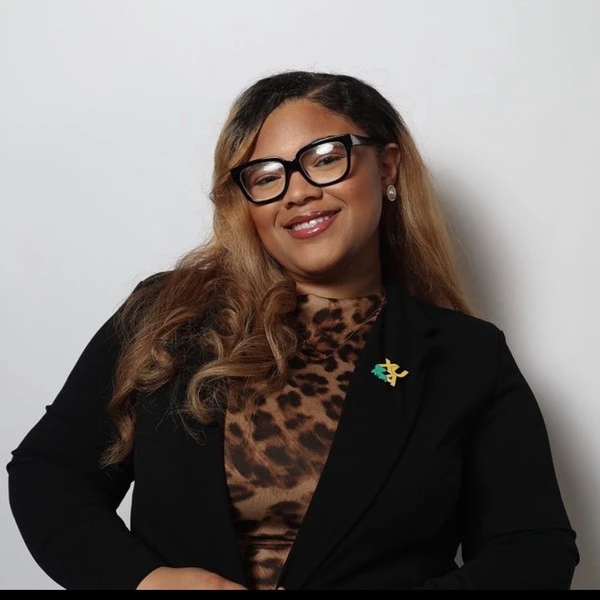
Summer Jordan Singleton is a senior Public Health Sciences major with a minor in Healthcare Management at Xavier University of Louisiana. A first-generation college student from Lake Charles, Louisiana, she currently serves as SGA Treasurer & Chief Financial Officer, is a UCLA CHARM Research Scholar, and a Mayo Clinic Undergraduate Administrative Intern in the Department of Surgery. She also serves as the Louisiana Representative for the Southern Black Girls & Women's Consortium and as a Regional Officer for the Southwest Region of Delta Sigma Theta Sorority, Inc. Passionate about leadership and public service, Summer is a dedicated advocate for reproductive rights and equitable access to healthcare. She plans to pursue a career in healthcare administration and earn a dual Master of Business Administration (MBA) and Master of Health Administration (MHA) degree.
Education
Xavier University of Louisiana
Bachelor's degree programMajors:
- Public Health
Minors:
- Health and Medical Administrative Services
Alfred M. Barbe High School
High SchoolMiscellaneous
Desired degree level:
Master's degree program
Graduate schools of interest:
Transfer schools of interest:
Majors of interest:
- Health and Medical Administrative Services
- Public Health
Career
Dream career field:
Hospital & Health Care
Dream career goals:
Hospital Adminstrator
Administrative Intern - Department of Surgery
Mayo Clinic2026 – Present7 months
Research
Public Health
UCLA — Community Health Research Fellow2025 – 2026
Public services
Advocacy
Student Government Association — SGA Treasurer and Chief Financial Officer2024 – PresentAdvocacy
Southern Black Girls and Women's Consortium — Youth Ambassador -2024 – Present
Future Interests
Advocacy
Politics
Volunteering
Entrepreneurship
Henry Respert Alzheimer's and Dementia Awareness Scholarship
Remembering More Than Memories
Some of my fondest childhood memories were made at my grandmother's house in Louisiana. It was where birthdays were celebrated, family stories were shared, and generations gathered around the same table. The elders in my family were the keepers of our history. They told stories about relatives I had never met, reminded us where we came from, and made sure family traditions continued. As a child, I assumed those moments would always be the same. I never imagined how heartbreaking it could be to watch someone slowly lose the memories that connected them to the people and experiences they loved most.
As I grew older, I began noticing changes in some of the older adults around me. Conversations became repetitive, familiar faces became difficult to recognize, and stories that had once been told with certainty became harder to recall. At first, these moments seemed small, but over time I understood that they represented something much greater. Alzheimer's disease and other forms of dementia were affecting people not only in my family but throughout my community. What impacted me most was realizing that memory loss does not affect just one person. It changes the lives of everyone who loves and cares for them.
Growing up in Louisiana, I witnessed how families often became caregivers overnight. Adult children took on new responsibilities, grandchildren stepped in to help, and entire families rallied together to provide support. I watched loved ones coordinate doctor's appointments, manage medications, provide transportation, and make difficult decisions about care. Many of these responsibilities were carried quietly and without recognition. While the focus was often on the individual experiencing dementia, I came to understand that caregivers were experiencing their own challenges, balancing emotional, financial, and physical demands while trying to preserve the dignity of those they loved.
These experiences also opened my eyes to larger issues within our healthcare system. In many communities, especially underserved communities, access to specialized dementia care, caregiver support, and educational resources can be limited. Families are often left trying to understand a complex disease while navigating healthcare systems that can be difficult to access. For many, receiving quality care depends on where they live, their financial resources, or their ability to advocate for themselves. Seeing these disparities helped me recognize that Alzheimer's disease is not only a personal or family challenge. It is a public health issue that affects entire communities.
At the same time, I witnessed the incredible power of community support. In Louisiana, community often extends beyond family. Church members checked on elderly neighbors, delivered meals, offered rides to medical appointments, and stepped in wherever help was needed. I saw people show patience when memories faded and compassion when communication became difficult. Those experiences demonstrated that while dementia may affect a person's ability to remember others, it can also reveal the strength of the relationships surrounding them. Communities have the ability to preserve a person's sense of belonging even as a disease changes so much of their daily life.
The impact of Alzheimer's disease has influenced both my educational journey and my future goals. As a Public Health Sciences major with a minor in Healthcare Management, I am committed to improving healthcare access and reducing disparities that affect vulnerable populations. I hope to pursue a career in healthcare administration where I can help develop systems and programs that better support older adults, caregivers, and families affected by dementia-related illnesses. Whether through community-based services, caregiver support initiatives, or efforts to improve access to care, I want to contribute to solutions that make these challenges more manageable for families.
Perhaps the greatest lesson I have learned is that a person's value is not defined by what they can remember. Even when memories fade, dignity, love, and human connection remain. Watching families and communities support one another through the challenges of dementia taught me that healthcare is about more than treating a disease. It is about caring for people, supporting families, and ensuring that no one faces difficult circumstances alone.
Alzheimer's disease has shown me both the fragility and resilience of the human experience. It has revealed the strength of caregivers, the importance of community, and the need for healthcare systems that support the whole family, not just the patient. Most importantly, it has inspired me to dedicate my future career to improving health outcomes and ensuring that individuals facing dementia-related illnesses receive the compassion, dignity, and support they deserve.
Charlene K. Howard Chogo Scholarship
Writing the Story We Deserve
"If there's a book that you want to read, but it hasn't been written yet, then you must write it." When I think about women's empowerment, I think about that quote by Toni Morrison. To me, it means that when the world fails to see your story, your struggles, or your potential, you have the power to create a different narrative. The first woman who taught me that lesson was my aunt.
Growing up in Louisiana, I watched my aunt spend years advocating for herself within healthcare systems that often seemed unwilling to listen. I remember accompanying her to a doctor's appointment after noticing changes in her health that had become increasingly difficult to ignore. During the appointment, questions came quickly, one after another, and before she could fully explain how she had been feeling, the conversation moved on. When she briefly mentioned feeling more depressed than usual, it was nearly overlooked. I spoke up and encouraged the provider to slow down and listen. I also shared concerns our family had noticed, including significant weakness in her arms and hands that had begun affecting her daily life. That conversation led to additional evaluations that revealed serious underlying health concerns, including a stroke and a tumor that otherwise may have gone undetected for much longer.
Sitting beside my aunt that day changed me. I realized that empowerment is not always found in grand speeches or leadership titles. Sometimes empowerment is making sure someone's voice is heard when others are not listening. As a young Black woman, I also understood that my aunt's experience was not unique. Black women have long faced disparities in healthcare, often finding their symptoms minimized, their concerns dismissed, and their pain underestimated. Time and time again, Black women are expected to advocate for themselves in systems that do not always advocate for them. Watching my aunt navigate those challenges taught me why empowerment matters and why representation, advocacy, and access are so important.
Today, that experience drives my commitment to women's health and health equity. Through my work in public health, reproductive health advocacy, and community outreach, I strive to help women access the information, resources, and support they need to make informed decisions about their health. Every opportunity I have to educate, advocate, or support another woman feels like an extension of the lesson my aunt taught me years ago. Toni Morrison believed that when the story we need does not exist, we must write it ourselves. The women who inspire me have spent their lives doing exactly that. They created opportunities where none existed, spoke up when silence was easier, and continued pushing forward even when doors were closed in front of them. My goal is to honor that legacy by helping create a future where Black women are not only heard, but believed; not only included, but empowered. If the story we deserve has not yet been fully written, then I intend to help write the next chapter.
Learner Mental Health Empowerment for Health Students Scholarship
When Care Is Out of Reach
Mental health matters to me because I have seen what happens when people need help but cannot access it.
Growing up in Louisiana, I watched a family member live with bipolar disorder. Long before I understood diagnoses or treatment plans, I understood the impact mental illness could have on a person and the people who love them. I witnessed the unpredictability, the difficult days, and the emotional toll it took on our family. What stayed with me most, however, was not the illness itself. It was how hard it was to find support and how often people responded with judgment instead of understanding.
As I grew older, I realized my family's experience reflected a much larger problem. In many Black communities, mental health remains heavily stigmatized. Too often, people are told to "be strong," pray through their struggles, or keep personal challenges private. While faith and resilience are important, I have learned that strength should not require suffering in silence. When mental health struggles are viewed as personal weaknesses rather than legitimate health conditions, people are less likely to seek help, and families are left carrying burdens alone.
Living in Louisiana also exposed me to the reality of mental health disparities. Access to care is not equal for everyone. Many communities face shortages of mental health providers, financial barriers, transportation challenges, and limited access to culturally responsive services. I remember feeling frustrated that support often seemed hardest to reach for the people who needed it most. Watching someone I loved navigate these barriers taught me that mental health is more than an individual issue. It is a public health and health equity issue.
Those experiences shaped my understanding of health and inspired my interest in public health and healthcare leadership. They also changed the way I view advocacy. For me, advocacy begins with making people feel seen, heard, and understood.
As a college student, I have experienced firsthand how mental health affects academic success and overall well-being. Balancing coursework, leadership responsibilities, internships, research, and service commitments can be overwhelming. Like many students, I have faced periods of stress and burnout while trying to meet high expectations for myself. Those experiences reinforced something I learned years ago: mental health is just as important as physical health, and seeking support should never be viewed as a sign of weakness.
Because of my personal experiences, I strive to advocate for mental health within my community. I work closely with students navigating the challenges of life. Whether it is checking in after a difficult week, listening without judgment, or helping connect someone to resources, I believe small acts of support can make a meaningful difference. Often, people do not need someone to solve their problems; they simply need to know they are not facing them alone.
As a Public Health Sciences major with a minor in Healthcare Management, I hope to build a career focused on improving healthcare systems and reducing barriers to care. My goal is to help create communities where mental health services are accessible, affordable, and free from stigma, particularly for underserved populations.
Mental health matters to me because I have witnessed the consequences of stigma, the pain of unequal access to care, and the difference support can make in someone's life. Growing up, I learned that when care is out of reach, families often bear the cost. Through my education, advocacy, and future career, I hope to help build a world where no one has to struggle alone simply because the care they need is unavailable, unaffordable, or overshadowed by stigma.
ESOF Academic Scholarship
Building Healthcare Systems That Work for Everyone
For much of my life, I believed that improving health outcomes was primarily the responsibility of doctors, nurses, and other healthcare providers. However, as I became involved in public health research, community advocacy, and healthcare operations, I began to recognize a different reality. Many of the barriers people face are not caused by a lack of medicine or medical expertise. They are caused by challenges navigating healthcare systems, understanding health information, accessing resources, and receiving timely care. That realization transformed my understanding of service and ultimately shaped both my educational and professional goals.
I am currently pursuing a Bachelor of Science in Public Health Sciences with a minor in Healthcare Management at Xavier University of Louisiana. Throughout my education, I have intentionally sought opportunities that would allow me to better understand the intersection of healthcare, leadership, finance, and community impact. My coursework in epidemiology, healthcare finance, healthcare management, healthcare information technology, and research methods has strengthened my understanding of how healthcare systems function and how organizational decisions influence patient outcomes. My long-term educational goal is to pursue graduate study in healthcare administration and continue preparing for a career dedicated to improving healthcare access, operations, and health equity.
My desire to pursue healthcare administration was shaped by experiences that repeatedly showed me how difficult it can be for individuals to access and navigate healthcare systems. Through community outreach, reproductive health advocacy, and public health research, I encountered people who wanted to prioritize their health but faced barriers ranging from limited information to challenges accessing services and support. These experiences taught me that effective healthcare is about more than treating illness. It is about ensuring that systems are designed to meet people's needs, provide clear pathways to care, and remove unnecessary barriers.
That understanding was reinforced during my internship with the Department of Surgery at Mayo Clinic. There, I worked on projects involving workflow improvement, process documentation, stakeholder communication, and patient access initiatives. While observing conversations among administrators, physicians, and interdisciplinary teams, I saw firsthand how operational decisions affect thousands of patients every day. A scheduling process, communication pathway, or workflow design may appear administrative on the surface, but each decision has a direct impact on a person's ability to receive timely care. Through this experience, I discovered that healthcare administration is not simply management. It is a powerful form of service.
My professional goal is to become a healthcare administrator and executive leader who helps build healthcare systems that are accessible, equitable, and responsive to community needs. I want to improve patient access, enhance healthcare operations, and develop innovative strategies that address persistent disparities in healthcare delivery. I am particularly interested in advancing women's health, preventive care, and community-centered approaches to healthcare leadership. Ultimately, I want to use leadership positions within healthcare organizations to ensure that operational excellence and health equity are viewed as complementary priorities rather than competing goals.
My commitment to public service extends far beyond my career aspirations. Service has become a defining principle in how I choose to use my time, leadership, and education.
As a CHARM Research Scholar with the UCLA Fielding School of Public Health, I conduct community-based participatory research focused on health equity and public health communication. Through this work, I founded HerChecks, a health communication platform designed to make health information more accessible and understandable for young people. I recognized that many individuals struggle to make informed health decisions because reliable information is often difficult to access. By translating research into practical, understandable health education, I hope to empower individuals to advocate for their own well-being and make informed healthcare decisions.
My commitment to service also includes reproductive and community health advocacy. As a Community Resource Coordinator with Beyond the Sheets, I help connect students and community members to reproductive health, wellness, and prevention resources. Through my work as an Emergency Contraception Access Advocate with the EC4EC Network and a member of Advocates for Youth's Free the Pill Council, I support efforts to expand health education and increase awareness of available resources. These experiences have strengthened my understanding that meaningful public service often begins by meeting people where they are and helping them overcome barriers that limit opportunity and well-being.
I have also sought opportunities to serve through leadership and stewardship. As the elected Executive Treasurer and Chief Financial Officer of the Student Government Association at Xavier University, I oversee more than $800,000 in student activity funding while supporting programs and initiatives that impact the university community. This role has taught me that leadership is not about authority; it is about responsibility. Every funding decision represents an opportunity to invest in student development, campus engagement, and community building. Managing resources responsibly is one of the many ways that public service can create lasting impact.
My service has further extended into community development through my work with the City of Lake Charles Mayor's Office and youth advocacy through the Southern Black Girls and Women's Consortium. Whether supporting literacy initiatives, examining maternal health disparities through research, advocating for reproductive health access, or investing in student organizations, I have consistently sought opportunities to strengthen the communities around me.
The common thread throughout my educational journey, professional aspirations, and service experiences is a commitment to improving systems that affect people's lives. I believe that leadership is most meaningful when it is used to create opportunities, reduce barriers, and empower others to thrive.
This scholarship would help me continue pursuing that mission by supporting my education and preparing me for a career dedicated to healthcare leadership and public service. My goal is not simply to build a successful career for myself. My goal is to help build healthcare systems that work better for the people who depend on them. By combining healthcare administration, public health, and a lifelong commitment to service, I hope to contribute to a future where every individual has access to the care, support, and opportunities necessary to live a healthy and fulfilling life.