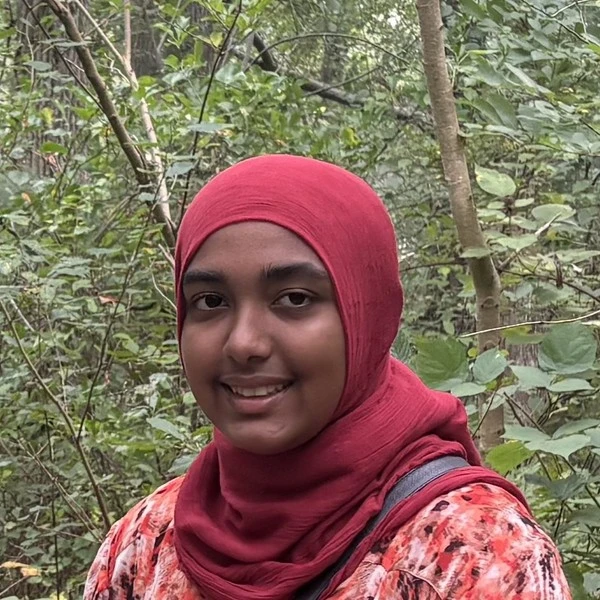
Hobbies and interests
Babysitting And Childcare
Board Games And Puzzles
Forensics
Chemistry
Mental Health
Public Speaking
Science Olympiad
Studying
Sumaiya Sarwar
1x
Finalist1x
WinnerSumaiya Sarwar
1x
Finalist1x
WinnerBio
My name is Sumaiya Sarwar. I am passionate about a career in medicine and hope to help people both physically and mentally. I want to use my diligence, empathy, and unique experiences to be the best physician I can be.
College is a crucial step in fulfilling my dreams, gaining significant experience, and gaining life-long memories I will always treasure. As such, I resolve to make the most of it and am grateful for any advantage I can receive.
Education
Forest Hills High School
High SchoolMiscellaneous
Desired degree level:
Doctoral degree program (PhD, MD, JD, etc.)
Majors of interest:
- Biological and Biomedical Sciences, Other
- Biochemical Engineering
- Health Professions and Related Clinical Sciences, Other
- Human Biology
- Medicine
Career
Dream career field:
Medicine
Dream career goals:
To work in the medical field in any capacity
Public services
Advocacy
Elmhurst Suicide Prevention in Youth Program at Elmhurst Hospital — Paid Intern2025 – PresentVolunteering
Wildlife Conservation Society at Queens Zoo — Discovery Guide2023 – 2023
Future Interests
Advocacy
Volunteering
Autumn Davis Memorial Scholarship
My name is Sumaiya Sarwar. I enjoy long walks in my garden, movie nights with my family, and the thrill of a good book. Outside of that, I am a very social person who often takes care of the people around me. Whether through planning multiple annual sleepovers for my family’s many younger children or acting as a confidant for any of my friends’ needs, I am someone who loves to help, guide, and comfort. Mental health has, therefore, been an important part of my life.
In some ways, it has been a subtle part of my life as well. Mental health is not openly discussed among my immigrant Bengali family. In our Bangladeshi village, not much was known about the clinical particulars of depression, anxiety, or healthy boundaries. Instead, my elders focused on the more tangible realities of life—food, clothing, shelter—and ignored their mental insecurities. Today, when they live stably and comfortably in America, those insecurities are passed down to us in the form of miscommunication and misunderstandings.
Parents yell, children rebel, and for a time, everyone hates everyone. Before I learned about mental health, I was a victim of this pattern as well, hurting my parents and being hurt in turn. I failed to understand why they were so harsh to me, spewing insult after insult in punishments more severe than the crimes. I used to wonder which party to blame, until my understanding of mental health allowed me to empathize with both sides.
My parents’ outrageous insults were unnecessary, but they did not stem from a place of malice; my parents actually loved me dearly and would do anything to protect me from bad choices. That meant motivating me to do well in school by threatening abandonment, or advising me to take better care of my Eczema by reminding me of my friends’ potential disgust. The methods were atrocious, and undoubtedly had to change, but their intentions were honorable. That, coupled with their stalwart support of my education and continued devotion to Eczema-related doctors’ visits, made me realize just how much they loved me.
Still, their goals did not justify their means, but thanks to my understanding of mental health, I could now work towards a solution instead of feeling adrift. I could even acknowledge that some of the blame was mine as well. Many times, I failed to appreciate the lengths my parents would go for me, the way they would hand-feed me fruit and beckon me to lean on them during family movie nights. I had wronged them, and they had wronged me—understanding this allowed us to move forward.
This mindset of viewing both the good and bad affects my relationships as well. I can listen to my friends’ concerns and give them sound, unbiased advice. I can scold my younger relatives while empathizing with their viewpoints. Most importantly, I can use my understanding of people to truly make a difference in the world.
My experience with mental health has motivated me to become a kind, successful nurse. As a nurse, I would frequently interact with patients, using my empathy to comfort them through all hardships. I would be able to view them as the beautiful, unique individuals they are, loving them not in spite, but because of their flaws. I would devote my entire being to protecting their mental health, allowing them to gain the peace they deserve—the peace I can help them attain. As a nurse, I would be able to improve the mental health of all my patients, so I am determined to pursue this goal with everything I have.
William T. Sullivan Memorial Scholarship
As I sat in Honor’s Society, watching awkward teachers watch us, I started to ponder our official goals. We had been chosen due to our “diligence” and “commitment” with instructions to “make a difference in the world”. But what difference were we making now? It had been weeks of inactivity, our determination waning in the face of such a broad and heavy goal, the teachers insistent upon our independence yet growing wearier by the second. Enough was enough.
I outlined my idea: a recycling campaign for the entire school. Any recyclable materials were welcome, but we would focus specifically on cans and bottles that were exchanged for a few cents. With enough of those, we could raise proceeds for our local Elmcore Senior Center, cleaning our community, and donating to charity at the same time. I thought that was a good start to making a difference in the world. The idea was also highly personal—I adored my elderly relatives, the way they had seen it all yet still looked at me with so much fondness; I also adored nature, my appreciation cultivated through countless hours spent gardening as a family. This campaign would be my homage to both, a way to advance the goals I was passionate about.
The class shared my enthusiasm. Preparations began shortly, as I met with multiple people to plan practical implementation. Although a goal was better than a thought, turning it into action still proved to be challenging. I had to argue and concede my ideas several times, quickly improvising when people were unavailable, and supplies were short. But everyone worked with drive and enthusiasm, and eventually, we had answers to our concerns. How would we collect cans? With bins in each classroom, emptied every Friday. How would we recycle them and receive money? Through a nearby Walmart with the proper equipment. How would we advertise our campaign? With a flyer I would personally design. Finally, things seemed to be running smoothly.
In actuality, a flyer was not enough to garner interest in our cause. As disheartening as it was, I realized we could only try harder. We began advocating over morning announcements, personally visiting classrooms, emphasizing the importance and dual benefits of our campaign. Slowly, but surely, we started to see bins filled to the brim, money piling up, and school participation skyrocketing. As more and more people took notice, we created a friendly competition with a pizza party awarded to the most recycling class. As teamwork and closeness appeared within our halls, I realized we had benefited more than our neighborhood—our school community was thriving as well.
In the end, we were able to donate a few hundred dollars to the Elmcore center—more than anticipated, given our short and impulsive time frame. Such results taught me that real change is more than attainable. With time, resources, and motivation, the abilities of youth can shine and benefit worthy causes. More than anything, I found that changing the world starts with changing your community and seeing that change in the people you love.
Today, I change the world through my role as a Youth Suicide Prevention Intern. Alongside the Elmhurst Hospital, I use my platform to design and facilitate workshops and screenings aimed at combating negativity. Recently, I have been planning a summer training on dialectical thinking and its benefits, combining creativity with insightful connections to bring participants meaningful comfort. In all these actions, the passion from my recycling campaign shines through. That experience was my gateway to public initiative—it has changed me for the better by empowering me to change the world.
Learner Tutoring Innovators of Color in STEM Scholarship
As I sat in the large doctor’s chair, dutifully reciting my medical history to an attentive nurse, the dreaded question came: What about your family?
I winced internally before responding. My parents were borderline diabetic; my mother suffered from glaucoma; my grandparents were fully diabetic, with at least one diagnosed with cancer, two with glaucoma, and more with high blood pressure. The list went on and on. The nurse visibly exclaimed as I finished.
Like previous times, I felt no shame—just sadness at the memory of my family’s struggles, and helplessness at the inevitability of those struggles. Growing up in Bangladesh, they had lived their lives unaware of certain preventative healthcare. Now, they were paying the price.
Medicine itself is fairly accessible in Bangladesh; many surgeries, treatments, and over-the-counter pills can be provided to those in need. But Bangladeshi attitudes towards lifelong health and wellness are often harmful to recipients, decreasing quality of life, particularly in the elderly. Many people are simply uninformed about balanced diets, proper exercise, and the importance of good hygiene. Many more cannot even afford to worry about such things. Instead, they experience decreased health and mobility as they age, unable to climb stairs, eat certain foods, or even exist without feeling pain. And the younger generation—my generation—watches them with mournful eyes, as if the pain was their own.
The Bengali community in America still follows this pattern. I see it in my friends, cousins, and neighbors. I see it in young children who do not understand the importance of brushing their teeth. And as I look closer, I see it in various people of color. Asians, African Americans, Latin Americans, and so on—many of them are disadvantaged in healthcare. No matter our race, we all came to America for a better life, yet we are all haunted by the consequences of misinformation. We need better emphasis on continuous wellness to break this cycle of poor preventative healthcare. And as we engage in this lifelong goal, we need kind, empathetic, culturally aware physicians to support us.
This is my reason for a career in STEM—more specifically, for a career as a family physician. I want to expand access to preventative health measures, ensuring that the next generation of Bengali Americans, and all people of color, can live their lives to the fullest. I will use my culture and background to empathize with my patients, integrating myself into their lives to provide sincere guidance. As I educate on hygiene, diet, and everyday illnesses, I hope to make a significant impact on my patients’ quality of life. Slowly, but surely, I plan to change immigrant attitudes toward preventative health, ensuring that they are happy and healthy well into their years.
As a family physician, I will see my patients for decades, if not longer. I plan to build a sense of trust and comfort with them, drawing from the community-centered villages and social networks of Bangladesh. This way, I will honor my culture, disproving its assumed inferiority by using it to put my patients at ease. As we grow closer, I will honor their cultures as well, appreciating all people of color and all unique cultural backgrounds.
Lastly, I hope to be a role model for other people of color, especially Bengali Americans like myself. I want them to be confident in their ability to make a difference, to help their families and future generations. As our determination grows stronger, people of color will no longer face repression in medicine or STEM fields. Instead, we will be working to advance each other while we strive to advance ourselves.
Stewart Family Legacy Scholarship
Leadership and science are crucial to our future—specifically to its improvements. Since the beginning of time, we have used science and leadership to better the lives of people after us, implementing new safety regulations, proliferating developed vaccines and medicines, introducing the latest advances in technology, and so on. These two disciplines are our greatest hope for success.
Although technically separate, science and leadership work in tandem to build a brighter future. Through science, we gain advancements; through leadership, we use such advancements for the greater good. This is particularly true in the medical field, where, after discovering treatments, scientists must work together in cooperation and leadership to share their discoveries with those in need.
I hope to work in medical research, the epitome of both science and leadership. Researchers both design their own experiments and collaborate with other scientists to verify their findings, implementing them into future medicine. Researchers also use leadership to separately investigate different variables of broader topics, combining their efforts to maximize information. This process leads to new cures and treatments that save countless lives, regardless of race, gender, or social circumstance. Medical research—and the science and leadership it encompasses—is therefore the gateway to a better future.
Medical research is especially necessary for those with rare or unusual diseases. Treatment of such conditions is often short and ineffective due to lack of knowledge and understanding. I realized this sharply when part of my vision was lost to a disease still undiagnosed after countless medical appointments. I am determined to remedy this disparity in research, aiding those who felt as hopeless as I did when faced with insufficient understanding. To do so, I will use science and leadership, always applying my findings to the betterment of mankind.
Even now, science and leadership are a crucial part of my life. I use science in my health professions classes—conquering complex human anatomy and diseases. I use leadership as a math tutor, Library Monitor, and Elmhurst Hospital Suicide Prevention Intern—working directly with unique individuals to address their specific needs. And as captain of my Science Olympiad Chemistry Team, I am both a leader and a scientist, studying independently yet guiding my team in competitions—teaching them to be both collaborative and independent. Science and leadership have therefore always been prevalent in my life. As I grow, I intend to use them to their fullest.
Matthew E. Minor Memorial Scholarship
My name is Sumaiya Sarwar. I enjoy long walks in my garden, movie nights with my family, and the thrill of a good book. Outside of that, I am a very social person who often takes care of the people around me. Whether through planning multiple annual sleepovers for my family’s many younger children or acting as a confidant for any of my friends’ needs, I am someone who loves to help, guide, and comfort. This translates into my community involvement.
As a Math Alliance tutor, I work with a wide variety of students at my school, facilitating their understanding of algebra, geometry, statistics, and even SAT math. This experience has taught me how to communicate with multiple unique perspectives, conveying information in ways that resonate with my differing peers. According to overwhelming reviews, our program was widely successful, and our tutors, even more so. As a Library Monitor, I also interact with many individuals, helping them find new recommendations based on their specific interests and preferences. I also take part in big projects such as book reorganization and monthly library displays aimed at representation for all. Even the little tasks I do, like shelving and straightening books, all make a big impact on the wellness of the library.
My most impactful activity, however, is my internship at ESPY—the Elmhurst Hospital Suicide Prevention in Youth Program. Through my work here, I can directly help youth who are struggling with in-person and cyberbullying. I use my platform to highlight the signs of bullying and the proper actions to take. I also offer support for victims and various methods of regulating stress, making sure to emphasize one-on-one conversations. Finally, I see specific individuals and address their risk of self-harm and suicide through various screenings, connecting them with proper aid and speaking to them again after treatment. There is an entire section of this process that focuses on the rise of technology and how its proliferation has disastrous effects on cyber-bullying. This section addresses the ways cyberbullying differs from in-person bullying—the inability to hide from it, the more mainstream audience, the greater difficulty in identifying victims due to lack of physical evidence—and proposes combative measures for adults and children alike. I am proud of the effort I have put into this program and the people I have connected with. I truly believe we are making a strong impact on the lives of youth, especially those who have experienced bullying of any nature.
When I joined ESPY, I thought of the people I tutored at Math Alliance and the library community I served. I cannot stand the thought of them feeling small and diminished due to bullying, so I work hard at my internship with them in mind. This scholarship would help me immensely in my goal of stopping bullying. It would empower me with tools to advance myself in education, providing crucial opportunities to expand my work at ESPY and spread awareness of all forms of bullying. As a student from a staunchly middle-class family, I can happily say that we are not struggling greatly. But we still cannot afford most college prices, and our income is just slightly too high to qualify for aid. After receiving nothing from FAFSA and other forms of state and federal assistance, I realized that scholarships are my most prominent form of financial support. With this scholarship, I will be able to fuel my passion and make a larger difference in the lives of my fellow youth. Regardless of my status as a recipient, I am determined to continue my work, wholeheartedly supporting victims of bullying.
Sammy Hason, Sr. Memorial Scholarship
In my future healthcare career, I plan to improve the lives of others by approaching medicine with a sense of empathy above all else. This means that I cannot simply look at a person’s sadness; I must devote my entire being to alleviating that sadness. I must understand the indescribable pain, uncertainty, and vulnerability of patients and their loved ones, reducing such burdens through countless gentle explanations, rapid responses to needs, or any non-medical interaction that eases stress.
Through this work ethic, I can promote human wellness to the highest degree. I can address mental strain as well as physical illness, strengthening patients in mind, body, and soul. This multifaceted approach to healing is crucial in all cases, but it is especially necessary for patients with rare medical conditions.
The obscurity of such cases greatly limits the knowledge and certainties a healthcare provider can offer. Oftentimes, there is simply no straightforward cure, no “correct” answer, or even enough research to provide reliable results. In a world where physicians are prized for their ability to always find a solution with their expertise, rare medical conditions often defy that expertise, forcing them to regretfully deliver grim news.
Living with a rare disease is, therefore, a terribly specific sort of agony—you are helpless to cure yourself, and physicians most likely cannot cure you as well. Their lack of knowledge and understanding is utterly petrifying—like falling into a void, unaware of any sensation other than overwhelming emptiness. Empathy is our greatest weapon in combating this unique type of despair; my own experience proves it.
My rare medical condition has no official diagnosis. It happened in a mere second, a large swath of darkness suddenly appearing in my vision. I had no prior ailments, no physical trauma, no reason to spontaneously lose part of my sight. And as days and days of tests came back negative, that reason felt nonexistent.
When the lack of answers threatened to drown me, the empathy of the devout hospital staff was the only thing keeping me afloat. Their unwavering love and support brought tears to my eyes on many occasions, assuring me that I would move forward regardless of my condition. Now, I am beyond determined to follow their example, treating patients in a human-centered lens that continuously prioritizes empathy.
Once again, this empathy would not only involve viewing a person’s feelings but also responding to them, allowing patients to express themselves openly before helping them learn to live with their conditions. It is not magically fixing their issues; it is prompting the realization that they are only stronger because of such issues, that they are more than capable of the resilience necessary to navigate their realities. More than anything, it is seeing a patient as more than a rare disease—it is seeing them as the highly capable individual they are and arming them with the physical, mental, and emotional tools needed to keep being that wonderful individual.
As someone who has experienced this empathy firsthand, I understand its importance and effectiveness. I am passionate in my desire to practice it in my future medical career, and I am fully confident in the good I can do with it. As a healthcare provider, I hope to be a source of comfort to those with rare medical conditions and, of course, to any patient I am lucky enough to serve. I will treat my empathy with honor, using it to better the lives of others in any way I can.
Immigrant Daughters in STEM Scholarship
In Bangladesh, community is everywhere: my parents lived in villages that housed their entire family trees, and the remaining inhabitants were practically relatives as well. This did not change when they came to America and had me. Since birth, I have been surrounded by a large Bengali network that would stand with me through anything. But I never truly understood their devotion until I needed it the most.
When that day came, I could hardly believe what was happening. In the span of a second, a large swath of darkness had appeared in my vision. I had no prior ailments, no physical trauma—not even an official cause or diagnosis following a visit to the doctor.
Naturally, I was petrified: but I feared losing myself rather than my vision. I was the friend who always greeted you with a smile, the diligent student who seized every opportunity, the daughter who felt no shame embracing her parents in public. I welcomed every day with indomitable enthusiasm, the spark of life bright within me.
Lying despondently in a hospital bed, IV coiled around my arm like a viper in ambush, I began to question that spark. I imagined my smiles fading away, my studies left unattended, my parents staring helplessly at my dwindling spirit. I despaired this battle would wound me irreversibly—that I would fail to recognize my reflection in the aftermath. Worse, I feared recognizing it as a pale imitation of the vibrant person I once was.
That first night at the hospital, I was utterly defeated, unaware of the unadulterated love that was coming my way.
It started with family friends visiting from hours away, offering me an assortment of sweets bright enough to enliven the entire floor. They were replaced by my grandparents, my aunts and uncles, my cousins’ grandparents and aunts and uncles. Even my great aunt—her ankle broken in three pieces—had doggedly resolved to crutch her way over. I was gifted books and flowers and comfortable pillows; fruits and delicacies representative of my heritage joined the pile as well.
My community’s steadfast support brought tears to my eyes. Slowly but surely, they were showing me that my spark had never failed, that my sense of self would survive this calamity. More than anything, they were offering me their hands, offering me guidance with the unwavering belief that I would make it through this struggle. And I did—only with the blessing of their support.
Drawing from their comfort, I maintained my vigor, completed my schoolwork, and allowed myself to rest, confident that I was strong enough to survive any adversity. My efforts were apparent in my grades, in the self-assurance I gained as a result of this hurdle.
Now, I plan to use my experience as a bridge towards my career in medicine, one that focuses on unique cases such as my own—cases that have no clear solutions or guidelines to follow. I hope to soothe the distress that comes from limited structure and knowledge, supporting my patients the way my community supported me.
My vision may never fully recover, yet I have never seen myself more clearly. I see the resilience I always had, the strength I never should have doubted. More than ever, I feel proud of my Bengali immigrant identity—of the community traditions that held me up when the ground was shaking. Such traditions are the cornerstone of my identity, bringing light from darkness, laughter from frowns, and opportunity from challenges.
Harvest Scholarship for Women Dreamers
My “Pie in the Sky” goal began as early as my birth and is intrinsically linked to my Bengali identity.
With this identity comes overwhelming warmth and support. I have seen this demonstrated multiple times, the earliest being when my eczema first appeared. My parents wasted no time in getting me the resources I needed. They guided me through all the doctor’s appointments, explaining the various instructions I received. Their protectiveness was palpable, their mere presence soothing me.
But with that protectiveness comes extreme worry, often expressed inconsiderately. Whenever my eczema flares up in the winter, my parents motivate me to take care of it by detailing a future where everyone sneers at me in disgust. They spew their menacing remarks despite watching the slight roughness of my skin vanish during the warmer months, unwilling to believe that the cold simply made it a little more prominent.
And therein lies the problem. My parents believe they have to emotionally wound me for my own good. Not just for my eczema, but for anything they decide is the right choice for me.
Their cruelty comes from a place of love—they want to guide me in ways that were unavailable to them in their financially unstable Bangladeshi homes. They fear my deviation from “safe” choices will result in my downfall—thus, their biting remarks.
This pattern is present in my entire community. I see it in my cousin’s eyes as his father pushes him into engineering despite his interest in finance. I see it in the tears of my friends as they relay their parents’ harsh critiques of them. We are all the children of Bengali immigrants, and we are all suffering from the same lack of communication, unaware of how to properly address it.
As I watched my younger brother fall prey to the same misunderstandings, I realized something had to change. And thus, my Pie in the Sky goal was born. I want to better the mental health and familial relationships of the Bengali community. I want to acknowledge our ignored emotional challenges and ensure a future full of understanding.
I have already taken two important steps towards this goal. The first is a mental health internship at Elmhurst Hospital. There, I have a platform where I can connect with multiple Bengali families, designing events and workshops meant to further my Pie in the Sky goal. Utilizing official training and mentorships, I continue to speak in front of Bengali families, describing healthy relationships that acknowledge the cultural circumstances of all generations.
The second step is therapy—something that seemed almost sinful at the beginning. It took great courage to speak openly about my concerns, the feeling of betraying my parents clinging to me for the entirety of the first session. But as time went on, I saw that I was breaking the cycle, shattering the continued silence that let my struggles fester uninhibited. And if I could do it, so could my peers.
Sometimes, my Pie in the Sky goal seems too large to fully accomplish—rewriting years of miscommunication is no easy feat. But as I look at the work I have done in therapy and my internship, I realize I have the strength and resilience to see my vision completed. Most importantly, I have no doubt that my community is worth fighting for. My Pie in the Sky goal is not a censure on Bengali families; it is my commitment to them. It is my desire to honor them with my actions, to give back to them with everything I am.
RonranGlee Literary Scholarship
“To whom should I complain? Did I tell this,
Who would believe me? O perilous mouths,
That bear in them one and the self-same tongue,
Either of condemnation or approof;
Bidding the law make court'sy to their will:
Hooking both right and wrong to the appetite,
To follow as it draws” (MM 2.4.184-190)!
The above lines, taken from Shakespeare's dark comedy "Measure for Measure," can be likened to the disillusionment at the end of a rainbow—or more aptly, the end of the scene. Heroine Isabella is practically begging the pious Angelo to reverse her brother Claudio's death penalty, only to discover his reputation of gold conceals his sinful nature. Bribed to have premarital sex with this wicked angel—the very same crime with which he condemned Claudio—Isabella delivers the above censure, filled with righteous anger and a dismayed acknowledgement of her own powerlessness. Her helpless criticism, alongside its connection to the rest of the play, reveals various darker facets of man—corruption, hypocrisy, selfishness—that have endured in multiple contexts; altogether, they are a commentary on the innate immorality of human nature.
To truly comprehend the complexities of Isabella’s words, one must first understand their rhetorical significance. Isabella begins her speech with two rhetorical questions, not seeking predictable answers, but the release of her frustration and the acknowledgment of the questions’ inherent immorality. In these two lines alone, Isabella creates a righteous yet cynical tone that both fortifies and cleverly divides her meaning: the fortification is seen in the tone’s amplification of Isabella’s displeasure, the audience feeling something is amiss when faced with a gentle person’s anger; the division can be found in the subtle irony of the tone’s stubborn intensity—Isabella is stating a dismal truth (the truth of undefeated corruption among the powerful) that has existed for so long, it seems almost pointless to scold it, yet Isabella does so fervently. This play on paradox emphasizes that, no matter its inevitability, corruption is plain evil and deserving of persistent attack. It is ultimately an implicit, genius way to simultaneously acknowledge enduring corruption and denounce it.
The next three lines of Isabella’s speech, pertaining to the tongues of powerful men, also hold great importance. Here, Isabella juxtaposes the contradictory uses of such tongues, which often preach justice and oppression in the same breath. The rhythm and poetry of these lines belie the slight at Angelo himself, who undeniably represents the powerful men Isabella is cursing. This juxtaposition is also a prime example of the hypocrisy that often taints the affluent, their lack of accountability twisting their words to suit both heaven and hell. It is a two-pronged attack against both Angelo and those like him.
Finally, Isabella’s use of “appetite” in the fifth line invokes an underlying association that adds depth to her overall meaning. “Appetite” implies hunger, and hunger, in correlation with the powerful and wealthy, is not true hunger at all—it is greed. Thus, Isabella reveals the motivations of the affluents’ previously described hypocrisy: to further their greed; to advance their own agendas at the expense of morality and innocents like Isabella herself. Isabella’s diction of “appetite” preceded by “mouths” and “tongue” can also be viewed as imagery pertaining to greed, potentially causing the audience to visualize a relentless, hungry mouth that devours everything in sight. Such an image fully encapsulates Isabella’s perspective of the men she scolds, the same perspective she so desperately tries to convey.
In short, the rhetorical structure of Isabella’s words alone reveals three vital truths: first is her persistent anger at elitist corruption, no matter its long-lasting nature; next is the hypocrisy at the core of that corruption, seen in Angelo and many like him; last is the overwhelming greed that hypocrisy serves, all three components creating a system of injustice that darkens all of mankind. This, alone, already speaks to humanity’s innate immorality. (For how else could such evil exist for so long, considered practically normal in its omnipresence, if it was not man’s destiny to be cruel?) However, Shakespeare furthers his commentary on the matter by showcasing this immorality in multiple contexts, revealing its various intricacies and enduring nature.
One intricacy Shakespeare highlights is corruption itself, especially of the higher classes. Already touched upon in Isabella’s speech, where she recognizes it in Angelo’s twisting of the rules to satiate his own lust, corruption is present in other forms as well. Surprisingly, it is subtly prevalent in Duke Vincentio, the hero of the story.
After temporarily giving his position to Angelo at the beginning of the play, the Duke disguises himself as a friar to observe Angelo’s rule. Already, it is established that the Duke’s motives are impure: he hopes Angelo will enforce the existing yet unminded laws banning premarital sex. Instead of admitting his own failure to uphold these laws, the Duke passes the responsibility—and the future ire of the citizens—onto an ignorant Angelo. Above all, he wishes to avoid humiliation that will mar his spotless image. His actions are cowardly and reek of corruption, despite his mostly just nature.
As Angelo ruthlessly attacks premarital sex (according to the Duke’s predictions), he arrests Isabella’s brother and, drunk on power, proposes she exchange her virginity for his freedom. Yet once Angelo believes the act to be complete, he goes back on his word, ordering Claudio’s execution to eliminate any proof of his malpractice. This cruelty is yet another example of corruption—like the Duke, Angelo places his reputation above honor and morality. Unlike the Duke, he is willing to spill blood to preserve it.
Angelo’s deception is ultimately unveiled by the Duke at the end of the play, yet even this liberation from Angelo’s tyranny stems from corruption: to expose Angelo, the Duke spends the majority of the play organizing dishonest schemes and plots, unwilling to simply state the truth. Although some argue that this corruption was necessary to counter that of Angelo, such reasoning only exposes the inherent corruption of the system itself, which is deeper than any tied to a specific character. It is present in every circumstance, affecting both hero and villain, characterizing pure virtue as impossible.
Another human flaw Shakespeare sheds light upon is hypocrisy. Once again, Isabella’s words have already established Angelo’s own contradicting actions. His bribe of premarital sex, although most passionately dressed down in Isabella’s speech, is given more weight when one considers the entire play. Multiple others, including the man in question, have lauded Angelo as the holiest of saints, the most disciplined of prophets. It is claimed he is above all sins, most of all lust. Every repetition of Angelo’s integrity only further villainizes his hypocrisy, utilizing dramatic irony to communicate the raw weight of this hypocrisy to the audience.
A thousand times more shocking, however, is Isabella’s hypocrisy. Upon receiving Angelo’s sexual offer, she immediately refuses, maintaining that such actions were the worst kind of crime. Yet just moments before, she had pleaded for mercy on her brother’s behalf, knowing he was imprisoned for the same act she despised. To see hypocrisy in even the kindest of people feels almost like a betrayal. It fills the audience with shock, disbelief, and terrible cynicism. Through this narrative, Shakespeare establishes that hypocrisy is an irreplaceable aspect of humanity, surviving in even the most noble of souls.
As if it had not besmirched humanity enough, Shakespeare’s writing explores the darkness of selfishness as well. Claudio, upon learning of Angelo’s deal, begs Isabella to trade away her most prized possession—her purity—in exchange for his life. He selfishly disregards her own feelings and dignity for a chance to escape punishment. Many do not fault Claudio for desperately clinging to life, as humans are wont to do. Yet on the brink of death, Claudio’s true nature was revealed, implying that at their core, humans are selfish.
This is proven again when the Duke, in a manner vaguely reminiscent of Angelo’s proposal, asks Isabella to marry him at the end of the play. The Duke is well aware of Isabella’s cherishment of her chastity and his own power over her, yet he still dares to ask for marriage, leaving her in a difficult position to refuse. Even when restoring order after Angelo’s harsh reign, the Duke’s benevolence is tempered by selfishness. Once again, it seems good cannot exist unless it is inexplicably tied to evil.
By the end of "Measure for Measure," Shakespeare has undoubtedly illustrated the permanent presence and innateness of human immorality: his writing proves that corruption is present, whether it is a person or the entire system; that hypocrisy reigns free, whether it is the oppressor or the oppressed; that selfishness is dominant, whether it is life or death, family, or a near stranger. No matter the context or the virtue of the person, immorality holds true. It is simply an inherent aspect of man, absolutely inescapable—in both Shakespeare’s play and the world that receives it.
By demonstrating the inherent evil of his play and its characters, Shakespeare seeks to define the real world. He is speaking to his stern and uncompromising society, where meticulous etiquette and expectations are thought to diminish evil, only for it to fester in the cracks and spread, like rot, to whatever it touches. He is speaking to his nobility, who often hoard power as if it does not contain corruption, using such power for immoral reasons if they so desire. He is speaking to the upstanding citizens who think they are free from darkness, unaware that it is unavoidable. He is even speaking to King James Ⅰ, who believed in the Divine Right of Kings and was therefore likely to abuse his authority. Shakespeare’s foiling of Angelo’s tyranny may even warn the King of unchecked power and its consequences—if Shakespeare were so bold. The natural wickedness of man was not invented by Shakespeare; it mirrors what he has observed to be true in his own life.
Even today, hundreds of years later, immorality has endured, just as Shakespeare predicted. It is in the corrupt politicians who pass laws for their own benefit, the unfairly demanding superiors who belittle their employees while maintaining an air of laziness. It is the teachers who seem like tyrants of the classroom, the people who discard their loved ones at the taste of fame. Even our friends and family can exhibit corruption, selfishness, and hypocrisy throughout their lives. These dismal situations are not always true, but they are always present. No matter how completely society changes, immorality will forever remain its shadow.
We all remember innate human immorality. If we do not remember it in ourselves, we most likely remember it in others—and we definitely remember falling victim to it. Most people, therefore, view human darkness with hopelessness and despair. It is exceptionally disheartening to know that such darkness is intrinsically tied to us, has followed us from the beginning of time and will be there until the end. But perhaps Shakespeare did not want his play’s impression to be overwhelmingly grim—perhaps he has shown that good can exist, despite the continuity of evil.
Shakespeare’s play—while ultimately using flawed, varied characters and multiple complex situations to reveal humanity’s enduring immorality—features a conclusion to Angelo’s despotism. This ending, albeit heavily imperfect, is happy. And Isabella herself, who used her words to simultaneously acknowledge and condemn immorality, proved to be correct in her persistent fight against evil: her complaints against Angelo were recognized—her powerlessness in the face of corruption was reversed. This is why Isabella’s speech is the true cornerstone of this play: it encompasses not only innate human immorality, but the way we must always fight against it, hoping that someday we will win.
Sandy’s Scholarship
My name is Sumaiya Sarwar and my relationship with healthcare has evolved immensely throughout the years.
Really, this relationship started as soon as I learned to speak—one of my first words was “doctor,” leading many of my relatives (who conveniently worked in the medical field) to declare that I would be the first in our family to bear the title. My animated, inquisitive nature only cemented their beliefs. They were certain that I would become a doctor, so resolute in their speech that it offended my childish strong will completely. I firmly rejected the notion, immaturely proclaiming that I would never be a physician. At the time, that was the end of the story.
The tides began to shift after my father was hospitalized with Covid in 2020. Barely in middle school, I prayed for his safe return, even repented for besmirching the good name of medicine with my cruel words. After his eventual recovery, I reluctantly faced the medical field—first out of gratitude; then out of genuine curiosity and wonder. I realized I had rejected this field purely on the desire to be contradictory. I had never truly gotten to know it, an oversight I regretted immensely as I poured through text after text, documentary after documentary. It felt like I had discovered an entire new world hidden deep within my body, cells and enzymes and organs all weaving together in complex yet beautiful interplay. Suffice to say, I fell in love with this world. Forced to denounce my childhood words, I could not have been happier.
My appreciation for physicians themselves came two years later, heralded by yet another tragedy. It was my cousin’s 10th birthday party, her house easily crowded by at least 40 guests, all there to witness our other cousin’s sudden heart attack. The adults quickly sprang into action, firmly administering CPR as they waited for an ambulance. Much later, it would be revealed that the steady chest compressions followed by expert care in the hospital were what kept my cousin’s heart beating. This time, I was not only grateful for medicine, but also the people who practiced it, wielded it, used it to protect innocent families from unimaginable grief. Finally, I could see the title of doctor for what it truly was: the noblest badge of honor and dedication.
As if I needed more convincing of my calling in healthcare, the universe decided it was my turn to suffer from illness. Towards the end of junior year, I was hospitalized for abrupt partial vision loss and severe anemia, both conditions unexplainable to this day. A week in the hospital followed by various blood and iron transfusions saw sufficient rise in my RBC count; but my vision improved faintly and has yet to recover. My story does not have a perfect ending, but such is the nature of life, of being a doctor. The experience did nothing to dissuade my passion, rather it strengthened my resolve. The devout kindness of the hospital staff, the awe-inspiring knowledge and composure of physicians, the intuitive yet earnest approach to medical mysteries—all of it cemented my devotion towards medicine and unveiled a truth that should have been obvious from the start: my love of healthcare stemmed from my love of people. I want to be the dependable doctor I had, the dependable doctor patients wish they have. I want to help those I hold dear and those others hold dear. Above all, I want to protect what my entire life has taught me is irreplaceable: human health and the undeniable happiness it brings—to individuals and communities alike.
Leading Through Humanity & Heart Scholarship
Winner1) My name is Sumaiya Sarwar, and the best parts of my life have always involved my family.
As the oldest of my generation, I often take care of our family’s many younger children, all of them calling me “older sister,” regardless of our relation. Multiple times a year, I willingly plan elaborate sleepovers for us, happily managing the food, activities, and logistics in exchange for their delighted laughter. Through them, I learned responsibility, patience, understanding, and the joy that comes from simple pleasures such as arts and crafts or hand-made desserts.
I would not stop these sleepovers for the world—various instances in my life have taught me to appreciate every moment with my loved ones, especially with human health as precarious as it is.
I first learned this lesson when my father was hospitalized with Covid in 2020. It was reinforced two years later as I watched my cousin sprawled on the floor, fighting a heart attack. If both times had not ended in recovery, part of me would have died along with my relatives. Since then, I have resolved to guard human health, a person’s single most precious asset. In the medical field, I am determined to protect not only individuals, but their loved ones as well, ensuring families are never torn apart.
2) In the future, I am determined to be a nurse—one of the most human-centered occupations in the medical field. It is therefore crucial for me to approach medicine with a sense of empathy above all else.
At its most basic level, empathy is understanding—the ability to glimpse a person’s feelings and comprehend what you are seeing. In healthcare, empathy is not only understanding, but also action. As a nurse, I cannot simply look at a person’s sadness; I must devote my entire being to alleviating that sadness. When faced with the indescribable pain, uncertainty, and vulnerability of patients and their loved ones, I must do everything I can to lighten such burdens. Whether it is through countless gentle explanations, rapid responses to patient needs, or any non-medical interaction that eases stress, it is my duty to always act selflessly when guarding human health.
By employing this work ethic, nurses—and all healthcare workers—can improve human wellness to the highest degree. They would address mental strain as well as physical illness, strengthening patients in mind, body, and soul. To achieve this multifaceted approach to healing, empathy is crucial. Without it, our medical facilities would be cold and barren—a place of grim judgments and anxiety, devoid of any relief. Already, death and recovery often hinge upon clinical facts; without empathy, this helplessness would simply be unbearable. Empathy is therefore essential to human health. As a nurse, I resolve to always channel empathy within me, utilizing it in my frequent patient interactions.
Maintaining this attitude will allow my efforts to shine in a human-centered lens. To ensure that I never deviate from this lens, I plan to always follow the example of my ultimate role models: the nurses and physicians who cared for me during my own hospitalization. Shocked, panicked, and unsure if I would ever recover, my grim disposition was tempered only by the devout hospital staff. Their unwavering love and support brought tears to my eyes on many occasions, assuring me that I would move forward regardless of my condition. Already, I think of their earnest diligence every time I find myself in need of strength and patience. I am certain their guidance will never lead me astray, especially in terms of human-centered healthcare.
My hospital experience has also clarified what I have always known: my love of healthcare stems from my love of people. I want to be the dependable nurse I had, the dependable nurse patients wish they have. I want to help those I hold dear and those others hold dear. I want to comfort those who desperately need it, caring for them the same way I was cared for. As long as these desires burn bright within me, I will never lose sight of my empathy. Instead, I will use it to better the lives of patients in any way I can.
A Man Helping Women Helping Women Scholarship
My name is Sumaiya Sarwar. I have grown up witnessing and experiencing an underrepresentation of women’s health, one I will work hard to remedy in my future career.
I first noticed it when I got my period. Shocked, panicked, and barely ten years old—I failed to remain calm in that monumental moment, desperately craving support.
Later, my father acted like nothing was amiss. Unnerved by his silence, I eventually asked if he knew what was happening to me—if he knew how my world had turned upside down.
He shushed me immediately, determined to keep the word period from leaving my mouth. His grim expression made me think I had uttered a curse and summoned a demon to haunt him for eternity. Heart sinking, I listened as he told me such matters were never to be discussed out loud.
From then on, a pattern had been established: I was taught to hide my monthly cycle like it was something shameful, not a natural bodily function experienced by more than half the population. Slowly but surely, I developed the idea that my body was somehow wrong, inferior, unworthy of attention, just for its biological sex. I felt helpless, even more so when my body betrayed me further.
It soon became apparent that my cycles were highly irregular, occurring too often in a month and lasting much longer than was normal. Various doctors and specialists all had the same verdict: there was simply nothing wrong.
It was as if my worst fears had come true: there really was something wrong with my body, something nobody could find, let alone fix. But rather than continued anguish, I felt the burn of righteous anger. The intense indignation building since that fateful day had finally broken through my wall of helplessness.
Why did I have to suffer like this? Why did any woman have to suffer like this? We already had no control over our periods; why should they be a source of fear, humiliation, and worthlessness?
I knew I was not alone in my isolation. My own mother knew nothing about periods until her own fateful day, as the topic was strictly taboo in Bangladesh. Many of my friends suffer from irregular cycles as well, quietly confiding how petrifying it is to be unaware of your own body.
At that point, I wondered why I failed to realize it sooner: I had long since resolved to work in the medical field, but now that resolve extended to gynecology.
I want to be an OBGYN, a woman who cares for other women physically and emotionally when they inevitably have their own fateful days. I want to guide them through the chaos and panic that follows, reinforcing that they should never feel shame over their condition. Most importantly, I want to ensure that a woman’s self-worth is never jeopardized by her menstrual cycle.
I want to guide women the way I wish someone had guided me, breaking the cycle of heartbreaking uncertainty. More than anything, I long to raise awareness about women’s reproductive health, ostracized despite its vital importance and relatability. As I change societal attitudes, I hope to convey just how hurtful it is for young girls to face ignorance when they desperately need support.
I have already succeeded with my father, his steady presence making all the difference in my mental well-being. I am therefore certain that a warm, understanding atmosphere coupled with physical and mental medical care is crucial for female reproductive health. As an OBGYN, I am determined to provide both.