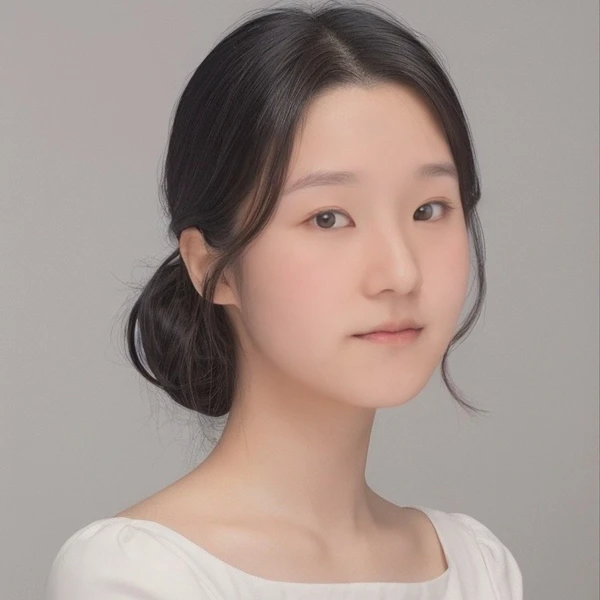
Gender
Female
Ethnicity
Asian
Hobbies and interests
Drawing And Illustration
Japanese
Korean
Reading
Architecture
Literature
Magical Realism
Philosophy
I read books multiple times per month
Suji Kim
1x
Finalist1x
WinnerSuji Kim
1x
Finalist1x
WinnerBio
I'm an M.S./Ph.D. student in Civil Engineering (Construction Engineering & Project Management) at UT Austin, driven by a belief that the best engineering solutions emerge from bridging different perspectives.
My journey spans three countries: I earned my B.E. in Civil Engineering from Nagoya University in Japan, where I researched moisture transport in concrete using X-ray computed radiography and digital image correlation. After graduation, I worked as a site engineer at Hyundai Engineering & Construction on a $343M office tower project in Seoul, managing concrete operations and quality control.
As a first-generation immigrant who has navigated educational systems in Korea, Japan, and the US, I understand the challenges international students face. I'm passionate about construction productivity and quality management research, and equally committed to mentoring other international students through the obstacles I've encountered.
Fluent in Korean, Japanese, and English, I aim to use my multicultural engineering perspective to improve construction practices while creating pathways for the next generation of global engineers.
Education
The University of Texas at Austin
Master's degree programMajors:
- Civil Engineering
Miscellaneous
Desired degree level:
Doctoral degree program (PhD, MD, JD, etc.)
Graduate schools of interest:
Transfer schools of interest:
Majors of interest:
Career
Dream career field:
Civil Engineering
Dream career goals:
Freelance Technical Translator & Interpreter
Hana IP Law Firm2025 – 2025Junior Manager - Construction Site Engineer
Hyundai Engineering & Construction Co., Ltd.2023 – 20241 year
Sports
Taekwondo
Club2007 – 20136 years
Research
Materials Engineering
Nagoya University — Undergraduate Researcher2022 – 2023
Arts
Nagoya University
ArchitectureNo2019 – 2023
Future Interests
Advocacy
Volunteering
Entrepreneurship
New Beginnings Immigrant Scholarship
The first time I saw an anti-Korean demonstration, I was walking through downtown Nagoya. Protesters held signs I could read perfectly because I had spent the past year learning Japanese well enough to understand exactly how they felt about people like me. I kept walking. That became my pattern: keep your head down, work harder, prove yourself through results.
I had come to Japan right after high school in Daejeon, South Korea, on a government scholarship to study civil engineering. The academic transition was manageable. The cultural one was not. I sensed distance from classmates whenever conversations touched on the painful history between our countries. In a course called "Exploration of Japan," I stayed silent when discussions turned to colonialism, unsure whether my perspective was welcome.
Then a classmate pointed out something I hadn't seen: that I was dismissing Japanese teamwork as mere uniformity, their protocols as excessive caution. He was right. I carried biases I hadn't examined. That moment forced me to do something harder than adapting to a new country. I had to confront my own assumptions. I started seeking out conversations I had been avoiding, sharing my perspective while genuinely listening. Over time, I didn't just adapt to Japan. I learned from it. Japanese research precision became central to how I approach engineering today.
This integration shaped my work directly. At Nagoya University, I combined X-ray computed radiography with digital image correlation to study moisture transport in concrete, earning the Best Presentation Award at the Japan Concrete Institute national conference. At Hyundai Engineering & Construction in Korea, I led a ten-member team to develop a market entry strategy for Vietnam, bringing together economists and field engineers with fundamentally different priorities. Our proposal received the top evaluation among three competing teams. The skill that mattered most was the one I had been building since arriving in Nagoya: integrating perspectives that don't naturally fit together.
That skill also shaped how I showed up for others. As an international student tutor at Nagoya University, I supported a fellow Korean student struggling with coursework delivered entirely in Japanese. She understood the engineering concepts but couldn't express her ideas fast enough, and the frustration was pushing her toward giving up. I knew that feeling intimately. We worked through assignments together, and I helped her build confidence to speak up in class, not by translating for her but by showing her that struggling with language didn't mean struggling with intelligence. She finished the year near the top of her cohort. The most meaningful help comes from someone who has walked the same road.
Now pursuing a master's degree in civil engineering at UT Austin, I find myself starting that same process over again. The discomfort of being new is once again an advantage. I notice things people inside the system take for granted. I bring perspectives from two engineering traditions my peers haven't encountered.
My goal is to manage large-scale infrastructure projects where international teams are the norm. I have seen on construction sites in Korea how a single miscommunication between teams with different standards can delay a project by weeks. The industry needs people who can sit in a room with engineers from five countries and make them work together. Every immigrant knows that starting over demands resilience. Immigrating twice taught me something more specific: that the discomfort of being an outsider, if you stay honest with yourself, becomes the foundation for connecting people who would otherwise talk past each other. Not because you have read about cross-cultural collaboration, but because you have lived it.
Julie Holloway Bryant Memorial Scholarship
My parents named me Suji because it sounds natural in just about any language. They wanted a name that wouldn't stumble on anyone's tongue, no matter where I ended up. It turned out to be a small prophecy. I grew up in South Korea, moved to Japan right after high school on a government scholarship, spent five years studying entirely in Japanese, and now I'm pursuing an M.S. in Civil Engineering at the University of Texas at Austin. English came third, mostly through textbooks and research papers before I ever used it in daily life.
The hardest part of being multilingual hasn't been learning the languages themselves. It's been the constant switching. Korean is direct. Japanese wraps everything in layers of politeness and indirection. English falls somewhere in between, and figuring out where took me a while. When I first started writing emails in English for graduate school applications, I'd default to Japanese-style indirectness, long lead-ups before getting to the point, or swing the other way into bluntness that felt natural in Korean but came across wrong in English. Even now, I sometimes catch myself mentally running a sentence through all three languages before I'm satisfied with how it sounds.
Working across languages professionally made these challenges real in ways that go beyond school. At Hyundai Engineering & Construction in Seoul, I worked on a $343 million office building designed by an American firm. The design specs and international standards were in English, the daily coordination was in Korean, and I was reading Japanese technical literature on the side to inform our concrete operations. Later, at a patent law firm, I interpreted between Korean and Japanese for Canon's intellectual property team, translating documents that constantly referenced English-language patents. The mental load of recalibrating between three languages in a single workday is something I don't think monolingual speakers fully appreciate.
But the benefits have been worth every bit of that effort. Being trilingual has opened doors I couldn't have predicted. At Nagoya University, I presented my research on moisture transport in concrete at the Japan Concrete Institute's national conference, in Japanese, and received the Best Presentation Award. That moment taught me that communicating complex ideas clearly matters as much as the research itself, and doing it across languages has made me sharper in all three.
What I value most, though, is the human connection. In Japan, I tutored international students who were struggling with the same cultural and linguistic adjustment I'd gone through. Here in Austin, I've connected with other international students at my church who are navigating life in a new language and a new country. I understand what it feels like to search for a word you know perfectly in one language but can't find in another, or to wonder if people are really hearing what you mean.
After completing my M.S., I plan to work in nuclear construction project management. The nuclear energy industry is experiencing a global resurgence as countries invest in clean energy, but the sector faces a critical shortage of engineers who can manage the complexity of these international projects. Nuclear construction increasingly involves multinational partnerships between American, Korean, and Japanese firms, and I've seen firsthand how miscommunication across languages and engineering cultures can stall a project. I want to be someone who bridges those gaps. My three languages aren't just something I happen to speak. They've shaped how I think, how I solve problems, and how I bring people together across borders. That's what I want to bring to this industry, and that's why I'm pursuing this degree.
Nabi Nicole Grant Memorial Scholarship
I couldn't get out of bed anymore.
My second year at Nagoya University, depression I'd carried for years got worse. COVID-19 lockdowns trapped me. Being Korean in Japan meant I was always an outsider. Historical tensions between our countries run deep, and no amount of perfect Japanese could erase that. Eventually I stopped trying. Stopped going to classes. Stopped answering messages. I trusted no one.
One evening I forced myself to a church I'd passed hundreds of times. I went in, not because I believed anything, but because I had nowhere else to go.
I'd grown up in a Christian mission school where church was routine, prayer just words. But desperate and alone, I kept returning to that church. The community began feeding me. Simple meals after service, often the only real food I ate all week. I prayed, awkwardly and desperately. But I didn't really believe. Not yet.
A few months later, my grandfather died.
He was the person I'd depended on most in my family. He believed in me when I didn't believe in myself. When he passed, I felt like I'd lost my anchor. I was drowning in grief on top of everything else, completely alone in a foreign country.
I remember sitting at my grandfather's funeral, numb, and seeing those church members walk in. They didn't have to come. They barely knew him. They barely knew me. But they came and they stayed. They sat with me through the service. They brought food to my apartment afterward. They checked on me in the weeks that followed.
For someone who couldn't trust people, who was convinced everyone judged her, who'd spent months isolated and afraid, watching strangers choose to be present for my pain changed everything. That's when faith became real. Not through miracles or answers or my depression suddenly lifting. But through people showing up when the person I trusted most was gone.
The depression didn't end. When I came to UT Austin for my master's, it followed me. Different country, same crushing weight. But this time I knew where to turn. I found a church. Not because I'd figured everything out, but because I'd learned that faith isn't about having answers. It's about having people who show up anyway.
I still have hard days. Days when I can't get out of bed, when the loneliness feels suffocating. But I'm no longer facing them alone. And now, I do for others what my church did for me.
I show up for international students who feel invisible in a foreign country. I meet with students struggling with depression who think no one understands. I stay present for people who can't trust anyone, because I know what that feels like. I used to think cynical, closed-off people were just mean. Now I know they're often just scared. I was that person. And someone showed up for me anyway.
I'm also completing my master's in engineering, which allows me to support this work financially while contributing to my community through infrastructure that serves people. But my true calling, the one born from my darkest moments, is being present for people who feel fundamentally alone.
I know what it's like to be that scared, that broken. I know what it means when someone stays anyway. Faith became real when I was completely broken and strangers chose to carry me. Now I get to be that person for someone else. That's what love looks like, and that's what I'm spending my life giving back.
Elizabeth Schalk Memorial Scholarship
I stood in my dorm room in Japan at 2 AM, checking the door lock for the fifteenth time. I knew it was locked. I'd checked fourteen times already. But my brain kept screaming that maybe I'd missed something. That's when I realized this wasn't normal. The intrusive thoughts, the compulsive checking, the need for control. This was OCD, and it was taking over.
Moving to Japan at eighteen triggered something I didn't see coming. The isolation hit hard. I'd sit in my dorm for entire weekends, unable to leave. Everyone else seemed fine, adapting, making friends, enjoying college. Why couldn't I? The depression crept in slowly, then all at once. Some days I couldn't get out of bed. Other nights I couldn't sleep at all, lying awake replaying every awkward interaction, every mistake I'd made. When I finally got sleep medication, I realized how bad things had gotten.
The OCD came next, or maybe it was always there and depression made it worse. I developed rituals. Checking locks, counting steps, touching doorframes a specific number of times. If I didn't do it perfectly, I'd start over. I'd be late to class, stuck in my room redoing the same action until it felt "right." My concrete research won top presenter at a conference, but I couldn't enjoy it. I was too exhausted from the constant battle in my head.
When I returned to Korea for Hyundai E&C, I thought changing environments would fix everything. It didn't. Depression followed me. OCD got worse with project stress. I'd spend hours after work checking and rechecking calculations I knew were correct. My coworkers thought I was thorough. They didn't know I was trapped in compulsive loops I couldn't escape.
Coming to the US for my M.S./Ph.D. added another layer. Visa uncertainty, financial pressure, no safety net. It amplified everything. I finally sought help because I couldn't keep living like this. Therapy helped me understand the patterns. Medication took the edge off. But it's not cured. I still have bad days.
What made it harder was cultural stigma. In Korea and Japan, you hide mental illness. You don't talk about depression or anxiety. You definitely don't admit you can't stop checking the stove. Coming to the US, where people are more open, was both relieving and terrifying. I could finally talk about it, but I also had to confront how much it had controlled my life.
I share this because international grad students face unique mental health challenges people don't talk about. The isolation, visa stress, financial pressure, being far from support. It's perfect conditions for mental illness. Engineering and construction are high-pressure fields where mental health gets ignored. People burn out, struggle silently, and we pretend it's just part of the job.
I'm trying to change that. I talk openly with other international students about mental health. I share resources, recommend therapists who understand visa anxiety. I'm creating spaces where grad students can admit they're struggling without feeling like failures. In construction engineering, where everyone's supposed to be tough, I want to show you can be successful while managing mental illness.
Depression and OCD haven't disappeared. I still have hard days. I still catch myself in compulsive patterns. But I'm no longer suffering in silence, no longer pretending everything's fine. Mental illness doesn't disqualify you from your goals. Managing it has taught me resilience, empathy, and the importance of asking for help. Those lessons make me a better engineer, researcher, and hopefully, better support for others fighting similar battles.
American Dream Scholarship
I was eighteen, alone in my Nagoya University dorm room, unpacking boxes when I found my mom's kimchi at the bottom. She'd wrapped it carefully so it wouldn't leak on the plane from Korea. I just sat there and cried. Not because I missed home, though I did. But because I kept thinking: is this what they sacrificed for? Me sitting here, can't speak Japanese properly, watching everyone else belong while I'm trying to figure out how to ask where the bathroom is?
That night, I had no idea what the American Dream was. I thought it meant America specifically. Turns out I was completely wrong.
In Korea, everyone's dream looked identical. Good grades, good university, stable job. My parents ran an architectural firm. I watched them argue about hospital designs. My dad wanted premium materials, my mom pulled out budget spreadsheets. Practical always won. There was one path, and you either followed it or you were messing up.
Japan was different but also the same. Everything had a system, a right way. My concrete research did well because I learned to follow every protocol exactly. But as an international student, I was always outside. I started tutoring other international students struggling like me. Translating lectures in our heads, always behind, wondering if we'd catch up. We helped each other because the official system wasn't helping us.
Then I came to the US for my M.S./Ph.D. It's not that America is better than Korea or Japan. It's just different. Here, I could combine things. Korea's work ethic, Japan's precision, America's "figure it out yourself" approach. That's when I got it. The American Dream isn't about becoming American. It's about having freedom to build something that wouldn't fit anywhere else.
But nobody talks about the hard parts. Every scholarship: "US citizens only." Every job: "Must have work authorization." My visa needs renewing every year and I never know for sure if I can stay. I can't fill out FAFSA. I check my bank account too often, calculating how many months until I run out. My parents sacrificed so I could go to Japan. Then sacrificed again for the US. And sometimes I think, am I even worth all this?
Here's what I refuse to believe. That my passport decides what I'm worth. That I should feel guilty for needing help. That being a non-citizen means I can't contribute anything real.
When I tutored those students in Japan, I got it. My "outsider" thing wasn't a problem. It was the qualification. I knew exactly what they were going through because I'd been there. I could show them shortcuts that took me months to find. That's the actual dream. Not just getting help, but helping the next person.
Construction engineering makes sense to me because buildings don't care about citizenship. Good quality is good quality. Safety is safety. My research at UT Austin pulls from what I learned in all three countries. But I'm also trying to help other international students. Sharing scholarship lists, explaining visa stuff, connecting people to research. My parents believed education opens doors. I'm trying to hold those doors open for whoever's coming next.
That first night in Japan, I cried because I felt completely alone. Now I know that's how every international student feels. The American Dream isn't about things being easy. It's about getting the chance to turn your struggles into shortcuts for someone else. My legal status will always say "non-citizen." But what I build won't stop at any border.
That's the dream I'm living.
Dr. Samuel Attoh Legacy Scholarship
I grew up watching my parents argue in their architectural office. My father would insist on premium materials for his hospital designs. "These spaces heal people," he'd say. My mother would pull out budget spreadsheets. As a kid, I thought they were just fighting. Now I understand they were showing me what legacy actually means—not just what you build, but how it serves people long after you're gone.
Legacy isn't about personal achievement. It's about what you pass forward—the knowledge you share, the opportunities you create, the bridges you build. Dr. Attoh got this. He didn't just collect three degrees in three countries; he used each experience to lift others up, moving from professor to dean to associate provost. Each role expanded his ability to open doors for students navigating new systems, like he once did.
I see his journey in mine. Moving from Korea to Japan at eighteen, I had to rebuild everything—new language, different academic culture, figuring out how to belong. Then Japan to the US, starting over again. Each place taught me something I couldn't have learned elsewhere. Japan showed me systematic thinking and meticulous methodology. Korea gave me a work ethic that doesn't quit. The US is teaching me to question assumptions and make my own path. Like Dr. Attoh's three degrees, my three countries aren't separate chapters—they're layered perspectives I bring to engineering.
My upbringing shaped this more than I realized. Those debates between my parents weren't just about hospital designs—they were about balancing ideals with reality. That became how I approach engineering. At Nagoya University, I loved that research had clear answers. My concrete moisture transport work earned top presenter, and I thought I'd stay in research forever. Then I worked at Hyundai E&C. The $343 million project didn't care about my clean lab data. Weather delays, worker shortages, quality problems that needed fixing now. I had to learn what my parents had been showing me all along—the best solutions come from understanding both the theoretical and the practical.
Now at UT Austin doing my M.S./Ph.D., I'm thinking hard about what to continue and what to change. I want to keep Dr. Attoh's commitment to education—that hunger for knowledge and drive to share it. I want to maintain the work ethic I learned in Korea, where dedication isn't optional. And I want to keep being a bridge between cultures, helping international students through the struggles I know too well.
But I also want to evolve some things. Korean work culture often equates excellence with endless hours and personal sacrifice. I watched engineers burn out at Hyundai E&C, brilliant people whose potential got cut short by unsustainable expectations. I think we can maintain high standards while recognizing that real innovation comes from people who aren't exhausted. That combining research and practice isn't abandoning the traditional path—it's making a better one. That collaboration beats competition.
Dr. Attoh's journey from Ghana through three countries to academic leadership proved that legacy isn't about where you start. It's about what you do with each opportunity and how you help others along the way. His integrity didn't just guide his career—it shaped countless students' paths. That's what I want: not legacy through individual achievements, but through the doors I open, the bridges I build, and the students I support as they navigate their own journeys across cultures and fields.
Dr. Hassan Homami Memorial Scholarship
WinnerStanding four stories underground at the HANA Financial Group construction site, I was supposed to be focused on the concrete pouring plan for the next day. But I kept thinking about the voids we'd found in our mockup test—air pockets below the EPS inserts that could compromise the entire Double Beam System. My supervisor wanted a quick fix, but I knew this wasn't just about passing inspection. Somewhere above this foundation, people would work for decades, trusting that we'd done this right. That's when it hit me: engineering isn't about having all the answers. It's about taking responsibility when you don't.
I didn't always think this way. When I researched concrete at Nagoya University, I loved that everything had a clear answer. My work on moisture transport earned top presenter at a national conference, and I felt like I'd found my path—stay in research, keep things controlled and measurable.
Then I started working at Hyundai E&C. The $343 million project didn't care about my lab protocols. We had weather delays, worker shortages, and schedules that didn't pause for problems. When workers couldn't get proper concrete consolidation around those EPS inserts, I had to get on site and demonstrate the technique myself, working with people who'd been doing this for twenty years. It was frustrating and messy. It was also when I actually started understanding construction engineering.
I think about Dr. Hassan working full-time while doing his PhD, and I get it now. It's not just about being busy or determined. It's about seeing problems from both sides—the theoretical side that knows what should work, and the practical side that knows what actually can work. That tension is where real solutions happen.
Being a first-generation immigrant adds another layer. I moved to Japan at eighteen, spent my first year translating every lecture in my head, always feeling one step behind. When I finally got comfortable, I started tutoring other international students because I remembered how isolating it felt. Later, working as a technical translator, I saw how communication breakdowns become engineering risks—a mistranslated specification can compromise an entire project.
Now I'm at UT Austin starting my M.S./Ph.D., and I'm that international student again. But I'm also bringing something valuable: I've seen how different countries approach construction, and they each have insights the others need. My research focuses on construction productivity and quality management—finding better ways to bridge the gap between planning and execution on site.
What really gets me about Dr. Hassan's story is that while battling cancer and managing everything else, he still mentored interns. That's understanding that the work doesn't end with your own achievements. As someone who's been the lost international student, the junior engineer making mistakes, I know how much it matters when someone takes time to help you.
I'm not going to pretend I have Dr. Hassan's level of resilience—working through cancer while pursuing a PhD is extraordinary. But I understand the core of it: believing education matters enough to pursue it despite obstacles, staying committed to practical work while deepening your knowledge, and helping others navigate the path you've walked. Those aren't just nice values. They're what move our field forward.
This scholarship would connect me to Dr. Hassan's legacy. Being a first-generation immigrant isn't just a challenge to overcome—it's a perspective that enriches engineering. We bring different approaches, different solutions, different ways of seeing problems. That's what Dr. Hassan brought to transportation systems, and that's what I hope to bring to construction engineering. Not despite the challenges of being an immigrant pursuing advanced education, but because of them.