user profile avatar

Devon White

1x

Finalist

Bio

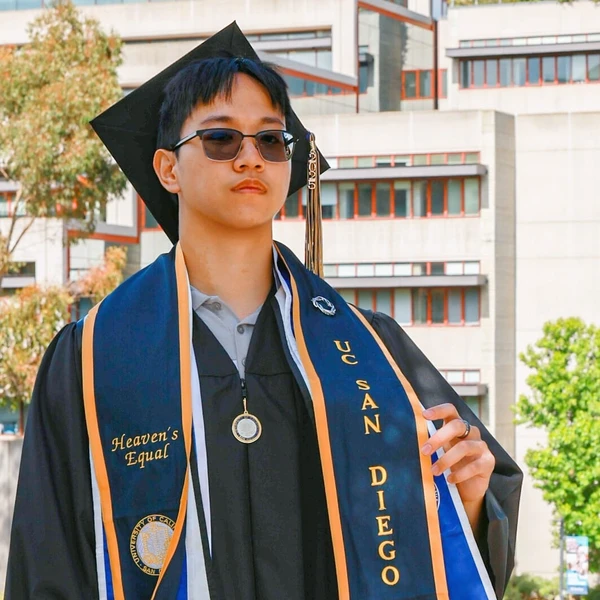
UCSD Alumni Cal Poly Pomona Graduate Student

Education

California State Polytechnic University Pomona

Master's degree program
2026 - 2028
  • Majors:
    • Aerospace, Aeronautical, and Astronautical/Space Engineering
    • Mechanical Engineering

University of California-San Diego

Bachelor's degree program
2022 - 2025
  • Majors:
    • Aerospace, Aeronautical, and Astronautical/Space Engineering
  • Not planning to go to medical school
  • Career

    • Dream career field:

      Aviation & Aerospace

    • Dream career goals:

    • Document Specialist

      Universal Elite Realty
      2023 – Present3 years

    Sports

    Basketball

    Intramural
    2022 – 20253 years

    Awards

    • Team Captain

    Research

    • Aerospace, Aeronautical, and Astronautical/Space Engineering

      Rocket Propulsion Laboratory — Osiris Propulsion Engineer
      2022 – 2025

    Public services

    • Volunteering

      UNICEF — UNICEF member
      2017 – 2021
    Sabrina Carpenter Superfan Scholarship
    From the moment I first saw Sabrina Carpenter on Disney Channel, I knew there was something special about her. As a student growing up and trying to figure out who I am, watching her journey from playing Maya Hart on Girl Meets World to becoming a confident and successful artist has been incredibly inspiring. She is not just someone I admire, but someone who has genuinely shaped the way I think about growth, confidence, and pursuing my dreams. When I watched her as Maya, I connected with her character in a way I did not expect. Maya was not perfect. She was outspoken, sometimes guarded, but deeply loyal and strong. As a student, I have often felt pressure to fit into certain expectations, whether academically or socially. Seeing a character who embraced her individuality gave me the confidence to start doing the same. It helped me realize that being different is not something to hide, but something to be proud of. As Sabrina moved into music, my admiration for her only grew. Her songs, especially “Please Please Please” and “Espresso,” are more than just catchy. They are honest, expressive, and full of personality. As someone balancing school, responsibilities, and personal goals, I find comfort and motivation in her music. Her lyrics remind me that it is okay to feel unsure sometimes while still continuing to push forward. I often listen to her songs while studying or working on assignments, and they give me the energy and confidence to keep going. What inspires me most is her work ethic and determination. Sabrina did not limit herself to one path. She explored acting, music, and more, constantly evolving. As a student preparing for my future, that mindset is something I try to follow. She has shown me that it is okay not to have everything figured out right away, as long as I am willing to grow, take risks, and work hard. Her journey motivates me to step outside my comfort zone, whether that means taking on challenging classes or pursuing new opportunities. Beyond her talent, Sabrina uses her platform to encourage confidence and self expression. That message has had a real impact on me. It has helped me become more comfortable speaking up in class, sharing my ideas, and believing that my voice matters. In a world where students often feel pressure to compare themselves to others, her example reminds me to focus on my own path and embrace who I am. Sabrina Carpenter is not just someone I listen to or watch. She is someone who has helped shape my mindset during an important time in my life. Her journey has taught me to be confident, work hard, and stay true to myself. As a student with big goals and dreams, that inspiration means everything to me.
    Taylor Swift Fan Scholarship
    The Taylor Swift performance that has stayed with me the most is her live performance of “All Too Well” during the Eras Tour. Even though she was performing in front of thousands of people, the moment somehow felt personal, like she was telling a story directly to each person in the audience. What made it so powerful was not just the song itself, but the emotion and honesty she brought to the stage. “All Too Well” has always been one of her most emotional songs, but the ten minute version made it even more meaningful. Watching her perform it live, you could feel how real the story was to her. It was not just about heartbreak. It was about looking back, growing from it, and finding strength in those experiences. That is what made the performance stand out to me. What I admire most about this performance is how it shows Taylor Swift’s growth. She originally wrote the song years ago, but coming back to it and performing it again in a bigger and more complete way shows confidence and courage. Instead of moving on from the past, she chose to face it and turn it into something even more powerful. That is something I really respect. During the Eras Tour, this performance felt different from the rest of the show. Everything slowed down, and for a few minutes, it felt like nothing else mattered except the story she was telling. It showed that even in a huge, high energy concert, there is still room for real and honest moments. This performance also connects to me personally. As a student, I have faced challenges, pressure, and moments where things did not go the way I expected. Watching Taylor perform this song reminded me that those experiences are not something to be ashamed of. They are part of growing and becoming stronger. It made me think about my own life and how I can learn from difficult moments instead of letting them hold me back. Taylor Swift’s ability to connect with people is one of the reasons she is so successful. Her music makes people feel understood, and her performances bring those emotions to life. The Eras Tour celebrates her entire journey, and “All Too Well” is a powerful example of how far she has come. To me, this performance represents what being in the spotlight is really about. It is not just about success, but about being real and staying true to yourself. It shows that it is okay to be vulnerable and that sharing your story can be something powerful. Overall, Taylor Swift’s performance of “All Too Well” is the most moving to me because it feels honest and real. It reminds me that even difficult experiences can turn into something meaningful, and that growth comes from facing those moments instead of avoiding them.
    James T. Godwin Memorial Scholarship
    My grandfather served in the Vietnam War, but if you met him, you probably would not guess it from the way he tells his stories. Instead of starting with serious or dramatic moments, he almost always starts with a joke. Growing up, I remember sitting with him in the living room listening to his stories about his time in the military. Somehow, even the hardest situations were told with humor and a smile. One memory that has always stayed with me happened when I was younger and asked him what Vietnam was like. He leaned back in his chair, paused for a second, and said, “Well, the food definitely didn’t taste like your grandma’s cooking.” Then he started laughing. After that he told me about the long days, the intense heat, and how the soldiers tried to make each other laugh whenever they could. According to him, joking around was one of the best ways they stayed strong during stressful times. Humor helped them get through days that were unpredictable and difficult. At the time I thought his stories were just funny, but as I got older I realized there was a deeper lesson in the way he told them. My grandfather had gone through experiences that most people cannot imagine, yet he chose to focus on the moments of friendship and laughter. Instead of letting those experiences make him bitter, he carried them with humility and strength. He also taught me a lot about perspective. Whenever I felt stressed about school or frustrated by a problem, he would remind me that challenges are a part of life. He would say that if you can keep your sense of humor and stay patient, you can get through almost anything. Hearing that from someone who had experienced war made those words carry even more meaning. What I admire most about my grandfather is that he never bragged about his service. Serving in Vietnam required courage and sacrifice, but he rarely spoke about it in a way that looked for recognition. He was much more interested in hearing about our lives, asking about school, and telling stories that would make everyone in the room laugh. His stories showed me that strength does not always look the way people expect. Sometimes it looks like someone who has faced difficult moments but still chooses kindness, humility, and humor. Through the way he lived his life, my grandfather taught me the importance of resilience, gratitude, and staying positive even during hard times. Whenever I think about him and the stories he shared, I feel grateful for the lessons he passed down. His humor and perspective continue to influence how I handle challenges in my own life. Because of him, I have learned that even when life becomes difficult, keeping a positive attitude and finding reasons to laugh can make a huge difference.
    Second Chance Scholarship
    Growing up, I learned very early that opportunity is not always handed to you. Sometimes you have to work for it every single day. Financial challenges have been a constant part of my life, but instead of allowing them to stop me, they have pushed me to work harder toward building a better future for myself and for the people around me. Education has always been my path toward change. I want to create a life where I can be stable, support my family, and give back to my community. However, paying for school has never been easy. To keep pursuing my education, I have balanced my classes with part time work, long hours of studying, and constantly searching for opportunities like scholarships. Many nights have been spent finishing assignments after work shifts, and many mornings have started early so I could keep moving forward with my goals. There have been moments when the financial pressure felt overwhelming. Tuition, books, and daily living expenses add up quickly, and sometimes it feels like I am climbing a mountain that keeps getting steeper. However, every challenge has strengthened my determination. Instead of seeing obstacles as reasons to quit, I see them as reasons to keep pushing forward. Each scholarship application, each shift at work, and each completed semester is another step toward a future I am determined to build. What motivates me the most is the belief that my hard work will create opportunities not just for myself but for others as well. I want to build a life where I can help people who are struggling the way I have struggled. I understand how much even a small opportunity can mean when someone is trying to improve their life. This scholarship would make a meaningful difference in my journey. It would help relieve some of the financial pressure that comes with paying for school and allow me to focus more fully on my education. Instead of constantly worrying about how to cover the next expense, I would be able to dedicate more time and energy to my studies and to preparing for the career I hope to build. More importantly, this scholarship represents something deeper than financial support. It represents belief. It shows that someone believes in students who are working hard to change their lives. That encouragement can make a powerful difference for someone who is fighting to keep moving forward despite challenges. If I am fortunate enough to receive this scholarship, I plan to carry forward the same spirit of giving that inspired it. One day, when I am in a more stable position, I want to help others who are working toward a second chance in their own lives. Whether that means mentoring younger students, helping someone navigate the education system, or supporting scholarship opportunities for others, I want to contribute to the same cycle of opportunity that is helping me today. I believe that second chances are powerful because they allow people to redefine their future. My journey has been shaped by financial hardship, long hours, and persistence, but it has also been shaped by hope. Every step I take toward completing my education is a step toward creating a life where I can give others the encouragement and opportunity they need to succeed. Receiving this scholarship would not just support my education. It would help me continue building a future where hard work, resilience, and compassion can create opportunities for others who are still waiting for their chance.
    Prince Justice Memorial Scholarship
    Living with sickle cell disease has shaped every part of my life. It influences how I plan my days, how I approach challenges, and how I think about my future. Pain crises can appear without warning, turning an ordinary day into hours or sometimes days of exhaustion and recovery. Hospital visits, medications, and careful monitoring have become a normal part of my routine. Even with these challenges, my experience with sickle cell disease has taught me one of the most important lessons of my life: strength is not just about enduring pain, it is about continuing to pursue your goals despite it. Growing up with sickle cell disease required me to develop patience and determination early in life. There were times when attending school or finishing assignments felt incredibly difficult because of fatigue or pain. Watching classmates move through their routines with ease sometimes made me feel isolated. However, those moments also strengthened my determination. Instead of allowing my condition to define what I could or could not do, I chose to see it as something that shaped my resilience and discipline. My interest in engineering grew from this mindset. Spending time in hospitals introduced me to an environment filled with technology designed to save and improve lives. I began noticing the machines that monitored patients, the equipment doctors relied on, and the systems that made treatment possible. I found myself asking questions about how these technologies worked and how they could be improved. That curiosity slowly developed into a dream of becoming an engineer who can design solutions that help people overcome medical challenges. Engineering means more to me than simply choosing a career. It represents the ability to turn obstacles into innovation. Living with sickle cell disease has given me a unique perspective on problem solving. I understand what it means to face unpredictable challenges and still move forward. Because of this, I have learned how to adapt, think creatively, and remain determined even when solutions are not immediately clear. These qualities are essential for engineers who work to create solutions that improve lives. Managing sickle cell disease requires constant balance. I must monitor my health, stay hydrated, manage stress, and maintain routines that protect my well being while still pursuing demanding academic goals. Learning to balance these responsibilities has taught me discipline and accountability. Every time I overcome a health setback and continue progressing in my education, I am reminded that persistence can transform adversity into growth. The people who inspire me most are those who encourage me to believe in my potential. My family, doctors, and mentors have supported me through difficult moments and reminded me that my dreams are still possible. Their encouragement motivates me to work harder and continue pursuing my goals, not only for myself but for others who face similar struggles. Receiving this scholarship would help me continue my education and move closer to my goal of becoming an engineer. I hope to develop technologies that improve healthcare and make treatment more accessible and effective for patients. My experiences with sickle cell disease have given me the motivation and perspective to pursue this mission with passion and dedication. Sickle cell disease has introduced many challenges into my life, but it has also given me a sense of purpose. It has strengthened my resilience, deepened my ambition, and inspired my desire to create solutions that help others. Through engineering, I hope to transform the difficulties I have experienced into innovations that improve lives and demonstrate that adversity can lead to meaningful impact.
    Learner Calculus Scholarship
    Calculus is important in STEM because it gives us a way to understand how things change. Many of the systems scientists and engineers work with are constantly changing, whether it is the motion of a spacecraft, the flow of air over a wing, or the transfer of heat through a material. Calculus allows us to describe these changes mathematically and predict how a system will behave. Without it, many of the technologies and discoveries that shape the modern world would not exist. As an aerospace engineering student, I have seen how essential calculus is in turning theory into real engineering applications. During my undergraduate studies at the University of California, San Diego, courses like aerodynamics, thermodynamics, fluid mechanics, and heat transfer relied heavily on calculus. These subjects use derivatives and integrals to describe how forces, energy, and motion behave in real systems. At first, calculus felt abstract, but as I moved into more advanced engineering courses, I began to see how it connects directly to the design and analysis of aircraft and spacecraft. One experience that helped me appreciate the value of calculus was working with UCSD’s Rocket Propulsion Laboratory. As part of the propulsion team, I helped design and launch an amateur rocket that reached an altitude of over 3,000 feet with full recovery. Designing rocket components requires understanding how pressure, temperature, and thrust change throughout the propulsion system. Calculus-based models help engineers predict how propellant burns, how gases accelerate through a nozzle, and how those forces ultimately push the rocket upward. Seeing those calculations translate into a successful launch helped me understand how powerful mathematical tools like calculus can be in real-world engineering projects . I also saw the importance of calculus during my aerospace engineering capstone project, where my team designed, built, and flew a radio-controlled aircraft. Before building the aircraft, we had to analyze how lift, drag, thrust, and weight would interact to keep the plane in the air. These forces are described using calculus-based aerodynamic equations that help engineers predict stability and performance. Being able to apply these concepts to a real aircraft design made the math feel much more meaningful, because it directly influenced whether our design would successfully fly . What makes calculus so valuable in STEM is that it provides a common language for solving complex problems. In physics, it helps explain motion and energy. In biology, it can model how populations grow or how diseases spread. In computer science and data science, calculus is used in optimization and machine learning algorithms. Across many different disciplines, it helps scientists and engineers understand systems that change over time. Now, as I continue my education as a graduate student in Aerospace Engineering at California State Polytechnic University, Pomona, calculus continues to play an important role in my studies. Topics such as astrodynamics and optimal control rely heavily on calculus to design spacecraft trajectories and analyze orbital motion. These mathematical tools allow engineers to plan missions that travel thousands or even millions of miles through space with incredible precision. For me, calculus is more than just a required course. It is one of the fundamental tools that allows engineers and scientists to turn ideas into real technologies. Whether designing rockets, aircraft, or future space systems, calculus provides the foundation that makes innovation in STEM possible.
    Edwards Scholarship
    Education has always represented opportunity for me, but as a first generation college student, the path toward higher education was not always clear. My family has always supported my goals, but navigating college, especially in a demanding field like aerospace engineering, required me to learn how to overcome challenges independently. I had to figure out how to manage difficult coursework, pursue opportunities, and build confidence in spaces where I often felt like I was learning the rules as I went. These experiences shaped my resilience and motivated me to take full advantage of every opportunity education provides. My interest in aerospace engineering began with a simple curiosity about how things work and how engineering can push the boundaries of human achievement. The idea that engineers could design systems capable of leaving Earth and exploring space fascinated me. That curiosity eventually led me to pursue a Bachelor of Science in Aerospace Engineering at the University of California, San Diego. During my time there, I made it a priority to gain hands-on experience and apply what I learned in the classroom to real engineering projects. One of the most meaningful experiences during my undergraduate studies was working with UCSD’s Rocket Propulsion Laboratory. As a propulsion engineer, I helped design and launch an amateur rocket that reached an altitude of over 3,000 feet with a successful recovery. Being involved in that launch was an incredible moment because it showed me how teamwork, technical knowledge, and persistence could transform an idea into a real working system. I also joined a new two-stage solid propellant rocket project intended to compete at the Spaceport America Cup, where I designed and modeled rocket components such as nozzles and bulkheads using SolidWorks while coordinating with teammates and suppliers to evaluate manufacturing feasibility . Another experience that shaped my development as an engineer was my aerospace engineering capstone project. My team designed, built, and flew a RC aircraft from the ground up. I helped create CAD models of the aircraft and worked on fabricating the fuselage and wings. Seeing our design take flight after months of planning and construction was incredibly rewarding and reinforced my passion for engineering and problem solving . Now, I am continuing my education as a graduate student pursuing a Master’s degree in Aerospace Engineering at California State Polytechnic University, Pomona. As a first generation student, reaching this stage of my education represents years of hard work and perseverance. However, my goal extends beyond earning a degree. I want to use my education to contribute to technologies that advance space exploration and improve global communication and scientific research. International and first generation students bring valuable perspectives and experiences that strengthen universities and contribute to innovation across the world. Studying in the United States has given me access to collaborative environments, advanced research opportunities, and diverse perspectives that are essential for solving complex global challenges. Receiving this scholarship would allow me to continue focusing on my graduate studies and research while building the skills necessary to contribute to aerospace innovation. More importantly, it would help me continue pursuing an education that I hope will allow me to make a meaningful impact through engineering and inspire other students from underrepresented backgrounds to believe that they belong in higher education and in fields that shape the future.
    Adam Montes Pride Scholarship
    What makes me unique is the path I took to get here and the determination it required to stay on it. As a first generation college student pursuing a master’s degree in Aerospace Engineering at California State Polytechnic University, Pomona, I have often had to figure things out on my own. My family has always supported me, but navigating higher education and a technical field like aerospace meant learning how to overcome challenges, ask questions, and believe in my ability even when the path ahead was uncertain. I chose aerospace engineering because I have always been fascinated by how complex systems work and how human innovation can push the boundaries of what is possible. During my undergraduate studies at the University of California, San Diego, I made it a priority to gain hands on experience and turn classroom knowledge into real world engineering projects. As a propulsion engineer with the Rocket Propulsion Laboratory, I helped design and launch an amateur rocket that reached over 3,000 feet in altitude with a successful recovery during my first year. I also contributed to the early development of a two-stage solid propellant rocket that will compete in the Spaceport America Cup. My work involved designing and modeling rocket components such as nozzles and bulkheads in SolidWorks and collaborating with teammates and suppliers to make sure our designs could actually be built and tested . One of the most rewarding experiences of my undergraduate career was my capstone project, where my team designed, built, and flew a RC aircraft. We started with an idea and turned it into a working aircraft by creating CAD models, fabricating the structure, and presenting our results to professionals in the field. Moments like that reminded me why education matters because it gives people the tools to turn curiosity into something real . Adam Montes believed deeply in encouraging students to become the best versions of themselves, and that message resonates with me. As someone from an underrepresented background pursuing a career in STEM, I know how important it is for students to see that people like them belong in these spaces. My goal is not only to succeed as an engineer but also to help inspire others who may feel uncertain about pursuing higher education or technical careers. Receiving this scholarship would help support my graduate studies and allow me to continue focusing on developing the skills needed to work in rocket and spacecraft systems. More importantly, it would represent encouragement to keep moving forward and to one day give that same encouragement to others, just as Adam Montes did for his students.
    Lauren Rebekah Uterine Fibroid & Endometriosis Research Scholarship
    My passion for studying uterine fibroids began with the women in my life. I have watched mothers, sisters, and friends quietly endure years of heavy bleeding, intense cramps, exhaustion, and fertility struggles, often being told that their pain was simply “part of being a woman.” Seeing how something so common could be so misunderstood and minimized changed the way I think about women’s health. Uterine fibroids may be benign tumors, but the impact they have on daily life is anything but minor. What moves me most is how deeply fibroids affect a woman’s sense of control over her own body. Many women live around their symptoms, planning their schedules around unpredictable bleeding or carrying the constant anxiety of possible surgery. For some, hysterectomy is presented as the primary solution, sometimes before they feel ready to make that decision. I believe women deserve better options, earlier diagnosis, and care that truly listens. That belief is what drives me. Academically, I am drawn to understanding the science behind fibroid growth. We know that hormones such as estrogen and progesterone play a role, but there is still so much we do not understand about why fibroids develop, why they grow more aggressively in some women, and why certain populations are disproportionately affected. Black women, for example, are more likely to develop fibroids at younger ages and to experience more severe symptoms, yet they remain underrepresented in research studies. This inequity is not just a statistic to me; it represents real women whose voices deserve to be heard in scientific discovery. I want to contribute to research that closes these gaps. Whether through studying genetic markers, exploring environmental factors, or developing targeted therapies, my goal is to help move treatment beyond invasive surgery toward more personalized and less disruptive options. I am especially interested in finding ways to identify fibroids earlier and intervene before they significantly impact fertility or overall health. Beyond research, I care deeply about awareness. Too many women normalize symptoms like extremely heavy periods or chronic pelvic pain because they have been taught to endure them. I hope to work with community organizations to create educational resources that empower women to recognize when something is not right and to seek care without shame. Education can be just as powerful as innovation. Ultimately, I envision a career as a physician scientist who combines compassionate care with meaningful research. I want to sit with patients, hear their stories, and also work in the lab to develop solutions that give them more choices. My passion for uterine fibroid research is rooted in empathy, strengthened by science, and guided by a commitment to equity. Women’s health should never be an afterthought. By advancing research, expanding awareness, and advocating for better treatment options, I hope to be part of a future where no woman feels dismissed, unheard, or limited by a condition that we have the power to understand and treat more effectively.
    Christian Fitness Association General Scholarship
    As an aerospace engineering student at the University of California, San Diego, I have built my academic path around curiosity, hands on learning, and a strong desire to contribute to meaningful engineering work. My goal is to pursue a career in rocket and spacecraft systems where I can apply what I learn to real world challenges that push technology forward. This scholarship would allow me to continue developing my skills, stay focused on my education, and deepen my involvement in the projects that have shaped who I am as a student and aspiring engineer. My academic experience has given me a strong foundation in core engineering principles and problem solving. Through courses in aerodynamics, propulsion, thermodynamics, heat transfer, flight and orbital mechanics, advanced fluid mechanics, signals and systems, and engineering design, I have learned how complex systems function and how theoretical concepts translate into practical applications. These classes have strengthened my analytical thinking and prepared me to approach engineering challenges with structure and confidence. They have also shown me that success in engineering requires persistence, attention to detail, and a willingness to continuously learn. Outside the classroom, I have consistently looked for ways to apply what I learn through hands on work. As a propulsion engineer with the UCSD Rocket Propulsion Laboratory, I have been part of a team developing a two stage solid propellant rocket for the Spaceport America Cup. I designed and modeled rocket nozzles and bulkheads in SolidWorks, working to improve their thermal and structural performance while also coordinating with suppliers to ensure that designs could realistically be manufactured within budget. This experience showed me how engineering decisions must balance theory, practicality, and teamwork. It also taught me how to communicate ideas clearly and collaborate with others toward a shared goal. Earlier in my time with the Rocket Propulsion Laboratory, I contributed to the design and launch of an amateur rocket that reached an apogee of over 3,000 feet and was safely recovered. I assisted with propellant formulation, motor testing, and flight simulations, gaining first hand experience in how design choices directly impact performance and safety. Watching a project progress from early planning to a successful launch reinforced my passion for aerospace engineering and showed me how rewarding it is to see ideas come to life. I also participated in a capstone project where my team designed, built, flew, and landed a radio controlled aircraft. I developed CAD models that met our design requirements and helped fabricate the fuselage and wings using laser cutters and workshop tools. Presenting our design and results to peers and professionals helped me grow more confident in communicating technical ideas and strengthened my ability to work within a team. That experience reminded me that engineering is not just about technical ability but also about collaboration, adaptability, and trust. Throughout these experiences, I have developed skills in SolidWorks, MATLAB, OpenRocket, OpenMotor, and other engineering tools that support both design and analysis. More importantly, I have learned how to approach challenges with patience, adaptability, and a willingness to learn from failure. Engineering rarely works perfectly on the first attempt, and the process of testing, revising, and improving has shaped my growth more than any single success. What makes me a strong candidate for this scholarship is not only my academic and technical experience but my commitment to growth and contribution. I actively seek opportunities that push me beyond coursework, whether through research, design teams, or collaborative engineering environments. I am motivated by the idea that engineering can expand human capability, especially in aerospace where innovation can shape the future of exploration, communication, and global connectivity. This scholarship would allow me to continue focusing on my education and hands on involvement in engineering projects without the constant pressure of financial limitations. Aerospace programs often require significant time, specialized tools, and materials, and balancing those demands can be challenging. With this support, I would be able to dedicate more energy toward learning, building, and contributing to team projects that prepare me for my future career. Beyond academics and technical work, I strive to be a reliable teammate and someone who contributes positively to the environments I am part of. Whether working late to meet a project deadline, helping a teammate troubleshoot a design issue, or presenting our work to others, I value responsibility and collaboration. I believe that engineering is a collective effort, and the best results come from people who support one another and share knowledge. In the future, I hope to work in rocket propulsion or spacecraft systems where I can contribute to the development of technologies that support exploration beyond Earth. I want to be part of teams that value innovation, collaboration, and continuous improvement. My experiences so far have shown me that progress comes from dedication, teamwork, and the willingness to take on challenges that seem intimidating at first. I see this scholarship as more than financial support. It represents an opportunity to continue growing, learning, and contributing to a field I care deeply about. I am committed to using this opportunity to further my education, strengthen my skills, and work toward becoming an engineer who makes a meaningful impact. With continued support and hard work, I hope to contribute to advancements in aerospace that inspire exploration, solve complex problems, and expand what is possible for future generations.
    New Light: Illuminating Your Future Scholarship
    As an engineering graduate student, my vision for the future is rooted in one central goal: to help push humanity further into space. I want to contribute to the innovation of space travel and exploration in a way that makes it more accessible, sustainable, and impactful for life on Earth. While that is a large and long-term ambition, I believe it is built through smaller, intentional steps that I am actively working toward every day. In the near term, my goals are focused on developing the technical foundation needed to meaningfully contribute to the aerospace field. I aim to deepen my understanding of propulsion systems, orbital mechanics, and spacecraft design through my graduate coursework, research opportunities, and hands-on engineering projects. I want to gain experience using simulation tools, testing hardware, and collaborating with multidisciplinary teams, because real progress in space exploration requires more than theory. It requires engineers who can turn complex ideas into reliable systems. At the same time, I am working to support myself financially while pursuing my education, which has taught me discipline, time management, and resilience. Balancing part-time work, graduate studies, and scholarship applications has forced me to stay focused on what truly matters. Each challenge reinforces my commitment to my goals and reminds me that meaningful achievements often come from persistence rather than convenience. Looking further ahead, I hope to contribute to missions that expand human presence beyond Earth, whether through advanced propulsion technologies, deep-space exploration systems, or sustainable infrastructure for long-duration missions. I am especially motivated by the idea that innovations in space often lead to breakthroughs that improve life on Earth, from energy systems to materials science and global communication. To me, working in this field is not just about exploration for its own sake. It is about solving difficult problems that benefit humanity as a whole. To reach these goals, I plan to continue pursuing research opportunities, internships, and industry collaborations that expose me to real aerospace challenges. I want to learn from experienced engineers, take on increasingly complex responsibilities, and contribute wherever I can, even in small ways. Progress in space exploration is built through thousands of incremental improvements, and I am committed to being part of that process. Personally, I also hope to build a life grounded in curiosity, growth, and service. I want to mentor future students, especially those who may not initially see themselves in engineering, and show them that persistence and passion can open doors. The journey into space should represent the best of humanity: collaboration, innovation, and the desire to understand the unknown. Ultimately, my goals are both big and small. The big goal is to help shape the future of space travel and exploration. The small goals are the daily steps: studying, learning, working, and pushing myself to improve. By staying consistent and committed, I believe those small steps will lead me to a career where I can contribute to something far greater than myself.
    Ruthie Brown Scholarship
    Student loan debt is something I think about constantly. It isn’t just a future problem waiting for me after graduation, it’s something I’m already trying to manage while I’m still in school. As an engineering student, I understand that my education is an investment in my future, but I also know it comes with real financial responsibility that I have to take seriously and plan for. One of the biggest ways I’m addressing this is by mass applying to scholarships. I treat it as part of my weekly routine, almost like a second job. I spend time searching for opportunities, writing essays, and submitting applications whenever I can. Some awards are small and others are more significant, but every bit helps and reduces what I will eventually have to repay. It can be discouraging at times, especially when I receive rejections or never hear back, but I remind myself that persistence matters. Even one scholarship can ease financial pressure and allow me to focus more on school. I also work part time while balancing a demanding engineering course load. It isn’t always easy to manage classes, studying, and work at the same time, and there are days when it feels overwhelming. Still, earning money toward my education helps me rely less on loans and builds a sense of independence. It has taught me how to budget, prioritize, and be intentional with how I spend. When you’re contributing to your own education, every purchase feels more deliberate, and you start thinking long term instead of just getting by week to week. At the same time, I’m preparing for what comes after graduation. I’ve started learning about loan repayment plans, interest rates, and financial strategies so I won’t feel lost when that responsibility becomes real. My goal is to graduate with a clear plan, enter the workforce ready to contribute, and begin paying down my loans in a steady and responsible way while living within my means. This challenge has also changed how I view my education. It pushes me to stay focused on my degree, pursue internships, and take every opportunity to grow professionally. I want stability, independence, and the ability to support myself and my family. I want my degree to open doors, not feel like a weight holding me back. I know paying off student debt won’t happen overnight, and there will likely be setbacks along the way. But I’m committed to staying disciplined, continuing to apply for opportunities, and making thoughtful financial decisions. Every step I take now, no matter how small, is part of building a future where my education creates opportunity and security instead of stress.
    Lost Dreams Awaken Scholarship
    Recovery, to me, is a daily choice. It’s choosing to keep moving forward even on the days when it would be easier to give up. It’s not one big turning point but a series of small decisions to be honest with yourself, take responsibility, and work toward becoming a better version of who you were yesterday. I’ve seen how substance use can impact people and the families around them, and it changed how I understand strength and resilience. Recovery means learning healthier ways to cope, building supportive relationships, and staying committed to a future that reflects your goals instead of your past mistakes. It’s about turning difficult experiences into motivation and using them as a reason to grow. As a student, recovery also means staying focused on school, personal growth, and long-term goals. It means showing up for yourself every day and proving that you are capable of stability, discipline, and progress. Each step forward, no matter how small, builds confidence and reminds you that change is possible. Recovery isn’t just about staying clean. It’s about rebuilding your life, finding purpose again, and creating a future you’re proud of.
    Tawkify Meaningful Connections Scholarship
    Option 2: Technology is changing how we communicate, but authentic human connection does not have to disappear. It simply requires more intention. Digital tools make it easier than ever to stay in touch, share ideas, and maintain relationships across long distances. At the same time, they can make conversations feel rushed, distracted, or surface level. Preserving real connection in a technology driven world means choosing depth over convenience and being mindful of how we interact with others. One way to strengthen human connection is by using technology as a bridge rather than a replacement. Video calls, messaging platforms, and online communities allow people to maintain relationships even when they are physically far apart. However, these tools are most meaningful when we use them with purpose. Taking the time to truly listen, respond thoughtfully, and show empathy helps conversations feel more personal and sincere. Even simple actions, like putting away phones during in person conversations or setting aside time to check in on someone, remind people that they matter beyond a screen. Technology also gives us opportunities to reimagine connection by creating shared experiences. People can collaborate on projects, learn new skills, and participate in creative activities together even if they are not in the same place. Virtual classrooms, collaborative workspaces, and online communities make it possible for individuals to connect through common goals and interests. These experiences build understanding and trust because they encourage people to interact, contribute, and support one another rather than simply observe. At the same time, it is important to protect the human qualities that technology cannot replicate. Face to face interaction allows people to read body language, notice emotions, and respond with care in ways that digital communication often cannot capture. A conversation in person carries warmth, tone, and presence that help people feel understood and valued. Schools, workplaces, and communities should continue to create opportunities for people to interact directly, share experiences, and build relationships that are grounded in real human presence. Authentic connection also depends on vulnerability. Technology often encourages people to present only the best versions of themselves, which can create distance and comparison. Real connection grows when people feel safe enough to share their challenges, ideas, and emotions honestly. Whether online or in person, being open and genuine helps others feel comfortable doing the same. This sense of mutual understanding is what turns communication into meaningful connection. The future of human connection is not about resisting technology. Instead, it is about learning how to use it thoughtfully and responsibly. Technology can expand relationships, introduce people to new perspectives, and create opportunities for collaboration that were not possible before. However, it should support human interaction rather than replace it. When people prioritize empathy, attention, and presence, technology becomes a tool that strengthens relationships instead of weakening them. As the world becomes more digital, the responsibility to maintain authentic connection falls on each of us. Choosing to be present, to listen, and to engage with others in meaningful ways ensures that relationships remain strong. Technology will continue to evolve, but the need to feel seen, heard, and understood will always remain the same. By using technology with intention and valuing the human aspects of communication, we can preserve and even deepen the connections that matter most.
    Lotus Scholarship
    Growing up with a single mom had a huge impact on who I am today. She raised two kids on her own while also taking care of her parents, carrying the responsibilities of provider and caregiver at the same time. Watching her manage everything without giving up taught me the meaning of perseverance and strength. Even when things were difficult, she kept moving forward, and that example has guided me throughout my life. Because our resources were limited, I learned early on the value of hard work and responsibility. I understood that nothing would come easily and that reaching my goals would require consistency and effort. Whenever I face challenges, whether academic or personal, I remind myself of everything my mom overcame without the option to quit. That perspective helps me stay motivated and resilient during difficult moments. These experiences have shaped my desire to make a positive impact in my community. Seeing firsthand the struggles of single parents and caregivers has made me more empathetic and driven to support others in similar situations. I want to help create opportunities and provide encouragement to people who may feel overlooked or unsupported, and to show that circumstances do not define potential. I am actively working toward my goals by staying focused on my education and seeking opportunities that allow me to grow and give back. I carry the values my mom instilled in me every day. Her sacrifices and strength motivate me to push forward, succeed, and uplift others along the way.
    Love Island Fan Scholarship
    As a die hard Love Island fan who has watched every recoupling, every Casa Amor betrayal, and every “I’ve got a text” moment like it was a sporting event, I think it’s time for a challenge that goes deeper than kissing contests and heart rate monitors. My brand new Love Island challenge would be called “The Timeline Test.” The Timeline Test is designed to expose how Islanders really move in relationships, not just what they say in the moment. The challenge would take place midway through the season, when couples think they’re solid but cracks are already forming. The Islanders are split by gender and brought to separate outdoor setups that look like giant phone screens. Each Islander is shown a timeline of key moments from their partner’s time in the villa, including flirtations, conversations, confessional clips, and private remarks made to other Islanders. Here’s the twist. The timeline is interactive. For each moment, the Islander has to choose one of three options: “That’s fair,” “That’s shady,” or “That would change things for me.” Once they lock in their choice, a short unseen clip is revealed that either confirms or complicates the situation. For example, if someone brushed off a flirt as harmless but the unseen clip shows their partner saying “I’d jump ship for them,” that decision hits harder. After everyone completes the challenge individually, the couples are reunited at the fire pit. One by one, their choices are revealed on a big screen, including where their opinions matched and where they completely clashed. This creates natural tension, accountability, and honest conversations without forcing drama. No yelling host, just raw reactions and awkward silence, which Love Island fans know is elite television. The winning couple is the one with the most alignment across their timelines, meaning their expectations, boundaries, and interpretations actually match. They win a romantic overnight date outside the villa. The couple with the least alignment has to make a public decision: either recommit and reset their boundaries or voluntarily separate and be single going into the next recoupling. What makes The Timeline Test perfect for Love Island is that it rewards self-awareness, consistency, and emotional intelligence, not just chemistry. As a fan, I love drama, but I love real relationship tests even more. This challenge would expose who is genuinely building something and who is just playing the game, and that is peak Love Island energy.
    Enders Scholarship
    Losing my great uncle to alcoholism was one of the first experiences that made me truly confront how deeply someone’s struggles can affect the people around them. Watching someone I cared about slowly lose control of their health and well-being was painful and confusing. It brought up emotions I did not fully understand at the time, including sadness, frustration, and a sense of helplessness. There was also a lingering fear that the same patterns could repeat themselves in my own life if I was not intentional about the choices I made. I did not turn to meditation or journaling to process this loss. Instead, I chose a more physical and disciplined path toward self-improvement. I began going to the gym consistently as a way to channel my emotions and regain a sense of control. Exercising became a healthy outlet where I could clear my mind, build confidence, and work through difficult feelings without numbing them. Along with this, I made a personal commitment to never consume alcohol. That decision was not rooted in judgment, but in a desire to protect my health and avoid repeating a cycle that caused real harm to my family. These choices helped me transform grief into motivation and discipline. This experience taught me the importance of accountability and self-awareness. I learned that growth does not always come from reflection alone, but sometimes from action and routine. Improving myself physically helped strengthen me mentally and emotionally, and it showed me that small, consistent decisions can lead to long-term change. My strongest influence throughout my life has been my mother. As a single mother raising two children, she carried responsibilities that would have overwhelmed many people, yet she handled them with strength, patience, and determination. She showed me what resilience looks like through action, not words. Because of her, my sibling and I grew up strong, smart, and healthy, and we learned the value of hard work and self-respect. Watching her navigate challenges without giving up inspired me to push forward, even when things felt difficult. I want to go to college and continue my education because I see it as a way to honor both my experiences and my upbringing. Education represents growth, opportunity, and the chance to build a future grounded in stability and purpose. I carry the lessons from my great uncle’s passing and my mother’s strength with me, using them as motivation to live intentionally, improve myself, and create a better path forward.
    Dr. Hassan Homami Memorial Scholarship
    My interest in engineering, and specifically aerospace engineering, comes from a lifelong fascination with space and exploration. Space has always represented curiosity and possibility to me, a reminder that humanity is capable of pushing beyond its current limits through knowledge, collaboration, and persistence. Aerospace engineering allows me to contribute directly to that pursuit by applying science and mathematics to real systems that enable exploration beyond Earth. I first became passionate about engineering when I realized that space exploration is not just driven by astronauts or scientists, but by engineers who design, test, and refine the technologies that make missions possible. Learning how rockets launch, how spacecraft survive extreme environments, and how systems work together under precise constraints showed me that engineering is where imagination meets discipline. That realization transformed my curiosity into purpose. I was no longer just interested in space as a concept, but in the detailed work required to reach it safely and responsibly. Within aerospace engineering, I am especially excited by spacecraft systems, propulsion, and mission design. The challenge of optimizing performance while accounting for safety, efficiency, and sustainability motivates me. Space exploration demands creative problem-solving under strict limitations, and I find that balance both intellectually rewarding and meaningful. Designing systems that can operate millions of miles from Earth requires careful thinking, accountability, and collaboration, all of which align with how I approach engineering. My plan for expanding my knowledge includes pursuing hands-on research, internships, and interdisciplinary learning. I want to deepen my understanding of propulsion systems, materials, and orbital mechanics while also gaining experience working on real aerospace projects. I have already gained some experience through the Rocket Propulsion Laboratory club at UCSD where I spent 3 years designing and building both solid and liquid propellant rockets. Beyond technical skills, I aim to grow as a communicator and collaborator, recognizing that engineering progress depends on strong teams and shared responsibility. Making an impact in my field means more than contributing technical solutions. I want to be part of shaping a future in aerospace that is inclusive, ethical, and forward-thinking. Space exploration affects life on Earth through technological innovation, global cooperation, and inspiration, and engineers play a central role in guiding those outcomes. I am committed to approaching my work with integrity, curiosity, and a sense of service, ensuring that innovation benefits society as a whole. Dr. Hassan’s life exemplifies the power of dedication to education, engineering, and service to others. His commitment to using technical expertise to make a meaningful difference inspires me to pursue my career with similar intention. I see engineering not just as a profession, but as a responsibility to contribute positively and thoughtfully to the world. Through aerospace engineering and space exploration, I hope to advance human knowledge while remaining grounded in purpose, service, and impact. My vision is to help build systems that expand what is possible, while honoring the responsibility that comes with exploration and innovation.
    Learner Tutoring Innovators of Color in STEM Scholarship
    I chose to pursue a degree in STEM, specifically aerospace engineering, because I have always been fascinated by space and the idea of exploration beyond Earth. From a young age, space represented curiosity, possibility, and the desire to push past what is known. However, as a person of color, I rarely saw people who looked like me represented in aerospace or space exploration. Instead of discouraging me, that absence made my interest more intentional. I wanted to understand how these systems work and why access to these fields has been so limited, and I wanted to be part of changing that reality. Aerospace engineering appealed to me because it combines imagination with structure. Space exploration is not just about dreaming big, but about doing the difficult, detailed work required to make those dreams real. I enjoy the challenge of solving complex problems, whether it involves propulsion, materials, or systems design, and knowing that those solutions can directly contribute to future space missions motivates me. The idea that engineering can enable humanity to explore farther than ever before is what continues to drive me through the rigor of the program. My identity as a person of color has shaped how I view my role in STEM. I am constantly aware that the perspectives included in engineering influence the direction of innovation. When certain voices are missing, entire communities and ideas are overlooked. I want my presence in aerospace to help challenge the assumption that space exploration is only for a select group of people. Representation matters not just for visibility, but for inspiring others who may not yet see a place for themselves in STEM. In terms of impact, I hope to contribute both technically and socially to the field. I want to work on space exploration projects that expand our understanding of the universe while also being mindful of ethics, sustainability, and accessibility. Beyond my technical work, I want to be involved in mentorship and outreach, especially for students from underrepresented backgrounds. Seeing someone who shares your background succeed in a field can make the difference between giving up and continuing forward. Looking ahead, I see myself helping build a future in aerospace where diversity is treated as a strength rather than an afterthought. I want to be part of teams that value collaboration, curiosity, and accountability, and that recognize how different experiences lead to better solutions. Pursuing a degree in STEM is my way of contributing to space exploration while also working toward a more inclusive field. For me, aerospace engineering is about more than reaching space. It is about who gets to participate in that journey and whose perspectives shape where we go next.
    STEAM Generator Scholarship
    Entering higher education has often felt like walking into a system where I was expected to already know the rules. As a graduate engineering student from a first or second-generation immigrant background, I have spent much of my academic journey figuring things out as I go. My parents and grandparents worked incredibly hard to build stable lives, but higher education at this level was never something they experienced themselves. Because of that, I have often felt like I am navigating unfamiliar territory without much guidance, even while trying to meet very high expectations. Throughout college and now graduate school, I have been aware of how much hidden knowledge exists in academic spaces. Things like how to approach professors, how research groups operate, or how to plan for an academic or industry career are not always explained outright. Many of my peers seem to have grown up around these conversations, while I had to learn them through trial, mistakes, and asking questions that sometimes felt uncomfortable or embarrassing. That learning curve has been one of my biggest challenges and a constant source of self-doubt. At the same time, my background has shaped how I respond to those challenges. Growing up in an immigrant family meant learning resilience early. I watched my parents adapt, sacrifice, and push forward despite uncertainty, and that perspective has stayed with me. When graduate school feels overwhelming or when imposter syndrome creeps in, I remind myself that struggling does not mean I do not belong. It means I am doing something difficult without the generational safety net that others may have had. One of my concerns about higher education is how isolating it can be for students who come from underrepresented backgrounds. Engineering in particular can feel rigid and unwelcoming at times, especially when there is an assumption that everyone arrived with the same preparation or confidence. There have been moments when I worried that my lack of familiarity with the system would limit my opportunities or slow my progress. Those worries pushed me to seek out mentors, build support systems intentionally, and learn how to advocate for myself even when it felt intimidating. My experiences have also shaped how I think about my future. Education is not just a personal achievement for me. It represents something my family worked toward without ever directly benefiting from it themselves. Because of that, I feel a strong sense of responsibility to use my education in meaningful ways. I want my work as an engineer to be thoughtful, ethical, and accessible, and I want to remain connected to the communities that are often left out of technical spaces. Looking ahead, I hope to be someone who makes higher education feel less opaque for others like me. Whether through mentorship, collaboration, or simply being honest about my own path, I want to help normalize the reality that not everyone starts from the same place. Being an outsider to the system has been challenging, but it has also given me clarity about why I am here and who I want to support as I move forward.
    Goths Belong in STEM Scholarship
    When most people picture an engineering student, they imagine someone who blends easily into a very specific mold. My own presentation does not always fit that expectation. I identify with alternative subcultures such as punk and metal, and I express that identity through dark clothing, visible tattoos, and piercings. Rather than existing separately from my interest in STEM, this identity has deeply shaped how I think, learn, and persist as an engineering student. Alternative culture was my first exposure to questioning norms and thinking critically about the systems around me. Punk and metal spaces emphasize independence, creativity, and a willingness to challenge what already exists. Those values naturally translated into my relationship with engineering. Engineering is not just about following formulas or procedures. It is about recognizing flaws, asking better questions, and designing solutions that improve the world. My alternative identity encouraged me to approach problems creatively and to stay comfortable with being unconventional, even when the answer was not obvious. At the same time, expressing my identity openly in academic and professional environments has come with challenges. I have experienced moments where my appearance seemed to precede my abilities, where I felt I had to prove my competence more quickly than others. There were times when I wondered whether being taken seriously in engineering required me to change how I looked or present a watered-down version of myself. That internal conflict was difficult, especially early in my academic career. Over time, I learned that authenticity and professionalism do not have to be opposites. I focused on producing strong work, being dependable in group settings, and contributing meaningfully in labs and projects. As peers and instructors got to know me through collaboration rather than assumptions, my appearance became less of a focal point. These experiences taught me resilience and confidence, and they reinforced my belief that technical skill and personal expression can coexist. Being visibly alternative has also made me more aware of how exclusion can operate in subtle ways within STEM. Engineering spaces often prioritize uniformity, which can unintentionally discourage those who do not match traditional expectations. Because I have navigated those spaces while feeling different, I am deeply motivated to help create environments where a wider range of people feel welcome and valued. Innovation depends on diverse perspectives, and diversity only thrives when individuals feel safe being themselves. As I look toward the future of my field, I see my role as both a problem-solver and an advocate. I want to contribute through thoughtful engineering work, but also by challenging narrow ideas of who belongs in STEM. Whether through mentorship, team leadership, or simply showing up authentically, I hope to help redefine what an engineer can look like. Engineering exists to serve people, and the people it serves are varied, complex, and creative. My alternative identity has shaped my journey by teaching me to question assumptions, embrace difference, and persist through discomfort. Those lessons have made me a stronger engineering student and will continue to guide me as I work toward a more inclusive and innovative future in STEM.
    Ali Safai Memorial Scholarship
    Flying and aviation have had a lasting impact on my life by shaping both who I am and what I aspire to become. My interest in aerospace engineering did not begin in a classroom, but in moments of awe watching airplanes take off and rockets launch. As a kid, seeing something so massive lift itself into the sky felt almost impossible, and that sense of wonder stayed with me. Aviation represented freedom, exploration, and human ingenuity, and it sparked a curiosity that has continued to guide my choices. As I grew older, my fascination with flight became more focused on understanding how it works. I found myself asking questions about how engines generate thrust, how wings produce lift, and how engineers design systems that operate safely under extreme conditions. Learning physics and math gave me tools to start answering those questions, and aviation stopped feeling like magic and started feeling like a challenge I wanted to take on. That realization played a major role in my decision to pursue aerospace engineering. In college, aviation became central to my everyday life. Aerospace engineering coursework pushed me to think critically and work through complex problems in fluid mechanics, thermodynamics, propulsion, and systems design. These classes were demanding, but they were also deeply rewarding because I could directly connect what I was learning to real aircraft and spacecraft. Hands on projects and team based work showed me how theory translates into hardware and how even small design decisions can have significant consequences for performance and safety. Flying and aviation have also shaped my character. The field demands discipline, attention to detail, and persistence. Engineering projects rarely work perfectly the first time, and aviation taught me that failure is part of the process. Learning to analyze mistakes, iterate on designs, and keep moving forward has helped me develop resilience and confidence. Aviation has also emphasized the importance of teamwork and communication, since safe and successful flight depends on collaboration across many disciplines. Most importantly, aviation has given my life direction. What started as childhood curiosity evolved into a clear career path and a sense of purpose. Aviation motivates me to work hard, stay curious, and aim for meaningful contributions rather than quick results. As an aerospace engineering student, I see aviation not just as a field of study, but as a way to contribute to exploration, innovation, and progress. Being able to play a role in the industry that inspired me from such a young age is something I find both motivating and deeply fulfilling.