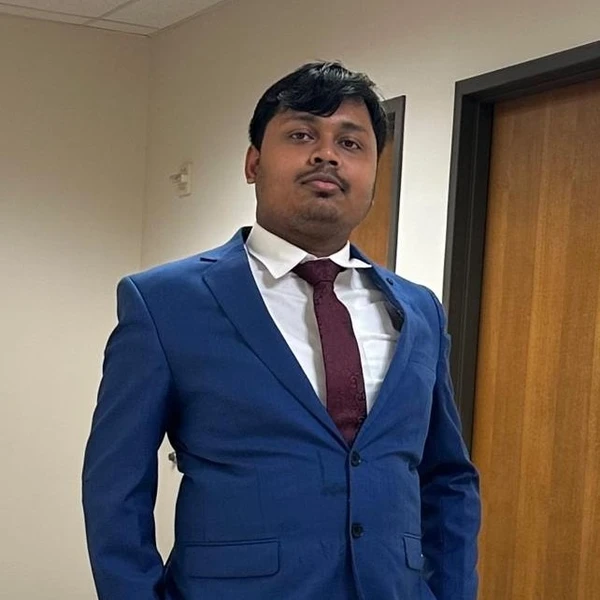
Hobbies and interests
Soccer
Subhrojit Mondal
1x
Finalist1x
Winner
Subhrojit Mondal
1x
Finalist1x
WinnerBio
I want to invent some some new techniques related to fluid flow. I am involved in research where I am building transient wellbore models with artificial lift for hyrdogen production.
I am really passionate about soccer.
I am the perfect candidate for this scholarship, as I am the first one from my family to pursue doctoral studies or even complete a master's degree. I really like problem-solving and take pleasure in overcoming new and innovative challenges. I am a huge Sabrina Carpenter, Olivia Rodrigo, and K-pop fan. Specifically, I listen to "Espresso" on loop, and I kind of go to my happy place while listening to it. I try to mimic some K-Pop dance moves in private.
Education
Texas A&M University- College Station
Doctoral degree program (PhD, MD, JD, etc.)Majors:
- Petroleum Engineering
Career
Dream career field:
- Oil & Energy
Dream career goals:
Sports
Soccer
Club2016 – 20171 year
Research
Petroleum Engineering
Texas A&M University — Graduate Reseach Assistant2023 – Present
Public services
Volunteering
NSS- India — Door-to-door campaigner, making village people aware and collect information of those people willing to donate blood.2019 – 2019
Bulkthreads.com's "Let's Aim Higher" Scholarship
I want to build a bridge between the energy systems we depend on today and the cleaner energy systems we need for the future.
For me, that bridge is not only an idea. I am building it through my Ph.D. research in Petroleum Engineering at Texas A&M University. My work focuses on using reservoir simulation, pressure-transient analysis, and machine learning to better understand how fluids move through rocks deep underground. These tools have traditionally supported oil and gas production, but they can also help us store carbon dioxide safely, produce and store hydrogen, and develop geothermal energy.
One project I hope to build is an accessible, machine-learning-assisted diagnostic tool for subsurface wells. Engineers collect large amounts of pressure and production data, but interpreting those data can be slow and require specialized experience and expensive software. I want to create a tool that can recognize important pressure signatures, identify possible reservoir or well problems, and help engineers make faster, better-informed decisions. Such a tool could support safer carbon storage, more reliable underground hydrogen projects, and more efficient energy production.
I understand that building something meaningful does not happen in one breakthrough moment. It happens through many smaller steps: learning the underlying physics, creating simulation cases, checking whether the data are reliable, testing models that do not always work, and improving them until the results are useful. I am actively taking those steps through my research, technical training, and collaboration with faculty and other students.
I also want to build something less visible but equally important: confidence in students who are still finding their place. As a first-generation student from a low-income household, I know how difficult it can be to pursue an education without a clear roadmap. Scholarships helped me pay tuition during my undergraduate studies in India and made it possible for me to continue moving forward. Now, as a teaching assistant, I help students learn Python, data analytics, and petroleum-engineering concepts. I have seen students enter a course afraid of coding and leave able to solve engineering problems independently. Being part of that change is deeply meaningful to me.
My future will be built at the intersection of research, practical engineering, and mentorship. I hope the technologies I develop will contribute to safer and cleaner energy systems, while the guidance I provide will help other students believe that they also belong in technical fields. Ultimately, I do not want my education to benefit only me. I want to use it to build tools that solve real problems and pathways that make it easier for others to follow.
Lotus Scholarship
Growing up in a low-income household taught me that education was an opportunity I could never take for granted. My family believed in my goals, but paying for college was not something we could manage easily. During my undergraduate education in India, I repeatedly searched and applied for scholarships to help cover my tuition. Each application carried real importance: receiving support meant I could continue studying without placing an impossible financial burden on my family.
That experience taught me to be persistent, resourceful, and willing to ask for help. It also taught me that financial hardship does not reflect a person’s ability or ambition. Sometimes, a capable student simply needs someone to make the next step possible.
I am now pursuing a Ph.D. in Petroleum Engineering at Texas A&M University, where I study carbon storage, hydrogen, geothermal energy, reservoir simulation, and machine-learning applications. I am actively working toward my goals through research, technical training, and teaching. As a teaching assistant, I have helped hundreds of students learn Python, data analytics, and petroleum-engineering concepts. I especially value helping students who begin a course feeling uncertain or behind, because I understand how much encouragement and guidance can matter.
My long-term goal is to develop practical technologies that make energy systems cleaner, safer, and more accessible. I also want to mentor first-generation and low-income students who may question whether they belong in higher education. Scholarships helped me continue when finances could have limited my path. I hope to repay that support by using my education to solve meaningful problems and helping other students recognize that their circumstances do not determine how far they can go.
Edwards Scholarship
Coming to the United States from India to pursue a Ph.D. was both exciting and intimidating. I arrived with years of academic preparation, but I quickly learned that succeeding abroad requires much more than doing well in the classroom. As a first-generation college student, I did not inherit a roadmap for navigating higher education. I have had to build that roadmap myself, one question, mistake, and opportunity at a time.
I am currently pursuing a Ph.D. in Petroleum Engineering at Texas A&M University. My research explores how engineering tools traditionally used in the oil and gas industry can be adapted to address emerging energy challenges. I work on carbon dioxide injection and storage, hydrogen production and underground storage, geothermal energy, reservoir simulation, and machine-learning-assisted well-test analysis. What connects these topics is a question that motivates me deeply: How can we use our existing knowledge of the subsurface to develop energy systems that are cleaner, safer, and more reliable?
Reaching this point has not been simple. Moving to another country meant adjusting to a new academic culture while living far from my family and support system. I had to learn how to approach professors, find research opportunities, build professional relationships, and advocate for myself—all while managing the financial uncertainty that often accompanies graduate education. Unlike many domestic students, international students face additional restrictions on where and how we can work. When funding is uncertain, the available alternatives are limited, and that uncertainty can make it difficult to concentrate fully on research and long-term goals.
I have responded by becoming more resourceful rather than allowing these obstacles to define me. I have actively pursued assistantships, scholarships, research collaborations, and professional opportunities. I have also served as a teaching assistant in petroleum data analytics and formation evaluation. Through these roles, I have helped hundreds of students develop skills in Python, statistics, machine learning, and petroleum-engineering software. Some students begin the semester convinced that they are “not good at coding.” Watching them gradually gain confidence and solve problems independently has been one of the most meaningful parts of my graduate experience. It has also shown me that impact is not limited to a future career; it can begin with the people beside us today.
Through my studies, I hope to become a researcher and engineer who connects traditional subsurface expertise with the global energy transition. I want to develop practical tools that improve the safety and efficiency of carbon storage, hydrogen systems, and geothermal energy. I also hope to mentor students—especially first-generation and international students—who may have the ability to succeed but lack guidance or confidence.
Studying in the United States has brought me into classrooms and research teams with people from many countries, disciplines, and backgrounds. Those experiences have taught me that global problems are best addressed through collaboration and the open exchange of knowledge. This scholarship would ease a portion of my financial burden, but its meaning would extend beyond the amount. It would affirm that the perspective and determination of an international, first-generation student have value. Most importantly, it would help me continue turning the opportunities I have received into knowledge, mentorship, and solutions that benefit others.
Bick First Generation Scholarship
When I received my admission to a Ph.D. program in Petroleum Engineering at Texas A&M University, I knew the acceptance letter carried more than my name. It carried my family’s sacrifices, their faith in education, and the hopes that brought me from India to the United States. As a first-generation student, I have often had to enter unfamiliar spaces without a roadmap—but never without purpose.
To me, being first-generation means learning how to ask questions when I do not even know what questions I am supposed to ask. My family has always encouraged me, but they could not guide me through graduate applications, research funding, academic networking, or the realities of pursuing a doctorate abroad. I have had to learn each step by seeking mentors, accepting mistakes, and continuing even when the path felt uncertain.
Financial uncertainty has been one of the most difficult parts of this journey. Pursuing graduate education far from home requires balancing research, teaching, living expenses, and the pressure to make every opportunity count. There have been times when the lack of guaranteed funding made it difficult to focus fully on my academic goals. Instead of allowing that uncertainty to stop me, I pursued teaching and research opportunities, applied for scholarships and assistantships, and continued building the skills needed to contribute meaningfully to my field. As a teaching assistant, I have also supported hundreds of students learning Python, data analytics, and petroleum engineering. Helping them gain confidence has reminded me how powerful guidance can be—especially for someone navigating unfamiliar territory.
My dream is to become a researcher and engineer who develops practical solutions for the energy transition. My doctoral work focuses on subsurface energy systems, including carbon dioxide storage, hydrogen production and storage, geothermal energy, reservoir simulation, and machine-learning-assisted well-test analysis. I am driven by the belief that the technical knowledge developed in traditional energy fields can help create cleaner and more reliable energy systems for the future.
This scholarship would reduce the financial pressure surrounding my education and allow me to devote more attention to my research, professional development, and progress toward completing my Ph.D. It would also give me greater freedom to pursue opportunities based on their educational value rather than immediate financial necessity.
Being first-generation does not mean that I have traveled alone. It means that I am the first in my family to travel this particular road—and that each step I take can make the road clearer for those who come after me. This scholarship would help me continue that journey with greater stability, confidence, and determination.
Neetu Watumull Scholarship Program Managed by Rupa Shah
WinnerAs a Ph.D. student in Petroleum Engineering at Texas A&M University, my educational journey has been deeply shaped by my Indian heritage, perseverance, and my family’s emphasis on education despite financial limitations. I was born and raised in India and completed both my B.Tech. in Mining Engineering and M.Tech. in Petroleum Engineering at the Indian Institute of Technology Kharagpur. Growing up in India taught me the importance of discipline, resilience, and community. My family always viewed education as the most meaningful path toward creating opportunities and stability, and that belief continues to motivate me every day.
My Indian background has strongly influenced both my academic goals and personal values. Coming from a culture that values hard work and collective responsibility, I learned early on that success is not achieved individually but through the sacrifices and support of family. During my time in India, I also participated in community-oriented activities such as organizing blood donation camps in rural West Bengal, which strengthened my sense of responsibility toward helping others through meaningful work. These experiences shaped my desire to pursue research that can contribute to solving real-world energy and sustainability challenges.
Currently, my Ph.D. research focuses on transient wellbore and reservoir modeling for applications such as CO₂ injection, hydrogen systems, and flow assurance. I have maintained a strong academic record, including a 3.8 GPA at Texas A&M, and have been fortunate to receive merit-based scholarships in the past. However, pursuing graduate education in the United States has also brought significant financial challenges.
I am currently managing educational loans and living expenses while pursuing my Ph.D. Although I actively seek internships, research support, and assistantship opportunities, financial uncertainty remains a major concern, especially during periods without guaranteed funding. In addition to supporting myself academically, I also try to contribute to my family’s financial responsibilities whenever possible. The cost of tuition, housing, health insurance, and daily expenses as an international graduate student creates constant financial pressure.
Receiving the Neetu Watumull Scholarship would provide meaningful support toward reducing this burden and allowing me to focus more fully on my research and academic goals. More importantly, this scholarship represents encouragement for students of Indian origin who are striving to build a better future through education despite financial barriers. I would be sincerely grateful for the opportunity to be considered.
Dr. Hassan Homami Memorial Scholarship
Engineering, to me, is about understanding how complex systems behave under real-world constraints—and using that understanding to design solutions that are both efficient and reliable. My passion for engineering took shape during my master’s in petroleum engineering at the Indian Institute of Technology Kharagpur, when I began working on geothermal wellbore systems. For the first time, I saw how pressure, temperature, and fluid behavior interact dynamically within a confined system and how small changes can significantly impact performance and safety. That experience defined my interest in fluid systems and set the direction for my career.
What fascinated me most was the transient nature of these systems. Unlike simplified steady-state models, real engineering systems evolve continuously—especially during operations such as startup, shut-in, or flow rate changes. This realization led me to focus on transient multiphase flow behavior, where thermal and pressure fluctuations can influence everything from efficiency to structural integrity. Today, as a Ph.D. student in petroleum engineering at Texas A&M University, I build computational models to study these effects in hydrogen production and CO₂ injection systems. I specifically investigate near-wellbore dynamics, including Joule–Thomson cooling and rapid pressure variations, which are often overlooked but critical for safe and optimized operations.
While my work is grounded in subsurface energy systems, I am deeply interested in broader engineering challenges involving transport phenomena. At their core, both subsurface flow and large-scale transportation systems deal with the movement of fluids, energy, or resources through constrained networks. Whether it is fluid flow in pipelines or traffic flow in transportation infrastructure, both require careful management of transients, optimization under uncertainty, and system-level thinking. This parallel motivates me to think beyond traditional disciplinary boundaries and approach engineering problems from a holistic perspective.
To expand my knowledge, I am actively developing advanced numerical and computational skills. I work with simulation tools such as Python-based solvers, OLGA, and CMG, and I am increasingly integrating machine learning techniques to improve predictive modeling. I also seek to strengthen my understanding of high-performance computing and data-driven engineering, as these tools are becoming essential for solving complex, large-scale problems. Beyond technical development, I aim to engage in interdisciplinary collaboration, recognizing that impactful engineering solutions often require integration across domains such as economics, policy, and sustainability.
My long-term vision is to contribute to the development of resilient and efficient energy systems that support a lower-carbon future. I am particularly motivated by challenges that involve dynamic system behavior—where transient effects can influence performance, safety, and environmental impact. Through research and industry collaboration, I hope to design solutions that improve reliability in hydrogen production, optimize CO₂ injection strategies, and enhance overall system efficiency.
Like Dr. Hassan, whose life reflected dedication, innovation, and service, I view engineering as a responsibility. It is not only about advancing technology but also about applying knowledge to solve meaningful problems. My journey—from discovering fluid system dynamics in geothermal wellbores to advancing transient modeling in energy systems—has been driven by curiosity and purpose. I am committed to continuing this path and using engineering to make a lasting, positive impact.