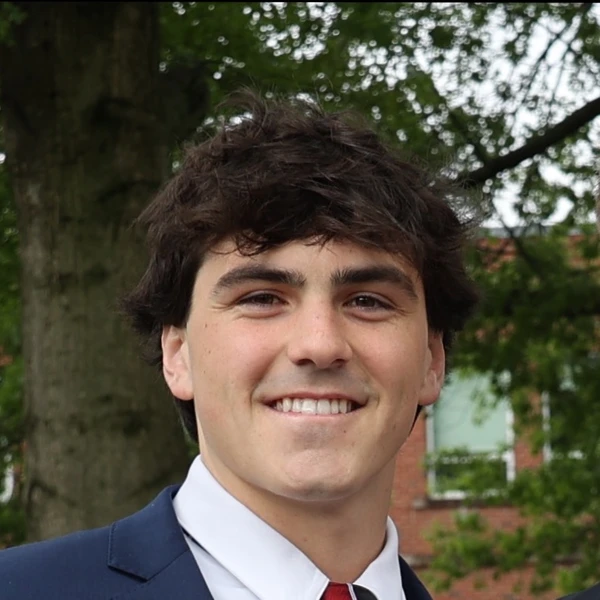
user profile avatar

Stephen Bailey

1x

Finalist

Bio

My name is Stephen Bailey, and I am a transfer student from Grinnell College pursuing a future in finance, with particular interest in wealth management and investment banking. At Grinnell, I earned a 3.92 GPA during my first semester while studying public economics, philosophy, writing, and calculus. These courses strengthened my interest in markets, incentives, and financial decision-making. Outside the classroom, I have built discipline and leadership through athletics, service, and finance-related activities. As a starting quarterback at Grinnell and a former high school team captain, I learned how to prepare under pressure, communicate clearly, and stay accountable when outcomes are uncertain. Through investment clubs at both Grinnell and Kingswood Oxford, I developed a stronger interest in market research, stock analysis, risk, and long-term value. My interest in finance comes from wanting to understand how people and institutions make decisions with real consequences. Whether through wealth management or investment banking, I hope to build a career that combines analytical thinking, client trust, ethical judgment, and long-term financial strategy. I have also learned the importance of service through volunteering at the Clelian Center, where spending time with elderly residents taught me patience, empathy, and the value of listening closely. Scholarship support would help me continue my education while reducing the financial burden of transferring and allow me to focus fully on academic, professional, and personal growth.

Education

Vanderbilt University

Bachelor's degree program
2026 - 2029
  • Majors:
    • Economics

Grinnell College

Bachelor's degree program
2025 - 2026
  • Majors:
    • Philosophy, Politics, and Economics

Miscellaneous

  • Desired degree level:

    Bachelor's degree program

  • Graduate schools of interest:

  • Transfer schools of interest:

  • Majors of interest:

    • Economics
  • Not planning to go to medical school
  • Career

    • Dream career field:

      • Investment Banking
    • Dream career goals:

    • Intern in Accounting

      Triple B Media
      2026 – Present7 months
    • QB coach

      PlaymakersCT
      2025 – Present1 year

    Sports

    Football

    Varsity
    2012 – 202513 years

    Awards

    • Offensive Player of the Year
    • 1st Team all New England
    • 1st Team all Evergreen League
    • Captain

    Lacrosse

    Varsity
    2021 – 20254 years

    Awards

    • Captain

    Public services

    • Volunteering

      Clelian Center — Volunteer
      2021 – 2025
    RonranGlee Literary Scholarship
    Selected paragraph from Epictetus’ Enchiridion: “It is not things themselves that disturb men, but their judgments about these things.” Epictetus’ underlying meaning is that human freedom begins at the exact point where instinctive reaction ends. In this sentence, he is not denying pain, loss, failure, or hardship. Instead, he is making a sharper and more demanding claim: the events of life do not fully determine the condition of the soul. What determines us is the meaning we attach to those events. For Epictetus, the deepest form of education is not the accumulation of information, but the training of judgment. The sentence appears simple because its language is plain, almost severe. “Things themselves” refers to events as they occur before interpretation: a rejection, an injury, a death, a defeat, a change in fortune. Epictetus strips these moments down to their bare existence. By contrast, “judgments” refers to the inner act by which the mind names an event good, unbearable, humiliating, unjust, permanent, or defining. The distinction matters because it separates what happens from what we make of what happens. Most people collapse those two together. They say the failure ruined them, the insult angered them, the loss made life meaningless. Epictetus asks us to pause before that conclusion. He suggests that between event and suffering there is a hidden space, and in that space lies moral responsibility. The word “disturb” is also important. Epictetus does not say that things never hurt us or that circumstances do not matter. To be disturbed is not merely to feel pain; it is to be thrown out of order. Disturbance is the mind losing command of itself. A person can grieve without being destroyed, struggle without surrendering, and face disappointment without allowing it to define his character. Epictetus is not asking for emotional numbness. He is asking for inner discipline. His philosophy is not coldness, but self-government. This is why the sentence is more radical than it first appears. If our judgments disturb us, then we are not helpless before the world. We may not control outcomes, other people, illness, status, reputation, or the timing of loss. But we do retain some authority over interpretation. That authority is not easy. It requires practice, humility, and courage. It is much easier to blame the event itself because doing so excuses us from the harder work of examining our response. Epictetus places that responsibility back in our hands. This idea has become especially meaningful to me because college, athletics, and family have all taught me that life rarely follows the exact path we imagine. As an athlete, I learned that a bad play is not only physical; it can become mental if you allow it to. One mistake can turn into a whole game if judgment turns it into panic. As a student, I have learned the same thing in the classroom. A difficult course, a disappointing grade, or an uncertain transfer process can either become evidence that I am not capable or an invitation to become more disciplined. The event is real, but the judgment determines whether it becomes defeat or growth. Epictetus is also warning against a subtle form of slavery. A person who lets every outside event determine his inner state is never truly free. He belongs to circumstances. Praise lifts him, criticism ruins him, success inflates him, failure breaks him. His peace depends on forces he cannot command. Epictetus offers a different kind of freedom: not the freedom to avoid hardship, but the freedom to meet hardship without surrendering the mind. That kind of freedom is not passive. It does not mean accepting injustice without action or pretending that suffering is imaginary. In fact, clearer judgment makes better action possible. When people are ruled by disturbance, they react impulsively. When they examine their judgments, they can respond with purpose. A calm mind is not an inactive mind; it is a mind capable of choosing its next step wisely. The deeper meaning of this paragraph is that education should teach us how to see. Close reading itself follows the same principle. A careless reader reacts immediately, deciding too quickly what a text means. A close reader slows down, separates the words from assumptions, and pays attention to what is actually there. Epictetus is asking us to close-read our own lives in the same way. Before accepting our first interpretation of an event, we should examine it. Is this truly unbearable, or have I judged it that way? Is this failure final, or is it instruction? Is this obstacle proof that I should stop, or is it the very material from which resilience is built? To me, that is the profound insight of Epictetus’ sentence. He is not minimizing suffering. He is protecting human dignity. If external events alone controlled us, character would be impossible. But if judgment matters, then growth is always possible. A person can be wounded and still remain responsible. He can be disappointed and still remain disciplined. He can lose something important and still choose what kind of person he will become afterward. Epictetus’ sentence endures because it refuses to flatter us. It does not promise that life will be fair or easy. It promises something harder and more useful: that we are not merely the products of what happens to us. We are also shaped by how honestly, patiently, and courageously we interpret what happens. The world will continue to bring uncertainty, loss, pressure, and change. The work of a serious person is to meet those things without allowing them to take possession of the soul. That is the kind of education I want to pursue. Not only one that prepares me for a career, but one that trains judgment, strengthens discipline, and teaches me how to turn difficulty into purpose. Epictetus’ meaning is ultimately that the mind is not just where suffering occurs. It is also where freedom begins.
    Bulkthreads.com's "Let's Aim Higher" Scholarship
    What I want to build is a future in finance that is grounded in trust, discipline, and service. I am interested in wealth management and investment banking because finance affects more than numbers. It shapes how families plan, how businesses grow, and how communities create opportunity. My goal is to use my education to become someone who can help people and organizations make thoughtful decisions about their futures. As a transfer student, I am building that future step by step. My education so far has helped me discover a strong interest in economics, markets, and financial decision-making. I am drawn to the way finance combines analysis with responsibility. In wealth management, success depends on understanding a client’s goals, earning their trust, and helping them make decisions that can affect their family for years. In investment banking, financial decisions can influence companies, employees, and communities. In either path, I want to be known as someone who brings preparation, integrity, and good judgment to the work. I also want to build something beyond my own career. Eventually, I hope to help create or support financial literacy opportunities for young people who may not grow up with access to financial guidance. Many students are expected to make major decisions about college, debt, saving, and careers without ever being taught the basics of money. I believe financial education can give people confidence and independence. If students understand budgeting, investing, credit, and long-term planning earlier, they can make stronger choices for themselves and their families. That desire to help others comes from experiences I have already had. As a math peer tutor, senior advisor, quarterback, and volunteer at the Clelian Center, I learned how much guidance and consistency can matter. Sometimes impact comes from explaining something clearly, encouraging someone who doubts themselves, or simply showing up when people need support. Those lessons shape the kind of professional and person I want to become. Building my future means more than earning a degree or getting a job. It means developing the skills, character, and discipline to create stability for myself while becoming a resource for others. I want my education to help me build a career that opens doors, strengthens my family’s future, and allows me to give back to my community through knowledge, mentorship, and service.
    Stephan L. Wolley Memorial Scholarship
    Family, faith, and competition have shaped almost every part of who I am. I grew up in a family where sports were not just something we watched or played, but something that taught us discipline, toughness, and commitment. My dad played college baseball at West Virginia, my brother played college football as a quarterback, and many of my relatives competed at the college level. Being around that kind of example made me want to follow the same path, not just to say I played a college sport, but to prove that I could earn something difficult through work. Football became the place where I learned the most about myself. As a quarterback, I was never the biggest player on the field. At 5’11”, I was often overlooked compared to taller quarterbacks who fit the typical image of the position. I did not receive much hype or attention, and there were plenty of moments when I felt like I had to prove myself more than others. But being overlooked also gave me an edge. It taught me to prepare harder, study more film, lead with confidence, and focus on what I could control. That mindset helped me earn an opportunity to play quarterback at Grinnell College. Getting that offer meant a lot to me because it showed that the work I had put in was worth something. At Grinnell, I became the starting quarterback as a freshman, which was one of the most challenging and rewarding experiences of my life. I had to grow up quickly, learn a college offense, earn the trust of older teammates, and lead while still adjusting to college myself. It taught me accountability in a way nothing else could. When you play quarterback, people look to you when things are going well and when they are not. That responsibility made me more disciplined, more resilient, and more focused. My family has always been central to that journey. They have supported me through every stage, from youth football to high school to college. Their belief in me has pushed me to keep going, especially during moments when the path felt uncertain. My family dynamic is built on high expectations, but also on loyalty. We push each other because we believe in each other. That has shaped how I approach both athletics and school. Academically, I have worked to bring the same discipline from football into the classroom. My education so far has helped me discover a strong interest in finance, especially wealth management and investment banking. I am drawn to finance because it requires preparation, decision-making, trust, and the ability to perform under pressure, many of the same qualities I developed as an athlete. My future plans are to continue pursuing my degree while preparing for a career in finance. I have also decided to transfer to Vanderbilt, where I am working every day toward the goal of walking on to the football team. I know that will not be easy, but I believe I can do it. I have been overlooked before, and I know what it means to keep working when recognition is not guaranteed. This scholarship would help me continue pursuing both my academic and athletic goals. I want to honor the values that have shaped me: family, faith, competition, and perseverance. My goal is not just to achieve success for myself, but to become someone who proves that drive, discipline, and belief can carry you farther than people expect.
    Our Destiny Our Future Scholarship
    I plan to make a positive impact on the world by building a life and career rooted in trust, service, and responsibility. I am interested in finance, especially wealth management and investment banking, because money is never just about numbers. It affects families, opportunities, security, education, and the choices people are able to make for their futures. My goal is to develop the knowledge and discipline to help individuals, families, and organizations make thoughtful financial decisions that improve their lives. My understanding of impact began through service. While volunteering at the Clelian Center in Hamden, Connecticut, I spent time with elderly residents, helped with daily activities, and listened to their stories. At first, I wondered if I was doing enough. I was not solving a major problem or creating something visible. Most days, I was simply sitting with residents, talking with them, or helping them feel less alone. Over time, I realized that presence itself can be meaningful. Many people do not need someone to impress them; they need someone to listen, show patience, and treat them with dignity. That experience changed the way I think about service. It taught me that helping others does not always require a grand gesture. Sometimes it starts with consistency, humility, and the willingness to meet people where they are. I have carried that lesson into other parts of my life, including athletics, academics, and mentoring younger students. As a quarterback, I learned that leadership is not about being the loudest person in the room. It is about earning trust, staying steady under pressure, and helping others believe they can succeed. As a math peer tutor and senior advisor, I saw how encouragement and guidance can give younger students more confidence in themselves. Looking ahead, I want to combine that service-minded approach with my professional goals. In wealth management, I hope to help people make decisions that protect their families, build stability, and create opportunities across generations. In investment banking, I am interested in understanding how businesses grow, raise capital, and make decisions that affect employees, communities, and the broader economy. In either path, I want to be someone who approaches finance with integrity, discipline, and concern for the people behind every decision. I also hope to give back directly through mentoring. I know how important guidance can be, especially for young people who are still trying to understand their strengths and future goals. I want to support students who may not yet see what is possible for themselves, whether through tutoring, coaching, financial literacy programs, or community organizations. If I am fortunate enough to build a successful career, I want to use that success to open doors for others. To me, making a positive impact on the world means using my abilities in a way that reaches beyond myself. It means working hard not only to achieve personal success, but to become someone others can rely on. Through education, service, and a career in finance, I hope to help people feel more secure, more confident, and more capable of building better futures for themselves.
    Nicholas J. Fillmore Opportunity Scholarship
    When I read about Nicholas J. Fillmore’s life, the qualities that stood out to me most were discipline, resilience, loyalty, and his commitment to guiding young people toward a better future. As a former Marine, father, mentor, and coach, he represented the kind of steady leadership that helps others believe in themselves. Those values resonate with me because they reflect the kind of person I am working to become through my education, my work ethic, and my future career in finance. I am a Connecticut student and a transfer student from Grinnell College. During my first semester, I earned a 3.92 GPA while taking courses in economics, philosophy, calculus, and writing. That semester helped me understand that my strongest academic and professional interest is finance, especially wealth management and investment banking. I am drawn to finance because it combines analysis, discipline, trust, and long-term decision-making. Whether helping individuals plan for their futures or working with organizations on important financial decisions, I want a career where preparation and responsibility matter every day. This scholarship would help me continue that path by reducing the financial burden of transferring and allowing me to focus more fully on my education, professional growth, and future opportunities. As a transfer student, I am entering a new stage of my life that requires both confidence and humility. I will need to adjust to a new academic environment, build new relationships, and continue proving myself. Scholarship support would help me pursue internships, finance-related experiences, and coursework that will prepare me for a career in wealth management or investment banking. Resilience has been one of the most important lessons of my college experience. When I arrived at Grinnell, I was a varsity football player and became the starting quarterback as a freshman. Football had been part of my identity for years, and it taught me discipline, preparation, leadership, and accountability. But over time, I realized that the path I was on no longer matched the future I wanted to build. Stepping away from football was difficult because it meant leaving something familiar behind, but it also gave me the chance to be honest about my goals. I learned that personal growth sometimes requires the courage to change direction. That decision clarified what I want from college and from my future. I want to challenge myself academically, develop real-world financial skills, and become someone who can be trusted with responsibility. In finance, ambition alone is not enough. You need communication, ethical judgment, and the ability to stay steady when outcomes are uncertain. Those are qualities I first learned as an athlete, but I now hope to apply them in a professional setting. Service has also shaped how I understand impact. While volunteering at the Clelian Center in Hamden, Connecticut, I spent time with elderly residents, listened to their stories, and helped with daily activities. That experience taught me that leadership is not always loud or visible. Sometimes it means showing up, listening carefully, and making someone feel valued. The Nicholas J. Fillmore Memorial Scholarship would be important to me because it would support more than my education. It would support the direction I am working hard to pursue. I am determined to make the most of my college experience, grow through challenge, and build a future defined by discipline, integrity, and impact.