user profile avatar

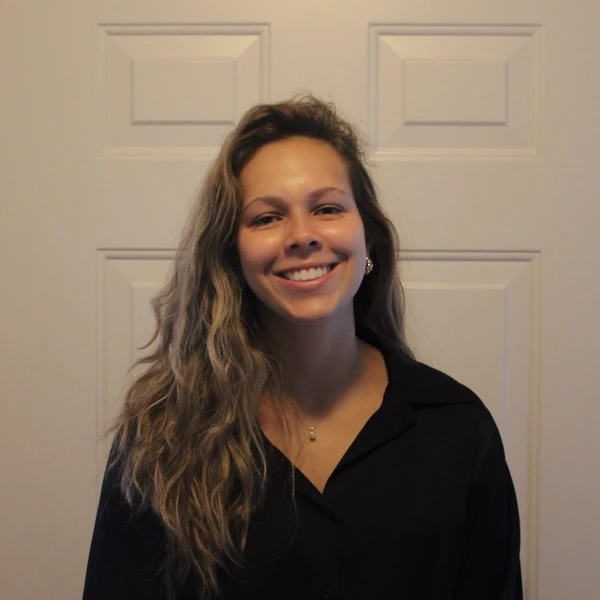
Sovay Reid

1x

Finalist

1x

Winner

Bio

I am a biracial high school senior from Burke, Virginia, heading to Stanford to study Data Science & Social Systems. I carry a 4.42 GPA, 1530 SAT (800 Math), AP Scholar with Distinction, and the National African American Recognition Award. My coursework includes Linear Algebra, Multivariable Calculus, AP Computer Science A, AP Literature, and AP Government. Energetic and quantitatively-oriented, I aspire to work at the intersection of social systems and data-driven inquiry — building frameworks that help socially conscious businesses collect, analyze, and interpret large datasets to drive better-informed, more equitable decisions. That drive landed me a MITRE internship researching AI sustainability, an 80-hour international internship raising $1,400 for education in Nigeria, and a 10th place finish at DECA Internationals out of 271. I serve as Senior Class Officer, a Fairfax County Human Rights Commissioner, NHS Service Project Coordinator, and Jack & Jill Teen Treasurer. I also volunteer with Capital Caring Health, helping hospice patients through donations and care management. I proudly descend from Black women who built paths that didn't exist — Maggie Lena Walker, my 3-times great-aunt, who was the first African American woman to charter a bank, a grandmother who is a Living Legend of Alexandria, and a mother who earned her engineering degree from UVA before it was a movement. Their legacy is my blueprint. Stanford is where my mission begins.

Education

Stanford University

Bachelor's degree program
2026 - 2030
  • Majors:
    • Data Science
    • Social Sciences, Other
    • Social Sciences, General
    • Intercultural/Multicultural and Diversity Studies
Lake Braddock Secondary

High School
2021 - 2026

Miscellaneous

  • Desired degree level:

    Bachelor's degree program

  • Graduate schools of interest:

  • Transfer schools of interest:

  • Majors of interest:

    • Data Science
    • Mathematics and Computer Science
    • Sociology
  • Not planning to go to medical school
  • Career

    • Dream career field:

      • Technology
    • Dream career goals:

      In the long term, I aspire to develop my skills and build a career in Data Science that deepens my expertise in analytics and quantitative problem solving. My ultimate goal is to found my own data science consulting firm that analyzes large datasets and builds predictive models to help clients improve their decision-making.

    • Technical Aide Intern: assisted MITRE's Chief Scientist in researching thermal energy storage solutions to stabilize the electricity demand of AI data centers and alternative refrigerants to reduce their water consumption impact on local communities.

      The MITRE Corporation
      2025 – 2025

    Sports

    Basketball

    Club
    2019 – 20245 years

    Awards

    • PrepHoopsVA: 27th in c/o 2026

    Basketball

    Varsity
    2022 – 20242 years

    Awards

    • All-NOVA Freshman Girls Team
    • District Honorable Mention

    Research

    • Energy Systems Technologies/Technicians

      The MITRE Corporation — Technical Aide Intern; researched 3 cold thermal energy storage solutions to reduce AI data centers' peak energy loads & devised 2 viable integration plans. Analyzed 9 eco-friendly refrigerants & presented findings in 2 department-wide presentations.
      2025 – 2025

    Arts

    • Conquering Purpose Productions

      Cinematography
      Who Is Boo? – The Black Architect of the American Dream
      2024 – Present

    Public services

    • Volunteering

      Capital Caring Health — Hospice volunteer that managed a 160-patient database, assembled 250 bereavement letters monthly, organized 3 assembly events, donated 50 holiday cards, and tagged 500+ pediatric donations including quilts, pillowcases, beanies, and blankets.
      2024 – Present
    • Advocacy

      Leadership Initiatives - International Business & Development Internship — Project Team Lead for 3 HS students; transformed a Nigerian entrepreneur's laundry business through budgeting & marketing plans, yielding +30% revenue, +50% productivity & -15% operating costs. Served as primary contact & led monthly partner calls.
      2024 – 2025
    • Advocacy

      FCPS Student Human Rights Commission — Brainstorms initiatives to promote diversity dialogue among youth. Organizing a K-12 cultural celebration week for 183,000 FCPS students & planning the Fair Housing Art Contest to promote social justice and expose students to civil rights laws.
      2025 – Present
    • Advocacy

      Leadership Initiatives - International Leadership & Business Internship — Assisted a Nigerian entrepreneur in building his automotive business; compiled marketing materials, a business plan & implementation timeline, yielding +75% revenue, +40% customer growth & -12% spending. Presented to 3 investors, securing a $3,500 grant.
      2024 – 2024
    • Volunteering

      Long & Foster Real Estate, Commercial Division — Assisted a commercial agent with franchise market research for a client in Frederick, MD. Compiled data from 32 franchises including contact info, proximity & requirements. Learned Excel & pivot tables to organize & present data for decision-making.
      2024 – 2024
    • Public Service (Politics)

      Senior Class Officer for School — 1 of 5 elected officers. Campaigned on inclusion & affordability; coordinated 2 fundraising initiatives securing $1,020, reducing prom tickets from $75 to $50-$55. Currently collaborating with administration to plan prom & graduation.
      2025 – Present
    • Volunteering

      Jack & Jill of America, Inc., an African-American org. — Community Service Chair: led 12-person committee, donating 1,440 toiletries, 300 canned goods & 52 toys to underserved families. Teen Treasurer: revised budgeting process & built a predictive framework that reduced teen dues by 52%
      2017 – Present

    Future Interests

    Advocacy

    Volunteering

    Philanthropy

    Entrepreneurship

    Learner SAT Tutoring Scholarship
    The SAT taught me that preparation is not about proving that I am naturally good at testing. It is about learning how to study with honesty, discipline, and patience. When I began preparing, I did not treat the test as one large score. I broke it into smaller questions: Which concepts did I truly understand? Where was I losing time? Which mistakes came from gaps in knowledge, and which came from rushing? Because mathematics is one of my strongest subjects, I set a demanding goal for myself. I wanted an 800 in Math and a total score above 1500, not simply for the number itself, but because I wanted my score to reflect the level of preparation I was bringing to my college goals. Stanford was one of the universities I hoped to attend, and I knew that a strong SAT score could strengthen an application already built on rigorous coursework, leadership, service, and STEM exploration. My preparation became a cycle of testing, reviewing, and adjusting. I completed timed practice sections so I could experience the pressure of the real exam instead of only studying concepts in comfortable conditions. Afterward, I reviewed every missed question, including the ones I had guessed correctly. I wrote down why an answer was wrong, what clue I had overlooked, and how I would recognize a similar problem the next time. That process helped me see patterns. In reading and writing, I learned to slow down enough to identify what the passage actually supported rather than choosing an answer that merely sounded reasonable. In math, I practiced deciding when to solve algebraically, when to use the calculator, and when a simpler approach would save time. I also prepared through the academic choices I made every day. Courses such as Multivariable Calculus strengthened my confidence with complex problems, but they also taught me that advanced ability does not replace careful work. A small sign error can undo an entire solution. That lesson carried into SAT preparation: precision matters as much as speed. My family influenced my goals as well. My mother earned an engineering degree from the University of Virginia, and my older brother attended Stanford before building a career in technology. Their examples showed me that opportunity should be met with preparation. I did not want to approach the SAT as an obstacle standing between me and college. I wanted to use it as an opportunity to demonstrate readiness and expand what was possible for my future. That work resulted in a 1530 SAT score, including an 800 in Math. Reaching that goal confirmed that improvement comes from treating mistakes as information rather than as evidence that I am not capable. My SAT preparation also strengthened habits that I will carry into college: analyzing weaknesses, seeking better strategies, practicing under realistic conditions, and staying consistent even when progress is not immediate. My larger goal has always extended beyond one test. I plan to study Data Science and Social Systems and use data to make inequities in technology, energy, education, and economic opportunity more visible. The SAT was one step toward that future. It challenged me to prepare deliberately, measure my progress honestly, and keep working until my performance matched my ambition.
    Chadwick D. McNab Memorial Scholarship
    Before my research at MITRE, I thought of the internet mostly as something people used. After that project, I started seeing it as something people depend on: a system of data, energy, infrastructure, and choices that can either widen problems or help solve them. The project I worked on focused on a question that felt both technical and urgent: as artificial intelligence grows, how will AI data centers affect energy demand, and could cold thermal energy storage help reduce peak strain? I was passionate about this project because it connected the kind of math and analysis I enjoy with a real problem that affects communities far beyond a lab or spreadsheet. Every search, calculation, and comparison reminded me that technology is never just code or machines. It has consequences. My role required me to gather information about storage capacity, power patterns, cooling systems, and how demand changes over time. I used calculus to think about linked changes instead of looking at numbers in isolation. At first, the project felt overwhelming because the issue was bigger than one formula. Data centers are tied to AI growth, electricity use, climate concerns, business decisions, and public infrastructure. But that complexity is what made the work meaningful. I learned that technology problems rarely have simple answers; they require people who are willing to ask better questions. One of the biggest lessons I took from the project was that data can make invisible pressure visible. Most people experience the internet as instant searches, apps, videos, or AI tools. They do not always see the cooling systems, energy demand, or environmental tradeoffs behind those tools. Through research, I saw how data science can help reveal what is happening beneath the surface and give decision-makers clearer ways to act. That inspired me because I want my future work in technology to do more than create something impressive. I want to create something responsible. Working in technology inspires me because it gives structure to curiosity. I have always been drawn to problem-solving, whether through advanced math, leadership, athletics, or service. Technology allows me to take that curiosity and turn it into practical tools. It also challenges me to consider who benefits from those tools and who might be left out. As a Black woman preparing to study Data Science and Social Systems at Stanford, I know representation in technology matters. The questions we choose to ask are shaped by the people in the room, and I want to help bring more attention to communities and systems that are often overlooked. In the future, I hope to use data science to build fairer, more sustainable systems in areas such as energy, education, technology access, and economic opportunity. My MITRE project showed me that even highly technical work can have a human purpose. Behind every model or dataset are people whose lives are affected by the decisions technology helps make. That is why working in technology inspires me: it gives me a way to connect logic with impact. I want to be part of a future where innovation is not measured only by speed or profit, but by whether it helps people understand problems more clearly and solve them more justly.
    J&Y Law Yahouda Yahoudai Service Scholarship
    I have always believed that doing good in a community does not have to begin with a title or a large platform. Sometimes it begins with noticing who is being left out, who needs support, or who simply needs someone to care enough to slow down and help. Throughout high school, I have tried to serve my communities through volunteering, student leadership, mentoring, donation efforts, and creating more accessible spaces for others. One meaningful part of my service has been supporting people’s basic needs. Through community service opportunities, I have participated in food and toiletry donation efforts for people and families who needed practical support. Donating food, hygiene products, and everyday essentials may seem simple, but those items can make someone feel remembered during a difficult time. Service has taught me that dignity is often protected through small acts of care. When people have access to the things they need, they are better able to focus on school, work, family, and healing. My service has also extended beyond my local community through Leadership Initiatives, where I worked with a Nigerian entrepreneur who owned a laundry business. As project team leader, I helped develop budgeting and marketing strategies to increase revenue, improve productivity, and reduce operating costs. During our calls, I learned that his business supported thirteen relatives. That changed the way I understood impact. A budget was not just a spreadsheet. A marketing plan was not just an assignment. Each decision could affect a family’s stability and a business owner’s ability to keep moving forward. That experience taught me to listen first, think practically, and create solutions that fit the person using them. In school, one of my clearest examples of community impact came through DECA. I noticed that students outside the marketing program were interested in competing but were often confused by the requirements, deadlines, forms, and expectations. Some students were capable and motivated, but without guidance, they could have missed the opportunity altogether. I helped organize study sessions, request an extension, and create a buddy system so newer students had someone to ask questions without feeling embarrassed. That effort helped non-marketing student participation grow from 15 to 59 students. To me, that was community service in a practical form. It showed me that helping people access an opportunity can change how confident they feel walking into a room. I have also contributed through Jack and Jill, Capital Caring Health, the Student Human Rights Commission, and other community-focused work. These experiences have shown me that service is not only about giving time. It is about paying attention to dignity, access, and belonging. As a Black and biracial student, I know how important it is for young people to see themselves represented in leadership, education, and service. I try to notice who feels unseen, who hesitates before speaking, and who may need encouragement before stepping forward. As I prepare to attend Stanford and study Data Science and Social Systems, I want to continue using both service and data to make hidden needs more visible. My goal is to build tools and systems that help communities understand where support is missing and how resources can reach people more effectively. The good I have tried to contribute is rooted in care, inclusion, and responsibility. Whether through donations, student mentorship, international service, or community leadership, I have learned that impact is not always measured by how visible an action is. Sometimes it is measured by whether someone feels less alone, more prepared, or more confident because you chose to help.
    Barbara Cain Literary Scholarship
    Books have taught me that a story can make a system visible. The book that shaped my goals most clearly is Hidden Figures by Margot Lee Shetterly because it showed me that math is never only numbers on a page. It can be a language of precision, a tool for problem-solving, and, when people are finally seen, a way to change history. Reading about Katherine Johnson, Dorothy Vaughan, Mary Jackson, and the other Black women whose calculations helped power NASA made me think differently about both achievement and recognition. They were brilliant, disciplined, and essential, yet they worked in a world that often tried to separate their talent from their identity. Their story taught me that intelligence is not always rewarded equally and that some of the most important contributions can be hidden in plain sight until someone decides to tell the truth fully. That lesson connects directly to why I want to study Data Science and Social Systems at Stanford. I am drawn to math and data because they can reveal patterns that people might otherwise ignore. In my own academic work, from advanced math and computer science courses to research on AI data center sustainability at MITRE, I have seen how numbers can explain complex systems. But Hidden Figures reminded me that data still needs human context. A calculation can help send people into space, but a story can help us understand who was allowed to make that calculation, who was overlooked, and why that matters. Books have also shaped the kind of leader I want to become. In DECA, I saw how students could be excluded from opportunities simply because no one clearly explained the process. I helped organize study sessions, request an extension, and create a buddy system so more students could compete. That experience echoed a lesson I have learned from reading: access to knowledge can change what people believe is possible for themselves. Barbara Cain's legacy as a librarian makes this scholarship especially meaningful because libraries protect that kind of access. They give young readers the chance to discover courage, identity, imagination, and direction. Books have taught me to ask better questions about the systems around me, and they have shaped my goal of using data, technology, and service to make inequities easier to recognize and harder to ignore. I hope my education helps me become someone who does not only solve problems, but also helps make sure the people behind those problems are seen.
    The Concrete Rose Scholarship Foundation
    At my kitchen table, I learned that education can be both a doorway and a responsibility. My mother, Arvette, earned an engineering degree from the University of Virginia as a Black woman entering a field where people like her were not always expected to belong. She once chose UVA over Brown because of financial limitations, and that story has stayed with me because it taught me that talent alone does not determine opportunity. Access does. That lesson has shaped my own story. I am preparing to attend Stanford University to study Data Science and Social Systems because I want to understand how numbers, technology, and human lives connect. To me, data is not just information on a screen. It can reveal who is being overlooked, where resources are missing, and how systems can be redesigned to serve people more fairly. I began seeing the power of data and systems through my academic and research experiences. At MITRE, I researched how artificial intelligence data centers strain energy systems and whether cold thermal energy storage could reduce peak demand. I gathered information about storage capacity, cooling needs, and power patterns, then used calculus to study how those factors related to one another. The project showed me that innovation is not only about building faster technology. It is also about asking who pays the cost when systems grow and whether we can make progress more responsibly. My drive to build fairer systems also comes from leadership. In DECA, I noticed that students outside the marketing program were almost excluded from competition simply because no one had explained the forms, deadlines, or preparation process clearly. It would have been easy to say they should have known, but I knew exclusion could hide behind confusion. I helped organize study sessions, ask for more time, and create a buddy system so more students could participate. Non-marketing participation later grew from 15 to 59 students. That experience taught me that leadership is not always loud. Sometimes it is noticing who is missing and opening the door wider. This scholarship would make a meaningful impact on my career goals by helping reduce the financial pressure of pursuing a Stanford education while my family prepares for another major investment in higher education. It would help with books, academic materials, technology, and the resources I need to keep building my foundation in data science. More importantly, it would affirm the path I am choosing as a young African American woman entering STEM and technology with a purpose beyond personal success. My long-term goal is to use data science to make inequity visible, measurable, and harder to ignore. I hope to build tools, research, and eventually a data-focused company that helps communities, schools, energy systems, and organizations make more ethical decisions. Like a concrete rose, I want my education to become proof that growth can happen in difficult places, and I want to use that growth to help others rise too.
    Women in STEM Scholarship
    I chose STEM because data can make invisible problems impossible to ignore. During my research at MITRE, I studied how the growth of artificial intelligence is increasing energy demand in data centers and whether cold thermal energy storage could reduce peak strain. At first, the work felt technical: storage capacity, power patterns, cooling systems, and calculus-based analysis. But the more I studied the issue, the more I saw that data centers are not just machines using electricity. They are part of a larger system that affects communities, costs, infrastructure, and the future of technology. That is why I plan to study Data Science and Social Systems at Stanford. I want to understand both sides of problem-solving: the technical methods that reveal patterns and the social context that explains why those patterns matter. My courses in Multivariate Calculus, nine AP classes, and years of challenging STEM work have given me discipline. My 800 Math SAT score reflects my love for problem-solving, but my motivation goes beyond numbers. I am drawn to STEM because numbers can tell stories that people in power may overlook. As a woman in STEM, and as a Black student entering spaces where representation still matters, I want my presence to be useful, not just symbolic. I know what it feels like when opportunity depends on whether someone explains the rules. In DECA, I saw non-marketing students nearly lose access to competition because they had not received the same guidance as everyone else. I helped organize study sessions, request more time, and create a buddy system so students could compete with confidence. Participation among non-marketing students grew from 15 to 59. That experience taught me that access often improves when someone notices the gap and builds a clearer pathway through it. I hope to bring that same mindset to data science. My long-term goal is to build a data science firm that helps organizations use information ethically to improve systems in energy, education, technology, and economic opportunity. I do not want to use data only to describe inequality after it happens. I want to use it to help prevent exclusion, allocate resources more fairly, and make decisions more transparent. Women bring essential perspectives to STEM because innovation is strongest when it includes the people most affected by the problems being solved. I hope to mentor younger girls who are curious about math, technology, and research but may not yet see themselves as scientists, engineers, or founders. I want them to know that STEM is not only about being the loudest person in the room or having every answer first. It is about asking careful questions, testing ideas, learning from mistakes, and using knowledge responsibly. This scholarship would support more than my education. It would support my preparation to become a woman in STEM who leads with curiosity, ethics, and impact. I am pursuing STEM because I believe data, when guided by human responsibility, can help build a fairer future.
    Michael Rudometkin Memorial Scholarship
    Selflessness, to me, is not always a dramatic act. Sometimes it is noticing that someone needs food, supplies, comfort, or encouragement before they have to ask for it. It is choosing to make room for someone else’s need even when my own schedule is already full. I have learned this through community service, especially through my work with Jack and Jill and other outreach efforts. As a Community Service Co-Chair, I helped coordinate donation projects that turned good intentions into organized support. One effort collected 1,440 toiletries, 300 canned goods, and 52 toys for families and individuals who needed basic items that many people take for granted. I saw that service is not only about giving things away. It is about paying attention to dignity. A toothbrush, a can of food, or a toy can communicate that someone is remembered, valued, and not invisible. Another meaningful example was our support for outreach in Nigeria. We gave laundry equipment and supplies, which reminds me that helping someone in need can also mean helping them build stability. The washing machine, iron, and supplies were not just objects. They represented a chance for someone to work, provide, and move forward with more independence. That kind of service shaped how I understand selflessness: it should not only meet an immediate need, but also help create a pathway toward opportunity. I have also served through Capital Caring Health, where I learned a quieter form of selflessness. Working around patient records, comfort donations, and bereavement-related support taught me that people need care in practical and emotional ways. In those spaces, small details matter. A letter, a blanket, or an organized record may seem minor, but to a family facing illness or loss, it can be part of feeling supported during one of the hardest seasons of life. Selflessness has also shown up in my school leadership. In DECA, when non-marketing students were nearly left out because they did not understand competition requirements, I helped organize study sessions, request an extension, and create a buddy system. Participation later grew from 15 to 59 non-marketing students. That experience taught me that helping someone in need is not always about charity. Sometimes it is about access: making sure people are not excluded simply because no one explained the system to them. These experiences connect directly to my future goals. At Stanford, I plan to study Data Science and Social Systems because I believe data can make overlooked needs visible. I want to use technology not just to analyze problems, but to help communities, organizations, and institutions respond with more fairness and compassion. I embody selflessness by trying to turn concern into action. Whether through donations, service, support during grief, or creating access for classmates, I have learned that helping others is not separate from who I am becoming. It is part of the kind of leader, data scientist, and community member I hope to be.
    Joe Gilroy "Plan Your Work, Work Your Plan" Scholarship
    When I think about my future, I do not picture one single job title. I picture a plan: learn the technical language of data, understand the social systems behind the numbers, and eventually build a data science firm that helps communities and organizations make fairer decisions. That goal did not appear all at once. It grew from watching people in my family use education as both a tool and a responsibility. My mother earned an engineering degree at the University of Virginia, and my older brother attended Stanford before becoming the CEO of an AI startup. Seeing both of them pursue difficult paths taught me that ambition is not just dreaming big. It is making a plan, doing the work, and staying useful to other people. My first step is Stanford, where I plan to study Data Science and Social Systems. Academically, I have prepared through Multivariate Calculus, nine AP courses, a 1530 SAT, and an 800 in Math. Professionally, my MITRE research helped me see how data can be used to study urgent problems. I researched AI data center energy strain and whether cold thermal energy storage could reduce peak demand, gathering information on storage capacity, power patterns, and cooling systems while using calculus to analyze related changes. That experience showed me the kind of work I want to keep doing: turning complicated patterns into solutions that people can actually use. My plan has four parts. First, during my first year of college, I will build a strong foundation in statistics, computer science, ethics, and policy while using office hours and study groups early instead of waiting until I struggle. Second, I will build a project portfolio with at least two serious data projects each year, beginning with energy and access topics connected to my MITRE work and my community service. Third, I will seek research, internship, and mentorship opportunities every semester, including professors, Stanford alumni, and founders working at the intersection of AI and social impact. Fourth, by junior and senior year, I want to test a small consulting-style project where I help a community organization use data to understand need, resources, or outcomes more clearly. The resources I need are practical: a reliable laptop, books, software, cloud or data-storage tools, transportation for research or service opportunities, and professional development. If awarded this $1,315 scholarship, I would budget it intentionally: about $500 for books and required academic materials, $350 for software, data tools, or project hosting, $250 for transportation or conference/networking costs, and $215 for portfolio development, certification preparation, or emergency academic expenses. I know a plan has to include flexibility, so if one internship or research opportunity does not work out, I will continue building independent projects and asking for feedback until another path opens. I should be selected because I already treat education as preparation for impact, not just personal achievement. As a DECA leader, I helped create study support and a buddy system when non-marketing students were nearly left out of competition opportunities. That experience taught me that planning is not only about my future; it is about designing systems that allow more people to participate. My goal is to carry that same mindset into data science, entrepreneurship, and service. I want to plan my work carefully, work that plan with discipline, and build a future where data makes opportunity more visible, measurable, and reachable.
    Stephan L. Wolley Memorial Scholarship
    Basketball taught me that competition is not only about the final score. It is about how I carry pressure, how I respond when someone is counting on me, and whether I can stay disciplined when no one is watching. As a varsity and AAU basketball player, I learned to lead through consistency. Being a team captain meant setting the tone in practice, listening before reacting, and understanding that a team only becomes strong when every player believes they matter. My family has shaped that same understanding of responsibility. I come from a family where education is treated as both a privilege and a tool for service. My mother earned an engineering degree from the University of Virginia, and her example showed me that women of color belong in technical spaces even when they are not always expected there. My older brother attended Stanford and is now the CEO of an AI startup, which helped me see entrepreneurship as more than starting a company. It can mean using skill, courage, and imagination to solve problems that affect real people. My late grandmother, Alice Morgan, also taught me that a meaningful life is not measured only by recognition, but by steady service. School has been one of the main places where I have tried to live out those lessons. I have earned a 4.48 weighted GPA while taking a rigorous course load that includes nine AP classes, Multivariate Calculus, and four years of French. My 1530 SAT, including an 800 in Math, reflects the discipline behind my academic goals, but the number alone is not what motivates me. I am most interested in how math and data can help explain problems people often overlook. That interest grew during my research at MITRE, where I studied the energy strain created by AI data centers and explored whether cold thermal energy storage could reduce peak demand. I gathered data on three Cold Thermal Energy storage capacities, power patterns, and cooling systems, then used calculus to understand how those variables connected. That project showed me that STEM is not abstract. A data question can become an energy question, an access question, and eventually a community question. My future plan is to attend Stanford and study Data Science and Social Systems. Long term, I want to build my own data science firm focused on helping organizations make better, fairer decisions in areas like energy, education, technology, and economic access. I want to use data to make inequity visible, measurable, and harder to ignore. I know this scholarship honors a student-athlete who valued family, competition, and purpose. Those values connect deeply to how I see my own path. Basketball taught me discipline. My family taught me service. My education is teaching me how to turn both into impact. As I enter college, I want to carry all three forward: competing with integrity, learning with intention, and building a future that helps others move closer to opportunity.
    Jennifer Kelley Memorial Scholarship
    Work has taught me that responsibility is not only about being busy; it is about being trusted with something that affects other people. While attending school, I have worked as a student researcher at MITRE, a research assistant for Long & Foster’s commercial division, a post-production assistant for a documentary about Boo Williams, and a team lead in Leadership Initiatives’ international business program. Each role shaped me differently, but all of them taught me to respect details, listen before acting, and treat every assignment as part of a larger purpose. At MITRE, I researched Cold Thermal Energy Storage solutions and eco-friendly refrigerants for AI data centers. That work showed me that technology has real consequences for energy, water, and communities. At Long & Foster, I used Excel and pivot tables to organize franchise data for a client’s decision-making. Through Leadership Initiatives, I led students supporting a Nigerian entrepreneur’s laundry business, helping create budgeting and marketing strategies that increased revenue by 30%, improved productivity by 50%, and reduced operating costs by 15%. These experiences strengthened my interest in data science because I saw how clear analysis can help people make better decisions. My volunteer work has shaped me just as much. As Community Service Co-Chair for Jack and Jill of America’s Burke-Fairfax chapter, I helped lead a 12-person committee that donated 1,440 toiletries, 300 canned goods, and 52 toys to underserved families in Washington, D.C. At Capital Caring Health, I have helped manage a database of about 160 patients and assemble 250 bereavement letters each month for families experiencing grief. I also serve on the Fairfax County Public Schools Student Human Rights Commission, where I help develop equity initiatives for more than 183,000 students. These experiences taught me that service is not always dramatic. Sometimes it is organizing supplies, maintaining accurate records, or making sure someone feels remembered. Outside of school, I am passionate about basketball, storytelling, and entrepreneurship. Basketball taught me discipline, teamwork, and how to keep showing up even after disappointment. Documentary work taught me that overlooked people deserve to have their stories preserved. Entrepreneurship interests me because I hope to one day own a data science firm that helps organizations identify gaps in access before those gaps become permanent barriers. My greatest motivator is my grandmother, Alice Morgan. Her life of public service, including national recognition from President Barack Obama, reminds me that impact does not have to be loud to be lasting. She motivates me to pursue success with humility, professionalism, and responsibility. I want to use my education at Stanford, my work experiences, and my service background to make systems more thoughtful, fair, and human-centered. I believe I should be selected because I have already begun doing the kind of work this scholarship honors: working hard, serving consistently, thinking creatively, and refusing to treat opportunity as something only some people deserve.
    Emerging Leaders in STEM Scholarship
    At MITRE, I learned that technology is never just technology. While researching the energy strain created by AI data centers, I studied storage capacity, power patterns, cooling systems, and whether cold thermal energy storage could reduce peak demand. Before that project, AI often sounded like something invisible, almost weightless. Then I saw the physical systems behind it: electricity, infrastructure, cooling, and decisions about whose communities carry the cost of innovation. That is why I am interested in STEM, especially Data Science and Social Systems. I am drawn to data because it can make hidden problems visible. Numbers can reveal where energy is being used, who has access to opportunity, which students are being left behind, and which systems are working only for the people they were designed around. At Stanford, I plan to study data science not only as a technical field, but as a way to ask better questions about fairness, access, and accountability. My path has been shaped by both example and challenge. My mother, Arvette, earned an engineering degree from the University of Virginia, but she once chose UVA over Brown because of financial limitations. My older brother, Jarren, went to Stanford, studied STEM, and became a Y Combinator entrepreneur. Their journeys taught me that education can open doors, but they also showed me that talent alone does not determine opportunity. Access matters. Resources matter. Representation matters. As a Black student entering STEM, I carry that awareness with me into every classroom and project. I have worked to prepare myself academically and personally for that responsibility. I maintained a 4.4 weighted GPA with straight A's, took nine AP courses, completed Multivariate Calculus, and earned a 1530 SAT, including an 800 in Math. But some of my most important lessons came outside traditional academics. In DECA, I recognized an access gap when non-marketing students were nearly excluded from competition because no one had clearly explained the requirements. The announcement was blunt: "Forms are due today! No forms; no competing at States!" Instead of accepting that exclusion as a mistake students simply had to live with, I helped request an extension, organize study sessions, and create a buddy system. Non-marketing participation later grew from 15 to 59 students. That experience changed how I define leadership. To me, leadership is not just achieving something first. It is noticing who is missing, asking why, and building a structure that helps more people participate. I want to bring that same mindset into STEM. The impact I hope to make is practical and human. I want to use data to improve systems in energy, education, technology, and economic access, especially for communities that are often measured by statistics but rarely given power over the decisions those statistics influence. At Stanford, I will continue building the technical foundation to analyze complex systems and the ethical foundation to question who benefits from them. The adversities I have overcome have taught me to be disciplined, observant, and purposeful. I know what it means to enter spaces where opportunity is not automatic. STEM gives me a way to change that. I do not want to use data only to describe inequality. I want to use it to make inequity impossible to ignore and opportunity easier to reach.
    Byte into STEM Scholarship
    At my kitchen table, STEM never felt separate from service. My mother, Arvette, an engineer who earned her degree from the University of Virginia, taught me to look at something broken and ask how it could work again. My older brother, Jarren, followed a STEM path to Stanford and later became a Y Combinator entrepreneur. Their examples helped me see education as more than achievement. It is a way to build tools, systems, and opportunities that other people can use. As a Black student preparing to study Data Science and Social Systems at Stanford, I am motivated by the gap between who is affected by systems and who gets to design them. I am drawn to data because it can make inequity visible. In energy, education, technology, and economic access, people are often reduced to statistics without having power over the systems those statistics describe. I want to become the kind of data scientist who changes that by building systems that are not only efficient, but accountable. I have taken that goal seriously through rigorous academics and applied research. I earned a 1530 SAT, including an 800 in Math, completed Multivariate Calculus, took nine AP courses, and maintained straight A’s. At MITRE, I researched the energy strain created by AI data centers and whether cold thermal energy storage could reduce peak demand. I gathered information on storage capacity, power patterns, and cooling systems, then used calculus to understand how those pieces affected one another. That project made my passion for STEM more concrete because it showed me that technology has physical and social consequences. AI is not just a program running in the background. It requires energy, infrastructure, and decisions that can either protect communities or pass costs onto them. My values have also been shaped by service and access. In DECA, I noticed an injustice when non-marketing students were nearly excluded from competition because no one had clearly explained the requirements. The announcement felt final: “Forms are due today! No forms; no competing at States!” Instead of accepting that students were simply unprepared, I helped request an extension, organize study sessions, and create a buddy system so students could understand the process. Non-marketing participation later grew from 15 to 59 students. That experience taught me that leadership is not always about being the loudest voice in the room. Sometimes it is about noticing who is missing, then creating a structure that helps them enter. Stanford’s Data Science and Social Systems program will help me build the technical and ethical foundation I need for that work. I want to study computational methods, statistics, ethics, and social systems so I can use data to solve problems with real human stakes. My long-term goal is to work at the intersection of technology, energy, and equity, using data to expose overlooked patterns and guide better decisions. This scholarship would help reduce the financial pressure of beginning college, including expenses like books, technology, and research materials. My mother once chose UVA over Brown because of financial limitations, and my family is now preparing for a second Stanford education after supporting my brother’s journey. I know talent matters, but access matters too. With support, I will continue using my education to make opportunities more visible, more measurable, and more reachable for the communities that have too often been left out of STEM’s future.
    STLF Memorial Pay It Forward Scholarship
    My understanding of service did not begin with a title. It began with watching the women in my family notice people others overlooked. My grandmother, Alice Morgan, was a nationally recognized civil servant, my great-aunt fought housing inequality, and my mother works to make sure elderly people receive proper care. They taught me that service is not about being praised for helping. It is about paying attention, asking who is struggling quietly, and doing something before someone has to ask. I carried that lesson into Jack and Jill of America as Community Service Co-Chair. The volunteer effort I helped organize could have easily become a simple collection drive: bring toiletries, bring canned goods, bring toys. But I wanted our chapter to understand that each item represented a real person and a real need. Toiletries meant dignity. Canned goods meant stability. Toys meant a child could feel remembered, not forgotten. Working with a 12-member team, I helped set donation goals, communicate with members, track what we collected, and keep the purpose at the center. Together, we donated 1,440 toiletries, 300 canned goods, and 52 toys to underserved families in Washington, D.C. I volunteered by helping organize the effort before the donations ever reached the families. That meant making sure people knew what was needed, following up, helping sort and prepare items, and treating the project as more than participation. The numbers mattered, but the intention behind them mattered more. My view of service also expanded through Leadership Initiatives' International Business and Development Internship, where I led a team supporting a Nigerian entrepreneur's laundry business. We did not arrive assuming we knew what he needed. We listened, studied the business, and used budgeting and data-informed marketing strategies to help increase revenue by 30%, improve productivity by 50%, and reduce operating costs by 15%. That experience taught me that leadership through service is not about taking over. It is about strengthening what people have already built. Leadership through service matters because good intentions are not enough. Without organization, donations can become clutter. Without listening, help can become disrespectful. Without follow-through, people may feel seen for a moment but forgotten afterward. Leadership turns compassion into structure. It asks: who is being left out, and what can I build so they are not left out again? I have continued asking that question through community service, student advocacy, and my planned study of Data Science and Social Systems at Stanford. I want to learn how data can help schools, nonprofits, and community organizations identify needs earlier and use resources more fairly. Whether I am helping coordinate a donation drive, supporting a small business, or building systems that make access easier to reach, service reminds me that leadership is not measured by how visible I am. It is measured by who is better off because I showed up.
    Teria Onwuaduegbo Black Women in STEM Scholarship
    My career interest is to use data science, computer science, and mathematical modeling to make systems more responsible and more equitable. I am drawn to the technical side of STEM, but I am just as interested in the people affected by those systems. Data can make inequity visible, or it can hide it behind averages. I want to help build tools that make the truth harder to ignore. That interest started at home. My mother earned an engineering degree from the University of Virginia, and watching her explain how something broken could become functional again taught me that STEM was not just about being “good at math.” It was about patience, structure, and solving problems that mattered. My older brother, Jarren, also pursued STEM at Stanford and later became a Y Combinator entrepreneur. Their paths showed me what was possible, but as a Black girl in advanced classes and STEM spaces, I also understood that following their example did not mean the path would automatically feel open or easy. I have taken my goals seriously through the courses I chose and the work I sought out. I earned a 4.4 weighted GPA, took nine AP courses, completed Multivariate Calculus, and scored a 1530 on the SAT, including an 800 in Math. Those numbers matter because they reflect hours of discipline, but they are not the whole story. The more important step has been learning how to use that preparation outside the classroom. At MITRE, I researched the energy strain caused by AI data centers and whether cold thermal energy storage could reduce peak demand. I gathered information on storage capacity, power patterns, and cooling systems, then used calculus to analyze how the pieces affected one another. That project changed the way I think about technology. AI is often discussed as if it exists in the cloud, separate from the physical world, but it depends on energy systems, infrastructure, and communities. I became more interested in the question underneath the data: who benefits from innovation, who carries its costs, and how can better modeling lead to better decisions? I have also learned that impact in STEM depends on access. In DECA, I noticed that students outside marketing classes were being excluded from competition mainly because they had not been told the requirements clearly. When “Forms are due today! No forms; no competing at States!” went out, it felt like an access problem, not just a paperwork problem. I helped organize study sessions, request an extension, and create a buddy system so new students could participate. Non-marketing participation later grew from 15 to 59 students. That experience taught me that systems can be redesigned at any scale, from a school club to a national energy grid. At Stanford, I plan to study Data Science and Social Systems because it matches the kind of STEM career I want: one that combines computation, statistics, ethics, and social impact. My goal is to become the kind of data scientist who can work across technology, policy, and community needs. I want to build models that do not just predict outcomes, but help people question whether those outcomes are fair. For me, pursuing STEM is not about proving that I belong in the room. It is about using every room I enter to make the next one easier for someone else to enter.
    Olivia Rodrigo Fan Scholarship
    The Olivia Rodrigo lyric that stays with me is from “brutal”: “all I did was try my best.” I connect with it because it captures a feeling that many high-achieving students know but do not always say out loud: sometimes doing your best still feels like it is not enough. For much of high school, I have been seen through achievement first. I worked hard in advanced math and computer science classes, earned strong grades, served in leadership roles, and prepared to attend Stanford to study Data Science and Social Systems. I am proud of that work, but Olivia’s lyric reminds me that success does not erase pressure. There were moments when I felt like I had to keep proving myself academically, socially, and even personally. As a Black and biracial girl, I have also experienced people questioning my identity because I did not match what they expected Blackness to look like. Comments like “You’re so pale,” or “You’re lying!” made me realize how exhausting it can be to feel like every part of yourself is being measured. That is why Olivia Rodrigo’s writing resonates with me. She does not turn growing up into something clean or easy. Her songs make room for insecurity, frustration, comparison, and honesty. They remind me that being ambitious does not mean pretending I never doubt myself. It means continuing to move forward while admitting that the process can be messy. My own triumph has been learning to use pressure as a reason to become more grounded, not smaller. Through DECA, the Student Human Rights Commission, Jack and Jill, Capital Caring Health, and other service work, I have tried to create spaces where other students feel less alone and more capable. In DECA, when newer students were confused about competition requirements, I helped organize study sessions and a buddy system so more students could participate. That experience showed me that achievement means more when it helps someone else access an opportunity too. Olivia’s music has impacted me because it makes honesty feel powerful. It reminds me that my story does not have to be polished to matter. I can be driven, unsure, proud, tired, hopeful, and still worthy of the future I am building. As I move into college and pursue data science, I want to keep carrying that lesson with me: the most meaningful growth often begins when we stop pretending everything is easy and start telling the truth about what it takes to keep going.
    Taylor Swift Fan Scholarship
    The Taylor Swift performance I find most moving is her 2021 Saturday Night Live performance of "All Too Well (10 Minute Version)." I have always loved shows and movies because I like watching how a story changes when it is performed, not just told. That performance felt like watching someone take a memory that could have stayed private and turn it into something controlled, detailed, and shared on her own terms. What moves me most is that it is not a flashy performance in the obvious way. Taylor is mostly standing there, carrying ten minutes of story with her voice, timing, and restraint while the short film plays behind her. That choice made the performance feel confident rather than overproduced. She did not have to be distracted from the story because the story itself was enough. To me, that is a different kind of strength in the spotlight: trusting that honesty, detail, and patience can hold people's attention. I also admire what the performance represents in Taylor's career. "All Too Well" had already become important to fans, but the ten-minute version showed how an artist can return to her own work with more perspective and give it a fuller shape. As someone preparing to study Data Science and Social Systems, I think a lot about patterns, context, and the stories people miss when only part of a picture is shown. Taylor's performance reminded me that meaning often lives in the details people cut out, rush past, or underestimate. That lesson matters to me beyond music. In school and service, I have learned that people feel seen when someone slows down enough to understand the whole story. Whether I am helping students navigate DECA requirements, working in community spaces, or thinking about how data can reveal inequalities, I care about making overlooked details visible. Taylor did that onstage through art. She turned memory into structure and vulnerability into connection. I find that performance moving because it proves that being in the spotlight does not have to mean becoming less human. It can mean using attention carefully, telling the truth with craft, and giving other people permission to feel their own experiences more clearly. That is the kind of artistry I respect most.
    Sabrina Carpenter Superfan Scholarship
    I became a fan of Sabrina Carpenter because her career feels like proof that growing up does not have to mean becoming less playful, less honest, or less yourself. I first knew her through Girl Meets World, where Maya Hart had the kind of humor and confidence that made her stand out even when she was not trying too hard. But what has made me admire Sabrina more over time is that she did not stay frozen in one version of herself. She kept evolving. That matters to me because I am at a point in my life where I am also stepping into a new version of myself. As I prepare to attend Stanford and study Data Science and Social Systems, I think a lot about how to bring different parts of myself together. I love math, technology, shows, movies, creativity, and questions about people. Sabrina’s career reminds me that a person does not have to fit into one category to be taken seriously. She can be funny and thoughtful. Polished and vulnerable. Lighthearted and ambitious. That balance is one of the reasons I connect with her. Her music also shows me how powerful honesty can be when it is delivered with confidence. Songs like Espresso and Please Please Please are fun, catchy, and easy to sing, but part of their strength is that they feel self-aware. Sabrina understands performance, but she also understands personality. She makes confidence feel less like pretending to have everything figured out and more like choosing to show up with humor, style, and honesty anyway. That has impacted how I think about my own path. In school and leadership spaces, I sometimes feel pressure to present only the serious version of myself: the student, the researcher, the future data scientist. Sabrina’s career reminds me that joy is not the opposite of ambition. Creativity can make ambition stronger because it helps people connect. Whether she is acting, writing music, performing, or shaping her public image, she shows that growth can be intentional without losing warmth. I am a fan because Sabrina Carpenter represents evolution with personality. She makes people feel entertained, but also encouraged to embrace change without apologizing for it. As I move into college and build my own future, that example reminds me to stay curious, expressive, and open to becoming more than one thing.
    Love Island Fan Scholarship
    If I created a new Love Island challenge, I would call it The Unfiltered Lens Challenge. Love Island works because everything looks bright, funny, and glamorous, but the moments people remember most are usually the ones when a couple has to ask whether their connection is real or just good for the cameras. My challenge would test the gap between how islanders think they are being seen, how their partner sees them, and what their actions actually show. For the setup, the villa would turn into a sunset photo gallery with Polaroid walls, movie lights, mirrored stations, and a giant screen called “The Final Frame.” Each couple would receive a “camera roll” of staged challenge photos and candid-style moments from the villa: laughing together, looking distracted, comforting someone, pulling away during a conversation, or hyping each other up. The images would be playful, not cruel, because the goal is drama with purpose. Round One would be called “Snapshot Selection.” Each partner privately chooses three photos: one that shows their strongest chemistry, one that shows a misunderstanding, and one that shows what they still need to work on. They then reveal their choices and explain them in sixty seconds. If their answers match, they earn points. If they do not match, they have to talk through the difference. Round Two, “Caption This Connection,” would have partners write separate captions for the same photo. One caption must be funny, one must be honest, and one must be what they think viewers would say. The captions are revealed on the villa screen, which would create humor, embarrassment, and real conversation at the same time. The final round would be “The Keeper Frame.” Each islander takes one new photo of their partner and says one quality they want the villa to see that may not always come across on camera. Other islanders vote for the couple that showed the most honesty, growth, and chemistry. The winners receive a private movie-night date filled with unseen funny clips from their time together. As someone who loves shows, movies, and photography, I think this challenge would add excitement because it gives fans visuals, tension, and vulnerability. It would remind everyone that the strongest Love Island couple is not always the one with the perfect image, but the one willing to look closer.
    Learner Math Lover Scholarship
    I love math because it gives invisible things a shape. A feeling can be ignored, but a pattern is harder to dismiss. When numbers are organized clearly, they can show where a problem is growing, who is being left out, and whether a solution is actually working. That is why math feels both logical and human to me. In advanced math classes, I learned to appreciate the precision of a correct answer, but I also learned to love the process behind it: breaking a problem apart, testing an approach, noticing where an assumption fails, and trying again. Multivariable calculus especially changed the way I think because it showed me that change rarely happens in one direction. Most real problems are shaped by several forces at once. That idea connects directly to my interest in Data Science and Social Systems. I want to use the quantitative side of data science to understand complex social issues, especially inequalities that are deeply embedded in schools, technology, energy, and opportunity. During my MITRE research on AI data center sustainability, math helped me think beyond artificial intelligence as code. It helped me examine energy use, cooling systems, storage capacity, and environmental tradeoffs. The numbers made the system visible. I love math because it is not only about solving what is placed in front of me. It teaches me how to ask better questions. What is changing? What is connected? What pattern are we missing? What would happen if we looked at the problem another way? Those questions are why math gives me confidence. It is a language I can use to understand the world more honestly and, hopefully, help improve it.
    Charlene K. Howard Chogo Scholarship
    When I was younger, I learned that belonging can be questioned in small, cutting ways. As a Black and biracial girl, I sometimes heard comments like, “You’re so pale,” “What, like 10%?” or “You’re lying!” when I said I was Black. Those moments were embarrassing because they made me feel as if I had to prove my identity before I could simply exist in it. They also shaped how I understand women’s empowerment. To me, empowerment is not only telling girls to be confident. It is helping them enter rooms where they do not have to explain, defend, or shrink themselves before they are allowed to lead. My late grandmother, Alice Morgan, showed me what that kind of empowerment can look like across a lifetime. She led sit-ins to desegregate restaurants in the 1960s and later became a respected civil servant whose service was recognized nationally, including by President Barack Obama. Her example taught me that Black women’s leadership can be courageous in public and consistent in ordinary life. She did not just believe in opportunity; she helped make spaces more open for the people coming after her. When I think about my own effect on women’s empowerment, I think about carrying that same responsibility in the spaces I am in now. My impact has often been practical. In DECA, I saw how students outside the marketing program, including girls who were fully capable, could be left behind simply because no one clearly explained forms, deadlines, events, or competition expectations. I helped organize study sessions, request an extension, and create a buddy system so newer students had someone to ask questions without feeling embarrassed. During those sessions, I helped break down requirements, remind students what they needed to submit, and make the process feel less intimidating. Non-marketing student participation later grew from 15 to 59. That mattered to me because empowerment can look like giving another girl enough information to say, “I can do this too.” I carry the same mindset into the Student Human Rights Commission, Jack and Jill, Capital Caring Health, and my future goals. I try to notice who hesitates before speaking, who feels different, and who assumes leadership is not meant for her. I empower other girls by listening first, making room for their voices, sharing resources, and modeling that a Black and biracial girl in STEM can lead without shrinking any part of herself. As I prepare to attend Stanford and study Data Science and Social Systems, I want to keep building tools and communities that make inequities easier to recognize and harder to ignore. My effect on women’s empowerment begins with the girls around me, but I hope it grows into systems where Black girls, biracial girls, and all young women know they belong before anyone asks them to prove it.
    Kayla Nicole Monk Memorial Scholarship
    Cooking first taught me that care has a structure. When I cook, I am not only following steps. I am noticing timing, balance, texture, and how small choices change the whole result. It has always been one of my favorite ways to reset, but it also taught me something that connects directly to why I chose STEAM: when creativity is paired with structure, it can become useful to other people. I chose to further my education in STEAM because I want to understand systems deeply enough to improve them. As an incoming Stanford student planning to study Data Science and Social Systems, I am interested in the way numbers can reveal patterns that people sometimes overlook. In high school, my advanced math and computer science coursework helped me see data as more than formulas or code. Through my MITRE research on AI data center sustainability, I studied how artificial intelligence depends on energy, cooling, storage, and environmental choices. That experience showed me that technology is never separate from the real world. Every system has consequences, and every solution should be designed with people in mind. That is also why community service matters to me. Through Capital Caring Health, Jack and Jill, the Student Human Rights Commission, and school leadership, I have learned that service often begins with paying attention. In DECA, when students outside the marketing program were nearly left behind because they did not fully understand competition requirements, I helped organize study sessions, request an extension, and create a buddy system. Non-marketing student participation later grew from 15 to 59. That experience reminded me that access is not always about whether an opportunity exists. Sometimes it is about whether someone explains it clearly enough for others to understand it. This scholarship would help me pursue an education that combines ambition with service. Kayla Nicole Monk’s story is inspiring because she had vision, joy, and a desire to help people flourish. I see that same kind of purpose in the future I am working toward. At Stanford, I want to keep studying data, technology, and social systems so I can help build tools that make inequities easier to see and harder to ignore, especially in education, sustainability, and community access. Financial support would reduce the pressure of college costs and allow me to focus more fully on research, service, and leadership. More than anything, it would help me continue turning the lessons I learned from cooking, STEM, and community work into a future where creativity, structure, and care work together to make a difference.
    Richard Neumann Scholarship
    “Forms are due today! No forms; no competing at States!” our DECA advisor announced. Around me, backpacks unzipped as students pulled out paperwork I had never seen before. I was one of 15 non-marketing students in a 314-member chapter, newly allowed to join DECA but not yet given the same information as students in marketing classes. I looked around and saw the same panic on other faces. The problem was not that we were unmotivated. The system simply had not been built for us. That day, I created a solution from scratch. First, I spoke with our advisor and helped secure an extension so we could still compete. Then I built a support system for non-marketing students who were trying to learn an organization without the usual classroom foundation. I organized after-school study groups where basic questions were welcome. I worked with marketing teachers to turn unfamiliar concepts like branding, promotion, and distribution into vocabulary lists we could review. I helped arrange practice exams for the 100-question test and a buddy system so students could rehearse roleplays and presentations without feeling judged. Later, as DECA Liaison, I sent monthly reminders and resources to non-marketing members so deadlines, forms, and preparation steps were easier to follow. The impact was visible. At States, the same students who had almost missed the paperwork deadline walked into the competition with confidence. Many earned medals, including me, and I later placed 1st out of 80 Virginia competitors and 10th out of 271 international competitors. More importantly, non-marketing membership grew from 15 to 59 in one year. What I created did not just solve my problem. It changed how a chapter welcomed students who entered from a different path. If I had the money and resources to solve a larger problem, I would build Opportunity Compass, a digital access platform for high schools. Too often, students miss scholarships, competitions, internships, service hours, and leadership opportunities because information is scattered across emails, flyers, club meetings, and counselor announcements. Students with more connected networks learn what to do early; others discover deadlines too late. My plan would begin with a pilot at my school. With funding, I would hire a small team of student designers, software developers, and a data privacy advisor to build a secure platform where students could create a profile of their interests, grade level, financial needs, and goals. The platform would generate a personalized calendar of deadlines, required forms, contact people, and preparation steps. Club sponsors, counselors, and community organizations could upload opportunities using a simple template, while the system would flag missing details before the post went live. Students could also opt into reminder texts, mentor matching, and resource guides written in clear language. After testing the pilot with DECA, NHS, student government, and service clubs, I would use feedback to improve the design and expand it districtwide. My goal would not be to replace counselors or teachers, but to make their support more accessible. Creative problem-solving, to me, means noticing where confusion becomes a barrier and designing something that restores access. DECA taught me that the right system can turn exclusion into belonging. With the resources to build Opportunity Compass, I would help more students stop learning about opportunities too late and start seeing themselves as prepared, capable, and included.
    Learner Mental Health Empowerment for Health Students Scholarship
    Mental health is important to me because students cannot separate learning from feeling safe, seen, and supported. A student can have access to classrooms, textbooks, and opportunities, but if anxiety, isolation, online cruelty, or fear of judgment is taking up all of their energy, it becomes much harder to show up fully. As a student, I have seen how easy it is for people to assume that achievement means someone is fine. But success on paper does not always show what a student is carrying privately. That is why mental health awareness matters to me. It reminds students that they do not have to wait until they are in crisis to ask for help, and it reminds communities that support should be normal, not embarrassing. My advocacy starts with dignity. As a Fairfax County Student Human Rights Commissioner, I have worked on issues connected to equity, belonging, and student voice in a district serving more than 183,000 students. That experience has helped me understand that mental health is not only an individual issue. It is shaped by whether students feel respected in their classrooms, safe in their communities, and able to speak without being dismissed. I also care about the way cyberbullying and exclusion affect mental health. Harm does not always happen loudly or in person. Sometimes it happens through a comment, a post, a group chat, or a pattern of being left out. Those moments can follow students home and make school feel unsafe long after the school day ends. Advocating for mental health means taking those experiences seriously and helping create a culture where students look out for one another instead of treating pain as drama or weakness. In my own leadership, I try to notice who is being left out and help create practical support. In DECA, when non-marketing students were almost excluded from competition because no one had clearly explained the requirements, I helped organize study sessions, request an extension, and create a buddy system. Participation from non-marketing students later grew from 15 to 59. That experience was not only about a club. It taught me that when students receive guidance instead of judgment, they are more likely to believe they belong. As an incoming Stanford student planning to study Data Science and Social Systems, I want to continue approaching mental health through both compassion and systems thinking. I am interested in how schools can use information responsibly to identify gaps in support, improve access to resources, and make students feel less alone without reducing them to statistics. This scholarship would help me pursue an education focused on building tools and communities that support people more fully. I want to be part of changing the mental health narrative from silence and stigma to awareness, care, and action. To me, advocacy begins when students know their struggles are real, their voices matter, and help is something they deserve.
    Christian Fitness Association General Scholarship
    I have learned that achievement is not only about grades, test scores, awards, or college acceptances. To me, achievement means using what I have learned to become more useful to other people. I am proud of my academic accomplishments, but I am even more proud of the way those accomplishments have pushed me toward responsibility, service, and problem-solving. As I prepare to attend Stanford and study Data Science & Social Systems, I want my education to help me understand complex problems while staying connected to the people and communities behind them. The first time I understood what education could build, I was not in a classroom. I was at the kitchen table, watching my mother explain how something broken could become functional again. Her hands turned problems into systems and systems into solutions. That moment shaped the way I see my future: knowledge should not just help me move forward. It should help me widen the path for others. Academically, I have challenged myself through rigorous math, computer science, and STEM coursework because I enjoy problems that require patience, structure, and persistence. I have earned a 4.0 unweighted GPA, a 4.42 weighted GPA, a 1530 SAT score, and an 800 on the Math section of the SAT. These accomplishments reflect more than numbers to me. They show my curiosity, discipline, and willingness to keep working even when the material is difficult. Through advanced coursework such as AP Calculus BC, Multivariable Calculus, Linear Algebra, AP Computer Science A, AP Computer Science Principles, and AP Physics, I have learned that hard problems are not something to avoid. They are opportunities to grow, think more deeply, and prepare myself to contribute in meaningful ways. One of my most meaningful academic experiences was my research at MITRE, where I studied the sustainability challenges connected to AI data centers. As artificial intelligence continues to grow, I learned that innovation also comes with hidden infrastructure costs, especially in energy demand and cooling systems. My research focused on AI data center energy strain and whether cold thermal energy storage could help reduce peak demand. I gathered data on storage capacity, power patterns, and cooling systems, then used calculus to analyze how these factors were connected. This experience helped me understand that data is never just numbers. Data represents resources, access, consequences, and real communities affected by the decisions people make. Outside the classroom, I have also tried to use leadership as a way to make opportunities more accessible to others. In DECA, I saw how quickly students could be excluded from an opportunity when they did not fully understand the competition requirements. During a stressful deadline situation, our school’s head DECA advisor shouted, “Forms are due today! No forms; no competing at States!” I noticed 14 other perplexed faces and knew that I wasn’t alone. I was one of the 15 non-marketing students in our school’s 314-member chapter. I helped organize study sessions, request an extension, and create a buddy system. By the next year, non-marketing participation grew from 15 students to 59. That experience taught me that leadership is not always about being the loudest person in the room. Sometimes, it means noticing who is being left out, creating structure during confusion, and helping others feel capable of participating. Service has also shaped the way I understand impact. Through Capital Caring Health, I learned that helping others often requires patience, compassion, and presence. In that environment, I saw that dignity matters in every interaction and that small acts of service can still make someone feel seen and respected. My involvement with Jack and Jill has also shaped my understanding of community leadership. It has taught me that community is not just something we belong to, but something we help strengthen through service, cultural awareness, and responsibility. These experiences have reminded me that impact can be quiet. It can look like listening, showing up consistently, and doing what is needed even when no one is watching. At Stanford, I hope to study Data Science & Social Systems because I am interested in the connection between technology, people, and decision-making. To me, data science is not only about coding, statistics, or analysis. It is about using information to make better and fairer decisions without losing sight of the communities behind the data. I want to study how data can make inequities visible, how technology can be designed responsibly, and how systems can better serve people who are often overlooked. Whether I work on sustainability, ethical technology, education, or access to opportunity, I want my education to help me create solutions that are both effective and human-centered. I should be considered for this scholarship because I have worked hard to prepare myself academically, but I have also tried to connect my accomplishments to service, leadership, and impact. I am proud of my grades, test scores, research, and extracurricular activities, but I am most proud that these experiences have helped me think beyond myself. Receiving this scholarship would help reduce the cost of college and allow me to continue pursuing my education with greater focus. I would carry this support with gratitude and responsibility as I continue using my education to serve others, solve real-world problems, and make sure the communities behind the data are never overlooked.
    Our Destiny Our Future Scholarship
    At Capital Caring Health, I learned that changing the world does not always begin with a microphone or a platform. Sometimes it begins with a bereavement letter, a donated quilt, or a quiet commitment to make sure someone grieving does not feel forgotten. For the past two years, I have volunteered with Capital Caring Health, supporting hospice patients and families through administrative work, patient database support, and monthly bereavement letters. I have helped manage information for about 160 patients, assembled around 250 bereavement letters each month, and tagged 500 donated quilts, pillowcases, beanies, and blankets for pediatric patients. None of those tasks was glamorous, but they taught me that service is often most meaningful when it is consistent. A family may never know who prepared the letter they received, but they can still feel the care behind it. That lesson has shaped the way I plan to make a positive impact on the world: by combining compassion with systems that help people access the support they need. In Jack and Jill of America, where I have been involved for nine years, I helped lead service initiatives that collected more than 1,400 toiletries, 300 canned goods, and 52 toys for underserved families in Washington, D.C. As Senior Teen Treasurer, I also helped reduce our chapter budget by 52% to make participation more affordable and supported a fundraiser that generated $3,100 in profit, including a $1,000 donation to Capital Caring Health. These experiences taught me that impact is not only about giving. It is about asking whether the structure around service is accessible, sustainable, and responsive to real needs. At school, I carried this mindset into my role as National Honor Society Service Project Coordinator. I organized projects that included homemade holiday cards for hospice patients and donations of 385 bookmarks, 54 books, and 20 packaged items to ECHO, a Northern Virginia nonprofit. I wanted my peers to see service as more than a requirement. I wanted it to become a habit of noticing who is overlooked and choosing to respond. My future impact will build on that same principle. At Stanford, I plan to study Data Science and Social Systems because I believe data can be used to improve lives when it is guided by empathy. During my MITRE internship, I analyzed energy and water demands connected to AI data centers, and I saw how technical decisions can affect communities. In the future, I hope to build tools that help schools, nonprofits, and local governments identify gaps in resources before people fall through them. Whether the problem is access to grief support, educational opportunity, environmental sustainability, or basic community needs, I want to use data to make invisible patterns visible and turn that visibility into action. My grandmother, Alice P. Morgan, spent her life in public service and taught me that service is not about recognition. It is about responsibility. I plan to honor that legacy by becoming the kind of leader who listens first, builds carefully, and measures success by whether people feel seen, supported, and included. That is how I hope to make a positive impact on the world: not through one dramatic act, but through a lifetime of turning care into systems that last.
    Learner Calculus Scholarship
    Calculus started to feel important to me when I stopped seeing it as a class about complicated formulas and started seeing it as a language for change. I have always liked math because of the way one variable can quietly shift an entire system. I learned multiplication tables on drives to preschool with my dad, explored equations on Desmos in middle school, and later took AP Calculus BC, Multivariable Calculus, and Linear Algebra. Each new class made the world feel less random. Calculus, especially, gave me a way to understand motion, accumulation, optimization, and the invisible patterns behind real decisions. That became clear during my summer internship at MITRE, where I researched the rising energy demands of AI data centers. At first, the problem sounded almost too large to grasp: cooling systems, peak energy loads, water consumption, and the environmental cost of artificial intelligence. But calculus helped me break the problem into questions I could actually study. How does energy demand change throughout the day? How much total consumption accumulates over time? If cold thermal energy is stored during off-peak hours, how can that reduce strain during peak demand? Using calculus-based thinking, I evaluated three cold thermal energy storage solutions and analyzed nine eco-friendly refrigerant alternatives. I was not just trying to get an answer for a worksheet. I was trying to understand whether a system could become more efficient without creating new environmental problems. By the end of the project, I determined that two of the three storage solutions were viable and presented my findings twice to MITRE staff. That experience showed me why calculus matters in STEM. STEM fields are built around change: temperature changes in a cooling system, velocity changes in physics, population changes in biology, risk changes in public health, and model performance changes in data science. Calculus gives students a disciplined way to measure those changes instead of guessing. It teaches us to ask not only what is happening, but how fast it is happening, why it is changing, and what might happen next. Calculus is also important because it trains students to think beyond memorization. When I struggle with a problem, I have to define variables, understand relationships, test assumptions, and revise my approach. That process is the same mindset I will need as I study Data Science & Social Systems at Stanford. I want to use data to help organizations make better, more ethical decisions, especially in areas like sustainability, education, and access to opportunity. Calculus gives me the foundation to model complex systems responsibly. I do not believe every STEM professional will use every theorem by hand every day. But I do believe calculus changes how a person thinks. It teaches patience, precision, and humility because one small assumption can change the entire outcome. In a world where technology, climate, healthcare, and communities are constantly shifting, calculus helps us understand movement instead of being overwhelmed by it. For me, calculus is important because it turns change into something we can study, question, and improve. That is what STEM should do at its best: help people make sense of complex problems and build solutions that serve the world more responsibly.
    Justin Moeller Memorial Scholarship
    Technology first became real to me when I understood that it is not invisible magic. Every search, model, platform, and digital system depends on physical infrastructure, human decisions, and data that can either widen opportunity or deepen inequality. As a Black and African American student preparing to study Data Science and Social Systems at Stanford University, I am interested in information technology because it gives me a way to ask better questions about the systems people rely on every day and to build answers that are useful, ethical, and measurable. My background has shaped the way I see technology. I grew up in a family where STEM was never separated from service. My mother, Arvette, earned an engineering degree from the University of Virginia and showed me that technical knowledge can become a form of problem-solving for other people. My older brother, Jarren, studied STEM at Stanford and became a Y Combinator entrepreneur, which helped me see technology not only as a career path but as a tool for creating something that did not exist before. Their examples encouraged me, but they also made me aware that access is not equal. In many communities, talented students do not lack intelligence or ambition; they lack mentors, resources, and early exposure to the rooms where technology is created. That awareness became clearer during my MITRE Technical Aide Internship, where I researched how artificial intelligence data centers strain energy systems. I studied cold thermal energy storage solutions, analyzed eco-friendly refrigerants, reviewed cooling patterns, and helped develop integration strategies for AI data centers. The project changed how I thought about information technology. I had always been drawn to data, but MITRE helped me understand that the digital world has environmental and social consequences. As AI grows, the people designing and maintaining its infrastructure must think about efficiency, sustainability, and who carries the cost of innovation. My academic path has also strengthened my interest in IT. Through AP Computer Science Principles, AP Computer Science A, advanced math, and data-focused coursework, I have learned to appreciate both structure and creativity. I enjoy the precision of breaking a problem into smaller parts, but I am most motivated by what those solutions can do for people. Whether I am analyzing a system, studying algorithms, or presenting research, I am drawn to the moment when information becomes clear enough to guide action. Outside the classroom, leadership has taught me that technology is also about access. As a DECA Chapter Liaison, I helped students who were not in marketing classes understand competition requirements, prepare for events, and feel included in a space that initially seemed closed to them. That experience connects to my larger goal in technology: I want to help make complex systems more understandable and more available to people who are often left out of them. My long-term goal is to use data science and information technology to make inequity visible in areas such as energy, education, and economic opportunity. I want to work on systems that do more than process information. I want them to help communities advocate for resources, make better decisions, and shape their own futures. Winning the Justin Moeller Memorial Scholarship would support my education, but it would also affirm the purpose behind it: to enter the technology field with ambition, discipline, and a commitment to building tools that serve people fairly.
    Bright Lights Scholarship
    The first time I understood what education could build, I was not in a classroom. I was at the kitchen table, watching my mother explain how something broken could become functional again. Her hands turned problems into systems and systems into solutions. That moment shaped the way I see my future: knowledge should not just help me move forward. It should help me widen the path for others. I grew up around examples of Black excellence in STEM. My mother, Arvette, earned an engineering degree from the University of Virginia at a time when becoming an engineer as a BIPOC woman was not common. My older brother, Jarren, attended Stanford, studied STEM, and later became a Y Combinator entrepreneur. Their paths showed me what discipline can make possible, but they also taught me that access matters. Talent alone does not open every door. Opportunity, support, and resources do. This fall, I am preparing to attend Stanford University and study Data Science and Social Systems. My goal is to use data to make inequity visible, measurable, and impossible to ignore. I want to build tools that help leaders understand where communities are being overlooked, whether in energy use, education, technology access, or economic opportunity. That purpose became clearer during my internship at MITRE, where I researched the energy strain of AI data centers and whether cold thermal energy storage could reduce peak demand. I gathered data on storage capacity, power patterns, and cooling systems, then used calculus to analyze how those factors connected. On paper, the work looked technical. In reality, every data point pointed to human consequences: electric bills, environmental strain, infrastructure decisions, and communities affected by systems they may never get to shape. My commitment to access also shows up in how I lead. In DECA, when non-marketing students were nearly excluded because no one had explained the competition requirements, I helped organize study sessions, request an extension, and create a buddy system. By the next year, non-marketing participation grew from 15 students to 59. That experience taught me that leadership means noticing who is missing and helping create a way in. My future plans are ambitious, but they are grounded in service. At Stanford, I hope to study machine learning, ethical data analysis, and public problem-solving so I can create technology that is both accurate and humane. I want my career to focus on building systems that help schools, nonprofits, local agencies, and communities make fairer decisions. This scholarship would help me step into that future with less financial pressure on my family. Preparing for a Stanford education is a major commitment, especially as my family continues to manage the cost of higher education. The Bright Lights Scholarship would help cover school-related expenses and allow me to focus more fully on learning, research, and service. To me, a bright future is not only one where I succeed. It is one where my education helps others become visible, valued, and supported. With this scholarship, I will continue working toward a career where data, discipline, and purpose become tools for opening doors that too many students and communities have been told are closed.
    AROC AI/ML Scholarship
    At MITRE, the first artificial intelligence problem I worked on was not a chatbot, a facial recognition tool, or a finished app. It was heat, water, electricity, and the question of whether AI can grow without quietly straining the communities around it. During my summer 2025 internship at MITRE Corporation, I researched the rising energy and water demands of AI data centers. Growing up in Northern Virginia, known as Data Center Alley, made this work feel personal. These buildings were not distant infrastructure. They were part of the region where I live, learn, and plan my future. My project focused on three Cold Thermal Energy Storage solutions that could reduce peak energy loads in AI data centers, and I also analyzed nine eco-friendly refrigerants connected to cooling and water consumption. I compared tradeoffs, studied integration plans, and presented my findings twice in department-wide briefings. My hands-on AI/ML experience has not yet been about launching my own machine-learning app. It has been about building the technical foundation and responsibility to eventually create one well. In AP Computer Science Principles, I learned Python. In AP Computer Science A, I learned Java. I also challenged myself through AP Calculus BC, Linear Algebra, Multivariable Calculus, and AP Physics, because data science requires more than knowing how to code. It requires understanding patterns, systems, and consequences. I have also begun learning Jupyter Notebook independently, which has helped me think more practically about how data can be organized, analyzed, and communicated. I saw another side of technology when I collaborated with USUL, a Y Combinator AI startup, as a demo designer. Using Figma, I helped build custom product demos that were presented to government clients and Fortune 500 companies. That experience taught me that even the most advanced technology depends on whether real people can understand it, trust it, and use it. These experiences shaped my goal to study Data Science & Social Systems at Stanford. I do not want to build AI simply because it is powerful. I want to build and evaluate AI systems that are ethical, sustainable, and useful to communities that are often left out of technical decisions. As a biracial student who identifies as African American and White, and as a young woman entering STEM, I understand how easily certain perspectives can be missing from the room. That absence matters. If AI models are trained, deployed, or scaled without diverse voices, they can repeat old inequities under the appearance of innovation. In the future, I hope to work at the intersection of AI, data science, sustainability, and policy. I imagine building tools that help communities and decision-makers see the real costs of AI infrastructure: energy use, water demand, environmental tradeoffs, and unequal local impact. A dashboard or predictive model that makes those consequences visible could help cities plan more responsibly before growth becomes harmful. What excites me most about AI and machine learning is that the field is still being defined. I want to be part of the generation that asks not only, "Can we build this?" but also, "Who will this affect, who is missing, and how can we make the answer more just?"
    Sloane Stephens Doc & Glo Scholarship
    The impact I want to make begins with a question I have learned to ask whenever I study a problem: who is being left out of the data, the room, or the opportunity? The person who inspires me most is my late grandmother, Alice Morgan. She was a respected civil servant whose work earned national recognition, including from President Barack Obama, but what moves me most is not the recognition itself. It is the example behind it. My grandmother showed me that leadership is not always loud or immediate. Sometimes it is years of steady service, solving problems people may never fully see, and improving a community because you believe people deserve better. Her example shaped how I think about education. My mother, Arvette, also earned an engineering degree from the University of Virginia as a BIPOC woman in the 1990s, and my older brother, Jarren, studied STEM at Stanford before becoming a Y Combinator entrepreneur. Together, they taught me that knowledge should become useful beyond personal success. At Stanford, I plan to study Data Science and Social Systems because I want to use numbers to make inequity visible, measurable, and impossible to ignore. Data can reveal where educational resources are unevenly distributed, where energy systems place burdens on certain communities, and where economic barriers quietly limit futures. I have already started learning what that kind of impact requires. At MITRE, I researched how AI data centers strain energy systems and whether cold thermal energy storage could reduce peak demand. I studied storage capacity, cooling systems, and power patterns, then used calculus to understand how those variables changed together. That work strengthened my belief that innovation should not only move fast. It should move responsibly, especially when communities already carrying environmental or economic burdens are often the last to benefit and the first to absorb harm. My commitment to access also shows up in leadership. In DECA, I realized that non-marketing students were nearly excluded from competition simply because no one had explained the requirements clearly. I helped organize study sessions, request an extension, and create a buddy system. Participation from non-marketing students grew from 15 to 59. That experience taught me that giving back is not always a grand gesture. Sometimes it is translating a confusing process so more people can step forward with confidence. Sports have taught me that same lesson in another way. As captain of the AAU PV Thunder basketball team, I learned that leadership means protecting a team's trust, communicating clearly, and believing in collective growth. This scholarship would help ease the financial pressure of college and allow me to focus more fully on the work I am preparing to do. Like my grandmother, I want my education to become service. I want to build tools, research, and communities that help overlooked people become visible and supported. My future will be measured not only by what I achieve, but by how many doors I help open for others.
    Bulkthreads.com's "Let's Aim Higher" Scholarship
    I want to build community data tools that make hidden needs easier to see and solve. Growing up in Northern Virginia, I have lived near the region known as Data Center Alley, where much of the world's digital life is stored, cooled, and powered. During my summer 2025 internship at MITRE Corporation, I researched the rising energy and water demands of AI data centers and studied cold thermal energy storage solutions that could reduce peak energy load. That experience changed how I think about technology. Innovation is not only about what a system can do. It is also about what that system asks from the people and communities around it. As an incoming Stanford student planning to study Data Science and Social Systems, I want to build a platform that helps schools, nonprofits, and local agencies turn data into fairer decisions. My goal is to create tools that can help communities understand patterns in energy use, resource access, student needs, and program demand. Instead of leaving information buried in spreadsheets, I want to make it clear enough for students, families, and local leaders to act on it. In Fairfax County Public Schools, more than 183,000 students are affected by decisions about facilities, budgets, transportation, and access to resources. Even small inefficiencies can scale quickly. If a school can reduce unnecessary energy costs, those savings could support tutoring, technology, student activities, or mental health resources. If a community center can better understand when and where services are used, it can make programs more accessible. Data should not sit in spreadsheets that only a few people understand. It should become a language that communities can use to advocate for themselves. I see this work as both technical and human. Through the Fairfax County Student Human Rights Commission, I have seen how policies affect real students. Through Leadership Initiatives, I served as project team lead for a Nigerian entrepreneur's laundry business, helping develop budgeting and marketing strategies that increased revenue by 30%, improved productivity by 50%, and reduced operating costs by 15%. During our calls, he explained that his business supported thirteen relatives. That experience taught me that numbers are never only numbers. They can represent a family’s stability, a student’s opportunity, or a community’s future. My education will help me build the technical foundation to make this vision real. I want to study machine learning, systems modeling, ethical data analysis, and public problem-solving so I can create tools that are accurate, accessible, and human-centered. I want to become the kind of leader who can move between equations and lived experiences without forgetting either one. In the future, I hope my community sees data not as something distant or intimidating, but as a tool for shared power. I want to build systems that make problems visible earlier, decisions clearer, and opportunities easier to reach. To me, aiming higher means using education not only to rise personally, but to build something strong enough for others to rise with me.
    Stephan L. Daniels Lift As We Climb Scholarship
    The first time I understood engineering, I was not in a classroom. I was at the kitchen table, watching my mother explain how something broken could become functional again. Her hands turned problems into systems and systems into solutions. To me, that was STEM before I had the language for it: curiosity with structure, patience, and the belief that knowledge should be useful. I grew up surrounded by that quiet excellence. My mother, Arvette, earned her engineering degree from the University of Virginia at a time when becoming an engineer as a BIPOC woman in the 1990s was legacy-making. My older brother, Jarren, attended Stanford, studied STEM, and later became a Y Combinator entrepreneur. Stanford was never abstract in my house. I saw it through his discipline, ambition, and willingness to build. Now, as I prepare to attend Stanford, I feel honored to follow in their footsteps. But I also know I am responsible for making my own. For me, math has always felt alive. I loved realizing that changing one variable could shift an entire relationship. Change one policy, and a neighborhood shifts. Change one assumption, and a student feels seen. Change one opportunity, and a family’s future moves. That curiosity shaped my academic life. I have earned a 4.4 cumulative weighted GPA while maintaining straight A’s across my coursework. I have completed nine AP courses, including Multivariate Calculus, while studying French for four years. On the SAT, I earned a 1530, with a perfect 800 in Math and a 730 in Reading and Writing. I am proud of these numbers because they reflect discipline, but they matter most because they prepared me for work beyond a transcript. At MITRE, I researched the energy strain of AI data centers and whether cold thermal energy storage could reduce peak demand. I gathered data on storage capacity, power patterns, and cooling systems, then used calculus to analyze linked changes. On paper, it looked like models. But each data point had human consequences: electric bills, community strain, environmental impact, and policy decisions made for people not invited into the room. That is why I plan to study Data Science and Social Systems. I want to use data to make inequity visible, measurable, and impossible to ignore. As a Black and African American student, I understand that communities like mine are too often reduced to statistics without being given power over the systems those statistics describe. I want to build tools that help leaders recognize disparities in energy, education, technology, and economic access, then respond with solutions that are practical and humane. This mission also shapes how I lead. In DECA, when non-marketing students were nearly excluded because no one had explained the competition requirements, I helped organize study sessions, request an extension, and create a buddy system. By the next year, non-marketing participation grew from 15 students to 59. That experience taught me to notice who is excluded and pull up more chairs. Earning admission to Stanford is one of my greatest honors, but the financial reality is daunting. My family is preparing for a second Stanford education while still recovering from my brother’s journey. My mother once had to choose UVA over Brown because of financial limitations. Her story reminds me that talent alone does not determine opportunity. Access does. This scholarship would help me step into Stanford fully without overwhelming my family. I am following footsteps, yes, but I am also widening the path. With this support, I will use data, discipline, and service to make overlooked communities visible, valued, and impossible to ignore.
    RonranGlee Literary Scholarship
    Winner
    Selected paragraph from Aristotle's Nicomachean Ethics, Book II, Chapter 1, translated by W. D. Ross: “Virtue, then, being of two kinds, intellectual and moral, intellectual virtue in the main owes both its birth and its growth to teaching (for which reason it requires experience and time), while moral virtue comes about as a result of habit, whence also its name (ēthikē) is one that is formed by a slight variation from the word ethos (habit). From this it is also plain that none of the moral virtues arises in us by nature; for nothing that exists by nature can form a habit contrary to its nature.” Thesis: In this passage, Aristotle argues that moral excellence is not an inborn trait or a sudden achievement, but a disciplined pattern of becoming; by distinguishing teaching from habit, he reveals that the deepest form of education is not only what the mind learns, but what repeated action trains the character to love, choose, and become. Aristotle begins with a division that appears simple: “Virtue, then, being of two kinds, intellectual and moral.” This opening matters because he refuses to treat goodness as one flat category. By separating intellectual virtue from moral virtue, he shows that knowing what is right and becoming the kind of person who does what is right are related, but not identical. Intellectual virtue belongs largely to the life of study. It grows through instruction, observation, reasoning, and time. Moral virtue, however, must be practiced in the self. Aristotle’s underlying meaning is that a person can be educated without yet being formed. A student may understand justice, courage, or patience as ideas, but understanding alone does not guarantee that those virtues will guide her behavior under pressure. His phrase “birth and growth” gives intellectual virtue an almost living quality. Knowledge is not presented as a possession that appears all at once, but as something born, fed, and matured. Aristotle does not dismiss teaching. In fact, he honors it by acknowledging that the mind needs “experience and time.” This phrase slows the reader down. Even intellectual excellence requires patience, repetition, and exposure to life beyond the classroom. A concept may be introduced in a lesson, but it becomes wisdom only when tested against experience. Aristotle suggests that learning is not merely the transfer of information from teacher to student. It is a gradual enlargement of perception. The deeper turn of the passage comes when Aristotle contrasts this with moral virtue, which “comes about as a result of habit.” The word “habit” is the hinge of the paragraph. At a surface level, habit can sound ordinary, like a routine done without thought. Aristotle’s use is more demanding. Habit is not mindless repetition; it is repetition that shapes desire. When a person repeatedly acts with courage, generosity, or honesty, those actions begin to train the soul’s instincts. The goal is not only to force oneself to do the right thing, but to become someone for whom the right thing becomes more natural. Aristotle’s moral world is therefore active. Character is not discovered like a hidden object. It is built through choices made again and again. His attention to language strengthens this point. Aristotle notes that “ēthikē” comes from “ethos,” connecting ethics to habit and custom. This wordplay is not decorative. It reveals that morality is rooted in formation. The word itself carries the history of practice inside it. By drawing attention to the origin of the term, Aristotle makes an argument about human development: our moral identities are shaped by what we repeatedly do, by the customs we inherit, and by the patterns we allow to become normal. Ethics is not abstract philosophy floating above life. It is the daily architecture of a person’s conduct. The final sentence adds an important safeguard: “none of the moral virtues arises in us by nature.” Aristotle is careful here. He does not say humans are incapable of virtue. He says virtue does not arrive already completed. This distinction prevents both arrogance and despair. If virtue were simply natural, then people born with it could feel superior, and people who struggle could assume they are permanently deficient. Aristotle rejects both conclusions. His view is more hopeful and more responsible. Because virtue is not fixed by nature, it can be cultivated. At the same time, because it is not automatic, no one can claim goodness without practicing it. The example he gives, “nothing that exists by nature can form a habit contrary to its nature,” clarifies his logic. A stone falls downward by nature; no amount of throwing it upward will train it to rise on its own. Human beings are different. We are not born with completed moral habits in the way a stone has weight. We are born with the capacity to be shaped. Aristotle’s underlying claim is that human nature is flexible enough for moral growth, but not so complete that growth happens without effort. This is where the passage becomes both philosophical and practical. It says that the self is neither entirely predetermined nor entirely invented. We begin with potential, then become through practice. This idea also changes how we should think about education. If intellectual virtue grows through teaching and moral virtue grows through habit, then education is incomplete when it measures only grades, scores, or technical knowledge. A truly educated person must also learn how to act under pressure, how to serve when no reward is guaranteed, how to lead without pride, and how to correct mistakes without losing purpose. Aristotle would likely argue that a school, family, team, or community forms people not only through what it says, but through what it repeatedly asks them to practice. That meaning feels especially relevant to leadership. Courage is not formed in the speech about courage, but in the moment a person chooses to speak up. Responsibility is not formed by admiring responsible people, but by returning to a duty when it becomes inconvenient. Compassion is not formed by believing kindness matters, but by making time for someone else when it would be easier to look away. Aristotle’s paragraph insists that the moral life is concrete. It is made in repeated decisions that may seem small until they become the pattern of a person. What makes this passage powerful is that Aristotle refuses shortcuts. He does not promise that virtue can be gained through intention alone. Wanting to be good is not the same as being trained toward goodness. At the same time, he also refuses the idea that character is closed. The person who has failed can practice differently. The person who lacks confidence can build courage. The person entering a new environment can become more disciplined, more generous, and more just through repeated action. Ultimately, Aristotle’s underlying meaning is that moral excellence is a practice before it is an identity. We become what we repeatedly choose. Intellectual learning may teach us what virtue is, but habit teaches us whether virtue has become part of us. In that sense, the paragraph is not only about ancient ethics. It is about every student, leader, athlete, volunteer, and citizen trying to become worthy of the work they hope to do. Aristotle reminds us that the future self is shaped quietly, choice by choice, long before anyone sees the result.
    Julie Adams Memorial Scholarship – Women in STEM
    On my 18th birthday, I opened a door to a room full of women who had shaped me. My kindergarten teacher, who first made math feel exciting, was there. My mother, who earned an engineering degree from the University of Virginia as a Black woman in STEM, was there. My aunties, coaches, mentors, and relatives filled the room. Seeing them together made me realize that my passion for Data Science and Social Systems did not begin with one class or one award. It began with women who taught me that learning is powerful when it helps people feel seen. Math was the first language that made the world feel orderly to me. Before I fully understood what numbers meant, I memorized multiplication tables on car rides to preschool with my dad, reciting them like songs. In middle school, I experimented with the Desmos graphing calculator just to see how changing one variable could shift an entire curve. Later, in Algebra 2, I watched my teacher sketch algebraic and transcendental functions across the board and realized math was not just about getting the right answer. It was about understanding relationships, predicting outcomes, and finding structure inside complexity. That curiosity became more serious as my coursework became more advanced. At Lake Braddock Secondary School, I have taken AP Computer Science Principles in Python, AP Computer Science A in Java, AP Calculus BC, Linear Algebra, Multivariable Calculus, and AP Physics. I have maintained a 4.0 unweighted GPA, earned a 1530 SAT with an 800 in Math, and received AP Scholar with Distinction. Still, my passion for STEM has never been only about achievement. I am passionate about data science because it sits at the intersection of logic and responsibility. It asks technical questions, but the answers affect real people. I understood this more clearly during my summer 2025 internship at MITRE Corporation. My research focused on the rising energy and water demands of AI data centers, an issue that feels especially close to home because Northern Virginia is known as "Data Center Alley." I researched three Cold Thermal Energy Storage solutions to reduce peak energy load and analyzed nine eco-friendly refrigerants connected to data center cooling. At first, I saw the project as a technical challenge: compare systems, evaluate tradeoffs, and present findings clearly. But the deeper I researched, the more I saw that every number represented a larger consequence. A data center's energy use affects infrastructure. Its water consumption affects surrounding communities. A system built for innovation can still create harm if no one asks who carries the cost. That is why I am pursuing Data Science and Social Systems. I do not want to study data as if it exists separately from human experience. I want to understand how algorithms, institutions, and policy decisions shape opportunity. My goal is to use data to help organizations make better decisions without overlooking the communities behind the numbers. I saw that same lesson outside a traditional STEM setting through Leadership Initiatives' International Business and Development Internship. As project team lead, I worked with three other high school students to support a Nigerian entrepreneur's laundry business. We built a budget and marketing plan that helped increase revenue by 30%, increase productivity by 50%, and reduce operating costs by 15%. During our early-morning calls, the entrepreneur explained that his business supported thirteen relatives. Suddenly, spreadsheets were no longer abstract. Each formula connected to a family's stability. That experience confirmed that data becomes meaningful when it serves people. My passion for this degree is also personal because I know representation matters in STEM spaces. As a biracial student who identifies as African American and White, I have sometimes had my identity questioned by classmates who looked at my appearance before listening to my story. As a young woman entering a technical field, I know how easy it can be to wonder whether you belong in rooms where few people share your background. But I come from a lineage of women who refused to let other people's expectations define the size of their dreams. My mother's engineering path showed me that women belong in technical fields not as exceptions, but as builders. That belief shapes how I try to lead now. I tutor students in math, mentor non-marketing DECA members, and serve on the Fairfax County Student Human Rights Commission, where I help promote equity initiatives for more than 183,000 students. These roles may seem different, but to me they are connected. Whether I am explaining an Algebra 2 problem, helping a student prepare for a competition, or thinking about districtwide equity, I am asking the same question: how can I make systems easier to understand and fairer to navigate? At Stanford, I plan to study Data Science and Social Systems because it gives a name to the future I have been imagining: one where technical skill and social awareness work together. I want to study machine learning, systems modeling, and ethical data analysis, then apply those tools to issues such as sustainability, educational equity, and resource allocation. I am not passionate about this degree because data feels distant or perfect. I am passionate because data is imperfect, powerful, and deeply human when handled with care. Julie Adams devoted her life to helping students succeed and encouraging young women to enter STEM. That legacy resonates with me because teachers and women mentors helped me believe that math could be more than a subject I was good at. It could be a way to serve. In the future, I hope to become the kind of woman in STEM who opens doors for others the way so many women opened doors for me: by using knowledge not just to solve problems, but to make people feel seen, included, and capable of changing the world.
    Peter and Nan Liubenov Student Scholarship
    The first time I realized I could be a positive force, I was sitting in a DECA meeting with no paperwork in my hands. "Forms are due today! No forms; no competing at States!" our advisor called across the lecture hall. Around me, students pulled forms from their backpacks while I sat frozen. Then I noticed 14 other students looking just as confused. We were the non-marketing students, newly allowed into our 314-member DECA chapter, but no one had clearly explained the process to us. At first, I was embarrassed. I am used to being prepared, whether I am studying Multivariable Calculus or AP Computer Science. But that day showed me something I still carry with me: people are not always struggling because they lack ambition. Sometimes the system was simply not designed with them in mind. That realization shaped how I see myself as a positive force now. I do not believe leadership is only about speaking the loudest or collecting titles. I believe it is about noticing who is quietly being left out and choosing to make the path easier for the next person. After that meeting, I approached our advisor, helped secure an extension, and began organizing study sessions where non-marketing students could ask basic questions without feeling judged. I worked with marketing teachers to create vocabulary guides and helped build a buddy system for roleplays and presentations. By States, our chapter filled the hotel lobby with students practicing together. I later placed 1st at the Virginia DECA State Leadership Conference and 10th internationally, but what mattered most was watching students who once felt unqualified walk into competition with confidence. Afterward, our advisor created a DECA Liaison role for me, and non-marketing membership grew from 15 to 59 students in one year. Current social norms shape my thinking because they often decide who feels like they belong before anyone says a word. In school, students are frequently expected to already know the language of every space they enter: how to apply, how to compete, how to advocate, how to fit in. As a multiracial student who identifies as African American and White, I have also felt how identity can be judged by appearance or other people's assumptions. Those experiences have taught me to choose the moral high ground by responding to exclusion with access instead of resentment. I try to carry that mindset beyond DECA. As a Fairfax County Student Human Rights Commissioner, I help develop equity initiatives for more than 183,000 students. As Senior Class Officer, I represent 809 classmates. Through Jack and Jill of America, I have helped support underserved families, and at Capital Caring Health, I have volunteered with hospice families through quiet, consistent acts of care. In the future, I hope to become a positive force by studying Data Science and Social Systems at Stanford and using data to build fairer systems. To me, being a lifelong learner means continuing to ask who is missing, whose needs are being overlooked, and how information can become action. Social norms may shape what people expect, but they do not have to define what we accept. I want my life to keep challenging the idea that success is individual. The most meaningful success is making room for others to rise too.
    StatusGator Women in Tech Scholarship
    The first time technology felt personal to me, I was not staring at a finished app or a futuristic robot. I was researching the energy systems behind artificial intelligence and realizing that every digital breakthrough has a physical footprint. During my summer 2025 internship at MITRE Corporation, I studied the rising energy and water demands of AI data centers. Growing up in Northern Virginia, known as Data Center Alley, made the issue feel close to home. These were not abstract servers hidden somewhere far away. They were part of the infrastructure surrounding my community. My project focused on three Cold Thermal Energy Storage solutions that could reduce peak energy load in AI data centers, along with nine eco-friendly refrigerants connected to cooling and water consumption. At first, I thought of the work as a technical puzzle: compare systems, evaluate tradeoffs, and present the most viable options. Then I realized the real question was larger. If AI is going to shape the future, who is making sure that future is sustainable, ethical, and fair? That experience shaped my goal to study Data Science and Social Systems at Stanford. I want to understand not only how data models work, but also how they affect people, institutions, and communities. My interest in technology began with math. I memorized multiplication tables on car rides to preschool with my dad, later experimented with Desmos to see how one variable could change an entire graph, and eventually challenged myself through AP Computer Science Principles, AP Computer Science A, AP Calculus BC, Linear Algebra, Multivariable Calculus, and AP Physics. I earned a 1530 SAT with an 800 in Math, but my passion for tech is not just about achievement. It is about using analytical tools to solve problems that numbers alone cannot fully explain. One challenge I have faced is learning to trust my voice in spaces where I do not always see myself represented. As a biracial student who identifies as African American and White, I know what it feels like to have people question whether I belong before they understand my story. As a young woman entering technology, I also understand that technical spaces can feel intimidating when gender imbalance has shaped who is encouraged to lead. I have had to remind myself that belonging is not proven by having every answer. It is built by staying curious, asking stronger questions, and contributing a perspective that might otherwise be missing. That is the impact I hope to make through my future career in tech. I want to build systems that help organizations use data responsibly, whether that means making AI infrastructure more sustainable, improving access to educational opportunities, or helping communities make better decisions with the information they already have. Through my Student Human Rights Commission work for Fairfax County Public Schools and my Leadership Initiatives project supporting a Nigerian entrepreneur's laundry business, I have seen that data becomes powerful when it is connected to human needs. What excites me most about the future of technology is that the field is still being shaped. AI, data science, and digital systems can deepen inequities if they are built carelessly, but they can also expand access, reveal hidden patterns, and help solve problems across disciplines. I want to be part of the generation of women in tech that does not ask only what technology can do, but what it should do, who it serves, and how it can leave communities stronger than it found them.
    Gregory Flowers Memorial Scholarship
    The personal achievement I am most proud of did not begin with a trophy, title, or perfect score. It began with me sitting in a DECA meeting with no paperwork in my hands, realizing I was not the only person who had been left behind. “Forms are due today! No forms; no competing at States!” our school’s head DECA advisor shouted across the lecture hall. Around me, students pulled forms from their backpacks. I sat there confused. Then I looked around and noticed 14 other students with the same expression. We were the non-marketing students, newly allowed to join Lake Braddock’s 314-member DECA chapter, but no one had clearly explained what we needed to submit. At first, I felt embarrassed. I was used to being prepared. I was taking advanced classes like Multivariable Calculus, Linear Algebra, AP Calculus BC, AP Computer Science A, and AP Physics while maintaining a 4.0 unweighted GPA, so I usually trusted myself to figure things out. But that moment taught me something important: sometimes people are not struggling because they lack ability. They are struggling because the system was not built with them in mind. That realization felt personal. As a biracial student, I have thought a lot about belonging and what it means to make space for people who are not always immediately seen or understood. In DECA, I saw a different version of that problem. We had interest and potential, but not equal access to information. Instead of accepting the confusion, I approached the advisor and explained what had happened. After securing an extension, I committed myself to making sure non-marketing students had the same chance to succeed. I organized after-school study groups where students could ask basic questions without feeling judged. I worked with marketing teachers to create vocabulary lists so words like “branding,” “distribution,” and “target market” became less intimidating. As competitions got closer, I helped organize practice exams for the 100-question test and worked with advisors to create a buddy system so students could rehearse roleplays and presentations together. The night before the state competition, our DECA chapter was spread across the hotel lobby, students paired off and practicing together. What started as a support system for 15 excluded students had become part of the chapter culture. The next day, many of us earned medals, including me. I later placed 1st out of 80 competitors at the Virginia DECA State Leadership Conference and 10th out of 271 competitors internationally, but the achievement I am most proud of was not only my own success. It was helping others believe they belonged there too. After competition season, I met with the head advisor to explain the challenges non-marketing students faced and the solutions we created. In response, she established a new leadership position for me: DECA Liaison. In one year, the number of non-marketing members grew from 15 to nearly 60, and I now mentor those students monthly. That experience changed how I see leadership. Before DECA, I thought achievement meant proving what I could do. Now, I understand that real achievement also means noticing who has been excluded and pulling up more chairs. This mindset shapes how I serve as Senior Class Officer representing 809 students, NHS Service Project Coordinator, and Fairfax County Student Human Rights Commissioner supporting a district of 183,000 students. DECA taught me that my greatest impact comes when I combine initiative with empathy. I am proud of this achievement because it helped me become the kind of leader I hope to be in college and beyond: someone who builds systems where more people can succeed.
    Ava Wood Stupendous Love Scholarship
    “Creating Connection” “Forms are due today! No forms; no competing at States!” our DECA advisor shouted at our school’s first DECA meeting. Around me, students scrambled through backpacks while I sat frozen, empty-handed. Ashamed, I glanced around the room and noticed 14 others just like me. We weren’t careless; we were overlooked. As one of the few non-marketing students in our school’s 314-member DECA chapter, I had stepped into a space that wasn’t built with us in mind. That moment made it clear: we didn’t just need information, we needed inclusion. After talking with the advisor and securing us an extension, I made it my responsibility to ensure none of us felt out of place again. I organized after-school study groups where questions were welcomed, not judged. Knowing we lacked the foundational marketing knowledge others had, I worked with teachers to build vocabulary lists so we could learn the language of DECA together. Slowly, confusion turned into confidence. But the connection didn’t stop at academics. I partnered with advisors to create a buddy system, pairing members to practice roleplays and presentations. The night before States, I watched our entire chapter fill the hotel lobby, students from all backgrounds practicing side by side. What started with 15 of us had spread. Many of us went on to medal, but more importantly, we belonged. After the season, I met with our advisor to advocate for lasting change. That conversation led to the creation of a DECA Liaison role for me, ensuring future non-marketing students would be supported from the start. Within a year, our group of non-marketing students grew from 15 to 59. Creating connection, I've learned, starts with noticing who's been left out and then pulling up a chair. “Boldly, Unapologetically Me” In the summer of 2024, at my Black-side’s family reunion, a deep BA-dum-BA-dum thumped through my uncle’s speakers as V.I.C’s “Wobble” filled the air. My aunties abandoned their lawn chairs, my uncles halted their fish frying, and my cousins deserted their half-cracked blue crabs to stomp their sneakers on the hot asphalt. “Sovay, let’s go! It’s our song!” my mom called as she rushed over. But I froze. I had spent years feeling like I didn’t belong. As a biracial girl, I was constantly questioned for my pale appearance amongst my Black peers. Even my basketball teammates said I was “trying too hard to be Black,” when, in reality, I am. I started shrinking myself, second-guessing how I spoke, how I showed up, even how I claimed my identity. Eventually, the pressure became too much, and I quit basketball, not because I didn’t love it, but because I was tired of performing for acceptance. Walking away was my first act of resistance. Free from that environment, I stopped measuring myself against others' definitions and started sitting with my own identity. I revisited what I loved, how I moved through the world, and the lineage of strong black females I came from. That reflection led me back to my roots: My grandmother, Alice Morgan, organized sit-ins to desegregate restaurants. She never waited for permission to belong. She claimed her space no matter the social pressures. And while admiring her bravery, I realized I didn't have to conform either. So when the music played again in the summer of 2025, I made a different choice. I stepped onto the asphalt, found my rhythm beside my mom, and danced, boldly, unapologetically me.
    Simon Strong Scholarship
    In the summer of 2024, a deep BA-dum-BA-dum thumped through my uncle’s speakers as V.I.C’s "Wobble” filled the air. My aunties abandoned their lawn chairs, my uncles halted their fish frying, and my cousins deserted their half-cracked blue crabs to stomp their sneakers on the hot asphalt. My mom sprang up from our table, turned, and locked her eyes on mine. "Sovay, let's go! It's our song!" But I froze. Seconds later, the chorus chanted, “wobble baby, wobble.” I watched as my family moved in perfect sync. Arms swinging, hips swiveling, laughter cutting through Maryland’s August humidity. My mom danced freely, effortlessly pulling others into her orbit. I stayed on the sidelines, head nodding but my body hesitant to join. I could stare at my mom for hours. Her big, chocolate eyes. Her glossy, black curls. Her smooth, espresso skin. I wish I were her mirror. But I have dry, vanilla skin. Frizzy, sandy waves. Almond, hazel eyes. My mom has always embraced her Blackness, but I constantly questioned mine. Do I actually belong in the Black community? My insecurity arose because my Black peers didn’t see me as one of them even though I am biracial. I thought they would welcome me, embrace me as one of their own, but they only saw me as white. When I would proclaim, “I’m Black,” they would narrow their eyes, chuckle in doubt, and then challenge me: “But you're so pale!” “What, like 10%?” “You’re lying!” My high school years were permeated by this skepticism. In my freshman Biology class, my classmate joked, “You're the definition of whitewashed.” At a club fair, a Black Student Union member discouraged me from joining. During my sophomore year, my basketball team, consisting mostly of Black girls, seemed to never accept me as one of them, even accusing me of trying too hard to be “like them.” Even my coach once pointed out how much lighter I was than my mom, as if I needed a reminder. Then I quit basketball. The moment I walked off the court in the fall of 2024, the mental fog enveloping my long-debated identity cleared. Free from the weight of trying to prove my race, I was able to breathe and think for myself. I found the space I needed to reflect and shed the disconnect I had been conditioned to believe existed between myself and my heritage. That’s when, for the first time in my life, I understood that it didn’t matter whether society accepted me as Black or not. Their strict racial definitions don't define me, I do. While I may not look Black in the way others expect, I do carry Black history inside me. I proudly view my life through the lens of empowerment I have inherited from my grandmother who led sit-ins to desegregate restaurants in the 1960s, my great-aunt who assisted low-income families in fighting housing inequalities, and my mother who ensures elderly people have access to the care they need. This lineage of strong Black women builds an integral part of who I am, inspiring me to continue their legacy of empowerment and make my own meaningful impact. So when I returned to my family reunion this past summer and heard that familiar BA-dum-BA-dum thumping through my uncle’s speakers, I joined my mother on the hot asphalt and wobbled beside her. I now believe that identity is not something you prove. It is something you define. My advice is simple. Stop asking for permission to belong. The moment you define yourself, you take your power back.