user profile avatar

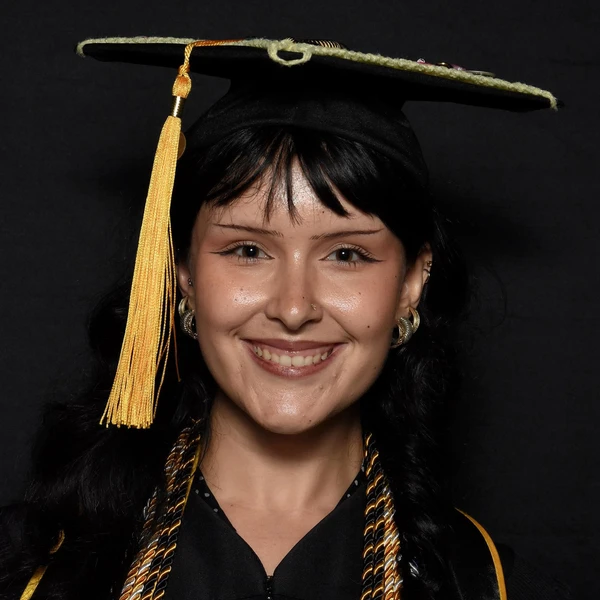
Sophia Thonis

1x

Finalist

Bio

Hello! My name is Sophia Thonis, and I am a first-generation college student currently attending the University of Central Florida. I am majoring in Clinical Psychology and minoring in Early Childhood Development & Education. I am passionate about helping others, as demonstrated by my long history of community service. Working in summer camps, equine-assisted therapies, and as a math tutor is what fostered my interest in helping children grow and flourish. My biggest goal in life is to open a clinical practice where I can help adolescents improve their well-being. In my free time, I enjoy learning American Sign Language. One day, I hope to incorporate my love of ASL into my career by providing psychological services to Deaf children and families.

Education

University of Central Florida

Bachelor's degree program
2022 - 2026
  • Majors:
    • Clinical, Counseling and Applied Psychology
  • Minors:
    • Human Development, Family Studies, and Related Services
Pembroke Pines Charter Hs

High School
2018 - 2022

Miscellaneous

  • Desired degree level:

    Master's degree program

  • Graduate schools of interest:

  • Transfer schools of interest:

  • Majors of interest:

    • Psychology, General
    • Human Development, Family Studies, and Related Services
  • Not planning to go to medical school
  • Career

    • Dream career field:

      Counseling

    • Dream career goals:

      Clinical Therapist for adolescents

    • Volunteer Crisis Texter

      Crisis Text Line
      2024 – 20251 year
    • Undergraduate Teaching Assistant

      University of Central Florida
      2023 – 20252 years
    • Intern

      The Counseling Corner
      2025 – 20261 year
    • Recovery Support Specialist Intern

      Aspire Health Partners
      2024 – 20251 year
    • Cashier

      Publix
      2023 – Present3 years
    • Instructor

      Mathnasium
      2021 – 20221 year
    • Receptionist

      GDR Acquisitions DBA Cors Air
      2021 – 2021
    • Data Entry Processor

      GDR Acquisitions DBA Cors Air
      2021 – 20221 year

    Arts

    • River of Grass ArtsPark Summer Camp

      Acting
      2018 – 2019

    Public services

    • Volunteering

      Relay for Life — Secretary
      2018 – 2022
    • Volunteering

      Girl Scouts of Southeast Florida — Member
      2015 – 2022
    • Volunteering

      River of Grass ArtsPark Summer Camp — Camp Counselor
      2019 – 2020
    • Volunteering

      Key Club — Vice President, Secretary, Class Representative
      2018 – 2022

    Future Interests

    Advocacy

    Volunteering

    Philanthropy

    Ethel Hayes Destigmatization of Mental Health Scholarship
    My passion for counseling is a fire that has been stoked my entire life. It was first lit when my father lost his battle with alcoholism. I have always been acutely aware of how this early loss permeated all areas of my life, often in maladaptive ways. It impacted my relationships, friendships, family, and beliefs about the world. I often felt abandoned, like I was chasing after something I would never find. How could my father continue to drink even if that meant leaving his family behind? As I got older, I pondered how mental illnesses impacted not only the individual but everyone surrounding them. I became increasingly curious about how illnesses developed, evolved, and how someone could be suffering despite keeping up appearances. More logs were added to the flame when I lost my aunt to suicide, my freshman year of college. My mother and stepfather were driving up to visit me for a weekend, and she took her life the minute they pulled into the parking lot. Devastated, shocked, and angry all at once, I once again thought about how someone could leave their family behind. She suffered behind closed doors for as long as I’d been alive, but no one noticed until it was too late. How could the woman whom I have never seen frown in my entire life be struggling in silence? My mom looked back on their childhood for answers and recalled traumatic events that made my stomach churn. Mental health was, and remains, a taboo subject for their generation. Children were forced to pick themselves up and dust themselves off after experiencing tragedy, but trauma never fully leaves us. The remnants stick to us like dust bunnies and show themselves in all areas of life. This moment was like kerosene to my interest in counseling. I wanted to make people feel heard when no one had listened to them before, give them a safe space where they didn’t need to hide their struggles. Children and adolescents should have the space to heal, and adults should have the opportunity to uncover what lies underneath the dust of their trauma. In the wake of my aunt’s death, I felt called to help people battling suicidal ideation. I learned about the Crisis Text Line from a flyer and immediately signed up. Between gruelling shifts at work and assignments across five classes, I spent hours taking meticulous notes on the training material. I wanted to make sure I was fully equipped to help. When people experiencing crises texted, I heard their stories, validated their feelings, and collaborated with them to create crisis management plans. Together, we navigated their suicidal thoughts, and I guided them to safety. While this experience was fulfilling, I grew frustrated with the rigid scripts and the impersonal nature of texting. I often felt unable to truly connect with others. This changed when I joined Aspire Health Partners' Recovery Support Specialist Internship Program. I was fortunate enough to be placed at Kate’s Place Clubhouse. Here, I helped adults experiencing co-occurring mental health and substance use disorders navigate their post-inpatient lives. The clubhouse modelled a work-ordered day where every member had a vital role to play. One unit cooked lunch, another wrote the daily brief of clubhouse activities, and the third unit served as a clothing store. I ran workshops on everything from job skills to coping strategies. However, my favorite part was talking with the members. Conversations began as small talk and evolved into discussions about dreams, goals, and passions. Each member had a unique, storied past. It was heartbreaking but inspiring to know that, despite what they have gone through, they are still pushing to better themselves. As I talked to the members, I understood more and more about what my father and aunt went through. When you are in the throes of addiction and mental health struggles, it is hard to see the light at the end of the tunnel. It can make you feel like you're doing your loved ones a favor by leaving them behind. From then on, it was my mission to make the members of the clubhouse feel important and cherished. Through this newfound understanding, I helped members focus on what brought them pleasure and purpose, encouraging them to pursue their hobbies. I noticed a member crocheting a hat, and suggested she write an article in the bimonthly newsletter about her creations. I listened to the tracks of aspiring musicians in the clubhouse and offered feedback. I helped another member tend to the clubhouse garden, and he eventually started one at his own apartment. He told me about how much peace gardening gave him in the storm of his anguish. While I gave them the kindling to start their own fire, they helped fan the flames of mine. My personal and professional experiences with mental health have helped shape the counselor I hope to become- a counselor who acknowledges how every person is a unique mosaic of their experiences and circumstances. My interest in childhood trauma has compelled me to work with adolescents, to get ahead of adverse circumstances, and with adults to heal past hurts. Addiction counseling is especially compelling to me because it exists at the intersection of these two avenues. This scholarship would allow me to sustain the fire that is my passion for counseling, and help others find their own spark.
    Emma Jane Hastie Scholarship
    I have always known that I was destined for a life of service. Growing up, my family was very involved in service organizations like Kiwanis and the Elks Club, and my parents would frequently bring me along for the ride. In elementary school, I helped my Stepfather make Thanksgiving care packages to give to families in our town. In middle school, I joined the Builder's Club and participated in beach cleanups with my friends. When I got to high school, I became the vice president of our Key Club and organized peanut butter and jelly drives to donate sandwiches to local food pantries. My passion for service then blossomed into a desire for a career in counseling. There are times when I dwell on the what-ifs. What if I became an engineer or lawyer, how much money could I make? But the longer I sit down and think about what career would fulfill me, I know that serving others will make me happier than any paycheck. When I got to college, I was excited to see how I could serve my new community. During my freshman year, I realized I had a lot of free time, and I wanted to spend it doing something to benefit others. Through getting involved in the Psychological Society, I learned about a volunteer opportunity at Crisis Text Line as a Virtual Crisis Counselor. I would just have to take a week-long training course; then, I would be able to talk to people who texted in and help them feel less alone. After my training was complete, it was time for me to go online for the first time. My stomach stirred with excitement and anxiety as I opened the first texter's message. The conversation started off well, I stuck exclusively to the prompts given in my training. I stayed online with the texter for over an hour, but it felt like nothing I said was helping. I frantically switched between tabs to look at the training material and sample messages to craft the perfect messages. As I was copying and pasting a response, I was met with the all-caps "STOP" which meant they had chosen to disconnect. To say I felt like a failure was an understatement. But, I knew I shouldn't give up that easily. A week later, I decided to try again. I logged on to the portal, relaxed my shoulders, unclenched my jaw, and took a deep breath. When someone texted in, I decided to go with my gut. Closing the several reference tabs I had opened, I empathetically reflected their words in my own way instead of trying to be perfect. It was important to me that the texters knew there was an actual human behind the screen who cared about them rather than reading messages that seemed automated. When we wrapped up our conversation, the texter told me how much relief they felt after talking about what was going on in their life. Seeing the words "Thank you" instead of "STOP" made me feel a sense of accomplishment I cannot put into words. Even just helping one person cope with a difficult situation was enough to make me feel fulfilled. But, I reminded myself that helping others won't always end as perfectly as it did this time. Instead of becoming discouraged, I can use it as an opportunity to grow. I plan to make a career out of serving my community, and while challenging, this was the perfect introduction.
    Early Childhood Developmental Trauma Legacy Scholarship
    Think about being on the playground at your elementary school. I bet you could remember a few things. Your friends, your teachers. While recalling some details may be a bit murky, others appear as clearly as if it happened yesterday. The mean thing that one classmate said about your hair, that stuck. Getting picked last for kickball, I'm sure that stuck with you too. Now, imagine what a similar exercise might be like for someone who suffered trauma as a child. The memories come back in painful waves during their day-to-day lives. It sticks with them every waking moment of their lives. For others, entire periods of their childhood are wiped clean and replaced with numbness so they never have to relive that pain. Our childhood experiences are like tattoos, they stick with us for the rest of our lives. No matter how small or seemingly insignificant, these events can change how we act even into adulthood. For example, when I was young, my mother once told me that school was my only job, so I better give it my all. This one statement changed my entire work ethic up to this day. I would, and still do, spend hours upon hours studying so I can do my “job” the best I can. While this is a positive example of the principle, the same can be applied to negative childhood experiences like manipulation and abuse. Experiencing childhood trauma changes nearly everything about a person’s life. For example, abusive parental relationships can cause disorders of attachment that affect how the individual forms new relationships. They enter a toxic relationship that mirrors their experiences as a child. The cycle of abuse and pain turns round and round. The effects can be more physical as well. Neglected children may experience delayed or even impaired development that can cause deficits in many areas such as intelligence, speech, and social skills. Childhood abuse can also create risk factors that make the later development of psychological disorders more likely. I am a firm believer that if trauma and abuse can be identified and mended during childhood, adults today would be more healed, well-adjusted, and even happier. This ideology has made me passionate about a career in Childhood Psychology. My dream is to become a therapist for young children and adolescents so I can nip the impact of childhood trauma in the theoretical bud. No child deserves to move into adulthood with the tattoos of trauma inflicted upon them. According to a study done by the National Children's Alliance, in 77% of child abuse cases, a parent is the one victimizing the child. For this reason, I want to work directly in childcare or school settings, rather than a counseling center where parents bring in their children to receive psychological help. By working in this setting I will be able to identify the signs of abuse and neglect, get in contact with the appropriate social services, and provide the child with the right kind of therapy for them. Furthermore, I want to create new community outreach programs that give mental health training to parents and children. In doing this, parents could learn about appropriate child development and what practices will aid in a healthy growing-up process. I want this program to be present in schools where children learn healthy coping strategies, and how to ask for help if they need it. Healthy communities are where healthy minds grow and thrive. I want to create an environment where mental health isn't taboo, and families are committed to improving the well-being of themselves and their children.
    Girls Ready to Empower Girls
    The most influential woman in my life is my mother. To me, she is the embodiment of the woman I want to be. Growing up, I understand more and more the sacrifices she has made for me to have an education. All I want to do is alleviate the pressure of providing for my education off of her shoulders. Shoulders that have hunched in stress during sleepless nights, worrying about how I will pay for college. Shoulders that have borne the brunt of every problem that needed to be solved, no matter how big or small. From settling conflicts to making sure everyone was fed, my mother, as if like Atlas, carried every burden. Meeting others’ needs before tending to her own, and keeping me blissfully ignorant of financial troubles because it was her burden to bear alone. In the rare instances where she presented her more vulnerable side, my mom told me about her own college experience. She told me how much her shoulders ached from working odd jobs to support herself financially. My mom tended bars, bagged at grocery stores, and cleaned hotels amid her studies. She told me how the pressure became too much to hold and she dropped out. Her voice broke as she explained she didn't want me to have to carry that same burden. Before hearing my mother's story, I selfishly thought that I was carrying the weight of the world. I took for granted the warm, comforting environment my mother crafted for me so I could explore who I wanted to become. When I told her I wanted to learn American Sign Language so I could provide therapy to deaf children, she bought me ASL workbooks and flashcards. When I told her I was worried about finding a college, she sat down with me for hours researching different schools. She sacrificed her own money and time to make sure I could achieve the goals she couldn’t. And at the time, I didn’t fully understand just how much she had been giving up for me my entire life. While being 19 certainly comes with pressures, I can't go on pretending like I'm the only one whose shoulders ache. It’s time for me to repay the woman who has sacrificed so much of her own life and happiness for me. If I can’t absolve my mother of the Earth-sized burden she has shouldered, I can at least take a few continent's worth. I want to succeed in my education and career to the fullest extent so I can show my mother that her sacrifices meant the world to me.
    Healthy Eating Scholarship
    Before coming to college, I had visions of myself holed up in my dorm room every night eating 99-cent ramen noodles and snacking on potato chips. College is a world of questionable dining hall food, 3 am vending machine runs, and hangover-induced Mcdonald's breakfasts. I was worried that I wouldn't be able to strike a healthy balance, and I would end up feeling the physical effects. Eating well is something that has always been important to me, especially being a vegetarian, and I wanted it to be a habit I adhered to as I moved away. When I have a consistent diet of fruits and vegetables, I find that I spring out of bed every morning and walk through my day full of energy. There is a smile on my face, and my skin even seems to glow. I remember feeling this for the first time when I started my health journey when I was 12 years old. I haven't looked back since. I have more energy to focus on self-care activities like reading, journaling, and yoga; and I find myself to be happier when I'm around my friends. The first grocery store trip I took after I had settled into my University of Central Florida dorm room was a challenge. I was stuck between two avenues down every aisle, the healthy choice and the convenient choice. With only a microwave and a mini-refrigerator in my arsenal, the convenient choices were calling my name. My arch-nemesis instant ramen mocked me from the shelves until I reached the produce section. I realized I could buy ingredients for and easily assemble the most basic of healthy meals, a salad. So, the ever-so-simple kale salad was the launching point for all of the healthy meals I would eventually cook in my room. As the weeks started to go on, I got more and more creative. I had a few staple healthy items that I would buy at every grocery store trip. Minute brown rice, cans of protein-rich black beans, bell peppers, kale, tofu, sweet potato (surprisingly easy to microwave), and eggs (also a delight in the microwave). My roommate would come back from class and witness me furiously chopping up ingredients for my rainbow-colored veggie wrap, just as surprised as I was that I could manage to create a balanced meal in a place like this. Every day I would proudly send my mother pictures of my vibrant creations and think, "I did it! I didn't live up to the fears I had before coming to college." That was until one fateful day. I opened up one of my ingredient drawers so I could begin the dreaded process of reorganizing when I spotted it. There in its offensively-bright orange packaging, Maruchan Instant ramen. How did this get there, and more importantly WHO put it there, it certainly wasnt me? My mother, I thought, must have snuck a few packages into my stuff for fear that I would go hungry. I closed the drawer and moved to the fridge as I pondered. I secretly was craving the salty noodles that I hadn't eaten since childhood. As I looked at the vegetables in my fridge I had an idea. Before I knew it I was chopping them up, opening the noodle package, and assembling a big, warm bowl of Instant Ramen filled to the brim with veggies and tofu. It was at that moment I realized being healthy didn't mean eating only what others would call "rabbit food". As long as I balanced what I ate, I could continue being my high-energy healthy self.
    Grace Lynn Ross Memorial Scholarship
    The brain has always been something that has fascinated me. Learning about how it shapes our actions, our reactions, and our personalities is something I could do for hours on end. In my free time, I enjoy watching footage of developmental psychological studies from the 1960s and reading the works of psychologists and philosophers like Carl Jung and Friedrich Neitzche. Applying this knowledge to the world around me is also something I do often. When I’m watching movies, reading books, or simply observing others, I think about how all the individual parts of the brain come together to make people act the way they do. I sometimes like to watch my favorite films for the third or fourth time over, pay attention to a specific character, and frantically scribble in a notebook every facet of their personality. It's because of this unusual hobby I know the Myers-Briggs personality type of every Dead Poets Society character and can recite every line of Pitch Perfect. Because of this, I know that majoring in psychology is the right path for me. Furthermore, I have dreams of becoming a clinical psychologist, and eventually opening my own practice so I can help people in need. I want to be a therapist specifically for teens and adolescents. I know firsthand how difficult it can be to navigate the world as a young person. The feeling of walking a tightrope between adulthood and childhood is hard to bear on your own, so I want to be a beacon for others. I am also a firm believer that the smallest things that happen to us as children, from teasing on the playground to poor advice from parents, leave lasting impressions on our behavior and thought patterns. For example, when I was in elementary school and the weight of adding fractions was too much to bear, my mom would always repeat this to me. "School is your only job, so you better do it correctly". What was intended as a motivation, I took as a threat. I began to develop anxiety around school and whenever I felt that my work was not up to par, I would deem myself a failure. This continued through high school until I started seeing a therapist and she helped me move past those feelings. This event inspired me, I too wanted to help young people get to the root of their issues before they can be affected into adulthood. Furthermore, because I’ve spent four years (and counting) learning American Sign Language, I want to extend my practice to Deaf members of my community as well. Those in the Deaf community deserve to have access to the best resources, and this includes psychological counseling.