Hobbies and interests
Music
Photography and Photo Editing
Reading
Chick Lit
I read books multiple times per week
LOW INCOME STUDENT
Yes
FIRST GENERATION STUDENT
Yes
Solea Roberts
1x
FinalistSolea Roberts
1x
FinalistBio
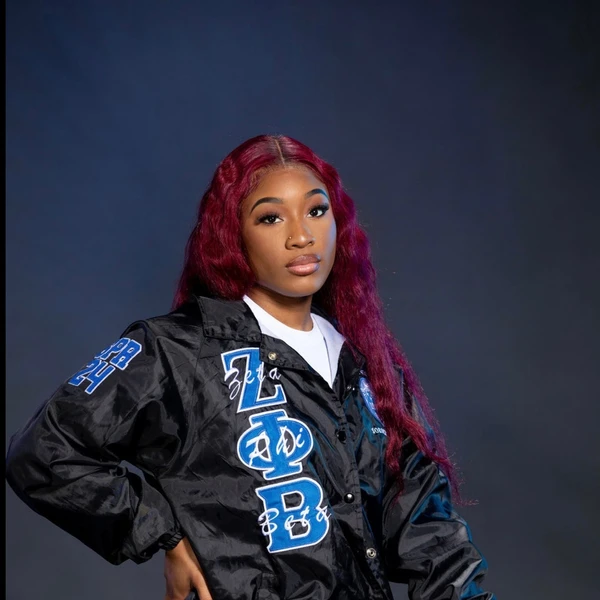
My name is Soleá Roberts, and I am a dedicated nursing student at Oakland University, pursuing my Bachelor of Science in Nursing. As a first-generation college student from an underserved community, I am passionate about making healthcare more accessible and equitable, especially for marginalized populations. I currently work as a Patient Care Technician on an oncology floor, with previous experience as a CNA and phlebotomist. These roles have deepened my desire to serve vulnerable patients and strengthened my commitment to the nursing profession. I am actively involved in leadership and service through Zeta Phi Beta Sorority, Inc., and I’m committed to using my education to advocate for health equity and improve care in underserved areas.
Education
Oakland University
Bachelor's degree programMajors:
- Registered Nursing, Nursing Administration, Nursing Research and Clinical Nursing
Minors:
- Practical Nursing, Vocational Nursing and Nursing Assistants
Miscellaneous
Desired degree level:
Master's degree program
Graduate schools of interest:
Transfer schools of interest:
Majors of interest:
- Registered Nursing, Nursing Administration, Nursing Research and Clinical Nursing
Career
Dream career field:
Hospital & Health Care
Dream career goals:
Patient care Technician
MyMichigan Health2024 – 20251 year
Sports
Cheerleading
Varsity2018 – 20224 years
Track & Field
Varsity2018 – 20224 years
Public services
Volunteering
East side Soup Kitchen — Helper2023 – 2025Volunteering
Midland Children’s Grief Center — Creator2024 – 2025Volunteering
SVSU — Worker2024 – 2025
Future Interests
Advocacy
Volunteering
Philanthropy
Maxwell Tuan Nguyen Memorial Scholarship
The first time I really felt pulled toward healthcare, I was working as a CNA in a long term care facility. One of the residents, a woman with dementia, had been left in pain and confusion during shift change. I called the nurse, and what I witnessed stuck with me. She did not just give the patient medication. She knelt down beside her, explained everything slowly, and stayed until she felt safe. In that moment, I realized how much power nurses have — not just to treat, but to comfort and advocate. That moment stayed with me and became my reason.
I have been working in healthcare for a few years now, not only as a CNA but also as a phlebotomist and patient care tech. I have worked in hospitals, drawn blood in the emergency room, and supported patients in long term care. I started these roles just trying to survive. I was on my own by 17, balancing work and school, doing everything I could to keep going. But even through the chaos, I never let go of the idea that I wanted to be a nurse.
My dream is not just to become a registered nurse — it is to become an NFL nurse and later, a nurse practitioner in sports medicine. I have always loved sports, especially football. But growing up, I never saw people like me on the sidelines in medical roles. I want to change that. I want to be the one athletes can count on when something goes wrong, the one who understands both the science and the stress that comes with performance, injuries, and recovery.
But it is not only about football. I want to use my career to open doors for others too. I want young girls, especially Black girls, to see someone in that position and realize they can do it too. I want to bring representation to a space that rarely offers it. I want to be a mentor and eventually create opportunities for students who need help finding their path in medicine or sports.
I have failed before. I got into nursing school once and did not pass. I was overwhelmed, working too much, and dealing with personal struggles I had not yet faced. But I did not let that stop me. I transferred, got into therapy, and created a new plan. I am still working, still learning, and still pushing forward. That setback taught me resilience and reminded me of my “why.”
I plan to make a difference by being the kind of nurse who does more than treat — one who listens, advocates, and truly sees people. My past shaped me, but it will not limit me. It is the reason I am walking this path in the first place.
Beacon of Light Scholarship
Honestly, I didn’t always know I wanted to work in healthcare. I just knew I wanted to help people and do something that mattered. I’ve been working since I was 17, on my own, figuring things out while trying to keep myself together. I became a CNA and a phlebotomist not because it was easy, but because it was stable and gave me a way in. But the more I worked, the more I realized this is what I’m meant to do.
I’ve always had a love for sports, especially football. I used to joke about working for the NFL one day, but now it’s not a joke—it’s the plan. I want to become an NFL nurse and eventually a nurse practitioner in sports medicine. I want to be the one on the sidelines helping athletes recover, stay strong, and get the care they need when the pressure is high. It’s a lane a lot of people don’t even know exists, but I’ve done my research, and I know it’s real and possible.
There’s not a lot of people from my background doing this kind of work. I come from an underserved community where healthcare access isn’t the best, and representation is even worse. Growing up, I didn’t see people who looked like me in these roles, and that made it hard to imagine myself in them. But I’ve made it this far by pushing through, even when the odds weren’t in my favor.
I failed out of nursing school once, and that was a low point for me. I was dealing with so much, working two jobs, trying to stay afloat, and keeping things bottled up. I didn’t want to quit, but I just didn’t have the right support at the time. That failure made me stop and ask myself what I really wanted, and if I was willing to start over to get there. The answer was yes.
So I transferred, got serious about my mental health, built a schedule that actually works for me, and kept showing up for myself. I’m back on track now, more focused than ever. I still work in the hospital. I still hustle. But I’ve found my purpose.
I want to work in sports medicine not just because of the NFL, but because I care about what athletes go through behind the scenes. I want to be someone who understands them, who treats them with compassion and knowledge. One day, I hope to mentor other girls who have dreams like mine, but don’t know how to get there. If I can do it, so can they.
Henry Respert Alzheimer's and Dementia Awareness Scholarship
Alzheimer’s is one of those diagnoses that doesn’t just affect one person. It touches the whole family. I saw that up close—both at work and in my own home. My grandmother passed away from stomach cancer, but toward the end of her life, she was also showing signs of early dementia. At the time, I didn’t fully understand what that meant. But I knew something was changing in her.
She was the heart of our family—wise, loving, and always two steps ahead. So when she started forgetting things she just said or asking the same question over and over, it hit me hard. Even as we were dealing with her cancer, I could feel her mind slipping. I helped take care of her as best I could. I made her meals, kept her company, and gently reminded her when she got confused. It wasn’t easy, but it showed me something important: that being there for someone, even when you can’t fix things, still matters.
That experience stayed with me when I became a CNA. I’ve worked with many dementia patients since then—on the oncology floor, in long-term care, even in the ER and ICU. One woman I cared for, X.X., was 92 and deep into Alzheimer’s. She didn’t know her name anymore, but her face lit up when she heard old gospel music. She’d smile when I held her hand or wrapped a warm blanket around her shoulders. I learned how to connect without using many words. A soft voice, kind eyes, just sitting with her—it made a difference.
I’ve worked with patients like her in all kinds of settings: medical ICU, neuro trauma, general med. And each time, I’ve seen how Alzheimer’s doesn’t just take away memory—it changes everything. I’ve seen families grieve while their loved one is still alive. I’ve felt that same kind of grief myself.
All of these moments, both personal and professional, have shaped what I want to do with my life. I want to focus on dementia care, especially in communities that don’t have enough support or access. I want to help families recognize the early signs, find resources, and feel like they’re not alone in this. One day, I hope to bring memory care into the community, where people feel safer and more understood.
I also want to push for better care for Black and Brown families. I’ve seen too many get overlooked or misunderstood. As a Black woman, I want to be someone who changes that—who treats patients like people, not just symptoms, and who supports families the way I did for my own.
Losing my grandmother was one of the hardest things I’ve gone through. But she gave me something I carry every day—purpose. She showed me that care isn’t always about curing. Sometimes it’s just about being there. And that’s what I plan to do. Bring heart into nursing, one patient at a time.
Cariloop’s Caregiver Scholarship
Caregiving has been a part of my life for as long as I can remember. As the oldest sibling, I naturally stepped into a second-parent role. I cooked meals, helped with homework, made sure my siblings were dressed and safe, and just tried to be someone they could count on. While other kids were focused on hanging out or going out, I was focused on making sure everyone at home was okay. It wasn’t always easy, but it shaped who I am. I’ve always been the one to show up when things get hard.
One of the first times I really understood what it meant to care for someone was when my grandma started to get sick. She passed away in 2017 from stomach cancer, but even before that, she had started showing signs of dementia. I was still a teenager, going to school during the day and helping take care of her at home. I would make her food, remind her of things she forgot, and just sit with her when she seemed lost. That time taught me that caring isn’t always about doing something big. Sometimes it’s just being there. It taught me patience, and that presence alone can be powerful.
That experience—and the way I had always cared for my siblings—is what pushed me into healthcare. I became a CNA, and later I worked as a phlebotomist in the emergency room. I’ve worked on a lot of different units—oncology, ICU, neuro trauma, general med, labor and delivery—and in every single one, I’ve carried those early lessons with me. I’m not afraid to sit with someone who’s crying, to advocate when a patient feels ignored, or to pay attention to the small things that make people feel human.
Being a caregiver made me strong. It made me emotionally aware. It taught me to lead with compassion. But it also opened my eyes to how many people don’t get the care they deserve—especially those in low-income communities. That’s why I chose nursing. I don’t just want to treat symptoms. I want to support the full person, especially families who’ve carried invisible burdens for years.
This scholarship would mean a lot. I’m balancing hospital shifts while going to school full-time, and it’s hard. Sometimes I’m just trying to make it through the week. Getting this support would take some pressure off, and let me give more energy to what really matters—learning, growing, and being there for my future patients.
More than anything, this scholarship would be proof that everything I’ve gone through matters. That all the nights I stayed up taking care of others, all the work I’ve put in, and all the love I’ve given hasn’t gone unnoticed. I’m not just chasing a career. I’m walking in my purpose—and I’m not stopping.
Linda Hicks Memorial Scholarship
During my first two years of college, I went through something that completely changed my life. I ended up in a relationship with a man who was older than me. At first, I thought it was love. But it didn’t take long before things shifted. He used my age, my inexperience, and how much I trusted him to control me. It became emotional abuse. He isolated me from people I cared about and slowly made me feel like I didn’t know who I was anymore. On the outside, everything looked normal, but on the inside, I was struggling. I didn’t realize at the time that I was experiencing intimate partner abuse. I just knew something felt wrong.
Getting out of that relationship was one of the hardest things I’ve ever done. It left me with wounds that you couldn’t see, but that I felt every day. I carried a lot of fear, shame, and self-doubt. I kept asking myself how I let it happen, and what that said about me. But one day, I made a decision. I wasn’t going to let what happened to me be the end of my story. I wanted to find purpose in the pain. That’s when I found my way back to nursing.
Now that I’m a nursing student, I see the kind of nurse I want to be much more clearly. Of course I want to help with physical care, but I also want to be someone women can trust. I want to be the nurse who notices the quiet signs. Who takes the time to ask, “Are you okay?” and really listens. I want to work in community health, especially in clinics and hospitals that serve mostly Black neighborhoods—because that’s where this kind of support is needed the most.
Black women go through a lot. We’re often affected by domestic violence, addiction, and trauma—but we don’t always get the kind of care that truly helps. Sometimes we’re judged before we even speak. I want to help change that. I want to use my nursing degree to make sure women get more than just medical help. I want to connect them with therapy, shelter, and people who care. I want to be part of a system that treats survivors like people, not just patients.
This whole experience taught me so much. It showed me how abuse can be hidden in plain sight, and how important it is to build trust in healthcare. It taught me that women—especially Black women—need to be heard and believed when they finally speak up.
I’m not ashamed anymore. I’m proud of how far I’ve come. And I want to help other women find their strength again, just like I did. This scholarship would help me keep going—not just in school, but in the mission I’ve chosen: to bring healing, safety, and support to the women who need it most.
Clarice Kanouse Memorial Scholarship
When I was a kid, I used to wrap my Barbie dolls in toilet paper and pretend they were patients. I didn’t know what I was doing at the time—I was just playing. But looking back, I realize that was the start of something real. I come from a place where access to good healthcare isn’t easy. Growing up in a single-parent home and being a first-generation college student, I’ve always had to figure things out on my own. Nothing has ever come easy, but one thing I’ve never let go of is my dream to become a nurse.
My path hasn’t been perfect. In fact, I had to step away from nursing school once. A lot was going on in my personal life, and it hit me hard. I wasn’t okay. I felt like I let myself down—and everyone else, too. But after some time to heal and think, I realized I still wanted this. I still needed this. So I made the decision to start over. I transferred schools, picked myself back up, and reminded myself why I started in the first place: I want to help people who don’t always get the care they deserve. People like me and the ones I grew up with.
To support myself, I started working in healthcare. I spent three years as a phlebotomist, then became a CNA. I’ve worked with cancer patients, held the hands of dying elders, and helped people who couldn’t speak for themselves. These jobs weren’t just paychecks—they taught me how to really care for people. How to be gentle when things are chaotic. How to listen without assuming. How to show up, even when I’m tired.
Balancing work, school, and bills has been a challenge. I’ve had to make tough choices—like buying groceries instead of a textbook, or working overnight before an early class. But I keep going because I know this isn’t just about me. It’s for the people coming after me. For the kids in my neighborhood who think they can’t make it. I want them to see that you don’t have to be born into the perfect situation to make a difference.
This scholarship would help me more than I can explain. It would take some of the weight off and let me put more energy into school instead of worrying about how I’m going to pay for it all. It would be a sign that someone sees my effort and believes in what I’m trying to do. And I promise I won’t take that for granted.
In the future, I want to work in public health or as a community nurse. I want to be in neighborhoods like the one I came from, teaching people how to take care of their health and making sure they have someone who listens. I believe everyone deserves that.
This isn’t just a dream for me. It’s personal. And no matter what, I’m going to keep showing up.
Catrina Celestine Aquilino Memorial Scholarship
My name is Soleá Roberts. I’m a first-generation college student, and honestly, getting here has been one of the hardest things I’ve ever done. Nothing about this path has been easy. I’ve failed, had to start over, and questioned myself more times than I can count. But no matter what, I keep showing up because I know this is where I’m supposed to be.
I come from a community where healthcare isn’t always easy to get, and when people do go, they don’t always feel seen. I’ve watched my family go through that—sitting in waiting rooms for hours, getting rushed through appointments, feeling like no one was listening. It’s hard to trust a system that doesn’t make space for you. That’s what made me want to become a nurse. I don’t just want to be part of the system. I want to be someone who makes people feel safe inside of it.
My first two years of college were rough. I was dealing with a relationship that drained me mentally and emotionally. It was with someone older who used my lack of experience against me, and it really took a toll on every part of my life—school, work, and how I saw myself. When I finally got out of it, I had to rebuild everything from scratch. I was behind on school, broke, and emotionally exhausted. But walking away from that and choosing myself again was the first real step I took toward becoming the kind of nurse I want to be.
Since then, I’ve been working in healthcare. I started as a CNA and a phlebotomist. I’ve worked in so many areas—emergency room, oncology, labor and delivery, general med, even the ICU. Every shift is different, but one thing stays the same: people just want to feel like they matter. That’s what I focus on. Whether I’m drawing blood or helping someone use the bathroom, I show up with kindness and patience, because I know how it feels to need someone and not have anyone.
These experiences shaped what I want to do. I’m not just trying to graduate and get a job. I want to work with people who feel forgotten—especially low-income families and Black women like me. I want to focus on trauma-informed care and mental health. One day, I hope to open a mobile clinic that brings care into neighborhoods that are often overlooked.
This scholarship would help take a weight off my shoulders. But more than that, it would mean someone believes in what I’m trying to build. I’ve seen what pain looks like up close. I’ve lived it too. I want to help others feel like they can breathe again. That’s what being a nurse means to me.
Tanya C. Harper Memorial SAR Scholarship
I never really had the chance to take the easy way. Since I was a teenager, I’ve been figuring things out on my own. I’ve worked while going to school, paid my own bills, and learned how to survive without much help. Being a first-generation college student, there’s no one before me who showed me how this is supposed to go. But I’ve always known I want something better, not just for me, but for the people who come after me too.
What really pushed me toward the medical field was seeing how people in my community are treated when they need care. I’ve seen family members get brushed off or not taken seriously. I’ve seen people leave appointments with more questions than answers. And I’ve watched people just avoid going to the doctor altogether because they don’t feel heard. That stuck with me. I want to be the one that changes that for somebody else.
I’ve worked as a CNA and a phlebotomist, and I’ve been in hospital rooms where patients were scared or confused, and no one really took the time to explain things. That’s when I stepped in—not because I had all the answers, but because I understood how it felt to be on the other side of that. I’ve worked in different departments like med-surg, labor and delivery, the ER, and oncology. Every patient taught me something. Every shift reminded me that I’m where I’m supposed to be.
I don’t just want to be in the medical field. I want to be part of the reason more people feel safe in it—especially Black patients. I want them to walk in and see someone who looks like them, who understands where they’re coming from. That matters. It changes everything.
Long term, I want to work in underserved areas where healthcare isn’t always easy to access. I want to make sure families get the right information, and not just when something is wrong. I care about health education, prevention, and making sure people feel comfortable asking questions without being judged.
I’m proud of where I come from, and I’m proud of how far I’ve come. This path hasn’t been easy, but I know it’s right. I’m not just chasing a degree—I’m chasing impact. I want to be the kind of provider who really sees people. And if this scholarship helps me get one step closer to that, I’ll be grateful every step of the way.
Rose Browne Memorial Scholarship for Nursing
I didn’t grow up with much. Life got real for me at a young age. By the time I was seventeen, I was already out on my own, not because I wanted independence, but because I had no choice. I had to survive. I was juggling school and work while trying to figure out how to just make it through the day. There were times I didn’t know where I was going to sleep or how I was going to eat, but I kept going. I didn’t really have comfort, but I had determination. That drive is what pushed me toward something bigger than myself.
When I first started working in healthcare, it was just to pay the bills. I became a CNA and later a phlebotomist. I didn’t expect to fall in love with the work, but the more time I spent with patients, the more I realized how powerful small acts of kindness could be. I saw how nurses weren’t just doing their jobs. They were comforting people, showing up for them when they needed someone the most. That’s when I started picturing myself in that role.
Working in different areas of the hospital—emergency room, oncology, labor and delivery, med surg—I got to see how real and meaningful nursing is. I saw scared patients who didn’t have family around, and I tried my best to be there for them. I kept thinking about how many times I had to face hard things alone and how much it would’ve meant to have someone like that for me. That’s why nursing felt so personal to me.
I’m a first generation college student, and that means a lot. It’s not just about me. I’ve got younger siblings watching everything I do. I want them to see that even if life throws a lot at you, you can still make it. My path has been rough, but it’s shaped me. It’s taught me how to care for people with empathy, patience, and real understanding.
Nursing, to me, isn’t just a job. It’s a way to give back. I know what it feels like to be overlooked, to feel invisible. I never want my patients to feel that way. I want them to feel seen, heard, and taken care of.
This isn’t just a career choice for me. It’s something I’m passionate about because of everything I’ve lived through. I’ve worked hard to get here. I’ve failed, I’ve learned, I’ve grown. And now I’m ready to use what I’ve been through to help others. Nursing is my calling, and I’m finally ready to answer it.
Dr. Christine Lawther First in the Family Scholarship
Being the first person in my family to earn a college degree is more than just a milestone—it is a symbol of hope, healing, and breaking generational cycles. It means rewriting a narrative that has long been defined by survival, not opportunity. For me, this achievement represents the sacrifices of my mother, who worked multiple jobs to keep the lights on, and the prayers of my grandmother, who never had the chance to finish high school. Earning my degree means I am turning struggle into success and carrying the dreams of those who came before me into a future they never got to see for themselves.
But being first also comes with weight. I have no blueprint to follow, no family legacy of higher education to lean on. I’ve had to figure out how to navigate college applications, financial aid, course loads, and career decisions completely on my own. It’s been overwhelming, but it has made me resilient, resourceful, and fiercely determined. I’ve learned to advocate for myself, to work hard even when no one is watching, and to never take my education for granted. Every lecture, every test, every long night spent studying is a step forward not just for me, but for my entire family.
In college, I am pursuing a Bachelor of Science in Nursing. My journey into healthcare began with my experiences as a Certified Nursing Assistant and a phlebotomist in the emergency room. I’ve worked on medical oncology floors, ICU units, and labor and delivery, caring for patients through some of their most vulnerable moments. I’ve watched life begin and end, and I’ve learned that nursing is not just about medicine—it’s about presence, empathy, and advocacy. These experiences have shaped my desire to become a nurse who leads with heart and serves with purpose.
My long-term goals extend far beyond graduation. After becoming a registered nurse, I hope to specialize in either critical care or trauma nursing. Eventually, I want to return to school to become a nurse practitioner and open a community wellness center that offers culturally competent, affordable healthcare to underserved populations. I want to serve Black and Brown communities like the one I came from—places where medical care is often delayed, denied, or misunderstood. I want to bridge the gap between hospitals and the neighborhoods they serve, educating families on preventive care, mental health, and chronic illness management.
Being a first-generation college student is not easy. It comes with pressure, responsibility, and the constant fear of failure. But it also comes with pride, passion, and a deep sense of purpose. I am not doing this just for myself—I’m doing it for every young girl who has ever been told that her dreams were too big, too unrealistic, or too expensive. I am doing this for my family, for my community, and for every patient I will one day care for.
This degree is only the beginning. It’s the foundation of a future I’m building with intention, compassion, and the unwavering belief that I was born to make a difference.
Dr. William and Jo Sherwood Family Scholarship
When you grow up watching your parents stretch every dollar, witnessing the sacrifices made just to keep the lights on or to put gas in the car so you can make it to school, the idea of opportunity becomes sacred. For me, education is not just a path—it’s a lifeline. As a first-generation college student, pursuing a career in nursing isn’t simply about upward mobility. It’s about healing generational wounds, giving back to my community, and becoming the nurse that people like my family always needed but rarely had access to.
Receiving this scholarship would make a tremendous difference—not only financially but emotionally and academically. Right now, I juggle school, night shifts at the hospital, and serving part-time to cover rent, bills, and tuition. There are days I come home from a 12-hour shift and have to rally the energy to study for an exam or complete clinical assignments. The stress of managing everything can be overwhelming, but I keep going because I know what’s at stake. This scholarship would ease that pressure, allowing me to reduce my work hours and fully focus on excelling in my nursing courses and clinicals.
More than anything, it would be a reminder that my story matters—that despite the setbacks, financial limitations, and emotional burdens, I am still seen and supported. And that encouragement, that validation, would push me even harder to succeed.
I plan to use my nursing degree to serve communities that are often overlooked—low-income neighborhoods, Black and Brown families, and underserved populations who have been let down by the healthcare system. With my past experience working as a CNA on the oncology, ICU, neuro trauma, labor and delivery, and general medical floors—as well as a phlebotomist in the emergency room—I’ve seen the gaps in care firsthand. I know the fear in a patient’s eyes when they feel misunderstood, and I’ve made it my mission to become the kind of nurse who brings not just clinical excellence, but comfort, empathy, and advocacy to every patient interaction.
This scholarship would help propel me into that future. It’s not just about the money—it’s about unlocking time, space, and energy for me to truly learn, grow, and lead. It’s about becoming the kind of healthcare professional who doesn’t just treat symptoms, but changes lives.
Investing in me means investing in a nurse who is dedicated, tested, and fueled by purpose. With this scholarship, I’ll have the freedom to finish strong, give back boldly, and keep my promise to those I serve: to show up fully, always.
Sara Jane Memorial Scholarship
The nursing field drew me in not from a textbook, but through lived experience and real human connection. I grew up in a community where access to quality healthcare wasn’t guaranteed, and watching my loved ones struggle with miscommunication, limited resources, and dismissal in medical settings lit a fire in me. I realized early on that I didn’t just want to be in the room—I wanted to make a difference in how people are treated, heard, and healed.
What excites me most about nursing is the balance between skill and compassion. Nurses are the first to notice subtle changes in a patient’s condition, but they’re also the ones holding a hand when things get tough. They are educators, protectors, and fierce advocates. I want to be that nurse—especially for patients who feel unseen by the healthcare system.
My long-term goal is to become a registered nurse working in high-acuity environments, specializing in either trauma or critical care. Eventually, I hope to open a community wellness center focused on holistic and preventive care for underserved families, particularly in Black and Brown communities. I want to provide culturally competent care that addresses the full person—not just their chart.
To get to this point, I’ve built my foundation with a wide range of clinical experience. I worked as a Certified Nursing Assistant (CNA) on a medical oncology floor, where I cared for patients undergoing some of the hardest chapters of their lives. I learned how to show up with both strength and softness—helping patients bathe, eat, and feel human again when treatment left them weak. I’ve also worked on a Medical ICU floor, Neuro Trauma ICU, General Medical units, and Labor and Delivery. Each setting challenged me in a new way, pushing me to think critically, act quickly, and adapt with empathy.
Additionally, I worked as a phlebotomist in the emergency room, where every moment counted. In that fast-paced environment, I learned how to stay calm under pressure, communicate clearly, and prioritize care. Drawing blood might seem simple, but in an emergency room, it could be the first step toward saving someone’s life. I never took that responsibility lightly.
These experiences have not only sharpened my clinical skills—they’ve shaped my character. I know how to build trust with a patient in a matter of minutes, how to advocate for someone too scared to speak up, and how to read a room when words fail. I’ve seen what happens when patients are treated with dignity, and I’ve seen the damage when they’re not. That’s why nursing is more than a job to me—it’s a mission.
I’m also proud of what I’ve accomplished outside the hospital. As a first-generation college student, I’ve faced financial struggles, personal loss, and academic setbacks. But I never let any of that stop me. I’ve always found a way to keep going, because I believe deeply that my purpose is greater than my pain.
This scholarship would not only support my education—it would support a future nurse who brings heart, hustle, and a clear sense of purpose to everything she does. I’m ready to keep showing up, learning, and serving—because nursing isn’t just what I do. It’s who I am.
Wieland Nurse Appreciation Scholarship
I never thought a hospital room would feel like home. But after spending countless nights watching nurses care for my grandfather as he battled multiple health issues, something in me changed. I wasn’t just observing medical professionals—I was watching healers, listeners, advocates, and the steady hands of hope. That experience was the first time I saw nursing not just as a profession, but as a calling.
Growing up in an underserved community where health care often felt like a privilege instead of a right, I learned early on what it meant to go without. I watched family members delay care because they couldn’t afford it. I saw neighbors suffer in silence due to mistrust or lack of access. Those memories became my motivation. I knew that if I could become a nurse, I could be part of the solution—offering both care and compassion to those who are too often overlooked.
My journey hasn’t been easy. As a first-generation college student, I’ve had to navigate the world of higher education on my own. I’ve worked multiple jobs, including as a CNA and a phlebotomist, not just to make ends meet, but to gain firsthand experience in the field I love. I’ve cared for patients at their most vulnerable—changing linens for stroke survivors, helping oncology patients stay comfortable during chemotherapy, and drawing blood from children who were scared and needed a calm, steady presence. These moments have solidified my purpose: I am meant to be a nurse.
What inspired me most wasn’t just one moment—it was the accumulation of them. It was the elderly woman who squeezed my hand and said, “You made my day better.” It was the single father who thanked me for treating his child like my own. It was my younger self, who needed someone to look up to and didn’t always have that. I decided to become the person I once needed—the nurse who not only heals, but truly sees people.
Nursing is more than a career to me—it’s a lifelong mission. I want to become a registered nurse who works in underserved communities, helping bridge the gap between medical systems and those they often fail to reach. Eventually, I hope to open a wellness clinic focused on prevention, education, and culturally competent care. But for now, I’m focused on building the foundation. That means continuing my education, gaining as much clinical experience as I can, and surrounding myself with mentors and patients who will help me grow.
This scholarship would relieve a significant financial burden and allow me to dedicate more time to my studies and clinical training. It would bring me one step closer to living out a purpose I’ve carried in my heart for years. More importantly, it would affirm that my story, my struggle, and my dreams matter.
I found out about this scholarship through an online search while looking for financial resources to help support my nursing education.