Hobbies and interests
Acting And Theater
Advocacy And Activism
Animals
Alpine Skiing
Cinematography
Journalism
Movies And Film
Reading
Adult Fiction
Economics
Horror
Humor
Science Fiction
Romance
Thriller
I read books daily
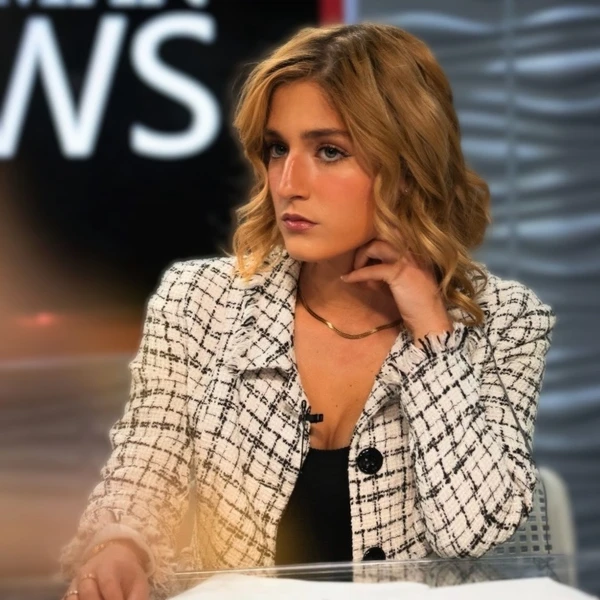
Sofia Youngs
1x
Finalist
Sofia Youngs
1x
FinalistBio
I'm a broadcast journalist with more than eight years of experience spanning on-camera reporting, multimedia production, international documentary filmmaking, and entertainment and business journalism. My work has taken me from covering red carpets in Los Angeles to producing documentaries in Europe and reporting on business and politics through the Dow Jones News Fund, where I was selected from more than 1,000 applicants for one of the country's most competitive journalism internships. Every newsroom I've joined has trusted me with greater responsibility because I consistently deliver thoughtful, engaging stories under pressure.
I have never believed that opportunities should be waited for. They should be earned. I've built my career by walking into rooms where I had something to learn, asking questions other people were afraid to ask, and treating every assignment, no matter how big or small, as an opportunity to produce work I'm proud to put my name on. I have high expectations for myself because I know what I'm capable of, and I hold my work to that same standard. I'm not looking for someone to believe in my potential. I'm looking for opportunities to prove what I already know I can do.
Education
Chapman University
Bachelor's degree programMajors:
- Journalism
Miscellaneous
Desired degree level:
Master's degree program
Graduate schools of interest:
Transfer schools of interest:
Majors of interest:
Career
Dream career field:
- Broadcast Media
Dream career goals:
Being an entertainment journalist or traveling food journalist
Producer
Sikhlens2025 – 2025Business and Political Intern
Richmond BizSense2026 – 2026Columnist
Los Angeles Magazine2026 – 2026
Sports
Volleyball
Club2010 – 20199 years
Awards
- gold medal
- silver medal
- bronze medal
Swimming
Club2010 – 202010 years
Arts
Los Alamitos HS
Visual Arts6:20 : Short Film, Time's Up: Short Film, Left Field: Short Film2020 – 2023
Public services
Volunteering
National Charity League — Chapter President2017 – 2023
Future Interests
Advocacy
Politics
Volunteering
Philanthropy
Entrepreneurship
Sloane Stephens Doc & Glo Scholarship
I have never believed journalism is about being the person in front of the camera. It is about the people on the other side of it.
The impact I want to make has nothing to do with my name or my face being recognized. It has everything to do with the stories I choose to tell and the people who finally feel seen because someone took the time to listen.
Growing up as the granddaughter of Cuban immigrants and the daughter of a first-generation Cuban American mother, I was raised to understand that every opportunity carries a responsibility. My grandparents left everything they knew behind so future generations could have choices they never had. They taught me that success is measured not by what you achieve for yourself, but by what you leave behind for others. That lesson has shaped every decision I have made.
Higher education has given me more than technical skills. It has taught me how to think critically, ask difficult questions, and recognize the humanity in every story. It has also reinforced something I have always believed: the most powerful journalism is rooted in empathy. People do not remember statistics. They remember stories. Those stories have the ability to influence public opinion, inspire action, and even save lives.
My own life has shown me the importance of being heard. After surviving sepsis because medical professionals initially dismissed my symptoms, I learned firsthand what it feels like to have your voice overlooked. My family's experiences with addiction taught me that the people struggling the most are often the ones society is quickest to judge. Those moments changed the way I see the world. They also changed the kind of journalist I want to become.
I want to report on the issues that affect people's everyday lives, from mental health and addiction to healthcare, housing, education, and public policy. I want to hold leaders accountable while also highlighting the quiet acts of kindness happening in communities every day. Too often, the people making the biggest difference are the ones who never make the headlines. I want to change that.
I am also passionate about mentoring the next generation of journalists, especially first-generation college students and young women who may not see themselves represented in leadership positions. I know what it feels like to question whether you belong in a room. I want my career to show others that talent, curiosity, and hard work matter more than where you come from.
The people who inspire me are not celebrities or public figures. They are the local business owners rebuilding neighborhoods after setbacks, the teachers who stay long after the final bell, the healthcare workers who fight for patients who cannot fight for themselves, and the ordinary people whose extraordinary resilience rarely receives recognition. They remind me that meaningful change almost always begins quietly.
I know I will spend my life telling stories. The question has never been whether I will become a journalist. It has always been what kind of journalist I want to be.
The greatest accomplishment of my career will never be the awards on my shelf. It will be the lives that are different because someone finally felt seen after watching one of my stories. If my work can help even one person feel heard, challenge one harmful assumption, or inspire one act of compassion, then I will have left my community better than I found it.
WCEJ Thornton Foundation Low-Income Scholarship
Higher education is not simply the next step in my life. It is the foundation of the future I have been building toward for years.
I know I am going to become a broadcast journalist. My goal is to report on the stories that shape communities, challenge perspectives, and give a voice to people who are too often overlooked. One day, I will win an Emmy, not because I am chasing recognition, but because it will represent a career built on honest, compassionate storytelling that makes a lasting difference.
As the granddaughter of Cuban immigrants and the daughter of a first-generation Cuban American mother, education has always represented opportunity. My grandparents left everything they knew behind in search of a better life, believing the generations after them would have opportunities they never did. Because of their sacrifices, I have the privilege of pursuing a college education and a career I genuinely love. Every class I attend and every opportunity I pursue is my way of honoring the risks they took to give our family a future.
College has already transformed me into a stronger journalist. Through internships in local television, business reporting, entertainment journalism, and multimedia storytelling, I have learned that journalism is about far more than reporting facts. It is about building trust. It is about asking thoughtful questions, listening without judgment, and telling stories that help people understand one another. Every professor, newsroom, and mentor has challenged me to think more critically, write more thoughtfully, and report more responsibly.
Higher education will continue giving me the knowledge, experience, and confidence to succeed in an industry that demands both curiosity and integrity. It will allow me to sharpen my investigative reporting skills, deepen my understanding of public policy and the communities I serve, and continue learning from people whose experiences are different from my own. The best journalists never stop learning, and my education is preparing me to keep asking better questions for the rest of my career.
The positive impact I hope to create extends far beyond the newsroom. I want to tell stories that change the way people see the world. Whether I am reporting on addiction, mental health, healthcare, local government, or everyday people doing extraordinary things, I want my work to remind audiences that every person has a story worth hearing. I want to give a voice to those who have been ignored, challenge assumptions, and inspire conversations that lead to understanding instead of division.
I also hope my journey encourages other first-generation students, young women, and aspiring journalists to believe there is a place for them in this profession. I know what it feels like to question whether you belong in certain rooms. I want my career to prove that determination, curiosity, and compassion can take you anywhere.
The greatest accomplishment of my career will never be the awards on my shelf. It will be the lives that are different because someone finally felt seen after watching one of my stories. If I can spend my life creating that kind of impact, then every sacrifice, every challenge, and every step of my education will have been worth it.
Begin Again Foundation Scholarship
Before I experienced sepsis, I thought it was something that happened to someone else. It was a word I had heard on medical dramas or in passing on the news, never something I imagined would become part of my own story.
It all started with a tattoo.
Like most people, I expected a little soreness and redness while it healed. Instead, each day it looked worse. The skin around it became increasingly inflamed, warm to the touch, and painfully tender. Soon, I wasn't just dealing with an infected tattoo. I was dealing with something much bigger.
It was the middle of winter, but I couldn't stop sweating. I remember sitting in a sweatshirt, beads of sweat running down my face, while everyone around me complained about the cold. I developed a fever that left me shivering one moment and drenched in sweat the next. My skin became ghostly pale, and I felt so exhausted that simply walking across a room felt like a marathon. I had never felt that disconnected from my own body before. Every instinct I had told me something was seriously wrong.
I went to urgent care looking for answers.
Instead, I was told not to worry.
They assured me it was "just" an infected tattoo and sent me home.
But I knew my body, and I knew this wasn't normal.
When my symptoms continued to worsen, I went to the emergency room, convinced someone would finally recognize how sick I had become. Instead, I was dismissed again. I remember leaving feeling defeated, almost embarrassed for insisting that something was wrong. When medical professionals tell you you're okay, you begin questioning yourself, even when your body is screaming that you aren't.
The infection didn't stop.
It entered my bloodstream, and what had begun as a skin infection became sepsis, a life-threatening condition in which the body's response to infection begins attacking its own organs and tissues. By the time doctors realized the severity of my condition, I was no longer just fighting an infection. I was fighting for my life.
Looking back, what stays with me most isn't just how sick I became. It's what it felt like to know something was wrong and not be believed.
That experience fundamentally changed me.
It taught me that advocating for yourself is not being dramatic. It is not difficult. Sometimes, it is the reason you survive. I learned to trust my instincts, ask difficult questions, and keep speaking even when my voice felt small.
As a journalism student, I have found that lesson has shaped the way I approach every story. I know what it feels like to have your concerns minimized and your voice overlooked. Because of that, I strive to be the kind of reporter who listens first. I want the people I interview to feel heard, especially those whose experiences are often dismissed or misunderstood.
Surviving sepsis gave me something I never expected: a profound appreciation for ordinary days. Every opportunity I have today, every interview I conduct, every class I attend, and every goal I pursue exists because I was given another chance. I refuse to waste it.
Sepsis may be part of my story, but it is not the story's ending. Instead, it became the moment that taught me the value of resilience, the importance of self-advocacy, and the responsibility we all have to listen when someone says, "Something isn't right." That lesson has stayed with me long after the fever broke, and it will continue to shape the person and the journalist I am becoming.
Bright Lights Scholarship
My future is not something I simply hope for. It is something I am building every single day. I know I will become a nationally recognized broadcast journalist because I have dedicated my life to that goal. Every internship, every newsroom, every difficult interview, and every opportunity I have chased has brought me one step closer. One day, I will win an Emmy, not because I am chasing a trophy, but because it will represent a career built on telling stories that matter.
As the granddaughter of Cuban immigrants and the daughter of a first-generation Cuban American mother, I was raised with the understanding that success was never guaranteed. It was earned. My grandparents came to the United States in search of opportunities they could only have dreamed of, and every sacrifice they made was with the hope that future generations would have doors open to them that had always been closed. Growing up, I carried that responsibility with me. Not as a burden, but as a privilege.
There has always been an expectation to succeed, but more importantly, to make those sacrifices mean something.
That mindset has shaped every decision I have made. I have never waited for opportunities to come to me. I have sought them out. From local television to business reporting and entertainment journalism, I have pushed myself into environments where I could grow, even when they felt intimidating. I love talking to people I would otherwise never have met because every conversation broadens my perspective. The best journalists are curious about the world, and I never want to lose that curiosity.
Balancing college with internships and work has not been easy. Like many students, I have had to think carefully about every financial decision while continuing to pursue experiences that will prepare me for my career. My family has taught me the value of hard work, and I have done everything I can to honor that lesson.
This scholarship would ease that financial burden, but it would also mean far more than the dollars themselves.
It would mean that someone else believes in me.
I have spent years believing in myself, even when opportunities seemed out of reach. I have continued showing up, continued working, and continued betting on my own potential because I know what I am capable of becoming. Receiving this scholarship would be a reminder that someone else sees that potential, too. Sometimes, one person believing in your dream is enough to make you believe in it even more.
My goal is to tell stories that make people feel seen. Whether I am reporting on addiction, mental health, politics, or the everyday people quietly changing their communities, I want my work to leave people more informed and more compassionate than they were before.
This scholarship would not change my destination. I know where I am going. What it would change is the journey. It would allow me to spend less time worrying about how I will afford the next step and more time taking it. More than anything, it would remind me that my family's sacrifices, my own hard work, and my dreams are worthy of someone else's investment. I intend to spend the rest of my career proving that the investment was well placed.
Max Bungard Memorial Scholarship
Growing up, I never imagined alcohol would become part of my story.
My dad struggled with alcoholism for years. I watched it change how he interacted with the people he loved and how our family functioned. As a kid, I promised myself I would never follow the same path. I believed that simply seeing the damage it caused would be enough to keep me from making the same mistakes.
I was wrong.
What began as something social slowly became something I depended on. At first, alcohol felt like a way to quiet the constant noise in my mind. It made stressful days feel lighter and painful memories easier to ignore. I convinced myself I was in control because I was still succeeding in school, showing up to work, and accomplishing my goals. The truth was that addiction does not always look the way people expect it to. It can exist behind good grades, a smile, and a busy schedule.
The hardest part was admitting that I had become the very thing I swore I would never be.
There is a unique kind of heartbreak that comes with recognizing yourself in someone whose struggles once scared you. I spent a long time angry at myself, wondering how I could have repeated a cycle I understood so well. Eventually, I realized that shame would never help me heal. Recovery only became possible when I stopped asking, "How could this happen?" and started asking, "What am I going to do about it?"
Choosing sobriety has been the hardest decision I have ever made, but it has also been the most rewarding. Recovery has taught me that strength is not pretending you are fine. Strength is being honest enough to admit when you are not. It is choosing, every single day, to make a different decision than the one that feels easiest.
Today, I pour my energy into building a future that my younger self could be proud of. As a broadcast journalism student and reporter, I have discovered that stories have the power to change perspectives and remind people they are not alone. I want to use my career to tell stories with honesty and compassion, especially those that challenge stereotypes surrounding addiction, mental health, and recovery. Too often, addiction is reduced to a headline or a statistic. I know firsthand that behind every statistic is a person, a family, and a story that deserves dignity.
My experience has also made me more empathetic. I no longer assume I know what someone is carrying simply because they appear successful on the outside. Some of the strongest people I know have fought battles that no one else could see.
I cannot change the choices my father made, and I cannot erase my own. What I can do is decide what comes next. Every day I remain committed to recovery is another day I prove that cycles can be broken. My past will always be part of my story, but it no longer gets to write the ending. Instead, it has become the reason I believe healing is possible, that people can change, and that hope is strongest when chosen one day at a time.
Joe Gilroy "Plan Your Work, Work Your Plan" Scholarship
My long-term goal is to win an Emmy for broadcast journalism, not because I want a trophy on a shelf, but because I want to create work worthy of being remembered.
My plan begins with building the strongest foundation possible while I am still a student. I am majoring in broadcast journalism and documentary, anchoring, producing, writing scripts, editing video, pitching stories, and learning how to work under real newsroom pressure. My immediate goal is to graduate with a portfolio that proves I can do more than appear on camera. I want to report, write, produce, shoot, edit, and tell stories with emotional depth and journalistic integrity.
The first phase of my plan is skill-building. I will continue taking journalism and documentary courses, working with campus news outlets, and seeking internships in professional newsrooms. My Dow Jones News Fund internship at Richmond BizSense is part of that path because it gives me real reporting experience, deadlines, and published work. I plan to continue applying for internships with local stations, entertainment news outlets, documentary teams, and digital media companies.
The second phase is building a reel. Every semester, I will produce at least three polished broadcast packages: one hard news story, one human-interest feature, and one enterprise story. I will track my growth by saving scripts, standups, raw footage, final edits, and feedback from professors and editors. By graduation, I want a reel that shows range, not just polish.
The resources I need include reliable camera equipment, editing software, transportation, professional clothing, and mentorship. My estimated annual budget includes $300 for Adobe Creative Cloud, $500 for camera accessories such as microphones, SD cards, and lighting, $800 for transportation to shoots and interviews, $400 for professional wardrobe, $250 for journalism memberships and contest submissions, and $1,000 for travel to conferences, networking events, or major reporting opportunities. Altogether, I estimate that I will need about $3,250 a year to seriously invest in this goal.
The third phase is entering the industry strategically. After graduation, I plan to pursue positions as a multimedia journalist, associate producer, or on-air reporter in a local market where I can learn as much as possible. I know success may not begin in a glamorous city or perfect position. It may mean early mornings, small markets, long drives, and stories no one else wants to cover. I am prepared for that. Every great career has a season where nobody is watching, and I believe that is where the real work is built.
To keep myself accountable, I will set yearly goals: submit work to student journalism competitions, apply for fellowships, build relationships with mentors, improve my writing, and study Emmy-winning packages to understand what makes them exceptional. I will also remain open to different paths, including documentary, investigative journalism, entertainment reporting, or digital video, because the industry is changing and I want to grow with it.
Winning an Emmy will require talent, discipline, resilience, and opportunity. I cannot control every door that opens, but I can control how prepared I am when one does.
My goal is not just to stand on a stage one day.
It is to spend every day becoming the kind of journalist who deserves to.
Michael Rudometkin Memorial Scholarship
People often think selflessness is measured by grand gestures. I used to think that too.
But the older I've gotten, the more I've realized that the moments that shape someone's life are rarely the ones that make headlines. They're the quiet moments when you choose someone else's needs over your own, even when no one is there to thank you.
One of those moments happened during my freshman year of college.
A classmate of mine had quietly stopped showing up to our journalism labs. At first, everyone assumed she was sick or overwhelmed with coursework. When she finally returned, she admitted she had been struggling with her mental health and had fallen so far behind that she didn't think she could catch up. She wasn't asking anyone to fix the situation. She had simply accepted that she was going to fail.
I couldn't stop thinking about that conversation.
For the next several weeks, we met almost every evening after class. We rebuilt assignments from scratch, practiced writing AP-style stories, edited scripts together, and spent hours in the newsroom until campus security reminded us the building was closing. There were nights I postponed my own work so she could finish hers first. I never viewed it as a sacrifice of my time. I viewed it as investing in someone who had forgotten how capable she was.
By the end of the semester, she had passed the class.
Months later, she told me something I still carry with me. She said, "You were the first person who made me feel like I wasn't a burden."
That sentence changed my understanding of what it means to help someone.
Selflessness isn't about being someone's hero. It's about making sure they never have to feel alone while they're fighting their own battles.
I've tried to carry that mindset into every part of my life. Through more than 4,000 hours of community service, I've learned that people don't always need someone to solve their problems. Sometimes they need someone willing to listen without rushing to offer advice. Sometimes they need someone to organize a volunteer event, raise money for a nonprofit, or simply show up when everyone else has gone home.
Journalism has reinforced that lesson every day. My job is to ask questions, but the most important part of interviewing someone isn't speaking. It's listening. Whether I'm sitting across from a business owner celebrating a lifelong dream or a family navigating unimaginable loss, I want every person to feel like their story matters. Giving someone your full attention is one of the purest forms of generosity because it's the one thing you can never get back: your time.
I don't believe selflessness means putting yourself last forever. I believe it means recognizing when someone else needs to come first.
There is a quote that has stayed with me for years: "People will forget what you said, people will forget what you did, but people will never forget how you made them feel." I try to live by that every day.
At the end of my life, I don't hope people remember me for the stories I wrote, the awards I won, or the titles I held.
I hope they remember that whenever they needed someone, they never had to ask twice.
STLF Memorial Pay It Forward Scholarship
When people hear that I graduated high school with more than 4,000 community service hours, the first question they usually ask is, "How?"
The answer isn't that I loved volunteering.
It's what I fell in love with, what happened after.
As President of my National Charity League chapter, I wasn't just expected to show up. I was responsible for creating opportunities for others to serve. That meant organizing dozens of philanthropy events throughout the year, coordinating volunteers, communicating with nonprofit organizations, managing logistics, and motivating students with different schedules, interests, and commitments to spend their weekends helping strangers they would likely never meet again.
Leadership quickly taught me that service is rarely glamorous. It isn't the smiling group photo at the end of the day. It's the weeks of planning beforehand, the last-minute cancellations, the forgotten supplies, the unanswered emails, and the quiet work no one notices. I learned how to solve problems before they became obstacles and how to lead without needing recognition.
But more importantly, I learned something about people.
No matter how different our backgrounds were, every volunteer showed up because they wanted to leave the world a little better than they found it. Watching hundreds of hours of collective effort transform into meals served, parks restored, families supported, and nonprofits strengthened made me realize that generosity has a ripple effect. One person gives their time, another is inspired to do the same, and suddenly an entire community is moving forward together.
That realization stayed with me long after high school.
When I arrived at Chapman University, I joined the Snow Club, partly because I love skiing, but also because I found another opportunity to combine community with purpose. I helped organize Picnic for P.O.W., a fundraising event supporting Protect Our Winters, an organization dedicated to combating climate change and protecting the outdoor spaces that bring so many people together. We coordinated donations, planned the event, encouraged local participation, and turned a simple afternoon picnic into an opportunity for students to invest in something much bigger than themselves.
It reminded me that service doesn't always look the same. Sometimes it's packing food boxes. Sometimes it's raising money. Sometimes it's simply convincing one more person that their contribution matters.
The greatest lesson leadership through service has taught me is that leadership is not measured by how many people follow you. It is measured by how many people you inspire to walk beside you.
The titles I have held, whether chapter president or event organizer, were never the most meaningful part of my experience. What mattered were the people who discovered that giving back could become part of who they were. If someone attended one volunteer event because I encouraged them and left wanting to spend a lifetime serving others, then every hour of planning was worth it.
I've come to believe that communities are not built by the loudest voices or the biggest donations. They are built by ordinary people who keep showing up, even when no one is watching.
After all, the most lasting impact we leave behind is rarely our own. It's the impact we inspire in everyone who comes after us.
Learner Mental Health Empowerment for Health Students Scholarship
For most of my life, I thought mental health was something you could hide if you tried hard enough.
From the outside, I looked like the student who had it all together. I earned good grades, filled my schedule with extracurriculars, volunteered whenever I could, and eventually built a career in journalism while still in college. People saw the finished product. They never saw the hours spent rereading the same assignment because my brain convinced me I had missed something. They never saw me checking that I had locked the door over and over before leaving home. They never saw me pull at my hair absentmindedly when my anxiety became too loud to ignore.
When I was diagnosed with OCD and ADHD, nothing about me changed overnight. I was still the same person. The difference was that I finally understood why my brain worked the way it did. There was an incredible sense of relief in realizing I wasn't lazy, dramatic, or simply "too much." I wasn't broken. My mind just needed to be understood instead of fought against.
That perspective has shaped not only the kind of student I am but the kind of person I hope to be.
As a journalist, I spend my days asking people to tell me their stories. I've interviewed business owners celebrating lifelong dreams, public officials making difficult decisions, and families navigating unimaginable loss. One lesson has remained constant: everyone is carrying something you can't see. The strongest person in the room may have spent the morning convincing themselves they could make it through the day. The person who seems the happiest may be fighting a battle they have never spoken aloud.
Because of that, I've learned that mental health advocacy doesn't always begin with a campaign or an awareness week. Sometimes it begins with a conversation.
I try to create spaces where people don't feel like they have to apologize for struggling. Whether it's checking in on a classmate who has gone quiet, staying after a meeting to listen instead of rushing to my next commitment, or being honest about my own experiences when someone else feels alone, I've found that vulnerability has a way of giving other people permission to breathe.
The more open I've become about my own journey, the more often someone quietly says, "I've been dealing with that too." Those moments remind me that honesty is contagious. When one person is brave enough to speak, others begin to believe they can as well.
Mental health matters to me because I know what it feels like to fight a battle that leaves no visible scars. I know how exhausting it is to look composed while your mind is anything but. More importantly, I know how life-changing it can be when one person chooses compassion over assumption.
I've learned that we don't always remember the people who had the perfect answers. We remember the people who made us feel safe enough to tell the truth. I hope that, wherever I go, I can be one of those people.
Jean Ramirez Scholarship
There are moments in life that divide everything into two chapters: before and after. Losing my sister to suicide was that moment for me.
The hardest part isn't that I lost her. It's the last conversation we ever had, which ended with me saying, "I hate you. I never want to see you again." We argued as siblings do, both convinced there would be another chance to make things right. I thought there would be another phone call, another birthday, another ordinary day when one of us would finally swallow our pride and apologize.
There wasn't.
For a long time, those words became the soundtrack of my grief. I replayed them over and over, wondering if one different sentence could have changed everything. Grief has a cruel way of convincing you that you hold the power to rewrite an ending that has already been written. It fills your mind with "what ifs" that can never be answered.
Eventually, I realized something I desperately needed to hear: my sister's life cannot be reduced to our last conversation, just as my love for her cannot be measured by my worst moment. We had years of laughter, traditions, inside jokes, and memories that deserved to matter just as much as our goodbye. Healing began when I stopped allowing one painful moment to erase an entire lifetime of love.
Her death changed the way I see people. I learned that pain is often invisible. The brightest smile in a room can hide the heaviest burden, and the strongest person you know may be fighting a battle no one else can see. That realization has shaped not only who I am as a person but who I hope to become in my career. As a journalist, I want to tell stories with compassion because I know firsthand that every headline represents a human being whose story is far more complicated than anyone realizes.
I've also learned that pride is a luxury life doesn't always give us time to keep. I say "I love you" before hanging up the phone. I apologize sooner. I check in on friends even when nothing seems wrong. I no longer assume there will always be another opportunity to say what matters most.
People often ask whether grief ever goes away. I don't think it does. Instead, it changes shape. What was once unbearable becomes something you learn to carry. Some days it feels impossibly heavy, and other days it reminds you that loving someone deeply is always worth the pain of missing them.
If my sister taught me anything, it is that hope doesn't come from forgetting. Hope comes from choosing to live in a way that honors the people we've lost. I cannot change the last words I ever spoke to her, but I can choose the words I speak to the people I love today.
I've learned that love is measured far less by the last thing we say, and far more by what we choose to say while we still have the chance.
Christian Fitness Association General Scholarship
People often assume the hardest part of journalism is learning how to write. It isn't.
It's about learning to hear the word "no" and still show up the next day.
When I entered college, I believed success would come from being the smartest person in the room. If I worked harder than everyone else, earned good grades, and never made mistakes, I thought opportunities would naturally follow. It didn't take long to realize I was wrong.
Journalism is a profession built on rejection.
Sources ignore your emails. Interviews fall through minutes before they begin. Editors cut paragraphs you spent hours perfecting. Stories you're convinced will make headlines never leave the pitch meeting. Sometimes you pour everything you have into a piece only to watch it disappear beneath the next day's news cycle.
At first, I took every setback personally.
If an editor rewrote my article, I assumed I wasn't a good writer. If another student was chosen to cover a story instead of me, I questioned whether I belonged in journalism at all. I spent more time trying to avoid mistakes than I did trying to improve. Every assignment felt like a test of whether I deserved to be there, and perfection became the standard I held myself to.
The problem with perfection is that it leaves no room for growth.
You become so afraid of getting something wrong that you stop taking the risks necessary to become better.
I remember walking into interviews with pages of notes, terrified I would forget a question. I'd replay live broadcasts in my head for hours afterward, noticing every stumble that no one else seemed to catch. I celebrated accomplishments for only a few minutes before convincing myself they weren't good enough. Instead of enjoying the opportunities I had earned, I was constantly chasing an impossible version of myself.
Eventually, I realized something that changed the way I approached not only journalism but my education as a whole.
The people I admired most weren't the people who never failed.
They were the people who kept showing up after they did.
That realization changed everything.
Instead of avoiding criticism, I started asking for it. I began volunteering for stories that intimidated me instead of waiting until I felt "ready." I learned to treat every edit as a lesson rather than a judgment. Slowly, I stopped measuring success by whether something was perfect and started measuring it by whether I had learned something new.
That shift opened doors I never imagined.
I became an anchor and reporter for my university newsroom, covering everything from breaking news to investigative stories. I earned opportunities in entertainment journalism, interviewing actors, producers, and public figures whose work I had admired for years. This summer, I was selected for the Dow Jones News Fund internship program, one of the most competitive journalism internships in the country, and moved more than 2,500 miles from Southern California to Richmond, Virginia, to work as a business and political reporter.
Leaving home was another challenge entirely.
For the first time, I found myself navigating an unfamiliar city, building a new support system, and learning how to balance a full-time reporting job while continuing my education. There were days when I questioned whether I was capable of handling it all. But journalism had already taught me something invaluable: confidence doesn't appear before you do something difficult. It develops because you choose to do difficult things anyway.
Every interview I conduct reminds me that everyone has a story worth telling. Business owners, elected officials, restaurant employees, nonprofit leaders, and entrepreneurs all have moments when life forces them to adapt. Listening to those stories has made me realize that resilience rarely looks dramatic. More often, it looks like waking up the next morning and deciding to try again.
That lesson has become the foundation of my education.
It has taught me to ask questions even when I worry they might sound foolish. It has taught me that constructive criticism is one of the greatest gifts a mentor can offer. Most importantly, it has taught me that growth is rarely comfortable but almost always worth it.
As I prepare for a career in journalism and eventually law, I know the challenges won't become easier. The questions will become harder. The stakes will become higher. The responsibility to serve others with honesty and integrity will only grow.
But I no longer fear challenges the way I once did.
I've learned that setbacks are not evidence that you're on the wrong path. Sometimes they're proof that you've chosen one worth pursuing.
Looking back, I don't think the greatest lesson college has taught me is how to write a better story or deliver a stronger broadcast. It has taught me something far more valuable:
The opportunities that define your life rarely begin with someone believing in you. They begin the moment you decide not to stop believing in yourself.
Olivia Rodrigo Fan Scholarship
Olivia Rodrigo has a way of putting feelings into words that I didn't know could be explained. Her music doesn't just capture heartbreak or growing up. It captures the strange feeling of reaching a goal you've worked toward for years, only to realize that achieving it comes with sacrifices you never expected. The lyric that resonates with me most comes from "making the bed":
"I got the things I wanted, it's just not what I imagined."
When I first heard that line, I immediately thought of this past year.
Ever since I was little, I knew I wanted to be a journalist. I loved asking questions, meeting people, and hearing stories that most would overlook. Throughout college, I threw myself into every opportunity I could find. I anchored live newscasts, reported on breaking news, worked in entertainment journalism, and spent countless late nights editing stories long after everyone else had gone home. Every internship, every interview, and every rejection felt like another step toward the career I had always dreamed about.
Then this summer, that dream became a reality. I was selected as a Dow Jones News Fund intern and moved across the country from Southern California to Richmond, Virginia, to work as a business and political reporter. It was one of the proudest moments of my life. I had earned an opportunity that thousands of journalism students hoped for, and suddenly I was living the life I had spent years working toward.
But I quickly learned that dreams often ask for more than hard work.
Moving meant leaving behind my family, my closest friends, and my boyfriend. It meant learning to navigate a city where I didn't know anyone, celebrating milestones through FaceTime instead of in person, and realizing that homesickness can exist even when you're exactly where you want to be. I found myself missing the smallest things: family dinners, familiar streets, and conversations with people who had known me long before journalism became my identity.
That's why Olivia's lyric means so much to me.
I did get the things I wanted. I earned incredible internships, found opportunities to tell meaningful stories, and proved to myself that I belonged in professional newsrooms. But no one tells you that sometimes achieving your dream also means giving up the comfort of everything you've ever known.
What I've come to realize, though, is that the lyric isn't pessimistic. It's honest. Dreams aren't disappointing because they're impossible. They're complicated because they're real. Success doesn't erase loneliness, self-doubt, or sacrifice. Instead, it teaches you how to carry all of those things while continuing to move forward.
Looking back, I wouldn't change my decision for anything. Every interview I conduct reminds me why I chose this career. Every story I tell reminds me that journalism is exactly where I'm meant to be. Richmond has challenged me, pushed me outside my comfort zone, and helped me grow not only as a reporter but as a person.
To me, that lyric represents adulthood. Sometimes life doesn't look the way you pictured it would, and that's okay. I've learned that chasing your dreams doesn't guarantee an easy journey, but it does guarantee growth. And if I've learned anything over the past year, it's that sometimes the life you never imagined ends up becoming the one you're most proud to live.
Love Island Fan Scholarship
"The Butterfly Effect"
One of the most fascinating parts of Love Island is how one seemingly insignificant moment can completely change the course of the villa. A casual conversation, a challenge kiss, or even a single piece of advice can create a chain reaction that affects relationships days or even weeks later. My original challenge, The Butterfly Effect, is designed to uncover those hidden ripple effects and show Islanders just how connected their journeys really are.
The challenge begins with the villa transformed into a futuristic laboratory. At the center of the garden is a massive glowing web of illuminated ropes connecting every Islander to one another. Each person stands on their own podium, symbolizing that every action they have taken has influenced someone else's experience. The host explains that throughout the season, every conversation, decision, and interaction has created "butterfly effects" that spread throughout the villa, whether the Islanders realized it or not.
Earlier in the week, each Islander secretly answered a series of questions in the Beach Hut. Instead of asking obvious questions like who they fancy most, the prompts focus on influence. Questions include: Who changed your opinion the most? Who gave you advice that altered your journey? Who made you question your relationship? Who surprised you the most? Who do you trust more now than when you first met them? The answers remain anonymous.
As the challenge begins, the host announces statements one by one. For example: "One Islander was named by five different people as the person who most changed their experience in the villa." Immediately, five glowing ropes connected to one podium light up, but no one knows whose answers caused them to glow. Islanders begin trying to figure out who influenced whom, creating suspense without revealing everything at once.
The second round introduces real events from the season. The host reveals statements such as, "One conversation at the fire pit caused three Islanders to rethink their couples," or, "One kiss during a challenge changed two Islanders' opinions forever." Again, ropes illuminate throughout the web, but no names are attached. Contestants quickly realize that moments they considered insignificant may have had major consequences for people they never expected.
Finally, the host reveals the truth. One by one, each glowing connection is explained using real examples from the season. Islanders discover exactly who influenced whom and how. Someone may learn that a piece of relationship advice saved another couple, while another may find out that an innocent joke accidentally pushed someone toward a completely different partner. These revelations would create emotional conversations, unexpected gratitude, and plenty of drama as contestants realize how deeply intertwined their experiences have become.
The challenge ends with one final surprise. Each Islander receives a sealed envelope containing a personalized message, such as, "The person who had the biggest impact on your journey is not your current partner," or, "Someone you rarely speak to believes you completely changed their Love Island experience." Islanders can choose whether to share their message, leaving the villa full of curiosity and speculation long after the challenge ends.
RonranGlee Literary Scholarship
"Then we ought not to retaliate or render evil for evil to anyone, whatever evil we may have suffered from him. But I would have you consider, Crito, whether you really mean what you are saying. For this opinion has never been held, and never will be held, by any considerable number of persons. There is no common ground between those who hold this opinion and those who do not."
One of the most revolutionary ideas in legal philosophy is not that laws should punish wrongdoing, but that justice itself cannot be built upon retaliation. In this passage from Crito, Plato, through the voice of Socrates, argues that morality does not fluctuate with circumstances or emotions. Instead, it exists independently of our personal suffering. His claim that one must never "render evil for evil" is not merely a lesson in forgiveness; it is a philosophical argument about the foundation of law itself. Plato suggests that justice loses its legitimacy the moment it becomes an instrument of revenge rather than an expression of moral truth. The underlying meaning of this passage is that the rule of law derives its authority from objective ethical principles, not from the emotional impulses of those who have been wronged. A legal system that abandons this distinction ultimately abandons justice altogether.
At first glance, Socrates appears to be making a personal ethical claim. Crito wants him to escape prison because his execution is unjust. Most readers instinctively agree with Crito. If the state has acted unfairly, why should Socrates submit to its punishment? Yet Socrates deliberately refuses to evaluate the situation in terms of consequences. Instead, he asks a more fundamental question: would escaping require him to commit an injustice himself? If the answer is yes, then escape cannot be morally justified regardless of how unfair the original sentence may have been.
This distinction reveals Plato's deeper concern. Justice is not determined by balancing harms. It is determined by whether an action is inherently right or wrong. The temptation to answer injustice with injustice may feel satisfying, but it transforms justice into little more than reciprocal violence. Once morality depends on personal grievances, there is no longer any objective standard by which actions can be judged. Every individual simply becomes the author of his own exceptions.
This idea remains remarkably relevant to legal philosophy today because modern societies frequently confuse justice with emotional satisfaction. Criminal punishment is often discussed in terms of what offenders "deserve" rather than in terms of the principles that should govern the legal system. Public outrage frequently pressures lawmakers to create harsher penalties immediately after high-profile crimes, while sympathy may encourage exceptions when the offender is personally relatable. Socrates rejects both impulses. For him, law cannot be legitimate if it bends according to anger, fear, or compassion alone. Its legitimacy comes from its consistency with moral truth.
The phrase "there is no common ground" carries particular philosophical weight. Socrates is not claiming that disagreement is impossible. Rather, he argues that certain foundational principles cannot be negotiated without changing the entire meaning of justice. If one person believes harming others can sometimes be morally acceptable while another believes it never is, they are not simply debating policy. They are operating within entirely different moral universes.
This observation parallels one of the central challenges in jurisprudence. Every legal system rests upon assumptions that cannot themselves be proven by the law. Constitutional democracies assume equality before the law. Authoritarian governments assume obedience to authority. The written rules may appear similar, but the underlying philosophy radically changes how those rules function. Plato recognizes that before societies debate individual laws, they must first determine what justice fundamentally is.
Perhaps the most overlooked implication of this passage is that Socrates refuses to create a moral exception for himself. This is extraordinary because he possesses every reason to believe he has been treated unfairly. His trial was influenced by political hostility, emotional rhetoric, and public fear rather than objective evidence. If anyone could justify breaking the law, it would seem to be Socrates. Yet he insists that his own innocence does not authorize him to violate the moral principles he expects others to follow.
This reflects one of the defining characteristics of the rule of law. A legal system cannot survive if individuals obey only the laws they personally approve of. Selective obedience transforms law into preference rather than obligation. Socrates, therefore, distinguishes between criticizing a law and abandoning respect for law itself. His willingness to die rather than undermine the legal order demonstrates that justice sometimes demands personal sacrifice rather than personal victory.
Importantly, Plato is not arguing that governments are incapable of injustice. The dialogue repeatedly acknowledges that Athens has reached the wrong conclusion regarding Socrates' guilt. Instead, Plato separates the imperfections of human institutions from the ideals those institutions ought to pursue. Laws are written by imperfect people, but they aspire toward universal principles. The appropriate response to flawed laws is thoughtful reform, not retaliatory lawlessness.
This distinction has shaped centuries of legal philosophy. Thinkers from Thomas Aquinas to John Rawls wrestle with the relationship between positive law, the rules enacted by governments, and higher moral principles that exist independently of legislation. Socrates' refusal to repay injustice with injustice anticipates this debate by suggesting that morality remains binding even when legal institutions fail to uphold it. Human courts may reach incorrect conclusions, but moral truth is not altered by judicial error.
There is also a profound psychological insight hidden within this passage. Revenge appears to restore balance because it mirrors the original harm. Socrates recognizes, however, that retaliation changes the victim as much as it affects the wrongdoer. When individuals justify immoral conduct because someone else acted immorally first, they allow another person's wrongdoing to redefine their own character. Justice becomes externally controlled rather than internally governed.
From this perspective, law serves not merely to regulate behavior but to preserve the moral integrity of society. Courts exist to prevent private vengeance from replacing public justice. Without legal institutions committed to objective standards, every conflict risks becoming an endless cycle of retaliation. Plato, therefore, portrays law as civilization's attempt to replace personal revenge with rational judgment.
Some critics argue that Socrates' position is impractical because absolute moral principles leave little room for difficult situations. Modern legal systems often recognize self-defense, necessity, and competing rights. Yet this criticism misunderstands the passage's central purpose. Socrates is not offering a criminal code. He is identifying the ethical foundation upon which any criminal code must rest. Before lawmakers decide when force is justified or punishment is appropriate, they must first reject the idea that emotional retaliation constitutes justice.
This distinction explains why the passage continues to resonate more than two thousand years later. Plato is less interested in answering specific legal questions than in asking what kind of people should administer the law. If judges, legislators, and citizens view justice primarily as revenge, legal institutions inevitably become tools of political power or public anger. If, however, they understand justice as the consistent application of moral principle, then the law becomes something greater than the temporary passions of the majority.
Ultimately, the enduring power of this passage lies in its refusal to compromise on first principles. Socrates argues that justice cannot depend on convenience, public opinion, or personal suffering. To commit an injustice, even in response to one, is still to weaken the moral order that law exists to protect. Plato, therefore, presents justice not as the satisfaction of resentment but as fidelity to objective moral truth. In doing so, he establishes one of the foundational ideas of Western legal philosophy: the legitimacy of law depends not on its ability to punish enemies, but on its unwavering commitment to principles that apply equally to everyone, including those who have suffered injustice themselves.
Charles B. Brazelton Memorial Scholarship
I've always thought my weirdest quality is that I collect people instead of things.
Some people collect baseball cards. Some collect vinyl records or sneakers. I collect conversations.
I have this habit of talking to people I probably have no business talking to. Cashiers, flight attendants, baristas, the elderly man sitting alone on a park bench, the woman next to me on an airplane. My friends have accepted that a quick coffee run with me somehow turns into a twenty-minute conversation with someone we've never met before.
I've never understood the idea that strangers are just...strangers. To me, they're stories I haven't heard yet.
One of my favorite conversations happened while I was waiting for a delayed flight. I sat next to an older man who looked like he wanted someone to talk to, so I asked where he was headed. Forty-five minutes later, I knew about the grocery store where he met his wife over fifty years ago, how they built a life together, and how he was flying to visit his grandchildren. I'll probably never see him again, but I'll never forget him either.
Moments like that happen to me all the time.
People tell me things. I don't know why, but they do.
Maybe it's because I'm genuinely curious. Maybe it's because I ask follow-up questions instead of waiting for my turn to speak. Whatever the reason, I've realized that everyone carries a story they're hoping someone will care enough to ask about.
I think that's why journalism found me.
People often assume journalism is about asking tough questions, chasing breaking news, or speaking in front of a camera. Those things matter, but they've never been the reason I fell in love with it. I love journalism because it gives me permission to be endlessly curious about other people. Every interview feels like an opportunity to understand someone's world, even if it's only for half an hour.
This summer, I moved from Southern California to Richmond, Virginia, for a journalism internship. I didn't know anyone when I arrived, but I wasn't worried. New places have never scared me because they come with new conversations. Since I've been here, I've talked with entrepreneurs who started businesses from their garages, local leaders trying to improve their communities, and residents who simply wanted someone to listen. Every one of those conversations has reminded me that the most interesting people are usually the ones no one else is paying attention to.
If I'm being honest, it's probably a little awkward. Most people don't strike up conversations with strangers just because they're curious. I do. My friends tease me about it constantly because they know that if we're out together, I'll somehow end up learning a stranger's life story before we've even ordered our food.
But I wouldn't change it.
Collecting conversations has taught me empathy, curiosity, and how to find common ground with almost anyone. Those aren't just the qualities that make me a better journalist. They've made me a better person. And if I spend the rest of my life collecting stories from people who simply needed someone willing to listen, I think that's a pretty wonderful collection to have.
Taylor Swift Fan Scholarship
For me, it's "The Man" during The Eras Tour.
It isn't necessarily her most emotional performance, but it's the one that has stayed with me the longest because it feels less like a song and more like a conversation every woman has had with herself at some point.
I'm studying broadcast journalism, and I've already had moments when I wondered whether people were listening to my questions or simply noticing that I'm the youngest woman in the room. Whether I'm interviewing CEOs, politicians, or business owners, there's always a quiet pressure to prove I belong before I can even begin my job. It's not always overt. Sometimes it's just the feeling that you have to be twice as prepared to be taken half as seriously.
When Taylor performs "The Man," I don't hear someone asking for sympathy. I hear someone pointing out a double standard that so many women recognize immediately. She's not saying success is impossible. She's saying the path often looks different depending on who's walking it.
That perspective has helped me put words to experiences I couldn't quite explain before.
As someone who hopes to build a career in television journalism, I know there will be times when my appearance is discussed more than my reporting, or when confidence is mistaken for arrogance simply because I'm a woman. Watching Taylor own that message on one of the world's biggest stages reminds me that acknowledging those realities doesn't make you bitter. It makes you honest.
I also love that the performance never feels defeated. It's bold. It's theatrical. It's almost playful, while still making an important point. That's something I try to carry into my own work as a journalist. Some of the strongest stories don't have to shout to leave an impact. Sometimes they simply hold up a mirror and let the audience come to their own conclusions.
Taylor's performance reminds me that I don't need to become someone else to be taken seriously. I just need to keep showing up, asking the difficult questions, and letting my work speak louder than anyone's assumptions. If "The Man" has taught me anything, it's that the goal isn't to wait for a seat at the table.
It's about pulling up a chair and starting to ask questions.
Sabrina Carpenter Superfan Scholarship
I've always loved Sabrina Carpenter because she's completely comfortable taking up space.
That sounds simple, but I don't think it is.
Growing up, I feel like girls are constantly given invisible rules. Be confident, but not too confident. Be attractive, but don't acknowledge it. Talk about relationships, but definitely don't talk about sex. Sabrina has never seemed interested in following those rules, and I think that's one of the coolest things about her.
She's unapologetically sex-positive, but she's also funny, smart, and self-aware. She's never made me feel like confidence has to come at the expense of kindness. She owns who she is, laughs at herself, and somehow makes all of it feel normal instead of controversial.
That actually ended up influencing me more than I expected.
I'm a journalism student, and I write for LA Magazine. Some of my favorite stories have been about dating, relationships, and modern sex culture. A lot of people hear that and immediately think those topics aren't "real journalism," but I completely disagree. The way people date, love, communicate, and navigate intimacy says so much about our generation. Those conversations matter because they're about people.
Watching Sabrina talk openly about sexuality without shame has made me more confident in writing those stories. She's shown me that sex positivity isn't about trying to shock people. It's about treating something completely normal like... well... something completely normal. I think we need more of that.
I also really admire how long she worked before people started calling her an "overnight success." She was acting, writing music, touring, and getting overlooked for years. Then, suddenly, Espresso happened, and everyone acted as if she came out of nowhere. She didn't. She just never stopped working.
I relate to that a lot.
I'm the kind of person who packed up my life and moved 2,500 miles across the country for a journalism internship because I knew it would make me better. I don't mind putting in years of work before anyone notices because I know the career I want isn't built overnight.
I hope one day I can have that same kind of confidence in my own career. Not confidence because I think I'm the best person in the room, but confidence because I know I've done the work.
At the end of the day, I don't just admire Sabrina because she makes incredible music (although she absolutely does). I admire her because she's made me realize that women don't have to shrink themselves to be taken seriously. You can be ambitious, funny, feminine, outspoken, and completely yourself all at once.
TOMORROW X TOGETHER (TXT) MOA Scholarship
1. When did you find TXT?
I found TXT in 2020 during COVID. Like a lot of people, I was stuck at home and spending way too much time online. I came across Blue Hour, and it was exactly the kind of happiness I needed during a really uncertain time. From there, I fell down the rabbit hole.
2. What do you think is one of the most important characteristics of an MOA?
Kindness. Every fandom has people who argue online, but the MOAs I've met are the ones who genuinely celebrate each other's happiness. Whether someone has been here since their debut or just found TXT yesterday, everyone deserves to feel welcome.
3. Do you have a TXT bias, and if so, why did you choose them?
Soobin. He's proof that you don't have to be the loudest person in the room to make people feel comfortable. I really admire how gentle and thoughtful he is while still being an incredible leader. As someone who wants to lead in journalism one day, I think there's a lot to learn from how he treats people.
4. Who is your ultimate bias, if any, of any group?
Soobin. It's been him for years.
5. What is your favorite TXT song, and why?
"Quarter Life." As a college student trying to figure out my future, it feels like someone put all the uncertainty of my twenties into one song. It reminds me that it's okay not to have everything figured out yet.
6. Have you had a chance to see TXT live in concert before?
Yes! I saw them in Los Angeles, and hearing everyone sing together during "Blue Spring" is one of my favorite concert memories.
7. What was your favorite album concept, and why?
The Name Chapter: FREEFALL. I loved how honest it felt. It wasn't about pretending everything was okay. It was about growing up, making mistakes, and still moving forward.
8. How are you currently paying for school?
I work while attending school full-time, and this summer I moved across the country for a Dow Jones News Fund internship. I also rely on scholarships and financial aid to make school possible.
9. How will the scholarship help you? What gaps can it fill?
This scholarship would help cover tuition and everyday expenses so I can spend less time worrying about finances and more time focusing on becoming the best journalist I can be. It would also make it easier to accept opportunities based on what I'll learn instead of what I can afford.
10. How has TXT influenced you for good?
TXT has always reminded me that growing up isn't supposed to be easy. Their music never tells you that life is perfect. Instead, it reminds you that uncertainty, change, and even failure are things we all experience. As someone in my early twenties trying to build a career, I've found a lot of comfort in that message.
11. How will you use your education to do good in the world?
I'm studying broadcast journalism because I want to tell stories that make people feel seen. Whether I'm reporting on a small business owner, a local community, or someone whose voice has been overlooked, I want my work to leave people more informed, more connected, and maybe even a little more hopeful.
Lost Dreams Awaken Scholarship
To me, recovery isn't about returning to the person I was before. It's about becoming someone who has made peace with every version of herself.
For a long time, I believed the hardest chapters of my life would define me. I thought my mistakes, my struggles, and the moments I wished I could erase would always be the loudest parts of my story. Recovery taught me something different. It taught me that healing doesn't erase the past. It simply changes the relationship you have with it.
Recovery is peace.
It's waking up without constantly carrying yesterday on your shoulders. It's choosing to believe that one difficult chapter was never meant to become the entire book. It's understanding that resilience isn't pretending nothing happened. It's allowing yourself to move forward without letting the past hold you back.
Today, recovery means extending myself the same grace I so easily give to others. It means believing I am worthy of joy without first having to earn it through suffering. Most importantly, it means trusting that my story is still being written.
The chapters behind me shaped who I am, but they do not determine how my story ends. That ending is mine to write, and for the first time, I look toward it with peace instead of fear.
Champions Of A New Path Scholarship
I don't think I deserve this scholarship more than anyone else applying.
The truth is, none of us is entitled to it.
Every applicant has sacrificed something. Every applicant has overcome obstacles that shaped who they are. Merit isn't a competition of who has struggled the most, and I would never pretend to know someone else's story.
What I can speak to is what I know about myself.
If there's one thing that sets me apart, it's that I have never waited for permission to chase the life I want. I don't believe opportunities simply appear. I believe you create them.
That mindset has taken me from Southern California to Richmond, Virginia, as a Dow Jones News Fund intern, into newsrooms where I was often the youngest person in the room, and onto assignments that intimidated me long before they excited me. I've learned that growth almost always begins by saying yes before you feel completely ready.
As a first-generation Cuban American, I was raised believing that hard work isn't something you do for recognition. It's simply the expectation. Growing up, I didn't earn money for making my bed or helping around the house. Those weren't chores. They were responsibilities. My parents taught me that if I wanted an extraordinary life, I had to build it myself.
That lesson is reflected in every decision I've made. I work while attending school full-time. I pursued opportunities across the country instead of staying where life felt comfortable. I report on everything from local government and business to entertainment because I want to become the most versatile journalist I can be. My goal isn't to collect impressive experiences. It's to become someone capable of telling stories that genuinely matter.
If selected, this scholarship won't be a finish line. It'll be fuel.
It will allow me to spend less time worrying about how to afford my education and more time pursuing the reporting opportunities that will define my career. I won't treat it as recognition for what I've already accomplished. I'll treat it as an investment that I intend to multiply through every story I tell, every community I serve, and every opportunity I refuse to waste.
I can't promise I'm the most deserving applicant.
I can promise that if you invest in me, I will spend the rest of my career proving it was a worthwhile investment.
The Concrete Rose Scholarship Foundation
When people ask about my career goals, I usually hesitate before answering.
Not because I don't know them. Because saying them out loud makes them sound impossible.
I am going to win a Peabody Award and an Emmy before I turn 30.
I know how unrealistic that sounds. There are journalists who spend decades in this profession and never receive either. I know talent is never enough, and ambition certainly isn't. But I've never understood making yourself smaller because the odds tell you to. If a dream has followed me this relentlessly, then maybe my job isn't to question whether I'm worthy of it. Maybe it's to become the kind of journalist who earns it.
That mindset didn't come from nowhere.
I'm a first-generation Cuban American, raised by parents who taught me that nothing worth having would ever be handed to me. Growing up, there was no allowance for making my bed or unloading the dishwasher. Those weren't chores to be rewarded. They were responsibilities. I used to joke that I didn't get paid to make my bed. I got to eat dinner that night. Looking back, I realize the lesson had nothing to do with chores. It was about understanding that hard work isn't transactional. You work because excellence becomes a habit.
That lesson has shaped every decision I've made.
This summer, I packed two suitcases and moved 2,500 miles from Southern California to Richmond, Virginia, after being selected as a Dow Jones News Fund intern. I left behind everything familiar because I knew growth rarely comes from comfort.
Today, I spend my days interviewing entrepreneurs, local leaders, and community members whose stories deserve to be told. During the school year, I return to Chapman University, where I anchor live newscasts, produce stories from pitch to broadcast, and write for LA Magazine. Whether I'm covering entertainment, business, or public policy, every story begins with the same question: Why should someone care?
That's the question I want to spend my career answering.
I don't want to chase headlines. I want to create documentaries and investigative journalism that change conversations. To me, a Peabody and an Emmy aren't symbols of prestige. They're proof that a story mattered enough to leave the world a little better than it found it.
This scholarship would give me something more valuable than financial support. It would give me the freedom to keep saying yes. Yes to internships that prioritize learning over pay. Yes to stories that require weeks of reporting. Yes to opportunities that ask me to bet on myself.
Maybe telling people I'll win a Peabody and an Emmy before I'm 30 sounds naive.
Maybe it is.
But every award-winning journalist was once a student with a dream that sounded impossible. I'd rather spend my twenties chasing a goal that scares me than settle for one that doesn't. If I succeed, it won't be because someone handed me the opportunity. It'll be because I was raised to believe that impossible dreams aren't meant to intimidate us. They're meant to reveal what we're willing to work for.
Working Student Scholarship
Working while pursuing my degree has never been a choice between school and work. It has been about finding a way to make both possible. As a full-time Broadcast Journalism student at Chapman University, I have spent my college career building professional experience while earning my degree. During the academic year, I write for L.A. Magazine, and this summer I was honored to be selected as a Dow Jones News Fund intern, a role in one of the country's most competitive journalism programs. Through that opportunity, I relocated from Southern California to Richmond, Virginia, where I now work as a business and political reporter for Richmond BizSense.
From the outside, it may look like my path has been filled with exciting opportunities. What people do not often see are the sacrifices behind them.
This past spring was one of the hardest seasons of my life. I was balancing a full course load while writing professionally, anchoring and producing weekly campus newscasts, applying for internships, and preparing to move more than 2,500 miles away from home. At the same time, I worked to help cover the costs of pursuing my education and career. Every opportunity I accepted came with another responsibility, but turning them down was never something I wanted to do.
I remember sitting alone in the newsroom one evening after everyone else had left. I had an article due before midnight, an exam the following morning, and half-packed boxes waiting for me at home. For the first time in a long time, I questioned whether I had taken on too much. It felt like every part of my life needed my full attention at once.
Instead of letting that moment define me, I changed the way I approached it. I stopped focusing on everything I had left to accomplish and concentrated on the next task in front of me. One article. One chapter. One interview. One deadline. Slowly, what had felt impossible became manageable.
That experience taught me something I will carry long after graduation. Resilience is not about pretending things are easy. It is about continuing to move forward even when they are not.
Today, living in Richmond for my internship has only strengthened that lesson. I have learned to adapt to a new city, build relationships with people I had never met before, and tell stories that matter to my community while continuing my education. Every interview reminds me why I chose journalism in the first place. I love meeting people whose lives are completely different from my own and helping tell their stories with honesty and compassion.
Balancing work and school has required discipline, perseverance, and sacrifice, but it has also given me confidence. It has shown me that I can handle demanding situations without losing sight of my goals. More importantly, it has reminded me that every challenge I overcome brings me one step closer to the journalist and the person I hope to become. I have never expected the journey to be easy, but I have always believed it is worth it.