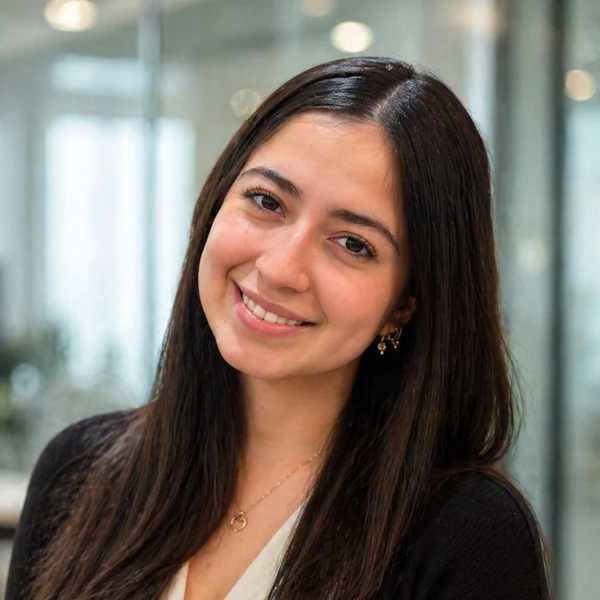
user profile avatar

Sofia Martini

1x

Finalist

Bio

I am an Economics and Finance student with a minor in Computer Science, interested in the intersection of business, technology, and artificial intelligence. Growing up around entrepreneurship taught me early that successful businesses require more than good ideas. They need strong systems, sound financial decisions, and people who know how to turn problems into practical solutions. Over the past several years, I have gained hands-on experience in business operations, where I have seen how inefficient processes can waste time, create errors, and prevent people from focusing on higher-impact work. That experience sparked my interest in AI automation and business architecture. I want to learn how organizations can use technology responsibly to simplify operations, improve decision-making, and create better experiences for employees and customers. In July 2026, I will begin a six-month full-time internship with State Street in Business Architecture and Agentic Automation. I am excited to build technical skills while learning how AI is being applied inside a major financial institution. My long-term goal is to develop technology-driven financial and operational solutions that make complex systems easier to navigate, especially for entrepreneurs and communities that have historically had less access to specialized knowledge and resources. I hope to build a career where business strategy and technology are used to create measurable, lasting opportunities for others.

Education

Emmanuel College

Bachelor's degree program
2024 - 2028
  • Majors:
    • Finance and Financial Management Services
    • Business/Managerial Economics
  • Minors:
    • Computer Science
  • GPA:
    3.5

Boston University Academy

High School
2020 - 2024

Miscellaneous

  • Desired degree level:

    Bachelor's degree program

  • Graduate schools of interest:

  • Transfer schools of interest:

  • Majors of interest:

    • Finance and Financial Management Services
  • Not planning to go to medical school
  • Career

    • Dream career field:

      • Technology
    • Dream career goals:

      My goal is to build a career at the intersection of finance, business operations, and artificial intelligence. I want to design systems and technology that help organizations make better decisions, operate more efficiently, and make financial knowledge more accessible.

    • Sector Head, Technology

      Colleges of the Fenway Investment Group
      2026 – Present7 months
    • Business Operations Assistant

      Synergy Contracting Inc.
      2022 – Present4 years
    • Campaign Organizer

      Lawrence Mayoral Campaigns
      2021 – 2021

    Arts

    • Boston University/BU Academy

      Photography
      Season Photos , Church Choir Group Concerts
      2022 – Present

    Public services

    • Public Service (Politics)

      Mayor of Lawrence 2022 Elections — Campaign co-director
      2021 – 2022

    Future Interests

    Advocacy

    Volunteering

    Entrepreneurship

    SIA Financial Planning Scholarship
    I became interested in finance before I knew the vocabulary for it. Growing up around a family business, I saw how financial decisions shaped everything from hiring and payroll to growth, risk, and whether a company could take on its next opportunity. I also saw how difficult it can be for capable people to make informed financial decisions when they do not have access to the right guidance. That experience made finance feel practical and personal to me. I am studying Economics and Finance with a minor in Computer Science because I want to understand both how financial systems work and how technology can improve them. I am especially interested in financial planning, business architecture, and artificial intelligence. These fields may appear separate, but they are increasingly connected. Financial professionals rely on data, digital platforms, and automated systems to serve clients. The quality of those systems affects who receives good advice, how quickly they receive it, and whether they understand the recommendations being made. One weakness in the current financial system is that useful advice often reaches people too late. Many individuals first seek professional guidance after they have accumulated debt, made costly tax decisions, or missed years of potential investment growth. Others assume financial planning is only for wealthy families. Complicated terminology and unclear fee structures can make the profession feel inaccessible, especially to young adults, first-generation professionals, and small business owners. I believe the system can improve by making financial guidance more understandable, proactive, and personalized. Financial education should begin earlier and should focus on real decisions people face, such as building credit, comparing job benefits, preparing for taxes, choosing insurance, investing consistently, and understanding the risks of debt. Advisors should also communicate their fees and incentives clearly so clients can make informed choices about whom they trust. Technology can help expand access, but it should support human judgment rather than remove accountability. AI tools could help clients organize financial information, identify patterns, model different scenarios, and prepare better questions before meeting with an advisor. For example, a small business owner could use a secure platform to understand how cash flow, debt, taxes, and retirement planning affect one another instead of treating each issue separately. The advisor could then spend more time interpreting the information and helping the client make thoughtful decisions. In July 2026, I will begin a six-month full-time internship with State Street in Business Architecture and Agentic Automation. I am excited to learn how a major financial institution evaluates processes and applies emerging technology in real business environments. I want to understand where automation improves service and where human oversight remains necessary. My long-term goal is to work at the intersection of finance, operations, and technology. I hope to help design financial systems that are easier to understand and more responsive to the people using them. I also want to contribute to financial literacy efforts and support entrepreneurs who may understand their businesses deeply but need clearer guidance on planning, investing, and long-term financial security. I want my career in finance to help people make decisions with greater knowledge, confidence, and control over their futures.
    Carla M. Champagne Memorial Scholarship
    During the pandemic, I learned that helping people does not always look dramatic. Sometimes it looks like standing in a senior center, packing food into boxes, and making sure families have one less thing to worry about that week. I am currently studying Economics and Finance with a minor in Computer Science. I am interested in business operations, technology, and artificial intelligence because I want to understand how strong systems can solve everyday problems. Much of that interest comes from growing up around a family business and seeing how decisions involving money, people, and limited resources affect real lives. My experiences outside the classroom have also taught me that progress begins with paying attention to what people actually need. One of my most meaningful volunteer experiences was helping at the Lawrence Senior Center during the pandemic. I packed food boxes that were distributed to local families and older residents. At the time, many people were isolated, financially strained, or unable to safely shop for themselves. The work was repetitive, but its purpose was immediate. Every completed box represented food reaching someone who might otherwise go without it. That experience changed how I understood service. I realized that helping others is rarely about receiving recognition. The people receiving those boxes did not know who packed them, and I did not need them to. What mattered was that the work was completed carefully and that the community could depend on the volunteers who showed up. I have also contributed to my community in other ways. I participated in a public mural project through Street2Ivy, supported my high school’s athletic department through photography, and served as an admissions ambassador by giving tours and writing personalized letters to prospective students. During a local mayoral campaign, I recruited and coordinated volunteers, created outreach materials, and spoke directly with residents. These experiences showed me that community involvement can take many forms. It can involve meeting basic needs, creating public art, helping students feel welcome, or encouraging residents to participate in decisions that affect their city. The most important lesson I have learned is that effective service starts with listening. People do not need someone to assume what is best for them. They need people who are willing to understand the problem, follow through, and treat them with dignity. I have also learned that organization matters. Good intentions are limited if food is distributed poorly, volunteers are not coordinated, or information never reaches the people who need it. As I continue my education and begin a career in finance, business architecture, and AI automation, I plan to keep helping others by combining service with the skills I am developing. I want to support financial literacy, mentor younger students who are interested in business and technology, and help entrepreneurs better understand the systems that affect their companies. In the future, I hope to build tools that make financial and operational knowledge easier to access, especially for people who are often expected to navigate complicated systems without enough guidance.