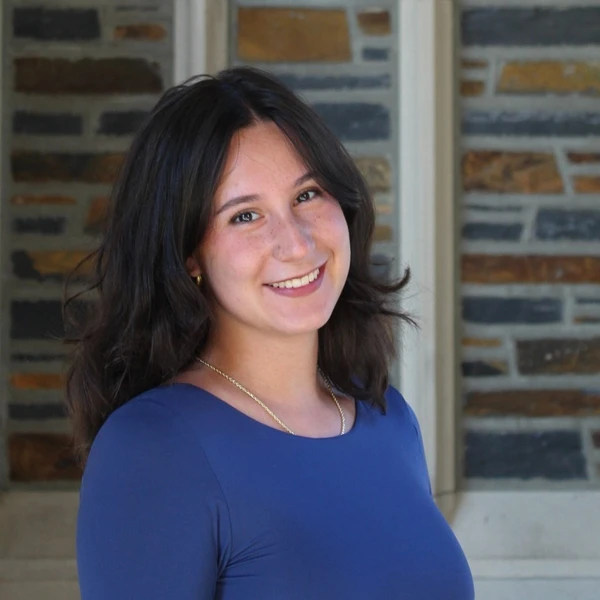
user profile avatar

Sofia Acosta Servin

1x

Finalist

General information

Hobbies & Interests

  • Photography and Photo Editing
  • Cooking
  • Anatomy
  • Anime
  • Beach
  • Kayaking
  • Fishing
  • Ice Skating
  • Music

Reading

  • Adult Fiction
  • Cookbooks
  • Fantasy
  • Romance

I read books multiple times a month.

Bio

My life goals are centered on making a meaningful impact in healthcare through compassionate, patient-centered care. As a Psychology student on the pre-nursing track, I plan to become a nurse practitioner or CRNA, combining my understanding of human behavior with clinical skills to support patients holistically. I am also interested in healthcare management and education, where I hope to improve access. I am most passionate about working with people and building meaningful connections. My compassion and empathy guide how I support others, whether through patient care, mentorship, or community involvement. I strive to make people feel seen, heard, and valued. Coming from a low-income background has shaped my resilience and determination. I am motivated to create better opportunities for myself, my family, and my community. In Durham, I have worked with young children to promote inclusivity and healthy friendships. This, along with my dedication and commitment to service, makes me a strong candidate for scholarships and for creating lasting impact.

Education

Duke University

Bachelor's degree program

2024 – 2028

Majors:
  • Registered Nursing, Nursing Administration, Nursing Research and Clinical Nursing
  • Psychology, General
Minors:
  • Public Health

School for Advanced Studies Homestead

High School

2022 – 2024

Miami Dade College

Associate's degree program

2022 – 2024

Majors:
  • Health Professions Education, Ethics, and Humanities

Miscellaneous

Desired degree level:
Doctoral degree program (PhD, MD, JD, etc.)
Graduate schools of interest:
Columbia University in the City of New York, Emory University, University of North Carolina at Chapel Hill, University of Miami, Florida International University, North Carolina State University at Raleigh, University of Florida, Pace University
Majors of interest:
Health and Medical Administrative Services, Registered Nursing, Nursing Administration, Nursing Research and Clinical Nursing, Psychology, General
Desired degree modality:
Hybrid
Medical school interest:
No
English as first language:
No
Homeschooled:
No

Career

  • Experience & Engagement Fellow

    Education · Thrive Scholars

    Jan 2026 – Present

  • Student Simulation Assistant

    Higher Education · Duke University School of Nursing

    Jan 2025 – Present

Miscellaneous

Dream career field:
Health, Wellness, and Fitness, Higher Education, Hospital & Health Care, Human Resources
Dream career goals:
Certified registered nurse anesthetist
Work experience:
3 years
Has nursing license:
No
Leadership experience:
Yes

Future Interests

  • Advocacy
  • Volunteering
  • Philanthropy
  • Entrepreneurship
Brian Leahy Memorial Scholarship
In the fall of my senior year of high school, my mom was diagnosed with breast cancer. She was the one who held our household together, our breadwinner, the center our days were built around. Almost overnight, our family had to learn a new way of living. My dad did everything he could. He took on odd jobs, drove for Uber, became a line cook, helped neighbors do yard work. Stretching hours and energy that were already thin, so that her medications and treatments would never go unpaid. My younger brother was only ten, and we all agreed, without ever needing to say it aloud, that he should not be left in the dark. My dad explained what was happening in words my brother could hold, and we made sure that even in the hardest weeks, our home still had room for laughter. That was how we survived: not by one person being strong, but by each of us carrying a different piece of the weight. My part was understanding. I went to every chemo appointment with my mom. I sat beside her in rooms that smelled of antiseptic and waited for her drip to stop. I asked questions, so many questions, until our nurse navigator became someone I trusted completely. She never made me feel like a child in that way. Instead, she taught me. After my mother’s double mastectomy, she showed me how to care for her JP drain and how to bathe her, and I learned to do it with steady hands, even when my heart was not steady at all. Caring for her in that way changed what love meant to me. It stopped being only a feeling and became something I could do with my hands. It was tough seeing her after her surgery. She was pale, weak, and in her head about how she felt as a woman. There would be days she would avoid looking at herself in the mirror or meeting my gaze. But by treating her with gentleness and care, those months brought us closer than I had ever imagined we could be. I learned to treasure ordinary time with her, quiet car rides, sitting together, the simple fact of her being there. I stopped taking tomorrow for granted. And then came the moment I continuously return to. When it was time for me to apply to universities thousands of miles from home, I wanted to stay. It would have been the easy and loving choice. But my mother would not let me. Even in the middle of her own trials, she told me to go, and she told me something I now carry like a compass: even when things are hard, always keep moving forward. So I did. I live my life now partly for her, and partly because of her. The nurse navigator who guided us showed me what compassionate care looks like when someone is scared, and I am now preparing for a career in nursing, working toward a healthcare system where families like mine, families stretched thin and holding on to each other, are never left to navigate it alone. My mother’s diagnosis gave me my purpose, and her courage let me chase it. My family did not come through this unchanged, but we came through it together. And I am still moving forward, just as she asked me to.
Jennifer Kelley Memorial Scholarship
Before I understood the word "poverty," I understood the feeling: the quiet in a room when a bill arrives, the particular shame of standing in a food bank line and hoping no one from school walks by. I remember carrying boxes of donated food home, grateful and small in the same breath, learning far too young that survival and dignity do not always arrive together. In Paraguay, I watched that same tension play out on a larger scale. I saw children my age working instead of studying, families rationing what little they had, and a system that seemed to decide, before a child could even speak, how far they were allowed to go. Those images never left me. They became the lens through which I see everything now. That lens is what pulls me toward nonprofit and volunteer work. I have lived on the receiving end of generosity, and I know how it feels to be handed something you needed but never asked for out loud. I want to spend my life on the giving end of that exchange, not out of guilt, but out of gratitude, building the support I once needed so other children do not have to hope silently that someone notices. Education is where I believe that impact multiplies. I am deeply passionate about equity in how we teach and treat young people, especially the smallest ones, still learning what they are allowed to dream about. I have seen what happens when a child is spoken down to, when their circumstances are treated as their character. It teaches them to shrink. I want to be part of a generation of mentors who look at a struggling child and see potential instead of a problem to manage. Equity, to me, is the radical act of refusing to let a child's zip code or bank account decide their worth. Outside of school, that same belief lives in my photography. I am drawn to capturing people in milestone moments, graduations, birthdays, the electric second after a game-winning play, because those moments are proof that people made it somewhere they once only imagined. Through my lens, I witness joy that was earned, and there is something sacred about being trusted to hold that memory for someone. Photography taught me to notice people fully, a skill I carry into every room I mentor in. If I had to name my greatest motivator, it would be my younger brother. The moment he was born, something in me shifted permanently. I was no longer just trying to survive my own circumstances. I was building a map for someone who would be watching my every step, whether I wanted him to or not. I wanted him to see that where we started did not determine where we could go. Every scholarship I have earned, every form I have taught myself to fill out, every door I have pushed open, I have done with him in mind, so his path might be a little less confusing than mine. My life has been shaped by scarcity, but it has not been defined by it. It has been shaped just as much by generosity: the strangers who filled that food bank, the mentors who believed in me before I believed in myself, the brother whose existence rewired my sense of purpose. I carry all of it into classrooms, into mentorship, into every photograph I take of someone becoming who they were always meant to be. I intend to spend my life making sure other children feel proud of where they come from, not ashamed of it.
Sara Jane Memorial Scholarship
The nursing profession calls to me because it lives at the intersection of science and humanity, where skill meets compassion and knowledge becomes a form of hope. To be a nurse is to stand beside someone on the worst day of their life and offer not just care, but steadiness. It is the ability to hold a patient’s fear in one hand while placing hope for tomorrow in the other. That quiet responsibility is what draws me to this field. My desire to pursue nursing deepened through both personal experience and professional exposure. I currently work at the Duke University School of Nursing, where I prepare simulation labs for students before they enter clinical settings. In this role, I work closely with faculty and technology, observing how future nurses are trained not only in technical skills but also in empathy, communication, and composure under pressure. This environment has shaped me profoundly. I have learned that competence alone is not enough. Patients remember how you made them feel just as much as how you treated them. Through this experience, I have begun developing my own voice as a future nurse, one that is calm, compassionate, and intentional. However, my most transformative experience came outside of any classroom. When my mother was diagnosed with breast cancer, our home became a place of healing, fear, and resilience all at once. After her double mastectomy, she returned home physically weakened, yet emotionally enduring. My father and I became her caregivers, working in shifts to ensure she was never alone. I managed her medications, carefully documenting dosages, timing, and purpose. I assisted in her physical care, including maintaining her surgical drains, a task that required both precision and emotional strength. These moments taught me what it truly means to care for someone beyond obligation. It is an act of love, patience, and dignity. During this time, I also witnessed gaps in the healthcare experience that continue to shape my goals. I sat beside my mother as a plastic surgeon spoke to her with little sensitivity, reducing her to a procedure rather than recognizing her as a person navigating a life-altering diagnosis. In that moment, I spoke up not just as her daughter, but as an advocate. That experience solidified my belief that healthcare must prioritize empathy as much as expertise. A title should never excuse a lack of compassion. These experiences have guided my career aspirations. I hope to continue my education and become a nurse who works with women and children, whether in pediatrics, labor and delivery, or oncology. I am especially passionate about improving the quality of care for patients recovering from major procedures and ensuring that caregivers and families are better prepared to support their loved ones. Not every patient has a support system at home, and I want to help bridge that gap through education, advocacy, and presence. Despite my determination, my journey has not been without challenges. As a first-generation, low-income student, I have worked long shifts to support my education, covering the costs of textbooks, travel, housing, and study materials without financial assistance from my family. While these responsibilities have been demanding, they have strengthened my resilience and commitment. Every sacrifice has reaffirmed my purpose. Nursing, to me, is more than a career. It is a calling to serve, to advocate, and to restore dignity in moments when it feels lost. My experiences have prepared me to pursue this path with intention and heart. I am committed to becoming a nurse who makes patients feel seen, heard, and cared for in the fullest sense.
Sofia Acosta Servin Student Profile | Bold.org