Hobbies and interests
Dance
Politics and Political Science
Science
Singing
Reading
Writing
Reading
Environment
Cultural
I read books multiple times per month
Setonee Nagbe
1x
Finalist1x
Winner
Setonee Nagbe
1x
Finalist1x
WinnerBio
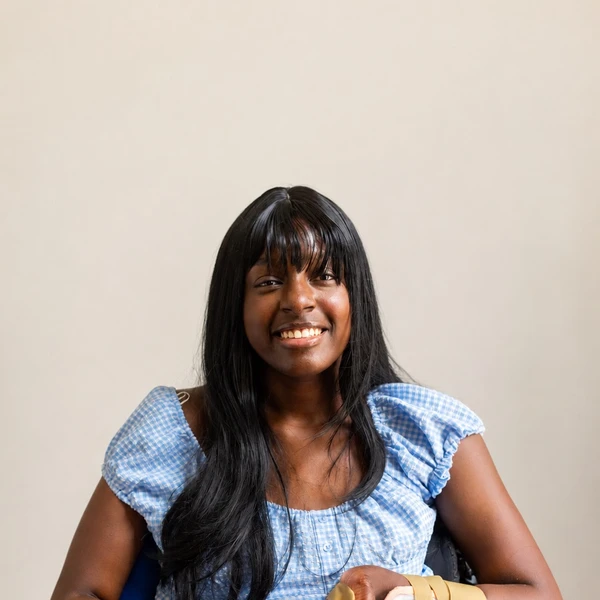
I am a junior at University of Delaware pursuing a degree in Leadership and Public Policy. After experiencing transverse myelitis and paralysis, I have had to rebuild many parts of my life while continuing my education and long-term goals. My experiences with rehabilitation, resilience, and adapting to challenges have strengthened my passion for advocacy, leadership, and helping others facing adversity.
I aspire to attend law school and pursue a career where I can create meaningful change through policy, justice, and public service. Alongside my academic goals, I am passionate about storytelling, community impact, and motivating others through my journey.
Through every obstacle, I have remained committed to growth, perseverance, and building a future that allows me to make a difference in the lives of others.
Education
University of Delaware
Bachelor's degree programMajors:
- Public Administration
Miscellaneous
Desired degree level:
Graduate schools of interest:
Transfer schools of interest:
Majors of interest:
Career
Dream career field:
Undecided
Dream career goals:
I want to write and advocate for others
Sports
Field Hockey
Varsity2018 – 20191 year
Awards
- 3.2 gpa Scholars award
Tennis
Varsity2017 – 20181 year
Awards
- above 3.2 gpa scholars award
Research
Psychology, General
With School — writer2019 – 2019
Arts
Christiana High School
ActingMary Poppins the Musical2018 – 2019
Public services
Public Service (Politics)
Delaware’s Youth Advocacy Council — Advocate2019 – 2019Volunteering
Key Club — Vice President and Volunteering2018 – 2019
Future Interests
Advocacy
Politics
Volunteering
Philanthropy
Robert and Suzi DeGennaro Scholarship for Disabled Students
My life was simple. Go to work, go to school, and repeat. I spent hours scrolling through different careers I wanted to pursue. I never felt brave enough to do what I wanted to do. I would stumble over my words and try to come up with something impressive of what I might want to do or achieve in my own life when someone asked.
Everything changed the night I decided to pick up an extra shift at a group home. I felt a shooting pain in my back and within a few hours I was rushed over to the nearest hospital in which my body had finally shut down. I was airlifted to the University of Pennsylvania. After weeks of testing, my doctors had confirmed I was diagnosed with idiopathic transverse myelitis that left me paralyzed from the chest down.
I spent the next two months in the hospital, doing treatment and rehabilitation. I knew leaving the hospital doors, that my life would change forever. There were days where I would be alone in my room, where I would just cry. I had no movement in my legs, only one working arm. I felt useless, invisible and trapped in my own body.
Doctors stated that the chances of me walking again were slim. I felt angry at my life because I felt like my potential was taken away from me. However, everything changed the moment I saw my mother cry. She had always been the strongest person I knew. Seeing her cry made me realize that something had to change.
I began giving it my all at rehab. I focused on every small victory. I needed me back. As I continued my slow recovery, I started rebuilding my life outside of the hospital. I reenrolled myself back into classes taking two classes at a time. Returning to campus as a disabled student was intimidating, but it reminded me that not all hope was lost.
I began working as a consultant at Precision Neuroscience, a company that develops devices to support independence for individuals with disabilities. I started working with a University of Delaware's engineering department to develop tools that promote independence for individuals with spinal cord injuries, including adaptive devices that aids users in performing daily tasks like make-up application.
Along with that, I started a YouTube channel called agirlwithachair, in which I give advice and words of encouragement. Spiritually, I started going to church and became a Catholic. One day, my spiritual advisor asked me what keeps me going and how I stay strong.
I thought about an answer and realized that my diagnosis was not about defeat. It was about guiding me to my purpose. Transverse myelitis forced me to develop confidence in spaces in which I would otherwise feel scared to be in. It has pushed me to lead in ways I've never thought possible. It has also allowed me to advocate for those who may not have a voice. It has allowed me to live with intention.
Today, I live with C7 quadriplegia as a result of transverse myelitis. I take my power wheelchair to classes, exams, and doctor’s appointments. Additional financial support would relieve the burden transportation, medical expenses, adaptive needs and educational costs while allowing me to focus on my recovery and academic goals. My goal remains to graduate college with my degree in leadership and attend law school. I wish to advocate for greater educational, financial, and recreational opportunities for individuals with disabilities. Transverse myelitis was not the end of my story, it became the beginning of my purpose.
Lee and Elizabeth Mockmore Scholarship
WinnerMy life was simple. Go to work, go to school, and repeat. I spent hours scrolling through different careers I wanted to pursue. I went through life on autopilot. I never felt brave enough to do what I wanted to do. I would stumble over my words and try to come up with something impressive of what I might want to do or achieve in my own life when someone asked.
Everything changed the night I decided to pick up an extra shift at a group home. I felt a shooting pain in my back and within a few hours I was rushed over to the nearest hospital in which my body had finally shut down. I was airlifted to the University of Pennsylvania. After weeks of testing, my doctors had confirmed I was diagnosed with idiopathic transverse myelitis that left me paralyzed from the chest down.
I spent the next two months in the hospital, doing treatment and rehabilitation. I knew leaving the hospital doors, that my life would change forever. There were days where I would be alone in my room, where I would just cry. I had no movement in my legs, only one working arm. I felt useless, invisible and trapped in my own body.
Doctors stated that the chances of me walking again were slim. I felt angry at my life because I felt like my potential was taken away from me. However, everything changed the moment I saw my mother cry. She had always been the strongest person I knew. Seeing her cry made me realize that something had to change. I gave myself the choice of either crying or fighting.
I began giving it my all at rehab. I focused on every small victory. I needed me back. As I continued my slow recovery, I started rebuilding my life outside of the hospital. I reenrolled myself back into classes taking two classes at a time. Returning to campus as a disabled student was intimidating, but it reminded me that not all hope was lost. I was still here.
I began working as a consultant at Precision Neuroscience, a company that develops devices to support independence for individuals with disabilities. I started working with a University of Delaware's engineering department to develop tools that promote independence for individuals with spinal cord injuries, including adaptive devices that aids users in performing daily tasks like make-up application.
Along with that, I started a YouTube channel called agirlwithachair, in which I give advice and words of encouragement. Spiritually, I started going to church and became a Catholic. One day, my spiritual advisor asked me what keeps me going and how I stay strong.
I thought about an answer and realized that my diagnosis was not about defeat. It was about guiding me to my purpose. Transverse myelitis forced me to develop confidence in spaces in which I would otherwise feel scared to be in. It has pushed me to lead in ways I've never thought possible. It has also allowed me to advocate for those who may not have a voice. It has allowed me to live with intention.
Today, I live with C7 quadriplegia as a result of transverse myelitis. I take my power wheelchair to classes, exams, and doctor’s appointments. My goal remains to graduate college with my degree in leadership and attend law school. I wish to advocate for greater educational, financial, and recreational opportunities for individuals with disabilities. Transverse myelitis was not the end of my story, it became the beginning of my purpose.
Online ADHD Diagnosis Mental Health Scholarship for Women
Attention Deficit Hyperactivity Disorder (ADHD) can pose significant challenges for college students, impacting their academic performance and overall well-being. As a student, I did not realize I had ADHD until I was in college. I was so used to the systemic format during K-12 that public school brought to me, that it was easy to hide the fact that I was struggling. I made good grades when I was in High School, but college became a new ballgame that I was not ready to pitch for.
One of the primary ways ADHD has affected my career was my attention to deadlines. I was missing certain assignments that were due, and not managing my time properly. Distractions was easily derailing their focus, making it challenging to sit through online lectures, readings, and assignments.
Another significant challenge for college students with ADHD was mood regulation. ADHD can go undiagnosed in women for many years based on gender bias in the medical field. I always struggled with my mood in high school, but my parents put me off as I was in my teenage phase. Difficulty regulating my mood and outlook, deterred me from being motivated to work that I usually enjoy. It also made it incredibly difficult to organize and plan effectively and balance academic responsibilities with other commitments, such as extracurricular activities or social life. This can contribute to stress, anxiety, and decreased motivation.
To improve academic performance, I took incredible steps to learn and embrace my ADHD. One by utilizing resources on campus, seeking accommodations is another important step. My university offers accommodations for students with disabilities, such as extended time on exams, preferential seating, or note-taking assistance. These accommodations can help level the playing field and provide students with the support they need to succeed.
Another way to improve my performance is time management techniques. Breaking down tasks into smaller, manageable steps, using a planner or digital calendar, and setting deadlines helped me stay organized and avoid procrastination. Additionally, effective study techniques can enhance learning and retention. Visual aids, creating mnemonics, and studying in short bursts can be beneficial for students with ADHD.
Building a support network is vital for college students with ADHD. Connecting with other students who have ADHD can provide a sense of community and shared understanding. Additionally, seeking support from friends, family, or a therapist offered me emotional encouragement and guidance.
In the beginning, ADHD had presented a significant challenge for me as a college student, but with the right strategies and support, I was able to overcome these obstacles and achieve academic success. By implementing effective time management techniques, utilizing study strategies, seeking accommodations, and building a support network, I was able to prioritize my mental health.