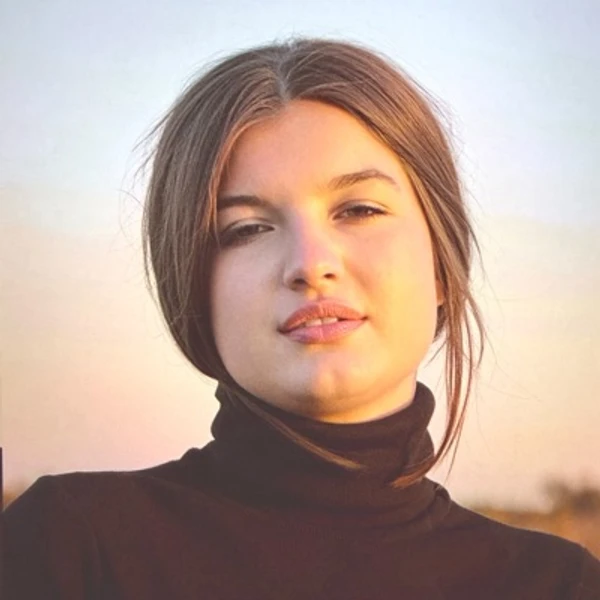
Montevallo, AL
Gender
Female
Religion
Christian
Church
Baptist (Southern)
Hobbies and interests
American Sign Language (ASL)
Cheerleading
Art
Baking
Animals
Archery
ATV Riding
Canoeing
Dirtbiking
STEM
digital art
3D Modeling
Advocacy And Activism
Community Service And Volunteering
Engineering
FFA
Horseback Riding
Robotics
Softball
Piano
Reading
Fantasy
Art
I read books multiple times per week
Skylar Sippola
2x
Finalist2x
Winner
Skylar Sippola
2x
Finalist2x
WinnerBio
I am a senior at Montevallo High School and a proud deaf varsity cheerleader in my third year on the squad. Go Bulldogs! πΎπ€π»
My career path is centered on Robotics and Automated Manufacturing at the Career Technical Educational Center (CTEC). As a junior, I made history by earning the highest score of any first-year robotics student while taking the Certified Production Technician (MSSC CPT 4.0) exam. I am an Alabama SkillsUSA member and currently dual-enrolled at Jefferson State Community College, where I am completing my Mechatronics Certificate and earning college credits toward my future degree.
My goal is to attend the University of Alabama through the Shelton State Bridge Program to lead the next generation of industrial automation. I am dedicated to proving that hearing loss is no obstacle to becoming a leader in high-level robotics and manufacturing.
2026 Alabama SkillsUSA State Conference Robotics & Automation Technology Award Winner - 3rd Place.
I hold the following certifications:
β’ MSSC CPT 4.0 Safety Certified Production Technician
β’ FANUC CERT Robot Operations
β’ FANUC CERT Safety
β’ OSHA 10-Hour
β’ Beef Quality Assurance Certification
Education
Montevallo High School
High SchoolMiscellaneous
Desired degree level:
Bachelor's degree program
Majors of interest:
- Electrical/Electronic Engineering Technologies/Technicians
- Mechanical Engineering
- Electrical and Computer Engineering
- Mechatronics, Robotics, and Automation Engineering
- Mechanic and Repair Technologies/Technicians, Other
Career
Dream career field:
Automotive
Dream career goals:
Earn my BS in Mechanical Engineering and Robotics.
Large-Scale Logistics: Managed high-volume guest services at Birmingham Protective Stadium and UAB.
MHS Varsity Cheer2022 β Present4 years
Sports
Cheerleading
Varsity2022 β Present4 years
Awards
- All American Nominee
Softball
Varsity2023 β 20241 year
Archery
Club2022 β 20231 year
Arts
Self taught
Animation2018 β Present
Public services
Advocacy
Southern Sign Society β Founder & Student Advocate2025 β PresentAdvocacy
Alabama Hands & Voices β Member2022 β Present
Future Interests
Advocacy
Politics
Volunteering
Philanthropy
Entrepreneurship
Kristinspiration Scholarship
Education is important to me because it creates opportunities that can change the direction of an entire family. As a first-generation college student, I am not following a path that has already been laid out for me. I am helping create it.
Growing up, college was always seen as something valuable, but it was also something unfamiliar. My family encouraged me to work hard and pursue my goals, yet there was no roadmap showing me how to navigate applications, scholarships, financial aid, or college planning. Much of the process has involved learning as I go, asking questions, seeking guidance, and figuring things out one step at a time.
That experience has taught me that education is more than earning a degree. It is about gaining the knowledge, confidence, and skills needed to solve problems and create opportunities. It is a tool that allows people to improve their lives, support their families, and make meaningful contributions to their communities.
My passion for education is closely tied to my interest in robotics and engineering. I have always enjoyed understanding how things work, finding solutions to challenges, and building systems that can improve peopleβs lives. Through Career Technical Education courses, robotics competitions, and industry certifications, I discovered that engineering is not just about machines. It is about creativity, innovation, teamwork, and perseverance.
This fall, I will begin my studies at Shelton State Community College with plans to transfer to the University of Alabama and pursue a bachelorβs degree in Mechanical Engineering. Every class I take and every challenge I overcome brings me closer to a career where I can help develop technologies that solve real world problems.
The legacy I hope to leave extends beyond my own accomplishments. I want to be remembered as someone who opened doors for others. As a deaf student pursuing engineering, I understand how important representation can be. Sometimes the most powerful thing a person can see is someone who looks like them, faces similar challenges, and succeeds anyway.
I want younger students, especially girls and students with disabilities, to know that they belong in STEM fields. I want them to see that engineering, robotics, and technology are not reserved for a select few. They are fields where curiosity, determination, and hard work matter.
I also hope to leave a legacy within my own family. By becoming the first person in my family to earn a college degree, I can help make higher education feel less intimidating and more attainable for future generations. My goal is that one day younger relatives will view college not as an exception, but as a possibility that has always been within reach.
Education gives me the opportunity to build a future I am proud of. The legacy I hope to leave is one of opportunity, perseverance, and service to others. If my journey helps even one person believe they can pursue a dream that once felt out of reach, then I will consider that legacy a success.
RonranGlee Literary Scholarship
Selected Passage: βThe hidden harmony is better than the visible.β -Heraclitus of Ephesus
Thesis: In the fragment βThe hidden harmony is better than the visible,β Heraclitus argues that reality is governed by invisible relationships rather than obvious appearances. His deeper meaning is that the forces that truly create order, growth, and understanding are often hidden from view. By calling hidden harmony βbetterβ than what is visible, Heraclitus challenges us to look beyond surface appearances and recognize the unseen systems that make everything possible.
At first glance, Heraclitusβ statement seems counterintuitive. Most people trust what they can see. The visible world feels concrete and reliable. Yet Heraclitus deliberately elevates the hidden over the visible. The word βbetterβ is crucial. He does not simply claim that hidden harmony exists. He argues that it is superior. This suggests that appearances often distract us from deeper truths.
The phrase βhidden harmonyβ itself contains a paradox. Harmony implies order, balance, and unity. Hidden suggests something concealed or difficult to detect. Heraclitus combines these ideas to argue that the most important forms of order are often invisible. We notice outcomes, but we rarely notice the structures that produce them.
This pattern appears throughout nature. A treeβs branches, leaves, and trunk are visible, but its survival depends on roots hidden beneath the ground. The roots receive little attention despite being essential to the treeβs existence. Heraclitus suggests that reality works in a similar way. What we see is often only the final expression of deeper processes operating beneath the surface.
The same principle appears in engineering. As someone pursuing robotics and mechanical engineering, I immediately connect with Heraclitusβ insight. When people watch a robot complete a task, they see movement. They see a machine lifting an object, following a path, or responding to commands. What they do not see are the sensors gathering information, the electrical signals traveling through circuits, the code processing data, or the feedback systems constantly making adjustments. The visible movement captures attention, but the hidden interactions are what make the movement possible. In many ways, engineering is the study of hidden harmonies.
Heraclitusβ idea also applies to people. We often judge others based on visible characteristics, accomplishments, or circumstances. Yet the most important parts of a personβs story are rarely visible. Determination, resilience, discipline, mentorship, and sacrifice cannot be easily seen.
As a deaf student, this aspect of Heraclitusβ philosophy resonates deeply with me. Most people notice the visible fact that I cannot hear normally. What they do not see is the hidden system operating behind that reality. They do not see the concentration required to follow conversations, the constant attention needed to read lips and facial expressions, or the adjustments required in environments designed primarily for hearing people. These invisible efforts are not unique to me. Every person carries unseen struggles, strengths, and experiences that shape who they are.
Heraclitus encourages readers to recognize that what is visible rarely tells the whole story.
His use of the word βharmonyβ is equally important. Harmony does not mean sameness. In music, harmony is created by different notes working together. The notes remain distinct, yet together they produce something greater than any single note could create alone. Heraclitus believed reality functions in much the same way. Opposing forces, differences, and tensions are not necessarily signs of disorder. They can be essential parts of a larger balance.
This idea helps explain another central theme in Heraclitusβ philosophy: growth often emerges from tension. In robotics competitions, problems rarely appear because everything is working perfectly. Progress happens when something fails, when a design reveals a weakness, or when a challenge forces a new solution. The tension between what works and what does not work drives improvement. What appears to be conflict on the surface may actually contribute to a deeper harmony.
The fragment also serves as a warning about human judgment. People naturally focus on what is obvious. We notice results more than processes. We celebrate victories more than preparation. We see success more easily than perseverance. Heraclitus challenges this habit by suggesting that wisdom requires looking beneath appearances. Understanding does not come from observing outcomes alone. It comes from investigating the relationships and systems that create those outcomes.
What makes this fragment remarkable is its brevity. In only six words, Heraclitus presents an entirely different way of seeing the world. He asks us to become investigators rather than spectators. Instead of accepting appearances at face value, we should search for the deeper patterns that connect people, ideas, and events.
Ultimately, the underlying meaning of βThe hidden harmony is better than the visibleβ is that reality is shaped by forces we often overlook. Whether examining nature, engineering, communities, or individual lives, the most important structures are frequently invisible. Heraclitus teaches that wisdom begins when we move beyond appearances and learn to recognize the hidden connections that make the visible world possible. The visible may capture our attention, but the hidden harmony is what gives it meaning.
Mark Caldwell Memorial STEM/STEAM Scholarship
One of my greatest achievements was earning third place at the 2026 Alabama SkillsUSA State Conference in Robotics and Automation Technology. For many students, a robotics competition is a chance to demonstrate technical skills. For me, it was also a test of perseverance, adaptability, and confidence.
I am deaf, and I have spent my entire education in a mainstream environment designed primarily for hearing students. In technical fields like robotics and automation, communication is a major part of success. Instructions are often delivered verbally, discussions happen quickly, and important information can be exchanged in seconds. Throughout my life, I have had to find ways to overcome those barriers while keeping pace with everyone around me.
When I entered the Robotics and Automated Manufacturing program at CTEC, I quickly realized I would need strategies that worked for me. Instead of relying solely on spoken instruction, I became a highly visual learner. I studied demonstrations, diagrams, and technical materials while practicing skills until I fully understood them. I also learned to advocate for myself by asking questions, requesting clarification, and helping others understand the best ways to communicate with me.
One of the most valuable skills I developed was learning to break large problems into smaller parts. Whether troubleshooting a machine, wiring a circuit, or programming a robotic system, I learned to analyze each component and test solutions step by step. This approach helped me solve technical challenges and stay calm under pressure.
Those skills became especially important while preparing for the SkillsUSA state competition. Robotics and automation require teamwork, precision, and problem-solving. There were moments when communication barriers made tasks more difficult, but I focused on preparation, attention to detail, and trusting the skills I had developed.
The result was an achievement I am incredibly proud of. My teammate and I earned third place in the state of Alabama. That award represented much more than a medal. It represented years of learning how to adapt, advocate for myself, and turn obstacles into opportunities.
Along the way, I discovered that some of the skills I developed because of my hearing loss actually strengthened my abilities as a future engineer. I became more observant, more detail oriented, and more focused on visual problem solving. These qualities have helped me succeed not only in robotics but also in my dual-enrollment mechatronics coursework and technical training.
My experience in robotics has inspired me to pursue a degree in Mechanical Engineering with a focus on robotics and mechatronics. I hope to work in industrial automation and advanced manufacturing, helping build and improve the systems that shape our future. I also hope to serve as a role model for other Deaf and Hard of Hearing students who may be interested in STEM fields.
Robotics has taught me that every problem has a solution if you are willing to approach it with patience, creativity, and determination. Earning third place at the Alabama SkillsUSA State Conference in Robotics and Automation Technology is one of my proudest accomplishments. Not only did I place in a traditionally male-dominated field, but I did so as a deaf competitor in a competition that relies heavily on communication, teamwork, and technical skill. At this point in my life, it stands as one of my greatest achievements because it represents years of hard work, self-advocacy, and perseverance. It proved to me that barriers do not define what is possible, and those lessons continue to guide me as I pursue my future in engineering.
Patricia Lindsey Jackson Foundation - Eva Mae Jackson Scholarship of Education
Faith has played a significant role in my life because it gave me something to hold onto during times when the path ahead felt uncertain. As a deaf student growing up in a mainstream education system, there were many moments when it would have been easy to become discouraged. Instead, faith taught me to keep moving forward, even when I could not see the entire road ahead.
One of the biggest lessons my faith has taught me is that progress is not always linear. It often looks more like a heartbeat, with highs and lows, victories and setbacks. There have been times when I felt confident and successful, and there have been times when I questioned whether I truly belonged in the spaces I was working so hard to enter. Through those moments, my faith reminded me that setbacks are not the end of the story. They are often part of the preparation for what comes next.
Being deaf in a world that is built primarily for hearing people has required persistence, patience, and self advocacy. Whether I was in the classroom, on the cheer mat, or in a robotics lab, I often had to work harder to access the same opportunities as my peers. There were challenges that others did not always see, but faith gave me the confidence to believe that my value and potential were not defined by those obstacles.
My mother has been one of the greatest influences in my life and one of the biggest reasons I have continued to pursue higher education. She has always encouraged me to dream bigger than my circumstances. Even when things were difficult, she reminded me that challenges are meant to be faced, not feared. Her belief in me never changed, even during moments when I doubted myself.
She taught me that hard work matters, but she also taught me the importance of character, integrity, and serving others. Those lessons have shaped how I approach leadership and community involvement. Through varsity cheer, community service, and advocacy work, I have learned that success is not only about personal achievement. It is also about creating opportunities for others.
As the founder and student advocate of Southern Sign Society, I have worked to promote accessibility and inclusion for Deaf and Hard of Hearing students. My goal is to help create a future where students with disabilities feel seen, valued, and supported. I want other students to know that their challenges do not determine their potential.
Faith has also influenced my academic and career goals. I plan to pursue a career in mechatronics and industrial automation, with the long term goal of becoming an engineer and helping create systems that are more accessible and inclusive. I believe that the talents and opportunities we are given should be used to serve others, and I hope to use my education to make a positive impact in both my profession and my community.
Looking back, I know I would not be where I am today without faith, hope, and the support of my family. My journey has not always been easy, and it has certainly not been a straight line. But every challenge has strengthened my determination and reinforced my belief that I am here for a purpose.
That purpose is not only to succeed for myself, but to help open doors for others who are still searching for their place in the world.
YOU GOT IT GIRL SCHOLARSHIP
My name is Skylar Sippola, and I believe I am a βYou Got It Girlβ because I have spent my entire life learning how to show up for myself, adapt to challenges, and keep moving forward even when the path was not designed for me.
I am a deaf student, a varsity athlete, a robotics competitor, and an advocate for accessibility and inclusion. Growing up in a mainstream education system, I often found myself navigating a world built around sound. Whether I was in the classroom, on the cheer mat, on the softball field, or competing in technical programs, I learned early that if I wanted opportunities, I would have to be resilient, resourceful, and willing to advocate for myself.
Sports have played a major role in shaping who I am. I competed in archery during my freshman year, played varsity softball during my sophomore year, and was a varsity cheerleader during my freshman, sophomore, and senior years. Through cheerleading, I learned discipline, teamwork, leadership, and perseverance. As a deaf athlete, I could not rely on many of the audio cues that other athletes take for granted. Instead, I learned to stay synchronized through visual awareness, repetition, trust, and communication with my teammates and coaches. Those experiences taught me that obstacles can often be overcome with creativity and collaboration. Through cheer and other volunteer activities, I also completed more than 920 hours of community service, giving back to youth programs and community events throughout Alabama.
One of the biggest challenges I faced was stepping away from cheer during my junior year. At the time, I was struggling with significant fatigue and knew I needed to focus on my health. It was a difficult decision because cheer had become an important part of my identity and school experience. Watching from the sidelines when I wanted to be participating was frustrating and disappointing.
However, that setback taught me an important lesson. Strength is not always pushing through. Sometimes strength means recognizing your limits, taking care of yourself, and preparing for a stronger comeback. Instead of giving up, I focused on my academics, robotics training, and future goals. When my health improved, I returned for my senior year and finished my high school cheer career proud of what I had accomplished.
The person I admire most is my mom. She has always encouraged me to pursue opportunities that many people might assume are out of reach for a deaf student. She taught me that challenges are problems to solve, not excuses to quit. She has spent countless hours supporting my education, extracurricular activities, competitions, and advocacy efforts. Her determination and belief in me have helped shape the person I am today.
While athletics have been an important part of my journey, my future competitive goals look a little different. After high school, I plan to continue competing through robotics, engineering, and technical competitions. Most recently, I earned third place at the 2026 Alabama SkillsUSA State Conference in Robotics and Automation Technology. I am pursuing a career in mechatronics and industrial automation, and I hope to continue representing women in technical fields that are often male dominated.
I also hope to create a more inclusive future for Deaf and Hard of Hearing students. As the founder and student advocate of Southern Sign Society, I work to promote accessibility and participation in schools and technical programs. My goal is to show others that hearing loss does not determine what you are capable of achieving.
Receiving the YGIG Scholarship would help me continue building that future. As a low income student, college expenses extend far beyond tuition. I am currently working to raise funds for housing, reliable transportation, professional interview attire, and a MacBook Pro, which provides accessibility features that work seamlessly with my hearing aids and closed captioning needs. These resources will help me succeed both academically and professionally as I pursue my degree and career goals.
Being a student-athlete has taught me how to manage responsibilities, stay committed to long-term goals, and keep going when things get difficult. Whether I was learning a new cheer routine, recovering from a setback, balancing dual enrollment classes, or preparing for a robotics competition, I learned that success comes from consistency and determination.
I hope to be a YGIG representative because I understand what it means to overcome barriers and keep showing up. My journey has never been the easiest path, but it has taught me resilience, leadership, and grit. Those lessons will stay with me long after high school, and I plan to use them to make a difference in both the engineering field and my community.
Thank you for your consideration.
Skylar Sippola
Let Your Light Shine Scholarship
How I plan to create a legacy is by building something that connects my technical skills with my purpose of helping others. As a deaf student in a mainstream education system, I have learned that access is not always equal. Because of that, I want my legacy to be focused on making accessibility and communication easier for Deaf and Hard of Hearing students in schools, technical programs, and workplaces.
My long term goal is to become a mechatronics technician and work in industrial automation. But beyond my career, I also want to build something of my own that supports my advocacy work. I hope to start a small technical services and consulting business after college. This would be focused on helping organizations improve accessibility in hands on environments like labs, workshops, and training programs.
This business would not only be about profit. It would be the foundation that helps support my nonprofit work and student led advocacy. I am the founder of Southern Sign Society, a student led initiative that focuses on accessibility and inclusion for Deaf and Hard of Hearing students. Through this work, I have seen how many schools and programs want to be inclusive but do not always know where to start. I want my business to help bridge that gap by offering practical solutions, training, and guidance for communication systems that work for everyone.
In technical environments, communication is often assumed to happen in one way. But I have learned through robotics, engineering classes, and cheerleading that there are many ways to communicate successfully. Visual systems, hands on learning, teamwork, and structure all play a role. I want to take what I have learned from these experiences and turn it into something that helps others build more accessible spaces from the beginning instead of trying to fix barriers later.
My idea of entrepreneurship is not only about building income. It is about building impact. I want to create a system where my technical skills can support my advocacy work. The business would help fund workshops, accessibility resources, and outreach programs through my nonprofit efforts. This allows me to continue serving students while also building a sustainable future for myself.
I shine my light by leading through action. I do not just talk about accessibility. I live it every day in classrooms, labs, and extracurricular activities. In robotics, I have learned to solve problems through logic and observation. In cheerleading, I have learned teamwork and synchronization without relying on sound. In advocacy, I have learned how to speak up for systems that need to change. These experiences have taught me that leadership is not about attention. It is about consistency and impact.
I also shine my light by showing other students, especially Deaf and Hard of Hearing students, that they do not have to wait for perfect conditions to succeed. They can create their own systems, build their own paths, and take space in fields where they are not always represented.
My legacy will be built through both my career and my service. I want to be known not only as someone who worked in engineering, but as someone who used engineering as a tool to make life more accessible for others. By combining entrepreneurship with advocacy, I hope to create something that continues to support students long after I am gone from the classroom.
That is how I plan to let my light shine.
Scorenavigator Financial Literacy Scholarship
Growing up, financial education was not something that was clearly taught in my home or in school. Most of what I learned about money came from watching how limited resources affected decisions in everyday life. I understood early that finances were something I had to take seriously, especially as I started thinking about college and my future career.
As a high school student pursuing mechatronics and dual enrollment at Jefferson State Community College, I have already started experiencing the real cost of higher education. Tuition, textbooks, lab fees, housing, and assistive technology are all part of my path. Because I am a deaf student in a technical field, I also have to consider tools and supports that help me fully access learning environments. These costs add up quickly. Because of this, I rely heavily on scholarships and careful planning to continue my education.
Winning scholarships has shown me how important it is to understand how money works and how financial decisions affect long term opportunities. Each award I receive goes directly toward my education and reduces the pressure of how I will afford each semester. It has also taught me that financial stability is not just about earning money. It is about managing it in a way that allows me to stay in school and stay focused on my goals.
I have learned that financial mistakes can easily create barriers that are hard to overcome later. For example, taking on unnecessary debt or not understanding the full cost of college can affect someoneβs future for years. As someone who already faces additional challenges as a deaf student in a technical program, I know I cannot afford avoidable financial setbacks. I have to be intentional and informed with every decision.
My goal is to become a mechatronics technician and eventually continue into engineering. This career path requires long term planning, especially financially. I plan to use financial education to help me make smarter decisions about student loans, scholarships, budgeting, and living expenses while I am in school. I also want to understand credit early so that when I graduate, I am in a strong position to build independence without financial stress holding me back.
In the future, I want to be able to manage my income in a way that supports stability and growth. That means learning how to budget monthly expenses, save for emergencies, and make informed decisions about major purchases. It also means avoiding financial habits that could limit my options later in life. I want to build a foundation where I can focus on my career and advocacy work without being overwhelmed by financial pressure.
Financial literacy is important to me because it directly affects whether I can complete my education and reach my goals. It is not just about money. It is about access. It determines whether students like me can continue forward or are forced to pause or stop their education due to cost.
I plan to use what I learn about finances to stay on track in college, reduce unnecessary debt, and build a stable future in the engineering field. My goal is to create a life where I am not only successful in my career, but also responsible and confident in how I manage my financial decisions.
Tawkify Meaningful Connections Scholarship
The Future of Human Connection
In a world increasingly driven by technology, human connection is often described as something at risk of being lost. But as a deaf student in a mainstream education system, I have learned that connection has never depended on sound alone. It depends on whether people are willing to build systems that allow understanding in different ways.
Much of my life has been shaped by navigating environments that were not designed with accessibility in mind. In classrooms, labs, and extracurricular spaces, communication is often assumed to happen through speech and hearing. For me, it has always required intention. That reality could have made connection more difficult, but instead it taught me something important. Human connection is not passive. It is built.
In robotics and automated manufacturing, I found a space where communication takes a different form. Machines do not rely on tone or spoken language. They rely on logic, structure, and clear systems. Working in that environment taught me that people can communicate effectively when they focus on visual learning, shared goals, and teamwork. My connection to others in the lab is not weaker because it is different. It is often more deliberate.
This idea extends beyond technical spaces into my everyday relationships. In cheerleading, I learned how teams move in sync without relying only on sound. We depend on visual cues, repetition, and trust. In both academics and extracurriculars, I have had to communicate clearly about what I need in order to participate fully, and others have had to meet me halfway. These relationships have taught me that inclusion is not automatic. It is something people choose to build.
I also founded Southern Sign Society, a student led initiative focused on accessibility and inclusion for Deaf and Hard of Hearing students. Through this work, I have seen how communication barriers are not just personal challenges, but design challenges. When people are given tools and awareness, communication becomes easier for everyone. Accessibility does not separate people. It brings people closer together.
Looking at the future of human connection, I do not believe technology is the enemy of authentic relationships. I believe it can help strengthen them. Technology has the potential to remove barriers that have historically isolated people, but only if it is designed with inclusion from the start. For Deaf and Hard of Hearing individuals, that can mean real time captioning, visual first systems, and better communication tools in classrooms and workplaces.
My long term goal in mechatronics and industrial automation is connected to this belief. I want to help design systems where communication is not limited to one mode. In engineering spaces, that can mean improving how people interact with machines and with each other through clearer visual systems and better feedback. On a broader level, it means helping build environments where people are not excluded because they communicate differently.
At its core, human connection is not about everyone communicating the same way. It is about shared understanding. My experience has shown me that when people are willing to adapt, whether through sign language, visual communication, written systems, or technology, the result is stronger teamwork and deeper trust.
The future of human connection will not be defined by whether we use more technology or less. It will be defined by whether we use it to include more people in the conversation. If we do, then connection does not weaken. It grows.
And in that future, I hope to be part of building the systems that make sure no one is left outside of it.
Scott A. Ross Memorial Automotive Scholarship
Built for This
Most people think of hearing loss as something that takes away from a person. For me, it changed how I see and understand the world, and ultimately led me toward the automotive field.
I was born with bilateral moderate to severe sensorineural hearing loss. To most people, that sounds like a quiet world, but to me it is a world where I have had to work twice as hard just to stay on the same level as everyone else. I do not see my hearing loss as a disability. I see it as the reason I developed a fighting spirit.
Growing up in mainstream education taught me how to adapt quickly, solve problems independently, and find workarounds in environments that were not designed for someone like me. Because I cannot always rely on sound, I became more observant and more focused on visual details than many of my peers. Those experiences unexpectedly gave me a technicianβs edge.
I found that strength in Robotics and Automated Manufacturing.
The first time I started working with robotics systems and machines, something clicked. Machines operate through logic, precision, patterns, and problem solving. I realized I had a natural ability to visualize how systems fit together and troubleshoot mechanical problems step by step. I do not just hear a machine. I feel the vibration and see the logic in the circuits. For the first time, the way my brain worked felt like an advantage instead of a limitation.
That experience is what drove me toward the automotive field. Modern automotive manufacturing depends heavily on robotics, automation, electrical systems, and advanced technology. I became fascinated with the systems behind the vehicles people rely on every day. I am especially interested in the future of electric vehicles, energy storage, and robotic manufacturing systems. I do not just want a career working around cars. I want to earn my place as an expert helping build the future of the automotive industry.
I recently graduated from high school after completing dual enrollment coursework in mechatronics and robotics while competing in Alabama SkillsUSA Robotics and Automation Technology, where I earned 3rd place at the state level. Those experiences strengthened my confidence and confirmed that I belong in this field.
The challenges I have faced have shaped the way I approach both life and work. Living with hearing loss forced me to become adaptable, patient, determined, and willing to outwork expectations. I have also learned to balance other health challenges, including hyper reactive hypoglycemia and neurological symptoms, while keeping up with rigorous technical coursework, dual enrollment classes, varsity cheer, and competition robotics. There were many moments when I felt underestimated or overwhelmed, but those experiences pushed me to keep proving what I was capable of. I have spent my life learning how to succeed in environments that were never designed for someone like me, and that is exactly why I know I am built for this career.
Hard work has never scared me. I am ready to keep learning, keep building, and help shape the future of the automotive industry.
Jeannine Schroeder Women in Public Service Memorial Scholarship
WinnerOne of the most important social issues I am working to address is accessibility and inclusion for Deaf and Hard of Hearing students, especially in technical and extracurricular environments. Many spaces in education are still designed with the assumption that everyone can rely on sound. This creates barriers that are often overlooked, not because people do not care, but because they do not fully understand the challenges. As a deaf student in mainstream education, I have experienced firsthand how difficult it can be to fully participate without the right tools, support, and awareness. Instead of accepting those limitations, I have worked to create solutions that not only help me, but also help others who may face similar challenges.
I am the founder and student advocate of Southern Sign Society, a student led initiative focused on promoting accessibility, inclusion, and participation for Deaf and Hard of Hearing students. The mission is to increase visibility and create opportunities for students to be fully involved in school activities, especially in areas where communication barriers are most common. Through this work, I advocate for practical solutions such as the use of assistive technology, better communication strategies, and increased awareness among peers, teachers, and coaches. My goal is not just to ask for accommodations, but to help normalize them so future students do not have to fight the same battles for access.
In addition to advocacy, I lead by example through my involvement in both academics and extracurriculars. As a student in the Robotics and Automated Manufacturing program, I work in an environment that relies heavily on communication, teamwork, and technical instruction. I have learned how to adapt by using visual learning, hands on practice, and technology to stay engaged. At the same time, I help others understand how to communicate more effectively with me, which creates a more inclusive environment for everyone. I also participate in varsity cheer, where I have worked with my team and coaches to implement tools and strategies that allow me to stay synchronized and involved. These experiences show that accessibility is possible when people are willing to collaborate and problem solve.
Community service has also played a major role in my efforts. Through varsity cheer, I have completed over 920 hours of service, working with youth programs and local outreach events. These experiences have allowed me to connect with younger students and serve as an example of what is possible, even when challenges exist. Representation matters, and I want other students, especially those with disabilities, to see that they can pursue their goals in any field.
In the future, I plan to continue addressing this issue by combining my interest in engineering with advocacy. I want to contribute to designing systems and environments that are more inclusive by default, not as an afterthought. Whether that is through technology, workplace practices, or mentorship, my goal is to help create a world where accessibility is built in from the start. By continuing to speak up, lead, and innovate, I hope to make a lasting impact on both my community and the industries I plan to enter.
Lady Gaga Fan No-Essay Scholarship
Miley Cyrus Fan No-Essay Scholarship
Post Malone Fan No-Essay Scholarship
300 Bold Points No-Essay Scholarship
Bold.org No-Essay Top Friend Scholarship
1000 Bold Points No-Essay Scholarship
Josh Gibson MD Grant
Josh Gibson MD Scholarship
Rev. Ethel K. Grinkley Memorial Scholarship
My name is Skylar Sippola and I am a senior at Montevallo High School. I have been deaf my whole life. Being a deaf student in a regular school can be lonely and hard. Sometimes I feel like an underdog because I have to work much harder to hear and understand what is going on around me. My faith is what gives me strength. My favorite Bible verse is Philippians 4:13 which says, "I can do all things through Christ who strengthens me." This verse reminds me that I am never alone. God gave me a fighting spirit and a heart that wants to help other people.
I try to live out my faith through community service. I have over 920 hours of service. Most of my time was spent working at Protective Stadium and for the UAB games. These are very busy and loud places, but I enjoy being part of a team that serves the public. I also spend one week every year leading youth cheer clinics. I love working with younger kids because I want to show them that they can do anything. I want to be the mentor that I needed when I was little. To me, showing the love of Jesus is about my actions and giving my time to others.
Faith and love are also important in my school work. I am dual enrolled at Jefferson State and I take robotics classes at CTEC. I am very proud that I have a 4.0 GPA in my college electric circuits class. I also hold the record for the highest safety exam score in my robotics program. I want to use these skills to become a mechanical engineer. I plan to go to the University of Alabama through the Shelton State Bridge Program. Being a first-generation college student is a big goal for me and my family.
As an engineer, I want to make the world better for people like me. I want to design machines and tools that help people with disabilities stay safe and feel included. I believe that engineering is a way to serve my community. I want to stay in Alabama and work in the automotive industry. I want to build a career where I can lead with kindness and solve big problems. My goal is to use the talents God gave me to help people move and work together better. I know that with faith and hard work, I can make a miracle happen for my community.
100 Bold Points No-Essay Scholarship
Finance Your Education No-Essay Scholarship
Wicked Fan No-Essay Scholarship
$25,000 "Be Bold" No-Essay Scholarship
400 Bold Points No-Essay Scholarship
500 Bold Points No-Essay Scholarship
200 Bold Points No-Essay Scholarship
K-POP Fan No-Essay Scholarship
No Essay Scholarship by Sallie
Dream Big Enough Scholarship
WinnerThe Language of Machines: My Big Dream
Growing up in a small town like Montevallo, the paths to success are built for a world of sound. I am a senior at Montevallo High School, a varsity cheerleader, and I am deaf. Because I have spent my life in a mainstream education system that was not designed for me, I have had to work twice as hard just to be at the starting line. I often find myself straddling the world of the hearing and the world of the Deaf, which is why I identify as deaf. It helps people understand the reality of my hearing loss and the effort I put in every day.
My "big dream" is to become a leader in industrial automation as a Mechatronics technician. This dream is big for me because it takes me out of the "support" roles people sometimes expect of the deaf community and puts me right in the center of high-tech engineering. My inspiration for this dream comes from the machines I work with. In the robotics lab at the Career Technical Educational Center (CTEC), I don't have to worry about catching someone's tone or hearing a specific voice. Robotics is about logic, math, and precision.
I found out quickly that I have a natural talent for seeing how mechanical systems fit together. This passion brought out skills I didnβt know I had, like the ability to visualize a solution for a complex machine before I even touch a tool. My dream is to prove that technical skill doesn't depend on how you hear the world, but on how you solve the problems in front of you. Iβve put in the work to make it happen. During my junior year at CTEC, I made history by earning the highest score of any first-year robotics student. I also earned my MSSC CPT 4.0 certification in April 2024.
Currently, I am dual-enrolled at Jefferson State Community College. I am working toward my Mechatronics Certificate while finishing my senior year. My next step is to attend the University of Alabama through the Shelton State bridge program. This path will allow me to gain hands-on technical training and then move into my degree at UA.
This scholarship would enable my dream by covering the essential costs of my education. Because I am navigating this path with very limited financial resources, winning scholarships is the only way I can afford to move forward. I would use these funds for tuition, housing, a meal plan, or the assistive technology I need to succeed in a lab environment. By removing these financial barriers, I can focus entirely on mastering the complex systems Iβll be working with in the industry. I want to show other kids from small towns and other students in the deaf community that our current situation doesn't set our limit. I want to change the way people look at disability in the workforce. I want them to see it as a different, highly focused way of looking at a problem.