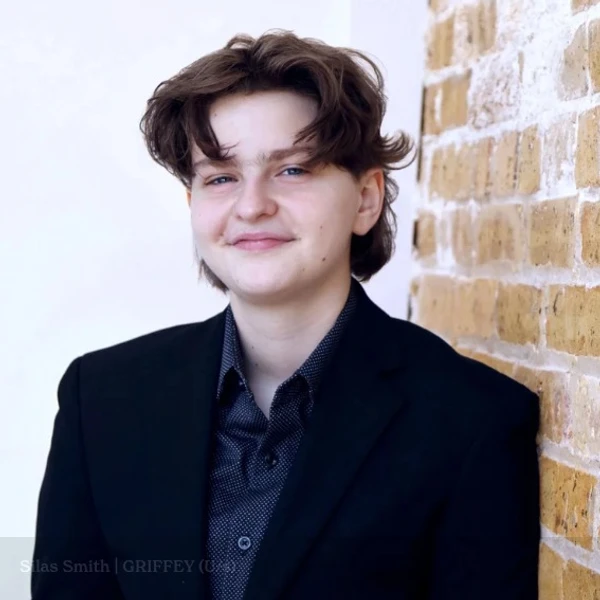
My plan for making a positive impact is to use my Psychology degree to become a mental health therapist for the 0.2% of Americans who are transgender young people, like me. The total population of transgender people in America is 0.8% of the total American population. I grew up surrounded by people who hadn't even considered transness, let alone knew someone who was trans. (I'm setting the stage for the shock I felt when politicians began calling attention to the "sea” of trans people in our country, and how they were destroying our nation's values. Where is this “sea”? I'd love to visit. ) I had no idea, when I stepped out of my home, that the larger world in America would be so horrified, concerned, and disturbed by my name, what I wore, and how I talked about myself. But, maybe I was too naive as a fresh-out-the-closet 13-year-old stepping out into the world, because I had already been greatly disappointed by the reactions in my own home with my family.
At the time, it was this horror so deep in my mind, I couldn’t feel anything else. I was trapped in the web. Everyone around me was so convinced they’d lost something. A daughter. But, I was there. I was right there. Beyond the doorframe, across the dinner table. I was the same kid.
I’m grateful they opened the door, reached across the table. But those 6 months of disregarding who I’d told them I was only broke trust. However, it taught me that anyone can change, even when it seems impossible. That gave me hope.
While it may have seemed to my family like I emerged from my room one day completely decided, I had been experiencing some other aspect of transness that haunts me to this day, since I was 12: gender dysphoria. Gender dysphoria is hard to describe. I usually just tell people to imagine someone constantly calling them a guy, or calling them handsome. Not surprisingly, it makes you feel crazy. And on top of that, I was trying to embody masculinity without the (toxic). Trying both to affirm yourself so you can feel comfortable in your body, while not accepting hyper-masculine ideals that tell you that you can’t cry or hug people or else, “you’re a girl”; except that threat is real. People will see me as a girl if I do any of those things, because their standard of my masculinity is so high, because I’m already “deficient” in their eyes. Missing some piece of being a man.
Now, I see the news. And, I feel safe in Illinois. Well, safer than other places. But there are still the elevated numbers of transgender unhoused youth, the unsolved murders of Black trans women, and video clips of people wishing death on the 0.8% of the American population. I struggle every day, and yet I am still so insanely lucky and privileged that I am able to access binders, that I know trans people in my community, and that I have a mental health therapist.
I’d love to say I overcame my adversity, but things, especially nationwide, are still bad. Saying we’ve “overcome” diminishes all the work that must be done. But, I’ve found joy. Joy I could never find from being someone else. Joy from strength given to me by our community of trans people. I want to be able to pass that on to the next generation; the knowledge that it can get better.