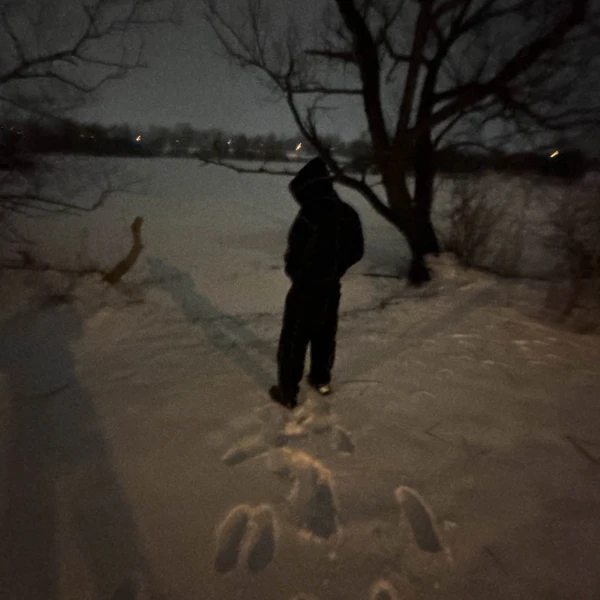
Life rarely grants us the privilege of a warning. One moment, we are racing forward, eyes fixed on the open road; the next, we are staring at the wreckage, wondering how everything could fall apart so quickly. These moments—unforgiving, unrelenting—have a way of teaching us, forcing us to confront avoidant truths. For me, they occurred back-to-back: a motorcycle crash that left me shaken and humbled, and the senseless death of a friend that left me questioning everything.
Looking at my brand new motorcycle broken, my leg pinned under its weight, all I could think of was “No way”.
When you focus intently on something, whether a goal or an obstacle, you head straight for it. This is one of the first things you are told when riding a motorcycle: Look ahead to where you want to go, past the problems, and you will head to your destination. However, like many new riders, I learned this lesson the hard way. On my second day with the motorcycle, I was riding down my street, when I somehow crashed headfirst into the corner of a building. The impact was sudden and unforgiving. luckily, I had all my gear on and walked away with just a few surface-level cuts.
It wasn’t just physically painful though; It hurt to hear the crunch, to see the result of my work over three summers destroyed, like a punch. It was the kind of moment where the world tilts and narrows, where even pain takes a backseat to disbelief, shattering the initial feeling of invincibility and freedom while riding. Strangely enough, however, I wasn’t shaken. I clung to the idea that, with effort, I could piece it all back together: the bike, my pride, my vision of control. Walking away from that moment, I felt myself extraordinarily resilient. But I wasn’t. Not truly.
The next day proved this. Rawnaq, a friend of mine was shot dead over something as trivial as a parking space. Unlike the crash, there was no fixing this. Nothing in my control could change what had happened. This realization struck firmly, crumbling the lesson I felt yesterday into something deeper, with darker clarity. The resilience I thought I had the day before seemed more like arrogance now. True resilience, I realized, wasn’t just about fixing what’s broken. It was about learning to live with what can’t be repaired.
The motorcycle crash taught me one lesson, and Rawnaq’s death taught me another.
The crash taught me that we often find ourselves heading toward what we focus on most, whether we mean to or not. At that moment, I was so consumed with avoiding the building that I steered directly into it. That moment lingers in my mind as a metaphor: if you fixate on fear or obstacles, you give them power over your path. The only way forward is to look ahead, past the doubts, and toward the possibilities.
Rawnaq’s death taught me something harder: how quickly life can change, and how powerless we are to stop it. His loss was a stark reminder of how much we take for granted—our relationships, our time, even the simple act of being alive.
These two experiences reshaped my understanding of resilience. The crash gave me the courage to navigate obstacles, to keep moving despite the fear of failure. Rawnaq’s death taught me to cherish the moments that cannot be reclaimed, to value the people in my life and the time we share. Together, they have become the compass by which I now steer my life: eyes ahead, heart full, and ready for whatever lies around the bend.