Hobbies and interests
Animals
Art
Choir
Church
Counseling And Therapy
Dungeons And Dragons
Gaming
Psychology
Clinical Psychology
Drawing And Illustration
Screenwriting
Writing
Animation
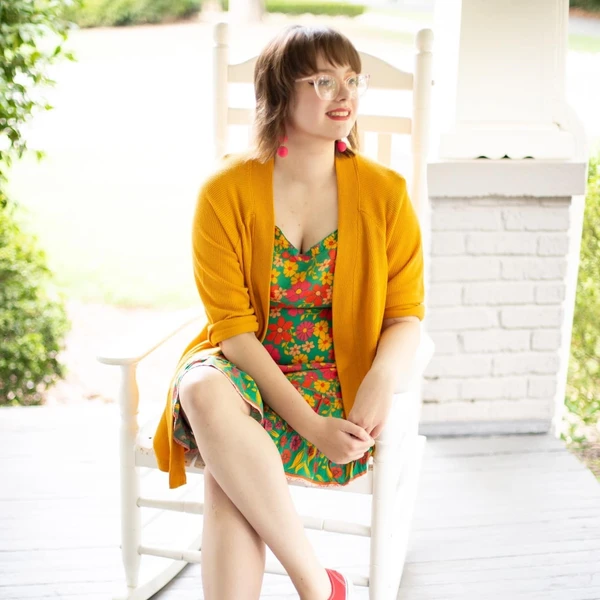
Sierra Isenhour
1x
FinalistSierra Isenhour
1x
FinalistBio
My goals are to increase awareness of autism in women and girls and conduct more research to get autistic women and girls like me the support that they need to flourish in life. I am passionate about psychology and sociology, as it helps me understand people as a whole and what I will be able to do for them in my future career. I care deeply about others and excel in my studies towards my educational and career goals.
Education
University of North Carolina at Charlotte
Bachelor's degree programMajors:
- Research and Experimental Psychology
- Psychology, General
Rowan-Cabarrus Community College
Associate's degree programMajors:
- Psychology, General
Home School Experience
High SchoolMiscellaneous
Desired degree level:
Master's degree program
Graduate schools of interest:
Transfer schools of interest:
Majors of interest:
Career
Dream career field:
Psychological Research
Dream career goals:
Sales Associate
Burlington Coat Factory2024 – 20251 year
Sports
Tennis
Club2021 – 20221 year
Public services
Volunteering
Project 658 — Childcare Volunteer2016 – 2017Volunteering
American Heritage Girls — American Heritage Girl2013 – 2022
Future Interests
Advocacy
Volunteering
Philanthropy
Elizabeth Schalk Memorial Scholarship
My name is Sierra Isenhour, and I am a college student from North Carolina with Generalized Anxiety Disorder (GAD).
I was diagnosed when I was seven years old and attending a public elementary school, where my anxiety started to spike as peers started getting meaner to people they associated with being different. It wasn't helped very much by my teacher, who would punish her students through humiliation. One of these punishments involved her placing my desk next to hers and instructing the other students to pay attention to me to be sure I didn't misbehave during class after I decided to doodle on a scrap piece of paper after finishing a test before everyone else. After learning of this incident and my diagnosis, my mother immediately pulled me out of public school and homeschooled me until I graduated high school and attended community college. She was incredible at providing me with an educational curriculum that was tailored to my needs while making sure I learned all of the necessary skills I would need to be successful in my future career.
My anxiety has prevented me from progressing through life at the rate a typical person would be expected to, I still don't have my driver's license at the age of 20 because being on the road gives me heavy anxiety, even when I'm being driven by someone I trust. I experience frequent dilemmas that my anxiety brings which leave me at a standstill, often where I get anxious about new experiences going wrong but also experiencing anxieties about missing out on something that could be good. The colliding nature of my anxiety disorder is something that sounds to many people without anxiety disorders, such as my parents, paradoxical with how no options ever truly lead to a complete relief of my anxiety.
In the past few years, however, I've been making strides in learning how to manage and cope with my anxiety disorder through therapy, medication, and healthy coping mechanisms. Despite my anxiety, I graduated high school with a 3.9 GPA, graduated from the online program at Rowan-Cabarrus Community College with a 3.7 GPA, and am now attending in-person classes at UNC Charlotte. I'm steadily getting a better hold of my adult life, albeit at a slower pace than others, but I'm comfortable with going at a pace I feel steady in and not rushing myself just to catch up to where others think I should be.
Women’s Health Research & Innovation Scholarship
I am a nineteen-year-old autistic woman who was diagnosed at the age of four. My parents observed abnormal behaviors in me when I was very young, including a style of play that resembled sorting more than traditional ‘play’, an aversion to most social events children my age would normally enjoy such as birthday parties, and a form of echolalia, where I would only be able to communicate through phrases that someone has already said, whether that would be through something I overheard my family say or something said on the television.
Initially, my parents suspected I had OCD, because of my love for order and annoyance at others who didn’t follow whatever rules had been put into place either by me or an authority figure. It wasn’t until my mom noticed a magazine in the waiting room of my speech therapy appointment, where a popular actress talked about her autistic son, that she realized my ‘quirks’ matched up much more with autism. In 2009, my mom brought me to the TEACCH center in Chapel Hill for an official diagnosis, where the researchers were incredibly excited about having a young girl brought in since it was considered a rarity at the time.
I was incredibly lucky to have been diagnosed at the age I was, as only 20% of females with autism are diagnosed before the age of 11 (Organization for Autism Research, 2018). Because of how androcentric the research on autism has been ever since the term was first coined, the diagnoses of most autistic women are based around how autism appears in male patients. However, the research done solely on male autistics is not an entirely accurate representation of the female phenotype of autism. Girls are generally considered to be harder to diagnose than boys because of how the research initially done on autistic people was focused on males and because of how their autistic traits are often more subtle due to how girls are generally socialized to be social butterflies and are pressured to “behave appropriately” (The National Autistic Society, n.d). This is known as ‘masking’, and is about three to four times more prevalent in autistic female behaviors than autistic male behaviors (Organization for Autism Research, 2018).
My journey in understanding my own autism and seeing how many other autistic women have gone through hardships in regards to learning about and getting their diagnoses is what inspires me. My goal with my career is to specifically focus on how autism presents itself in girls, women, and AFAB people and conduct enough research for that phenotype so that they will be able to be diagnosed at an earlier age and receive the support they will need for a better and brighter future. I believe that since I am also an autistic woman, my experiences being autistic can help provide more accurate information about autism in women and girls when compared to being a neurotypical person basing their studies off of research that skews towards androcentrism.
References:
Organization for Autism Research. (2018, October 26). The autism dilemma for women diagnosis. Organization for Autism Research. https://researchautism.org/audience/research/the-autism-dilemma-for-women-diagnosis/
The National Autistic Society. (n.d.). Masking. The National Autistic Society. https://www.autism.org.uk/advice-and-guidance/topics/behaviour/masking#:~:text=gender%20%E2%80%93%20autistic%20women%20and%20girls,girls%20must%20learn%20how%20to