Hobbies and interests
Acting And Theater
African American Studies
Botany
Clinical Psychology
Coffee
Comedy
Kinesiology
Medicine
Mental Health
Self Care
Shopping And Thrifting
Sociology
STEM
YouTube
Voice Acting
Video Editing and Production
Crocheting
Reading
Psychology
Sociology
History
Humor
Adult Fiction
Novels
I read books multiple times per month
SIdneya Smalls
2x
FinalistSIdneya Smalls
2x
FinalistBio
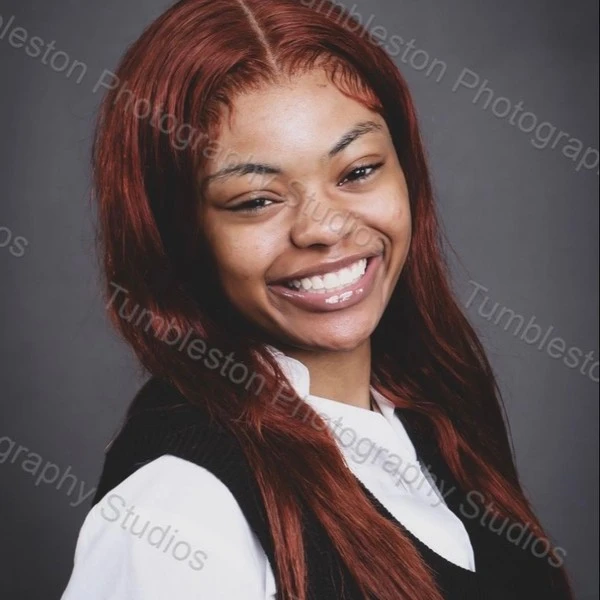
My name is Sidneya Smalls from Goose Creek, SC. I am a sophomore psychology major & political science minor at The University of South Carolina in Columbia, SC. As a second-year student working two jobs to pay my tuition, I’m determined to turn my challenges into impact by becoming a therapist who creates safe spaces for others.
Education
University of South Carolina-Columbia
Bachelor's degree programMajors:
- Psychology, General
Minors:
- Political Science and Government
Goose Creek High
High SchoolMiscellaneous
Desired degree level:
Bachelor's degree program
Majors of interest:
- Psychology, General
- Sociology
- Clinical, Counseling and Applied Psychology
Career
Dream career field:
Mental Health Care
Dream career goals:
Helping underserved americans get the mental help they deserve
Crew Member
Dunkin Donuts2025 – Present1 yearBusser/Host
Texas Roadhouse2023 – Present3 years
Sports
Track & Field
Varsity2018 – 20213 years
Research
Data Analytics
Office of Institutional Research, Assessment and Analytics (OIRAA) — Student Data & Research Assistant2025 – Present
Arts
Middle / Highschool Cohort
TheatreJames and The Giant Peach, Xanadu, Grease, Shakespeare2016 – 2020
Public services
Volunteering
Mercedes-Benz Back To School Event — Volunteer2023 – 2025
Future Interests
Advocacy
Politics
Volunteering
Philanthropy
Entrepreneurship
Aaryn Railyn King Foundation Scholarship
My name is Sidneya Michele Smalls, and my career journey to the world of medicine has been shaped in adversity. I grew up in a low-income household where money was always a gray area, and I learned early on what it was like to live without. The electricity being cut off, the food supplies running low, and seeing my mother working tirelessly just to keep us afloat made me determined to make something of myself.
When I came to college, I believed I had finally broken through, but it worsened. I lost my Pell Grant since my mother's income was considered "too high" on paper, although our daily life was otherwise. I lost another scholarship since my GPA fell during one of the most difficult years of my life. I was working as much as I could, getting up early, attending class for hours, and studying late into the night. There were times when I went without eating just to stretch what little I had. With that effort, the weight of tuition never ended.
I will never forget staring at my tuition bill and reading the $7,000 balance that I couldn't pay. That figure was not just a bill. It was either stay in school or quit. I cried myself to a sore chest wondering if my aspiration was slipping away from me. It was terrible to see classmates registering for the next semester while I sat dazed with a debt that I could not settle. The truth is that I had to almost quit school because it was simply not within reach. Even now, that $7,000 hangs over me and keeps me wondering if I can continue.
But money wasn't going to determine my fate. I told myself, if I had to take all the shifts, if I had to sacrifice weekends and holidays, I'd survive. That determination, tempered in hard times, encouraged me to continue when quitting seemed so tempting.
These struggles have hardened me, but above all, these struggles opened my eyes. I have a firsthand understanding of what it is like to fall through the cracks of a system that dismisses low-income families. I have a firsthand understanding of what it is like to fight against exhaustion and still not be good enough. I have the quiet weight of stress and depression because you carry it alone. That is why I pursued psychology.
My dream is to create affordable and accessible mental health care for the invisible people. My degree will represent education, but it will represent the sacrifices and all of those moments when I almost gave up and kept going. I almost lost education because of money, and I know how desperate it feels. My journey as a physician will ensure that others never have to be in that position. That is the kind of difference that I plan to leave on the world.
Elijah's Helping Hand Scholarship Award
Mental health has visited my life in such a way that I would never ignore it. I've had suicidal thoughts, and there were periods when I thought the world would be a better place without me being a part of it. Waking up every morning with that weight on my chest made life feel like a cycle which I couldn't break free from. I smiled and laughed socially, but I had secret pain no one could see when I was alone. The worst part of suicidal thoughts is the quietness. It makes you feel isolated like you are screaming on the inside, but no one can see it.
When I was fourteen, I understood how real this pain could be. My cousin had committed suicide two days before I turned fifteen. Instead of celebrating another year of life, my family was grieving the loss of hers. I still remember the phone call, the shock, and the disbelief. Birthdays are never the same anymore. Losing her broke something inside of me. It made all the thoughts I fought even louder, knowing how close one could get to losing it all. For many years, I blamed myself for not knowing, for not doing more, for not somehow saving her life. That guilt lived inside of me for a long time.
Her death forced me to confront my own struggles in a way that I could no longer escape. It reminded me of how tenuous life is, but how important it is to hold on. I know what it is to want to let go, and I know how it stings when someone else does. That mixture of hurt and endurance shaped me into someone who sees the world in a different way. I notice the unspoken sadness in others. I ask friends if they are okay even when they tell me that they are fine. I make sure the people around me know that they matter because I myself am very much aware of the thought of feeling that you do not.
Even on days that the darkness does creep into my life, I am reminded of how far I have come. I push myself at school, in the workplace, and within my own goals, because I want to check myself and make sure that I can keep going. To succeed is not to be perfect; it is to not allow my pain to dominate. It is to use my living as a strength. My cousin was not given a second chance, but I was, and I will not waste it.
What motivates me the most is the hope of being able to make another person feel less isolated by being honest with my own story. Mental illness is not something to be spoken of in hushed tones or kept under wraps. There are far too many people suffering quietly because they fear they will be judged. I want to speak out so others know they are worth it, their hurt matters, and recovery is within reach.
Pushing through suicidal ideation and losing a loved one to suicide has left its mark on my heart. But for that, those wounds are proof that I still exist. They remind me that despite how bad things were, I continued to choose life. And therefore, today, I want to assist others in crossing the threshold of understanding why they should continue to make that choice, too.
Johnna's Legacy Memorial Scholarship
Living with and watching over the struggles of a long-standing medical condition has shifted my understanding of resilience, purpose, and compassion. Without giving away the types of diagnoses I've worked directly and indirectly with, I can say that these experiences have greatly influenced my daily life and life goals. The reality of chronic illness is that it isn't only affecting the body; it shifts habits, relationships, and perspectives of the future. There are days where ordinary things take more energy than seems fair, and moments where boundaries feel like walls closing doors. But rather than being a definition by those walls, I've found meaning in building doors through them.
Indirectly, I have seen firsthand how illnesses such as asthma and arthritis can become a defining part of one's life. My close friend lugs around breathlessness in performing simple tasks that people take for granted, whereas my uncle has to endure the pain and tightness of inflamed joints that make even walking or simply holding a cup an ordeal. Their challenges have given me a glimpse of the manner unpredictable flare-ups or physical limitations can drain confidence and restrict independence. However, I have observed their wonderful perseverance to live in spite of these hindrances. This has influenced me in my own journey. When discouraged by my own weaknesses, I remember their perseverance, and it makes me work my best even on bad days.
Motivating me to work my best even in the face of limitations is the fact that adversity perfects strength. I have personally come to the conclusion that actual success is not gauged by grades, awards, and career achievements alone but also by the amount of strength it takes to keep going in spite of personal struggles. Each little triumph, like getting to class, finishing a workout, or having valuable conversations, is a badge of honor for staying strong. These mundane things take on monumental acts of willpower when done in the presence of long-term health hardship. Knowing that keeps me motivated and sustains my drive to overcome more than I believe is possible to start.
My experiences have also transformed my definition of impact. I don't wish to live on a bare survivorship of my own hardship. Instead, I intend to apply my experience to inspire others. Invisible illnesses can make individuals feel invisible or not understood because sometimes the symptoms are not apparent to others. Sharing my vision and establishing spaces of empathy, I hope to enable others to feel heard and accepted. No matter if you are advocating for mental health, academic support, or community mobilization, I would like to show people that their issues don't negate their worth.
Really, empowerment is a question of understanding. I've learned that one of the strongest things you can do for someone with a chronic illness is to hear them wisely and to be around them without diminishing their pain. My hope is to be that in each setting I walk into, whether in classrooms, workplaces, or interpersonal relationships. By modeling it and showing resilience and compassion, I hope to create a ripple effect that will cause others to labor outside of their own parameters and to allow those around them to do so as well.
Loving and witnessing chronic illness firsthand has shown me that even if the body will at times betray, the human spirit holds a certain power to overcome. That is the reality that I cling to, and it is what stands behind my hope to be a force for change in this world.
Leading Through Humanity & Heart Scholarship
I was brought up with a knowledge of how physical health, and especially mental health, impacts everything else in life. Coming from a low-income background myself, I knew the toll that money issues, stress, and scant resources took on people. I remember when my family struggled deciding whether bills or needs could be covered, and how that not only took a toll on our bodies but also on our minds. These experiences conditioned me to be someone who values resilience, empathy, and kindness towards others.
When I discovered psychology, it was like the missing piece of a puzzle. I understood that I could turn my own hardships into something that would be beneficial to others. I was enthused about human health and wellness because I understand what it feels like to have no one there, and I never want others to feel as though they are invisible during their pain. College is how I get to take those values and turn them into action. It isn't convenient to pay out of pocket, but it reminds me daily of the mission behind my education. I want health and wellness to be affordable, accessible, and inclusive so that no one feels like care is not an option.
2. Empathy, in my opinion, is being able to place yourself in another's shoes and see where they are coming from, even if you have not gone through the same. Empathy is more than sympathizing with someone. Empathy is listening without judgment, hearing what is not spoken, and having a place where an individual feels safe and heard. I view it as perhaps the most powerful bridge we can construct between people. It allows us to connect in a way that heals, understands, and trusts.
Empathy is essential in psychology and mental health care. Most who come for help carry heavy loads, characterized by pain, trauma, or circumstances beyond their control. Without empathy, it is impossible for progress to be authentic, as people have to feel safe before they can open their hearts. My vision is to work in a field where I can help other people cope with their feelings and build their mental resilience. Empathy allows me not only to treat a person as a case but as a whole person with a history behind them. It's what brings mental health treatment into human, not mechanical, form.
The human perspective is recalling that every decision I make affects real people. I want to build my work on listening before anything else, because people are experts within their own lives. I would ensure the spaces I design feel welcoming, culturally attuned, and non-judgmental. That also involves struggling for affordability and accessibility, since if people cannot access it, then it is not people-centered. My personal experience of paying for school directly and having to go without has given me knowledge about what it feels like to go without. That wake-up call keeps me on track and determined to be doing work that places people above profit.
Empathy to me is not just a skill but a fundamental value by which I choose to live. It means approaching people with patience, compassion, and respect. In the profession that I am exploring, it will guide how I listen, how I serve, and how I work to make care accessible to everyone. Deep down, it is empathy that heals, and I hope to spend my future instilling that in every single interaction.
Hines Scholarship
Going to college is something more to me than just getting a degree. It is the chance to break cycles, create stability in my life, and bring chances to others who have come from a path similar to my own. Being low-income, I have learned that education is a right and a responsibility. Every step I make on my campus is fueled by the sacrifices that I have made to be here and the sacrifices my family has made to help me excel. I fund school myself, and that has taught me hardiness and discipline. I know the value of every dollar, and I know what it means to work for something you believe in. For me, college is not a line-up of classes, but it is about proving to myself that I can build a future even though the odds have been stacked against me.
What I am striving to accomplish during my college years is bigger than myself. Of course, I want to study psychology and get prepared to work for other individuals, but I also want to create a foundation that will provide access to charity. My aspiration is not only graduation but finally contributing back to the societies that shaped me. I care deeply about bringing others along with me as I ascend, and college is instructing me on how to do so. I see myself creating programs focused on mental health, opening educational doors of opportunity, and providing services to families in financial need. I know first-hand the infuriation of being held back by finances, and I want to spend my future career erasing those barriers for other people.
Working to pay for school myself has been my greatest challenge as well as my greatest motivation. I wake up every morning feeling a sense of desperation, because I know how hard I am working just to be able to attend school. It keeps me disciplined, to budget every last penny, and always plan ahead. It is not simple, but it has made me realize that I can handle responsibility and that I will fight for my future. It also keeps me humble. I do not take the privilege of sitting in class for granted, because I realize how much it costs me in time, energy, and money. That sort of thinking only makes me more determined to do it, since I am not going to let my sacrifices all go in vain.
Ultimately, college means that I am creating a foundation not only for myself, but for the type of legacy I want to leave on the world. I want to graduate not only with a degree. I want to leave with the skills, knowledge, and experiences to position myself as a leader and philanthropist. I want to prove that an individual who comes from poor beginnings can make a difference and pave the way for others. College is my start. It is where I am converting my adversity into power and my dream into a roadmap.
Sloane Stephens Doc & Glo Scholarship
I'm Sidneya, and my journey is one of strength, self-discovery, and determination to create a meaningful future. I'm a second-year student at the University of South Carolina, majoring in Psychology with a minor in Political Science. To me, education is not merely a requirement; it is the opening to the creation of an independent, growing, and serving life for mankind.
As long as I can remember, I have been drawn to expression and creativity. Singing, dancing, acting, crocheting, and painting were some of the ways I explored the human condition. That interest would carry me into psychology, where I found a passion for seeing people more clearly. I would like to take what I have learned and use it to contribute to shattering the stigma of mental health and provide resources to empower individuals to live their own potential.
Working and going to school has not been a walk in the park. I balance a number of jobs like Dunkin' and Starbucks shifts, in addition to having to pay for tuition in cash out-of-pocket. This has taught me the importance of budgeting, financial responsibility, and perseverance. Every check that I get is divided very strategically between tuition, car savings, and long-term aspirations like my first apartment. Although these sacrifices might bear a heavy burden, I am glad with the freedom they provide and the self-control they build inside of me.
Aside from work and school, I value health and growth. Fitness is an important part of my life; both as a way of physical growth and as well for mental clarity. Spiritually, I anchor myself to religion to maintain contact with what is real amid uncertainty. I also value self-expression through presentation and style as a way of self-esteem and confidence.
My objectives are built on success and impact. I plan to maintain a minimum GPA of 3.0 while continuing to work towards financial independence. Someday, I would like to use my training in psychology to advocate for mental health education, particularly for communities whose voices are commonly marginalized. Above all, I hope that my life will inspire others to view adversity not as barriers, but as opportunities for development.
I am proud of the person I am becoming: disciplined, compassionate, and committed to doing something worthwhile. What was once a hindrance is now experience that has shaped me into someone who can carry responsibilities while still holding on to her dreams. This is what makes me, and this is what will continue to propel me towards achievement.
YOU GOT IT GIRL SCHOLARSHIP
3.
One of the biggest obstacles that I have had to persevere through is trying to stay in school while holding down my financial responsibilities. Being a psychology major at the University of South Carolina, I am constantly committed to school. Unfortunately, losing a scholarship on which I was dependent, my tuition costs skyrocketed. At once, I was put in a position where I needed to figure out how to pay for college or face jeopardizing my degree. Being in this sad situation was not pleasant because my education is not something that I want to complete, it is something that I am summoned to do. I want to help others with my career and become a voice for those who are voiceless one day. Leaving school was never even an option, but figuring out how to stay enrolled felt like too much to handle.
In order to fight against this, I decided to take my situation into my own hands instead of letting it control my actions. I started working two jobs, one at Dunkin' and the other at Texas Roadhouse. My days start before sunrise, and most nights I come home long after everyone else is asleep. It is exhausting, and I have had those days when I questioned how I would carry on. However, I keep going because I know the sacrifices that I make now will pay in the future. Every check I earn is channeled towards tuition, car funds to commute, and small essentials. Budgeting this close has not been simple, but it has taught me discipline and the importance of keeping my long-term goals over short-term wants.
Working two jobs while being a full-time student has taught me more than just financial accountability. It has hardened me. I have learned to manage my time more effectively, how to stay motivated even when I am tired, and how to ask for help when I need it. I have also become resourceful. Along with working, I pursue scholarships and seek out any opportunity available to help lighten the financial load. Each application I submit is a reminder that I am fighting for my education. I also draw on my faith during tough times. I have experienced moments when I have prayed to be guided, and each small triumph, like getting a work-study job or a friendly message from financial aid, feels like validation that I am on the right path.
This struggle has also made me more empathetic. I know what it feels to be struggling yet keep going. When I meet others who are struggling, whether in school, at work, or in their personal lives, I am better able to understand them and offer my support from an empathetic perspective. This perspective is valuable in psychology because it allows me to connect with others on a deeper level.
Although I am half way through this experience, I already realize how much I have changed. I am more independent, more motivated, and more confident in my ability to get things done. Working two jobs in order to afford school is not easy, but it has brought me to the realization that no problem is too big if you are willing to work and believe in yourself. This ordeal still shapes me into the hard, determined person I need to become if I am to achieve my goals.
Henry Respert Alzheimer's and Dementia Awareness Scholarship
My grandmother was the center of our family when I was a child. She was vivacious, affectionate, and always ready with words of wisdom. She possessed the ability to make every visitor feel at ease, be it with her cooking, her stories, or her hugs that had a way of disappearing all worry. To witness her battle with Alzheimer's disease was one of the worst experiences of my life. Though I was young, the memories of her decline and the impact it had on my family are vivid. She taught me through her fight with Alzheimer's how to conceptualize illness, family, and the power of empathy.
My grandmother slipped away slowly from Alzheimer's disease. She started small, forgetting things like where she left her keys or repeating the same story twice. My family wrote it off as age, but with the passage of time, the decline could not be denied. She would forget people she knew, even me. I remember one afternoon when she looked at me with puzzlement instead of recognition, and even as a child, I knew that something was essentially wrong. The woman who had raised my mother and brought me up was crumbling bit by bit.
The impact on my family was tremendous. Alzheimer's is not something that only occurs to the one diagnosed; it happens to anyone who is around that person. My mother became her full-time caregiver and paid in emotional and physical terms. I witnessed her perform double duty as a worker, caregiver, and mother while trying to be strong for everyone else. Our home was often tense with the stress of taking care of someone whose needs changed daily. There were moments of frustration, of guilt, of sorrow, but also moments of love. I came to understand at an early age that caregiving is both an act of strength and vulnerability. Observing my mother care for my grandmother taught me the true meaning of loving without reservation.
As a child, I didn't have the words to describe how I felt. I just knew that my grandmother was slipping away from me. The disease took her memories away, her independence, and then her life. But in spite of the suffering, I also saw how my family rallied together. We took turns being there for each other, helping out when we could, and relishing those few moments when my grandmother would be in her right mind. Those fleeting moments, when she would smile and say my name, were presents.
My grandmother dying of Alzheimer's made an impact on me that has lasted until this day. I learned that life is something fragile and memories are precious. The experience also served as my gateway to learning about psychology and the human mind. I was curious to find out how the brain works and what leads to such illnesses as Alzheimer's. I was constantly asking myself why there is no cure yet and how one could help families like mine. This interest eventually turned into something I was passionate about, and it made me change my mind to pursue psychology as an undergraduate degree. I would love to be able to educate other people on mental health and neurological disease because I have seen firsthand how they affect families and individuals.
In my community, it appears that people lack education on Alzheimer's. They just assume it's a memory loss, but there is so much more than that. It is an illness that robs a person of their identity and has families grieving long before the actual physical loss is experienced. I started paying attention to the elderly in my neighborhood and church after my grandmother's passing. I gained an appreciation for patience, understanding, and support systems. Little things like speaking to somebody or helping a neighbor who is elderly became meaningful to me. Alzheimer's has taught me that the little things can mean so much to a person who is struggling or to a caregiver.
Above all else, I learned strength. Watching my grandmother fade away and my mother bear the weight of caregiving made me a person who values strength, family, and compassion. It taught me to value the time I share with individuals I care about and never to take memory or connection for granted. Even though my grandmother is no longer alive, the lessons she imparted through her life and illness continue to guide me.
Alzheimer's disease came to my family, but it also provided me with a direction in life. My grandmother lives through her memory in all my endeavors. Her story motivates me to work hard, pursue studies, and end up helping others who are fighting similar wars. I found meaning in the suffering, and I found inspiration in the loss.
Bulkthreads.com's "Let's Aim Higher" Scholarship
What I wish to create is greater than a profession. I wish to create a place that prioritizes healing, representation, and restoration for Black girls and women who are too often asked to hold emotional hurt in solitude. As a person who has struggled with anxiety, grief, and burnout in a bid to stay strong, I can verify how hard it is to seek help when the world is insisting on you pushing on. That is why I am determined to make a future where mental health services are available, safe, and validating for people who resonate with me.
I am currently a sophomore at the University of South Carolina, pursuing a degree in Psychology with a minor in Political Science. My goal is to be a culturally responsive therapist working with Black communities. Along with individual therapy, I would like to have a wellness center that focuses on group circles, community education, and individual therapy that serves Black and Brown women. I want it to be a space where people are able to release, reattach, and remember they don't have to do everything by themselves.
This is extremely personal for me, but I want to share it. I want to normalize therapy in the homes where mental health has been neglected for far too long. I would like to mentor young women who are interested in psychology but question whether or not they fit into the area. I would like to develop programs that make education in mental health relevant and applicable. My belief is that when we are able to access care that understands who we are, healing becomes a possibility.
Constructing this dream is constructing me, too. Each psychology course, each minute I invest in working through my own healing, and each study session at midnight is further educating me on who I am becoming. I am learning discipline, focus, and staying grounded on my purpose. I know that the efforts I put in now, are laying the groundwork for something so much bigger than me.
What I want to build is more than a building or a profession. It is a promise to make others feel seen, heard, and safe. It is for the next wave of girls who have to be able to grow up believing that their feelings matter and that they are never too much. It is for my community, my future clients, and for the little girl version of me who needed exactly what I am determined to become.
Joybridge Mental Health & Inclusion Scholarship
Mental health has never been a hobby for me. It has been a vocation created through experience and a sincere hope to make a difference for people who look like me. As a Black woman, I have seen the stigma, silence, and systems of obstruction surrounding mental health in our communities. These experiences did not only cultivate my passion, but also gave me a sense of responsibility to be the voice, advocate, and support system I did not have.
Growing up, I observed strong women like my mother carry invisible burdens. I observed friends and family members fight quietly against anxiety, depression, and trauma without the tools or vocabulary to define what they were going through. I was one of them. My own grief and anxiety experiences often left me lost and unsure of where to turn. All that was different when I started therapy. For the first time, I felt mental health care as healing, personal, and validating. That experience lit a fire within me. I knew I wanted to create that same space of comfort and understanding for others.
I am a student pursuing a Bachelor of Arts degree in Psychology with a minor in Political Science at the University of South Carolina. My focus is researching interactions between trauma, care access, gender, and race, with special emphasis on how these features affect Black women. I wish to be a culturally responsive licensed therapist. I would appreciate the opportunity to work one-on-one with Black women and girls, help them unlearn shame, process trauma, and own their healing.
My hope is to build a holistic well-being center providing therapy, support groups, and mental health education to underrepresented communities. My hope is that the building itself will feel like home for those who never felt safe enough to be themselves. Representation matters in mental health. We need more therapists who are not only familiar with psychology but familiar with being Black and existing in the world. I'd like to be one of them.
In continuing diversity and inclusion in the field, I also plan to mentor new Black students pursuing mental health careers, advocate for greater access to care in marginalized populations, and use online avenues as a means of making therapy and emotional health more mainstream. My hope is to change the way people think about therapy, specifically in communities that have been left out of the conversation long enough.
This award would not only ease the burden of my education financially, but it would allow me to remain focused on doing the work I believe I have been called to do. Mental health rescued me, and I would like to be able to help rescue others through the creation of safe spaces, initiating dialogue, and providing care that is responsive to the populations it serves.
Brian J Boley Memorial Scholarship
I am pursuing a psychology degree because I know firsthand what it feels like to be suffering in silence. I have had periods where I seemed to have everything together externally but was living on a thread internally. I've watched the people I care about suffer in ways they couldn't describe, and I've experienced the weight of generational trauma unaddressed because nobody had the words to describe it. This is a choice on a personal level. I want to give others the tools to find out that what they're going through is real, that they're not alone, and that healing is not only an option but is also powerful.
Mental health has never been a stranger to my life, knowingly or not. In childhood and adolescence, it was occasionally pushed aside, brushed off, and occasionally misinterpreted. Anxiety was described as stress, and depression was simply told I was tired or lazy. I felt like I just needed to just get through things on my own. But the more I learned about mental health, the more I knew that these problems were something to be cared for, not to be ashamed of. That knowledge changed everything for me. It gave me purpose and focus.
I am learning through my education to be a mental health professional who does not just treat, but who hears deeply, respects each individual's story, and creates a space where individuals feel perceived. I want to work with Black youth and Black women especially, because I know how often our pain is dismissed. We're supposed to be stoic, quiet, or heal ourselves. I want to break that. I want to provide counseling that amplifies our voices and welcomes us with empathy and understanding.
Along with individual therapy, I plan to provide work in schools, community centers, and clinics for the purpose of opening up increased access to mental health education and treatment. A lot of people are only suffering because they don't know what they're experiencing or where to turn. I would like to help build systems where things are simple, accessible, and culturally aware. It is about creating bridges between communities and the mental health services they need. It is also about standing up to the mythology of what healing even is and how it happens.
I also hope to be a mentor and a role model to young girls who may feel lost or forgotten. At times, just seeing someone who understands you and takes care of you can do it all. I wish to be that individual. Through private counseling, group therapy, or public service, I am committed to having safe, empowering, and healing spaces.
This work matters to me on every level. It's not about a degree or a job. It's about retelling the story for the people who were told to shut up and endure. It's about setting people free to know themselves and take responsibility for healing. I would like to be part of that transformation. And I know, by coming into this work with heart and intention, I will.
Linda Hicks Memorial Scholarship
I grew up in a home where survival was normal. No one ever called it domestic violence, but the silence, tension, and emotional neglect characterized me in ways I didn't understand until I was an adult. I witnessed what happened when generational trauma was not healed. Pain that is not named becomes normal. And while there was no drug use in my household, I saw substance abuse in my extended family and community. I watched as loved ones became lost in addiction while the rest of us tried to go about business as usual. These experiences didn't just leave emotional scars. They gave me a lens through which I now view the world, especially as a Black woman.
There is a particular intersection of violence, erasure, and silence that African American women carry. We are asked to be strong, to wait, to forgive without being afforded the space to mourn, to process, or even to name what was done to us. That silence harms. It prevents healing, it results in shame, and it cuts us off from aid. I would like to change that.
I'm currently pursuing a degree in psychology, and my long-term career goal is to become a trauma-informed therapist with a specialization in providing support to Black women who have experienced domestic violence, generational trauma, and substance abuse. My motivation comes not only from personal experience but also from a belief that healing is a right. We shouldn't have to hit rock bottom before we're offered care. We deserve safe spaces and authentic support systems.
I'm building the expertise, compassion, and clinical skill to provide care that is culturally competent and emotionally safe. I want to develop programs and healing environments where Black women can present themselves just as they are, free from judgment or pressure to perform strength. I want to support them in restoring their self-worth, making sense of their feelings, getting reconnected with their bodies, and feeling empowered to set boundaries that protect their peace.
My long-term goal is to transition out of one-on-one therapy and into transforming how care is coordinated across systems. I want to promote more communication between mental health providers, domestic violence shelters, substance abuse centers, and the communities we care for. Too many women are failed by a system that was not created with them in mind. I want to assist in bridging that gap by creating bridges with clinics, churches, schools, and other sites where Black women already feel at ease or have support. By going where people are, we build trust and make healing more possible.
I also want to challenge the stereotype of the "strong Black woman." Not because we aren't strong, but because we should not have to be strong all the time. We deserve to be cared for even when we are not holding everything together. We deserve rest, softness, and protection like anyone else.
This is a cause near to my heart, and I carry it with purpose. My education is not just a degree. It is a promise to my younger self and to every woman like her. We deserve more than to survive. We deserve peace. We deserve visibility, voice, and healing. And I am going to make sure that we receive it.
Fishers of Men-tal Health Scholarship
Mental health has always been more than a topic to me. It's been the soundtrack to my entire life. I was the girl who grew up having it all together. I performed well in school, stayed out of the way, and made my parents proud without them needing to tell me twice. On the outside, I was thriving. But on the inside, I was constantly fighting my own mind. I overthought everything, doubted myself, and held stress that I did not even realize wasn't mine to hold.
No one really talked about mental health where I'm from. You were either going through something or being dramatic. Anxiety was just stress, and sadness was a just bad day. So I didn't say anything. I cried in silence, wrote in a journal what I couldn't say out loud, and smiled in public like everything was okay. I did not want to disappoint anyone or look weak.
But the truth was, I didn't feel strong at all.
College gave me the space to finally hear myself properly. Being away from home helped me realize I wasn't just tired, I was mentally and emotionally drained. I wasn't just quiet. I was holding on to pain. I started to recognize how hard it was for me to trust my own decisions. I would second guess myself constantly, especially when things didn't go perfectly. I saw how closely I tied my worth to how much I did and how well I did it. I wasn't okay with resting. I thought I needed to work for peace, not create it. That was a painful realization. But also freeing.
In the first semester, I broke down which I now call a breakthrough. I remember sitting in my dorm room and just feeling like everything was falling apart around me even though nothing much was happening. I could not even explain it to my friends. I finally visited my campus mental health services website that evening. I didn't book a session right away, but just navigating the site allowed me to know that I wasn't crazy, I was just overwhelmed, and I deserved help. That's when I promised myself, I'd never silence my struggles again.
Now, I've redefined strength. Strength is being soft without shame. Strength is respecting my boundaries, even when others don't get it. Strength is resting without guilt. Strength is choosing myself over and over again, not proving myself. I don't feel like I have to hold the world in order to be enough anymore. I just need to be in alignment with who I truly am. And that has taken time, intention, and a grandiose amount of unlearning.
My journey with mental health has also changed how I show up in relationships. I no longer overcompensate and try to earn love by being the one who always listened, always helped, always showed up, even if I was not receiving it back. I did not know I did not have to give all even when I was running empty. Now I know that healthy relationships are built on mutual care. I've learned to communicate my needs, consult with myself before committing to anything, and let go of people who only loved me when I was convenient to them.
It has not been easy, though. Some friendships did not survive that transition. Some people were offended by the boundaries I established. But the ones who stayed, the ones who respected my growth and honored my healing, have shown me what community really means. I have learned that you do not need to have a lot of people. You just need to have the right people. And I have been blessed enough to find such people, little by little.
This healing work also gave me clarity about my purpose. I'm now studying psychology, no coincidence. I would love to be a therapist, specifically for people who look like me and have families and communities where mental health wasn't discussed or was misunderstood. I understand how it feels to be the strong one, the one who carries other people's emotions and ignores yours. I understand how it feels to need safety and understanding and not know where to find it. That is why I want to be that safe place for someone else.
Mental health has also shown me that healing is not just personal. It's communal. When one of us learns how to speak our truth, rest, and set boundaries, we're granting others permission to do the same. I'd love to help create a world where humans feel seen, heard, and supported. Not just in crisis, but in the everyday. I believe that starts with conversations, resources, and representation.
I am especially drawn to working with Black women and children. There is so much we carry, so much we are expected to hold without breaking. But we deserve gentleness. We deserve tenderness. We deserve rest. I want to help others see that healing is possible, and that their story doesn't end at survival. It can blossom into peace, happiness, and purpose too.
My own path is not finished yet. I'm still working it out, still learning to trust myself, be gentle with myself, and no longer compare myself to standards that are not possible. But I am proud of how far I've come. I've turned pain into power. I've taken silence and made purpose from it. And I've turned each setback into a chance to more fully know who I am.
Mental health did not break me. It showed me who I was and am.
It showed me the adaptation of myself that I was constantly unfolding into. The one who believes in honesty, softness, growth, and connection. The one who wants to make an impact not just in theory, but in real lives. The one who believes healing is not just something to be sought after, but something to embody and offer.
Because of what has happened to me, I walk more compassionately. I speak more intentionally. And I dream more vividly. My faith in God, my friendships, and my career goals are all centered around one truth: when we take care of our minds, we create space for everything else to flourish. And I'm just getting started.
Women in Healthcare Scholarship
My name is Sidneya Smalls, and I am a rising sophomore at the University of South Carolina, majoring in Psychology. I have always been driven by a deep desire to ensure that every person has a chance to better themselves mentally and physically. This passion is what led me to pursue a degree in healthcare. As a Black woman, I am particularly aware of the disparities in healthcare access and quality that affect minority communities. I believe that by entering the healthcare field, I can help bridge these gaps and make a meaningful difference in people's lives.
Psychology is a field that fascinates me because it combines the study of the mind and behavior with the opportunity to help others improve their mental health. Mental health is a critical component of overall well-being, yet it is often overlooked or stigmatized. I want to change that by working to increase awareness and access to mental health services, especially in underserved communities. By understanding the psychological aspects of health, I aim to provide support and resources that empower individuals to achieve better mental and physical health outcomes.
As a woman in healthcare, I hope to make a positive impact by serving as a role model and advocate for other women who aspire to enter this field. The healthcare industry needs diverse voices and perspectives to address the complex challenges it faces. By bringing my unique experiences and insights as a Black woman, I can contribute to creating a more inclusive and equitable healthcare system. I want to inspire other young women of color to pursue careers in healthcare, showing them that their voices are valuable and necessary.
In addition to my academic pursuits, I am committed to community service and engagement. I believe that hands-on experience is essential to understanding the real-world implications of healthcare policies and practices. Volunteering at local clinics or mental health organizations will allow me to connect with individuals from various backgrounds and learn how to address their specific needs effectively. This direct interaction with patients will equip me with the empathy and skills needed to provide compassionate care.
Ultimately, my goal is to become a healthcare professional who not only treats patients but also advocates for systemic change. I want to work towards eliminating the barriers that prevent people from accessing the care they need. Whether it is through policy reform or grassroots initiatives, I am determined to make healthcare more accessible and equitable for all.
In conclusion, pursuing a degree in healthcare is not just a career choice for me; it is a calling. I am eager to use my education and experiences to make a positive impact in the healthcare field. By focusing on mental health and advocating for underserved communities, I hope to create a future where everyone has the opportunity to thrive both mentally and physically.