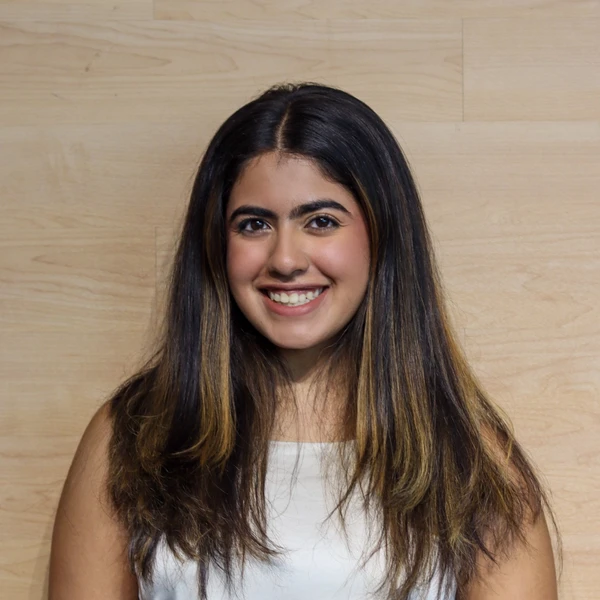
Hobbies and interests
Martial Arts
Dance
Baking
Reading
Writing
Advertising
French
Psychology
Mental Health
Advocacy And Activism
Business And Entrepreneurship
Marketing
Photography and Photo Editing
Community Service And Volunteering
Social Media
Public Speaking
Reading
Young Adult
Adult Fiction
Contemporary
Romance
Business
Self-Help
Psychology
I read books daily
Shreya Talwar
1x
Finalist
Shreya Talwar
1x
FinalistBio
Hi! I'm Shreya Talwar, an incoming student at The Ohio State University's Fisher College of Business and the Integrated Business and Engineering Honors Program.
I'm passionate about using business, technology, and entrepreneurship to solve real-world problems and create meaningful impact. Over the past several years, I've founded multiple ventures, including an allergy-conscious dessert business and a culturally inclusive gifting company, while leading marketing initiatives, mentoring students, and serving in leadership roles across my school and community.
I'm also developing LifeLine, a healthcare innovation concept designed to make preventive care more accessible and easier to navigate, particularly for underserved communities. Through every project, my goal is the same: identify a problem, understand the people behind it, and build solutions that improve lives.
Beyond entrepreneurship, mentorship is one of the most meaningful parts of my work. Whether teaching martial arts, guiding younger students, or leading teams, I strive to help others build confidence and recognize their potential.
My long-term goal is to build businesses that combine innovation with purpose, creating scalable solutions that leave communities stronger than I found them.
Education
Ohio State University-Main Campus
Bachelor's degree programMajors:
- Business, Management, Marketing, and Related Support Services, Other
- Finance and Financial Management Services
Minors:
- Engineering, General
- Computer Software and Media Applications
Emerson High School
High SchoolMiscellaneous
Desired degree level:
Master's degree program
Graduate schools of interest:
- Northwestern University
- University of Chicago
Transfer schools of interest:
Majors of interest:
- Business Administration, Management and Operations
- Marketing
- Business/Managerial Economics
- Entrepreneurial and Small Business Operations
- Communication, Journalism, and Related Programs, Other
Career
Dream career field:
- Management Consulting
Dream career goals:
To found and scale impact-driven companies that improve access to healthcare, education, and cultural representation through marketing and innovation.
Running with the Bulls Captain
Emerson High School2023 – 20263 yearsVP of Marketing
Emerson High School DECA2023 – 20263 yearsEditor-in-Chief
Emerson High School Yearbook2023 – 20263 yearsFounder & CEO
So Sweet Dessert Emporium2019 – Present7 yearsCertified Instructor + Social Media Manager
Tiger Rock Martial Arts2023 – Present3 yearsFounder & CEO – Brand Strategy + Operations Lead
Simply Gifted2024 – Present2 yearsCo-Founder & CEO – Photography + Client Experience Lead
Fleur de Frame2025 – Present1 year
Sports
Taekwondo
Club2014 – Present12 years
Awards
- 4th Degree Level 3 - National Black Belt
- Medaled in Sparring, Forms, and Board Breaking events at District, State, and National Championships (Gold, Silver, and Bronze)
Research
Psychology, General
Emerson High School — Student Researcher2024 – 2025
Arts
Arathi School of Dance
DanceAnnual Bharatanatyam Recital (2014-2025), Dallas Latino Cultural Arts Center Performance2014 – PresentYearbook
PhotographyIn Case You Missed It: 24-25 Yearbook, The Last First: 23-24 Yearbook2023 – PresentDesi Dance Team
DanceShehzada Kartik Aaryan, Emerson High School Spring Showcase 2023-20252022 – Present
Public services
Volunteering
Project Ruby — Mentor – Middle & High School Girls2022 – PresentAdvocacy
North Dallas Chess Foundation — Co-Founder2024 – PresentVolunteering
Stone Hollow HOA — Editor-in-Chief – Neighborhood Newsletter2024 – Present
Future Interests
Advocacy
Volunteering
Philanthropy
Entrepreneurship
Bulkthreads.com's "Let's Aim Higher" Scholarship
I became a CEO at 11. I wasn’t sure I wanted to bake, but I was sure I wanted to stop walking out of birthday parties, tears running down my face, after being faced with two options: don’t eat or risk dying. I wanted to build what I never had for all the other kids just like me. After days and nights of research, So Sweet Dessert Emporium, my own home bakery, was born.
In the beginning, my gorgeous creations collapsed overnight, and I promised cake flavors I had never heard of, but through it all, partnered with my trusty mentor, YouTube, I kept learning. Lost in a sea of business, I spent hours reading and taking courses in everything from digital marketing to management to e-commerce. What began as a way to solve my own problem quickly became something much bigger. So Sweet Dessert Emporium became a platform to promote inclusivity, mentorship, and service. Providing allergy-safe desserts year after year lets me answer the question, “How do I know this is safe for my child?” with, “Don’t worry, I have allergies too—I understand.” Seeing the smiles on children’s faces and becoming their family baker proved that every tear I shed over not being able to eat a cupcake was worth it.
Since then, I have continued looking for ways to use business to solve meaningful problems. I have led student organizations, mentored younger students through martial arts, co-founded a culturally inclusive gifting company, and begun developing LifeLine, a healthcare innovation concept designed to make preventive care more accessible. Although each project is different, they all begin the same way: by identifying a problem that affects real people and asking how I can build something better.
What I want to build next is LifeLine. I want to create a healthcare platform that makes preventive care more accessible and easier to navigate, particularly for underserved communities. Too many people miss opportunities to protect their health because the process is confusing, fragmented, or inaccessible. I want LifeLine to help people understand what care they need, when they need it, and how to access it.
This fall, I will attend The Ohio State University as a Finance major in the Integrated Business and Engineering Honors Program. My long-term goal is to build businesses at the intersection of technology, healthcare, and entrepreneurship that improve people’s everyday lives. I want to combine business strategy with innovation to create solutions that are not only scalable, but genuinely useful for the communities they serve.
Building LifeLine would help me continue becoming the kind of entrepreneur I want to be: someone who identifies a problem, understands the people behind it, and builds a solution that improves lives. For my community, it could make preventive care easier to understand and reach. At eleven years old, I built what I wished had existed for me. Now, I want to build what other people should not have to live without.
Champions Of A New Path Scholarship
I became a CEO at 11.
I wasn’t sure I wanted to bake, but I was sure I wanted to stop walking out of birthday parties, tears running down my face, after being faced with two options: don’t eat or risk dying. I wanted to build what I never had for all the other kids just like me.
After days and nights of research, So Sweet Dessert Emporium, my own home bakery, was born.
In the beginning, my gorgeous creations collapsed overnight, and I promised cake flavors I had never heard of, but through it all, partnered with my trusty mentor, YouTube, I kept learning. Lost in a sea of business, I spent hours reading and taking courses in everything from digital marketing to management to e-commerce. What began as a way to solve my own problem quickly became something much bigger.
So Sweet Dessert Emporium became a platform to promote inclusivity, mentorship, and service. Providing allergy-safe desserts year after year lets me answer the question, "How do I know this is safe for my child?" with, "Don't worry, I have allergies too—I understand." Seeing the smiles on children's faces and becoming their family baker proved that every tear I shed over not being able to eat a cupcake was worth it.
Those experiences shaped the person I am today. Since then, I have continued looking for ways to use business to solve meaningful problems. I have led student organizations, mentored younger students through martial arts, co-founded a culturally inclusive gifting company, and begun developing LifeLine, a healthcare innovation concept designed to make preventive care more accessible. Although each project is different, they all begin the same way: by identifying a problem that affects real people and asking how I can build something better.
This fall, I will attend The Ohio State University as a Finance major in the Integrated Business and Engineering Honors Program. My long-term goal is to build businesses at the intersection of technology, healthcare, and entrepreneurship that improve people's everyday lives. I want to combine business strategy with innovation to create solutions that are not only scalable, but genuinely useful for the communities they serve.
Receiving this scholarship would help me continue pursuing those goals by allowing me to devote more time to research, entrepreneurship, leadership opportunities, and developing ideas like LifeLine. Rather than limiting opportunities because of financial considerations, I would be able to focus on gaining the experiences, mentorship, and education necessary to maximize my impact.
At eleven years old, I built what I wished had existed for me. This scholarship would help me continue building solutions that make life better for others.
Kalia D. Davis Memorial Scholarship
I became a CEO at 11.
I wasn’t sure I wanted to bake, but I was sure I wanted to stop walking out of birthday parties, tears running down my face, after being faced with two options: don’t eat or risk dying. I wanted to build what I never had for all the other kids just like me.
After days and nights of research, So Sweet Dessert Emporium, my own home bakery, was born.
In the beginning, my gorgeous creations collapsed overnight, and I promised cake flavors I had never heard of, but through it all, partnered with my trusty mentor, YouTube, I kept learning. Lost in a sea of business, I spent hours reading and taking courses in everything from digital marketing to management to e-commerce. What began as a way to solve my own problem quickly became something much bigger.
So Sweet Dessert Emporium became a platform to promote inclusivity, mentorship, and service. Providing allergy-safe desserts year after year lets me answer the question, "How do I know this is safe for my child?" with, "Don't worry, I have allergies too—I understand." Seeing the smiles on children's faces and becoming their family baker proved that every tear I shed over not being able to eat a cupcake was worth it.
Those experiences shaped the person I am today. Since then, I have continued looking for ways to use business to solve meaningful problems. I have led student organizations, mentored younger students through martial arts, co-founded a culturally inclusive gifting company, and begun developing LifeLine, a healthcare innovation concept designed to make preventive care more accessible. Although each project is different, they all begin the same way: by identifying a problem that affects real people and asking how I can build something better.
This fall, I will attend The Ohio State University as a Finance major in the Integrated Business and Engineering Honors Program. My long-term goal is to build businesses at the intersection of technology, healthcare, and entrepreneurship that improve people's everyday lives. I want to combine business strategy with innovation to create solutions that are not only scalable, but genuinely useful for the communities they serve.
Receiving this scholarship would help me continue pursuing those goals by allowing me to devote more time to research, entrepreneurship, leadership opportunities, and developing ideas like LifeLine. Rather than limiting opportunities because of financial considerations, I would be able to focus on gaining the experiences, mentorship, and education necessary to maximize my impact.
At eleven years old, I built what I wished had existed for me. This scholarship would help me continue building solutions that make life better for others.
RonranGlee Literary Scholarship
Throughout Frankenstein, Shelley uses several literary devices and commentary to frame Victor and his creation as reflections of one another. While Victor and the creature both began their lives with a sense of innocence and curiosity, they were both rejected by society and destined for isolation in the end.
Shelley uses a simile and sensory details to suggest the similarity between the creature and Victor’s upbringing. “He came like a protecting spirit to the poor girl who committed herself to his care.” Shelley uses a simile to compare Victor’s father to a protecting spirit and frames him as a character with a strong sense of compassion. This begins to portray the environment Victor grew up in as one of love, and shows Victor’s family to be a stark contrast to his own personality. However, throughout the novel, Victor fails to connect with people outside his family and Henry, showing his social ineptitude and his overall rejection by society. While Victor grew up in a loving home with a family that cared for him, he still became morally corrupt despite his upbringing. As he lost his humanity and stopped caring what others thought, aside from a select few, he slowly lost the innocence with which he began the novel. Due to his indifference toward his own creation, calling it ugly and unable even to look at it, Victor slowly loses touch with himself and becomes emotionally as inhuman as he believes his creature to be. His thirst for knowledge, fueled by his mother's death, pushes him to a level of insanity, eventually leading him to be left with no one due to his own creation’s revenge. Similarly, the creature begins his life with nothing, stating that “I saw, felt heard and smelt at the same time.” The sensory details Shelley provides paint the creature as similar to an infant or small child. The creature was a blank slate at creation, knowing nothing besides Victor, his creator. Victor, despite having a good family of his own, is unable to provide similarly for the creature and abandons him upon creation. As the creature fought to connect with others, eventually he realized that due to the way his creator made him, he wouldn’t be able to. This led to an internal vengeance against Victor and caused the creature to lose any humanity he had learned. The creature lost its innocence, not by any fault of its own. As the creature begins to learn and grow, it is portrayed as more level-headed than Victor, gaining the humanity Victor seems to have lost, while still being alone, as shown by the creature’s asking Victor for a companion and, in return, leaving all of humanity at peace. As time went on, Victor developed a thirst for knowledge, while the creature developed a thirst for revenge.
Shelley uses a paradox and diction to highlight the roles nature and nurture played in both the creature's and Victor’s endings. “I gasped for breath, throwing myself on the body I exclaimed have my murderous machinations deprived you also, my dearest henry of life?” The author uses diction, specifically the words “machinations” and “deprived,” to rely on Victor’s self-condemnation. While he had little to say when Justine was executed due to being blamed for the actions of his creation, he now mourns the death of the last living person to whom he was attached. The diction serves to highlight his guilt and his current psychological state after losing everything. While Victor gave the creature nothing from the time he was created, the creature has now successfully reversed the roles and taken everything from Victor. Simultaneously, words such as “dearest” highlight a small sliver of humanity that Victor had but has now lost. Victor feels little and does nothing to correct or acknowledge his actions. The creature reveals guilt and a longing for belonging. “I am malicious because I am miserable. Am I not shunned and hated by all mankind?” Shelley uses a paradox to reveal that the creature’s true evil does not stem from being born but rather from being forced into it. It highlights a theme of nature vs. nurture throughout the book and argues that, while one can be born pure, isolation and rejection can triumph, and one can become “malicious”. The creature only wanted to be “normal,” or human, and to be treated by society as such, as seen in his interactions with the De Laceys. Still, once facing rejection from them due to his appearance, he abandoned hopes of being accepted by society. This was similar to his mother's death, for Victor was the catalyst for the malicious intent of the creature. The creature states that its evil stems from the rejection it has faced from society, which has made it miserable. Victor had the power to prevent the creature from becoming evil, while no one had control over Victor’s undoing besides himself. While both the creature and Victor were born good, events in their upbringing led them to evil, Victor through his treatment of the creature and the creature through its killings.
While Victor loses his innocence through a thirst for knowledge, the creature loses his through a thirst for revenge. In the end, both end up isolated from society and destined to be alone, losing their lives as a consequence.
Elizabeth Schalk Memorial Scholarship
When I was diagnosed with PCOS, I expected to learn about hormones, medications, and physical symptoms. I didn't expect how much it would affect my mental health.
For years, I had struggled with depression and anxiety that became part of my everyday life. Some days, getting out of bed felt exhausting. Other days, my thoughts convinced me I wasn't doing enough, wasn't accomplishing enough, or wasn't enough. I became someone who constantly stayed busy because slowing down meant sitting with thoughts I didn't know how to handle. While others saw leadership positions, businesses, competitions, and achievements, they rarely saw the quiet battles happening behind the scenes.
One of the hardest parts was that my struggles weren't always visible. It was easy for people to assume everything was fine because I continued showing up. I learned how to smile through difficult days, meet deadlines, and keep moving forward even when I felt overwhelmed inside. Often others got annoyed because I couldn't find it in me to answer a text or even check my phone. Many days ending laying on the floor tears running down my face because nothing felt worth it anymore.
Over time, I realized that overcoming these challenges didn't mean making them disappear. It meant learning how to manage them.
I began prioritizing habits that supported both my physical and mental health. I became more intentional about sleep, nutrition, movement, and stress management, recognizing that caring for my body also helped me care for my mind. I learned to be more patient with myself and to accept that asking for help is not a sign of weakness. Most importantly, I stopped measuring my worth solely by my productivity and began recognizing that taking care of myself was just as important as accomplishing my goals.
Living with PCOS has changed the way I view both health and resilience. It taught me that physical and mental health are deeply connected and that strength is not pretending everything is okay but instead it's continuing to move forward while acknowledging when things are difficult.
Although I still have challenging days, they no longer define me. My experiences have made me more compassionate, more understanding, and more determined to build a future where people feel supported, both physically and mentally. Rather than allowing these struggles to limit what I can accomplish, they have shaped the person I am becoming and strengthened my desire to make a meaningful difference in the lives of others.
Kayla Nicole Monk Memorial Scholarship
I became a CEO at 11.
I wasn’t sure I wanted to bake, but I was sure I wanted to stop walking out of birthday parties, tears running down my face, after being faced with two options: don’t eat or risk dying. I wanted to build what I never had for all the other kids just like me.
After days and nights of research, So Sweet Dessert Emporium, my own home bakery, was born.
In the beginning, my gorgeous creations collapsed overnight, and I promised cake flavors I had never heard of, but through it all, partnered with my trusty mentor, YouTube, I kept learning. As orders grew, so did the complexity behind them. I was managing inventory, customization, pricing, customer communication, and spreadsheets while still trying to make every order safely.
That was when I realized I was interested in more than baking. I wanted to understand why good ideas succeed, why systems fail, and how technology can help them scale.
A system that could handle ten orders could not necessarily handle one hundred. Manual workflows made customization, inventory management, and resource allocation inefficient. The problem was not always the idea itself; sometimes, it was the system supporting it.
That realization is what drew me toward STEAM and eventually toward studying business alongside technology and engineering. I am especially interested in the intersection between these fields because many of the problems I care about cannot be solved through one discipline alone.
Healthcare is one of them.
While developing LifeLine, a preventive healthcare concept, I began researching why people still struggle to access and manage care despite the number of medical resources available. After gathering feedback from medical professionals, I found that one of the greatest barriers is not always a lack of resources, but a lack of usable systems. Patients may have access to information, devices, or providers and still struggle to understand what to do next.
My long-term goal is to build scalable solutions that make complicated systems easier for people to navigate. Whether that means developing healthcare technology, building a company, or working at the intersection of business and engineering, I want my career to focus on turning difficult problems into practical solutions.
This scholarship would help me pursue that goal more fully. It would give me greater freedom to participate in research, entrepreneurship programs, technical projects, competitions, and internships that strengthen both my business and STEAM skills. It would also give me more flexibility to invest time and resources into developing ideas like LifeLine rather than limiting opportunities because of cost.
At eleven, I built what I wished had existed for me. Through my education, I want to gain the technical knowledge and business skills to continue doing the same on a much larger scale.
For me, STEAM is not simply a field of study. It is the toolkit I need to build systems that work better for the people who depend on them.
Women in STEM Scholarship
I became a CEO at 11.
I wasn’t sure I wanted to bake, but I was sure I wanted to stop walking out of birthday parties, tears running down my face, after being faced with two options: don’t eat or risk dying. I wanted to build what I never had for all the other kids just like me.
After days and nights of research, So Sweet Dessert Emporium, my own home bakery, was born.
In the beginning, my gorgeous creations collapsed overnight, and I promised cake flavors I had never heard of, but through it all, partnered with my trusty mentor, YouTube, I kept learning. As orders grew, so did the complexity behind them. I was managing inventory, customization, pricing, customer communication, and spreadsheets while still trying to make every order safely.
That was when I realized I was interested in more than baking. I wanted to understand why good ideas succeed, why systems fail, and how technology can help them scale.
A system that could handle ten orders could not necessarily handle one hundred. Manual workflows made customization, inventory management, and resource allocation inefficient. The problem was not always the idea itself; sometimes, it was the system supporting it.
That realization is what drew me toward STEAM and eventually toward studying business alongside technology and engineering. I am especially interested in the intersection between these fields because many of the problems I care about cannot be solved through one discipline alone.
Healthcare is one of them.
While developing LifeLine, a preventive healthcare concept, I began researching why people still struggle to access and manage care despite the number of medical resources available. After gathering feedback from medical professionals, I found that one of the greatest barriers is not always a lack of resources, but a lack of usable systems. Patients may have access to information, devices, or providers and still struggle to understand what to do next.
My long-term goal is to build scalable solutions that make complicated systems easier for people to navigate. Whether that means developing healthcare technology, building a company, or working at the intersection of business and engineering, I want my career to focus on turning difficult problems into practical solutions.
This scholarship would help me pursue that goal more fully. It would give me greater freedom to participate in research, entrepreneurship programs, technical projects, competitions, and internships that strengthen both my business and STEAM skills. It would also give me more flexibility to invest time and resources into developing ideas like LifeLine rather than limiting opportunities because of cost.
At eleven, I built what I wished had existed for me. Through my education, I want to gain the technical knowledge and business skills to continue doing the same on a much larger scale.
For me, STEAM is not simply a field of study. It is the toolkit I need to build systems that work better for the people who depend on them.
Charlene K. Howard Chogo Scholarship
Women’s empowerment has been a consistent part of the way I lead, mentor, and build. Through my work as a martial arts instructor, business owner, and mentor, I have focused on helping younger girls feel more confident in spaces where they may initially feel unsure of themselves. At Tiger Rock, I taught hundreds of students and worked closely with girls who were learning not only physical skills, but also how to speak up, trust themselves, and keep going when something felt difficult. Taking the extra time at tournaments, testings and other events went a long way. Watching a student go from hesitant and quiet to confident enough to lead or help someone else showed me how powerful encouragement can be.
I have also supported young women through mentorship. I have worked one-on-one with younger students through a non-profit called Project Ruby, helping them develop passion projects, explore career interests, prepare for college, and recognize opportunities they may not have known were available to them. From hours spent editing essays to refining their activities section every second was worth it. I try to be the person I would have wanted when I was younger: someone who makes ambitious goals feel possible and who is willing to explain the steps instead of simply telling someone to “work hard.” For me, empowerment means giving people both confidence and access.
Entrepreneurship has given me another way to promote that same idea. Starting businesses at a young age taught me to become comfortable making decisions, taking risks, negotiating, presenting ideas, and entering spaces where I was often younger than everyone else in the room. Through working with younger students in the same program, I've helped younger girls build connections, become more confident and be comfortable owning the room even if they don't believe they belong there at first. By sharing what I have learned with other girls interested in business, I hope to make leadership and entrepreneurship feel less intimidating and more attainable.
My impact on women’s empowerment may begin with individual conversations, lessons, or mentoring sessions, but I hope those moments continue beyond me. When one girl gains the confidence to pursue an opportunity, start something of her own, or mentor someone younger, that impact multiplies. I want the women I work with to see leadership not as something they need permission to pursue, but as something they are already capable of growing into.
RollinOn 3 Kentucky Presents D.B.C. Scholarship
When I was diagnosed with PCOS, I expected to learn about hormones, medications, and physical symptoms. I didn't expect how much it would affect my mental health.
For years, I had struggled with depression and anxiety that became part of my everyday life. Some days, getting out of bed felt exhausting. Other days, my thoughts convinced me I wasn't doing enough, wasn't accomplishing enough, or wasn't enough. I became someone who constantly stayed busy because slowing down meant sitting with thoughts I didn't know how to handle. While others saw leadership positions, businesses, competitions, and achievements, they rarely saw the quiet battles happening behind the scenes.
One of the hardest parts was that my struggles weren't always visible. It was easy for people to assume everything was fine because I continued showing up. I learned how to smile through difficult days, meet deadlines, and keep moving forward even when I felt overwhelmed inside. Often others got annoyed because I couldn't find it in me to answer a text or even check my phone. Many days ending laying on the floor tears running down my face because nothing felt worth it anymore.
Over time, I realized that overcoming these challenges didn't mean making them disappear. It meant learning how to manage them.
I began prioritizing habits that supported both my physical and mental health. I became more intentional about sleep, nutrition, movement, and stress management, recognizing that caring for my body also helped me care for my mind. I learned to be more patient with myself and to accept that asking for help is not a sign of weakness. Most importantly, I stopped measuring my worth solely by my productivity and began recognizing that taking care of myself was just as important as accomplishing my goals.
Living with PCOS has changed the way I view both health and resilience. It taught me that physical and mental health are deeply connected and that strength is not pretending everything is okay but instead it's continuing to move forward while acknowledging when things are difficult.
Although I still have challenging days, they no longer define me. My experiences have made me more compassionate, more understanding, and more determined to build a future where people feel supported, both physically and mentally. Rather than allowing these struggles to limit what I can accomplish, they have shaped the person I am becoming and strengthened my desire to make a meaningful difference in the lives of others.
Learner Math Lover Scholarship
I love math because it turns chaos into something I can understand.
When I started my baking business at 11, I thought scaling meant getting more orders. Instead, it meant spreadsheets, inventory, pricing, customization, and trying to make ten different moving pieces work at once. Copying formulas by hand from one cell to another, I realized that a system that could handle ten orders could not necessarily handle one hundred.
That realization changed the way I saw math.
Math was no longer just a subject where I solved for x. It became a way to understand why systems worked, why they failed, and how to make them better. A formula could reveal a pattern. A model could show which constraint mattered most. Numbers could turn a problem that felt overwhelming into something I could break apart and solve.
That is what I love most about math: it gives me a language for complexity.
Whether I am thinking about resource allocation in a business, analyzing data from a healthcare project, or trying to understand how one change affects an entire system, math gives me a framework to ask better questions. It allows me to move beyond intuition and test whether an idea actually works.
I love the certainty of finding an answer, but even more, I love the process of getting there: identifying what matters, simplifying what does not, and rebuilding a problem piece by piece.
For me, math is not about numbers alone. It is about making complicated things make sense.
The Concrete Rose Scholarship Foundation
I became a CEO at 11.
I wasn’t sure I wanted to bake, but I was sure I wanted to stop walking out of birthday parties, tears running down my face, after being faced with two options: don’t eat or risk dying. I wanted to build what I never had for all the other kids just like me.
After days and nights of research, So Sweet Dessert Emporium, my own home bakery, was born.
In the beginning, my gorgeous creations collapsed overnight, and I promised cake flavors I'd never heard of, but through it all, partnered with my trusty mentor, YouTube, I kept learning. Lost in a sea of business, I spent hours reading and taking courses in everything from digital marketing to management to e-commerce. By fifteen, I'd morphed from an at-home baker into a real CEO, though slightly more realistic about my rankings.
So Sweet Dessert Emporium quickly grew into more than a business. It became a platform to promote inclusivity, mentorship, and advocate for what means most to me.
Providing allergy-safe orders year after year lets me answer the question, "How do I know this is safe for my child?" with, "Well, don't worry, I have allergies too, I understand." Seeing the smiles on kids' faces and becoming their family baker proved that every tear I shed over not being able to eat a cookie was worth it.
Every order I packaged made my mission matter more. Soon, I began teaching baking classes to groups of kids who were just like me. Some students turned to their parents every few seconds, too shy to ask for help, and wouldn't even pick up a piping bag.
By the end of class, a student's proud smile, holding up her tray of frosted chocolate cupcakes, reminded me that leadership is about your impact on others, not just about being in charge. Watching their confidence grow taught me that building what you never had yourself is authentic leadership.
That lesson has followed me far beyond my bakery.
Whether mentoring students at Tiger Rock, guiding freshmen through Running with the Bulls, or developing LifeLine, a medical tracking system that simplifies healthcare management, I have found myself asking the same question: **How can I build something that makes someone else's life better?**
My career goal is to combine business and technology to solve problems that directly improve people's lives. After surveying medical professionals while developing LifeLine, I realized that many healthcare challenges are not caused by a lack of resources, but by systems that are difficult for people to use. I want to build businesses that bridge that gap by creating practical, accessible solutions that put people first.
This scholarship would allow me to fully invest in that goal. By reducing the financial burden of college, I will have greater freedom to pursue research opportunities, entrepreneurship programs, internships, competitions, and collaborative projects that will strengthen both my technical and business skills. Rather than limiting my experiences because of cost, I can focus on gaining the knowledge, mentorship, and real-world experience necessary to turn ideas into meaningful impact.
I may not be the world's greatest CEO, but that was never the point.
At eleven years old, I built what I wished had existed for me. My goal is to spend the rest of my career doing the same—for thousands of others.
Joe Gilroy "Plan Your Work, Work Your Plan" Scholarship
My long-term goal is to build systems that make healthcare more accessible, usable, and affordable. My current project, LifeLine, is the first step toward that goal.
LifeLine is a medical tracking system designed to simplify healthcare management and enable earlier detection of chronic illnesses. After surveying medical professionals, I found that one of the greatest barriers in healthcare is not always a lack of resources, but a lack of usable systems. Patients may have access to blood pressure monitors, glucose meters, doctors, or educational materials, yet still struggle to consistently track their health or understand what action to take.
During college, I plan to develop LifeLine in stages rather than trying to build a full company immediately.
My first year will focus on validation. I will continue interviewing physicians, nurses, patients, and community organizations to identify which features are actually useful. I also want to work with faculty and students in business, engineering, public health, and computer science to refine the idea from multiple perspectives. My estimated budget for this stage is approximately $500-$1,000 for research materials, survey incentives, transportation, software, and early prototypes.
During my second year, I plan to build and test a minimum viable product. Instead of manufacturing medical devices myself, LifeLine can incorporate existing FDA-cleared devices into a simplified kit and connect them to an easier tracking system. This reduces both cost and regulatory complexity. Depending on the devices and software required, I estimate an initial prototype budget of approximately $2,000-$4,000. I would pursue university grants, entrepreneurship competitions, research funding, and pitch competitions before considering outside investment.
My third year would focus on small-scale testing through a clinic, nonprofit, or community health organization. I would measure whether users consistently use the system, understand their health information more easily, and identify problems earlier. At this stage, funding needs could increase to approximately $5,000-$10,000 for additional devices, software development, user testing, and program support.
By my fourth year, I want enough evidence to decide which path makes the most sense: continue LifeLine as a startup, license part of the system to an existing healthcare organization, partner with a nonprofit, or use what I learned to pursue a broader career in healthcare innovation.
I recognize that LifeLine may change significantly—or even fail in its current form. That possibility is part of my plan. My goal is not simply to protect one idea. It is to understand why good healthcare solutions fail and how to build systems that do not.
Through business, engineering, mentorship, research, and real-world testing, I hope to become someone who can translate between technical possibilities and human needs. Whether LifeLine becomes a company or simply the beginning of my work in healthcare, I want to help build systems people can actually rely on.
Manuela Calles Scholarship for Women
I became a CEO at 11.
I wasn’t sure I wanted to bake, but I was sure I wanted to stop walking out of birthday parties, tears running down my face, after being faced with two options: don’t eat or risk dying. I wanted to build what I never had for all the other kids just like me.
After days and nights of research, So Sweet Dessert Emporium, my own home bakery, was born.
In the beginning, my gorgeous creations collapsed overnight, and I promised cake flavors I'd never heard of, but through it all, partnered with my trusty mentor, YouTube, I kept learning. Lost in a sea of business, I spent hours reading and taking courses in everything from digital marketing to management to e-commerce.
So Sweet Dessert Emporium quickly grew into more than a business. It became a platform to promote inclusivity, mentorship, and advocate for what means most to me.
Providing allergy-safe orders year after year lets me answer the question, “How do I know this is safe for my child?” with, “Well, don't worry, I have allergies too, I understand.” Seeing the smiles on kids' faces and becoming their family baker proved that every tear I shed over not being able to eat a cookie was worth it.
Every order I packaged made my mission matter more. Soon, I began teaching baking classes to groups of kids who were just like me. Some students turned to their parents every few seconds, too shy to ask for help, and wouldn't even pick up a piping bag.
By the end of class, a student's proud smile, holding up her tray of frosted chocolate cupcakes, reminded me that leadership is about your impact on others, not just about being in charge. Watching their confidence grow taught me that building what you never had yourself is authentic leadership.
Those experiences shaped the values I carry with me today.
I believe everyone deserves to feel included. No child should have to choose between fitting in and staying safe. That belief is what first pushed me to start my business, and it continues to shape every decision I make.
I also believe the best businesses begin with empathy. Before asking how to grow a company, I ask whose problem I'm solving and whether I'm making someone's life meaningfully better. My bakery was never really about cupcakes; it was about creating a place where children with allergies could celebrate alongside everyone else.
Whether I pursue business or work alongside those improving healthcare and mental well-being, these values will continue to guide me. I want to build solutions that begin with people, listen to their experiences, and leave them feeling more supported than before.
I may not be the world's greatest CEO, but I know that the businesses I build will always be driven by compassion, inclusion, and the belief that success is measured by the lives you improve.
Bright Lights Scholarship
The impact I want to make begins with a simple question: who has been left outside the systems that are supposed to help them? Whether the system is healthcare, education, or representation, I want to build companies and nonprofit initiatives that make access easier and ensure people feel seen rather than processed. The people who inspire that vision are not only famous entrepreneurs. They are the mentors who remembered me before I knew how to lead. At my taekwondo academy, Mr. Petry, Ms. Vela, and Mr. Jordan knew my name, birthday, and favorite color even after I stopped seeing them regularly. When I became an instructor, I initially thought leadership meant mastering techniques and commanding a room. My students taught me otherwise. Axel needed someone willing to sit outside the classroom and color until he felt safe enough to enter. Ananya needed someone to say her name correctly when she was too shy to correct others. Suryansh needed an adult to notice that his usual happiness had disappeared and ask whether he was okay. Those moments taught me that meaningful change begins with attention. A solution cannot help people if its creators have never listened to what they actually need. I have carried that lesson into the initiatives I build. I co-founded a nonprofit that empowers students through chess and use social media to strengthen its reach. I have launched ventures ranging from a customizable gifting business to a dessert brand that donates proceeds to environmental and healthcare causes. I am also developing the concept of LifeLine, a healthcare-access tool for underserved areas. Although these projects differ, each reflects the same goal: use strategy and innovation to turn connection into practical support. At The Ohio State University, I am studying finance with a minor connected to computer software and media applications. I want to understand both how organizations become financially sustainable and how technology and communication can help them reach people at scale. My education will give me the tools to evaluate costs, build responsible funding models, understand audiences, and develop products that can survive beyond an initial burst of enthusiasm. I do not want to create one-time campaigns that disappear when attention moves elsewhere. I want to build systems that last. My long-term vision is to found and scale impact-driven companies that improve access to healthcare, education, and cultural representation through entrepreneurship and marketing. In healthcare, that could mean helping underserved communities find and understand available resources. In education, it could mean creating tools and nonprofit partnerships that open opportunities to students who have been overlooked. In representation, it means using storytelling and marketing to reflect people as they truly are rather than reducing them to stereotypes. I will give back by treating communities as partners, not audiences. The people affected by a problem should help shape the solution, define success, and hold its leaders accountable. I also want to continue mentoring young people, because access is not only about providing a resource; it is about ensuring someone believes they belong in the room where that resource exists. My instructors showed me what it means to be remembered. My students showed me what it means to notice. My education will help me transform those lessons into organizations that connect empathy with strategy and ambition with accountability. The future I am determined to create is one in which innovation is measured not only by how far it reaches, but by whether it reaches the people who have been waiting longest.
Hines Scholarship
The impact I want to make begins with a simple question: who has been left outside the systems that are supposed to help them? Whether the system is healthcare, education, or representation, I want to build companies and nonprofit initiatives that make access easier and ensure people feel seen rather than processed. The people who inspire that vision are not only famous entrepreneurs. They are the mentors who remembered me before I knew how to lead. At my taekwondo academy, Mr. Petry, Ms. Vela, and Mr. Jordan knew my name, birthday, and favorite color even after I stopped seeing them regularly. When I became an instructor, I initially thought leadership meant mastering techniques and commanding a room. My students taught me otherwise. Axel needed someone willing to sit outside the classroom and color until he felt safe enough to enter. Ananya needed someone to say her name correctly when she was too shy to correct others. Suryansh needed an adult to notice that his usual happiness had disappeared and ask whether he was okay. Those moments taught me that meaningful change begins with attention. A solution cannot help people if its creators have never listened to what they actually need. I have carried that lesson into the initiatives I build. I co-founded a nonprofit that empowers students through chess and use social media to strengthen its reach. I have launched ventures ranging from a customizable gifting business to a dessert brand that donates proceeds to environmental and healthcare causes. I am also developing the concept of LifeLine, a healthcare-access tool for underserved areas. Although these projects differ, each reflects the same goal: use strategy and innovation to turn connection into practical support. At The Ohio State University, I am studying finance with a minor connected to computer software and media applications. I want to understand both how organizations become financially sustainable and how technology and communication can help them reach people at scale. My education will give me the tools to evaluate costs, build responsible funding models, understand audiences, and develop products that can survive beyond an initial burst of enthusiasm. I do not want to create one-time campaigns that disappear when attention moves elsewhere. I want to build systems that last. My long-term vision is to found and scale impact-driven companies that improve access to healthcare, education, and cultural representation through entrepreneurship and marketing. In healthcare, that could mean helping underserved communities find and understand available resources. In education, it could mean creating tools and nonprofit partnerships that open opportunities to students who have been overlooked. In representation, it means using storytelling and marketing to reflect people as they truly are rather than reducing them to stereotypes. I will give back by treating communities as partners, not audiences. The people affected by a problem should help shape the solution, define success, and hold its leaders accountable. I also want to continue mentoring young people, because access is not only about providing a resource; it is about ensuring someone believes they belong in the room where that resource exists. My instructors showed me what it means to be remembered. My students showed me what it means to notice. My education will help me transform those lessons into organizations that connect empathy with strategy and ambition with accountability. The future I am determined to create is one in which innovation is measured not only by how far it reaches, but by whether it reaches the people who have been waiting longest.
J&Y Law Yahouda Yahoudai Service Scholarship
The impact I want to make begins with a simple question: who has been left outside the systems that are supposed to help them? Whether the system is healthcare, education, or representation, I want to build companies and nonprofit initiatives that make access easier and ensure people feel seen rather than processed. The people who inspire that vision are not only famous entrepreneurs. They are the mentors who remembered me before I knew how to lead. At my taekwondo academy, Mr. Petry, Ms. Vela, and Mr. Jordan knew my name, birthday, and favorite color even after I stopped seeing them regularly. When I became an instructor, I initially thought leadership meant mastering techniques and commanding a room. My students taught me otherwise. Axel needed someone willing to sit outside the classroom and color until he felt safe enough to enter. Ananya needed someone to say her name correctly when she was too shy to correct others. Suryansh needed an adult to notice that his usual happiness had disappeared and ask whether he was okay. Those moments taught me that meaningful change begins with attention. A solution cannot help people if its creators have never listened to what they actually need. I have carried that lesson into the initiatives I build. I co-founded a nonprofit that empowers students through chess and use social media to strengthen its reach. I have launched ventures ranging from a customizable gifting business to a dessert brand that donates proceeds to environmental and healthcare causes. I am also developing the concept of LifeLine, a healthcare-access tool for underserved areas. Although these projects differ, each reflects the same goal: use strategy and innovation to turn connection into practical support. At The Ohio State University, I am studying finance with a minor connected to computer software and media applications. I want to understand both how organizations become financially sustainable and how technology and communication can help them reach people at scale. My education will give me the tools to evaluate costs, build responsible funding models, understand audiences, and develop products that can survive beyond an initial burst of enthusiasm. I do not want to create one-time campaigns that disappear when attention moves elsewhere. I want to build systems that last. My long-term vision is to found and scale impact-driven companies that improve access to healthcare, education, and cultural representation through entrepreneurship and marketing. In healthcare, that could mean helping underserved communities find and understand available resources. In education, it could mean creating tools and nonprofit partnerships that open opportunities to students who have been overlooked. In representation, it means using storytelling and marketing to reflect people as they truly are rather than reducing them to stereotypes. I will give back by treating communities as partners, not audiences. The people affected by a problem should help shape the solution, define success, and hold its leaders accountable. I also want to continue mentoring young people, because access is not only about providing a resource; it is about ensuring someone believes they belong in the room where that resource exists. My instructors showed me what it means to be remembered. My students showed me what it means to notice. My education will help me transform those lessons into organizations that connect empathy with strategy and ambition with accountability. The future I am determined to create is one in which innovation is measured not only by how far it reaches, but by whether it reaches the people who have been waiting longest.
FIAH Scholarship
The impact I want to make begins with a simple question: who has been left outside the systems that are supposed to help them? Whether the system is healthcare, education, or representation, I want to build companies and nonprofit initiatives that make access easier and ensure people feel seen rather than processed.
The people who inspire that vision are not only famous entrepreneurs. They are the mentors who remembered me before I knew how to lead. At my taekwondo academy, Mr. Petry, Ms. Vela, and Mr. Jordan knew my name, birthday, and favorite color even after I stopped seeing them regularly. When I became an instructor, I initially thought leadership meant mastering techniques and commanding a room. My students taught me otherwise. Axel needed someone willing to sit outside the classroom and color until he felt safe enough to enter. Ananya needed someone to say her name correctly when she was too shy to correct others. Suryansh needed an adult to notice that his usual happiness had disappeared and ask whether he was okay.
Those moments taught me that meaningful change begins with attention. A solution cannot help people if its creators have never listened to what they actually need.
I have carried that lesson into the initiatives I build. I co-founded a nonprofit that empowers students through chess and use social media to strengthen its reach. I have launched ventures ranging from a customizable gifting business to a dessert brand that donates proceeds to environmental and healthcare causes. I am also developing the concept of LifeLine, a healthcare-access tool for underserved areas. Although these projects differ, each reflects the same goal: use strategy and innovation to turn connection into practical support.
At The Ohio State University, I am studying finance with a minor connected to computer software and media applications. I want to understand both how organizations become financially sustainable and how technology and communication can help them reach people at scale. My education will give me the tools to evaluate costs, build responsible funding models, understand audiences, and develop products that can survive beyond an initial burst of enthusiasm. I do not want to create one-time campaigns that disappear when attention moves elsewhere. I want to build systems that last.
My long-term vision is to found and scale impact-driven companies that improve access to healthcare, education, and cultural representation through entrepreneurship and marketing. In healthcare, that could mean helping underserved communities find and understand available resources. In education, it could mean creating tools and nonprofit partnerships that open opportunities to students who have been overlooked. In representation, it means using storytelling and marketing to reflect people as they truly are rather than reducing them to stereotypes.
I will give back by treating communities as partners, not audiences. The people affected by a problem should help shape the solution, define success, and hold its leaders accountable. I also want to continue mentoring young people, because access is not only about providing a resource; it is about ensuring someone believes they belong in the room where that resource exists.
My instructors showed me what it means to be remembered. My students showed me what it means to notice. My education will help me transform those lessons into organizations that connect empathy with strategy and ambition with accountability. The future I am determined to create is one in which innovation is measured not only by how far it reaches, but by whether it reaches the people who have been waiting longest.
Stephan L. Wolley Memorial Scholarship
When I first started taekwondo, I was not the student anyone would have predicted would stay for more than a decade. I struggled to keep up with higher-ranked students, disliked sparring and forms, and treated black belt as a finish line. Yet even then, I noticed the instructors whose skill made me stop and pay attention. Slowly, frustration became determination. I wanted to prove that difficulty did not get to decide what I could become.
My family dynamic has taught me to recognize support through presence. My parents were there for major milestones, including a black-belt promotion when they gave a speech about my journey. They did not complete the forms, enter the ring, or teach my classes for me, but they witnessed the work behind those moments. As I grew older, I became increasingly responsible for defining my own goals and following through on them. That balance—knowing people are present while learning to direct myself—has shaped how I approach school, competition, and leadership.
Taekwondo eventually became more than an individual sport. It became a second family built through shared practice, corrections, setbacks, and celebrations. I advanced from a reluctant student to a national competitor and black belt, medaling in sparring, forms, and board breaking at district, state, and national championships. The transformation I value most, however, happened when I became a certified instructor. Leadership stopped being about performing the most impressive technique. It became noticing what each student needed. Some students need a correction, some need encouragement, and some simply need an instructor patient enough to help them feel safe entering the room.
That lesson has followed me beyond the mat. I have mentored younger students, helped lead community initiatives, co-founded a nonprofit that empowers students through chess, and built ventures centered on creativity and service. Across those experiences, I have learned that ambition matters most when it creates opportunities for someone else. Competition taught me discipline; teaching gave that discipline a purpose.
I am now an undergraduate at The Ohio State University studying finance with a minor connected to computer software and media applications. Finance is teaching me how organizations allocate resources and become sustainable. Technology and communication can help those organizations reach people more effectively. I want to combine those tools to build impact-driven companies and nonprofit initiatives that improve access to healthcare, education, and cultural representation.
My future plans are ambitious, but they begin with the same principle that kept me in taekwondo: progress is built through consistent work and people willing to show up. I want to create organizations that last beyond a single campaign or burst of attention. I also want to keep mentoring younger students, giving them the patience, recognition, and belief that helped turn a student who wanted to quit into an athlete and instructor determined to help others grow.
Sloane Stephens Doc & Glo Scholarship
The impact I want to make begins with a simple question: who has been left outside the systems that are supposed to help them? Whether the system is healthcare, education, or representation, I want to build companies and nonprofit initiatives that make access easier and ensure people feel seen rather than processed.
The people who inspire that vision are not only famous entrepreneurs. They are the mentors who remembered me before I knew how to lead. At my taekwondo academy, Mr. Petry, Ms. Vela, and Mr. Jordan knew my name, birthday, and favorite color even after I stopped seeing them regularly. When I became an instructor, I initially thought leadership meant mastering techniques and commanding a room. My students taught me otherwise. Axel needed someone willing to sit outside the classroom and color until he felt safe enough to enter. Ananya needed someone to say her name correctly when she was too shy to correct others. Suryansh needed an adult to notice that his usual happiness had disappeared and ask whether he was okay.
Those moments taught me that meaningful change begins with attention. A solution cannot help people if its creators have never listened to what they actually need.
I have carried that lesson into the initiatives I build. I co-founded a nonprofit that empowers students through chess and use social media to strengthen its reach. I have launched ventures ranging from a customizable gifting business to a dessert brand that donates proceeds to environmental and healthcare causes. I am also developing the concept of LifeLine, a healthcare-access tool for underserved areas. Although these projects differ, each reflects the same goal: use strategy and innovation to turn connection into practical support.
At The Ohio State University, I am studying finance with a minor connected to computer software and media applications. I want to understand both how organizations become financially sustainable and how technology and communication can help them reach people at scale. My education will give me the tools to evaluate costs, build responsible funding models, understand audiences, and develop products that can survive beyond an initial burst of enthusiasm. I do not want to create one-time campaigns that disappear when attention moves elsewhere. I want to build systems that last.
My long-term vision is to found and scale impact-driven companies that improve access to healthcare, education, and cultural representation through entrepreneurship and marketing. In healthcare, that could mean helping underserved communities find and understand available resources. In education, it could mean creating tools and nonprofit partnerships that open opportunities to students who have been overlooked. In representation, it means using storytelling and marketing to reflect people as they truly are rather than reducing them to stereotypes.
I will give back by treating communities as partners, not audiences. The people affected by a problem should help shape the solution, define success, and hold its leaders accountable. I also want to continue mentoring young people, because access is not only about providing a resource; it is about ensuring someone believes they belong in the room where that resource exists.
My instructors showed me what it means to be remembered. My students showed me what it means to notice. My education will help me transform those lessons into organizations that connect empathy with strategy and ambition with accountability. The future I am determined to create is one in which innovation is measured not only by how far it reaches, but by whether it reaches the people who have been waiting longest.
Barbara Cain Literary Scholarship
I read books daily, but the stories that remain with me are not always the most comfortable ones. I enjoy popular fantasy, romance, and mystery novels, yet I return most often to books that make me see a part of the world—and myself—that I had avoided. Two books that changed me are How to Make Friends with the Dark by Kathleen Glasgow and The List by Siobhan Vivian.
Kathleen Glasgow writes about subjects many people would rather leave unspoken, including substance abuse, grief, and mental illness. How to Make Friends with the Dark follows a young girl forced to find a path forward when her life is overtaken by misfortune. I read it as the pandemic ended, when I felt withdrawn and unsure how to reconnect with the world. Tiger’s story helped me understand that a person can become both the girl before and the girl after: shaped by darkness without being permanently defined by it. I learned that healing is not a return to an untouched past. It is the decision to keep building a life with honesty and hope.
The List gave me a different lesson. In the novel, an anonymous yearly list names the prettiest and ugliest girls at a school. It fractures friendships and identities by reducing each girl to a public judgment. I first read it in middle school without fully understanding it. Later, I recognized that even when no physical list is posted, social hierarchies still decide which girls are admired, dismissed, or laughed at. The novel taught me to question systems that appear normal simply because everyone has learned to participate in them.
Together, these books taught me why stories matter. A story can name an experience a reader has been too afraid to say aloud. It can expose harm that has become invisible through repetition. Most importantly, it can make someone feel seen rather than ranked, judged, or alone.
That lesson now shapes my goals. I am studying business and hope to build impact-driven companies that improve access to healthcare, education, and cultural representation through entrepreneurship and marketing. Business communication can easily become another type of list—telling people what they should look like, want, or become. I want to use it differently. I want to create campaigns, products, and organizations that begin by listening to the people they serve and telling stories with them rather than about them.
My work in photography, student storytelling, nonprofit leadership, and social media has already shown me how representation changes connection. When a person recognizes herself in a photograph, a message, or a community initiative, she understands that the space includes her. The books I love have made me more attentive to who is absent from the story and whose pain is treated as unimportant.
Reading has therefore shaped more than my interests; it has shaped the standard by which I want to build. I hope to create work that is strategic and successful, but also humane—work that brings difficult realities into the light and gives people the language to understand themselves. Glasgow and Vivian taught me that stories do not merely reflect the world. They can challenge its hierarchies, widen its empathy, and help create a better one.
Sweet Dreams Scholarship
My first assignment for the yearbook’s sports section was a tennis match in the sweltering Texas heat. I did not know the rules, the players, or what story I was supposed to find, so I raised my camera and started shooting.
Late that night, I found a photograph of a student frozen mid-throw, a tennis ball suspended in the air and sweat glistening on his skin. I adjusted the white balance and exposure, excited to show him the next day. When he saw the image, he stared at it and asked, “Wait, can I see that again?” I braced for ridicule. Instead, he smiled. “That’s amazing. Where can I get a copy?”
That spring, a face once unseen appeared in hundreds of yearbooks beside an 80-word story about a boy who had borrowed his aunt’s racket and never put it down. His story changed mine because it showed me that being noticed can change how someone sees himself. I had spent years carefully editing photographs of myself and measuring my worth through perfection. Behind the camera, I discovered a different purpose: not making people look perfect, but making them feel visible.
The problem I now notice is quiet exclusion. In every school and community, there are people whose names appear on a roster but whose stories are never told. They may not play a varsity sport, perform onstage, or lead a popular organization. Because they do not demand attention, people walk past them. Their absence is easy to miss unless someone deliberately looks for it.
The yearbook coverage report made that invisibility measurable. I found a sea of zeros beside students’ names—students who had never appeared in a photograph or story. I began searching the halls for them: the students outside athletics and fine arts, the students who believed they had nothing worth documenting. I listened, photographed, and wrote until pages that had once excluded them began to hold their faces and words. When a freshman opened the yearbook and smiled back at her own photograph, I understood that community is not merely the place where we live. It is something we construct by deciding whose experiences matter.
If I had greater resources, I would build a student-led storytelling initiative that gives overlooked students access to cameras, writing mentorship, and platforms where they can document one another. I would train students to use photography, interviews, social media, and marketing not to chase attention, but to widen it. Schools could track whose voices are missing, invite students to share their experiences in the format that feels safest, and create a living archive that represents the entire community rather than only its most visible members.
That tennis player’s story taught me that connection can begin with one person stopping long enough to see another. My goal is to keep creating that moment at a larger scale—through storytelling, entrepreneurship, and marketing that help people recognize their own value. No student should open a yearbook, enter a community, or tell their story and wonder whether anyone saw them at all.
Michael Rudometkin Memorial Scholarship
“Would you want to work here one day?”
“Yes,” I answered my taekwondo instructor before he could finish, hoping “one day” meant soon. No job seemed easier. I was wrong.
As a student, I ran to my taekwondo academy to escape reality. Front kicks became tornado kicks and spin hook kicks, and mastering what never came naturally felt like my own quiet victory. As an employee, however, the hands on the clock stood still while I struggled to speak without another instructor stepping in. I approached the mat wishing my shift would end faster.
After one class, a girl handed me a pink-and-orange bracelet she had carefully tied. “Thank you,” I said, then froze. I did not know her name. Embarrassed, I finished with, “I love it.” The bracelet exposed an uncomfortable truth: I taught hundreds of children, yet I had not taken the time to know them. How could they trust me when I did not know the first thing about them?
My favorite instructors—Mr. Petry, Ms. Vela, and Mr. Jordan—remembered my name, birthday, and favorite color even after I stopped seeing them regularly. They taught me that selflessness is not always a dramatic sacrifice. Often, it is choosing to give someone your attention, patience, and presence when doing so would be easier to avoid. I promised myself that I would become that kind of instructor: a mentor, friend, and cheerleader when my students needed one.
Axel, age four, never wanted to step onto the mat. His tears outside the door were a problem no one knew how to solve. I once would have assumed he simply would not attend class. Instead, I sat outside with him and colored until he felt safe enough to enter. Helping Axel meant setting aside the lesson plan and giving him the time he needed rather than the response most convenient for me.
Ananya, age eight, was my mini-me: quiet, shy, and unwilling to correct anyone who mispronounced her name. Whenever a coworker called her “Anu-na,” I saw her remain silent. I began repeating “Ananya” every time, making sure her name—and therefore she—was heard correctly. It was a small act, but I knew how much it mattered to feel recognized.
Suryansh, age twelve, was usually the hardest worker and the happiest student in the room. One day, he walked in silently. I could have ignored the change and started class, but I asked, “Are you okay?” He asked whether we could talk afterward. When class ended, he told me about his breakup and how his friends did not seem to care. I could not solve everything he was facing, but I could listen without rushing him and give him a place where his feelings mattered.
Through Axel, Ananya, and Suryansh, I learned that helping someone in need begins with noticing. Selflessness means pausing your own agenda long enough to understand what another person needs—whether that is patience, advocacy, or simply a trustworthy listener. Slowly, I became the Ms. Vela, Mr. Jordan, and Mr. Petry in my students’ lives: the instructor they asked for help, told about their days, and hugged before leaving.
The pink-and-orange bracelet still sits on my vanity. It reminds me that leadership is not measured by how loudly I command a room, but by whether the people in it feel known. My students brought me to that understanding, and I honor it by continuing to show up for them.
Ethel Hayes Destigmatization of Mental Health Scholarship
I wish I could forget all 151 pages, 107,220 words, and 553,686 characters, each moment etched onto a blank sheet of paper in an endless stack of journals. Tears turned my words into smears of ink, but I kept writing. When the pages filled, I turned to my camera roll, curating my life into perfect photographs with carefully worded captions until I could almost convince myself I was okay.
Click. Click. Click. Staring into the mirror, tears streaking down my face, I repeated the same words: prettier, skinnier, better. With each flash of the camera, I found ways to conceal the red marks and nonexistent fat. “I ate before I came,” I lied, praying my Celsius would silence my stomach until I got home. I sank onto the bathroom floor with my phone in my hand but not a single friend to call who knew my story. My mental health strained my relationships because I hid behind polished images and close-lipped smiles instead of allowing people to see me. Finally, I admitted through the bathroom door, “Mom, I don’t know what to do.” She answered, “Shreya, you just need to find your something.” Asking for help was the first crack in the perfect image I had built.
Weeks later, I hid behind another lens as yearbook students posed with tilted heads and crossed legs. Editing in Lightroom and chasing the perfect picture, something felt wrong. Everything looked bland. Maybe I was not made for perfection.
My first sports assignment was a tennis match in the sweltering heat. Late that night, I found a photograph of a student frozen mid-throw, a tennis ball suspended in the air and sweat glistening on his skin. The next day, he stared at the image and asked, “Wait, can I see that again?” I braced for ridicule. Instead, he smiled. “That’s amazing. Where can I get a copy?” That spring, a face once unseen appeared in hundreds of yearbooks beside the story of a boy who borrowed his aunt’s racket and never put it down. Looking at his photograph and 80-word story, I did not see perfection. I saw a person.
That moment reshaped how I understood the world. Pain is not always visible, and the people who appear fine may be fighting stories no one has taken the time to hear. I had spent years feeling invisible while carefully hiding myself; now I understood that being seen could begin with someone paying attention. My relationships changed as I stopped treating vulnerability as failure and began using listening, photography, and storytelling to connect with others.
I checked the yearbook coverage report and found a sea of zeros beside students’ names. I began searching the halls for the students who were not in athletics, fine arts, or any organization at all. Slowly, each page filled with the words and images of people who had once existed only as names in a reference list. When a freshman opened the yearbook and smiled back at her own face, I recognized the impact I wanted to make.
My mental-health journey shaped my goal of using entrepreneurship, marketing, and storytelling to create meaningful change in underserved communities. Whether I am mentoring students, building nonprofit initiatives, or developing impact-driven ventures, I want to create the connection I once needed: the feeling that someone notices, listens, and believes your story matters. Those 151 journal pages once documented a life ruled by calories, likes, and edits. Now they remind me that the story was not wasted. It taught me to look beyond polished surfaces, build relationships through honesty, and make room for people who have learned to disappear.
Elijah's Helping Hand Scholarship Award
I wish I could forget all 151 pages, 107,220 words, and 553,686 characters, each moment etched into a blank sheet of paper in an endless stack of journals. Tears turned my words into smears of ink, but I kept writing.
When the pages fill, I turn to my camera roll, stopping on meticulously edited pictures. Curating my life into perfect photographs with carefully worded captions, I can convince myself I’m okay.
Click. Click. Click.
Staring into the mirror, tears streaking down my face as I repeat the same words.
Prettier. Skinnier. Better. With each flash of the camera, I turn and pose, finding ways to conceal the red marks and nonexistent fat.
“I ate before I came,” I lie, my close-lipped smile never reaching my eyes, praying my Celsius silences my stomach until I get home.
I sink onto the bathroom floor, phone in hand, but not a single friend to call who knows my story.
“Mom, I don’t know what to do,” I admit through the door.
“Shreya, you just need to find your something,” my mom whispers.
Weeks later, I hide behind the lens, eye to the viewfinder, as students who could be models pose. With heads tilted and legs crossed, each shutter captures subjects sitting pretty and posed, in a way I could never be. Editing in Lightroom, chasing the perfect picture, something feels wrong.
Everything looks… bland.
Maybe I just wasn’t made for perfection?
My first shoot for the yearbook’s sports section is a tennis match in the sweltering heat. I have no idea what’s going on, but I pick up the camera and start shooting. Late at night, culling through images, there he is, someone I’ve never seen before, frozen mid-throw, a tennis ball suspended mid-air, skin glistening with sweat.
Excitedly, I edit, tweaking the white balance and exposure, eager to interview him the next day.
“Wait, can I see that again?” My heart stops, terrified his next words will be ones of ridicule all over again. “That’s amazing. Where can I get a copy of that?” Air refills my lungs, and a toothy smile spreads across my face.
That spring, a face once unseen appears in hundreds of copies taken home by students, sharing the story of a boy who borrowed his aunt’s racket and never put it down. Staring at the photo and the 80-word story, I don’t see perfection; I see a person. It’s beautiful. I may not wear a cheer uniform or gold medals, but with every story I collect over the following months, I realize I have a story too. That feeling, something I want everyone to experience.
As I continue shooting, I don’t seek out people with perfect, straight teeth or a model-like physique. I see the glimmer in their eyes and the type of joy that isn’t always pretty, just real.
After checking the coverage report and finding a sea of zeros next to names, I search the halls for those I’ve never seen before, those not in athletics, fine arts, or anything at all. Slowly, each page fills with words and images of people who were once only in the reference, mentioned by name, but never by story.
For years, 151 pages, 107,220 words, and 553,686 characters told my story: one of calories, likes, and edits. They remind me that I was once that girl who opened the yearbook and didn’t see her face. Now, when the new freshman girl opens up to her page and smiles back at her own face, I know the 151 pages weren’t wasted; they were just the beginning.
Elizabeth Schalk Memorial Scholarship
I wish I could forget all 151 pages, 107,220 words, and 553,686 characters, each moment etched into a blank sheet of paper in an endless stack of journals. Tears turned my words into smears of ink, but I kept writing.
When the pages fill, I turn to my camera roll, stopping on meticulously edited pictures. Curating my life into perfect photographs with carefully worded captions, I can convince myself I’m okay.
Click. Click. Click.
Staring into the mirror, tears streaking down my face as I repeat the same words.
Prettier. Skinnier. Better. With each flash of the camera, I turn and pose, finding ways to conceal the red marks and nonexistent fat.
“I ate before I came,” I lie, my close-lipped smile never reaching my eyes, praying my Celsius silences my stomach until I get home.
I sink onto the bathroom floor, phone in hand, but not a single friend to call who knows my story.
“Mom, I don’t know what to do,” I admit through the door.
“Shreya, you just need to find your something,” my mom whispers.
Weeks later, I hide behind the lens, eye to the viewfinder, as students who could be models pose. With heads tilted and legs crossed, each shutter captures subjects sitting pretty and posed, in a way I could never be. Editing in Lightroom, chasing the perfect picture, something feels wrong.
Everything looks… bland.
Maybe I just wasn’t made for perfection?
My first shoot for the yearbook’s sports section is a tennis match in the sweltering heat. I have no idea what’s going on, but I pick up the camera and start shooting. Late at night, culling through images, there he is, someone I’ve never seen before, frozen mid-throw, a tennis ball suspended mid-air, skin glistening with sweat.
Excitedly, I edit, tweaking the white balance and exposure, eager to interview him the next day.
“Wait, can I see that again?” My heart stops, terrified his next words will be ones of ridicule all over again. “That’s amazing. Where can I get a copy of that?” Air refills my lungs, and a toothy smile spreads across my face.
That spring, a face once unseen appears in hundreds of copies taken home by students, sharing the story of a boy who borrowed his aunt’s racket and never put it down. Staring at the photo and the 80-word story, I don’t see perfection; I see a person. It’s beautiful. I may not wear a cheer uniform or gold medals, but with every story I collect over the following months, I realize I have a story too. That feeling, something I want everyone to experience.
As I continue shooting, I don’t seek out people with perfect, straight teeth or a model-like physique. I see the glimmer in their eyes and the type of joy that isn’t always pretty, just real.
After checking the coverage report and finding a sea of zeros next to names, I search the halls for those I’ve never seen before, those not in athletics, fine arts, or anything at all. Slowly, each page fills with words and images of people who were once only in the reference, mentioned by name, but never by story.
For years, 151 pages, 107,220 words, and 553,686 characters told my story: one of calories, likes, and edits. They remind me that I was once that girl who opened the yearbook and didn’t see her face. Now, when the new freshman girl opens up to her page and smiles back at her own face, I know the 151 pages weren’t wasted; they were just the beginning.
Jimmie “DC” Sullivan Memorial Scholarship
"Would you want to work here one da?–
“Yes,” I respond to my taekwondo instructor’s question before he can even finish, hoping to hint that “one day” should be soon. No job in the world seemed easier.
I was wrong.
As a student, I ran to my taekwondo academy to escape reality. Front kicks and punches become tornado kicks and spin hook kicks by the day. The feeling of pushing myself to master something that never came naturally to me was my own quiet victory.
As an employee, the hands on the clock stand still as I struggle to get more than two words across without another instructor stepping in to save me. Spiraling out of control swallows me whole, and I approach the mat with a deep breath and a wish for my shift to end faster.
At the end of yet another long class, a girl approaches me and hands me something: a bracelet, pink and orange, carefully tied together. "Thank you…" My words trail off. I don’t know her name. Embarrassed, I finish the sentence “I love it.”
Shame fills me, my face burning red. I had wondered why each sentence I spoke ended in someone else’s voice when I couldn’t name one out of the hundreds of children I teach. How would they ever listen to me when I didn't know the first thing about them?
Mr. Petry, Ms. Vela, Mr. Jordan. All my favorite people. Why? Because they know my name, my birthday, and my favorite color, even though I barely speak to them anymore. I wanted to be like them as an instructor, but first, I need to be like them as a person.
Hovering in a corner and only speaking when I need to isn’t getting me anywhere. I wanted to laugh with students about their days and talk to parents without wondering which student was theirs. I made myself a promise. I was going to be their mentor, their friend, and their biggest cheerleader when they needed one.
Axel, age 4, never wants to be on the mat. Fits of tears outside the door are an issue that no one knows how to solve. What began as me saying, "I guess he's not coming to class today," transforms into sitting outside the door together, coloring until he is comfortable enough to go inside.
Ananya, age 8, may just be my mini-me. Quiet and shy, she walks into class without a word and leaves the same way. “Anu-na!” my coworkers call, causing me to grimace. Every single time I will her to respond “That’s not my name!” but it never happens. Each time I hear Anu-na, Ananya, I repeat after.
Suryansh, age 12, the hardest worker and always happy, walks in silently one day. He never speaks about his life, making me hesitate to ask, “Hey, are you ok?” “Can I talk to you about something after?” “Of course,” I respond, stunned to have earned his trust. After class, I hear the story of his breakup and how his friends don’t seem to care.
Slowly but surely, I become the Ms. Vela, the Mr. Jordan, and the Mr. Petry in these kids' lives. The instructor, whom they asked for help from, tell about their lives and hug before they leave. I learned it's not about what you say or whom you're talking to; it's about how you make others feel.
That bracelet still sits on my vanity, a reminder that Ananya, Axel, and Suryansh are the ones who brought me where I am today.
Our Destiny Our Future Scholarship
BEEP! BEEP! BEEP! Growing up, I remember hearing my dad's pager go off each night. I'll never forget that sound. As a child, the blaring scared me; I didn't understand what it meant. I just remember hearing my dad talk to people in medical terms that always seemed to be code for death, pain, and suffering. My mom's stories weren’t any more lighthearted. The stories of people who could’ve been helped but were out of time. These stories aren't just about patients—they are about real people facing the same tragic ending every time. Hearing these stories has left me with a different perspective on life. I began to wonder whether the problem really lay in the illness or the healthcare system. So many people visit doctors, only to hear the same line: "I'm sorry, but there's not much we can do," leaving with a clock ticking down above their heads.
Texas faces several challenges, including racial disparities, high costs of insurance, and expensive prescription drugs. According to US Census Data, "21.7% of Texas adults aged 19 to 64 went without health insurance in 2023… double the national rate of 11.0%." Economic barriers leave low-income individuals without healthcare options. Rural areas lack hospitals and require residents to travel long distances for adequate medical care. Without insurance, these individuals miss regular checkups, leading to delayed diagnoses and missed treatment windows. These gaps in the healthcare field are fatal, but what if you didn't need to be a doctor to understand and monitor your health? This is where LifeLine comes in.
LifeLine is an all-in-one medical kit that simplifies healthcare for both the patient and the doctor. The goal is to eliminate missed diagnoses caused by a lack of access to healthcare and the absence of accurate information. Each kit consists of basic healthcare devices that are equipped to catch common conditions early. This kit would include a blood pressure monitor, pulse oximeter, smart scale, and glucose meter to monitor these conditions effectively. The paired app guides users in correctly using the devices, medication reminders, daily wellness tips, symptom tracking, and mental health check-ins. Users can connect to any wearable smart fitness monitor, and families can choose to track medication adherence. With the ability to store and view health data in an easy-to-use healthcare dashboard that can be shared with family members and general care practitioners, users are able to make sure they are in control of their health.
To scale this idea, I plan to attend a pitch competition in hopes of gaining initial funding to partner with healthcare providers and non-governmental organizations (NGOs) to distribute the kits. I intend to launch a pilot program in underserved rural communities, such as those in West Texas. The kits will appeal to NGOs for use in impoverished communities and individuals seeking proactive health monitoring. Using feedback, I will collaborate with larger organizations to expand distribution and train local healthcare workers who work in these communities. I aim to sell in bulk to NGOs and international aid organizations to distribute as a part of a nonprofit program. This initiative leads to improved health monitoring and enables early diagnosis of conditions that often go untreated in remote areas. As medicine evolves, I plan to expand LifeLine's capabilities to cater to a larger array of conditions, effectively ensuring accessible healthcare for everyone.
Simon Strong Scholarship
What if challenges weren't setbacks but a mirror reflecting the person you're meant to become? I always thought my taekwondo academy would be my happy place forever, but that's not how it turned out. The biggest challenge in my life came when my role at the academy shifted from being a student to an instructor, the first step out of my life as an adolescent. This challenge didn't just change my role within the academy—it redefined my outlook on life. It taught me to approach challenges with determination and perseverance, values that I strive to embody in every part of my life.
Throughout my time as a student, my taekwondo academy was always the place I'd go to escape from reality. Learning new techniques and pushing myself farther was the highlight of every day. When I was first asked to work there, it seemed like nothing could've been more perfect. However, as an employee, I struggled to make meaningful connections with my students. This left me feeling anxious and questioning my abilities every time I was asked to lead a class. After several months of this, I was inclined to give up. But I didn't.
One day a young girl gifted me a bracelet she had made. Knowing my students appreciated me was everything. At that moment, I realized why I was struggling; I was trying to be an authority figure for these kids without knowing them. Thinking back to my favorite teachers, I realized every one of them had taken the time to get to know me. In my struggle to make classes of over forty students listen, I hadn't gotten to know any of them individually. I had continued to expect results from work I wasn't putting in. Going forward, this meant connecting with the students and proving I was their mentor, friend, and cheerleader.
Sometimes, it is not easy to self-reflect, but part of my job is realizing that if a student doesn't understand what I'm saying, I have to change something in the way I'm teaching. One young student never seemed to want to come to class. What began as my saying, "I guess he's not coming to class today," transformed into sitting outside together, coloring until he was comfortable enough to go to class with me. For one girl, correcting the mispronunciation of her name made her feel seen, whereas for another, simply listening when others didn't fostered a sense of trust. Even some of the teens, who rarely spoke during class, now crack jokes with me as they walk in. Slowly, I became the instructor all the kids came to talk to and hug as they left. Gaining the respect of my students rebuilt my confidence in my abilities. I had always considered myself to be an introvert and "not a people person," but I realized it’s about how you make others feel.
Carrying this lesson with me, I’ve transformed my approach to life. Where I was once the quiet girl, I now thrive in social settings. Embracing a newfound comfort in crowds, I’ve grown, switching career interests to business and marketing, where building connections is key. This understanding gave me confidence to conduct interviews and become best friends with strangers within the hour. What began as a part-time job became a transformative learning experience I’ll carry for the rest of my life. Looking back, these experiences have shaped who I am as a person and the leader I desire to be.
Netflix and Scholarships!
Some people say the ideal path is to live in blissful oblivion, reside behind the veil of familiarity, and be quietly sheltered from the harsh realities. If this choice resonates with you, you may be seen as a people-pleaser, content with a peaceful but static existence. You are surviving at peace where every day is the same, but that's okay. But are you okay living with the curtains pulled shut, in a state of unawareness in a world where you never have to make the hard choices? If you said yes, the blue pill is the right answer.
Some people say the right answer is to confront reality and face it head-on, regardless of the consequences and challenges. Often, accepting the truth isn't pretty, but to make a change, you must face it. If this choice resonates with you, you're a change-maker and a leader. You are living and thriving and sometimes suffering, but that's okay. But are you okay facing struggles and challenges, however hard they may be, to make a change? If you said yes, the red pill is the right answer.
The predecessor to this question presented in The Matrix, "After this, there is no turning back," emphasizes the gravity of your choice. Ultimately, your choices are to take the blue pill and continue believing in the reality you've been shown or take the red pill and continue chasing after the change you aspire to make. This timeless question from the 1999 movie has sparked debate and controversy on a grand scale. I first watched this movie in 2020, and my dad warned me that this movie may alter my reality drastically. Not a single day following that movie was the same. Suddenly barriers placed by others were nothing but a simulated reality. My decision was clearer than ever. And I had chosen the red pill.
My personal journey echoes this choice. Often, I find myself at a crossroads. Do I take the job and plunge into my career, or do I decline it and have another few carefree summers? Do I work as hard as possible for the rest of high school with hopes and dreams of making it somewhere, or do I take it easy and go to that party? Each decision felt like standing at the top of a ledge, looking down at the water below, contemplating my choices. Do I jump and live without regrets or return to the bottom where everything is safe? The world suddenly became so much clearer as the air rushed around me, and the impact of the water alerted every one of my senses.
Student Life Photography Scholarship
Simon Strong Scholarship
Every challenge is not a setback but an opportunity for personal growth and a chance to become a stronger version of yourself. The most significant challenge in my life emerged from an unexpected place, but it became a catalyst for my personal growth and resilience. It was not an easy journey, but I persevered, and that perseverance was key to my success.
As a student, my Taekwondo academy was always my happy place. Training with friends and learning new techniques was always the highlight of my day. Being asked to work there as my first job seemed like the perfect fit for me. However, to my surprise, as an employee, I dreaded going there. Minutes started feeling like hours at work; none of the students listened to me and frequently zoned off when I spoke. They would talk among themselves and constantly act like I wasn’t their instructor. When I was teaching, kids and parents often treated me as if I were still one of the students. After several months of tolerating this, I was tired and inclined to give up. But I didn't. I transformed my perspective and saw this as an opportunity to grow and learn.
However, not letting this get to me, I recognized that there was a clear-cut reason I earned no respect; I had never built the relationships necessary or had the communication to portray myself as a staff member. I had continued to fade into the background and expect something to happen. This meant connecting with the students and proving to them that I was invested in helping them individually.
Sometimes, it is not easy to recognize that not every student will understand what I am trying to convey on the first try. Part of my job is inventing new ways to aid them in comprehending skills. This was especially relevant to one young student who never paid attention in class. He did not listen to me or any other instructors. He constantly refused to do what he was told and threw temper tantrums. Often, the instructors would yell at him or resort to ignoring his behavior. None of these methods seemed to work. But I didn't give up. I thought of a unique idea. As this kid strolled in, I told him, "Today will be a great day." He asked me, "Why?" with the biggest scowl. I told him, "Because you're here, and today is going to be amazing because you are going to be awesome." That day was the first of many great classes for him, resulting in passed testings and medals at tournaments. This experience taught me the power of unique approaches to teaching and problem-solving.
Another great example was a young girl who never seemed to connect with any of the instructors. I realized that they were constantly mispronouncing her name. I made it my mission to correct this mistake, thereby becoming one of her favorite instructors. Another child who never seemed to speak now always comes to tell me about their day and what they’ve been up to. Slowly, I became the instructor all the kids came to talk to, ask for help, and hug before they left. As I gained trust from my students, I accumulated respect from their parents.
Connecting with people has always come naturally to me. I enjoy getting to know and understand more about new people every day. I use these skills to assist others. One thing facing a challenge has taught me: you have the power to help an infinite number of people.
Book Lovers Scholarship
If I could have everyone read one book, it would be The List by Siobhan Vivian. Others may list more popular choices, such as fantasy books like Shatter Me and Scythe or murder mysteries like One of Us is Lying. While these books are also some of my favorites, certain books hold a special place in my heart. I prefer books that can make me see a new side of the world.
Stories such as The List by Siobhan Vivian had more impact on me than any others. I first read The List at the start of middle school. While a fictionalized story, The List enunciated quite real events occurring in many places around me. Vivian tells the story of a school where a list is released yearly. This list ranks the prettiest and the ugliest girls that year. Each year, a new list is released, and while no one knows who releases it, everyone knows how it impacts the girls it targets. Creating riffs between sisters, and friends and creating cliches of girls who only bond over being pretty. While I never truly understood the book when I first read it, I understand it now. Where there aren’t lists being posted at every school, there are social hierarchies; there is the understanding of who the pretty girls and ugly girls are. This social hierarchy, this understanding forced upon us dictating which girl can stand on a stage and mess up, but it’s ok because she’s pretty versus the girl that gets laughed off the stage, harms young girls. While people say the real world can be cruel, sometimes I think high school can be crueler. This is the reason I’m so grateful for books like these because while I’d never say these things out loud seeing them on paper makes me feel seen.
Once Upon a #BookTok Scholarship
My BookTok must-haves are the books that you feel something deeply. Others may list more popular choices, such as fantasy books like Shatter Me and Scythe or murder mysteries like One of Us is Lying. While these books are also some of my favorites, certain books hold a special place in my heart. I prefer books that can make me see a new side of the world. The books that have impacted the BookTok community most are How to Make Friends with the Dark by Kathleen Glasgow and The List by Siobhan Vivian.
One of Kathleen Glasgow’s virtues I admire most is her ability to write about topics many other authors won’t, such as substance abuse and mental illness. How to Make Friends with the Dark, one of her most popular books and the one I read first, still lives in my head years after I read it. Glasgow insightfully and emotionally writes the story of a young girl whose life is surrounded by substance abuse, and misfortune is quickly overturned. She is forced to find a new path or be overcome by darkness. The book begins with a note: “ I can’t feel my body, I can’t feel my heart, I’m lifting out of myself watching as I separate into the girl before and the girl after.” This note drew me in, and I never let go as it helped me become the girl before and the girl after. Reading this book right as the pandemic ended, I felt I had become withdrawn and lost the social skills I once had. Embracing Tiger’s story helped me become the girl after and open my eyes to the light in the darkness.
Stories such as the list by Siobhan Vivian had more impact on me than any others. I first read the list at the start of middle school. The list, while a fictionalized story, enunciated quite real events occurring in many places around me. Vivian tells the story of a school where a list is released yearly. This list ranks the prettiest and the ugliest girls that year. Each year, a new list is released, and while no one knows who releases it, everyone knows how it impacts the girls it targets. Creating riffs between sisters, and friends and creating cliches of girls who only bond over being pretty. While I never truly understood the book when I first read it, I understand it now. Where there aren’t lists being posted at every school, there are social hierarchies; there is the understanding of who the pretty girls and ugly girls are. This social hierarchy, this understanding forced upon us dictating which girl can stand on a stage and mess up, but it’s ok because she’s pretty versus the girl that gets laughed off the stage, harms young girls. While people say the real world can be cruel, sometimes I think high school can be crueler. This is the reason I’m so grateful for books like these because while I’d never say these things out loud seeing them on paper makes me feel seen.
"The Summer I Turned Pretty" Fan Scholarship
In all honesty, I went into The Summer I Turned Pretty fully expecting to despise it. Now, while I am not into romance shows or movies, I am into romance novels. I am such a Shatter Me by Taherah Mafi, It Ends with Us by Colleen Hoover, and Fault in Our Stars by John Green kind of girl. Knowing The Summer, I Turned Pretty, was a book before it was a show made me expect to hate it since that tends to happen when books get turned into shows. The plot gets ruined, the story gets twisted, and the overall experience isn't the same. This, however, was not the case for The Summer I Turned Pretty.
Now, for the whole first of season, I was strictly on team Conrad, just like many people I know. What is there not to like about him? He's 100% the bad boy stereotype that makes girls fall for him left and right. He's the cuter out of the brothers, and he and Belly seemed so perfect for each other. He has always been her biggest supporter, from the volleyball game to teaching her how to make the bed. They have the electricity of any it couple. The countless times he's looked at her like she's his whole world throughout the seasons have my heart melting. All their sweet moments on the beach and all of their almost kisses are everything from a fairytale romance, but then I quickly realized that even through all that, he's not the right one for her.
When the second season came out, it didn't take me long to realize that. Even though Conrad may have tried his best frequently, his best still ended up hurting Belly. As much as she wanted him, he was never good for her. As much as Belly hurt him, Jeremiah has always been there and has never wronged her. All their moments have the calm instead of the storm that Belly and Conrad are. Jeremiah is always there to be her good luck, her rock, and her support system. He's there to help her, whether making pomegranate margaritas or stepping in to save her in deb rehearsals. They had many passionate kisses throughout the seasons, and even through all their fights, they were there to talk to one another afterward. After all, Taylor approves of their relationship, and what is your relationship if your best friend doesn't approve?
Maverick Grill and Saloon Scholarship
One characteristic I value most about myself is that I am undoubtedly me. I know that is a weird statement and probably doesn't make any sense; however, it embodies me entirely. Like most high school and middle school students, for years, I played a part and acted the way others wanted me to. I would do what you wanted me to and became a doll of sorts. Often times it was hard, and I entirely fell off the edge, having complete breakdowns over the fact that I felt so lost in life. I would get these pit-of-your-stomach feelings like I had no life purpose. It was a horrible feeling. It made no sense to me at that time. It does now, however.
That year was most definitely the worst year of my life and when I indeed found myself. During quarantine, I stayed in my room for 24 hours at a time. I cut off all my friends. I stopped doing everything I loved. I stopped eating and sleeping correctly. I would sit in my room and cry most days. At the same time, I would scroll through social media and realize all my friends were living their lives. I wanted so badly to be them. That's when I realized what my issue was. I had spent my whole life wanting to be someone else, and I never really ended up finding myself.
Now I am confident in who I am. If I am terrible at something, so what? I will admit it because no one is perfect. If I did something wrong, I am not going to hide it; I will admit it and apologize. If I want to go on stage and give a speech, I will. I am not going to keep worrying about what if he thinks my voice sounds weird or what if I mess up because none of those things matter to me anymore.
I think that this will most definitely help in life because truly being themselves is a skill that even some adults do not have. It's a trait I will always carry with me. I understand the value of being yourself and not acting to please others. For example, before, I was very hesitant to voice my opinions on any topic, whether it be something small like my favorite type of chips or something big like my opinions on global warming. Now I voice my views often and try to act on my beliefs instead of supporting others' ideas. I actively volunteer for causes I believe in and donate money I've raised to a charity I support. These are all ways I now live for myself.
@GrowingWithGabby National Scholarship Month TikTok Scholarship
Future Is Female Inc. Scholarship
Feminism is the fight for my voice and 3.9 billion others alike to be heard and to have a purpose. There are many reasons why this movement is still relevant today; however, the best way to explain this is that women do not yet have complete autonomy. Ever since I was young, I have known about issues such as the gender pay gap, and I have always had something to say about it. I remember my teachers thought I was so weird when I was 11. We had to write a persuasive essay, and while the other kids were arguing why vanilla ice cream is better than chocolate ice cream, I was arguing why it was unfair for women in many states to make less than 80 cents to every dollar a man makes. I have seen pictures all my life of women at protests holding up signs saying no means no and my body my rights, and I just had to wonder why that was still an issue. I saw a post once that has always stuck in my mind, and it said, "a man in a room full of women is ecstatic, but a woman in a room full of men is terrified." Without divulging more into the many issues of sexism, it shows me that men have had power for thousands of years while women have lived in silence. Now more recently, women have started protesting for their rights more and more. One woman, in particular, I have always looked up to, and admired, is Maria Montessori. Going to a Montessori school for all my elementary and middle school years, she is someone I have heard a lot about. She was a woman who went past what everyone told her was acceptable and did as she pleased and as she saw right. Although it was considered improper, she was the only woman in her medical school. She became one of the first female doctors in Italy and started an educational form now used worldwide. She is someone I have always looked up to through all of the different aspects of my life. She was a feminist, but more than that, she was a woman who could do anything, and I hope to be a person like that in the future. One way I currently contribute to feminism in my community is by exemplifying the traits in myself. I say what I believe is right and do not conform to norms or what is found acceptable. One thing I have heard all of my life and truly hate to hear is to act like a lady. This is one of the most outdated phrases in society because what is acting like a lady?
Sloane Stephens Doc & Glo Scholarship
One characteristic I value most about myself is that I am undoubtedly me. I know that is a weird statement and probably doesn't make any sense; however, it embodies me entirely. Like most high school and middle school students, for years, I played a part and acted the way others wanted me to. I would do what you wanted me to and became a doll of sorts. Often times it was hard, and I entirely fell off the edge, having complete breakdowns over the fact that I felt so lost in life. I would get these pit-of-your-stomach feelings like I had no life purpose. It was a horrible feeling. It made no sense to me at that time. It does now, however.
That year was most definitely the worst year of my life and when i indeed found myself. During quarantine, I stayed in my rooms for 24 hours at a time. I cut off all my friends. I stopped doing everything I loved. I stopped eating and sleeping correctly. I would sit in my room and cry most days. At the same time, I would scroll through social media and realize all my friends were living their lives. I wanted so badly to be them. That's when I realized what my issue was. I had spent my whole life wanting to be someone else, and I never really ended up finding myself.
Now I am confident in who I am. If I am terrible at something, so what? I will admit it because no one is perfect. If I did something wrong, I am not going to hide it; I will admit it and apologize. If I want to go on stage and give a speech, I will. I am not going to keep worrying about what if he thinks my voice sounds weird or what if I mess up because none of those things matter to me anymore.
I think that this will most definitely help in life because truly being themselves is a skill that even some adults do not have. It's a trait I will always carry with me. I understand the value of being yourself and not acting to please others. For example, before, I was very hesitant to voice my opinions on any topic, whether it be something small like my favorite type of chips or something big like my opinions on global warming. Now I voice my views often and try to act on my beliefs instead of supporting others' ideas. I actively volunteer for causes I believe in and donate money I've raised to a charity I support. These are all ways I now live for myself.
Act Locally Scholarship
There is a lot of change I want to see in this world. While people say to be optimistic and not be a pessimist, I consider myself a realist. The earth is slowly dying due to global warming and pollution. Species are going extinct. There is ongoing racism, sexism, and homophobia. There are so many people homeless and without food. There is gun violence and hate crimes galore. That's just the tip of the iceberg. I want every one of these issues to go away, and I believe it's possible. If, for once, humankind would stop fighting their reckless wars and realize for once the goal for us all is the same, there would be world peace. We held a peace day event each year at my middle/elementary school. We were taught that Montessori schools across the world were all singing one song, light a candle for peace, at the same time. That was always something that resonated with me. Even if the world wasn't at peace, there are some communities that are and that show that we can all live in peace if we genuinely try to.
I try to help as much as I can in my own community. Last year in middle school, I was student council president and worked on many different projects. I collected food during thanksgiving for the Frisco food pantry. I lead multiple street clean-ups of Lebanon road. I helped raise almost $1,000 for Scottish rite hospital and collected supplies for care packages for our troops. I also set up a recycling program for our school. Since 2020, I've been on the leadership team at my martial arts academy, which means I go in once a week with the sole purpose of helping out in a class. Now in high school, I joined the student council as a general member and have been helping as often as possible! So far, since I started high school, I've already done ten volunteer hours! I believe that giving back to your community is one of the most important things you can do. Working to make the world a better place is something we can all contribute to and be proud to be a part of.
Growing with Gabby Scholarship
One way I have grown in the last year is that I believe I've finally become myself. To most, that may seem like a strange statement. How could I have ever not been me? For all of my elementary and middle school years that I remember, I was always significantly influenced by the people around me. I never really made my own decisions but instead always asked others for theirs. I always did it, and no one ever tried to stop me. I was a people pleaser in the most extreme sense. I consistently had this feeling of being lost. Suddenly, it would hit me that I had no life purpose, and I could not tell you who I was as a person. It was the worst feeling I was convinced would follow me for my entire life. After that, I was at home in quarantine for part of the 6th and all of the 7th grade. I felt so alone and utterly hopeless that this would be my life forever. I would stay in my bedroom with the lights off for over 24 hours at a time. Only coming out when everyone else left to go to their rooms. I realized the year after, when I finally went back into society, that I had not lost myself; in fact, I had finally found myself.
Suddenly, I was making friends with people I never thought I would, and I realized they were just like me. These people were people who, before, I had despised. Just imagining not knowing and not spending the time I did with is heartbreaking. So many things about me overall have changed. I finally understand I don't have to fit a stereotypical pretty popular girl for people to like me; as long as I am a nice, genuine person, the people that want to be friends with me will. I have also learned that some people are not meant to be friends. All my life, I have always tried my best to stay friends with someone, even if it was turning into a toxic friendship and I was coming home crying after talking to them. I have understood that letting go of people who hurt me is not wrong. Some traits about me that have stayed the same are that I am still a confident person who is not afraid to say what she means. Before quarantine, these were still traits I had; however, over time, they have grown stronger, and I have achieved things I never thought I could.
Share Your Poetry Scholarship
Here’s to a girl at age five
smiled and laughed
A twinkle in her brown eyes
Here’s to a girl who has said goodbye
Waving away people
Who have left her life
Here’s to a girl who learned how to fight
Because she is a girl
And it’s in her right
Here’s to a girl who wanted to be perfect
Because then no one could hurt her
And then she’d be worth it
Here’s to a girl that knows how to live
To live a little on edge
But nothing too far of a stretch
Here’s to a girl that cried
Tears streaming down her face as slowly
She died inside
Here’s to a girl who was the talk of the class
Who was the one who was laughed at
Who you seemed to always be mad at
Here’s to a girl who made a promise
To always be honest
Who said she would never break a promise
Here’s to the girl who broke that promise
Who pretends to be a goddess
Who finally dares to break that promise
Here’s to the girl that’s broken
Shattered from her heart
Cause she is a mirror that was torn apart
Here’s to the girl that was sad
That was mad
That couldn’t take anything any more bad
Here’s to the girl who tried to hide
Years and years of her life
Were starting to look like a waste of time
Here’s to the girl who wanted to give up
Because finally
she had struck out of luck
Here’s to the girl who almost made it
Who was almost happy
Who was ready to take a step away from this story
Here’s to the girl that sits and cries
Because she feels
That every day slowly she dies
Here’s to the girl that loves too hard
Under her cold exterior
People run too deep in her heart
Here’s to the girl that can’t stand
When people leave and blame
and she’s can only stand in shame
Here’s to the girl that’s always questioned
Never given the answers
Never forgiven
Here’s to the girl that sees the light
At the end of the tunnel
It’s so very bright
#Back2SchoolBold Scholarship
My best back-to-school tip is just to be yourself! Even though that can be one of the hardest things in high school is harder to keep up a fake persona. I would know because I have done that for a long time. For years throughout the end of elementary school and middle school, i would gauge my environment and act according to the people around me. It was so hard to have to keep that up after a while. In high school, I have taken the opportunity to start afresh and not do that. Not to fit a stereotype or an aesthetic. I no longer feel the overwhelming urge to be "that girl."
Instagram - @s_talwar07