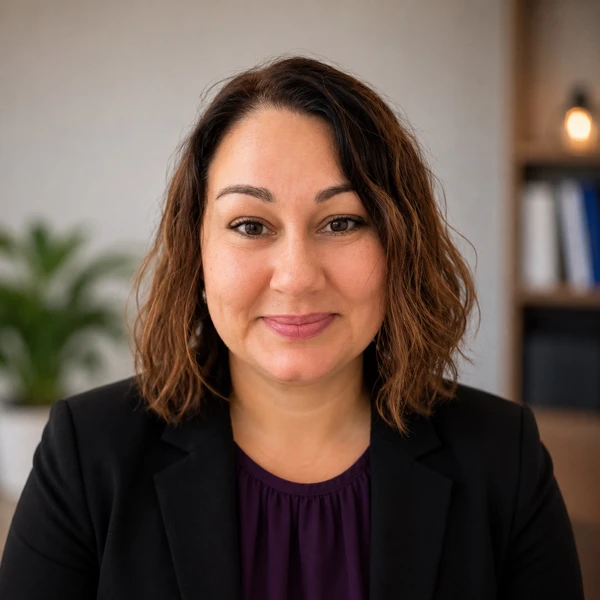
1. I live and work in rural Georgia, serving within the mental health community since 2012. I work with low-income families, whose access to services is often limited by lack of transportation, lack of insurance, lack of co-pays, lack of family support, lack of availability, and other challenges. In rural Georgia, it is often a reality that the provider will be someone that you or someone in your family knows, leading to some reservations and fears that confidentiality will be broken or judgment. Being in rural Georgia also increases the anticipation of discrimination by clients who do not fit the norm within the community, or who fear the repercussions for seeking help from those within their own community.
Equitable access to mental health support is important to me because, without access, too many people end up without the support and help that they need, resulting in things like the Know Your Worth Campaign, which was started in my hometown after numerous teenage suicides. BetterHelp enables me to work with people anywhere and at any time, provided they have access to an electronic device. Working with BetterHelp, I have been able to provide short-term, solution-focused therapy for those who needed immediate relief and provide longer-term care for those working to address more in-depth challenges with mental health at an affordable cost to clients. BetterHelp allows clients to seek help without having to go to an office, fearing being seen, or fearing rejection. BetterHelp offers a variety of ways in which to work with your therapist to increase confidence and rapport within the therapeutic setting. For instance, I have had several clients begin with text sessions, then transition to phone calls, and finally move to video when they felt confident that they could trust me. BetterHelp offers an opportunity to access and provide care easily.
2. I was called to be a mental health counselor to help people. My mission statement for counseling is to be the person that I needed at various stages of my life. As a counselor, I am committed to serving my community and providing consistent, quality, genuine care. Student loan debt is a burden that has limited my financial flexibility and my ability to invest in myself by continuing my education and attending professional development.
Receiving this grant would directly support my ability to reach the goal of being paid in full in half the anticipated time of the current estimate. By paying off my student loan debt, I would be able to pursue my doctorate in counseling, along with other advanced trainings and certifications that are essential for mental health. My goal is to become certified in EMDR, Addiction, CBT, DBT, and CPT, to name a few of my goals. Due to the current financial constraints of student loan debt, these goals are unachievable in the near future. The high costs of these opportunities is also prohibitive. These certifications and my doctorate would enhance my clinical skills, expand my scope of expertise, services, and the modalities that I offer clients.
This grant would help relieve the financial stress of student loan debt that forces counselors to delay and forgo professional development and higher education. This grant would allow me to remain in low-income, high-need areas while maintaining affordable care costs and still investing in myself.