Hobbies and interests
Reading
Reading
Academic
Adventure
Biography
Chick Lit
History
Health
Politics
Psychology
Romance
Shea Franklin
1x
Finalist1x
Winner
Shea Franklin
1x
Finalist1x
WinnerBio
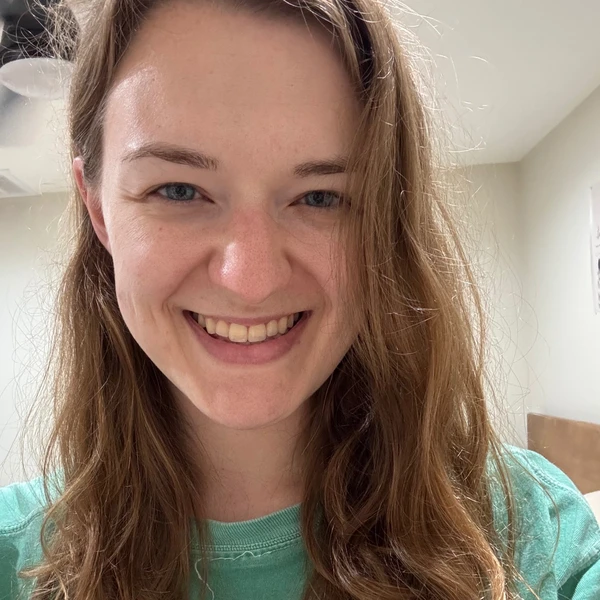
Hi! My name is Shea Franklin. I am currently a student at the Southern College of Optometry in Memphis, Tennessee. My undergraduate education took place at Arkansas Tech University; I completed a bachelor's degree in biomedical biology in 2022.
I went into healthcare to best help other people. At school, my eyes have been opened to the many ways in which vision care affects the ability to successfully participate in modern society. Prior to optometry school, I participated in a clinic that provided these services free of charge to underinsured and uninsured patients. I so look forward to getting to go back and serve in this clinic as a doctor.
One hurdle I am hoping to clear that will free up more time for donated exams is definitely the financial burden of school. I plan to work more until my loans are paid off, which limits the time I have to perform free exams. Financial aid will help me in getting to my goal of giving back to my community more quickly after school.
Education
Southern College of Optometry
Doctoral degree program (PhD, MD, JD, etc.)Majors:
- Medicine
- Optometry
Arkansas Tech University
Bachelor's degree programMajors:
- Biological and Biomedical Sciences, Other
Arkansas Tech University
Bachelor's degree programMajors:
- Biological and Biomedical Sciences, Other
Miscellaneous
Desired degree level:
Doctoral degree program (PhD, MD, JD, etc.)
Graduate schools of interest:
Transfer schools of interest:
Majors of interest:
Career
Dream career field:
Medical Practice
Dream career goals:
Ophthalmic Technician
Russellville Eye Clinic2023 – 2023Optometric Technician
Daiber Vision Care2021 – 20232 years
Sports
Softball
Junior Varsity2015 – 2015
Public services
Volunteering
River Valley Christian Clinic — Volunteer2022 – 2023
Future Interests
Advocacy
Politics
Volunteering
Noam Nicholson Memorial Scholarship
WinnerAdmittedly, I didn't know much about Jerry Seinfeld or George Carlin before this scholarship. Upon looking for quotes, the one that stood out to me was, "the best revenge is living well." I love this quote in regards to mental health, because I feel that there is no better way to honor those who lost their battles with mental illness than to lead a life of joy.
Upon looking at the Noam Nicholson site, I was stricken by how much Noam & I had in common. I also love cats & dogs of all kinds. I also attend SCO, and I can imagine him also sitting through Dr. Grant's pre-lecture spiels on what her foster animals are all up to. My mental health struggles have also been greatly exacerbated by my time here. Moving to Memphis was my first time ever living alone. I moved to a solo apartment while I waited for my husband to find a job that would allow him to move to Memphis with me, and I was terrified. Everyone back home had worked Memphis up to be a terrifying place, and I was incredibly anxious to be there alone. Additionally, I had been working from home before my time there, and I had developed new social anxiety that had me questioning every social interaction I had. Did my new friends actually like me?Additionally, I was dealing with brain fog from my mental health struggles, as well as another undiagnosed health condition that caused me to struggle greatly in my classes in ways that were unfamiliar to me. I questioned whether or not I belonged in optometry school. How would I ever make it through four years of those feelings?
The anxiety turned into a searing, isolating seasonal depression. That fall was one of the hardest of my life. In the year to come, I would go on medication for my anxiety. The undiagnosed health issues were found & addressed, and I found myself thriving in places I once struggled in. However, I definitely found ways that mental health could be addressed more adequately in optometry school.
For one, I think that every school should have an on-site counselor. SCO offers mental health services, but they are online. I could not figure out how to access them. Having an on-site counselor would make these services more easily accessible. Additionally, I do wish that there was more of a check-in with these things that didn't involve grades. I didn't know anyone well enough that they would've known to check in on me, and I did not have a one-on-one meeting set up with an advisor until my grades were poor on exams. I think that this is something that could be better addressed with individual advisor meetings before the first exam week to address mental health concerns before they cause poor grades.
My final suggestion for ways to deal with mental health, both in optometry school and beyond, is a mandatory class in the subject. It would be good to have this in both optometry schools & at continuing education opportunities. A mentor of mine said that the mental load of school matches the mental load of patient care, and she suggested that students find a good way to cope with their mental health struggles, as these would likely follow them beyond school. However, beyond a few after-school sessions that many didn't pay attention to, or maybe a talk or two during orientation week, I don't recall many instances of learning how to cope well with the stresses of either school or patient care. I think that many schools assume that students will know what works for them by the time that they reach professional school, since they made it to this level. This was not true for me. The mental struggles I faced were entirely brand-new during optometry school. In a new environment, it's possible and likely that students don't know people who are able to support them early-on. Beyond the school setting, there may not be systems in place to make sure doctors are mentally healthy. In optometry, it may be that the physician is working in a practice as a solo practitioner. That can become quite isolating. There may also not be support staff who are able to interact & check in on a physician. It's expected that physicians find ways to ask for help, but there isn't much instruction in the subject. I believe that a class addressing all of this would be a good place to start in teaching practitioners how to address these issues. The class could address signs & symptoms of burnout, depression, anxiety, and other mental struggles. It could encourage students to check on their colleagues, as well as show them when that check-in is necessary. I also think that this class would make a good continuing education subject, and might provide good support to providers who might be struggling themselves.
Through my own mental health struggles in optometry school, I've formed a new perspective on mental health in optometry. I feel that schools can provide more easily accessible support, more frequent check-ins with new students, and provide courses in-school and beyond on what addressing mental health looks like as a doctor of optometry. I strongly believe that honoring those who, like Noam, lost their battle, means that we learn to address these issues for those that come after. I believe that all of these ideas could help new doctors of optometry learn to cope in ways that could save lives.