Hobbies and interests
Makeup and Beauty
Acting And Theater
Community Service And Volunteering
Volunteering
History
Baking
Business And Entrepreneurship
Camping
Concerts
Cooking
Exploring Nature And Being Outside
Human Rights
Law
Mental Health
Psychology
Reading
Shopping And Thrifting
Theater
True Crime
Teaching
Marine Biology
Science
Music
Reading
Academic
Science Fiction
Fantasy
Leadership
Mystery
Young Adult
I read books multiple times per month
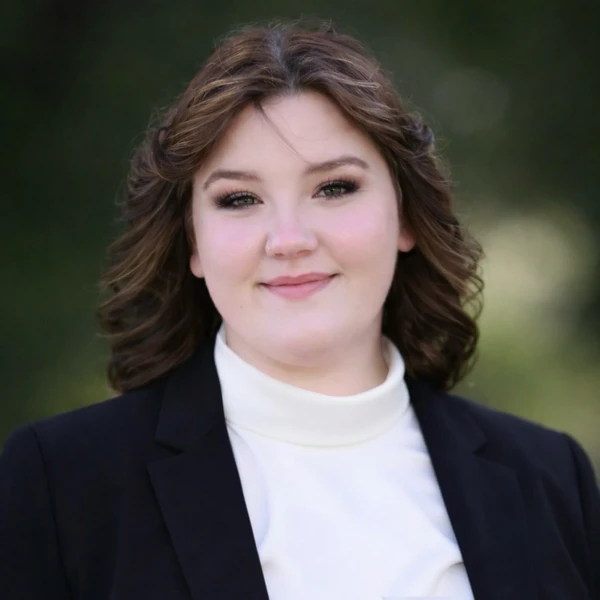
Shayna Cafarelli
1x
Finalist
Shayna Cafarelli
1x
FinalistBio
My goal in life is to make a positive impact on others and my community. Growing up, I learned the value of service, leadership, and helping others whenever possible. Over the years, I have dedicated over 13,000 hours to volunteer work, and I continue to volunteer in any capacity possible for my community.
One of my proudest accomplishments has been serving as a founding leader of a youth organization in my hometown. I was selected based on my leadership, experience, and commitment to community involvement. I helped create opportunities and positive alternatives for young people in a community affected by violence, substance abuse, and criminal activity. The organization provides youth with a safe environment focused on leadership development, personal growth, and the skills needed to succeed in life.
My commitment to helping others has led me to marine conservation. I currently volunteer with the Coastal Research & Education Society of Long Island (CRESLI), assisting with whale watch research and other efforts that support marine mammal research and public education. I also volunteer with the Atlantic Marine Conservation Society (AMSEAS), primarily in Education and Outreach while supporting other initiatives as needed. These experiences have allowed me to connect scientific research with public engagement, strengthening my dedication to protecting marine ecosystems and inspiring others to value and conserve them. As I pursue a degree in Marine Biology, I hope to combine my passion for service and conservation to create a lasting impact on both people and the environment.
Education
Suffolk County Community College
Associate's degree programMajors:
- Marine Sciences
Brentwood High School
High SchoolMiscellaneous
Desired degree level:
Doctoral degree program (PhD, MD, JD, etc.)
Graduate schools of interest:
Transfer schools of interest:
Majors of interest:
- Marine Sciences
Test scores:
1150
SAT
Career
Dream career field:
- Environmental Services
Dream career goals:
Marine Biologist
Sports
Cheerleading
Club2016 – 20182 years
Awards
- Co-Captain
Arts
Chamber Choir - Brentwood High School
Performance ArtMemorial Day Rememberance Ceremony (2014-2018), Veterans Appreciation Volunteer Choir (2014-2018), Nursing Home Volunteer Choir (2014-2018)2014 – 2018Drama Club - Brentwood High School
TheatreShakespeare Day (2015-2017), Arsenic & Old Lace (2016), Drama Club Original Monologue Performances (2014-2017)2014 – 2018Orchestra - Brentwood Middle School
Performance ArtHershey Park Presentation - Gold Medal (2013-2014)2012 – 2014General Choir - Brentwood High School
Performance ArtNursing Home Volunteer Choir (2014-2018)2014 – 2018Color Guard - Brentwood High School
Performance ArtGreen Machine Community Parade (2015)2014 – 2016Choir - Brentwood Middle School
Performance ArtHershey Park Choir Presentation - Gold Medal (2011, 2013-2014), Hershey Park Choir Presentation - Bronze Medal (2012)2011 – 2014
Public services
Volunteering
AFJROTC - Brentwood High School — AFJROTC Cadet2015 – 2018Volunteering
Color Guard - Civil Air Patrol — Commander, Mentor2013 – 2021Volunteering
Atlantic Marine Conservation Society — Education & Outreach Volunteer2026 – PresentVolunteering
CRESLI — Volunteer2026 – PresentVolunteering
Civil Air Patrol — Cadet, Senior2012 – 2021
Future Interests
Advocacy
Volunteering
Women in STEM Scholarship
My mom never had the opportunity to pursue the life she wanted.
As the oldest daughter in a home with an abusive father, she became responsible for caring for her mother and siblings long before she should have been. While other teenagers were thinking about graduation and college, she was thinking about how to keep her family together. She never finished high school because survival came first.
Growing up, I watched her work harder than anyone I knew. Before I was born, my older brother was diagnosed with cancer. While pregnant with me, my mom was navigating his treatments and raising us largely on her own. She spent the next four years as a single mother, carrying responsibilities that most people couldn’t imagine while never letting my brother or I feel anything but loved.
Watching her taught me resilience, but it also showed me how often women’s dreams are put on hold while they carry the weight of caring for everyone else. My mom had the ability to pursue an education and build the future she wanted, but life took that choice away from her. Every opportunity I have today exists because of sacrifices she made years before I understood what they meant.
Every time I walk into a science classroom, I think about the women who never got that chance.
For a long time, education didn’t feel like something that was meant for me, either. Health challenges, financial hardship, and caregiving responsibilities made college seem out of reach. But my mom never stopped fighting for our future, so I refused to stop fighting for mine. I graduated high school during one of the hardest periods of my life while working full time, and although I faced hardship after graduation, my love of learning never disappeared. Eventually, I chose to stop letting life dictate my future and enrolled in college to fulfill my dream of higher education.
When I discovered marine biology, I found where I belonged. I became fascinated by the complexity of marine ecosystems and the questions still waiting to be answered. Today, I’m pursuing my degree with a 4.0 GPA, and every class feels like a chance to build the future I once thought was impossible.
As I worked toward my degree, I also saw barriers that all STEM students faced. At my college, STEM majors require prerequisite courses that aren’t clearly disclosed before enrollment and often aren’t covered by financial aid because they fall outside a student’s declared program. For students like me, that can mean paying thousands of dollars before we’re even eligible to begin our major. When I tried to navigate the process, I received conflicting information from multiple departments and nearly gave up on my own degree. After learning that many other students had experienced the same confusion, financial barriers, or left STEM altogether because of it, I began working with my college’s president and educational leadership to advocate for clearer and easier pathways so future students wouldn’t face the same unnecessary barriers.
To me, being a woman in STEM means more than earning a degree. It means helping build a community where women support one another and where the path into science is clearer and more accessible for the next generation of students. My mom’s sacrifices gave me the chance to pursue a dream she never could. I hope to honor her by continuing in STEM and using what I learn to help remove the barriers that keep other students, and especially the strong women like my mother, from reaching the field in the first place.
Charles B. Brazelton Memorial Scholarship
Growing up, my “awkward” trait wasn’t something physical like being left-handed (although it made writing in notebooks uncomfortable)— it was how intensely I cared about things that mattered to me, especially volunteering.
Before I turned twelve, I joined the Civil Air Patrol, and it quickly became one of the most important parts of my life. I didn’t have friends in school, and I struggled to find where I fit. My parents found this program that provided structure, responsibility, a sense of purpose, and the possibility of building lasting friendships. I didn’t make friends right away—but I had a sense of meaning through service and contribution.
The thing is, I didn’t just “participate” in it quietly. I talked about it constantly. I wanted everyone around me—friends, classmates, even people who didn’t ask—to understand how impactful it was. That’s where things started to feel a little awkward. Most people weren’t thinking about leadership training, emergency response exercises, or community service at twelve, it was all about Justin Bieber to my peers. I genuinely believed service was something everyone should be involved in, not just focusing on pop-culture, and I probably came on a little too strongly trying to convince them.
But the truth behind that passion was simple: My life and those around me were being changed by it.
By the time I turned fourteen, I had opportunities I never imagined I’d have so young. I remember the first time I sat in the cockpit of a plane through the program, I was piloting an airplane before kids my age could get a drivers permit for a car. I wasn’t just a kid anymore; I was someone learning responsibility in real time. I also learned about honor and respect through participating in and eventually leading color guard ceremonies, where I helped represent service and country in a way that carried real meaning. I stepped into leadership roles that had me leading and mentoring large groups of young kids from underserved communities —close to 400 kids each summer by the time I turned sixteen.
At seventeen, I became the founding cadet leader of a new squadron in my community, created in response to increasing challenges such as youth violence and substance exposure affecting children as young as eight. To date, that squadron has guided over 200 kids and counting into becoming the leaders for tomorrow. That kind of responsibility forces you to grow up quickly, but in a good way. You learn how to communicate, how to stay patient, and how to show up for people who are looking to you for guidance.
Not everyone around me understood it. I remember getting looks like I was “too serious” or “too into it,” and being laughed at, especially when I tried to explain what we did or why it mattered. To some people, it probably sounded unusual for a teenager to be that invested in structure, discipline, and service. But to me, it wasn’t weird—it was grounding.
Looking back, I realize what made me feel awkward wasn’t the passion itself or the way people reacted. It was the mismatch between what I cared about and what most people my age were used to seeing. I wasn’t trying to stand out—but I did, simply by fully committing to something I believed in.
That experience shaped how I see myself now. I’ve learned that being “different” often just means being early to your own sense of purpose. And even if people don’t always understand it right away, that doesn’t make it less real—or less worth pursuing. I’m proud of my “awkward”.
Our Destiny Our Future Scholarship
Compassion has always been the driving force behind the way I move through the world. To me, making an impact is not defined by a single moment or achievement, but by the consistent choice to use what I have learned and experienced to create opportunities for others. As a first-generation college student in an underserved community, I understand what it feels like to navigate unfamiliar systems without guidance. That experience has shaped my commitment to ensuring others do not feel alone in spaces that determine their future.
Growing up, I also witnessed sacrifice as an act of service. My mother did not have the opportunity to finish high school because she spent her teenage years helping her family escape an abusive situation while working multiple jobs to provide support. Her experience showed me that people are often forced to put their own dreams aside for the well-being of others. It taught me that compassion is not just kindness—it is action taken to protect and uplift others, even at personal cost.
That understanding has guided my approach to service. Through more than 13,000 hours of volunteer work, including mentoring youth from underserved communities in Civil Air Patrol and working with communities impacted by gang violence and substance abuse, I have learned that impact begins with presence and consistency. In these environments, I have seen how instability and limited resources can shape a young person’s sense of possibility. Serving in these spaces has reinforced my commitment to being a stable, encouraging presence for individuals who may not always have access to positive support systems. As a mentor, I have worked to help young people build confidence, develop leadership skills, and envision paths forward that extend beyond their circumstances.
My commitment to impact has also continued into my college experience. Recognizing how overwhelming higher education can be for first-generation students and students from underserved communities, I began conversations with my college president and education board about improving access to majors with complex prerequisite pathways. Many students struggle not because they lack ability, but because they lack guidance in navigating academic systems. I want to help change that reality so that students can focus on learning rather than feeling lost or unsupported in the process.
In addition to educational advocacy, I am pursuing a degree in marine biology because I want to contribute to both scientific understanding and public awareness of the natural world. Through my 200 hours of volunteer work in marine science, I have seen how education can transform curiosity into action. When people understand the ecosystems they are part of, they are more likely to protect them. My goal is to make science accessible to communities that may not traditionally see themselves represented in environmental fields and to inspire a sense of stewardship for our oceans.
The impact I hope to make is rooted in the idea of accessibility—whether in education, mentorship, or science. I want to be someone who opens doors for others the way others have opened doors for me. My experiences have shown me that change does not always begin with large gestures; often, it begins with small moments of guidance, encouragement, and shared knowledge that ripple outward over time.
Ultimately, I hope my life’s work reflects a commitment to service that extends beyond myself. Whether I am mentoring students, advocating for educational access, or working in marine conservation, I want my actions to create pathways for others to succeed. If I can help even one person feel more capable, more confident, or more connected to opportunity, then I will consider that a meaningful impact.
Kristinspiration Scholarship
Education has never been something I take for granted. Growing up, I witnessed how circumstances can force someone to put their own education aside. My mother never had the opportunity to finish high school as a teenager because she helped her own mother and younger siblings escape an abusive home while working multiple jobs to support them. Knowing she sacrificed her education to protect her family taught me that earning a degree is not something everyone is afforded. For many, it is interrupted by circumstances beyond their control.
That perspective has shaped the way I view my own education. While navigating college as a first-generation student has required resilience, independence, and teaching myself how to navigate higher education, those challenges have only deepened my appreciation for opportunities to learn. I am the kind of person who can’t leave a question unanswered. If something captures my interest, I immerse myself in research, ask questions, and seek to understand it fully because learning has never felt like an obligation, but a privilege.
After high school, I was diagnosed with bipolar disorder and later stepped away from education to care for my family during a difficult time while learning how to manage my health. Beginning college at nearly 26 years old meant overcoming fear that I had missed my opportunity. Instead, those experiences reinforced my belief that education is worth fighting for. Every class I take is a chance that many people—including my own mother—never had.
Because of that, I believe education carries a responsibility. If I have the opportunity to learn, I also have the responsibility to use that knowledge to improve the lives of others. That belief has guided me long before I entered college. Through more than 13,000 hours of volunteer service, including mentoring youth in underserved communities, I learned that leadership is about creating opportunities for others to succeed.
That same mindset has guided my path to education. Recognizing how confusing higher education can be for first-generation students, I began conversations with my college president and education board about improving access to majors with complex pathways after experiencing firsthand how difficult they were to navigate. No student should feel limited in their academic opportunities simply because they don’t have the resources to navigate education systems. If my experience helps make that path clearer for even one student, then my education is already making a difference beyond myself.
Today, I am pursuing a degree in marine biology because I want to combine scientific discovery with conservation and public education. Through volunteer work in marine science, I have seen how education transforms curiosity into action. When people understand the ecosystems around them, they become invested in protecting them. My goal is not only to contribute to marine research but also to make science accessible to communities that may never have imagined themselves connected to it.
The legacy I hope to leave is one of opportunity. I want my family to look back and know that higher education became part of our story because I was willing to take the first step. I want future generations to believe college is attainable, not intimidating. Beyond my family, I hope my advocacy, volunteer service, and future career inspire others to pursue education, ask questions without fear, and use their knowledge to create positive change. To me, education is far more than earning a degree—It is creating opportunities so that future generations can achieve their dreams because those before them opened the door.
HeySunday Green Minds Scholarship
I don't like the beach.
Whenever I tell someone that, especially local Long Islanders, they're confused. Growing up on Long Island, surrounded by the ocean, it's almost unheard of. I never enjoyed the sand, the crowds, and had a fear of horseshoe crabs.
It wasn't until my first time on a friend's boat I discovered my fascination with the ocean– not from sitting on the sand, but peeking over the side and staring into the water as we drifted on the Long Island Sound or the Atlantic Ocean. My friend showed me how to spot movement beneath the surface, and if you sat patiently, you would see the water come to life. We would be surrounded by jellyfish and Atlantic menhaden, and if you were lucky, see striped bass come just below the surface to have a snack. One early morning, I was lucky enough to watch a whale breach only a few hundred feet from our boat, followed by its calf moments after. Seeing the life beneath the surface, just quietly existing, intrigued me. Sitting at the beach, you don't often get to experience the quiet of the ecosystem around you. Out on the ocean, however, everything comes to life.
The more I learned about the ocean, the more I realized how wrong I had been. Horseshoe crabs aren't scary; they're a critical species in our coastal ecosystems, and their impact extends beyond the shoreline. Their blue blood has saved countless lives through medical research. They taught me my first lesson as an aspiring scientist: just because something is unknown doesn't mean it's scary, it's an opportunity to understand.
That lesson has shaped the way I serve my community. Volunteering with AMSEAS allows me to share my passion for marine life with my community, teaching the importance of how our actions contribute to a difference in our environment. My experiences with CRESLI gave me a deep understanding of how critical the scientific community is to helping understand and drive changes through legislation worldwide to protect the magnificent ecosystem that is our waters. At the beach, I teach children about horseshoe crabs and their importance where I once avoided them. Seeing their fear turn into curiosity reminds me why education is one of the most powerful tools we have.
I am pursuing a degree in Marine Biology because I want my work to help protect the oceans that support both wildlife and humanity. From the microscopic plankton to horseshoe crabs to whales, every organism has an effect on the world around us. I hope my career and outreach contributes to a healthier world by combining research, conservation, and education. While scientific discoveries are essential, they only create lasting change if people understand why they matter. I want to help bridge the gap by inspiring others to care about the ecosystems they may have once overlooked, just as I did. I also have already begun to help make STEM majors more accessible in my community by advocating for change at my campus to improve access to difficult pathways of science majors, so more students have the opportunity to make a change.
My own journey began with avoiding horseshoe crabs on the beach. Now, I watch for the little things, like the small crabs dodging the water, the seaweed floating in the tide. They’re small reminders of the health of our waters and what is at stake if we fail to protect them. My greatest hope is that my work helps ensure those same beaches remain full of life for generations to come.