Hobbies and interests
Art
Animation
Writing
Human Rights
Mock Trial
Volunteering
Social Work
Politics and Political Science
Finance
Crafting
Babysitting And Childcare
Sociology
Reading
Fantasy
Young Adult
Thriller
Social Issues
Novels
Adventure
Historical
I read books daily
Shayna May Udani
1x
Nominee1x
Finalist1x
WinnerShayna May Udani
1x
Nominee1x
Finalist1x
WinnerBio
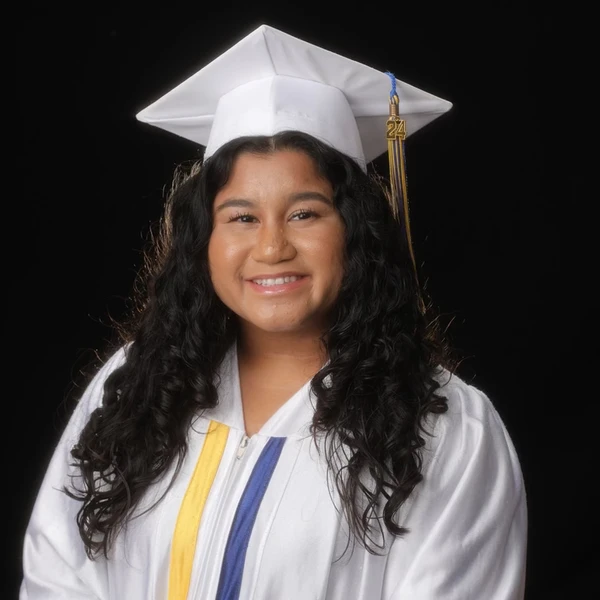
Hello! My name is Shayna May Udani. I am 19 years old and the oldest of six children. I am a Filipino-American who was born in Hawaii. My interests are in law, child welfare, and the arts. I hope to pursue higher education to reach my college and career goals.
Education
Willamette University
Bachelor's degree programMajors:
- Political Science and Government
Minors:
- Sociology
Leeward Community College
Associate's degree programMajors:
- Liberal Arts and Sciences, General Studies and Humanities
Waipahu High School
High SchoolMiscellaneous
Desired degree level:
Doctoral degree program (PhD, MD, JD, etc.)
Graduate schools of interest:
Transfer schools of interest:
Majors of interest:
- Law
- Political Science and Government
- Social Work
Career
Dream career field:
Law Practice
Dream career goals:
Guardian Ad Litem
HOME / CDBG Program Intern
Marion County, Oregon Community Services Department2025 – Present1 yearCirculation Department Student Assistant
Mark O. Hatfield Library2025 – Present1 yearStudent Summer Aide 2 | Summer Fun Program Staff & Teen Program Coordinator
City and County of Honolulu Department of Parks and Recreation2025 – Present1 year
Research
Social Work
Waipahu High School — STEM Capstone Senior Project Producer2023 – 2024
Public services
Volunteering
Willamette Heritage Center — Education Program Volunteer: Children’s Activity Leader2025 – PresentVolunteering
Willamette Heritage Center — Education Program Volunteer: Children’s Activity Leader2025 – PresentVolunteering
Phi Theta Kappa: Beta Chi Omega — Volunteer2023 – 2023Volunteering
Phi Theta Kappa: Beta Chi Omega — Volunteer2022 – 2024Volunteering
Center For Tomorrow's Leaders & Affordable Housing and Economic Development Foundation — Marketing Coordinator2022 – 2023Volunteering
Center For Tomorrow's Leaders & Project DANA — Marketing Coordinator2021 – 2022
Future Interests
Advocacy
Politics
Volunteering
Simon Strong Scholarship
At some point in my life, I wound up on the ground. Sitting dumbly on a concrete path as my body and mind failed me. When I opened my eyes all I could see were overly saturated blobs, like when a photographer's camera is unfocused and pointing at the sun. My heart was beating in my chest, palpitating. My breathing quick and shallow, and the action itself felt almost useless. My hands shook, and my legs were heavy. Yet after I got back up I felt light, so light that instead of floating into the sky I fell over and collapsed on the nearest bench before school staff picked me up and helped me stumble into the golf cart I didn’t realize arrived. I couldn't process the words of comfort a stranger whispered gently as we drove, but I was soothed if only slightly.
It is that helpless, horrible feeling that made me want to value the time when my body and mind are sound, capable, and healthy. It is that feeling of despair and uselessness that made me realize just how much I did in a day that I didn’t realize. How much of my ability that I’ve taken for granted. Just the week before I had put myself down for not doing enough, when in reality I was doing too much. So much so that my body could not handle it.
I sat in a hospital bed and stared blankly at my laptop. One day into summer vacation, taking a college Astronomy course, the first quiz open and a timer in the corner blinking at me. In such a surreal moment, I realized that I needed to do better for myself. Health is a challenge that not everyone can overcome. Sometimes it is too hard, too painful, or physically impossible. But what we can individually control is prevention; our response to the first sign of danger. I needed to begin appreciating myself, and valuing myself as a person.
After being discharged, I began to appreciate my wonderful body and everything it does for me. I now love walking. I enjoy strolls on the way to bus stops, through the neighborhood, around my old community college during golden hour. Weeks after recovery I got a free gym membership, learned how to exercise and operate the machines, brought friends with me to help each other out. For university, I chose a campus that sits in a walkable city. After class I often walk around the nearby gardens, into the local mall, to the boba shop. For my summer job at a day-camp program I play physical games, sometimes hike, and often surpass 10,000 steps daily. As someone who has been noticeably midsize my entire life, I am still the same weight but I finally feel happy with it. Because I feel good, I feel healthy.
I have also found that my body is more delicate than it was before. It's like a scar which I can never erase, but will constantly remind me of my progress. I think for me, I wanted to be able to stand on my own and not be dizzy. I wanted to walk from my room to the kitchen, to be able to play with my siblings, go out with my friends. Those things I took for granted were my goals, and I gained a sense of gratitude which motivated me. I think the same things would will someone else to move, too. I believe that adversity can come to us in many daunting forms, but what matters most is how we respond to it.
Filipino-American Scholarship
WinnerThe AI overview that pops up when you Google “Filipino-American experience” starts from our immigration. If you prompt it further, you can reach the Why. Why does such a large Filipino diaspora exist? AI will explain the logical—the economic, political, and social factors of it all. But I do not think AI will ever understand the weight that Why holds. And that Filipino-Americans often skirt around the Why, and spend their whole lives pretending not to notice it in the air.
I was born on the island of Oahu, and in this tiny state, Filipinos make up a little less than a quarter of Hawaii’s 1.4 million population. The city I live in is predominantly Filipino. Waipahu, the 94-block, holds our own Jollibee, Seafood City, Pacific Supermarket, and Nandings Bakery. I grew up surrounded by other second-generation immigrant Filipinos, sometimes first-generation, and others even third or fourth generation. Despite this, I have noticed that the younger generation knows almost nothing of the motherland.
There is a fog that floats across the home, a balance that each Filipino child learns to keep. Silog and morning silence at breakfast, hesitation on the names of distant family members, and a quiet praise of America as ‘The Land of Opportunity’ are what we learn. Passed down to us are our traditions, our culture, and our love. But not our history, our language.
“He who does not know how to look back at where he came from will never get to his destination,” is a famous quote by writer and Philippine National Hero José Rizal, and I believe it is true. Borne from generations of national trauma, Filipinos believe that love is sacrifice. The older generations bear sacrifices so that the younger generation will thrive, but in doing so, have robbed many Filipino-Americans of identity and have created a barrier between the generations. This rift in language, knowledge, and values has created inner conflict and uncertainty. It is that complicated feeling that I would want AI to understand is the core of the Filipino-American struggle. I sincerely believe that AI would never be capable of representing such a deeply personal concept if Filipino Americans can barely even grasp it ourselves. It also stands that AI can never know the answer to Why, if we cannot ask or get the answer ourselves.
Catrina Celestine Aquilino Memorial Scholarship
My clearest childhood memories are from 5th grade. They are not the earliest memories I have, nor are they the fondest, but instead the most vivid ones I hold. Incidentally, that is the year I met my best friend. From visions that zip back and forth through time, I can say that she looked like every other kid in our city. Her worn deep blue Old Navy jacket was always zipped, her textured black hair in a low ponytail, and her slanted brown eyes were kind. Right next to her, I wore my own indigo Old Navy Jacket, my long hair flowing, and my eyes wide open and curious. In the same city, on the same block for years, I knew the cracks that connected us, and when hers reached far past my reach.
At the peak of our high school experience, I lost contact with my friend for weeks. Radio silence, with my only context being my knowledge of her family situation, and an off-hand comment a few days ago that she might have to shelter in her father’s van. I was worried because of the radio silence, and visited her house only to find obvious signs that no one had been home for a while. When she responded to my dozens of missed calls, I learned that she was now a ward of the state and living in a group home. In the following months, I tried my best to be there for her as she went through what was arguably the most traumatic period of her life.
During this process, I was cruelly reminded of how helpless I was. I did not have the power or knowledge to change the situation, and I could offer nothing more than daily calls, tight hugs, and my best attempt at comforting words.
But due to these events, I took my heartbreak—my heavy lungs, my empathy, my frustration—and turned it into determination. I finally put my roots down and decided I wanted to become a Guardian Ad Litem—an attorney who represents children, and advocates on their behalf in court and case matters. I wanted to help children like my five younger siblings, whose childhood experiences should be of safety, shelter, and stability. I wanted to help youth like my best friend, who deserved a better childhood, and who got the support she needed through social workers. The possibility that my aspirations ever come to fruition lifts my foot onto the first few steps before me.
In my second year of college, I have declared my major in ‘Politics, Policy, Law & Ethics’ at Willamette University, and plan to declare a minor in Sociology as well. I believe that these areas of study will prepare me for my career goal. I am pursuing this career on the basis that I want to be an advocate for children—especially foster children who have been victims of maltreatment—and want to aid future generations of youth through their hardships. Children are our future; every single child deserves a safe and stable home environment to experience childhood. Every baby deserves to be healthy; every toddler a patient parent; every kid a safe home; every teenager access to mental health services. It will take a long time to reach my career goal, and in that time, I will make the best of my abilities and my time in college. I hope that with my strong desire to help, I can steps to provide the future generation of foster children with a capable and helpful Guardian Ad Litem.
Linda McCoy-Aitkens Memorial Scholarship
At eighteen, I fail to remember a time when multiple tiny children weren’t running around our cramped Filipino household. I grew up as the eldest child of six, naturally becoming their leader and the one setting an example for them to follow. It has taken my great-grandmother, my grandfather, and my parents—three generations of immigration—for me to become a first-generation college student here in the United States. As a child, I was too young to notice the government aid and food stamps that my family received. But now that I am older and our situation is better, I can see the cracks in our walls. Watching my father come home from work every day, tired and weary, I now understand: how difficult it is to provide for a family of eight, especially with the costs of living that seem to push other families out of Hawai'i. Because of the circumstances of my life, I understand the importance of education, money, and the opportunities that both of these things can provide.
Yet despite all my pride over what I have accomplished for my family, there is a question I have only ever been asked once by my grandfather:
“Do your parents fight?”
I remember how my stomach dropped, how my eyes widened in panic, my brain halting to a stop, and my mouth finally replying with a small "...no."
“Good, it’s hard for the kids that way.”
And I nodded. Hours later, the thought came: “If they don't fight, why did I react that way?” And then a second thought: “Hard for the kids...I wasn't included in that.”
Oftentimes in immigrant families, the eldest child gets trapped in a specific role: the future of the family, the role model to follow, the child that will become successful and provide their parents with a comfortable life. Eldest daughters in particular become the caretakers of their siblings, the peacekeeper between parents, and the third adult. And society expects it, enforces it even, and successful eldest children in big families never get asked if their childhood was anything other than positive and supportive.
In this, eldest children are isolated, often gaining mental health issues that are never addressed to keep up the illusion that everything is perfect. They cannot seek solace in their siblings, who did not have the same childhood experience, nor their other family, who are unlikely to take their side.
My chosen area of study has always been law—both for financial stability and a job that allowed me to help others—and I have been intending to create positive social change with a career within the judicial system. But what solidified my plans was the child welfare and foster care experiences that multiple friends have shared with me, and my own experience growing up in a volatile home environment.
In my senior year of high school, I conducted a capstone project centered around Social Work and the foster care system. It prepared me for my college plans to double major in Social Work and Political Science. I believe that these areas of study will prepare me for my career goal of becoming a Guardian Ad Litem—an attorney who represents children, and advocates on their behalf in court and case matters. I am pursuing this career on the basis that I want to be an advocate for children, especially foster care children who have been victims of maltreatment. I am determined to one day be able to aid families with my college and career success; and to one day improve the child welfare system for the keiki (children) of Hawai’i.
Chappell Roan Superfan Scholarship
On a hot and sweltering summer day, I was scrolling through my Twitter (it’s not X) timeline and came across a 00:34 second clip with the caption “chappell roan performing at coachella you will be remembered for generations.” I stopped scrolling.
As a Twitter veteran and a history of participating in various musical artists’ twt communities (or subtwts), I have seen hundreds of musical artist performances, the skyrocketing popularity of indie artists, the rise and fall of K-Pop groups, the fan wars between overly zealous stans; and of course, the whisperings of “Chappell Roan'' and “Good Luck, Babe!” that's been floating around the internet for months now. So, despite my own hesitance to jump onto a bandwagon, I watched the video.
And within those few seconds, I just got it.
As a Non-Binary Lesbian, the world has been a hard place to exist in. Even within online communities, sapphic women and non-binary people still face a lot of prejudice and discrimination. Not a day goes by where I have not been affected by Lesbophobia. It is worse in real life, where even amongst my queer friend group and around LGBTQ+ accepting people, everyone assumed I was asexual after I said I didn't like men. It did not even cross their minds that I could be sapphic; because they viewed lesbian as a dirty word, and because I didn’t express any interest in sex to them, they thought “they aren’t attracted to men, they must not be attracted to anyone at all!”
It hurt me. It hurt me so much, I stuck with the ambiguous label of “Queer” instead of clarifying I was a Lesbian, even though I knew so certainly in my heart that I am one. It got to the point where I considered saying I was Bisexual just so they would accept me, but that would mean expressing love for men and pretending to do so for the rest of my life—and that future seemed so tiring. In that hopelessness, I heard her siren-like voice reach out to me:
And when you wake up next to him in the middle of the night
With your head in your hands, you’re nothing more than his wife
And I imagined myself at 38, in bed with a man I could never be capable of loving romantically. A man I would have had to fake affection toward for the rest of my life, doing so knowing that it was not fully genuine. The dark chill of a bland bedroom, with only as much of my touch decorating it as he would tolerate. I imagined the draining misery, the crushing grief, and the quiet tragedy of it all.
And when you think about me, all of those years ago
You're standing face to face with "I told you so"
And I thought about her at this moment, quite literally telling me that I will regret it all. Would the 38 year old me think of this moment? Will I be thinking about Chappell Roan, her lyrics, her emotions, her bravery, and regret not listening to her message? If I continue on like this, will I ever be as happy and as confident in my sexuality like she is?
And it was decided with a single song bridge: I am a Lesbian, and the world has Chappell Roan to thank for that.