Religion
Christian
Church
Pentecostal
Hobbies and interests
Advocacy And Activism
African American Studies
Athletic Training
Bible Study
Blogging
Baking
Camping
Church
Boxing
Child Development
Community Service And Volunteering
Communications
Driving
Education
Coaching
Forensics
Fitness
Music
Poetry
Mentoring
Learning
YouTube
Writing
Walking
Reading
Christianity
Christian Fiction
Education
Family
Spirituality
I read books daily
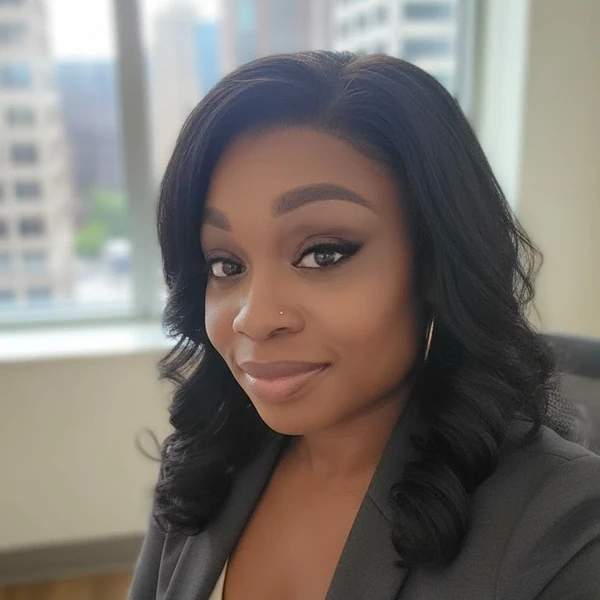
Shatoya Simmons
1x
FinalistShatoya Simmons
1x
FinalistBio
I am a Human Services student committed to transforming lived experience into meaningful service. My academic journey is rooted in resilience, faith, and a passion for advocacy, particularly for individuals navigating trauma, mental health challenges, and systemic barriers. Through internships, community engagement, and personal healing work, I have developed a strong foundation in empathy, leadership, and ethical practice. I am dedicated to using education as a tool for restoration, empowerment, and long-term social impact.
Education
Goodwin College
Bachelor's degree programMajors:
- Family and Consumer Sciences/Human Sciences, General
Goodwin College
Associate's degree programMajors:
- Family and Consumer Sciences/Human Sciences, Other
Miscellaneous
Desired degree level:
Master's degree program
Graduate schools of interest:
Transfer schools of interest:
Majors of interest:
Career
Dream career field:
Individual & Family Services
Dream career goals:
Residential Counselor
Community Health Resources2023 – Present3 years
Sports
Jogging
Intramural2023 – 20252 years
Research
Bible/Biblical Studies
Independent Research — Biblical Studies Researcher2024 – Present
Arts
Gospel/Church
Musicyes2001 – Present
Public services
Advocacy
Community Health Resources — Advancement Intern2025 – 2025Advocacy
Independence Unlimited — Advocacy Intern2025 – 2025Volunteering
UrCommunityCares — Community Support Intern2025 – 2025
Future Interests
Advocacy
Volunteering
Philanthropy
Entrepreneurship
Dylan's Journey Memorial Scholarship
Dylan’s Journey Memorial Scholarship Essay
For most of my life, I believed something was fundamentally wrong with me. Not in a dramatic sense, but in a quiet, exhausting way that made everyday life feel heavier than it seemed for everyone else. I struggled to remember things, lost keys constantly, felt overwhelmed by simple tasks, and fought an internal chaos I could never fully explain. At one point, I genuinely feared I was developing early dementia. I felt like I was losing my mind.
It wasn’t until adulthood that I was diagnosed with ADHD and recognized as neurodivergent. That diagnosis changed everything. It didn’t suddenly fix my struggles, but it gave them meaning. What I once interpreted as laziness, irresponsibility, or personal failure was finally understood as a learning disability I had been masking my entire life.
Growing up, mental health and learning differences were swept under the rug in my household. There was no language for executive dysfunction, emotional regulation, or sensory overload. Ironically, my mother worked professionally with individuals who had developmental and intellectual disabilities, yet my own struggles were minimized or dismissed. I learned early that unless a disability was visible, severe, or socially recognizable, it wasn’t considered “real.” That environment taught me to push through at all costs. Even when it cost me my peace, confidence, and self-trust.
Living undiagnosed made education especially difficult. I worked twice as hard to keep up, often burning out, forgetting assignments, and feeling ashamed when I couldn’t perform consistently. I internalized the belief that something about me was broken. Even now, as I adjust to treatment and medication, I still struggle with memory, focus, and organization. Some days feel like progress; others feel like starting over. But what has changed is this: I no longer quit on myself.
My motivation for pursuing higher education comes directly from this journey. Education is no longer about proving intelligence. It’s about reclaiming agency. It’s about showing myself and others that a learning disability does not disqualify someone from growth, leadership, or impact. Like Dylan, whose story reflects resilience in the face of both medical and learning challenges, I believe persistence matters more than perfection.
Despite homelessness, single parenthood, mental health challenges, and late diagnosis, I have continued my education without stopping. I earned my high school diploma later in life, entered college, and have remained committed even when my brain feels like it’s working against me. I have learned to adapt, ask for support, and advocate for myself. Skills I was never taught but had to build out of necessity.
I am a strong candidate for this scholarship because I embody its purpose. I am not succeeding despite my learning disability; I am succeeding with it, learning how to work alongside my mind instead of fighting it. I want my journey to reflect what Dylan stood for. That disabilities do not erase ambition, and that access, understanding, and perseverance can change lives.
This scholarship would support not only my education, but my continued effort to show others that neurodivergence does not mean limitation. It means difference and difference deserves dignity.
Women in Healthcare Scholarship
Why I Chose Healthcare & How I Plan to Make a Difference
I didn’t choose healthcare because it felt safe or prestigious. I chose it because I’ve lived inside the gaps of the system. The places where people fall through when care is delayed, misunderstood, minimized, or denied altogether.
Mental health and healthcare have shaped my life from an early age. I grew up surrounded by untreated mental illness on both sides of my family (depression, bipolar disorder, schizophrenia) conditions that were often normalized, hidden, or dismissed rather than addressed. In my family and culture, struggling mentally was not something you talked about openly. You survived quietly. Asking for help was seen as weakness, and labels were feared more than suffering. That silence had consequences.
As an African American woman, I have come to understand that those consequences are not accidental. Throughout my life, symptoms were downplayed, misinterpreted, or attributed to attitude, stress, or character rather than examined clinically. Like many women of color, I learned to mask, to push through, and to perform “strength” even when my body and mind were signaling distress. It wasn’t until later in life that I was diagnosed with ADHD and neurodivergence. A revelation that reframed decades of burnout, insomnia, anxiety, and self-blame.
That diagnosis didn’t label me; it liberated me. It also exposed a broader truth: healthcare is not an equal trade. Women of color are consistently underdiagnosed, misdiagnosed, or diagnosed late. Especially when it comes to mental health and neurodivergence. We are often seen as resilient rather than vulnerable, strong rather than in need of care. I didn’t just experience that disparity. I lived it.
Healthcare, for me, is not abstract. It is personal. It is watching people self-medicate untreated mental illness with substances because shame feels safer than vulnerability. It is seeing how dual diagnoses — mental health and substance use — are discussed separately while people suffer at their intersection. It is understanding how stigma, culture, and systemic bias combine to keep people from receiving timely, compassionate care.
I am pursuing healthcare because I want to be part of a system that does better. Not just clinically, but humanly. Through my academic studies, Recovery Support Specialist (RSS) training, and work in human services, I’ve supported individuals navigating mental illness, addiction, and emotional isolation. I bring more than textbook knowledge into this field. I bring lived experience, cultural awareness, and the ability to create safety where silence once lived.
As a woman in healthcare, I bring a perspective shaped by survival, advocacy, and insight. I believe empathy is not a weakness, it is a clinical skill. I plan to advocate for trauma-informed, culturally responsive, and integrated care that treats the whole person, not just symptoms. I want patients to feel seen, believed, and supported before they reach crisis.
Representation matters. Women, (especially women of color) deserve leadership, voice, and authority in healthcare. I am not entering this field to fit quietly into a broken system. I am entering to challenge harmful norms, amplify unheard voices, and help build systems that actually heal.
Healthcare needs professionals willing to sit in complexity, tell the truth, and stay present when it’s uncomfortable. I am committed to being one of them. This scholarship would not only help me complete my education. It would help position me to serve with integrity, courage, and impact.
I am not playing small with this calling. I am answering it fully.
RonranGlee Literary Scholarship
Central Thesis
This passage reveals how meaning is destabilized not through direct contradiction, but through subtle distortion of language, authority, and trust. The writer demonstrates that the earliest rupture in human consciousness begins not with rebellion, but with the misrepresentation of what was actually said, and the quiet invitation to reinterpret truth apart from relationship.
Selected Paragraph (Ancient Text)
“Now the serpent was more crafty than any of the wild animals the Lord God had made. He said to the woman, ‘Did God really say, “You must not eat from any tree in the garden”?’”— Genesis 3:1 (NIV)
Close Reading & Analysis
At first glance, this passage appears to introduce a simple exchange between two characters. However, a closer reading reveals that the dialogue is less about rules and more about how meaning is framed, questioned, and internally reconstructed. The serpent’s question is not a request for clarification but a deliberate rhetorical maneuver that subtly shifts the woman’s relationship to authority, truth, and self-trust.
The opening phrase “Did God really say…” is especially revealing. The serpent does not deny God’s existence, nor does he openly challenge divine authority. Instead, he introduces doubt regarding the accuracy and intent of God’s words. This distinction is critical. By questioning the representation of the command rather than the command itself, the serpent reframes the issue as one of interpretation. The listener is placed in the position of evaluator rather than recipient, subtly repositioning authority from an external source to internal reasoning.
The distortion becomes more pronounced in the content of the question: “You must not eat from any tree in the garden?” This phrasing exaggerates the original command, transforming a single boundary into an image of total deprivation. The original instruction permitted access to abundance with one exception, yet the serpent’s framing suggests excessive restriction. Through this shift, the writer demonstrates how language can alter perception without altering facts, converting provision into limitation and guidance into control.
Notably, the serpent does not issue a command or propose an alternative rule. He simply asks a question. This restraint is central to the passage’s underlying meaning. The absence of instruction creates the illusion of neutrality, as if the woman is merely being invited to think critically. However, the question itself is already weighted with implication. The writer illustrates that influence often operates most effectively when it appears non-coercive.
The term “crafty” further clarifies this dynamic. Craftiness implies skillful manipulation rather than brute force. The serpent’s intelligence is not used to inform but to obscure, relying on partial truths and strategic ambiguity. This suggests that deception, as portrayed here, is not chaotic or irrational. It is composed, articulate, and persuasive. The writer presents deception as something that mimics reason, making it difficult to recognize.
The woman’s engagement in the exchange is equally significant. She is not depicted as naïve or impulsive. Instead, she responds thoughtfully, indicating that the vulnerability described in the passage is not rooted in ignorance. Rather, the danger emerges when interpretation is detached from relationship. The shift occurs when meaning is negotiated internally, without reference to the original speaker. The passage implies that autonomy in interpretation, when isolated from trust, can become destabilizing.
On a psychological level, this moment represents a transition in consciousness. The woman moves from a relational understanding of instruction to an analytical one. The writer appears to suggest that the fracture does not begin with disobedience, but with the re-centering of authority within the self. This internalization of judgment sets the stage for subsequent actions, though those actions are not the focus of this paragraph.
More broadly, the passage functions as a meditation on the fragility of meaning. It exposes how easily understanding can be reshaped through subtle changes in wording and emphasis. The serpent’s question initiates a cascade of reinterpretation, demonstrating that meaning rarely collapses suddenly. Instead, it erodes incrementally through small, seemingly reasonable shifts.
Ultimately, this paragraph serves as a warning about the power of language to redefine reality. The writer is less concerned with prohibition than with perception. The underlying meaning suggests that truth is not merely a matter of content, but of context, trust, and relational grounding. When these are disrupted, even accurate information can become distorted, and certainty can unravel without a single explicit lie being told.
Poynter Scholarship
Balancing my education with my commitment to my family as a single parent is not something I approach casually. It is something I live every day with intention, discipline, and faith. I am raising my three children while pursuing my degree, not in spite of one another, but alongside one another. My education is not separate from my role as a parent; it is part of how I provide stability, model perseverance, and build a better future for us.
As a single mother, my children are my first responsibility. Their emotional well-being, safety, and consistency matter more than any assignment or deadline. Because of that, balance for me does not mean perfection. It means structure. I plan my academic life around my family’s needs, not the other way around. I use schedules, routines, and clear boundaries to ensure my children know when I am available to them and when I am focused on school. I study early in the morning, late at night, and during school hours. I break my coursework into manageable pieces so that my education enhances our household instead of overwhelming it.
I have learned to be flexible without being careless and disciplined without being rigid. There are days when parenting demands more of me, and there are seasons when school requires deeper focus. Balance looks like knowing when to push forward and when to pause without quitting. It also looks like giving myself grace while still holding myself accountable. I am teaching my children that commitment doesn’t mean ignoring your responsibilities. It means honoring them fully.
My children are also a source of motivation. They have watched me return to school later in life, complete assignments at the kitchen table, and keep going through exhaustion and uncertainty. They see firsthand that education is not just for those with perfect circumstances, but for those who are willing to persist. I want them to grow up knowing that learning is lifelong and that setbacks do not disqualify you from success.
This scholarship would directly support my ability to maintain that balance. Financial strain is one of the greatest challenges single parents face when pursuing higher education. Tuition, books, and basic living expenses compete with childcare, housing, and everyday needs. Reducing that burden would allow me to focus more fully on my studies without sacrificing my family’s stability. It would mean fewer impossible choices between academic expenses and household necessities.
Earning my degree is not just a personal achievement. It is an investment in my children’s future. My education will allow me to build a sustainable career rooted in service, advocacy, and stability. It will give me the tools to support my family independently while also contributing meaningfully to my community. This scholarship would not only help me complete my degree; it would affirm that single parents are capable, committed, and worthy of support.
I am not chasing a dream at the expense of my family. I am building one with them. And with the right support, I will finish what I started.
Harvest Scholarship for Women Dreamers
My “Pie in the Sky” dream is to build a healing-centered academy that restores people from the inside out—spiritually, emotionally, and practically—especially those who have survived trauma, instability, and systems that were never designed to protect them. It’s a dream that feels both deeply personal and bigger than me, one that sometimes feels just out of reach, but impossible to let go of.
This dream was sparked by my own life. I did not come to higher education through a straight line. I returned to school later in life after years of survival mode—raising children, navigating homelessness, trauma, and instability, and learning how to advocate for myself and my family without a roadmap. At one point, I was living in a shelter with my three children, including my daughter who was only four months old at the time. That season was both devastating and transformative. I learned that stability is not just about housing or income—it’s about healing, support, and having someone believe in you when the world does not.
Over time, I realized I had been doing advocacy and human services work long before I had language for it. I have spent my life standing in the gap—for my children, for vulnerable clients, for people being mistreated or silenced. Whether advocating for a client experiencing abuse, supporting individuals in behavioral health settings, or serving my community through nonprofit and volunteer work, I’ve always felt called to protect dignity and restore hope. My dream grew from that calling.
My “Pie in the Sky” vision is an academy rooted in faith, accountability, and healing—one that combines education, mental health awareness, lived experience, and spiritual restoration. I imagine a space where people don’t have to choose between clinical tools and spiritual truth, where healing is holistic, and where individuals are equipped not just to survive, but to rebuild their lives with purpose. I want to create programs, workshops, and resources that are accessible to those who are often overlooked—single parents, survivors, first-generation students, and people rebuilding after loss.
Getting there will require courage, patience, and community. The first step is education—continuing my undergraduate studies in social work and human services to deepen my understanding and strengthen my foundation. Another step is consistency: continuing to show up, even when no one is watching, and doing the quiet work of refining my voice, my leadership, and my character. I know this dream will not happen overnight. It will grow slowly, shaped by lived experience, faith, and collaboration with others who believe in healing and restoration.
What makes this dream feel just out of reach is its scale—but what makes it possible is my willingness to keep walking toward it, even when the path is unclear. I’ve learned that growth doesn’t come from having everything figured out; it comes from taking the next brave step. I am a dreamer, but I am also a doer. And I believe that when women are encouraged to dream out loud, supported by community and accountability, impossible things begin to grow.
Autumn Davis Memorial Scholarship
Mental health has shaped every part of my life. My beliefs, my relationships, and ultimately my career path. My understanding of mental health didn’t come from textbooks first; it came from lived experience. I have navigated trauma, instability, homelessness, single parenthood, and seasons of deep emotional distress while raising children and trying to hold life together. For a long time, I didn’t have language for what I was experiencing. I only knew that something inside me needed healing, not hiding.
Through my own mental health journey, I learned how deeply interconnected emotional well-being is with identity, relationships, and survival. I learned that untreated trauma doesn’t just disappear. It shows up in communication, boundaries, parenting, and decision-making. I also learned that healing is not linear and that strength doesn’t mean never struggling; it means choosing growth anyway. These experiences reshaped my belief system. I no longer see mental health as a weakness or a private burden, but as a public health issue that deserves compassion, resources, and dignity.
My relationships were also deeply impacted by my mental health journey. I’ve had to learn how to communicate honestly, set boundaries, and unlearn survival behaviors that once protected me but later caused harm. Therapy, self-reflection, and faith have taught me how to take responsibility for my healing without carrying shame. They’ve also helped me develop empathy (not just sympathy) for others. I understand what it feels like to want help but not know how to ask, to be misunderstood, or to feel judged rather than supported. That understanding has made me a better parent, advocate, and community member.
Professionally, these experiences led me to pursue a degree in social work. I am passionate about mental health because I have lived on both sides of the system. Needing support and later providing it. I have worked in human services settings, advocated for vulnerable individuals, and supported clients navigating abuse, instability, and mental health challenges. I don’t approach this work from a place of saviorism, but from solidarity. I believe people don’t need to be fixed. They need to be heard, equipped, and supported.
My career goal is to work in trauma-informed mental health spaces where individuals and families can access care without stigma or barriers. I am especially drawn to serving populations affected by generational trauma, poverty, and systemic neglect. I also hope to contribute to education and prevention efforts that normalize mental health conversations and empower people before they reach crisis points.
Ultimately, I want my career to reflect what I once needed: safety, understanding, and hope. Mental health changed my life by teaching me how to heal, how to lead with compassion, and how to transform pain into purpose. Through my work in the mental health field, I plan to help others recognize their worth, reclaim their voices, and build lives rooted in stability and wholeness. I don’t just believe in mental health advocacy, I live it.
Raise Me Up to DO GOOD Scholarship
Being raised in a single-parent household shaped me in ways I didn’t fully understand until adulthood. My upbringing wasn’t defined by abundance or stability in the traditional sense, but by perseverance, adaptability, and learning how to survive when the odds felt stacked against us. I was raised in an environment where love existed, but consistency, safety, and emotional support were not always guaranteed. That reality forced me to grow up quickly and learn how to navigate life without a roadmap.
For much of my childhood and early adulthood, I learned to rely on myself. There was no blueprint for college, no generational example of higher education, and no safety net to catch me if I failed. As a result, I internalized the belief that I had to figure everything out on my own. While that independence helped me survive, it also came with challenges—self-doubt, delayed confidence, and periods where I questioned whether I truly belonged in academic or professional spaces.
Despite these challenges, my upbringing instilled resilience. Watching a parent manage life under pressure taught me how to endure discomfort, push through exhaustion, and keep going even when circumstances felt unfair. It also made me deeply aware of how systems fail families, especially single-parent households, and how often children are expected to be resilient without adequate support. That awareness has shaped my ambition and sense of responsibility toward others.
My experience motivated me to return to school later in life and pursue a degree rooted in service and advocacy. Education became more than a credential. It became a way to break generational cycles, reclaim my voice, and build a future rooted in stability and purpose. As a first-generation student, every step forward represents not only personal growth, but a shift in what is possible for my family.
Looking ahead, I plan to use my talents—empathy, advocacy, lived experience, and leadership—to help others who have been overlooked or underserved. I am particularly drawn to work that supports families, individuals navigating trauma, and people rebuilding their lives after instability. Whether through social work, community programs, education, or faith-based initiatives, my goal is to create spaces where people feel seen, supported, and empowered rather than judged.
I understand firsthand how powerful it is when someone believes in you during seasons when you are still finding your footing. In the future, I hope to be that person for others—to provide guidance, resources, and hope to individuals who are trying to rewrite their stories. I don’t see my upbringing as something I overcame alone; I see it as the foundation that shaped my compassion, determination, and commitment to service.
Being raised in a single-parent household did not limit my future. It clarified it. It taught me that strength can come from struggle, and that purpose often grows from the places where support was once missing. My goal is to turn what I learned into impact, and to use my journey as proof that transformation is possible.
Arthur and Elana Panos Scholarship
My faith has been the anchor of my life, especially in seasons where everything else felt unstable. I did not come to faith from a place of comfort or ease; I came to it out of necessity. When resources were limited, support systems were inconsistent, and the weight of responsibility felt overwhelming, my relationship with God became the one constant that carried me through. Faith was not abstract for me. It was practical, sustaining, and deeply personal.
There were moments when I had nothing but prayer and perseverance. Times when I had to make decisions without clarity, move forward without guarantees, and trust God even when the outcome was uncertain. My faith taught me how to endure without becoming bitter, how to remain hopeful without being naïve, and how to keep my integrity intact when shortcuts would have been easier. It gave me the strength to continue pursuing education, raising my children, and rebuilding my life when giving up might have seemed reasonable.
God has also helped shape my sense of purpose. My faith taught me that success is not measured solely by money or status, but by impact, character, and obedience. I learned that how I achieve my goals matters just as much as achieving them. Integrity, honesty, and service are not optional values for me. They are foundational. Faith has guided the way I show up in classrooms, workplaces, and community spaces, reminding me that my work should reflect who I am and what I believe.
As I pursue my career, my faith will continue to be my compass. I am driven not only by ambition, but by responsibility to my children, my community, and the people I am called to serve. I believe faith-centered leadership creates sustainable success because it prioritizes ethics over ego and purpose over profit. Whether I am advocating for others, building programs, or creating opportunities, I intend to operate with transparency, compassion, and accountability.
Entrepreneurship and service, to me, are not separate from faith. They are expressions of it. I believe God equips us with vision, resilience, and creativity so we can build solutions that uplift others. My faith helps me take risks wisely, remain disciplined during setbacks, and stay grounded when success comes. It keeps me aligned when pressure might tempt compromise and reminds me that my work should always honor God, not just benefit me.
This scholarship represents more than financial support. It reflects values I live by. Faith has carried me through hardship, shaped my goals, and continues to guide my future. With God as my foundation, I am committed to building a career marked not only by success, but by integrity, service, and lasting impact.
Promising Pathways-Single Parent Scholarship
I am currently pursuing a degree in social work because service, advocacy, and healing have been a part of my life long before I ever stepped into a classroom. My academic focus is grounded in understanding human behavior, trauma, and systems of care so I can better support individuals and families who are navigating instability, hardship, and transition. Social work allows me to merge lived experience with education, turning survival into service and struggle into strategy.
Attending college as a single parent has required more than time management. It has required endurance. I am raising my children while carrying the responsibilities of coursework, internships, and financial survival. I have attended classes after sleepless nights, completed assignments while managing childcare logistics, and shown up to placements even when my body and emotions were exhausted. There were seasons when stability was fragile, including periods of housing insecurity, and yet school became the one constant I refused to let go of. Education was not just a goal; it was a lifeline.
Financial strain has been one of the greatest obstacles. As a low-income single parent, every decision has weight. Tuition, books, transportation, childcare, and basic living expenses compete constantly. There is no safety net to fall back on. Only faith, discipline, and determination. Still, I remained enrolled because I understood that completing my education would not only change my life, but my children’s future as well. They have watched me study, persevere, and push forward even when quitting would have been easier. In that sense, my education is already making an impact.
Emotionally, the journey has required confronting doubt, fatigue, and the pressure of doing everything alone. There were moments when I questioned whether I could sustain the pace, but each challenge strengthened my resolve. I learned how to advocate for myself, utilize campus resources, and remain focused despite uncertainty. Being a single parent in college has taught me resilience, humility, and the importance of asking for help when needed.
Once I complete my degree, I plan to continue working in the human services field, supporting individuals and families affected by trauma, poverty, and systemic barriers. My long-term goal is to create and expand programs centered on healing, education, and empowerment. Especially for parents and children who are often overlooked. I am committed to giving back to the community by providing support that is compassionate, informed, and rooted in real understanding.
Earning my degree is about more than career advancement. It is about breaking cycles, modeling perseverance for my children, and building a stable future grounded in purpose. This scholarship would help ease the financial burden that often threatens to derail students like me and allow me to remain focused on completing my education. With support, I can continue forward. Not just for myself, but for the lives that depend on me and the communities I am called to serve.
The F.O.O. Scholarship
I am a first-generation college student who returned to school after surviving instability that shaped, but did not define, me. I have experienced homelessness more than once. The most defining moment was when my daughter was just four months old and I entered a shelter with all three of my children. It was one of the hardest seasons of my life and, unexpectedly, one of the most transformative.
That experience stripped away everything except what mattered most: faith, perseverance, and responsibility. While it was born out of necessity, God used that season to give me something I had never truly had before, a solid foundation. I learned structure, accountability, and how to advocate fiercely for my family. What felt like rock bottom became the groundwork for stability, healing, and growth.
I earned my high school diploma as an adult in 2022 and immediately continued into higher education. I have remained enrolled since, determined not to let my past dictate my future. I am pursuing a degree in social work because advocacy has been part of my life long before it became academic. I have spoken up for my children, for clients, and for vulnerable individuals navigating systems that often overlook them.
Coming from a disadvantaged background taught me resilience, but more importantly, empathy. I understand what it means to survive systems not designed for you and to still choose purpose over bitterness.
This scholarship would help relieve financial pressure that low-income students like me carry daily, allowing me to remain focused on my education. More than that, it affirms that my story is not a weakness. It is the reason I am committed to serving others with compassion, integrity, and lived understanding.
Bick First Generation Scholarship
Being a first-generation college student means I am learning how to build a future without a blueprint. There was no one in my household who could explain financial aid, degree plans, or what it meant to stay the course when school got hard. What I did have was resilience, lived experience, and a deep belief that my life could be different if I was willing to do the work.
I earned my high school diploma later than most, graduating in June 2022. That moment changed everything for me. It wasn’t just a piece of paper. It was proof that I could finish what I started, even when life tried to convince me otherwise. Since then, I have stayed enrolled continuously, pushing forward through every semester with intention. Education became a way for me to reclaim my voice, my confidence, and my future.
The challenges of being first-generation are real. I navigated college systems without guidance, balanced school with work and family responsibilities, and often had to advocate for myself in spaces where I felt invisible. There were moments of isolation, moments of exhaustion, and moments when quitting would have been easier. But every obstacle strengthened my resolve. I learned how to ask questions, seek resources, and trust myself even when I felt uncertain.
What drives me is purpose. I have spent my life advocating for others. My children, clients, and vulnerable individuals in human services settings long before I ever stepped into a classroom. My education is helping me sharpen the skills I was already using instinctively: empathy, advocacy, and leadership. I am pursuing social work because I believe lived experience matters, and because communities need professionals who understand struggle from the inside out.
My dream is to continue serving individuals and families who feel overlooked by systems that were never designed with them in mind. I want to help people navigate hardship with dignity and to model what perseverance looks like in real time. I also want my journey to show my children and others like them that education is not reserved for a select few it is accessible, powerful, and transformative.
This scholarship would ease the financial pressure that comes with being first-generation and allow me to focus more fully on my education. More than that, it would affirm that my journey matters. I am not just pursuing a degree, I am creating a new legacy rooted in courage, service, and possibility.
Kristinspiration Scholarship
Education is important to me because it represents freedom, restoration, and legacy. As a first-generation college student, education was not something I was handed or even clearly modeled for me. It is something I had to fight for, believe in before I could see it, and pursue even when others doubted my ability to succeed. For me, education is not just about earning a degree. It is about breaking cycles and rewriting what is possible for my family.
I did not grow up with academic guidance or financial security. I learned early how to survive, how to adapt, and how to advocate for myself. Returning to education later in life required courage because it meant confronting years of self-doubt, fear, and the belief that I was “behind.” But once I took that step, education became a tool of healing as much as growth. It helped me understand myself, the systems around me, and the communities I have been serving long before I ever sat in a college classroom.
As a first-generation student, I carry more than my own goals with me, I carry the hopes of future generations. I want my children to grow up knowing that learning is not limited by age, circumstance, or past mistakes. I want them to see that education is not reserved for a select few, but available to those willing to persevere. My journey shows them that starting late does not mean starting weak.
The legacy I hope to leave is one of courage, service, and alignment with purpose. I want to be remembered as someone who used education not for status, but for impact. Through my studies in human services and social work, I plan to continue advocating for individuals and families who feel unseen, unheard, or misunderstood. Especially those navigating systems without guidance, just as I once did.
Education has given me language for experiences I already lived. It has strengthened my ability to serve with empathy, wisdom, and integrity. I hope to build programs, mentor others, and create spaces where people feel safe enough to heal and strong enough to grow. My legacy will not be measured only by titles or credentials, but by the lives touched through compassion, advocacy, and example.
Ultimately, education is important to me because it transforms pain into purpose. It allows me to stand in rooms my ancestors never had access to and hold the door open behind me. As a first-generation student, my success is not the end of the story. It is the beginning of a new one. One where perseverance becomes tradition, learning becomes generational, and hope is no longer optional but expected.
Harry & Mary Sheaffer Scholarship
Being a first-generation college student has shaped not only how I navigate education, but how I understand people, systems, and the world around me. I did not grow up with a roadmap for higher education. I learned how to survive first, and only later learned how to dream. That journey has given me a deep sense of empathy and an ability to connect with people across backgrounds, cultures, and lived experiences.
My greatest strength is my ability to listen deeply and translate pain into understanding. Because I had to figure life out without academic or institutional guidance, I learned how to read people, advocate for myself, and eventually advocate for others. I have spent much of my life navigating systems that were not designed with people like me in mind. That experience allows me to recognize when someone is being overlooked, misunderstood, or silenced—and to respond with compassion instead of judgment.
As I pursue higher education in human services and social work, I plan to use these skills to build bridges between individuals and the systems meant to serve them. To me, empathy is not just an emotion; it is an action. It looks like meeting people where they are, honoring their lived experiences, and helping them access support without shame or fear. I have already done this work through community service, advocacy, and lived experience, and education is helping me sharpen these instincts into ethical, effective practice.
One of the ways I hope to build a more empathetic and understanding global community is through trauma-informed care and education. Trauma exists everywhere, but understanding does not. By combining my education with lived experience, I aim to help create spaces where people feel safe enough to be honest about their struggles and supported enough to grow beyond them.
I also believe empathy grows when stories are shared responsibly. As a first-generation student, I understand the power of representation. Seeing someone from a similar background succeed in education can challenge limiting beliefs about what is possible. I plan to continue using my voice to speak openly about resilience, second chances, and growth—not for recognition, but to remind others that transformation is attainable.
Ultimately, my goal is to help reduce stigma and increase access to care by addressing the root causes of disconnection: misunderstanding, lack of resources, and systemic inequities. Whether working locally or contributing to broader conversations around mental health and advocacy, I will approach every space with humility, curiosity, and respect.
As a first-generation student, I know what it feels like to walk into unfamiliar rooms carrying both hope and uncertainty. That awareness fuels my commitment to making those rooms feel safer for others. Through education, service, and empathy in action, I will continue working toward a more compassionate and understanding world.
Priscilla Shireen Luke Scholarship
Service has never been something I “added” to my life. t has been woven into who I am for as long as I can remember. I didn’t learn service from textbooks first; I learned it from survival, advocacy, and showing up when no one else would.
Long before I ever held a job title in human services, I was advocating for my own children. I learned how to speak up in school systems, medical spaces, and community settings when my daughter and my sons needed someone to stand in the gap for them. That experience taught me early that systems often overlook the most vulnerable unless someone is willing to raise their voice. I became that voice, not because it was comfortable, but because it was necessary.
As I entered the human services field, that same instinct followed me. Whether working with clients at community-based organizations or in behavioral health settings, advocacy has been central to my role. I’ve supported individuals navigating trauma, instability, and systems that were not built with them in mind. I’ve advocated for clients whose voices were minimized, misunderstood, or outright ignored. In one instance, I spoke up when a vulnerable client was being mistreated by someone in a position of power, knowing that silence would make me complicit. Advocacy, for me, is not theoretical, it is lived, practiced, and often costly.
Beyond my professional roles, I give back through volunteer work and community engagement. Through organizations like UrCommunityCares and my participation in recovery and support-based trainings, including RSS training, I have learned the importance of meeting people where they are with dignity and compassion. I don’t believe in “saving” people; I believe in walking alongside them, modeling what healing, accountability, and growth can look like in real life.
My service is rooted in faith, but it is expressed through action. I am deeply committed to serving others with integrity, humility, and consistency. I strive to be someone who not only advocates but lives in a way that reflects hope. Especially for those who feel overlooked, forgotten, or written off.
Looking toward the future, my goal is to continue serving at a broader capacity through social work and community-based leadership. I plan to focus on trauma-informed care, advocacy, and education. Particularly for individuals and families impacted by systemic barriers, mental health challenges, and intergenerational trauma. I want to help build spaces where people feel seen, supported, and empowered to heal.
Ultimately, my vision is to create sustainable, faith-informed community programs that combine practical support with emotional and spiritual care. I want to continue being a voice for those who are still finding theirs and a steady presence for those who have grown tired of being unheard.
Service is not something I do for recognition. It is my calling, my responsibility, and my way of contributing to a world that desperately needs more compassion and courage. This scholarship would support not just my education, but the continued work of serving others with purpose and impact.
Susie Green Scholarship for Women Pursuing Education
What Gave Me the Courage to Go Back to School
The courage to return to school did not come all at once. It came quietly, over time, through survival, prayer, and a deep realization that my life did not have to end where it once stalled. For years, education felt like something meant for “other people.” Life circumstances, trauma, and responsibility interrupted my academic path early on, and I internalized the belief that I had missed my chance.
But something shifted when I chose not to give up on myself anymore. In June of 2022, I earned my high school diploma as an adult. That moment was not small to me. It was proof that growth is not bound by age, and that obedience to purpose matters more than timing. I remember praying and asking God if college was even possible for someone like me. When the door opened and my education was fully funded, it felt undeniable. That was the moment courage took root. If God could make a way once, I believed He could do it again.
Returning to school required courage because it meant standing alone at times. Not everyone celebrated my progress. Some people were more comfortable with the version of me that struggled. Choosing education meant choosing discipline over familiarity, purpose over approval, and growth over comfort. I had to silence outside voices and listen closely to the one calling me forward.
I am now pursuing higher education as part of a second career in human services and social work. A field I’ve been walking in long before I had the credentials. Advocacy has been a lifelong role for me. I have advocated for my children, for clients navigating unsafe systems, and for individuals whose voices were overlooked. Education gave structure, ethics, and clarity to work I had already been doing from lived experience.
The courage to return to school also came from necessity. I knew that to serve effectively and sustainably — I needed training, boundaries, and professional grounding. I wanted to help without burning out. I wanted to lead without compromising integrity. Going back to school was not about prestige; it was about stewardship.
As a woman over thirty-five, returning to education while balancing family responsibilities, healing, and work required resilience. There were moments of doubt and exhaustion, but there was also peace. I learned that courage is not the absence of fear, it is obedience in spite of it.
Susie Green’s story resonates deeply with me because it reflects what I have come to believe, it is never too late to rebuild your life with intention. Education has become a tool for transformation. Not only for me, but for the communities I serve.
The courage to go back to school came from faith, persistence, and the refusal to let my past define my future. I am walking forward with conviction, knowing that every step I take now is aligned with purpose.
Debra S. Jackson New Horizons Scholarship
I did not take a traditional path to higher education. For a long time, survival came before schooling. I navigated life carrying responsibilities, trauma, and expectations that left little room to imagine myself in a classroom. It wasn’t until my late thirties that I earned my high school diploma in June of 2022, an accomplishment I once believed was out of reach. That moment changed everything.
Returning to school as an adult was not just about education; it was about reclaiming my voice. I enrolled in college shortly after earning my diploma and have remained continuously engaged in my education since 2021. Despite skepticism from family, friends, and people who were more comfortable with my former limitations, I persisted. My progress disrupted narratives others had grown accustomed to, but it affirmed what I had come to know deeply: I was capable, called, and not too late.
My life experiences have shaped my values around advocacy, integrity, and service. I have spent my life standing in the gap — for my children, for clients, and for individuals whose voices were ignored or silenced. As a mother, I learned how broken systems can be and how critical it is to have someone willing to speak up. In professional settings within human services, I have advocated for vulnerable clients, challenged unsafe dynamics, and modeled accountability even when it came at a personal cost. Advocacy is not something I learned in textbooks; it is something I lived.
These experiences led me to pursue a degree in social work. Education has given me language, structure, and ethical grounding for what I have been doing instinctively for years. It has expanded my understanding of systemic injustice, trauma-informed care, and the responsibility that comes with serving others well. I am not returning to school to reinvent myself, but to refine my purpose.
My commitment to community service is deeply personal. I plan to continue working in human services with a focus on advocacy, education, and empowerment. Particularly for individuals and families navigating trauma, mental health challenges, and systemic barriers. I believe lived experience paired with education creates powerful, compassionate leaders who can bring real change to communities.
This scholarship would be transformative. As an adult learner, financial strain is a constant consideration. I have been intentional about minimizing debt because I want my future work to be guided by service, not financial survival. Receiving this scholarship would relieve pressure, allowing me to focus fully on my education and deepen my impact.
Debra S. Jackson’s story reflects my own belief in second chances and lifelong growth. Returning to school later in life is not a setback, it is an act of courage. I am walking in alignment with my purpose, and education is a critical part of how I will continue to serve, lead, and give back.
Kerry Kennedy Life Is Good Scholarship
My career choice is social work, but my passion for public service did not begin in a classroom. It began long before I ever knew the language for it. Advocacy has been the thread running through my life as a mother, a daughter, a community member, and eventually, a professional. I have been standing in the gap for people for as long as I can remember. Often before I had the credentials to back it up.
As a mother, I learned early how systems fail families. Advocating for my children meant navigating schools, behavioral health services, and community resources that were often fragmented, dismissive, or inaccessible. I became their voice when they could not find their own. That same instinct followed me into every space I entered. In the workplace, I spoke up for coworkers and clients who were being mistreated, including reporting abuse when it put my own position at risk. In community-based settings, I advocated for individuals experiencing mental health challenges, poverty, and instability, not only by speaking on their behalf but by modeling dignity, consistency, and accountability.
I chose social work because it formalizes what I have already been doing all my life. Standing with people, not over them. Social work allows me to combine lived experience with ethical practice, education, and structure so that my advocacy is not just passionate, but effective. Since entering the program, my understanding has deepened. I no longer see social work only as crisis response, but as systems change, prevention, and long-term restoration. Education has helped me move from instinct to intention.
The sacrifices I have made to pursue my education are real and ongoing. I returned to school as an adult while balancing motherhood, internships, employment, and healing from trauma. I chose stability over comfort, delayed personal goals, and often studied while emotionally exhausted. Financially, I have lived lean. Stretching limited income, accepting help when pride told me not to, and trusting that obedience would open doors I could not force open myself. I intentionally avoided student loans as much as possible, knowing that long-term debt would limit my ability to serve freely in the community.
There were moments when stopping at an associate degree would have been easier. But I realized that the populations I am called to serve individuals and families- navigating complex systems and deserve professionals who are well-trained, grounded, and prepared. Education has sharpened my discernment, strengthened my voice, and clarified my calling.
Public service is not something I plan to do someday. It is who I already am. This degree is not about status or income; it is about stewardship. I am committed to giving back through advocacy, education, and community-based work that centers humanity, accountability, and hope. I trust that if I do my part faithfully, the rest will be handled.
Emma Jane Hastie Scholarship
Advocacy has never been something I turned on and off. It has been woven into my life long before I knew there was a name for it. I learned early that when systems are slow, confusing, or dismissive, real people suffer in the gaps. I became the kind of person who steps into those gaps.
One of the most impactful ways I have served my community was through my work in human services, where advocacy was not always expected, but was desperately needed. While working with vulnerable clients, I became aware that one individual was experiencing abuse at the hands of someone who was supposed to provide support. Speaking up was uncomfortable and carried risk, but remaining silent would have meant participating in harm. I documented concerns, escalated them appropriately, and advocated until the situation was taken seriously. That client deserved safety, dignity, and protection, and ensuring that became my responsibility.
That experience was not an isolated moment. It reflected how I show up consistently. As a mother, I have advocated fiercely for my children, learning how to navigate educational, medical, and social systems to ensure their needs were met. I learned how to ask questions, challenge decisions respectfully, and persist even when it would have been easier to step back. Those same skills followed me into my professional life.
Through my work with organizations such as CHR, Independent Unlimited and UrCommunityCares, I have supported individuals facing trauma, instability, and systemic barriers. My service has looked like helping clients understand their rights, modeling healthy boundaries, de-escalating crises, and empowering people to advocate for themselves. I have also completed RSS training, which strengthened my ability to respond ethically and effectively in high-pressure situations. Service, for me, is not about saving people. It is about walking alongside them with consistency, integrity, and respect.
Pursuing a degree in social work is my way of formalizing work I have already been doing for years. I initially hesitated to continue my education beyond an associate degree because of financial concerns and the fear of student loan debt. However, I came to understand that the level of impact I am called to make requires deeper knowledge, stronger clinical skills, and a broader understanding of systems. Education has helped me refine my instincts, strengthen my ethics, and better understand how to advocate without causing unintended harm.
My goal is to continue serving individuals and families who feel unseen or unheard. Particularly those navigating trauma and power imbalances. I plan to give back by combining lived experience with professional training, ensuring that my advocacy is both compassionate and effective. Receiving this scholarship would not only support my education; it would allow me to continue serving my community with greater capacity and sustainability.
Service is not something I do on the side, it is who I am. This degree is not a starting point, but a continuation of a lifelong commitment to showing up where it matters most.
Fuerza de V.N.C.E. Scholarship
I didn’t choose social work because I wanted to start helping people. I chose it because helping people is something I’ve been doing my entire life. Often without a name for it, without protection, and without support.
Long before I entered a formal program, I was advocating in real time. I learned how to speak up in rooms where silence was expected. I learned how to document, intervene, and protect. Not from textbooks, but from lived experience. As a mother, I have been a voice for my daughter and my sons when systems were dismissive, slow, or unsafe. I learned early that if I didn’t ask the hard questions or push back respectfully but firmly, my children’s needs could be overlooked. That reality shaped me deeply.
As I entered human services work, that same instinct followed me. I didn’t know how not to advocate. Whether it was supporting clients at CHR, modeling healthy boundaries, or helping individuals understand their rights and options, I
consistently found myself standing in the gap. In one particularly difficult experience, I advocated for a client who was being abused by a coworker. Speaking up came with risk, but staying silent was not an option. That moment reinforced for me that advocacy is not always comfortable, but it is necessary.
Through RSS training and my professional roles, I’ve learned how to pair that instinct with structure. I’ve developed skills in documentation, ethical decision-making, crisis response, and trauma-informed care. I’ve also learned the importance of modeling (not just telling) what safety, respect, and accountability look like. Advocacy is not only about confrontation; it’s also about consistency, integrity, and showing people that another way is possible.
Choosing social work as a degree path was a way to give language, protection, and sustainability to work I was already doing. Since starting the program, my understanding has matured. I now recognize that effective advocacy must be ethical, informed, and collaborative. I’ve learned how systems operate, how harm can occur even with good intentions, and why self-awareness and supervision are essential. Social work has taught me that being passionate is not enough. You must also be prepared.
I plan to continue serving individuals and families who are navigating trauma, power imbalances, and systemic barriers. Especially those who feel unheard or dismissed. I want to advocate at both the individual and community level, helping people access resources while also challenging practices that cause harm. My goal is not to rescue, but to walk alongside people, affirm their dignity, and help them build capacity for themselves.
At my core, I am an advocate because I believe people deserve to be protected, believed, and supported. My faith has shaped that belief, but my work has taught me how to live it out responsibly. Social work allows me to do what I’ve always done. Now with accountability, training, and a framework that ensures the work is ethical and lasting. This degree is not a beginning for me. It is a continuation.