
Hobbies and interests
Advocacy And Activism
African American Studies
Education
Reading
Adult Fiction
Christianity
Historical
Gothic
Leadership
I read books multiple times per week
shanterra mitchum
2x
Finalist
shanterra mitchum
2x
FinalistBio
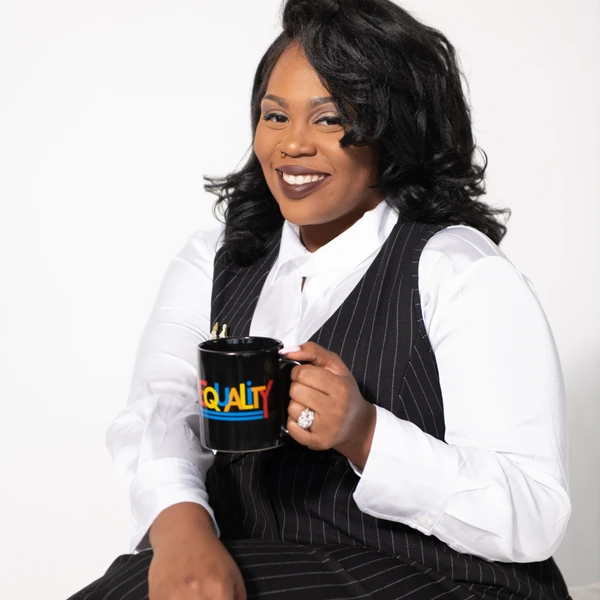
Shanterra Mitchum is a wife, mother, educator, pastor, and justice-centered leader whose life's work is rooted in empowering young people to lead change in their communities. She serves as Director of Rochester Programs for The Center for Teen Empowerment, where she leads youth-driven efforts focused on violence prevention, leadership development, and social transformation. With over 15 years of experience, she has dedicated her career to creating spaces where young people are not just supported, but seen, heard, and equipped to lead.
A Rochester native, Shanterra's leadership is shaped by her lived experience growing up in a marginalized community. She understands the barriers many young people face because she has walked through them — and now works to dismantle them. Through her leadership, youth are positioned at the forefront of solutions addressing mental health, education, and community violence.
Shanterra holds a Master's degree in History and is a graduate of Northeastern Seminary. She has been accepted into the Doctor of Education program in Executive Leadership at St. John Fisher University, deepening her commitment to leadership that transforms systems and communities.
She is a certified anti-racism and restorative circle facilitator and co-founder of the MC Collective, a coaching firm for women of color, and serves on the boards of The Children's Agenda and Connected Communities. Her work has been recognized with Rochester Business Journal's Forty Under 40 and the James M. McCuller Award.
Shanterra's work is more than a profession. It is a calling.
Education
Saint John Fisher College
Doctoral degree program (PhD, MD, JD, etc.)Majors:
- Community Organization and Advocacy
- Educational Administration and Supervision
- Public Administration and Social Service Professions, Other
SUNY College at Brockport
Master's degree programMajors:
- History
Nazareth College
Bachelor's degree programMajors:
- History
- Education, General
- Special Education and Teaching
Monroe Community College
Associate's degree programMajors:
- Liberal Arts and Sciences, General Studies and Humanities
Miscellaneous
Desired degree level:
Doctoral degree program (PhD, MD, JD, etc.)
Graduate schools of interest:
Transfer schools of interest:
Majors of interest:
Career
Dream career field:
- Executive Office
Dream career goals:
Special Education Teacher
Rochester City School District2015 – 20216 yearsProgram Director
Teen Empowerment2021 – Present5 years
Research
Community Organization and Advocacy
Teen Empowerment — Project Coordinator2019 – 2023
Ethel Hayes Destigmatization of Mental Health Scholarship
I did not grow up with a language for what I was watching. I just knew that something was wrong and that I needed to be ready.
My biological mother struggled with addiction for most of my life. Addiction is a mental health crisis that rarely gets named as one, especially in Black families and especially in communities where survival already takes everything you have. What I witnessed as a child was not just a mother who was unavailable. It was a woman drowning in something she could not control, and the ripple effects of that reached every person she loved. It reached me. And it reached my sister.
My sister carries a weight that I have watched her struggle under her entire life. Bipolar disorder. Manic depression. ADHD. A collection of diagnoses that together paint a picture of a mind that experiences the world at a different frequency than most. She did not choose that. She was born into a home already fractured by trauma, shaped by circumstances that research tells us increase the likelihood of mental health challenges, and left to navigate a world that was not designed with her in mind. I became her navigator.
From the time I was young I positioned myself between her and whatever was coming. Between her and my mother when things escalated. Between her and a system that did not always know how to hold her with dignity. I have shown up in the middle of the night to take her to the hospital during a mental health break. I have sat in waiting rooms not knowing what was going to happen next. I have made phone calls, asked hard questions, advocated loudly in spaces that wanted to reduce her to a file number. Protecting her has never felt optional to me. It has felt like something I was assigned to do.
What that experience gave me, beyond the exhaustion and the grief and the love, was an education in mental health that no classroom has matched. I learned that mental illness does not make someone less worthy of dignity. I learned that the people closest to someone who is struggling often absorb the impact silently, carrying their own trauma while trying to hold someone else together. I learned that Black families in particular have been handed silence as a coping mechanism, told to pray it away, push through, keep it inside, and that silence has cost us more than we can measure.
That last lesson became a calling. I am a pastor and I work every day with people who are suffering quietly. I lead a youth program that serves young people who have experienced violence, instability, and generational trauma. I co-founded a coaching firm for women of color who are leading while quietly breaking. In every single one of those spaces mental health sits at the center of the work whether we name it that way or not. I name it that way. I have learned that naming things is the beginning of healing them.
I also had to reckon with my own interior life. Being the protector, the one who shows up, the one who steps in, comes with a cost. There were seasons I did not tend to what I was carrying because I was too busy making sure everyone else was okay. I have had to learn, slowly and sometimes painfully, that I cannot pour from empty. That my own mental and emotional health is not a luxury. It is a requirement for every role I hold.
My goals have been shaped by all of this in ways I am still discovering. I want to build organizations and spaces where mental health is not a whispered topic but a central one. Where the young person who grew up watching a parent struggle with addiction can find someone who understands what that costs. Where the woman holding her family together can also be held. Where my sister's story, and my mother's story, and my story are not sources of shame but sources of understanding.
Many individuals struggle because the darkness they feel, the weight of what they carry had no light shined on it. I spend mine making sure that wherever I go, we turn the lights on.
Ruthie Brown Scholarship
I have seventy six thousand dollars in student loan debt. I am not ashamed of that number. I am also not ignoring it. That debt represents every degree I fought for, every semester I pushed through while pregnant, parenting, working, and serving my community. It is the cost of becoming who I am. But cost is still cost, and I have a plan.
The first part of that plan is the Public Service Loan Forgiveness program. I have spent my entire career in nonprofit and community work, and I intend to stay there. I am working toward my one hundred and twenty qualifying payments, making consistent progress while doing the work I was called to do. The PSLF program was designed for people like me, people who chose service over salary, who planted themselves in communities that needed them and built careers around impact rather than income. I am grateful it exists and I am intentional about protecting my eligibility.
The second part is how I approach borrowing now. I am a doctoral student, a wife, and a mother of three. Every financial decision I make affects my entire family. Because of that I only take out exactly what I need, nothing more. No borrowing for comfort or convenience. I look at what is required and I borrow to that number and I stop. That discipline did not come naturally. It came from years of learning what debt actually costs when you are also trying to raise children, keep a household, and build something that lasts.
The third part is making direct payments when I can. I am on a payment plan and I treat that commitment seriously. Between my salary, my husband's contribution to our household, and the way we manage our budget together, I make sure something is always moving toward that balance. Scholarships like this one are also part of the strategy. Every dollar I receive in scholarship funding is a dollar I do not have to borrow or a dollar that goes directly toward what I already owe. I do not take that lightly.
What I want anyone reading this to understand is that I am not a student who stumbled into debt without thinking about it. I am a woman who made a calculated decision to invest in her education because she knew what that education would produce, not just for herself but for every young person she leads, every woman she coaches, and every community she serves. The return on that investment is already showing up in my work every single day.
I am not running from this debt. I am working my way through it, strategically, faithfully, and with my eyes wide open.
Tawkify Meaningful Connections Scholarship
My grandmother did not have to take me in. She chose to. That distinction has shaped everything about how I understand love.
When I entered foster care, my grandmother became my foster mother. She opened her home, her table, and her life to me at a time when the adults around me were struggling to hold their own worlds together. And then she went further. She adopted me. She made it legal and permanent and hers in every way that the state recognizes, but what mattered most to me was what she made permanent in my heart. She made me feel like I belonged to somebody. Like I was not a problem to be managed or a child to be passed along. I was hers, and she was mine.
But what she did next is what I think about most when I consider the kind of person she was. My biological mother struggled with addiction. That is a reality I grew up carrying, the grief of a mother who was present in some ways and completely unreachable in others. It is a complicated kind of loss, one that does not always have language. My grandmother understood that. She never allowed her home to become a place where my mother was spoken about with contempt or written off as a cautionary tale. She maintained the relationship. She kept the door open. She made sure that I never had to choose between loving my grandmother and loving my mother. She held space for both, and in doing so she held space for all of me.
That was not a small thing. It would have been easy, and honestly understandable, for her to build a wall. Instead she built a bridge. She modeled what it looks like to love someone through their worst without excusing the harm, to hold compassion and boundaries in the same hands. I watched her do that and I did not have a word for it then. Now I do. It was grace. Practiced, deliberate, costly grace.
I carry that into everything I do. I work every day with young people who come from homes fractured by addiction, incarceration, poverty, and instability. I am a pastor who sits with people in the most broken seasons of their lives. I co-founded a coaching firm for women who are carrying things nobody around them fully understands. In every single one of those spaces I am drawing from what my grandmother showed me. That people are not their worst circumstances. That relationships require tending even when it is hard. That the most powerful thing you can offer another person is the refusal to give up on them.
She also taught me something about loyalty that I have never forgotten. She did not love me conditionally. She did not love me based on my performance or my gratitude or how easy I was to raise. She just loved me. Consistently, stubbornly, completely. That kind of love is not common and I knew it even as a child. I knew I was receiving something rare and I promised myself I would pass it on.
My grandmother is the reason I believe in showing up for people. She is the reason I stay at the table in hard conversations instead of walking away. She is the reason I fight for young people who have been told they are too far gone, because she looked at a little girl whose story could have gone in a completely different direction and decided she was worth fighting for.
I think about her every time I choose to stay in a difficult relationship instead of walking away from it. Every time I hold space for someone's humanity even when they are making it hard. Every time I refuse to let someone feel like they do not belong somewhere I have the power to welcome them.
She adopted me. But the truth is she also taught me how to adopt people, how to claim them, how to make them feel like they belong to something and someone. That is the relationship that shaped me most. And I spend my life trying to honor it.
Christian Fitness Association General Scholarship
I was big, pregnant, and tired when my advisor sat across from me and basically told me to quit. He did not say those words exactly. He said it practically, the way people do when they have already made a decision about your situation. Take a break. Come back later. Figure things out first. And then he added, "I have no doubt that you can do it, but can you do it well?" I remember sitting in that chair, swollen feet, exhausted body, and feeling the full weight of that question. Something ignited in me right then. I had to prove him wrong. Not for him. For me.
I went home and I made a schedule. Work. School. Rest. That was my structure and I held onto it like it was keeping me afloat, because it was. I was not going to survive this on emotion alone. I needed a plan and I needed to stick to it. But I also knew that a schedule alone was not going to be enough. I needed something bigger than discipline to carry me through. So I prayed. Not the quiet, composed kind of prayer. The desperate, honest, on my knees in the middle of the night kind. God, I need you to help me finish this. I am not quitting. I just need you to help me hold on. That became as much a part of my routine as anything else.
Then the baby came and I added one more thing to that schedule. My husband. He became my lifeline in ways I did not fully anticipate. There were nights I was completely spent, running on nothing, with an essay due and a newborn who did not care about any of that. He stepped in. He took the baby so I could write. He covered what I could not so I could finish what I started. I could not have done it without him and I will never pretend otherwise. Knowing when to ask for help and actually asking for it was part of how I overcame this. Faith got me through the moments when I was alone with my doubt. My husband got me through the moments when I needed someone with hands.
Nobody tells you how hard it is to be pregnant in school. Physically hard. The kind of tired that lives in your body and does not leave. I was carrying a baby and a course load and a job and a calling all at the same time. There were moments I sat in class and could barely keep my eyes open. There were moments I cried in the car before walking into a building because I needed to let it out before I could hold it together. But I kept showing up. Every single time I kept showing up.
That semester, the one my advisor questioned? I finished with a 3.6 GPA. I graduated with a 3.5. I did it, and I did it well. I carried those grades like the answer to a question I never should have been asked. And if I am honest, I still carry them. They remind me of what is possible when you refuse to let someone else's doubt become your own.
I walked across that stage and felt every single thing it had cost to get there. The sleepless nights. The prayers. The moments my husband held our baby so I could type one more paragraph. All of it was present in that moment and I let myself feel it completely. Then I kept going. I completed a graduate degree while working full time, raising my children, and serving as a pastor and worship leader at my church. The same tools that got me through that first pregnancy carried me through every hard season after it. Structure. Partnership. Prayer. And a deep, unshakeable decision that doubt was not going to be the loudest voice in the room.
Now I am pursuing my Doctor of Education in Executive Leadership. The same woman that advisor looked at and questioned is working on a doctorate. I say that not to impress anyone but because I know there is a young woman somewhere right now being told she should wait, being told it is too much, being told to come back later. I want her to know she does not have to listen to that.
Everything I went through as a parenting student lives in my leadership now. It is why I co-founded MC Collective to support women of color who are leading while carrying things nobody sees. It is why I show up every day for young people who have been told their circumstances define their ceiling. I know what it is to be that person. I know what it feels like to sit across from someone who has underestimated you. And I know what the right investment at the right time can do for someone who is already doing the work.
I did not drop out. I am not going to. I am asking you to be part of the reason why.
Charles B. Brazelton Memorial Scholarship
Honestly? I was the loud, weird-dressing, plus size girl. And I say that with absolutely no shame now, but I could not always say that.
Growing up, I stuck out in ways I did not choose and could not hide. I was big. I was loud. And I had a sense of style that did not follow any rules anybody else seemed to be following. That combination made me a target. Kids are not always kind to the girl who takes up space in more ways than one, and I heard about it regularly. The comments about my size. The mockery of what I was wearing. The way being loud got coded as too much, as aggressive, as a problem to be managed rather than a person to be known. There were days it wore me down. I will not pretend otherwise.
What nobody told me then was that every single one of those things they used against me was actually preparation.
Being plus size taught me early that the world was not automatically going to make room for me, so I had better learn to command it. I learned how to walk into spaces with confidence before I fully felt it, because waiting to feel it was not an option. Being loud meant I was never going to be overlooked in a room, and when you are doing work that requires people to pay attention, that is not a liability. It is a gift. I have stood in front of congregations, in front of funders, in front of rooms full of teenagers who did not want to hear from another adult, and my voice has never failed to cut through. And the weird dressing? That was just me being exactly who I was before I had the language to defend it. I have always had my own aesthetic, my own sense of what felt like me, and I refused to abandon it even when it cost me socially.
I lead worship for a congregation. I speak nationally on youth engagement. I walk into rooms with executives, community members, and young people who have been failed by every system around them, and I hold my own in every single one. And I still dress like myself. I am still loud. I still take up space without apologizing for it.
The girl who got picked on for being too much turned out to be exactly enough. She just needed time and the right environment to prove it. Charles found his thing in the water. I found mine the moment I stopped trying to shrink and started deciding that everything about me, the volume, the size, the style, was part of the point.
Being different never held me back. It just took a while to realize it was holding me together.
Bulkthreads.com's "Let's Aim Higher" Scholarship
The most dangerous thing you can do in a struggling community is leave the young people in it without a blueprint. I know this because I was once a young person in exactly that position. No blueprint. No guarantee. Just a neighborhood that had been written off and a girl trying to figure out what came next.
What I am building is a future where that girl has somewhere to go, someone to learn from, and a system strong enough to hold her.
I am in the process of expanding and strengthening the work of the Center for Teen Empowerment in Rochester, New York, the very program that caught me when I had nothing else. As Director of Rochester Programs, I am not simply managing what exists. I am building something more durable. I am developing operational frameworks that make our impact measurable and defensible. I am creating staff structures that develop the next generation of leaders from within the communities we serve. I am building a program ecosystem where a young person can walk in with nothing and walk out with a sense of purpose, a set of skills, and the audacity to dream beyond their circumstances.
That work is deeply personal. But it is also deeply strategic. Which is why I am simultaneously pursuing my business education, because what I am building requires more than good intentions. It requires financial literacy, organizational strategy, and the ability to make a compelling case for resources in rooms that do not always look like the communities I represent.
Beyond Teen Empowerment, I am building MC Collective, a coaching firm for women of color who are leading in spaces that were not designed with them in mind. Women who are brilliant and called and exhausted and in need of someone who sees the full complexity of who they are. I am building that space because I needed it and could not find it, and I refuse to let the next woman search as long as I did.
What connects all of it is a singular commitment. I am building a legacy of return. Every skill I gain, every system I strengthen, every woman I coach, every young person whose life is redirected by this work flows back into the communities that shaped me.
I am one of those things. And I am not finished yet.
Lotus Scholarship
Growing up in foster care in Rochester, New York's Crescent neighborhood meant that instability was not a season. It was a way of life. There was no single parent holding things together. There was no consistent home. What there was, was me learning very early that if I was going to make it, I had to decide to. That decision became the foundation everything else is built on.
Perseverance, for me, was never a motivational concept. It was a daily practice. It meant showing up to a youth program when I had every reason not to. It meant choosing to invest in myself in a community that did not always reflect that possibility back to me. And it meant carrying the weight of my story without letting it become a ceiling.
That same story is now my greatest professional asset. I did not study the communities I serve from a distance. I lived there. I know what it feels like to be the young person in the room who wonders if anyone is really coming back. That knowledge shapes how I lead, how I hire, how I build programs, and how I show up for every person under my care.
Today I direct the same program that once redirected my life. I am building MC Collective to coach and equip women of color with the tools to lead boldly. I am pursuing business education to make everything I am building more sustainable and more scalable. And I am doing all of it with the same girl from the Crescent in mind, the one who needed someone to believe in her before she believed in herself.
I plan to spend my life being that someone for others.
Marilynn Walker Memorial Scholarship
I was fourteen years old, living in foster care in one of the most dangerous zip codes in New York State, when someone from the Center for Teen Empowerment knocked on a door and told me my voice mattered. I did not believe them. But I showed up anyway. That decision changed the entire trajectory of my life.
The Crescent in Rochester, New York carries a name that tells the truth about what it costs to grow up there. High poverty. High violence. High stakes for every young person trying to find a way through. I was one of those young people. No stable home. No roadmap. What I had was a program that refused to count me out and a version of myself that refused to stay small. I became a Youth Organizer. I learned to speak in front of crowds, build community initiatives, and think critically about the systems shaping my neighborhood. That program did not just give me skills. It gave me a vision of what was possible and the audacity to believe I could help build it.
Now I am the Director of Rochester Programs at that same organization. I oversee four sites, manage staff, and lead the strategy for young people who look exactly like I did at fourteen. The full circle of that is not lost on me. Every day I walk into this work carrying both the memory of who I was and the responsibility of who I have become. But I have learned that running a program and building a sustainable business are two different things, and I have lived in that gap long enough to know it is time to close it.
The moment I felt that gap most clearly was when I sat down to map a growth strategy for my work and realized that passion and experience alone could not build what I was envisioning. I had the vision. I could see exactly where the organization needed to go, how to scale impact, how to structure for longevity. What I did not yet have was the formal framework to get it there. That is what business education is giving me. Strategy, organizational development, financial planning, and the language to turn bold ideas into enterprises that actually last.
Because my future is not limited to one room or one organization. I am building MC Collective, a coaching firm centered on women of color. I am consulting for nonprofits that need stronger operational foundations. I am working toward leading organizations where the girl from the Crescent is not the exception to the story but the author of it. Business education is not a detour from that calling. It is the infrastructure underneath everything I am building.
The youth I serve, the women I coach, and the communities I am committed to deserve leaders who are not just passionate but prepared. I am becoming both. And I am just getting started.