Hobbies and interests
Painting and Studio Art
Pilates
Reading
Academic
Business
I read books multiple times per week
shamim karbakhsh
3x
Finalist2x
Winnershamim karbakhsh
3x
Finalist2x
WinnerBio
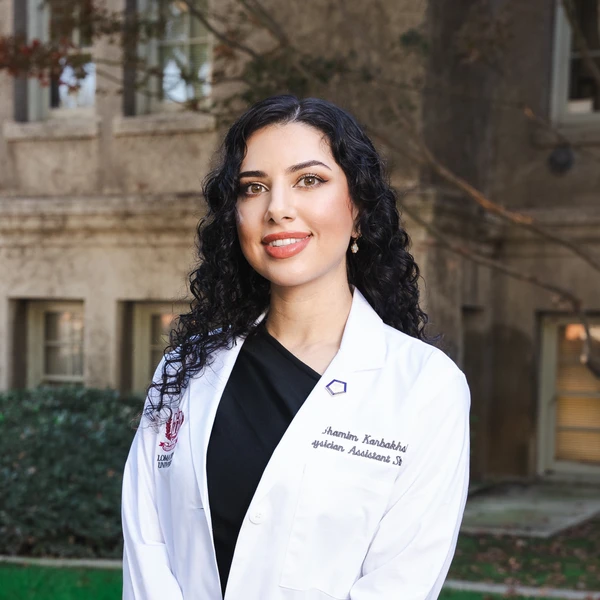
My name is Shamim Karbakhsh, PA-C, and I am a graduate of Loma Linda University’s Physician Assistant program. I am currently pursuing my Doctor of Medical Science (DMS) degree at Shenandoah University, where I am further developing my focus in clinical leadership and healthcare innovation.
I immigrated to the United States alone at seventeen with no financial support, working long hours while putting myself through school. That experience shaped my resilience, humility, and deep commitment to serving others.
I am passionate about community health, health equity, and expanding access to care for underserved populations. Throughout PA school journey, I volunteered in free clinics, supported vaccination initiatives, and worked with families facing significant barriers within the healthcare system. I actively advocate for the PA profession through my involvement in CAPA and AAPA, promoting awareness of our role and advancing autonomy and representation.
My long-term goals include becoming a clinical leader, educator, and policy advocate, particularly for immigrant and underserved communities. Through my DMS training, I am strengthening my ability to lead, mentor, and contribute meaningfully to healthcare systems that better serve diverse populations.
I bring clinical dedication, cultural insight, leadership drive, and lived resilience to everything I do. Every milestone I reach is rooted in one purpose: to give back to my patients, my profession, and the communities that shaped me.
Education
Shenandoah University
Doctoral degree program (PhD, MD, JD, etc.)Loma Linda University
Master's degree programMajors:
- Medical Clinical Sciences/Graduate Medical Studies
University of California-Irvine
Bachelor's degree programMajors:
- Biological and Physical Sciences
Saddleback College
Associate's degree programMajors:
- Chemistry
- Liberal Arts and Sciences, General Studies and Humanities
Miscellaneous
Desired degree level:
Doctoral degree program (PhD, MD, JD, etc.)
Graduate schools of interest:
Transfer schools of interest:
Majors of interest:
Career
Dream career field:
Medical Practice
Dream career goals:
medical assistant/ Scrub
HSA clinics, Dermatology office2020 – 20233 yearsSales Associate → Sales Manager
Clothing Boutique2014 – 20228 years
Sports
Aerobics
2016 – Present10 years
Research
Biological and Physical Sciences
Loma Linda University – PA Program — Primary Researcher / Author2024 – 2025Biological and Physical Sciences
Maryam High school, iran — Student Researcher2011 – 2011
Arts
Independent Artist / Personal Studio Work
Visual ArtsPersonal sketchbook collection, Acrylic and watercolor paintings (multiple completed works) Commissioned artwork for friends and community members2005 – Present
Public services
Volunteering
Health Service Alliance Clinics (HSA) — Volunteer Health Assistant & Community Health Educator2020 – Present
Future Interests
Advocacy
Politics
Volunteering
Entrepreneurship
Dr. Nova Grace Hinman Weinstein Triple Negative Breast Cancer Research Scholarship
Breast cancer continues to be one of the most significant health challenges affecting women worldwide. As a healthcare professional pursuing advanced medical education, I have become increasingly aware of how critical research is in improving outcomes for patients facing life-altering diagnoses such as breast cancer. While my current research training is not exclusively focused on breast cancer, my long-term goal is to contribute to the advancement of women’s health research and support the development of improved prevention, treatment, and patient education strategies.
My path toward research developed through my journey in medicine. After completing my Physician Assistant training, I chose to pursue a Doctor of Medical Science (DMS) degree in order to strengthen my ability to evaluate medical literature, analyze clinical studies, and contribute to evidence-based medicine. In modern healthcare, providers must do more than apply existing knowledge; they must also remain engaged with emerging research that drives innovation and improves patient care.
Breast cancer research is particularly important because of how many lives it touches. Nearly every person knows someone who has been affected by breast cancer, whether a family member, friend, or patient. Despite advances in treatment, certain forms such as triple negative breast cancer remain especially aggressive and difficult to treat. Continued research is essential to better understand the biological mechanisms of these cancers, develop targeted therapies, and improve survival outcomes for patients.
As a clinician, I have witnessed how frightening and overwhelming serious diagnoses can be for patients. Medical research plays a crucial role not only in improving treatment options but also in helping providers guide patients through complex healthcare decisions. Understanding the science behind disease allows clinicians to explain diagnoses clearly, discuss emerging treatments, and provide patients with hope grounded in scientific progress.
My decision to pursue advanced research training through my DMS program reflects my commitment to bridging the gap between research and clinical practice. Through this program, I am developing the skills necessary to critically evaluate studies, interpret new findings, and contribute to scholarly work that advances patient care. I believe clinicians who are trained in research are uniquely positioned to translate scientific discoveries into real-world healthcare improvements.
In the future, I hope to contribute to research that supports earlier detection, improved treatment strategies, and better patient education for conditions that disproportionately affect women, including breast cancer. Even when clinicians are not working exclusively in research laboratories, we play an important role in advancing knowledge by participating in clinical studies, promoting awareness, and ensuring that new evidence is incorporated into patient care.
Dr. Nova Grace Hinman Weinstein’s story is a powerful reminder of why continued research is so important. Progress in medicine depends on the dedication of clinicians and researchers who remain committed to understanding disease and improving outcomes. Through my continued education and future involvement in research initiatives, I hope to contribute in a meaningful way to the advancement of women’s health and the fight against diseases like breast cancer.
Lotus Scholarship
Growing up in a single-parent household shaped my understanding of resilience from a very young age. When my parents divorced when I was five, my mother became both the emotional and financial pillar of our family. Watching her work tirelessly to support us taught me the value of perseverance, responsibility, and determination. We did not always have financial stability, but what we lacked in resources we made up for through hard work and mutual support.
Those early experiences taught me that challenges are not barriers but opportunities to grow stronger. As I pursued my education and eventually immigrated to the United States alone, those lessons stayed with me. Building a life in a new country required courage, discipline, and an unwavering belief that perseverance would lead to opportunity.
Today, I am actively working toward my goals as a healthcare professional while continuing my advanced education. My experiences have shaped how I care for others, particularly patients who may feel unheard or face barriers such as language, financial limitations, or access to care. By taking time to educate and advocate for my patients, I hope to help others feel supported in their healthcare journey.
The resilience I learned from my mother continues to guide my path, motivating me to create meaningful impact through compassion, education, and service.
Tawkify Meaningful Connections Scholarship
Human connection has been the most powerful force shaping my life. From my childhood growing up with a single mother, to immigrating to the United States alone, to building a partnership with my husband while pursuing a career in medicine, relationships have not only supported my journey, they have defined my purpose.
My parents divorced when I was five years old, and from that moment forward my mother and I navigated life together. As a single parent, she worked tirelessly to support our family, and in many ways we grew up side by side. Our relationship was more than that of mother and daughter; we became partners through hardship, learning resilience, responsibility, and compassion together. Watching her persevere through financial struggles and uncertainty taught me early that relationships are built not just through love, but through shared strength and support during difficult times.
Years later, I made the decision to immigrate to the United States alone to pursue education and opportunity. Leaving behind everything familiar was both exciting and deeply challenging. Building a life in a new country required independence, determination, and the courage to create connections in unfamiliar places. That experience shaped how I approach relationships today with openness, empathy, and appreciation for the people who become anchors in uncertain times.
One of the most meaningful relationships in my life is with my husband, Nick. We met before I began Physician Assistant school, and over the years he has become far more than my spouse; he is my closest friend and the person I trust most in the world. Throughout the demanding years of medical training, he supported me emotionally through long nights of studying, stressful exams, and the uncertainty that comes with pursuing a rigorous healthcare career. Our relationship is grounded in mutual understanding and resilience, shaped in part by the fact that Nick also experienced his own challenging immigration journey. Those shared experiences taught us both to approach life with patience, gratitude, and perspective. In many ways, he is my constant reminder that no matter what challenges arise, I am not facing them alone.
These experiences have profoundly influenced how I connect with others, especially in my role as a healthcare provider. Medicine is not only about diagnosing and treating illness; it is about building trust and understanding between people. One of the most meaningful moments in my clinical experiences occurs when patients feel truly heard. Many of the patients I work with speak Farsi as their first language, and I often take time to explain their conditions in detail—what the disease means, why symptoms occur, and how treatment can help. Patients frequently tell me it is the first time someone has taken the time to explain their health in a way they fully understand. Seeing the relief and gratitude in those moments reinforces why human connection is essential in healthcare.
Outside of medicine, I express connection and emotion through painting. Art has always been a personal outlet for me a way to translate complex emotions into something tangible. Just as communication and understanding are essential in relationships, painting allows me to reflect, process, and share pieces of my journey through color and creativity.
Ultimately, my experiences have taught me that relationships shape not only who we are, but how we serve others. The resilience I developed alongside my mother, the partnership I share with my husband, and the connections I build with patients all guide my long-term goals as a healthcare provider. I hope to continue fostering meaningful connections in medicine by advocating for patients, communicating clearly, and ensuring that every person I care for feels understood and supported.
Pursuing advanced medical education has required significant financial sacrifice, and like many graduate students, I continue to carry substantial educational debt while working toward my long-term goals. Scholarships like this one help ease that burden and allow students like me to focus on building meaningful careers centered on service, empathy, and connection.
Human connection has carried me through life’s most challenging moments. It is also what motivates me to contribute to a future where empathy, understanding, and trust remain at the heart of healthcare and community.
Ps*(Added a picture of my favorite painting below)
Lauren Rebekah Uterine Fibroid & Endometriosis Research Scholarship
Uterine fibroids affect millions of women worldwide, yet they remain one of the most common conditions that many patients struggle to understand and manage. As a newly graduated Physician Assistant, I have developed a strong interest in women’s health and the conditions that significantly impact quality of life, fertility, and long-term well-being. Uterine fibroids represent an area where there is still much to learn, particularly in improving early identification, treatment options, and patient education. My passion for this field comes from both my clinical training and my desire to contribute to research that improves care for women.
During my medical education and clinical rotations, I became increasingly aware of how common gynecologic conditions such as fibroids can be and how differently they affect each patient. Some women experience minimal symptoms, while others face severe bleeding, anemia, pelvic pain, and fertility challenges that interfere with their daily lives. What stood out to me most was how frequently patients felt uncertain about their diagnosis or overwhelmed by the available treatment options. These experiences reinforced the importance of both research and education in helping patients better understand their health and make informed decisions about their care.
This interest in advancing patient care through research is one of the main reasons I chose to pursue a Doctor of Medical Science (DMS) degree following my Physician Assistant training. Through this program, I am strengthening my ability to critically evaluate medical literature, interpret clinical studies, and apply evidence-based medicine in practice. Developing these skills is essential for staying current with rapidly evolving research and ensuring that patients benefit from the most up-to-date treatment strategies available. My goal is to use these research skills to better understand conditions like uterine fibroids and to help translate emerging evidence into practical improvements in patient care.
Another area that motivates my interest in fibroid research is the need for increased awareness. Many women normalize symptoms such as heavy menstrual bleeding or chronic pelvic discomfort and delay seeking care. Improving education about fibroids and other reproductive health conditions can empower women to advocate for their health earlier and pursue appropriate evaluation and treatment. As a future provider, I hope to contribute to this effort by combining clinical practice with ongoing engagement in research and patient education.
Continuing my education while pursuing advanced training in research is both rewarding and financially demanding. Like many graduate students in healthcare, I am working to manage significant student loan obligations while striving to further develop my knowledge and skills. Scholarships such as this one provide meaningful support that allows students like me to remain focused on advancing our education and contributing to important areas of medical research.
Ultimately, my passion for studying uterine fibroids comes from a desire to improve the care and understanding surrounding a condition that affects so many women. Through continued education, research involvement, and patient advocacy, I hope to contribute to a future where women have greater awareness, better treatment options, and improved outcomes when facing fibroids and other reproductive health conditions.
Pay It Forward Scholarship
I am pursuing a career as a Physician Assistant and am currently continuing my education through a Doctor of Medical Science (DMS) program. I chose healthcare because I have seen firsthand how access, education, and advocacy can completely change the trajectory of someone’s life.
I immigrated to the United States alone at seventeen with no financial support and very limited understanding of how higher education worked. I worked long hours in retail and medical offices while putting myself through school, learning not only how to survive independently, but how systems function, especially healthcare systems. During those years, I often relied on mentors who took the time to explain what I did not know. Without that guidance, I may never have pursued medicine.
I chose to become a Physician Assistant because the profession embodies adaptability, collaboration, and patient-centered care. PAs are trained in the medical model and work closely with physicians, yet we often serve as the most accessible point of contact for patients. I was drawn to that combination of rigor and approachability. Throughout my clinical training, particularly in underserved settings, I saw how small moments of education and reassurance could change a patient’s understanding of their own health. That experience solidified my commitment to community-based medicine.
In addition to clinical practice, I am deeply interested in bridging medical research with real-world implementation. My doctoral work focuses on early prevention strategies for pediatric food allergies, specifically how evidence from landmark trials can be better translated into everyday clinical counseling. Research only has value if it reaches patients. I hope to use my degree not only to treat individuals, but to influence how care is delivered at a systems level.
Long term, I aim to serve as a clinical leader and educator. As a first-generation student, I understand how intimidating higher education and medicine can feel when no one in your immediate circle has navigated it before. I want to mentor students from similar backgrounds, advocate for equitable healthcare access, and contribute to policy conversations that strengthen the Physician Assistant profession. Representation matters not only for patients, but for future providers.
Dr. Michael Paglia and Dr. Albina Claps-Paglia dedicated their lives to medicine and to uplifting others. Their legacy reflects both excellence and generosity. As someone who began this journey with limited resources but unwavering determination, I hope to carry that same spirit forward, using my education not only as personal advancement, but as a tool to expand opportunity for others.
Ruthie Brown Scholarship
My educational journey has never followed a traditional or linear path. It has been shaped by early independence, frequent transitions, and a deep belief that education is the most reliable way to create stability and purpose. I immigrated to the United States as a teenager on my own, without my parents or a financial safety net. From that point forward, I learned to navigate school, work, housing, and finances independently often simultaneously. Movement became a constant in my life, as I relocated repeatedly in pursuit of education and opportunity rather than comfort.
I began my academic path by completing my undergraduate education while working, eventually continuing my studies at the University of California, Irvine. As a first-generation student, I entered higher education without generational guidance on navigating tuition, loans, or long-term financial planning. Still, I persisted, knowing that each step forward brought me closer to a career where I could serve others meaningfully. I later attended physician assistant school at Loma Linda University, a demanding and rigorous program that required full commitment. Throughout this time, I continued to support myself, relocate as needed for training, and prioritize education despite its growing financial cost.
Today, as I pursue my doctoral degree, I carry approximately $250,000 in student loans with an interest rate near 9%. This debt did not accumulate overnight, nor was it the result of poor planning. It reflects years of sustained effort, sacrifice, and the decision to continue advancing my education despite systemic barriers that disproportionately affect students of color, immigrants, and non-traditional learners. Each degree represented not just academic progress, but resilience the willingness to keep going even when the financial weight became overwhelming.
I actively work to address my student debt rather than postponing responsibility. While in school, I work whenever possible, apply consistently for scholarships, and live modestly to limit additional borrowing. Growing up without financial security taught me discipline and foresight. I understand how interest compounds, track my loans closely, and make deliberate decisions that prioritize long-term sustainability over short-term comfort.
My commitment to higher education is closely tied to my desire to give back. As a healthcare provider and future leader, I plan to work in roles that serve diverse and underserved communities many of which mirror the environments I grew up navigating alone. I am intentionally pursuing positions that offer loan repayment assistance and forgiveness programs, not only to manage debt responsibly, but to ensure that financial burden does not limit my ability to serve others. My doctoral training is an extension of this goal: to lead, educate, and advocate within healthcare systems that too often fail those without resources.
Educational debt has the power to delay independence and restrict opportunity, particularly for non-traditional students. This scholarship would directly reduce that burden and support my ability to complete my education with focus, stability, and purpose. I have built my path through perseverance, responsibility, and belief in service. With continued support, I hope to transform the opportunities education gave me into meaningful impact for others.
Arne Hyson Memorial Scholarship: Studies in Mental Health and Related Healthcare
My journey into healthcare began long before PA school it began when I was a young girl in Iran watching people I loved carry the weight of trauma, stress, and unresolved emotional pain without access to mental health support. I saw firsthand how mental health affects families, relationships, and the ability to function in everyday life. Growing up in an environment where mental health was misunderstood or stigmatized, I learned early how deeply people suffer when they are left without resources, validation, or guidance. These experiences shaped my passion for mental health long before I ever knew what a Physician Assistant was.
When I immigrated to the United States alone at seventeen, I experienced my own battles with fear, isolation, and the pressure of survival. Working long hours, struggling financially, and navigating a new culture without support taught me not only resilience but empathy especially toward patients who carry emotional burdens silently. That lived experience became the foundation of the provider I am becoming.
As I graduate from the Loma Linda University PA program and begin my Doctor of Medical Science degree at Shenandoah University, my ultimate goal is to become a clinician-educator with a strong focus on mental health, trauma-informed care, and improving access to quality care in underserved communities. During my rotations, I saw how profoundly mental health affects every area of medicine from pediatrics and OB/GYN to surgery and primary care. Depression, anxiety, trauma, chronic stress, and undiagnosed psychiatric conditions influence healing, compliance, relationships, and even physical symptoms. It became clear to me that mental health is not a specialty it is a foundation.
My long-term vision is to serve in a behavioral health–integrated primary care environment, where mental health screening and supportive interventions become as routine as vital signs. I plan to work with underserved communities, where mental health needs are high but resources are limited, and help patients feel seen, validated, and supported. I also aspire to teach future PA students and healthcare providers how to recognize mental health conditions early, communicate without stigma, and approach every patient through a trauma-informed lens.
Before PA school, I volunteered with Health Service Alliance Clinics, assisting low-income and immigrant families who often faced significant mental health challenges from postpartum depression and caregiver burnout to chronic stress and trauma. Many of these patients simply needed someone to listen. These interactions taught me that mental health care begins with compassion, patience, and presence.
This scholarship would allow me to continue my doctoral education despite significant financial barriers. As a low-income, first-generation student supporting myself entirely, managing the cost of PA school loans while beginning a doctoral program is overwhelming. Receiving this scholarship would not only ease that burden it would allow me to stay focused on serving the populations who need mental health advocates the most.
I am committed to dedicating my career to improving mental health access, educating future providers, and making a meaningful difference in the lives of patients who feel unheard. With your support, I can continue this work and honor Arne Hyson’s legacy through compassionate, equity-driven mental health care.
Edwards Scholarship
Hi, I’m Shamim, an international and first-generation college student whose journey in higher education began when I immigrated to the United States alone at the age of seventeen. I arrived without family support, financial stability, or a clear understanding of how the U.S. education system worked. What I did have was a deep belief that education could change the course of my life and allow me to build a future grounded in purpose and service.
My academic path has been shaped by perseverance and hard work. I began by earning associate degrees in Chemistry and Liberal Arts while working to support myself financially. Balancing employment with full-time coursework required discipline and sacrifice, especially as a first-generation student navigating college expectations independently. Those early years taught me resilience, accountability, and the importance of staying focused even when the path forward felt uncertain.
I later earned my Bachelor’s degree in Biology, which became a pivotal milestone in my journey. As a biology major, I developed a strong foundation in the sciences that underpin medicine while continuing to work and manage financial responsibilities on my own. Completing my bachelor’s degree as an international student without family support reinforced my confidence and showed me that persistence could overcome even the most challenging circumstances.
Following my undergraduate education, I pursued and completed a Physician Assistant program, a demanding experience that required years of rigorous academic training and extensive clinical rotations. During this time, I witnessed firsthand how language barriers, cultural differences, and misinformation can significantly affect patient outcomes. In one particularly meaningful experience, I was able to communicate with a patient in her native language, something no one else on the care team could do, which revealed a critical issue contributing to her declining health that had previously gone unnoticed. Experiences like this affirmed my commitment to culturally competent, patient-centered care.
Throughout my academic journey, I have made it a priority to support other students who are just beginning their paths, especially international and first-generation students. I often share my own experiences, lessons learned, and mistakes so they can feel less alone and more prepared as they navigate unfamiliar systems. Whether it’s helping someone understand application processes, offering encouragement during challenging coursework, or simply listening, mentoring others has become an important part of how I give back. I remember how isolating the process once felt, and I am intentional about being the person I wish I had when I first started.
Today, I am continuing my education by pursuing a Doctorate in Medical Science. Reaching the doctoral level as an international, first-generation student represents years of sacrifice, resilience, and personal growth. This next chapter reflects my desire not only to advance my clinical knowledge, but also to grow as a leader, educator, and advocate within healthcare.
Through my doctoral studies, I plan to focus on improving preventive care, reducing healthcare disparities, and promoting evidence-based practices that are accessible to diverse and underserved populations. I am committed to using my education to create meaningful change, mentor future students, and contribute to a more inclusive and compassionate healthcare system.
This scholarship would support more than my education—it would honor a journey built on perseverance, independence, and service. I am deeply committed to using my education to make a lasting, positive impact and to uphold the values of inclusivity, collaboration, and global understanding that this scholarship represents.
Women in STEM Scholarship
I didn’t choose STEM because it sounded impressive or because it was expected of me. I chose it because science felt like a tool one that, if used well, could genuinely change someone’s life.
I immigrated to the United States alone at seventeen, without family support or financial stability. Everything I built after that point depended on my ability to adapt, learn quickly, and keep going even when I was unsure of myself. Entering STEM spaces as a first-generation immigrant woman was intimidating. I was often surrounded by people who seemed to belong naturally, who spoke the language of science with confidence, while I was still learning how the system worked. There were moments I questioned whether I fit in, but I stayed.
Medicine became my path within STEM because it demands both precision and humanity. I pursued training as a Physician Assistant because I wanted a role where science is applied in real time, often under pressure, and where decisions directly affect people at their most vulnerable. STEM taught me how to analyze, problem-solve, and think critically. Medicine taught me that none of that matters if you forget the person in front of you.
Being a woman in STEM has shaped how I move through professional spaces. I’ve learned that women are often expected to be competent but quiet, confident but not assertive, capable but endlessly accommodating. Instead of shrinking, I chose to lead with curiosity and integrity. I ask questions. I speak up when something doesn’t feel right. I hold myself to a high standard while refusing to believe that confidence and compassion are mutually exclusive.
My background has made me especially aware of representation. Patients often feel more at ease when they sense understanding rather than judgment, and I’ve seen how trust can change outcomes. As a woman and an immigrant in medicine, I bring lived experience into clinical spaces that are still evolving. I don’t see that as a disadvantage, I see it as strength.
I am currently pursuing a doctoral degree to continue growing as a clinician and leader. I want to be part of shaping healthcare environments where mentorship is valued, diversity is visible, and women in STEM don’t feel like they need permission to take up space. I hope to support future women entering science and medicine by being someone they can look at and think, “If she did it, maybe I can too.”
STEM advances when different voices are heard and respected. As a woman in this field, my goal is not just to participate, but to contribute thoughtfully to use science in service of people, and to help create a future where women in STEM are not the exception, but the norm.
New Beginnings Immigrant Scholarship
Immigrating to the United States was not a single event in my life, it was the beginning of learning how to survive, adapt, and build a future entirely on my own. I arrived at seventeen years old, without family support, financial security, or a clear roadmap for how to navigate a new country. What I carried with me instead was determination and the belief that education would be my path to stability and purpose.
As a first-generation immigrant and student, every academic milestone came with weight. I supported myself while pursuing my education, often balancing work with demanding coursework. There was no margin for failure; if I fell behind, there was no one to catch me. These realities shaped my resilience, discipline, and ability to persist even when progress felt slow or uncertain. I learned how to advocate for myself, ask questions when I did not understand systems or expectations, and keep moving forward despite exhaustion and doubt.
My immigrant experience also deeply influenced how I see healthcare and service. Navigating unfamiliar systems as a young immigrant gave me firsthand insight into how isolating and intimidating institutions can feel when language, culture, or access become barriers. I remember moments of feeling unseen or misunderstood, and those experiences stayed with me. They ultimately guided me toward a career in medicine, where trust, communication, and empathy are as essential as clinical knowledge.
I pursued training as a Physician Assistant because the role allows for close patient interaction, adaptability across specialties, and meaningful collaboration within healthcare teams. Throughout my medical training, I have carried my background into every patient encounter. Being an immigrant has heightened my sensitivity to patients who feel vulnerable, marginalized, or overwhelmed by the healthcare system. I strive to be the provider who listens carefully, explains thoughtfully, and treats every patient with dignity especially those who may feel invisible or dismissed.
My career aspirations extend beyond clinical practice alone. I am currently pursuing a doctoral degree to continue growing as a clinician and leader in healthcare. Advanced education will allow me to deepen my impact through patient advocacy, education, and system-level contributions. I am particularly committed to serving underserved communities and helping create healthcare environments that are more equitable, culturally responsive, and compassionate.
Financial barriers remain one of the most significant challenges for immigrant students pursuing higher education. Despite working continuously and making personal sacrifices, the cost of graduate education remains a heavy burden. Scholarships like this one represent more than financial support they represent opportunity, validation, and the ability to continue moving forward without compromising one’s goals. Receiving this scholarship would help alleviate the financial strain of doctoral education and allow me to focus fully on becoming the kind of healthcare professional my patients deserve.
My journey as an immigrant has taught me perseverance, humility, and gratitude. Every step forward has been earned, and I do not take that lightly. I am committed to honoring the opportunities I have been given by continuing to serve others, mentor future students, and contribute meaningfully to the field of medicine. This scholarship would not only support my education it would support a future grounded in service, integrity, and purpose.
Issa Foundation HealthCare Scholarship
One of the most formative experiences of my medical training occurred during an emergency medicine rotation and challenged not only my assumptions about patient care, but also my understanding of what it truly means to show up as a medical professional.
I was caring for a patient who was homeless and acutely intoxicated, presenting with a facial laceration that required repair. From the moment I entered the room, he was visibly angry and dismissive. He repeatedly called me “nurse,” despite my explanations of my role as a Physician Assistant student, and insisted that I was not qualified to perform his laceration repair. His tone was rude and confrontational. My preceptor noticed the interaction and offered to send in another provider, wanting to protect me from further hostility.
In that moment, I chose to stay. Walking away felt like it would reinforce his belief that he was undeserving of time, patience, or dignity. Instead of escalating the situation or continuing to defend my title, I slowed the encounter down. I spoke calmly, listened carefully, and allowed space for him to be heard. Gradually, his defensiveness softened, and he began to share more about himself.
He told me he was a veteran who had served during the Iraq War. At one point, he looked at me and asked whether my background would affect how I treated him. I am Persian, and the history between Iran and Iraq is complex and deeply rooted. He asked if I would do a poor job because of what he saw on my face.
That question was sobering. I told him that I chose medicine to serve humanity, not based on appearance, nationality, past decisions, or circumstance. I explained that in that room, none of those things mattered. He was a human being in need of care, and my responsibility was to treat him with skill, respect, and compassion. That is the standard I hold myself to as a clinician.
As he sobered, the dynamic changed entirely. He allowed me to perform the laceration repair and remained cooperative throughout the procedure. Afterward, he thanked me repeatedly and asked to speak with my preceptor. He shared how respected he felt during the encounter and expressed gratitude for the care he received, which was deeply meaningful to me as a trainee.
This experience shaped the kind of medical professional I am becoming. It reinforced my belief that medicine is not about authority or titles, but about presence, humility, and ethical responsibility. Technical skill is essential, but human connection is what builds trust and allows healing to begin.
I am currently pursuing a doctoral degree to continue growing as a clinician and leader in healthcare. Advanced training will allow me to expand my impact through education, advocacy, and patient-centered care. This scholarship would ease the financial burden of doctoral education and allow me to remain focused on developing the qualities that matter most in medicine compassion, integrity, and lifelong learning. I carry the lessons from this experience with me as I continue my journey, committed to serving patients as people, not problems.
Lotus Scholarship
Growing up with my mom after my parents divorce, taught me early that perseverance was not something you waited to develop later in life it was something you practiced every day. Financial stress was a constant presence, and stability was never guaranteed. From a young age, I learned to take responsibility, adapt quickly, and keep moving forward even when the path was unclear. These experiences shaped my work ethic and taught me how to stay focused during uncertainty rather than becoming discouraged by it.
When I later moved to the United States independently, those lessons became essential. Without family support or financial safety nets, I had to rely on careful planning, long hours of work, and consistent discipline to pursue higher education. Balancing demanding coursework, clinical training, and financial responsibilities was often exhausting, but it reinforced my belief that meaningful progress comes from persistence, not comfort. Each challenge strengthened my confidence in my ability to endure setbacks and continue working toward long-term goals.
These experiences have shaped how I want to serve others. I plan to use my background to advocate for patients who feel overwhelmed by the healthcare system, particularly those from underserved or low-income communities. I understand how intimidating systems can feel when resources are limited, and that understanding allows me to meet patients with empathy, patience, and respect. As a PA, I am committed to providing care that prioritizes education, trust, and empowerment.
I am actively working toward these goals by completing my PA-training, pursuing advanced clinical education, and engaging in research focused on prevention and early intervention. I seek opportunities that allow me to contribute beyond the exam room through leadership/education, and community involvement. My journey has taught me that resilience can change trajectories, and I am committed to using mine to create meaningful, lasting impact.
Second Chance Scholarship
From a young age, I learned what it meant to rebuild myself. My parents divorced when I was five, and soon after, I found myself navigating life without the support or stability many children take for granted. As I grew older, I immigrated to the United States alone, carrying nothing but determination and the belief that I had to create a different future for myself. Those years shaped me in ways I didn’t understand then they taught me resilience, independence, and the ability to stand on my own, even when everything around me felt uncertain.
Today, that same resilience fuels my journey in healthcare. I am becoming a Physician Assistant because I want to be the kind of provider I never had growing up someone who listens, advocates, and believes in a patient’s ability to rise again. Becoming a PA represents the change I want in my life: moving from simply surviving to intentionally helping others heal, grow, and reclaim their future. As I progress through PA school, I’ve worked hard to build the mental strength, confidence, and emotional stability I need to serve patients with compassion and clarity. This transformation has required honesty, discipline, and a willingness to confront the parts of myself shaped by early hardship. But it is the most meaningful change I have ever made.
The steps I’ve taken so far reflect my commitment. I volunteer in underserved clinics, care for diverse patient populations, and make a conscious effort to advocate for patients whose voices often go unheard. As someone who immigrated to the U.S. alone, I understand how overwhelming it can be to navigate a new country’s healthcare and education systems. That is why I help new immigrants find the resources they need whether it’s understanding their medical conditions, accessing care, or finding their own path toward a stable career. I’ve also begun providing medical education on social media, focusing on simple, accessible explanations that reduce fear and empower people to understand their own health. Knowledge is a second chance many people are never given.
After I complete my Physician Assistant degree, I plan to pursue a Doctorate of Medical Science so I can also teach. Education changes lives, and I want to guide the next generation of healthcare providers especially students who come from adversity, just as I did. Becoming an educator is my way of extending the chain of second chances Nelson Vecchione believed in. When you help one person rise, they naturally lift others with them.
This scholarship would ease the financial pressure of my graduate education and allow me to continue focusing on my clinical training, volunteer work, and long-term goals. More importantly, it would symbolize something deeply personal to me: that even with a difficult childhood, an uncertain beginning, and a long road to stability, I am still worthy of a second chance and capable of creating them for others.
I am not only working to change my own life; I am building a future where I can be the person who opens doors for someone else. That is how I plan to honor Nelson’s legacy: by continuing the cycle of giving, believing, and rebuilding, one person at a time.
Safak Paker-Leggs Science Education Scholarship
WinnerMy journey in the sciences began long before I understood what a scientific career truly meant. At age five, when my parents divorced, I learned very quickly that life would demand resilience from me. Growing up with emotional and financial instability, science became the one place where things felt predictable and meaningful. It gave me a sense of direction during a childhood that often felt uncertain.
At seventeen, I made the life-changing decision to immigrate to the United States alone. I arrived with a suitcase, no financial support, and no family to guide me through school or adulthood. Navigating an entirely new education system, culture, and language on my own was overwhelming, but it shaped the determination I rely on today. Every form I filled out, every job I worked, and every class I took was something I had to figure out independently. That experience has stayed with me throughout my scientific and academic journey.
I earned my Associate of Science in Chemistry, then went on to complete my Bachelor of Science in Biology at the University of California, Irvine a major turning point in my confidence as a woman in science. UCI gave me my first real exposure to higher-level scientific coursework, research-based thinking, and the realization that I wasn’t just surviving in these spaces I was excelling in them. Even in environments where women, especially immigrant women, were underrepresented, I learned to hold my own.
My passion for health science ultimately led me to pursue graduate education as a Physician Assistant. Throughout my rotations in pulmonology, pediatrics, dermatology, OB/GYN, family medicine, and emergency medicine, I witnessed firsthand how deeply science and human connection intertwine in clinical care. My scientific background allows me to understand disease, but my immigrant journey allows me to understand people.
Being a first-generation immigrant has influenced every step of my education. I had to work while attending school, manage finances without support, and navigate all major decisions alone. These barriers strengthened me. They taught me discipline, empathy, independence, and an unshakable work ethic. They also gave me a unique ability to support patients who feel vulnerable, unheard, or overwhelmed by their circumstances.
As I prepare to graduate as a PA, my long-term goal is to continue my education and pursue a Doctor of Medical Science (DMS). I want to deepen my scientific knowledge, contribute to academic medicine, and eventually use my training to mentor young women especially women from immigrant backgrounds—who are entering science and healthcare. Growing up, I rarely saw women who looked like me or shared my story in senior positions. I want to become the representation I needed.
Safak Paker-Leggs’ mission resonates with me on a personal level. Her commitment to empowering women in scientific fields parallels my own ambition to uplift others and redefine what leadership in science looks like. This scholarship would not only support my continued education, but also help me carry forward her legacy ensuring that more women, especially immigrants, feel welcomed, valued, and capable of shaping the future of science.
Julie Holloway Bryant Memorial Scholarship
My name is Shamim, and my first language is Farsi. I grew up in Iran, where language was more than communication it was connection, culture, family, and identity. When I moved to the United States alone at seventeen, I suddenly found myself in a world where the language I had always relied on could no longer carry me. English was my second language, yet it became the only tool I had to survive, study, work, and build a new life.
Being multilingual has shaped my identity, my career goals, and the way I see the world. It has also made every step of my educational journey more challenging but more meaningful.
When I arrived in the U.S., I struggled to understand conversations, classroom instructions, and even basic interactions. I remember re-reading textbooks several times just to grasp the material, translating every new word in my head while trying to keep up with lectures. There were moments where I felt embarrassed to speak, afraid my accent or grammar would expose the fact that I didn’t belong. But step by step, I forced myself to practice, to speak even when it scared me, to learn not only English words but the confidence to use them.
One of the biggest challenges of being bilingual is the responsibility you carry. Like many immigrants, I became the unofficial translator for friends, coworkers, and even strangers who needed help at clinics, pharmacies, or schools. I learned how to interpret medical terminology in English and turn it into something understandable in Farsi. These moments taught me patience, leadership, and the value of communication in healthcare lessons that shaped my career path.
Now, I am graduating from the Loma Linda University Physician Assistant program and beginning my Doctor of Medical Science degree at Shenandoah University. My post-graduation plan is to work as a PA serving underserved and immigrant communities, where language barriers often determine health outcomes. Later, I hope to teach future PA students and advocate for better access to culturally competent care.
While learning English came with challenges, being bilingual has given me gifts I would never trade. Speaking multiple languages makes me a better provider. I can connect with patients who feel misunderstood, reassure families who are overwhelmed, and translate not just words, but emotions and cultural nuances. My patients often relax the moment they hear my accent because they know I understand what it feels like to navigate healthcare in a second language.
Being multilingual has made me adaptable, empathetic, and resilient. It has taught me how to think from multiple perspectives, how to break down complex information, and how to communicate with intention. These qualities are essential in healthcare, especially when working with vulnerable populations who face linguistic and cultural barriers.
This scholarship would help support my doctoral education as I continue building a career dedicated to serving communities like the one I came from. I want to use my voice—both in English and Farsi to advocate, teach, and heal.
Being bilingual is not a limitation. It is my strength, my identity, and one of the reasons I will make a meaningful impact in healthcare.
Women in Healthcare Scholarship
I chose healthcare because it is the one place where my personal journey, my purpose, and my heart all intersect. As an immigrant who came to the United States alone at seventeen, I learned what it feels like to navigate systems without guidance, to face illness without support, and to feel invisible in moments where compassion could have changed everything. Those experiences shaped my desire to become the healthcare provider I once needed someone who sees patients fully, listens deeply, and provides care that honors their story as much as their symptoms.
Growing up in Iran, medicine always fascinated me. I wrote pretend prescriptions for my dolls, borrowed my father’s stethoscope, and acted out clinical scenarios long before I knew what a Physician Assistant was. But what ultimately pushed me toward this field was watching how illness and lack of access devastate families. I saw loved ones slip through the cracks because of stigma, limited resources, or delayed care. I realized that healthcare is not simply a profession it is a lifeline.
As I completed my Physician Assistant training at Loma Linda University and prepare to begin the Doctor of Medical Science program at Shenandoah University, my purpose continues to evolve. I am pursuing advanced education not for prestige but to amplify my ability to make a difference. I want to serve underserved communities, advocate for health equity, and eventually teach and mentor future PAs especially first-generation students, immigrants, and women who doubt whether they belong in medicine.
Being a woman in healthcare carries a unique responsibility. Women bring emotional intelligence, intuition, and a deep capacity for empathy qualities that patients respond to profoundly. Yet historically, women have struggled to access education, leadership, and recognition in medicine. I am determined to be part of the generation that changes that.
I hope to make a positive impact by becoming a strong advocate for my patients and a role model for the women who come after me. I want to use my lived experience financial hardship, cultural transition, independence, and resilience to connect with patients who feel unheard or misunderstood. I want to provide culturally competent care, especially to immigrants and women whose voices are often overshadowed.
But my impact will not stop in the clinic. I want to stand in leadership spaces where decisions about healthcare delivery, accessibility, and community outreach are made. I want to advocate for diversity in healthcare teams, representation in education, and better support systems for future female providers. My goal is to break generational barriers not just for myself, but for every woman watching, wondering if she has a place in this field.
Financially, continuing my education is difficult. I support myself independently and carry significant student debt from PA school. This scholarship would ease that burden and allow me to focus on my doctoral studies without sacrificing my ability to serve, volunteer, and pursue leadership opportunities.
I chose healthcare because caring for others is the core of who I am. And as a woman in this field, I hope to use my voice, my compassion, and my resilience to create a more inclusive, equitable, and humane healthcare system.
Andrea Worden Scholarship for Tenacity and Timeless Grace
I have never been the “traditional student.” My path has been anything but predictable, messy at times, challenging, beautiful, and built entirely by perseverance. When I think about Andrea Worden and the kind of people she believed in, I see pieces of myself in her values: resilience, kindness, authenticity, and the courage to step into spaces where no one before you has stood.
I was five years old when my parents divorced, and everything I thought was stable disappeared overnight. I grew up between homes, between emotions, between versions of myself. Art became my first form of healing. I would draw, paint, and create imaginary worlds to escape the chaos around me. That creative spark something Andrea herself valued became the first proof that I had something inside me worth protecting.
At seventeen, I left Iran and everything familiar behind to come to the United States completely alone. No family support. No roadmap. No financial cushion. I worked from dawn until late at night, walking nearly an hour each day to my job, saving every dollar just to survive. I struggled with loneliness, fear, doubt, and the pressure of building a life from scratch in a country where I didn’t fully belong. But each obstacle taught me resilience not the loud, dramatic kind, but the quiet kind that whispers, “You can keep going.”
That resilience carried me through community college, through two Associate Degrees, a Bachelor of BS from UCI, through PA school, and into the Doctor of Medical Science program I am starting soon. But what shaped me even more than academics were the people I met along the way especially the ones who felt overlooked, dismissed, or unheard. Patients who didn’t speak English well. Immigrants who reminded me of my younger self. Women navigating fear, trauma, or cultural stigma. These were the people who pulled something out of me: kindness that wasn’t performative, compassion that came from lived experience, and a willingness to show up for others even when I was still learning how to show up for myself.
One moment stands out. Before PA school, I volunteered at a free clinic where most patients were uninsured and many were immigrants. One day, a woman came in with her young daughter. She barely spoke English and was terrified about a simple medical issue. She kept apologizing as if her fear was an inconvenience. I sat with her, reassured her in a way beyond language, and walked her through what was happening slowly and kindly. She cried not because of the diagnosis, but because she finally felt understood.
That was the moment I realized the kind of person I wanted to be: someone who lifts others up simply because I know what it feels like to have no one there.
My transcript doesn’t reflect nights crying from exhaustion, the hours I walked to work, the years I spent without a support system, or the times I had to choose between groceries and textbooks. It doesn’t reflect the courage it took to start a new life alone or the way I pour myself into helping others because I know what loneliness feels like. But those are the things that shaped me.
What drives me now is the dream of becoming a compassionate Physician Assistant, a future educator, and an advocate for underserved communities. I want to continue lifting others the way strangers once lifted me. I want to be the provider who sees people not just their symptoms, but their story. And I want to show other first-generation, non-traditional students especially women and immigrants that their dreams are valid, even when their path looks different.
This scholarship would not just ease the financial burden of PA school and my upcoming DMS program it would honor every obstacle I’ve overcome. It would remind me that people like Andrea still exist: people who believe in potential, not perfection.
I may not be the traditional scholarship candidate, but I am exactly the kind of person Andrea believed in someone who leads with heart, resilience, kindness, and a deep desire to elevate others.
Redefining Victory Scholarship
Bick First Generation Scholarship
Winnereing a first-generation student means stepping into a world no one in my family has had the chance to enter. It means walking into classrooms without someone at home who can explain financial aid, college systems, or what the future might look like. It means learning every step alone but refusing to let that stop you. For me, being first-generation has never been about pressure. It has been about opportunity, sacrifice, and the belief that I could build a life different from the one I was born into.
When I left Iran at seventeen, I came to the United States completely alone. No financial support. No guidance. No safety net. I worked from early morning to late at night, walked nearly an hour to my job, saved every dollar, and taught myself how to survive in a new country while trying to earn an education. I often felt invisible struggling quietly while trying to keep up with students who had families helping them, who had homes to go back to, who weren’t worried about how they would pay rent or buy groceries the next day. The odds were against me, but every challenge I faced became the reason I kept going.
What drives me today is the same thing that kept me going back then: the belief that education can change everything. I became the first in my family to attend college, the first to pursue a graduate degree, and soon, the first to earn a doctoral degree. I chose the field of medicine because I know what it feels like to be unseen, unheard, and unsupported and I want to be the kind of provider who makes sure no patient ever feels that way.
My dream is to become a Physician Assistant and ultimately a PA educator, serving underserved, immigrant, and low-income communities. I want to provide compassionate medical care, teach future healthcare providers, and advocate for families who face the same barriers I faced when I first arrived in this country. I want to be living proof to other first-generation students especially young women, immigrants, and students of color that your starting point does not define your future.
But pursuing higher education as a first-generation, low-income student comes with real financial barriers. I have supported myself every step of the way, and the weight of student loans is heavy especially as I enter my Doctor of Medical Science program. This scholarship would relieve part of that burden and allow me to continue my education without sacrificing my ability to focus, serve my community, and move toward my long-term goals.
Being first-generation is not easy. But it has made me stronger, more resilient, and more determined. With your support, I will continue building the future my family never had the opportunity to imagine.
Skin, Bones, Hearts & Private Parts Scholarship for Nurse Practitioners, Physician Assistants, and Registered Nurse Students
My motivation to pursue advanced education comes from a lifelong commitment to serving others and a deep belief that healthcare can change lives when delivered with compassion, knowledge, and cultural understanding. As an immigrant who came to the United States alone at seventeen, I learned quickly what it meant to struggle for access to education, healthcare, opportunity, and support. Navigating a new country without family, financial stability, or guidance shaped not only my resilience but also my motivation to pursue a career where I could be the support for others that I once needed myself.
I recently completed the Physician Assistant program at Loma Linda University and will be continuing my education in the Doctor of Medical Science (DMS) program at Shenandoah University. My motivation for pursuing a doctoral degree is rooted in a desire to elevate my ability to serve patients, strengthen my leadership skills, and eventually contribute to the field through education, advocacy, and improved patient outcomes. During my clinical training, I saw how essential advanced medical knowledge, empathy, and clear communication are in specialties like emergency medicine, women’s health, dermatology, orthopedics, and chronic disease management areas deeply aligned with Skin, Bones, Hearts & Private Parts.
As a future PA clinician-educator, my goal is to provide high-quality patient care while training future providers to recognize disease early, communicate effectively, and approach patients holistically. I want to empower underserved communities, reduce barriers to care, and advocate for patients who are often overlooked due to language, cultural stigma, or socioeconomic limitations. My advanced education is not only an investment in my career it is an investment in the communities I plan to serve.
However, the financial burden of higher education is significant. As a first-generation, low-income student who has always supported myself independently, the cost of PA school has already created a substantial financial strain. Pursuing a doctoral degree while managing my existing student loans is challenging and, at times, overwhelming. This scholarship would greatly lessen that burden and allow me to focus fully on my academic and clinical goals without the constant pressure of financial stress.
With this support, I will be able to continue my doctoral education while investing in meaningful professional development opportunities, attending conferences, participating in specialized training, and growing as a future leader. It will also allow me to dedicate more time to community health initiatives, research interests, and patient education areas that directly improve lives and align with the mission of this scholarship.
My advanced education is more than a personal aspiration; it is a commitment to the patients I serve and the communities that shaped me. I am determined to become a clinician who leads with integrity, compassion, and cultural awareness. With this scholarship, I will be one step closer to achieving that vision and making a lasting impact in healthcare.
PAC: Diversity Matters Scholarship
An impactful PA is someone who leads with empathy, cultural awareness, resilience, and a relentless commitment to patient care. As a BIPOC woman, a first-generation immigrant, and someone who built her entire life from the ground up, I embody these qualities not because I read about them in a textbook but because they were shaped through lived experience, adversity, and the determination to rise above every barrier placed in front of me.
I immigrated to the United States alone at seventeen, with no financial support, no safety net, and no understanding of how to navigate a new country. I worked long hours, walked nearly an hour to and from work, saved every dollar I could, and put myself through college and PA school. During this time, I learned how deeply people’s backgrounds shape their health how culture, stigma, trauma, language barriers, and socioeconomic struggles all intersect in the exam room. This experience has become one of my strongest qualities as a future PA: the ability to understand patients on a human level, especially those who feel unseen or misunderstood.
An impactful PA must be a strong communicator someone who can break down complex information in a way that empowers patients instead of overwhelming them. I learned this skill early while volunteering with Health Service Alliance Clinics, working with uninsured, immigrant, and low-income families. Many patients had never been taught about preventive care or how to understand their symptoms. I learned how to meet people where they are, listen without judgment, and teach with compassion. These skills carried into my clinical rotations, where patients often opened up to me about issues they never shared with anyone else.
Another quality of an impactful PA is advocacy, both for patients and for the profession. As a woman of color entering a field where diversity remains limited, I believe representation matters in powerful ways. Patients trust providers who look like them, speak their language, or understand their cultural fears. Throughout PA school, I made it a point to educate patients about the PA role, challenge misconceptions, support full practice authority, and stay connected to CAPA and AAPA. I plan to continue advocating for the PA profession and for PAs of color who deserve more visibility, mentorship, and leadership opportunities.
Resilience is another defining trait of impactful PAs. The PA path is demanding, but my entire life has been preparation for that challenge. I pushed through financial hardship, isolation, self-doubt, and the weight of supporting myself entirely. Instead of breaking me, these experiences made me stronger, more empathetic, and more committed to serving patients who face similar struggles.
Finally, impactful PAs are leaders not just inside clinics, but within their communities. With my Doctor of Medical Science degree, I plan to become a PA educator and mentor future BIPOC PAs who may feel discouraged or out of place. I want to build the representation I never had.
With financial barriers still heavy due to PA school loans, this scholarship would directly support my education and my ability to continue contributing to the profession with purpose, compassion, and the drive to make healthcare more inclusive.
Saswati Gupta Cancer Research Scholarship
As a first-generation immigrant woman who came to the United States alone at seventeen, I learned early how much health, opportunity, and survival depend on access. Throughout my life and clinical journey, I have seen how cancer especially gastric cancer, disproportionately affects underserved, immigrant, and low-income families. Several members of my extended family have been affected, and I have watched patients suffer due to late diagnoses, cultural barriers, and limited preventive care. These experiences shaped my commitment to medicine and to advancing cancer prevention and early detection in vulnerable communities.
I am graduating from the Loma Linda University PA program and beginning my Doctor of Medical Science at Shenandoah University. My career goal is to become a PA clinician-educator focused on community health, cancer prevention, and improving health equity. I want to work in academic medicine and eventually contribute to research that addresses disparities in cancer screening particularly among immigrant communities who face language barriers, mistrust, and lack of access to education about early symptoms.
Before PA school, I volunteered with Health Service Alliance Clinics, supported vaccination outreach, educated uninsured families, and assisted in community events serving low-income patients. These experiences showed me how often cancer is diagnosed late simply because patients did not understand their symptoms or had no access to screening. They also strengthened my desire to expand community education and empower patients to seek care earlier.
As a low-income, first-generation student with significant educational debt, this scholarship would help me continue my doctoral education and remain focused on a career dedicated to prevention, equity, and community-driven health improvements. I am determined to use my training to reduce preventable suffering and contribute to a future where more families receive timely cancer care before it’s too late.
Mireya TJ Manigault Memorial Scholarship
From the moment I arrived in the United States at seventeen alone, with no financial support, no family nearby, and no guaranteed path forward I learned that survival is not just about endurance, but about purpose. I worked long hours, walked nearly an hour to and from work, saved every dollar I could, and pushed myself through school with one goal in mind: to build a life where I could serve others, uplift underserved communities, and use my voice to create change. Today, as I graduate from the Loma Linda University PA program and prepare to begin my Doctor of Medical Science (DMS), that purpose has crystallized into a clear mission: to build a future in healthcare that is more equitable, more compassionate, and more accessible for everyone especially those who have historically been overlooked.
I grew up in Iran watching physicians care for people with compassion and dedication. At home, I used my father’s stethoscope to “treat” my dolls and write pretend prescriptions. That early love for medicine stayed with me through every barrier I faced. Immigration taught me resilience, independence, and the importance of community support especially when you don't have any. As a first-generation college student and Middle Eastern woman in medicine, I understand deeply how representation, diversity, and equity shape a patient’s experience in the healthcare system. Too many people fall through the cracks simply because their backgrounds, language, or struggles are misunderstood. This is why I am committed not only to clinical care but to advocacy, education, and leadership.
Throughout my journey, I have been heavily involved in nonprofit and community-focused work. Volunteering at Health Service Alliance Clinics, assisting underserved families, supporting vaccination efforts, and helping immigrants navigate the healthcare system taught me how meaningful it is simply to show up in spaces that desperately need support. I have also worked to promote the PA profession through AAPA and CAPA involvement, educating patients, families, and healthcare staff about the PA role, full practice authority, and how expanding PA leadership can directly improve access to care. These efforts reinforced something Mireya Manigault deeply understood: that innovation, equity, and community transformation start with people willing to create change at the ground level.
What inspires me most about Mireya’s legacy is her ability to merge creativity, vision, and compassion to uplift underserved communities. I see my own journey reflected in her belief that every person regardless of background deserves an equal chance at success. Her work demonstrates that changing systems requires both strategy and heart. As a future PA leader and educator, I hope to carry that same spirit forward. My DMS degree will allow me to step into leadership roles, influence health policy, strengthen community programs, and teach future PA students especially first-generation and immigrant students who may feel they don’t belong in medicine.
This scholarship would lift a heavy burden at a critical time. Despite working multiple jobs throughout college and PA school, I carry significant student loan debt, and the cost of pursuing my doctorate is overwhelming. Financial support would not only ease this burden but directly empower me to continue advancing in the direction that aligns with Mireya’s vision: building systems that uplift communities, advocating for equity in healthcare, and using my own lived experience to drive meaningful change.
From a little girl in Iran pretending to run a clinic for her dolls to a PA committed to transforming care for underserved communities, my journey has always been rooted in purpose. With your support, I can continue becoming the clinician, advocate, innovator, and educator I aspire to be just as Mireya would have encouraged.