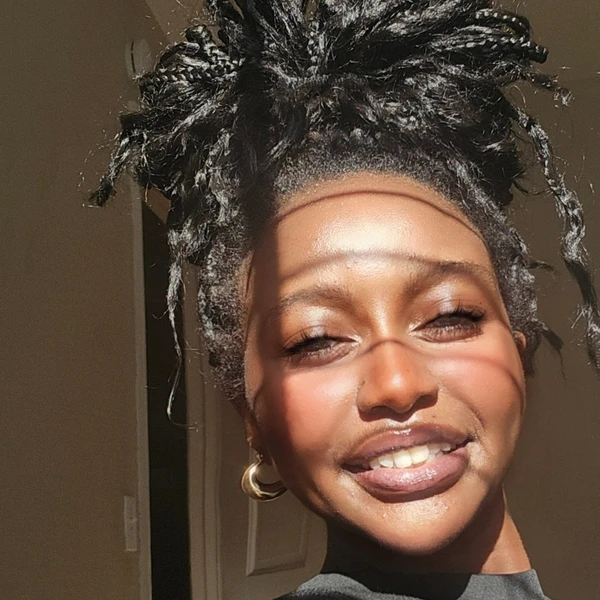
user profile avatar

Shalon Mwenda

1x

Finalist

General information

Hobbies & Interests

  • Cooking
  • Art
  • Bowling
  • Tennis
  • Track and Field
  • Engineering
  • Teaching

Reading

  • Fantasy
  • Action
  • Adventure
  • Cultural
  • Romance

I read books multiple times a week.

Bio

Shalon Karimi is a Kenyan student whose journey has been shaped by resilience, adaptability, and a deep belief in the power of education to transform lives. Moving from Kenya to a new country meant adjusting to a different academic system, but it also gave her a clearer view of the gap in resources between where she came from and where she landed. She remembers her robotics team back home struggling without the materials and equipment other students took for granted, an experience that sparked her determination to work in robotics and make sure other students don't face the same barriers. Since then, she has developed a strong interest in science and innovation, particularly medical and environmental robotics, fields where technology can directly improve human health and protect communities. She approaches every opportunity with curiosity and discipline, driven by a goal that goes beyond her own success: building solutions that make healthcare more accessible and the environment healthier for communities like the one that raised her.

Education

Georgia State University-Perimeter College

Bachelor's degree program

2026 – 2030

Majors:
  • Mechatronics, Robotics, and Automation Engineering
Minors:
  • Engineering Mechanics

Miscellaneous

Desired degree level:
Master's degree program
Graduate schools of interest:
University of Georgia
Majors of interest:
Engineering, Other, Engineering Mechanics
Desired degree modality:
In-Person
Medical school interest:
No
English as first language:
Yes
Homeschooled:
No

Career

Miscellaneous

Dream career field:
Mechanical or Industrial Engineering
Dream career goals:
I come from a community where many kids don't have access to the materials and resources needed to learn robotics, the way I was fortunate enough to. That experience shapes my long term career goal: to become a robotics engineer who designs technology that directly improves people's lives and communities, through robots that support healthcare and protect the environment. I'm especially drawn to medical robotics, such as devices that assist in surgery, rehabilitation, or patient care, because they combine precision engineering with real, immediate human impact. At the same time, I'm passionate about environmental robotics, systems that can monitor pollution, clean up waste, or support sustainable agriculture, because I want my work to benefit not just individuals, but entire communities, especially ones like the one I grew up in. Over the next several years, I plan to build a strong foundation in mechanical design, robotics programming, and control systems, while seeking out internships and research opportunities in both medical device development and environmental engineering. My goal is to eventually lead projects that bring these two fields together. For example, low cost medical robots for underserved communities, or environmental monitoring robots that help communities respond to pollution and climate challenges, communities that often don't have a voice in these solutions. This scholarship would help me pursue the education and hands on experience I need to turn these goals into reality, allowing me to become an engineer who doesn't just build robots, but builds solutions that make healthcare more accessible and the environment healthier for the communities that need it most, including the one that raised me.
Work experience:
1 year
Has nursing license:
No
Leadership experience:
Yes

Future Interests

  • Volunteering
  • Entrepreneurship
Bick First Generation Scholarship
My mother told me to study so I would not end up like her. She said it as a hope, the hope of a first-generation immigrant who wanted her child to have the choices she never had. That sentence has shaped everything I do. I was what people call a password kid. Before I understood what the documents meant, I was translating them: forms, letters, and the paperwork that runs an adult life. I learned to file applications, search for financial aid, and navigate a college system no one at home had ever seen. When it came time to plan my future, there was no one to ask for advice. Being first-generation means the blueprint does not exist. You draw it while you are already walking the path. What no one talks about is the silent pressure. My parents never pushed me. They simply trusted me to do well, and that trust is heavy. When someone who sacrificed everything believes in you without conditions, you carry that belief into every exam, every deadline, and every late night. Failing felt like betrayal to my parent. I chose mechanical engineering against people who told me I could not do it. I was told engineering was not for girls, that it was too expensive and too hard, and that I would not succeed because of money. I am doing it anyway. I work two jobs to cover my tuition, and my education is never guaranteed. It is earned shift by shift. Some weeks the work leaves little room for the studying. I do it anyway, because stopping is not an option I can afford, and because every class I pass is proof against everything I was told. This is why the degree is personal. I want to show the women of the Middle East and Africa that girls told the same things I was told, that engineering belongs to them too. I am one of them, and if I finish, I become evidence that it is possible. This scholarship would make it easy for me, letting me trade one shift for the hours my classes actually require. It moves me closer to the reason I started: to change what my family inherits and to widen the door for the girls coming after me. My mother told me to study so I would not end up like her. I intend to prove her right and to make sure the next girl who is told she cannot do this finds that someone already has. That is my why.
Sloane Stephens Doc & Glo Scholarship
The word "Karimi" means "farmer" in my language. I didn't think much about it growing up. It was just my name. I understand it better now that I know who gets to become an engineer and who doesn't. My grandparents raised me. We didn't have much, but they were sure about my education, and no one could take it. When my father died, I was ten, and with my mother gone since I was born, that belief is most of what held me together. Learning was a way out and also a way back. I found out early who that door shut for. I grew up in Kenya at a charity school for disadvantaged girls. There were trophies for sports and bands everywhere. The engineering room was locked. We had a robotics team, but it was inactive. I asked our lab teacher how I could bring the robotics team back; she told me I needed people first. So I went around the school and told them what nobody had bothered to tell us: engineering is creative and it's fun. One by one they showed up. We had no coach because we were short on staff and resources, but we figured it out and used the two old robotics kits we had. That year, a team that had existed only on paper placed fourth at the National Science Congress I think about that team a lot now, because it was the smallest version of what I wanted to build. We did not win money or a trophy, but we got proof. The girls were never short on ability; they were just short on resources and access. Engineering in my community isn't blocked by talent. It is blocked by money. Girls get filtered out long before anyone finds out what they could have made. I got through it. Most don't. That's what I want to change. In the USA, Europe, and parts of Asia, a girl who wants to build at least has a door to walk through. Where I am from and across much of Africa and the Middle East, that door is locked, or it was never put there in the first place. That's why I want to build STEM schools and programs for girls in engineering. Real schools where a girl's future in engineering comes down to her mind and not her family's income. A mechanical engineering degree is where it starts. It gives me the skills to build things and the standing to build the schools that teach and support the next group of girls to build too. My grandparents won't see all of it. But every girl who walks into a classroom that wasn't there before, who becomes an engineer because someone opened the door, has a belief that was made real. Education is not something you take; it's something you hand back.
Sweet Dreams Scholarship
Submitted via file upload _SHALON MWENDA OPTION 1
Lynch Engineering Scholarship
My future career goal is to build machines for farmers in my hometown in rural Kenya. After I graduate with a degree in robotics, I want to create practical machines for the people who need them most but are usually left out. That need comes from something I saw as a child. My father built a hand-cranked sheller, and when it broke, there was no mechanic around to fix it, so everything that depended on that machine came to a standstill until it was repaired. I saw how much the whole operation rested on one machine and how much a single breakdown cost. That is what I want to design against: machines that are useful, affordable, and simple enough for an ordinary farmer to fix themselves, instead of waiting on an expert who may never come. Two principles drive me. The first is self-reliance. It is what carried our school robotics team, which had no coach, as we taught ourselves to code and wire sensors until it worked, and it is why I taught myself to program an Arduino on my own. The second is service, and for me that means two things: building tools for the farmers back home who are the last to get help and showing girls like me that we belong in engineering. I rebuilt a team that had no members and led it to fourth in the National Science Congress, and I want other girls to see that the door is open to them too.
Ann and Phil's Scholarship
I grew up in Kenya at a charity school for disadvantaged girls. The trophy cases were full of sports ribbons and band medals, and the engineering room stayed locked most days. We technically had a robotics team, but the sign-up sheet on the door had been blank for two years, the paper curling at the edges, and there was no coach, no meetings, and no members. It existed only on paper. So I went to our lab teacher. I asked her how I could get more involved in engineering outside of class. Our lab teacher told me about the National Science Congress but said I needed a team first. So I started one myself. I went around to other girls and told them directly: engineering is creative and fun, and there's room for us in it even when nobody says so. One by one, they joined, curious enough to try. We had no coach, so we learned everything ourselves. We figured out how to code, connect our sensors, and program our robot to act autonomously. The sensors kept feeding wrong readings and the code crashed the robot, but we kept debugging until everything worked. That year, our team, with no coach and no prior experience, placed fourth in the National Science Congress, and for the first time, I felt like I actually belonged in engineering. That experience sparked something in me: I wanted to build things and fix them. The idea of designing something, watching it fail, figuring out why it failed, and making it work appealed to me. That's why I'll be pursuing a degree in mechanical engineering. But my relationship with engineering goes back further. As a kid, I watched my father assemble a manually operated sheller, a heavy hand-cranked machine bolted to a wooden stand. Even though I was still a kid, I remember my father assembling the machine while I held its components for him. There was often nobody around who could repair the machine if it broke down. When it did, everything ground to a halt until it was fixed. That kind of breakdown, with no one around to fix it, is exactly what I want to design against. I saw how much depended on that machine. When it did, everything ground to a halt until it was fixed. I want to design agricultural machines like that sheller, but ones farmers can fix themselves when something breaks. I want to design machines like that sheller, ones a farmer can fix alone when it breaks down and nobody is coming to help. A broken part should be an inconvenience, not a disaster. On a larger scale, I want to design technologies for people who've been overlooked, whether that's rural farmers in Kenya or low-income communities here in America who can't afford to wait on a repair crew. Engineering will be tough for me; I'll struggle in classes, projects will fail, and I'll doubt myself. But I'm not afraid, since I've done this before. I lost my father when I was ten, and my mother had long gone, so I had no choice but to grow up fast. I had to adjust quickly to a new way of life, taking on responsibilities I'd never had before. So I built one. Later, I attended boarding schools where we woke up at 4 in the morning and took baths in ice-cold river water. So I built one. It wasn't easy, but it taught me that discomfort doesn't have to stop me from doing what needs to be done. And that's exactly what I did with the robotics team.
Emerging Leaders in STEM Scholarship
I am about to start a mechanical engineering degree, and honestly, the reason goes back to a robotics team at my school that everyone had already given up on. I grew up in Kenya and went to a charity school for disadvantaged girls. At my school, things like sports and band got a lot of attention, but engineering really didn't. We technically had a robotics team, but it wasn't really a team at that point. There was no coach, no meetings, and barely anyone was interested in joining. I was curious about it, though. I remember going to our lab teacher and asking him how I could get more involved in engineering. He told me about the Science Congress competition and said I could participate, but I needed a team first. So I decided to make one. I started talking to other girls, telling them what I believed, that engineering is fun, that it's creative, and that there is room for us in it even when nobody is saying so. One by one, they came. The hardest part was that we still didn't have a coach, so we had to figure out a lot by ourselves. We learned how to write the code, connect sensors, and make our robot respond on its own. Sometimes things didn't work, but we kept trying until we figured them out. In the end, our team placed fourth at the National Science Congress. I was proud of that. We went from barely having a robotics team to representing our school at a national competition. That experience is a big part of why I chose mechanical engineering. I realized how much I liked building something, having it fail, figuring out what went wrong, and finally watching it work. But I also started thinking about what engineering could do outside of competitions and classrooms. Growing up in Kenya, I saw places where people did not always have access to technology that could make everyday life easier. Something that seems simple, like reliable equipment, clean water systems, or better machines, can make a huge difference when people actually have access to it. In the future, I want to work with robotics and automation. I want to build things that are useful to people. I would like to work on technology for underserved communities, whether that's somewhere back home in Kenya or here in the United States. My life has also taught me not to give up easily. I lost my father when I was five, and my mother had left when I was born, so I was raised by my aunt. I had to adjust to a new city, a new language, and a different life. Later, I went to boarding schools where we would wake up at 4 a.m. and sometimes bathe in freezing river water. Those experiences were not easy, but they taught me how to keep going even when I'm uncomfortable or things aren't going the way I hoped. I know college is going to be hard too. I know there will be difficult classes, failed projects, and moments when I question myself. But I've been in situations before where I didn't know exactly what I was doing, and I found a way forward. That's what I did with that robotics team. I am still at the beginning of becoming an engineer, and I have a lot left to learn. But I know why I am choosing this path. I want to build things, solve real problems, and hopefully use what I learn to make life a little better for people who are often overlooked.
New Beginnings Immigrant Scholarship
My name is Karimi, which means "farmer" in my language. My father's name, Mwenda, means "traveler." Between those two words lies my story. I am a girl rooted in Kenyan soil who had to keep moving to grow. I was born in Kiantune, a village in Meru County, where rivers, tea farms, and forests near Meru National Park framed my childhood. My father was my world. He left to cut down a tree for a neighbor and never came home. A freak accident took him in an instant. My mother had gone when I was born, so I was sent to my aunt in Nairobi. The city terrified me. The city terrified me: new language, new food, and buildings taller than any tree I knew. But my aunt's family taught me Kiswahili, and slowly the cage became a doorway. That pattern of loss, then growth, became my strength. Boarding school in the countryside meant 4 a.m. river baths in freezing water and thin, watery food, but it built a discipline I still rely on. It carried me to a charity school that takes disadvantaged girls from across Kenya. The school motto, "My education is my power," was literal there. My friend Evylne arrived just days after being married off by a family that saw no worth in a girl's schooling. The school kept her in a classroom instead. Story after story like hers taught me that education is not opportunity; it is survival. At Starehe, I found the work I want to spend my life on. In grade 10, I led the robotics team to fourth place at the National Science Congress. I learned that engineering has room for women and that the "boys' club" is a myth waiting to be broken. Our energy reduction project won the cool green campaign, and we started a club to teach other schools what we knew. Watching that knowledge spread showed me what impact really looks like; it's lifting the people around you as you climb. Then my foster mother found work in the United States, and after years apart, my family reunited here. I arrived carrying my school experience with me. As a first-generation student, since my father finished high school and no one before me went further, I know exactly what this education costs and what it can open. My goal is to work where healthcare and technology meet. I have seen how thin access to care can be, both in a Kenyan village and in an immigrant family trying to navigate an unfamiliar system. I want to build technology that widens that access, tools that reach the people the current system leaves behind, here in the U.S. and back home in Kenya. A health-conscious, technologically capable Kenya is not a fantasy to me; it is a future I plan to help build. So where is the farmer, the traveler, going? Forward, with the soil of Meru still under my nails. Tragedy started my journey, but it also handed me the tools: resilience and service. Wherever this leads, I want to leave the world a little more open than I found it.
S.O.P.H.I.E Scholarship
My journey of community service began with a visit to a children's home, a place that profoundly impacted my understanding of giving back. Seeing many infants, most under age one, opened my eyes to the vulnerability and innocence that needed nurturing. I played with them, assisted in feeding, and supported the staff every weekend during holidays and summer breaks. I visited regularly, turning my commitment into a steadfast routine. Each smile and gentle touch filled my heart with purpose, making every visit rewarding. During my time in school, my involvement in the engineering program ignited a passion for sustainable energy solutions. Collaborating with my team, we devised innovative solutions that significantly improved our school's energy efficiency. I reduced my school's energy consumption by 70% through designing and implementing solutions like solar panels and optimizing lighting. The funds saved from my initiative were redirected to support disadvantaged girls, allowing them to continue their education. Initially met with skepticism, I demonstrated that young women can lead in engineering, gaining my school's support. I extended my initiative by educating other schools through workshops on achieving energy efficiency. Beyond building, I embraced the role of a mentor, guiding others to achieve similar successes in the field. I decided to join the Red Cool Green campaign, a local initiative aimed at promoting energy-saving habits in our neighborhood. I joined the school community club, where we planted trees widely. We observed the growth of the trees and organized workshops to teach younger students how to care for them. These efforts beautify our surroundings and improve air quality, fostering a healthier environment. In each activity, I acquired distinct skills that shaped my personal and professional growth. Working at the children's home, I developed patience and empathy by engaging with the children and understanding their needs. In the engineering activities, I learned problem-solving and teamwork. Through organizing campaigns and participating in tree planting activities, I honed my skills in planning and executing projects effectively. I realized that consistency, even in small actions, is crucial for meaningful impacts, as shown by my experiences. I plan to continue serving my community by volunteering at local shelters and organizing neighborhood clean-up events. I plan to expand after-school programs for children, initiate community workshops on energy efficiency, and promote sustainable practices through local campaigns. I will implement small, consistent actions such as monthly recycling drives and energy audits that lead to improvements. Every action, from reducing waste to conserving energy, contributes to a healthier environment for future generations. Through community work, I learned to quantify impact, such as tracking the number of children engaged in educational activities. In the children’s home, regular visits allowed me to form meaningful relationships with the children, fostering a sense of trust and stability. In engineering, I quantified electricity savings and communicated these findings to raise awareness about energy efficiency. During the campaigns, I observed individuals adopting more sustainable practices, such as reducing plastic use. These experiences demonstrated that strategic planning and consistent effort can lead to tangible, positive outcomes. My goal is to link energy projects with educational and community activities in the future. Energy projects can fund children's activities, while tree planting serves as an educational tool, creating a cohesive community initiative. I aim to involve more students by offering skill-building workshops and creating a supportive network. This initiative will enhance community engagement and environmental awareness over time. Effective community work requires sustained dedication and commitment to long-term goals. My actions now can have long-term benefits. I am committed to continuing with these activities to make my community better, learning and teaching in steps.
Rev. Ethel K. Grinkley Memorial Scholarship
Growing up, I often found myself in a profound sense of loneliness. Losing my dad at the tender age of five turned the world empty, an echoing void. Amidst the silence of those formative years, as I grappled with the enormity of my loss, I found peace in Genesis 28:15. “I am with you and will watch over you wherever you go.” As a child moves in the vastness of life, that Bible verse becomes more than just words. It was a lifeline, the sole assurance that I wasn't navigating this world entirely alone. The comfort of being cared for inspired me to offer solace to others, a realization that dawned on me in a quiet corner of a children's home. I cradled a baby, her tiny form no more than three months old. She was so small and vulnerable that I was almost afraid of touching her. But as I gazed down at her, something shifted inside of me; I felt as if I were rediscovering the beauty and simplicity that life offers, a revelation that stirred something deep within me. I realized that for a baby, love is simple and real. It is the warmth of being held and the security of a full belly. It's fascinating how simplicity can alter a worldview. This experience reshaped my understanding of life's purpose, reminding me that everyone needs care, a truth I felt holding that little baby. Being a Christian for me means the ritual of attending church on Sundays; it's a guide in my everyday actions. It’s about how I treat people when no one is looking and there isn’t a direct reward for it. There are moments when the path my life has taken, marked by early losses, feels hard. In these moments of uncertainty, I find peace in Jesus' words from John 13:7, reminding His disciples that understanding may come later. I've come to embrace the promise of understanding later, even as I navigate the challenging nows of life. Spending weekends and holidays at the children's home is my way of building trust. The kids here are mostly under a year old. My work usually was feeding them, changing their diapers, or rocking them to sleep . It's not easy work, and there's no trophy or praise for rocking a baby to sleep. Yet, when the child finally stops crying in your arms because it feels safe, that's everything. I learned that offering love doesn't require a stage; it only needs a willing heart and open arms. As a first-generation college student, I am charting my own path through applications and financial aid without parental guidance. I aspire to pursue a career in engineering that directly addresses community challenges and improves lives. I aim to have a career that combines creative problem-solving with a commitment to social impact. Rev. Ethel K. Grinkley’s vision of creating inclusive support networks within communities deeply resonates with me. I aspire to lead with love by fostering teamwork in the science lab and offering empathy and support while volunteering at a local shelter. I’ve learned that life is fragile, much like the vulnerability of a newborn, and the best use of our time is ensuring those around us feel seen and supported. My father’s death and early hardships disrupted my life, but through faith and service, I have transformed these challenges into a foundation for uplifting others. Guided by faith, I aim to illuminate the lives of others by actively engaging in community service and promoting compassion in everyday interactions.
Trees for Tuition Scholarship Fund
My journey of community service began with a visit to a children's home, a place that profoundly impacted my understanding of giving back. Seeing many infants, most under age one , opened my eyes to the vulnerability and innocence that needed nurturing. I played with them, assisted in feeding, and supported the staff every weekend during holidays and summer breaks. I visited regularly, turning my commitment into a steadfast routine. Each smile and gentle touch filled my heart with purpose, making every visit rewarding. During my time in school, my involvement in the engineering program ignited a passion for sustainable energy solutions. Collaborating with my team, we devised innovative solutions that significantly improved our school's energy efficiency. I reduced my school's energy consumption by 70% through designing and implementing solutions like solar panels and optimizing lighting. The funds saved from my initiative were redirected to support disadvantaged girls, allowing them to continue their education. Initially met with skepticism, I demonstrated that young women can lead in engineering, gaining my school's support. I extended my initiative by educating other schools through workshops on achieving energy efficiency. Beyond building, I embraced the role of a mentor, guiding others to achieve similar successes in the field. I decided to join the Red Cool Green campaign, a local initiative aimed at promoting energy-saving habits in our neighborhood. I joined the school community club, where we planted trees widely. We observed the growth of the trees and organized workshops to teach younger students how to care for them. These efforts beautify our surroundings and improve air quality, fostering a healthier environment. In each activity, I acquired distinct skills that shaped my personal and professional growth. Working at the children's home, I developed patience and empathy by engaging with the children and understanding their needs. In the engineering activities, I learned problem-solving and teamwork. Through organizing campaigns and participating in tree planting activities, I honed my skills in planning and executing projects effectively. I realized that consistency, even in small actions, is crucial for meaningful impacts, as shown by my experiences. I plan to continue serving my community by volunteering at local shelters and organizing neighborhood clean-up events. I plan to expand after-school programs for children, initiate community workshops on energy efficiency, and promote sustainable practices through local campaigns. I will implement small, consistent actions such as monthly recycling drives and energy audits that lead to improvements. Every action, from reducing waste to conserving energy, contributes to a healthier environment for future generations. Through community work, I learned to quantify impact, such as tracking the number of children engaged in educational activities. In the children’s home, regular visits allowed me to form meaningful relationships with the children, fostering a sense of trust and stability. In engineering, I quantified electricity savings and communicated these findings to raise awareness about energy efficiency. During the campaigns, I observed individuals adopting more sustainable practices, such as reducing plastic use. These experiences demonstrated that strategic planning and consistent effort can lead to tangible, positive outcomes. My goal is to link energy projects with educational and community activities in the future. Energy projects can fund children's activities, while tree planting serves as an educational tool, creating a cohesive community initiative. I aim to involve more students by offering skill-building workshops and creating a supportive network. This initiative will enhance community engagement and environmental awareness over time. Effective community work requires sustained dedication and commitment to long-term goals. My actions now can have long-term benefits. I am committed to continuing with these activities to make my community better, learning and teaching in steps.
Shalon Mwenda Student Profile | Bold.org