
Hobbies and interests
Chess
Music Composition
Screenwriting
Guitar
Reading
Classics
Literature
Literary Fiction
Criticism
Academic
Crafts
Environment
Folklore
History
Novels
Science Fiction
Tragedy
I read books daily
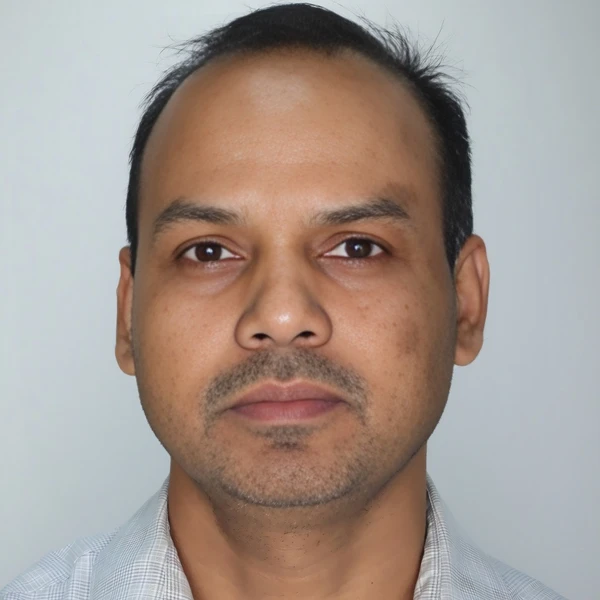
Shahinul Islam
1x
Finalist
Shahinul Islam
1x
FinalistBio
I am a first-generation international graduate student from Bangladesh pursuing an MFA in Creative Writing, with a concentration in fiction, at Texas State University. Before coming to the United States, I taught English and literature at colleges and universities in Bangladesh for more than fifteen years. I have published two books and several scholarly articles and have worked as an editor, teacher, and mentor. My fiction explores migration, memory, poverty, family separation, Bangladesh, and the lives of people shaped by political and social change. I hope to continue building a career as a writer, teacher, and editor while mentoring first-generation and international students.
Education
Texas State University
Master's degree programMajors:
- English Language and Literature, General
Miscellaneous
Desired degree level:
Doctoral degree program (PhD, MD, JD, etc.)
Graduate schools of interest:
- University of Southern California
- Columbia University in the City of New York
- University of Houston
- University of Cincinnati-Main Campus
Transfer schools of interest:
Majors of interest:
- English Language and Literature, General
- English Language and Literature/Letters, Other
Career
Dream career field:
- Arts
Dream career goals:
My long-term goal is to become a writer, teacher, and editor. I want to use literature and storytelling to teach, mentor students, and write about migration, memory, Bangladesh, poverty, and social change. As an international MFA student in Creative Writing, I hope to build a career that connects creative work with public service and education.
Assistant Professor of English
University of Science and Technology Chittagong2019 – 20234 yearsInterviews Editor
Porter House Review2024 – 20262 yearsAmbassador
International Student and Scholar Services at Texas State University2024 – Present2 yearsTeaching Assistant
Texas State University2024 – Present2 yearsELA Instructor / Educational Mentor
TRIO Upward Bound, Texas State University2025 – 2025Graduate Student Researcher
Texas State University2024 – Present2 years
Sports
Cricket
Intramural2001 – 20054 years
Awards
- Yes
Football
Intramural2016 – 20193 years
Awards
- No
Research
English Language and Literature, General
Texas State University — Graduate Student Researcher2026 – PresentSouth Asian Languages, Literatures, and Linguistics, General
Texas State University — Graduate Student Researcher2026 – Present
Arts
Texas State University
Art CriticismRunning Through Reeds, Revolution Raft2024 – PresentBishaud Bangla
MusicDariye GEC2011 – 2012
Public services
Volunteering
TRIO Upward Bound, Texas State University — ELA Instructor / Educational Mentor2025 – 2025Volunteering
International Student and Scholar Services at Texas State University — I-Ambassador/ International Student Ambassador2024 – Present
Future Interests
Advocacy
Volunteering
Philanthropy
Taylor Swift Fan Scholarship
The Taylor Swift performance that moves me most is her acoustic cover of Eminem’s “Lose Yourself.” I first watched it with curiosity because Taylor and Eminem seem to belong to very different musical worlds. Eminem is known for rap, dense language, anger, struggle, and sharp rhythms. Taylor is usually associated with country and pop songwriting, melody, personal memory, and emotional storytelling. Yet in that performance, the distance between them almost disappears.
I have admired “Lose Yourself” for a long time. Eminem uses profanity more than I usually prefer, but behind that roughness, there is a poet. He writes about pressure, failure, poverty, fear, ambition, and the moment when a person has to decide whether to act or remain where he is. His words come from everyday struggle. That is why so many listeners can connect with the song, even if their lives are very different from his.
The song also has a strong narrative. It does not feel like a collection of clever lines. It moves like a story. Every word seems to carry weight. Nothing feels unnecessary. The rhythm creates urgency, but beneath that urgency, there is also vulnerability. The person inside the song wants to succeed, but he is frightened of losing his chance. That combination of fear and determination gives the song its lasting power.
What I admire about Taylor’s performance is that she understood this gravity. She did not perform the song as a joke or as a surprising imitation of a rapper. She treated it with respect. With only her voice and guitar, she brought the song into her own musical space without removing its original tension.
That requires artistic confidence. Taylor does not normally sing or write in the same manner as Eminem. She did not need to prove that she could become a hip-hop artist. Instead, she showed that a serious musician can recognize greatness outside her own genre. She listened to what made the song important and then allowed her own tone and musical instincts to carry it.
To me, this is one sign of genuine artistry. A good artist develops a personal voice. A great artist also remains open to voices that sound completely different. Taylor’s performance shows curiosity rather than limitation. It suggests that she does not divide music into narrow territories and remains safely inside her own.
I am a writer, teacher, guitarist, and student of creative writing. Therefore, this performance speaks to me beyond measure. Writers also need to read outside their familiar traditions. Musicians need to listen beyond their preferred genres. We grow by encountering work that challenges our habits. We do not have to copy another artist. We can recognize what is powerful in that artist and allow the encounter to deepen our own work.
Although “The Life of a Showgirl” celebrates Taylor Swift’s career in the spotlight, this quieter performance reveals something equally important about her. It shows her as a listener. It shows her paying respect to an artist from another musical tradition. Most of all, it shows that her talent is joined by openness.
That is why her performance of “Lose Yourself” remains the most moving to me. It is not only a cover. It is one artist recognizing the force of another artist’s work and meeting it honestly through her own voice.
Ethel Hayes Destigmatization of Mental Health Scholarship
In 2003, during the final years of my undergraduate study at the University of Chittagong in Bangladesh, I fell in love for the first time. She was Buddhist. I was Muslim. In the society where we lived, that difference was not small.
The relationship lasted only five months. But its effect on my mental and physical health lasted much longer.
I had grown up in a poor family. My parents worked hard, but poverty created tension in our home. They often argued. As the eldest son, I carried many of their expectations. Sometimes I also received their fear and frustration. I do not blame them. They wanted me to succeed because they believed the future of the family depended on me. Still, some of their harsh words and doubts left wounds that I did not understand at the time.
When I met this young girl, I felt a kind of affection and safety that I had missed. She became more than the person I loved. She became my emotional world. I felt that someone finally saw me without measuring me by success, money, or responsibility.
Then her family learned about us.
They told her that if I had been Buddhist, they might have accepted the relationship. But because I was Muslim, they believed marriage was impossible in the context of Bangladesh. They asked her to choose between her family and me.
She came to me crying. I was devastated. Still, I told her to choose her parents and brother. I could not ask her to lose her whole family for me.
After that, I collapsed emotionally and physically. I could not sleep. I vomited. I could not concentrate. For nearly six months, day and night seemed to lose their order. I went to a psychiatrist and took medication. Later, I also spoke with an older acquaintance from my university who had become a psychology professor. He helped me understand that what I was experiencing was not simply weakness or ordinary sadness. My mind and body were reacting to a severe loss.
At my lowest point, I even had thoughts of ending my life. I did not act on them. Time, treatment, conversation, and the slow return of daily routine helped me survive.
I no longer live inside that relationship. I am now married and have two children. I am pursuing an MFA in Creative Writing at Texas State University. Still, I respect what that love meant in my life and what its loss taught me.
It taught me that emotional pain can become physical. A person may look normal and still be unable to sleep, eat, think, or imagine a future. It also taught me that heartbreak should not be dismissed as foolishness or immaturity. For a young person who already carries loneliness, family pressure, or childhood wounds, the loss of love can feel like the loss of the only safe place in the world.
The experience also changed my understanding of religion and society. I remain a person of faith. But I do not believe religious difference should prevent two adults from loving each other or building a life together. Deep down, we are human beings before we are social categories. When families and communities treat love only as a question of identity, they may ignore the mental suffering created by that decision.
Years later, while teaching at the University of Science and Technology Chittagong, a female student came to me after being rejected by someone she loved. She was deeply distressed. I did not tell her that it was only a relationship or that she would simply forget it. I knew those words would not help.
I listened. I told her that I understood her pain. I told her that my door was open if she needed to talk. I encouraged her to be patient and not make decisions while overwhelmed. I could not solve her situation. But I saw that being heard brought her some relief.
That moment reminded me how much a few honest words can matter. People in emotional distress do not always need a lecture. Sometimes they need one person who does not laugh, judge, or turn away.
My experience has shaped my goals as a writer, teacher, and mentor. I want to create spaces where students can speak without shame. I want to notice the pain hidden behind silence, anger, poor performance, or withdrawal. Through my writing, I also want to explore how family, poverty, religion, love, and social pressure enter the private life of the mind.
I dream of a world where young people feel wanted and loved. That may sound too hopeful. Still, I believe we can move toward it through attention, empathy, and honest conversation.
Mental health is not separate from love, family, religion, or society. All these forces enter the mind. My own struggle taught me that healing takes time, but it becomes more possible when someone listens and when suffering is allowed to be spoken out loud
Sweet Dreams Scholarship
In the mid 1990s, when I was in high school in Feni, Bangladesh, I met a young man named Mehedi. We called him Mehedi Bhai. I met him in a weekly study circle where a few of us gathered to read, talk, and ask questions. At first, I thought he was almost an anarchist. He spoke about everything with a strange freedom.
He did not look like someone important. His life was not organized in the way people usually respect. But he had a rare mind and a great heart. He talked fluently, but he never pretended to know everything. When I asked him questions, he answered with enthusiasm as if he liked the questions. Then sometimes he would say he did not know. Unlike other young men of his age, he would not pretend to know all the questions a high schooler like me would ask.
The story of his life changed mine because he noticed something in me before I could trust it myself. I was a village boy studying in a small town. I came from a poor background. I was trying to understand books and the world around me. I collected books from the Feni Public Library. I read with fear and hunger. One day, I told him I wrote short stories and poems. I was afraid to show them to him. He read them and said, “I cannot say they are great. But keep writing. There are some nice flares. And remember, almost no one writes great pieces in their initial years. Keep writing.”
Years later, I kept writing in university. I published books. I wrote songs. I am currently pursuing my MFA in Creative Writing at Texas State University. I still feel that a part of my writing life began because one person took a struggling student seriously.
The problem in my community that many people walk past is the intellectual and social isolation of students from poor and small-town backgrounds. People see them going to school. They see them passing exams. So, they think everything is fine. But many of those students do not have mentors. They do not have enough libraries. They memorize lessons but are not taught how to think. They see inequality every day but are told to accept it as normal. Some even grow up believing poverty is a kind of fate.
Mehedi Bhai taught me not to accept that silence. He used to say school cannot teach everything. He told us to read newspapers. He said we should never close the windows of the mind. He told us to doubt and to keep learning. He made me see that education is not only about degrees. It is also about becoming open, frank, and humane.
If I had the resources, I would create small reading circles and library spaces for first-generation students from villages and small towns. I would provide books, safe study spaces, food, fresh water, and mentorship. I would invite students to read newspapers, literature, history, and the stories of ordinary people. I would help them write without fear.
Now, as an MFA student, teacher, and international ambassador at Texas State University, I try to offer younger students and international students the kind of attention Mehedi Bhai once gave me. I cannot find him anymore. I once looked for him in Feni and heard he had gone to Dhaka. But his voice remains with me. Keep learning. Keep the mind open. Do not walk past another young person who is waiting to be seen and heard.
Redefining Victory Scholarship
American Dream Scholarship
I did not inherit the American dream. I had to travel toward it slowly from a poor village in Bangladesh. The road was not straight. It was made of years, of small sacrifices, and a stubbornness I could not always explain, even to myself.
I was born less than a decade after my country’s liberation. Around me, life was still hard. People worked, waited, borrowed, prayed, and survived. My parents could not finish fifth grade. None of my three siblings finished college. After I passed tenth grade, my father wanted me to become an electrician. I do not blame him. He knew hunger better than ambition. He wanted a safe income for me. He wanted me to survive.
My mother wanted me to study. Her belief was quiet, but it was strong. Because of her, I kept going. I studied literature. I taught students. I wrote. I came to Texas State University as an international student to pursue my MFA in Creative Writing. I came with fear and hope together. My wife and children are still in Bangladesh. I carry them in everything I do.
For me, the American dream is not only money, comfort, or a clean success story. My American dream is America as a great platform for education, for free thought, and for turning hidden potential into real work. It is a place where a village boy from Bangladesh can sit in a graduate classroom, teach, write, and think openly. It is a place where I can change my present and future, not by forgetting where I came from, but by using that memory as strength.
I want my American dream to be useful. I do not want it to end with me. I want to write books and stories that speak against poverty, silence, and unfairness. I want to write about people who do not always appear in the center of the page. Poor students. Migrants. Workers. Parents living away from their children. People who are told to wait for justice. People who are told to stay quiet.
I believe writing can help people stand up. Not in a loud or easy way, but in a lasting way. A story can make a reader feel less alone. A story can make someone ask why poverty continues. A story can make a young person believe that his or her life also has meaning. That is why I chose literature. That is why I teach. That is why I keep writing even when money is tight and the future feels uncertain.
At Texas State, I have also tried to serve others. As an International Student Ambassador, I have helped students adjust to a new academic life. I know what it feels like to arrive in a new place and not understand all the rules. Helping others gives me a small way to repay the help I have received.
My definition of the American dream is simple. It is the freedom to learn. It is the courage to speak. It is the chance to build a dignified life through education and honest work. It is also the responsibility to use that life for others.
I want to become a writer and teacher who inspires people to continue their fight for fairness, dignity, and humanitarian rights. I cannot eliminate poverty alone. No one can. But I can write against it. I can teach against it. I can stand with people who are trying to rise. That is my American dream. Not escape. Not luxury. A meaningful life that helps other lives become possible.
Michael Rudometkin Memorial Scholarship
I do not think selflessness always appears as a grand act. Sometimes it appears as patience. Sometimes it appears as sitting beside a student and helping them believe that their sentence matters.
My name is Shahinul Islam. I am from Bangladesh, and I am pursuing an MFA in Creative Writing at Texas State University. I am a writer and teacher, and most of my service has grown from these two words. I know what it means to need guidance and not always find it near me. My parents did not finish primary school. None of my siblings earned a college degree. Still, my family carried me forward with labor, hope, and sacrifice. Because of them, I understand that education is never only personal.
At Texas State, I try to practice this belief through teaching. As a graduate teaching assistant, I work with students who come to writing with different levels of confidence. Some students know how to begin. Some stare at a blank page as if it has already judged them. I do not see those students as weak. I see them as students who need time, attention, and a human voice beside them. I have helped students revise essays, clarify arguments, understand assignments, and trust that their experiences can become part of serious thinking. Sometimes helping someone means explaining a sentence. Sometimes it means listening long enough for that person to stop feeling alone.
I have also served international students through the International Mentor Program at Texas State. I know how strange the first months in another country can feel. The campus is beautiful, but the mind is often elsewhere. It is thinking about money, family, rules, paperwork, food, and the fear of making mistakes. When I mentor students, I try to offer the kind of practical and emotional support I once needed. I answer questions. I share what I know. I remind them that confusion is not failure. It is part of the arrival.
My work with Upward Bound also shaped my understanding of selflessness. Teaching younger students requires patience that cannot be fake. Some students need structure. Some need encouragement. Some need to see that an adult takes their future seriously. In those classrooms, I tried to make literature and writing feel less distant. I wanted students to see that education does not belong only to people who already sound confident.
I have also served the literary community as the Interviews Editor of Porter House Review. That work taught me another form of care. It required close reading, respectful communication, thoughtful preparation of questions, and helping writers present their work with dignity. Literary service may seem quiet, but it matters. It builds a community where voices can meet each other with seriousness and attention.
I do not claim that these acts are extraordinary. They are ordinary acts repeated with care. I believe selflessness is often built in repetition. A conference with a student. A message to a new international student. A lesson plan. A careful question for a writer. A small kindness done without advertisement.
My perseverance comes from my belief that writing and teaching can change the way people see themselves. I want to continue building a life where my education helps others find language, confidence, and direction. This scholarship would support that work by reducing financial pressure as I continue my MFA. It would help me remain focused on the path I have chosen, a path where my own struggle becomes useful to others.
Bulkthreads.com's "Let's Aim Higher" Scholarship
I want to build a life around language. Not language as decoration. Not language as a certificate on a wall. I want to build a life where language becomes shelter, work, memory, and a way of helping people stand with more dignity.
I am from Bangladesh, and I am pursuing an MFA in Creative Writing at Texas State University. I study fiction, but the work I am trying to build is larger than one degree. I want to become a writer and teacher whose work carries the lives of struggling people into places where they are often absent. Poor students. Migrants. Workers. Families divided by distance. People who speak carefully because the world has not always allowed them to speak freely.
My own life has taught me why these matters. I am a first-generation college student. My parents did not finish primary school. None of my siblings earned a college degree. Still, my family gave me the foundation for everything I have done. They gave me endurance. They taught me how to keep working when the road was not clear. I carry their labor with me in every classroom I enter.
At Texas State, I am building my future through study, writing, and teaching. As a graduate teaching assistant, I work with students who are learning how to trust their own thinking. Some of them arrive already confident. Some are quiet. Some seem unsure that their sentences matter. I understand that uncertainty. I know how it feels to come from a place where education is precious, but never simple. When I teach, I try to show students that writing is not only about grammar or an assignment. It is a way to discover what they know and what they have survived.
I also want to build a body of creative work that connects Bangladesh, the United States, and the larger human struggles of our time. In my fiction and poetry, I return to migration, poverty, family separation, climate pressure, memory, and the quiet courage of ordinary people. I want my books to make readers look more carefully at lives they may have passed without seeing.
This future will help me because it gives shape to my own struggle. It turns hardship into responsibility. It also helps my community because writing and teaching can create paths for others. A student who learns to write with confidence may speak differently in the world. A reader who meets a forgotten life in a story may become less careless with other people’s suffering.
I do not want to build something only for myself. I want to build a literary and teaching life that keeps a door open behind me. Through my education, I hope to make that door wider for students, readers, and people who are struggling and deserve language, attention, and respect.
Edwards Scholarship
My mother never finished primary school, but she wrote poems. Small lyric poems about seasons, about longing, and everyday grief. I grew up watching her find her best expression possible. That is where my literary sense began.
Neither of my parents had the education they deserved, yet they understood how much it mattered. They pushed me toward it the way people push toward something they love from a distance. That is where my literary sense began. I am now pursuing an MFA in Creative Writing at Texas State University, and I study fiction, but my work has always moved through more than one room. It moves through memory, family, migration, poverty, faith, doubt, and the lives of people who are often asked to remain quiet.
I am a first-generation college student. None of my siblings earned a college degree. Still, I do not think of my family as a story of absence. I think of them as the ground under my feet. They gave me endurance. They gave me the habit of working even when no one was watching. They gave me the knowledge that a person may have little formal education and still carry wisdom and sacrifice.
My path to higher education was not smooth. In Bangladesh, I learned early that education could become a narrow bridge. Many people want to cross it. Few can do so without fear. Money was always present, even when no one named it. Books had a cost. Time had a cost. A quiet place to study had a cost. Later, when I came to the United States, the struggle changed its shape. I had to live inside a new academic world, a new culture, and a new system. I had to study, teach, write, and remain responsible to the people who love me from far away.
At Texas State, I have tried to turn these pressures into discipline. I work as a graduate teaching assistant. In the classroom, I see students arrive with different levels of confidence. Some speak easily. Some sit with their hands folded, as if they are afraid of taking up too much space. I understand that silence. I know how long it can live in the body. When I teach writing, I try to show students that their thoughts are not small. A sentence can become a place where a person stands upright.
My own writing grows from this belief. I often return to ordinary people placed under large forces. I write about migration, families divided by distance, workers, students, memory, and the fragile dignity of those who are not usually protected by power. I write so that a life hidden in the corner of a room can become visible.
I plan to continue as a writer and teacher. Through my studies here, I am gaining craft, discipline, and a wider understanding of literature. I want to carry those lessons into classrooms and into the lives of students who may come from poor homes, weak language, or families that could not guide them through college because no one guided them first.
This scholarship would support a journey that began long before I entered a university classroom. It began with my mother and her poems. It began with my parents, their unfinished schooling, their labor, and their belief that I might go farther. I want to honor that belief by writing frankly, teaching carefully, and helping other struggling people who feel that their lives also deserve language, attention, and respect.
Joe Gilroy "Plan Your Work, Work Your Plan" Scholarship
I come from a place where planning was not a luxury. It was survival. My parents could not finish fifth grade. My three siblings did not complete college. After I passed tenth grade, my father wanted me to become an electrician because that seemed to him the safest road. My mother quietly pushed me toward study. Because of her, and because of a stubborn faith that education could open the world, I continued. Today I am an international MFA student in Creative Writing at Texas State University, and my goal is clear. I want to become a writer, teacher, and editor who uses literature to teach, mentor, and write about migration, poverty, memory, Bangladesh, and social change.
My first major goal is to complete my MFA by December 2026. My immediate plan is to finish my creative manuscript, revise it seriously, and prepare it for publication. I am also continuing to build teaching experience as a Graduate Teaching Assistant and mentoring experience through student programs. I know that a writing life does not happen through talent alone. It needs steady work, deadlines, revision, submission, and community. My weekly plan is to divide my time among thesis writing, teaching responsibilities, reading, editing, and scholarship and job and PhD applications.
My second goal is to apply to funded PhD programs or strong teaching and writing opportunities after graduation. I am considering programs where I can continue work in creative writing, postcolonial literature, migration, and environmental humanities. My plan is to prepare a strong writing sample by summer 2026, request recommendation letters early in fall 2026, and complete applications before December. If I enter a PhD program, I want it to be fully funded. If that path does not open immediately, I will seek teaching, editing, and writing-related positions while continuing to publish and apply again.
The resources I need are practical. For the coming year, my personal tuition responsibility is about $3,786 after university aid. I also need about $500 for books, printing, and writing materials, about $600 for thesis and research-related expenses, and $700 to $1,000 for graduate application fees, transcript fees, and possible conference or submission costs. I also need some emergency support for rent, food, and transportation. As an international student, I must abide by the work limits. I cannot simply work unlimited hours to cover every gap. When funding falls short, I have had to borrow from family and friends, but that is not a stable plan.
This scholarship would help me follow the motto "Plan your work, work your plan" in a real way. My plan is not solid and strong. It has a timeline. Complete MFA coursework and thesis by December 2026, submit creative work regularly, apply for funded doctoral programs and teaching opportunities, and continue building a life in writing and education. I know there may be setbacks. I may not get every fellowship or program I want. But I have already crossed distance, poverty, uncertainty, and fear to reach this point. I plan to keep moving with discipline, humility, and purpose until my work becomes impactful in changing the world, where people live in dignity and prosperity.
Lotus Scholarship
I grew up in a poor village in Bangladesh. We lived hand to mouth. There were no books in the house and no library nearby. But my parents believed education could change things, and that belief carried me further than I had any right to expect.
Getting here was not easy for me. I moved to the United States in December 2023, at forty-four, leaving behind my wife and two children to pursue an MFA in Creative Writing at Texas State University. The distance is real and painful, and the purpose is strong.
I believe the most useful thing I can do with my life experience is to be honest about it in my writing and present it in my teaching. Growing up without resources taught me what it actually feels like to need help and not know how to ask. That kind of knowledge does not come from books. I carry it into every classroom and every conversation.
As a Graduate Teaching Assistant at Texas State, I work closely with students from difficult backgrounds. As an International Ambassador in the I-Mentor Program, I support students who are new to this country and still finding their way. I try to make them feel that their situation is not a disadvantage they must overcome alone. I know what it means to feel that way, and I know how much one person's steady attention can change things.
My longer goal is to write fiction that speaks frankly about lives that rarely appear in literature. I believe that kind of writing can contribute meaningfully to societal change, and this is the impact I am working toward through each story I write and each student I teach.
Debra S. Jackson New Horizons Scholarship
I grew up in a small village in Bangladesh. My family did not have much. There were no bookshelves, no libraries nearby, and no clear road toward the kind of life I quietly imagined. But there were stories around. People told them in the evenings, in the fields, on the way to the bazaar. I listened to them with undivided attention. I learned that a story could open a door that poverty could not lock.
Through persistence and the support of those who believed in me, I found my way to the University of Chittagong, where I earned my BA in English Literature. I later completed my MA at Premier University. I went on to teach at universities in Bangladesh for over a decade, mentoring hundreds of students, publishing two books, and contributing to academic journals. I was grateful for every step forward. But something in me remained unfulfilled.
In December 2023, I made a decision that required courage and determination. I left my established career behind and moved to the United States to pursue an MFA in Creative Writing at Texas State University. I was forty-four years old. I started in the spring of 2024. I did not see this as a risk; rather, I saw it as a responsibility I owed to myself and to the work still ahead of me.
I believe stories matter not just for entertainment or for art. They shape how people understand one another, how communities treat those who are different, and how societies decide what is worth protecting. A well-told story can open a reader toward empathy in ways that arguments rarely manage. I want to write those kinds of stories. Stories about displacement, moral compass, and everyday struggle. My accepted paper for the 2027 MLA Convention, on forced displacement and expressions of emancipation, reflects where my work is headed.
This chapter of my life has sharpened my values. Having crossed oceans, languages, and economic circumstances, I carry a quiet understanding of what it means to start with very little and to keep going anyway. As a Graduate Teaching Assistant and ELA Instructor for TRIO Upward Bound at Texas State, I bring that understanding into the classroom every day. I design inclusive lessons. I give individualized feedback. I try to make every student feel that their voice belongs in the room.
My sense of responsibility reaches beyond the classroom. As an International Ambassador in Texas State's I-Mentor Program, I support international students who are navigating a world that can feel indifferent to their struggles. I was once in that place. I have not forgotten it.
The world has many problems. What it needs are writers who carefully understand and address them with precision. Writers who recognize the threads that connect human suffering to the health of the communities, the ecosystems, and the wider living world around us. I try to write with that awareness. I write with strong purpose and care.
I am humbled to have come this far from that village. I am determined to keep moving toward the future I am building. This scholarship would ease the real financial pressure that comes with being a full-time graduate student far from home. It would allow me to give my full attention to this work. It would mean that someone believes in this journey and trusts that it matters.