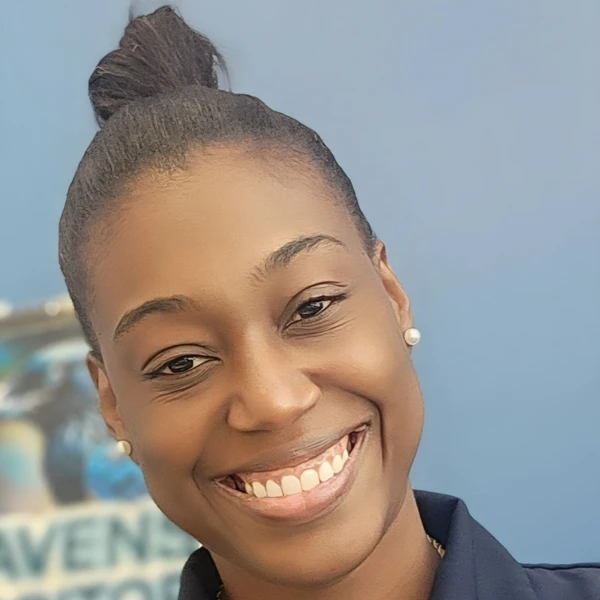
Hobbies and interests
Athletic Training
Babysitting And Childcare
Basketball
Coaching
Business And Entrepreneurship
Advocacy And Activism
Board Games And Puzzles
Bible Study
Child Development
Church
Education
Human Resources
Sports
Volunteering
Teaching
Travel And Tourism
Reading
Christianity
Romance
Adult Fiction
Suspense
Action
I read books multiple times per week
Shadell Williams
10x
Finalist3x
Winner
Shadell Williams
10x
Finalist3x
WinnerBio
Pursuing a career in education has been a calling of mine for as long as I can remember. I grew up in a small country in a single-parent household with limited opportunities, yet I always knew I wanted to become an educator and make a difference in children’s lives. Becoming a mother at nineteen reshaped my path and strengthened my sense of purpose.
Sixteen years after high school, I began my college journey, proving that setbacks do not mean never—only not yet. As a single mother, I strive to model resilience and perseverance for my daughter every day.
I am currently pursuing my bachelor’s degree in Elementary and Special Education and working hard to maintain a 4.0 GPA. Pursuing my degree has been both challenging and rewarding, and I find joy in the growth it brings. My goal is to inspire, empower, and help every child discover their worth and potential.
Education
Glendale Community College
Bachelor's degree programMajors:
- Special Education and Teaching
- Education, Other
GPA:
4
Bachelor's degree program
Majors:
- Business, Management, Marketing, and Related Support Services, Other
Miscellaneous
Desired degree level:
Doctoral degree program (PhD, MD, JD, etc.)
Graduate schools of interest:
Transfer schools of interest:
Majors of interest:
- Special Education and Teaching
- Educational Administration and Supervision
Career
Dream career field:
- Education
Dream career goals:
Masters in Educational Administration
Administrative Assistant
GCC2025 – Present1 yearSenior Accounts Rep.
Bahamas First2014 – 202410 years
Sports
Basketball
Varsity2008 – 20146 years
Public services
Volunteering
GCC Food Distribution — Food Distribution Volunteer2025 – PresentVolunteering
REACH Basketball — Assistant Coach2025 – PresentAdvocacy
Family, Career and Community Leaders of America (Early Childhood Education Club) — Member2025 – PresentVolunteering
Tru Heat Youth Basketball — Volunteer Assistant2025 – PresentVolunteering
Bethel Baptist — Youth Leader2009 – 2023Volunteering
Central Kitchen — Server2025 – Present
Future Interests
Advocacy
Volunteering
Entrepreneurship
RonranGlee Special Needs Teacher Literary Scholarship
Some children enter a classroom already knowing they belong there. They raise their hands, ask questions, make friends, and move through the school day with the confidence that their presence is expected.
Other children must first be convinced.
They may sit quietly because they are afraid of being wrong. They may communicate differently and be overlooked because their voice does not sound like everyone else's. They may struggle to regulate their emotions, complete an assignment, make a friend, or participate in an activity and gradually begin to believe that they are the problem. Before they can fully learn, they may first need someone to help them understand that they are worthy of being there.
That is why Professor Harold Bloom's statement that “the purpose of teaching is to bring the student to his or her sense of his or her own presence” resonates so deeply with me. I understand a student's “sense of his or her own presence” to mean more than simply knowing that they physically occupy a classroom. It means helping a student recognize: I am here. I belong here. I have a voice. I have strengths. I have something to contribute. I am more than my diagnosis.
That is the kind of teacher I am determined to become.
My passion for special education began before I understood the term. My grandmother was a teacher, and some of my earliest memories are of spending time in her classroom. I watched her work with students who needed additional academic and emotional support. She also had a sister with special needs, so conversations about patience, dignity, and understanding were part of my family life. My grandmother taught me, through both her profession and the way she lived, that a person should never be reduced to a diagnosis, a limitation, or the support they require.
Years later, becoming a mother gave that lesson a deeply personal meaning.
My daughter developed an autoimmune condition that caused periods of severe inflammation throughout her body. There were times when she struggled to walk, write, or fully participate in everyday activities. I became the parent navigating medical systems, advocating for accommodations, explaining what others could not immediately see, and watching how easily a child facing challenges can be misunderstood.
I learned that the most difficult part is not always the limitation itself.
Often, it is being underestimated because of it.
I remember what it felt like to watch my daughter struggle to do things that other children could do more easily. I knew that her difficulties did not erase her intelligence, creativity, personality, or potential. Yet I also understood how quickly the visible challenge could become the only thing others noticed. A child can become known for what they cannot do before anyone takes the time to discover everything they can.
Those experiences changed the way I see children. They taught me that supporting a student is not simply about helping them overcome a difficulty; it is about making sure the difficulty does not become the entirety of their identity.
I became more aware of the child who is present in the classroom but may not yet know how to make their presence felt. The child who knows the answer but cannot communicate it in the expected way. The child whose behavior is interpreted as defiance when it may be frustration, fear, sensory overload, or an unmet need. The child who has heard “you can't” so often that they begin to believe it.
I want to become the teacher who helps those students discover a different truth.
To me, guiding a student toward a sense of their own presence begins with seeing the whole child before focusing on the challenge. I want to discover how each student communicates, what motivates them, what brings them joy, what they are capable of, and what strengths may be hidden beneath a behavior or academic difficulty. I will adapt instruction rather than expecting every student to fit one predetermined method of learning.
My mission as a special education teacher will be to help students move from being defined by their challenges to recognizing themselves through their strengths, choices, relationships, and growth.
I will begin by learning who each student is beyond their educational classification. Before I ask, “What does this student struggle with?” I want to ask, “What does this student enjoy? How do they communicate? What makes them feel safe? What are they curious about? What can they already do? What are they trying to tell me through their words, actions, silence, or behavior?”
I believe these questions are essential because the same behavior can communicate very different needs. A student who refuses to participate may not be defiant. They may be overwhelmed, afraid of failure, unable to access the assignment, or unsure how to communicate what they need. A student who struggles to sit still may need movement in order to learn. A student who does not speak may still have an extraordinary amount to say.
My responsibility will be to look beyond the first interpretation.
I will guide students by creating multiple pathways for them to experience competence. I will use visual supports, hands-on learning, assistive technology, movement, creativity, explicit instruction, and opportunities for students to demonstrate understanding in ways that reflect their individual strengths. I will provide structure and consistency so students know what to expect while remaining flexible enough to adjust when a strategy is not working.
Most importantly, I will make progress visible.
For a student who has repeatedly experienced failure, “success” may not initially look like completing an entire assignment independently. It may look like attempting the first step. It may look like asking for help instead of giving up. It may look like communicating a need, joining a group, tolerating a difficult transition, or trying again after frustration.
I will celebrate those moments because they matter.
My daughter taught me this lesson personally. When a child struggles to walk, write, or participate in the way others expect, it can be easy for people to focus on the activity she cannot complete. But a child's life is not defined by one difficult moment. The responsibility of the adults around that child is to find ways to preserve access to learning, connection, independence, and joy.
That is how I want to guide my students.
If a student cannot demonstrate learning through one method, I will search for another. If a student cannot communicate through speech, I will value other forms of communication. If a student needs more time, more repetition, more movement, or more support, I will not interpret that need as a lack of potential.
I will ask: What barrier is preventing this child from showing me what they know, and how can I help remove it?
I believe a student begins to experience their own presence when they are given meaningful opportunities to make choices and see the effects of those choices. It may happen when a child selects a book they want to read, chooses between two activities, communicates a preference, helps a classmate, or contributes an idea that others value. It may happen when a student looks at their work and recognizes, perhaps for the first time, I did that.
Those moments may appear small to someone else.
To a child who has spent years being defined by what they cannot do, they can be transformative.
My goal is not to create dependence on me. It is to help students increasingly recognize their own abilities. I want to guide them until they can begin to advocate for themselves, identify what they need, recognize what they do well, and understand that needing support does not make them less capable or less worthy.
That is what I believe Bloom means by bringing a student to a sense of their own presence. A teacher does not give a student an identity. Instead, a teacher creates the conditions in which a student can discover and claim one.
My passion for special education comes from knowing how profoundly a child's experience can change when someone chooses to look beyond a limitation.
I want to become the teacher who sees the child before the diagnosis, the person before the behavior, and the potential before the achievement.
I want my classroom to be a place where students are not merely accommodated, managed, or included physically. I want them to experience genuine belonging. I want them to know that their voices matter, their differences do not diminish their worth, and their future is not determined by the limitations others place upon them.
I know this profession will require patience, creativity, flexibility, and determination. I also know that loving the work will not mean every day is easy. There will be setbacks, difficult behaviors, slow progress, and moments when I will need to try again with a different approach. But my experiences as a mother, a student, and an advocate have taught me that progress is not always dramatic. Sometimes it is quiet. Sometimes it is measured in one more step, one more attempt, or one moment of newfound confidence.
I have also learned that the most meaningful changes often begin before anyone else can see them.
A child may not yet believe they are capable, but a teacher can believe first.
A child may not yet know how to advocate for themselves, but a teacher can create opportunities for their voice to be heard.
A child may not yet recognize their strengths, but a teacher can help make those strengths visible.
That is why I am passionate about special education.
I do not want to simply teach students skills. I want to help them recognize themselves as people with abilities, voices, choices, and possibilities. I want to help them experience their own presence so deeply that, even when the world focuses on their limitations, they know who they are and what they are capable of becoming.
I am pursuing special education because I believe every student deserves someone who will look beyond the diagnosis, beyond the behavior, and beyond the barriers—and see the person who is still becoming.
If my students leave my classroom believing they belong, recognizing their own strengths, and trusting that their challenges do not define their future, then I will have helped them discover their own presence. To me, that is the true purpose of teaching, and it is the educator I hope to become.
Rebecca Lynn Seto Memorial Scholarship
Rebecca's story reminds us that special education is never about changing who a child is. It is to understand who they are well enough to help the world understand them too. That is the kind of special educator I strive to be.
My understanding of disability comes from personal experience and my commitment to special education. Growing up, I watched my grandmother care for her nonverbal sibling with patience, creativity, and consistency. Even without spoken words, there was meaningful communication built on trust and familiarity. Years later, my daughter temporarily lost the ability to walk and write because of juvenile rheumatoid arthritis. For three years, I adapted our daily lives around her changing abilities. Thankfully she recovered, but the experience gave me a glimpse into the uncertainty, advocacy, and resilience many families of children with disabilities experience every day. It strengthened my conviction that every child deserves educators who see possibility before limitation.
If I had the privilege of teaching a child like Rebecca, I would begin by listening before I ever attempted to teach. Communication begins long before words. It exists in eye contact, gestures, routines, facial expressions, interests, behaviors, and relationships. My responsibility would be to learn the language they already use. Only then can learning begin.
Instruction would grow from the child's strengths and interests. Rebecca loved music, birthdays, football games, roller coasters, and being surrounded by people she loved. Those details are not simply memories of her life—they are instructional opportunities. If a child lights up when hearing music, we can teach through rhythm. If they love sports, learning can become a game filled with teamwork, celebration, and movement. If they communicate best through visuals, gestures, or an AAC device, those methods become part of the classroom rather than exceptions within it. Children engage most when learning reflects who they are rather than asking them to become someone else.
Families are the most valuable members of every educational team. They are the experts on their children. Before developing goals, I would want to learn from them. When educators and families work together, school becomes an extension of the child's world rather than a separate one. That partnership creates consistency, trust, and meaningful growth.
My philosophy is simple: inclusion is not inviting a child into a classroom designed for someone else. It is designing the classroom from the very beginning so every child belongs. Success is not measured by how closely a child resembles their peers, but by whether they are growing, communicating, building confidence, and experiencing the joy of learning.
I am pursuing a degree in Elementary and Special Education and am committed to serving students in special education from pre-kindergarten through twelfth grade. While my classroom experience is still developing, I have worked with children through mentoring and youth sports, where I have learned to adapt activities to meet individual needs. As a first-generation college student, single mother, and part-time employee, I am responsible for tuition, housing, transportation, childcare, and my daughter's ongoing medical expenses. My savings were exhausted by unexpected housing costs and my daughter's medical expenses. I have enrolled for next semester knowing the financial resources I relied on are gone, making scholarships essential for me to continue pursuing my degree.
Rebecca's story reminds me that the best special educators are remembered not because they had perfect lesson plans, but because they took the time to know the child behind the disability. That is the educator I hope to become—someone who helps every student feel understood before they are ever expected to perform, because children learn best when they first know they belong.
Barbara Cain Literary Scholarship
Some books entertain us for a season. Others quietly change the way we see people for the rest of our lives.
Growing up, books became places where possibility was never limited by circumstance. They introduced me to people I'd never meet, places I'd never visit, and perspectives I couldn't have imagined on my own. Long before I understood educational philosophy or child development, books were teaching me one of the most important lessons I have ever learned: every person has a story worth understanding, and every person possesses potential that deserves to be recognized.
One of the first books to leave a lasting impression on me was Understanding Your Potential. Its message was simple but transformative: every individual is created with unique gifts waiting to be developed. Before reading it, I believed potential had to be something extraordinary—big, creative, and obvious for the world to see. The book challenged that belief. It taught me that potential also lives in our quiet desires, our dreams, and what we choose to build from them rather than allowing them to remain unrealized. It challenged me to stop measuring people by their current circumstances and instead look for what they could become. That perspective has shaped how I approach every stage of my life, from raising my daughter to pursuing a degree in Elementary and Special Education.
As I prepared to become an educator, my relationship with reading deepened. I found myself drawn to children's literature that celebrates identity, belonging, resilience, and inclusion because I realized stories help shape how children see themselves. When children encounter characters who overcome challenges, celebrate differences, and discover their strengths, they begin to imagine those possibilities for themselves.
At the same time, books like The Book Thief expanded my understanding in a different way. Rather than helping me see myself, they helped me see others more clearly. Reading about courage, loss, and humanity during one of history's darkest periods reminded me that every person carries experiences invisible to those around them. It reinforced something I now believe deeply: understanding begins with curiosity, not assumptions. The best books do more than tell stories—they invite us to practice empathy.
Together, these books shaped a philosophy that guides both my life and my future career. They taught me to look for potential before limitations, understanding before judgment, and belonging before achievement. Those lessons have become the foundation of the educator I hope to become.
When I was eleven years old, I filled notebook pages with sketches of the preschool I dreamed of building one day. Even then, I imagined a reading corner before I imagined almost anything else. Today, that vision has grown into a plan to create an inclusive early childhood center where children of all abilities learn together, families find encouragement, and books become windows into both themselves and the world around them.
I want every child who walks into my classroom to find two kinds of stories: one that helps them feel seen and another that helps them understand someone whose life is different from their own. I want my classroom library to be more than a collection of books. I want it to be a place where curiosity becomes compassion, differences become strengths, and every child begins to believe that their own story matters.
If a single book can change the way one child sees themselves or another person, then a classroom filled with those stories has the power to change a community. That is the kind of educator I hope to become, and it is why my love for books has become inseparable from my purpose.
Sola Family Scholarship
As a child, I thought my mother was simply busy. As an adult—and now a single mother myself—I finally understand what her long hours, quiet sacrifices, and constant determination truly cost her.
My father left before I turned one, leaving my mother to raise me on her own. She never had the opportunity to earn a college degree, yet she worked tirelessly, often juggling multiple jobs, to ensure I had everything she could provide. There were seasons when money was scarce and times when putting food on the table required impossible choices, but she never allowed our circumstances to define the future she believed I could have. There were evenings when she quietly skipped dinner, insisting she wasn't hungry. As a child, I believed her. As an adult, I realize she was making sure there was enough for me. I remember going to school with only the lunch and snacks we could afford while watching classmates buy extras without thinking twice. I was embarrassed that I couldn't join extracurricular activities because we simply didn't have the money. I was embarrassed when friends invited me out and I had to say no because I knew we couldn't afford it. I was even embarrassed by our old two-door car because, to me, it was another reminder that our life looked different from everyone else's.
Growing up, I admired my mother's strength, but I did not fully appreciate the weight she carried. I wouldn't fully understand it until I became a mother myself at nineteen.
Like my mother, I suddenly found myself balancing responsibilities far greater than my own dreams. My education was placed on hold as I focused on raising my daughter and creating stability for our future. What I expected to be a temporary pause became sixteen years. During those years, I often found myself making the same quiet sacrifices my mother once made—putting someone else's needs before my own, finding ways to make limited resources stretch further, and continuing to move forward even when the path felt uncertain.
Only then did I truly understand that my mother's greatest lesson was never about perseverance alone. She taught me that love is often expressed through sacrifice, and that strength is measured not by the absence of struggle but by the willingness to keep showing up despite it.
Today, I am a first-generation college student pursuing a degree in Elementary and Special Education with a 4.0 GPA. Every step I take is built on the foundation my mother laid long before I ever entered a college classroom. Her sacrifices taught me to value education, resilience, and compassion, while my own journey as a single mother deepened my commitment to serving children and families with empathy and understanding.
One day, I hope to open an inclusive early childhood center where every child feels valued and every family feels supported, especially those navigating challenges that often go unseen. I want to create the kind of environment my mother worked so hard to provide for me: one filled with encouragement, opportunity, and hope.
My mother never had the opportunity to pursue the college education she deserved. Because of her sacrifices, I do. Every milestone I reach is not mine alone—it is the continuation of the legacy she began years ago, and one I hope my daughter will carry forward long after me.
WCEJ Thornton Foundation Low-Income Scholarship
When I was eleven years old, I filled notebook pages with sketches of a preschool I hoped to build one day. I imagined colorful classrooms where every child felt safe, welcomed, and excited to learn. At the time, I knew very little about lesson plans or child development, but I already understood the power of belonging. Even as a child, I wanted to create a place where every student felt seen before they were ever expected to succeed. More than two decades later, that childhood dream has evolved into a lifelong mission: to create inclusive learning environments where every child and every family feels valued, supported, and empowered.
That dream is what brought me back to college after sixteen years away from the classroom.
As a first-generation college student who immigrated from the Bahamas, I returned to school while raising my daughter, working part-time, and balancing the financial responsibilities of supporting my family. My daughter's autoimmune condition has required frequent medical care, and the savings I once planned to use for my education were redirected toward her health and other unexpected expenses. Today, my part-time income primarily covers our living expenses, and I have enrolled for my next semester knowing the financial resources I once relied on have been exhausted. Scholarships are what will allow me to continue moving forward. Despite these challenges, I have maintained a 4.0 GPA because every assignment, field experience, and classroom observation brings me closer to becoming the educator I have dreamed of being since I was eleven years old.
I am pursuing a degree in Elementary and Special Education because I want to build classrooms where inclusion is not viewed as an accommodation but as the standard. Every child deserves to feel capable, respected, and included regardless of ability, background, or circumstance. Higher education is equipping me with evidence-based teaching practices, inclusive instructional strategies, and the skills to advocate for students whose needs are too often overlooked. Each course I complete brings me one step closer to becoming the educator I envisioned as a child.
My commitment to serving others began long before I returned to college and will continue long after I earn my degree. Although these experiences take place in different settings, they all reflect the same purpose: creating opportunities for children and families to thrive before challenges become barriers. I volunteer in my community by helping distribute food to families experiencing food insecurity and mentor young girls through youth sports and church programs. I also launched a small business that supports mothers as they prepare for their first years of parenthood because I believe children thrive when families are supported from the very beginning. Whether I am distributing food, encouraging a young athlete, supporting a new mother, or one day teaching in my own classroom, my goal remains the same: to help others feel supported, capable, and empowered to succeed.
One day, I hope to return to the Bahamas and open an inclusive early childhood center where children of all abilities learn together from the start. I envision a place where families receive educational resources, children develop a love of learning, and differences are celebrated rather than accommodated. A place where a child who uses a wheelchair plays alongside classmates without barriers, where parents leave conferences feeling encouraged instead of overwhelmed, and where every family knows they have a community invested in their child's success. By investing in children during their earliest years, I hope to help build communities rooted in empathy, belonging, and equal opportunity.
Receiving this scholarship would do more than ease the financial burden of completing my education. It would allow me to continue preparing for a career dedicated to expanding opportunities for others. I believe education is one of the most powerful tools for breaking cycles of poverty because it creates opportunities that extend beyond a single individual. The investment made in my education will ripple outward—to every student who discovers confidence in an inclusive classroom, every family that finds support during life's most challenging seasons, and every child who grows up believing they belong. For me, earning a college degree is not the finish line. It is the beginning of a lifetime spent creating the opportunities that once existed only in the pages of an eleven-year-old girl's notebook.
Bick First Generation Scholarship
Being a first-generation college student means more to me than being the first person in my family to earn a degree.
It means pursuing a dream that was postponed but never abandoned.
My mother sacrificed countless opportunities while raising me. She worked hard, often putting her own goals aside so I could have opportunities she never had. She never measured success by titles or accomplishments, but she taught me something just as valuable: to believe that my dreams were worth pursuing.
When I became a mother at nineteen, I found myself facing many of the same realities she had faced. Education became secondary to survival, responsibility, and providing stability for my daughter. What I thought would be a temporary pause lasted for years.
Returning to college was not simply about improving my financial future. It was about proving something to myself.
Many people can tell you that you are capable. There is a different kind of fulfillment that comes from doing the work, overcoming the obstacles, and discovering it for yourself.
As a first-generation student, I have had to navigate college without a roadmap while balancing motherhood, employment, financial hardship, and my daughter's autoimmune condition. There have been moments when continuing felt uncertain. Yet every challenge has reinforced why this journey matters to me.
I am pursuing a degree in Elementary and Special Education because I do not want to build programs, resources, and opportunities for children and families based only on theory. I want to combine professional knowledge with the lessons I have learned through hardship, perseverance, and rebuilding my own path. The support I hope to create in the future must be grounded in both education and lived experience.
My dream extends beyond becoming a teacher. I hope to create spaces where children and families can access educational support, early learning opportunities, resources, encouragement, and opportunities that help them move forward during difficult seasons of life. I want to build the kind of support system I often searched for myself—one that helps families move from uncertainty toward stability and possibility. The experiences that shaped me are not things I want to leave behind. They are things I hope to transform into something that helps others.
In many ways, this journey represents three generations of perseverance: my mother's sacrifices created opportunities for me, my education is creating new opportunities for my daughter, and I hope the example she sees encourages her to pursue dreams of her own.
This scholarship would help relieve financial barriers that threaten to slow my progress, but its impact would reach beyond that. It would help me continue building a future that began with my mother's sacrifices, continues through the choices I am making today, and creates new possibilities for my daughter tomorrow.
Organic Formula Shop Single Parent Scholarship
I became a mother at nineteen years old, long before I felt prepared for the responsibility and long before I imagined how difficult it would be to pursue an education while raising a child on my own. Like many young parents, I put my own educational goals aside and focused on providing stability for my daughter. At the time, I assumed college would simply have to wait. What I did not realize was how many years would pass before I would finally find the opportunity to return.
Today, I am a full-time student pursuing a degree in Elementary and Special Education, a first-generation college student, and a single mother maintaining a 4.0 GPA. While I am proud of that accomplishment, the most challenging part of being both a student and a single parent is not the coursework itself. It is carrying the full weight of responsibility for another person while trying to build a future at the same time.
As a parent, there is no option to pause when life becomes difficult. Assignments can be postponed. Sleep can be sacrificed. Personal needs can wait. Parenting cannot.
The most difficult part is that every responsibility ultimately falls to me. When my daughter is sick, there is no partner to share appointments, caregiving responsibilities, or sleepless nights. When unexpected expenses arise, there is no second income to absorb the impact. Every decision requires balancing what my daughter needs today with what our future requires tomorrow. Some of the same hours I need for studying are the hours she needs for support and finding a way to meet both responsibilities is a challenge I navigate every day.
My daughter lives with an autoimmune condition that causes periods of severe inflammation throughout her body. There have been times when she struggled to walk, write, or fully participate in daily activities. During those moments, my role as a student immediately becomes secondary to my role as her mother. Hospital visits, medical appointments, and caregiving responsibilities do not disappear because a deadline is approaching.
The challenge is that neither responsibility stops. School continues. Bills continue. Work continues. Life continues.
Many days require moving from work to class, from class to appointments, from appointments to parenting responsibilities, and then returning to coursework late at night after everything else is done.
The most difficult period of my college journey occurred shortly after I returned to school. I relocated with the understanding that I would be living with a family friend while completing my education. That arrangement would have allowed me to dedicate my limited savings toward tuition and educational expenses. Instead, within a few months, I unexpectedly needed to secure alternate housing because their family circumstances changed.
The savings I had carefully set aside for school were suddenly redirected toward housing deposits, rent, and moving expenses. Before I had time to recover financially, my daughter required significant medical and dental treatment that resulted in more than $6,000 in expenses. Around the same time, my vehicle experienced major engine failure, requiring approximately $4,500 in repairs.
For a time, every step forward seemed to bring another obstacle.
I remember nights spent completing assignments after long days of work and caregiving, wondering how I would cover the next expense while still staying on track academically. I remember studying through exhaustion because stopping would mean delaying the future I had worked so hard to rebuild.
What kept me moving forward was knowing how much had already been sacrificed to get here. Returning to school required rebuilding a path I had set aside years earlier. Each obstacle made continuing more difficult, but walking away would have meant abandoning a future I had spent years trying to create for both my daughter and myself.
She watches everything. She watches me leave for class. She watches me study late at night. She watches me continue despite setbacks. I understand the importance of that example because I was raised by a single mother myself. She worked hard and made countless sacrifices to provide for me, often putting her own goals aside so that I could have opportunities she never had. We did not have much, but she taught me resilience, determination, and the value of perseverance.
Returning to college is about more than earning a degree. It is about breaking a cycle that limited the opportunities available to previous generations of my family. I want my daughter to grow up seeing that difficult circumstances do not define what is possible. I want her to know that goals worth pursuing require effort, persistence, and faith in yourself even when the path is difficult. If she learns anything from watching me, I hope it is that challenges can become strengths and that perseverance can open doors that once seemed out of reach.
This scholarship would do far more than help cover educational expenses. It would provide stability during a season where multiple unexpected challenges have depleted the financial resources I had set aside for school. It would help protect the progress I have worked years to build and allow me to continue pursuing my degree without sacrificing momentum.
Most importantly, it would help me continue creating a different future for both of us.
My goal is to become an educator who advocates for children and families facing challenges of their own. Every course I complete brings me closer to that goal. This scholarship would not create my determination—it would strengthen my ability to continue acting on it. It would help protect the progress I have worked years to build and ensure that the years I spent rebuilding my path lead to the future I returned to school to create. It would also help ensure that my daughter grows up seeing obstacles as problems to navigate rather than reasons to stop pursuing what matters to her.
Special Needs Advocacy Inc. Kathleen Lehman Memorial Scholarship
I always knew I wanted to work with children, but I did not fully understand how deeply personal my connection to special education would become until life forced me to see it differently. Growing up, I spent time in my grandmother’s classroom watching her work with students who needed additional support academically and emotionally. She also had a sister with special needs, so conversations about patience, care, and understanding were present in my life from an early age. At the time, I admired it, but I did not yet understand what it meant to advocate for children often misunderstood or overlooked.
That understanding became personal when my daughter developed an autoimmune condition that caused periods of severe inflammation throughout her body. There were times she struggled to walk, write, or participate in daily activities. I watched how quickly children facing challenges can become treated differently when they require additional patience or support. There were moments when schools did not fully know how to help her beyond removing her from the situation. As a mother, that was heartbreaking. But it also changed the way I viewed children with disabilities and special needs entirely.
I began thinking about how many children walk into classrooms already carrying physical, emotional, developmental, or learning challenges that others cannot see. Too often, society focuses on what these children struggle with instead of recognizing their potential. Many are made to feel like burdens in systems that were not designed with them in mind. That realization is what strengthened my decision to pursue a degree in Elementary and Special Education.
As I gained experience through fieldwork, I became even more certain that this is where I belong. Working directly with children with different disabilities has shown me how transformative genuine patience and support can be. Many of these children are not asking to be “fixed.” They want to feel respected, included, and believed in. I have seen confidence grow through moments that may appear small to others: participating independently, communicating a need, remaining engaged during frustration, or simply feeling safe enough to try without fear of embarrassment.
Because of my experiences as both a mother and future educator, I do not view special education as simply providing accommodations. I believe real impact happens when children stop feeling like they are constantly being measured against what they cannot do. Too often, students with disabilities are spoken about through limitations, behaviors, diagnoses, or scores before anyone takes the time to understand who they are as individuals. I want to help create learning environments where children are recognized for their abilities, interests, personalities, and potential first.
I also hope to positively impact families who often feel emotionally exhausted advocating for their children in systems that are not always equipped to support them. I understand what it feels like to sit through appointments, worry about your child falling behind, and carry the emotional weight of wanting others to show your child patience instead of frustration. Because of that, I want parents to know they are not walking through those experiences alone. I want to become the kind of educator who communicates openly, advocates fiercely, and helps families feel supported rather than judged.
My goal is not simply to teach children with special needs. It is to help build environments where they are able to experience dignity, belonging, and opportunity without constantly feeling like they must overcome the system in order to receive it. I want my career to contribute to a future where children with disabilities are not viewed through the lens of limitation, but through the value they already carry.
EJS Foundation Minority Scholarship
WinnerThe night I sat in an emergency room with my daughter, I had an assignment due in a few hours.
I remember the exhaustion more than anything—the kind that settles into your bones after a full day of work, classes, and responsibilities that don’t pause. I had just gotten her home, made sure she ate, and opened my laptop to begin my schoolwork when she told me something was wrong. What started as discomfort quickly became something I couldn’t ignore.
So I closed my laptop and took her to get care.
As I sat there, watching her in pain, my mind held two realities at once: my daughter needed me, and my future depended on the work waiting at home. That moment captured what returning to school has meant—not choosing between responsibility and ambition, but carrying both at the same time.
I am a first-generation full-time student and single mother, pursuing a degree in Elementary and Special Education. My path to higher education has been shaped by responsibility and the pursuit of greater opportunity—it has not been linear. After becoming a teenaged parent, I put my education on hold to provide stability for my daughter. Like many students from underrepresented backgrounds, my challenges were immediate. I have had to weigh essential expenses against continuing my education while carrying full financial responsibility for my household.
Returning to school was a commitment to continue, even when circumstances were not ideal.
Today, I maintain a 4.0 GPA while balancing motherhood, school, work, and community involvement. My time is structured around responsibility, often studying late at night or in quiet moments between obligations. There is no excess—only discipline and intention.
My decision to pursue Elementary and Special Education comes from what I have witnessed firsthand—how quickly children who learn differently are mislabeled, overlooked, or left behind when systems are not built with them in mind. I am pursuing this field to become the educator who recognizes those gaps early and responds with intention. To me, education is a way to interrupt cycles and create access where it is often lacking.
Beyond the classroom, I have taken that commitment further by building a small business that provides essential supplies to mothers and young children. I started with limited resources, but with a clear purpose: to create support systems I once needed myself. That experience has taught me how to serve, adapt, and lead. Here in Arizona, I have worked directly with families navigating food insecurity and limited access to childcare resources, where a single box of essentials can relieve a week’s worth of stress. These moments ground my education in reality, not theory.
These efforts are connected. My education, my business, and my service are part of the same mission: to support families, advocate for children, and expand access to opportunity.
I am not asking for this scholarship based on potential alone, but on proof of persistence. I have returned, rebuilt, and continued forward despite the weight of responsibility. I understand what it means to work toward something when stopping would be easier.
Later that night, after we returned home and my daughter was resting, I reopened my laptop and completed my assignment.
Not because it was convenient, but because this path matters.
This scholarship would do more than provide financial support—it would create space: space to focus, to grow, and to continue building a future defined not by limitation, but by impact.
I am building a future in real time—one where my circumstances do not limit my impact, and where the work I am doing today creates opportunity for others tomorrow.
Kerry Kennedy Life Is Good Scholarship
Sacrifices—a word I learned far too early. I grew up watching my mother work tirelessly, to give me the best childhood and opportunities she could, even when it meant putting aside her own dreams. Her resilience gave me a deep desire to make those sacrifices worthwhile. From an early age, I felt a natural connection with children, which is why Elementary and Special Education never felt like a career choice, but rather the purpose God placed on my life.
I am passionate about becoming the kind of teacher who sees children fully—beyond their disabilities, beyond their limitations, and beyond the labels society puts on them. I want to be the person who helps a child feel safe, seen, capable, and worthy every single day. That calling has shaped every sacrifice I have made, including the life-changing decision to leave my home country in pursuit of this dream.
I was born and raised in The Bahamas, in a community where opportunities in education were limited and where many children went without the support they deserved. I spent years watching this, wishing I could do more, but knowing I needed an education to make a true impact. As a single mother, the idea of uprooting my life felt impossible, yet the desire to become a teacher never left me. I worked long hours, between jobs, saved every dollar I could, and slowly built the courage to try.
When I finally saved enough to cover one year of tuition, I took a leap of faith that changed everything. I resigned from a secure job, packed whatever I could fit into two suitcases, held my daughter’s hand, and migrated to the United States—with no safety net, no family nearby, and no guarantee that I would succeed. All I had was a dream and the determination to create a better future for my daughter and the children I one day hoped to serve.
Starting over has not been easy. I became solely responsible for tuition, rent, childcare, food, transportation, and managing my daughter’s health—while balancing school and work. There were nights I studied beside my daughter while she slept, mornings I rushed to class after dropping her off, and countless moments when the weight of it all felt heavier than my own body could bear. But every sacrifice reminded me why I came: to transform lives through education.
My passion for education is very personal. Growing up, I watched my grandmother care for her non-verbal sibling with nothing but love and patience teaching me that communication is deeper than words—it is connection, consistency, and compassion. Later, when my daughter temporarily lost the ability to walk and write due to juvenile rheumatoid arthritis, I learned what it means to adjust your world around a child’s needs. I learned empathy in a way textbooks could never teach.
These experiences didn’t just inspire my passion—they strengthened it. They showed me how powerful a caring educator can be in a child’s life, especially for those who struggle in silence. I want to be that support for my students: someone who celebrates their strengths, adapts to their needs, builds predictable routines, and creates a classroom filled with joy, safety, and learning.
Every sacrifice—the move across countries, the financial strain, the late nights, the moments of doubt—has been worth it. I am building the life I once prayed for. Becoming a teacher is not only my dream; it is the contribution I want to give the world. I want to change the lives of children who need it most, one classroom, one family, and one moment of compassion at a time.
Rebecca Lynn Seto Memorial Scholarship
A child like Rebecca deserves a teacher who doesn’t just meet them where they are, but celebrates who they are. They deserve someone who sees the meaning behind their laughter, unique quirks, quiet ways of communicating, and the joy that lights up their world. That is the kind of educator I am determined to become—one who leads with empathy, patience, and heart.
My understanding of special needs comes from a personal place. Growing up, I watched my grandmother care for her non-vocal sibling through creativity, patience, and simple, predictable routines. Even without words, there was rich communication—trust built through consistency and love. Her example taught me that communication is not limited to speech; it is presence, understanding, and connection.
Years later, when my daughter temporarily lost the ability to walk and write due to juvenile rheumatoid arthritis, I learned how quickly a child’s ability can change. For three years, I adapted everything—daily tasks, expectations, even how I encouraged her. It demanded emotional strength I didn’t know I had. While her recovery is a blessing, it helped me understand what families of children with disabilities often face daily. It deepened my commitment to supporting children who may never fully “recover,” but who still deserve joy, love, and learning.
With children like Rebecca, the goal is to build trust by learning their interests, comforts, and unique ways of expressing themselves. Students thrive when they feel valued and safe. I want every child to know they matter simply because they exist.
In my classroom, I would use playful, sensory-friendly, and interactive methods to connect with all students, especially those non-verbal. Music, rhythm, and movement—even silly dances—can open communication pathways that words cannot. I would follow each child’s interests and build the environment around what excites them. If they love sports like Rebecca did, our classroom might become a stadium—scoreboards for progress, cheers for effort, and activities that make learning fun.
To support communication, I would narrate actions and emotions to build vocabulary, and use interactive play—games, pretend scenarios, music, and movement—to create opportunities for connection. I would provide choices through picture cards, yes/no prompts, pointing responses, and simple visuals to help students express preferences independently. Visual schedules, routine boards, and single-step images would reduce anxiety and create structure. I would incorporate AAC devices, gestures, simplified language, allowing the necessary time children need to respond.
Success would never be measured by grades, but by growth. My goal is to help each child feel proud, confident, and understood. Above all, I would teach through love. Children sense when adults genuinely care, and sometimes a gentle reassurance is all they need to keep trying.
Family is central to this process. Families know their child’s joys, triggers, comforts, and fears better than anyone. I would collaborate closely with them to recreate familiar routines and support meaningful progress.
I am committed to earning my degree in Elementary and Special Education and to working in special education from pre-K through 12th grade. As a first-generation college student and single mother, I am responsible for tuition, rent, food, transportation, childcare, and managing my daughter’s health. Without a financial safety net, scholarships like this make it possible for me to continue my education.
What drives me most is knowing that not every child is as fortunate as my daughter, who recovered. Many need lifelong support, and I want to be someone who guides, encourages, and uplifts them. My heart is in this work, and I am committed to being the teacher who lights up a room the way Rebecca once did, helping them to feel valued, understood, and excited to learn.