Hobbies and interests
Reading
Baking
Piano
Biology
Chemistry
Math
Coding And Computer Science
Tutoring
Biochemistry
Public Policy
Health Sciences
Reading
Fantasy
Leadership
Politics
Science Fiction
Social Issues
Young Adult
Travel
Memoirs
Biography
I read books daily
FIRST GENERATION STUDENT
Yes
Sahil Gupta
1x
Nominee1x
Finalist1x
Winner
Sahil Gupta
1x
Nominee1x
Finalist1x
WinnerBio
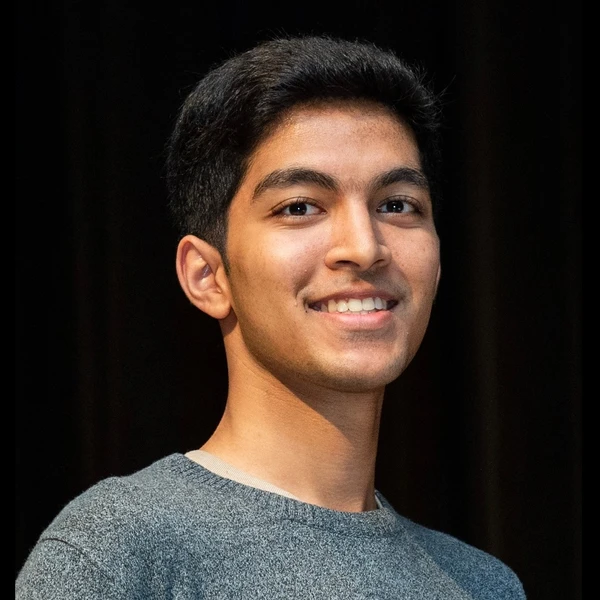
I am a student at Brown University majoring in Computer Science and Public Health. I am a part of PLME (Program in Liberal Medical Education), Brown's 8-year combined BS/MD program that will guarantees me a spot at the Warren Alpert Medical School following undergrad. I have volunteered at Inova Fairfax Hospital for 2 years, where I shadowed various physicians and provided translation services to immigrant patients, and am currently conducting research on racial and economic disparities among Puerto Rican citizens in access to Medicare/Medicaid at Brown University School of Public Health.
My career goals are to attend medical school, become a physician, and promote equitable access to healthcare by helping immigrants and non-English speakers. In my free time, I love to tutor students, learn new languages, and do crosswords!
Education
Brown University
Bachelor's degree programMajors:
- Computer Science
Minors:
- Public Health
Thomas Jefferson High School for Science and Technology
High SchoolTest scores:
36
ACT
Career
Dream career field:
Medicine
Dream career goals:
Physician
Software Engineer Intern
Google2025 – 2025Cybersecurity Intern
Humana Healthcare2023 – 20241 yearArabic Study Abroad Scholar
US Department of State2020 – 20211 yearPrivate Tutor
Self-Employed2018 – Present8 years
Sports
Badminton
Club2022 – Present4 years
Baseball
Intramural2014 – 20173 years
Awards
- District Champion x4
- District Playoffs Champion x3
Research
Biomathematics, Bioinformatics, and Computational Biology
Georgetown University — Student Researcher2021 – 2022Public Health
Brown University — Student Researcher2022 – PresentBiophysics
Georgetown University — Research Intern2020 – 2021
Arts
Viola
Music2015 – 2019Piano Player
Music2010 – 2018
Public services
Volunteering
Children's Science Center — Youth Advisory Board Member2019 – 2022Volunteering
INOVA Hospital — Volunteer2020 – PresentVolunteering
Kids Are Scientists Too (KAST) — Lead Facilitator2018 – Present
Future Interests
Advocacy
Politics
Volunteering
Philanthropy
Entrepreneurship
Bright Lights Scholarship
My parents came to the US from India on a leap of faith. With only a couple hundred dollars in the bank and no college degrees, they lived paycheck to paycheck to make ends meet.
Beyond our financial struggles, the language barrier was a difficult obstacle to overcome.
When I was 8, my father was diagnosed with neurocysticercosis, a rare and deadly brain disease. English was not my parents' first language, so they couldn’t understand the doctor's medical jargon. At such a young age, I became a translator, guiding my family through the next 11 years of treatment, surgeries, and physical therapy that followed.
After this experience, I realized the importance of providing bilingual care to underrepresented communities. In addition to language barriers, rising healthcare costs put many patients in tight situations. Despite America priding itself on being a “melting pot” of cultures and perspectives, our healthcare system was failing to address the needs of its diverse communities.
So, I made it my life’s mission to become a physician-researcher and make American healthcare more culturally and financially accessible. Through Brown University's Program in Liberal Medical Education (PLME), I am already guaranteed acceptance to medical school following my undergrad.
Upon graduating with an MD, I will become a Certified Medical Interpreter (CMI) in Arabic, Hindi, and Spanish so I can work in community-based clinics that treat low-income or immigrant patients who would otherwise have nowhere else to go.
After 2-3 years working in the field, I want to create a startup that disseminates medical translation technology or work for existing organizations like the World Health Organization (WHO) and National Institutes of Health (NIH) to travel with teams of doctors and provide treatment in 3rd world countries. I will dedicate my life to the cause: providing accessible, culturally sensitive care to patients in under-resourced areas while continuing to conduct medical research on the side.
But, college is extremely expensive.
Currently, my parents are still burdened with the cost of ongoing surgeries, physical therapy, and medications for my father’s condition. I also have a twin brother who is attending an out-of-state university, so my parents are paying for 2 tuitions at once. As such, I will be forced to take loans totaling more than $200K for the remaining 3 years of undergrad, and that doesn’t even account for the cost of medical school, which I anticipate will require an even larger amount of loans.
As a first-gen college student, this scholarship would mean the world. It would provide the necessary financial stability to continue my education and make an impact on the world that will last for generations to come. I have worked hard throughout high school and college to get to where I am today, and my past achievements can speak to that - developing an award-winning mobile app, studying abroad in Morocco to become multilingual, and gaining acceptance to medical school at 19, all while dealing with financial struggles and my father’s sickness.
I am driven by a mission I hold close to my heart. I have a vision for the next 10 years of my life, and with your help, I can follow through with my academic and career goals. I will be able to fully focus on my studies without having to worry about finances, molding me into a better physician so I can make my parents proud.
I sincerely appreciate the reader's time in allowing me to tell my story. Assistance from scholarships like this is invaluable, and if given the money, I am confident that your investment in me will not go to waste.
Scholar Dudes in Computer Science Scholarship
When I was in 9th grade, I made my first Flappy Bird game in Java. The code was basic, but I was thrilled to see the game come to life on my computer screen. I was amazed by how powerful lines of code could be - if I could make a working computer game from scratch with 100 lines of code, what could I make with 500? Or 1000?
The ability to create something new and innovative fascinated me, and I continued to explore computer science on my own. I spent hours building side projects, experimenting with new languages or frameworks, and watching tutorials online. I went from coding simple number calculators to implementing more advanced algorithms like an AI that could play Othello and successfully beat an online bot.
That was when I realized that through coding, I could invent. With more time and effort, these small projects could be scaled up to larger, more impactful solutions that others could use in their day-to-day lives. All I needed was my computer and the motivation to learn. Luckily, I had both.
The next summer, I noticed that many people in my community were not showing up to vote because they weren't informed. To combat this, I created a mobile app called Politirate, which helped voters easily access information about their local representatives and what issues they support. My team and I won the Congressional App Challenge, and we were invited to present our app to 250+ government officials on Capitol Hill.
Computer science had become more than just a hobby or side interest - it became something I could use to create positive change in the world. I was able to apply my creativity to design, ideate, and execute a solution to a tangible problem.
I continued to study computer science in high school, taking advanced courses like Artificial Intelligence and participating in local hackathons. In college, I decided to pursue a Bachelor's in Computer Science and have already learned so much. To give back to the community and spread my knowledge to others, I currently serve as a Teaching Assistant for the Introductory Data Structures & Algorithms course, where I assist students who need help understanding Python concepts.
In the future, I hope to continue inventing. At Brown University, I have developed a specific interest in computational biology. Eventually, I want to earn an MD-PhD so I can develop new technologies and algorithms to better predict and diagnose disease. As modern AI and machine learning algorithms continue to grow, computer science has so much potential to revolutionize the world, especially in the fields of health and medicine. With computer science, I can make meaningful strides toward the issues I care about, creating change that will last a lifetime.
Learner Math Lover Scholarship
I furiously scribbled on the paper in front of me, my hand racing with my brain to capture every thought. Wesley, my desk buddy, was scribbling alongside me, translating his own ideas into shapes and numbers. When we were stuck, we turned to one another—Wesley would show me a formula I had never seen before, or I would point to a simplified equation on my paper. I had solved math problems with others this way, but this interaction was different—it occurred entirely in silence.
I met Wesley 2 years ago at a math camp at my local university. Wesley was an international student who couldn't speak English. We were assigned as problem-solving partners; we had to complete all class work as a pair. At first, we kept our distance, solving problems on our own and not collaborating unless necessary.
But over the next few weeks, Wesley became a close friend. Every time we'd meet, I'd eagerly share an interesting solution to a math problem I did the week before, while Wesley would show me his favorite article about number theory research. Our love for math become more than numbers and shapes, it became a shared language—one that transcended our cultural and lingual barriers.
However, math as a universal language extends beyond simple people-to-people interactions. In every ancient civilization and modern culture, a system of math has been created and used to develop new technologies. And despite using different symbols or numbers each time, the underlying principles always remain the same. We all possess different genes, but the probability we pass them to our children uses the same set of formulas. The market is composed of thousands of businesses, but they all use predictive models based on the same mathematical foundations to drive the economy.
It's this unique commonality in math that drives my love for the subject. The fact that math is the only language that can be understood by all individuals is immensely powerful. It allows us to easily communicate important concepts like aerodynamics, particle physics, and earthquake predictions to others. With computer algorithms that now understand this math as well, the same formulas and equations will be used to create even bigger and better inventions in the future, from reusable rockets to 3D-printed organs. As I continue to study math in college, I'm excited to see what boundaries it breaks in my lifetime and beyond.